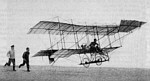
The 1910 Kasyanenko 1/1bis biplane was designed and built by Kasyanenko Brothers in Russia.
Span: top, 23′ bottom, 15’9″
Length: 29’6″ or 19’8″
The 1910 Kasyanenko 1/1bis biplane was designed and built by Kasyanenko Brothers in Russia.
Span: top, 23′ bottom, 15’9″
Length: 29’6″ or 19’8″
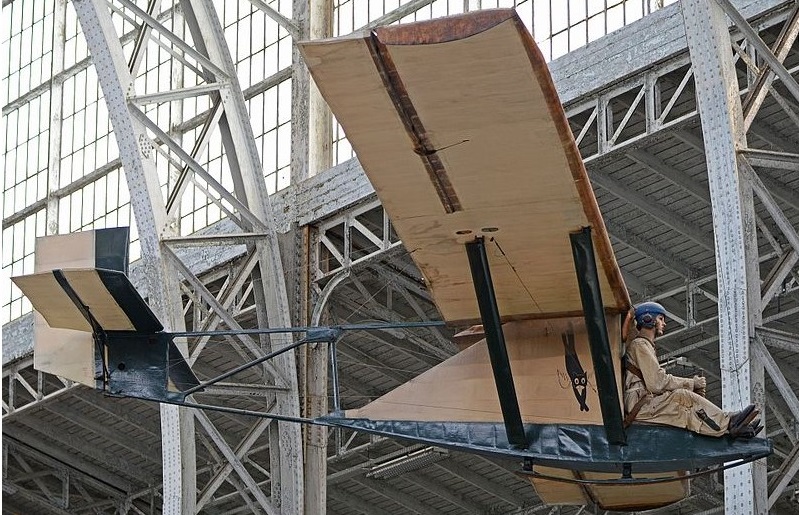
The Segelflugzeugbau Kassel 12 was a German glider used for training, developed in the 1920s. It was a minimalist design with the pilot sitting atop a tapered wooden structure that supported a high wing on a set of struts, and carried a conventional empennage at the rear. A spring skid was provided as undercarriage.
Conscripts from Lentoasema 2 built one Kassel 12A in 1935. The first flight with the aircraft was performed by Lt. Col. Ahonius at Santahamina on 28 March 1935.
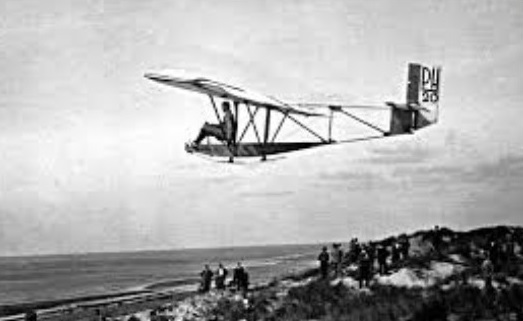
The aircraft was used at the Jämijärvi glider school in the summer of 1936, carrying the designation number “13”. The aircraft is today on display at the Päijänne Tavastia Aviation Museum in Asikkala, near Lahti.
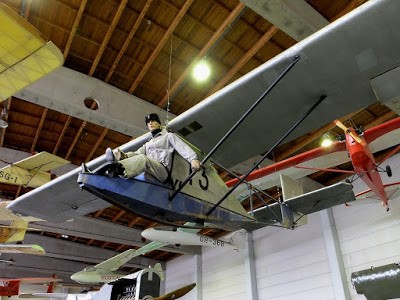
Wingspan: 10.00 m (32 ft 10 in)
Length: 6.50 m (21 ft 4 in)
Height: 2.20 m (7 ft 3 in)
Crew: One pilot

The 1911 Kass Ery 2 monoplane was designed by Josef Kassa and most likely built by Ateliers Aeronautiques de l’Est.

Józef Kass of Warszawa built in France a “self-stable” monoplane, the Kass Ery I, though there are no conclusive information about its flights;
Span: 32’8″
Length: 29’6″
The 1909 Kaspar-Cihak monoplane was designed and built by Kaspar and Cihak in Czechia.
The Bekas, which first flew in 1968, was a development of an earlier, 1959, design of Stefan Brochocki, the BKB-1. The design of the Bekas 1-A had three main aims : a higher L/D (archieved by using a greater span and aspect ratio), easier ground handling and rigging and a flexible wing to study the effect of bending on stability and controllability. It has a fixed gear and trailing- edge control surfaces on the out-board portion of the wing which serve a dual role of elevator and aileron.
Construction was wood and plywood.
Wing span: 15m / 49.2ft
Wing area: 14.67sq.m / 158sq.ft
Empty Weight: 159kg / 350lb
Payload: 91kg / 200lb
Gross Weight: 159kg / 350lb
Wing Load: 17.04kg/sq.m / 3.48lb/sq.ft
Aspect ratio: 15.3
Airfoil: NACA 8-H-12
MinSink: 0.61 m/s / 2.0 fps / 1.18 kt
No. Built: 3
Amongst the machines that Witold Kasper built and flew was a fully aerobatic glider that could do outside loops while in a side slip.
USA
Glider builder in the 1960s.
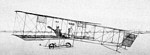
The 1910 Karpeka-1 monoplane was designed and built by A.D. Karpeka in Russia.
Span: 26’3″
Length: 26’3″
Weight loaded: 660 lb
A two-seat monoplane trainer.

