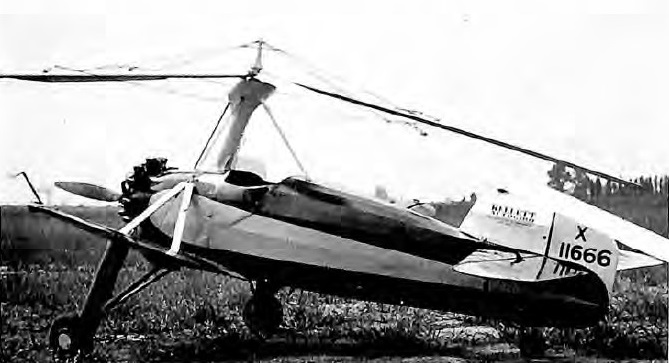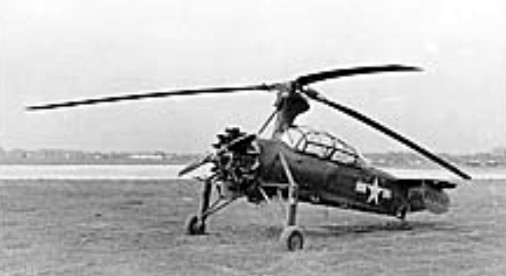
Kellett O-60

The Kellett O-60 was built and tested as an observation aircraft for the US Army in 1942 while the helicopter was still in development. The aircraft had a free-turning 43 ft 2 in rotor which provided lift in place of a conventional wing. A 285 horsepower radial engine turning a two-blade propeller gave the O-60 its forward thrust.
The two-place YO-60 was designed by Richard O. Prewitt and could do jump take-offs. The rotor was spun up to about 280 rpm (rotations per minute) at a no-lift angle using the power of the radial engine. When ready for take-off, the pilot would release a clutch mechanism which changed the blade angle to 8 degrees. This caused the aircraft to ‘jump’ about 10 feet into the air. The engine and propeller then pulled the YO-60 into forward flight as the rotor angle was decreased to a normal flight pitch of 3 degrees. The engine was only used to spin the rotor up to flight speeds on the ground, while in flight the rotor was free spinning.
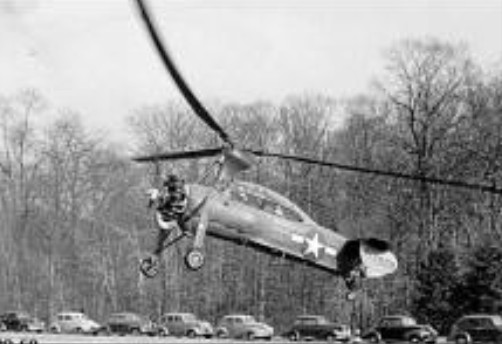
The YO-60 never got past the service test phase. Seven aircraft were built as XO-60 (S/N 42-13604 to 42-13610) with 225 hp radial engines and later re-engined with 285 hp. radials and redesignated YO-60.

YO-60
Engine: Jacobs R-915-3 of 285 hp.
Fuselage length: 20 ft. 9 in.
Fuselage width: 9 ft. 6 in. (at landing gear); 10 ft. at horizontal stabilizer
Height: 10 ft. 3 in.
Rotor diameter: 43 ft. 2 in.
No of blades: 3
Weight: 2,640 lbs. (gross)
Crew: 2
Top speed: 122 mph
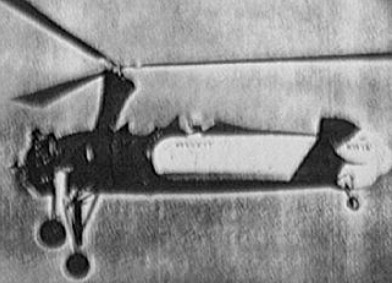
Kellett YG-1

YG-1B

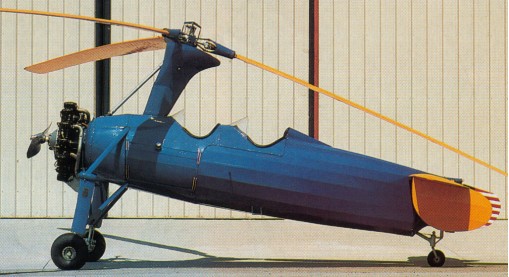
Cierva and Pitcairn licensed the Kellett Autogiro Corporation of Philadelphia to build autogiros and the developed Kellett YG-1 of the late 1930s became the US Army’s first rotary-winged aircraft.
Seven YG-1B autogyro were procured by the US army in 1937 for observation duties.

YG-1A
Year: 1936.
Seats: 2.
Engine: Jacobs L4MA7, 225 hp.
Gross wt: 2205 lbs.
Empty wt: 1586 lbs.
Rotor dia: 40 ft.
No of blades: 3.

YG-1B
Year: 1937.
Seats: 2.
Engine: Jacobs L4MA7, 225 hp.
Gross wt: 2400 lbs.
Empty wt: 1617 lbs.
Rotor dia: 40 ft.
No of blades: 3.

Kellett KD-1

KD-1B

Cierva’s C30 series and Pitcairn’s PA-22 and Luscombe-built aluminum body PA-36, and the KD-1 series constructed by Kellett Autogiro Company of Philadelphia were capable of jump take-offs and direct-control without wings.

KD-1
Year: 1935.
Seats: 2.
Engine: Jacobs L4MA7, 225 hp.
Gross wt: 2050 lbs.
Empty wt: 1345 lbs.
Rotor dia: 40 ft.
No of blades: 3.

KD-1A
Seats: 2.
Engine: Jacobs L4M4 seven-cylinder radial

KD-1B
Year: 1939.
Seats: 1.
Engine: Jacobs L4MA7, 2225 hp.
Gross wt: 2295 lbs.
Empty wt: 1670 lbs.
Rotor dia: 40 ft.
No of blades: 3.

Kellett K-4

Dr.Wynn Laurence LePage designed the first line of autogiros, K-2, K-3, and K-4, establishing Kellet as manufacturer of good performing autogiros.

The K-4 was developed in 1933.

Year: 1934.
Seats: 2.
Engine: Continental R-670, 210 hp.
Gross wt: 2400 lbs.
Empty wt: 1620 lbs.
Rotor dia: 40 ft 6 in.
No of blades: 4.

Kellett

Under Pitcaim-Cierva license developed and built autogiros at Philadelphia from 1929. A K-3 was taken to the Antarctic by Admiral Byrd on his second expedition in 1933, piloted by William S. McCormick. K-4 had two side-byside seats with demountable enclosure but retained wings. KD-1 of 1934 had tandem seats but was wingless and had direct-control rotor. In 1938 U.S. Army Air Corps bought seven Kellett autogiros for experimental use. From 6 July 1939 a Kellett KD-1 B of Eastern Airlines operated the first scheduled mail service by a rotary-wing aircraft, from the roof of the Philadelphia Post Office and the Camden airport. In 1939 Kellett exported an autogiro to Japan (see Kayaba). YG-1 was developed into XR-2 and XR-3 for the U.S. Army. XR-8 and XR-8A of 1943/1945 had twin side – by- side rotors. As Kellett Aircraft Corporation the company later undertook research and development contracts and subcontracting. Built its own KH-15 single-seat research helicopter (1954), the world’s first rocket-driven helicopter. In late 1950s attempted unsuccessfully to resume production of pre-war KD-1 A direct-control autogiro.
Hughes owned Kellett designs.