Kensgaila RT-4 “The Seagull”

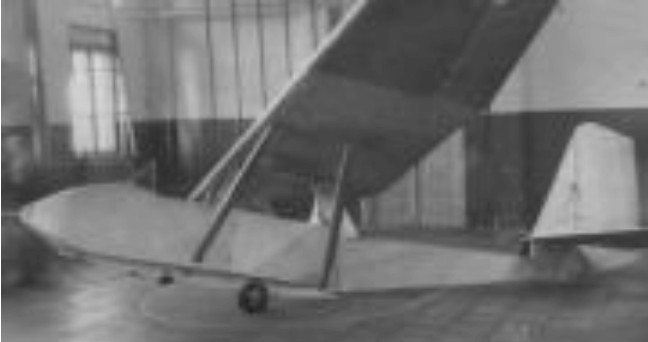
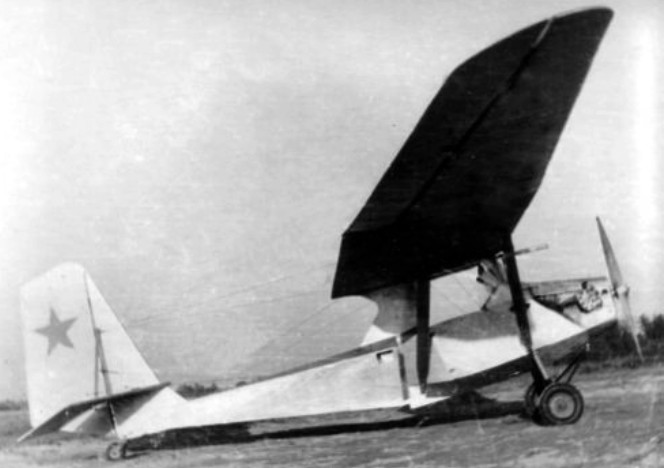
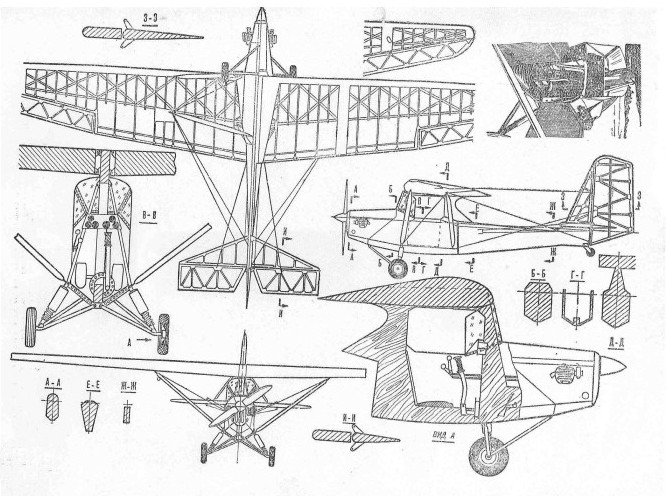
The RT-4 Seagull motorglider was created by Vlado Kensgailos with Silutes ASK.

The M-72 motorcycle engine of 22 hp power spun a 1.7 m diameter propeller. The propeller speed of 2500 rpm, with engine speeds 4800 rpm. Fuel tank – 20 liters, filled the first third of the wingspan, gravity feed into the carburetor.

On the right side, the cockpit door is made with a plexiglass panel. Instruments were compass, vertical speed indicator, altimeter, speed indicator, slip indicator, tachometer and the magneto switch.

The main undercarriage wheels came from a “Vyatka” scooter and the tail wheel of solid rubber.

The motorglider was built in the winter, spring, and summer of 1961 before the first flight.

Specifications:
Engine: M-72, 22 hp
Wingspan: 13.052 m
Fuselage length: 6,23 m
Wing area: 16.13 sq.m
Airfoil: R-III
Empty weight: 280 kg
Flight weight: 380 kg
Speed: 110 km / h.
Take-off speed: 65 km / h
Landing speed: 60 km / h
Takeoff dist: 250 m
Landing dist: 200 m

Kenny Jodel D 150X Governor

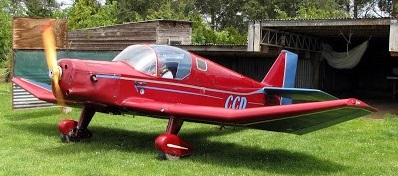
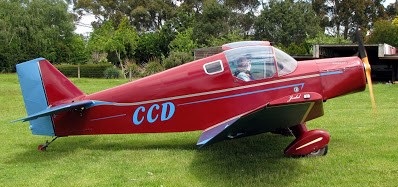
Charlie Kenny of Clydevale near Balclutha, New Zealand, a Jodel enthusiast built a Jodel D 9 ZK-AKR but believed he could build a better Jodel so he designed and built his D 150X Governor ZK-CCD (c/n AACA 360/2).

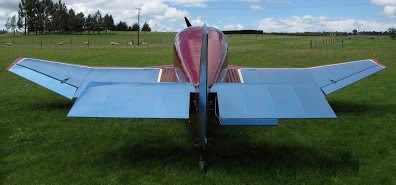
He incorporated what he reckoned were the best bits of all the many Jodel models. Charlie’s D 150X has the rudder from the D 150, the all-flying tailplane from the D 18 (but bigger), the luggage locker from a D 140 and the wing airfoil is that of a D 18 but again applied to a bigger wing. The wing has split flaps that drop down from the trailing edge.

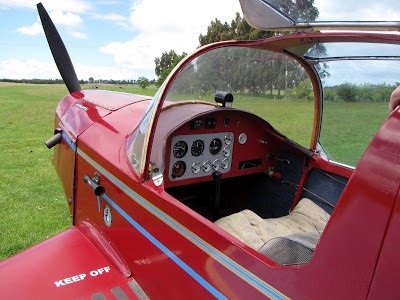
Charlie has also made the fuselage wider than the D 150 at 44 inches while he has moved the seat back 3 inches and sloped the seat to 30 degrees which gives a very roomy cockpit. The windscreen is from a Fletcher FU 24 and it has gull wing doors.

The Jodel is powered by a 1.9 litre Peugeot turbo diesel engine (from a Peugeot 405) that produces around 100 HP. It has a belt reduction drive designed by Wayne Affleck of Invercargill that gives 2400 rpm at the propellor for 3300 rpm engine revs. The engine is water cooled and the radiator in located in the starboard wing root with the battery located in the port wing root. Charlie developed the engine himself but later found out that Jean Delemontez (the del in Jodel) and Jacques Vion had developed their Delvion diesel engine along very similar lines. The diesel engine is very economical using only around 10 litres per hour at cruise.

The dimensions of Charlie’s D 150X Governor are similar to the D 150 Mascaret which has a length of 6.30 metres (20 feet 8 inches), a wingspan of 8.15 metres (26 feet 9 inches) and a wing area of 141 square feet.

It was first registered on 7 November 2011. The first flight was on 2 July 2015. Charlie says his aircraft flies really well and he had flown about 65 hours in, although it hasn’t flown in the last year or so.

Charlie Kenny has designed and built his D 150X entirely by himself in his shed, as well as sorting the entirely clean sheet engine conversion and all its systems.

Kennedy Giant

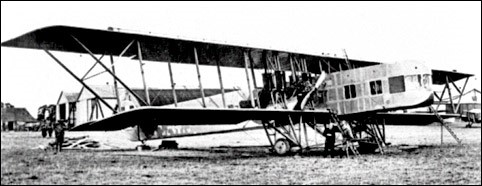
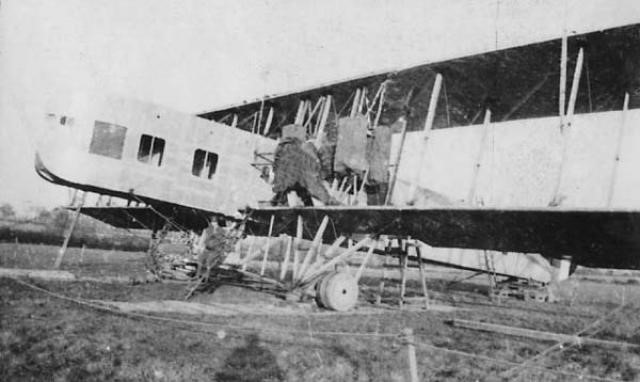
The Kennedy Giant was a British biplane heavy bomber designed by Kennedy Aeroplanes Ltd. during the First World War. The design was an imitation of works by Igor Sikorsky, with whom the owner of Kennedy Aeroplanes Ltd., Chessborough J. H. Mackenzie-Kennedy, had ostensibly worked prior to setting up the company.

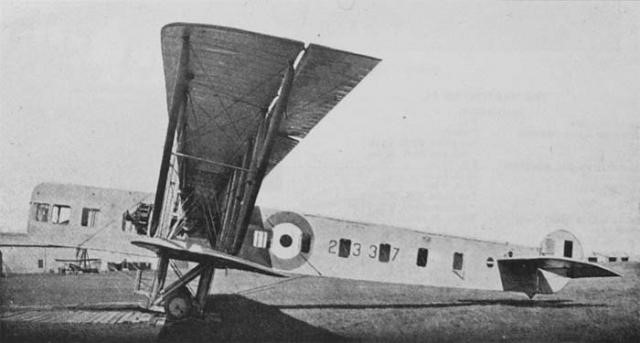
The four-bay, unstaggered wings spanned 142 feet; ailerons were fitted to the upper wings only, their control rods extending along the top of the leading edge, and the wing overhang being braced by pairs of outraked struts. The four engines, mounted in tandem pairs in nacelles on the lower wings, were very early British-built examples of the Canton-Unne/Salmson Z9 nine-cylinder water-cooled radials, each of which was provided with a pair of large vertical radiators on the sides of the nacelles.

The fuselage was of rectangular section over its entire length and tapered towards the tail only in plan. It provided fully-enclosed accommodation for the crew, the pilot being situated in the extreme nose, with individual compartmented cabins aft. The tail surfaces were of inadequate area, the tiny rudder (later enlarged) being unbalanced and without a fixed fin. The undercarriage was a complicated structure of multiple V-struts and skids.

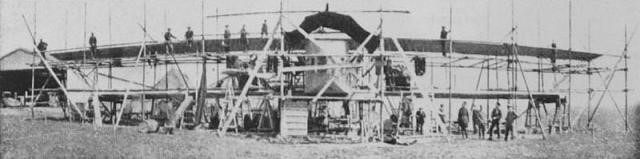
The aeroplane was a notorious failure; its size meant that construction had to take place in an open field at the Fairey factory at Heston as none of the hangars near Hayes, Middlesex, where the prototype was assembled, were large enough to house it.

Supply of the Sunbeam engines, manufactured under licence by the Dudbridge Iron Works Ltd of Stroud, were afforded very low priority (and were not subject of official trials until May 1919). Early examples were rated at only 200hp and, with these, the Giant was made ready for flight at Hendon late in 1917.

Movement needed two trucks and seventy men, but these efforts broke the tail of the aircraft. It was repaired, but the fuselage shortened by 10 feet (3,048 m).

This power proved insufficient to gain true flight, and despite being taxied at full throttle downhill, the pilot, Lieut Frank T Courtney, only managed to lift the mainwheels off the ground for a short hop with the tailskid still dragging along the ground. The prototype was left derelict at Northolt Aerodrome for a number of years.

Engines: Canton-Unne Salmson Z9, 200hp / 150 kW
Propellers: two tractor and two pusher two-blade
Wingspan: 142 ft 0 in / 43.28 m
Length: 80 ft 0 in / 24.38 m
Height: 23 ft 6 in / 7.16 m
Empty weight: 19017 lb / 8626 kg
Crew: 3
Kennedy Aeroplane Ltd

Founded early in First World War by Chessborough J. H. Mackenzie-Kennedy, with offices in South Kensington, London, following establishment of the Kennedy Aeronautic Company in Russia in 1909. In 1911 the founder met Igor Sikorsky and shared enthusiasm for large aircraft. Was associated in the English company with T. W. K. Clarke, well known in British aeronautics. With War Office permission, construction started on the Kennedy Giant by the Gramophone Company Ltd. Late in 1916 components were sent to Northolt Aerodrome for erection in the open. In 1917 attempts to fly the underpowered machine resulted in a “hop”. Building of a bomber was started at Newcastle- on-Tyne, but financial failure came in 1920.

Ken Brock KB-3

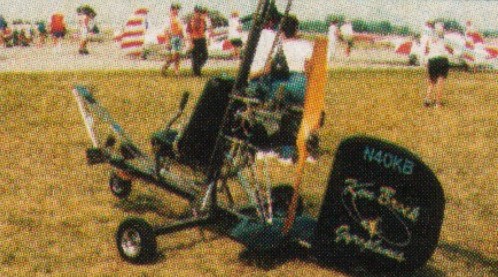
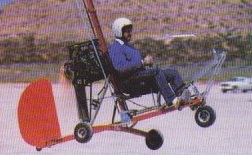
First flown in 1983, the KB-3 conforms to Pt 103 as a homebuilt.
The KB-3 was sold in sub-kits. Price may vary with options, but the average is $12,500 in 2001.

Plans
2001 Plans for the Rotax 582-powered KB-3: $125

Gallery

Engine: 64 hp Rotax 582cc.
Prop: Ground adjustable 60”.
Empty wt. lbs: 250
Max wt. lbs: 600
Rotor blades: 22’ x 7” Brock riveted aluminium, adjustable hub.
Disk area: 380 sq.ft.
Min speed: 18-20 mph.
Cruise: 60 mph.
Top speed: 63 mph.
Range: 100 sm.
Fuel cap: 5 USG.
ROC: 700 fpm.
Service ceiling: 12,000 ft.
Empty wt: 250 lbs.
Useful load: 350 lbs.
Gross wt: 600 lbs.
Width: 5’.
Height: 7’7”.
Length: 11’3”.
Seats: 1.

Engine: Rotax 532
Max speed mph: 63
Cruise mph: 45 Seats: 1

Engine: Rotax 582, 64 hp
Rotor span: 6.70 m
MAUW: 271 kg
Empty weight: 113 kg
Fuel capacity: 34 lt
Max speed: 150 kph
Cruise speed: 115 kph
Minimum speed: 35 kph
Climb rate: 6 m/s
Seats: 1
Fuel consumption: 18 lt/hr
Plan price (1998): $125
Kit price (1998): $11,000