A two-seat parasol monoplane of late 1920s.
Era
Kinner Airplane & Motor Co
Formed in 1919. Known chiefly for its air-cooled radial engines. Aircraft designed by the company round its own engines included Courier two-seat parasol monoplane of late 1920s. In 1930s was producing Sportster strut-braced low-wing monoplane with open side-by-side seats. Sportwing was refined version, Playboy was wire-braced and enclosed and Envoy was scaled-up Playboy seating four. Three Envoys acquired by U.S. Navy as XRK-1 were not experimental, but staff transports. During 1937 company still offered six types of engine and was working on twin-engined Invader, but in 1938 was in receiver’s hands, though continuing operations under control of a trustee.
1920s-1935:
635 West Colorado Boulevard
Glendale
California
USA
Kingsford Smith KS.3 Cropmaster
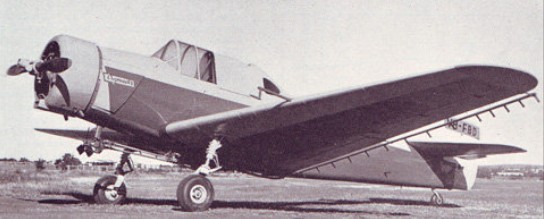
The 1959 Cropmaster was a low-wing monoplane, modified from the CAC Wackett.
Engine: 1 x 170hp Warner Super Scarab
Wing area: 17.6 sq.m / 189.44 sq ft
Cruise speed: 158 km/h / 98 mph
Kingsford Smith Bushmaster

A 1959 modified Auster J5G fitted with a 180hp Lycoming O-360 engine
Kingsford Smith Kingsmith
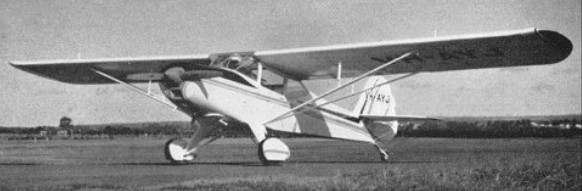
An Auster Autocrat J1 conversion with the 150hp Lycoming O-320 engine
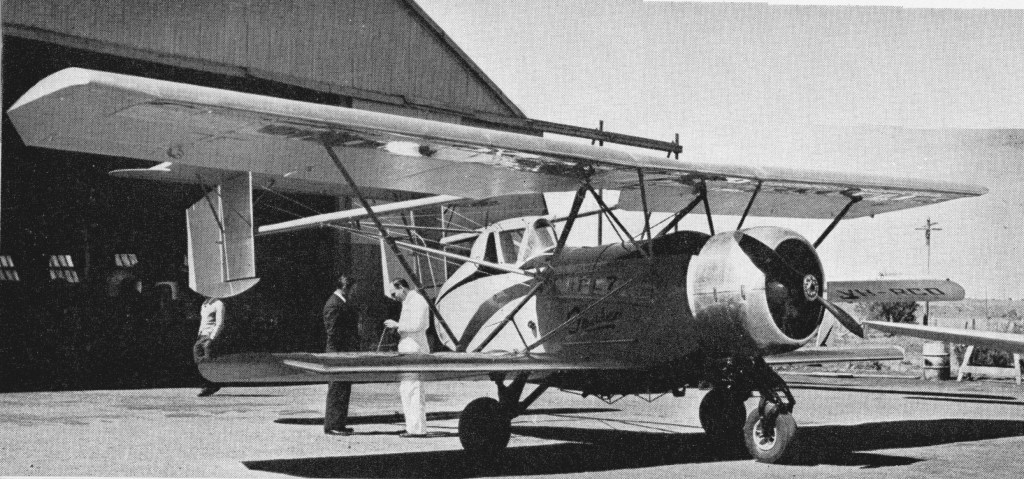
Kingsford Smith PL-7 Tanker / Pellarine PL-7
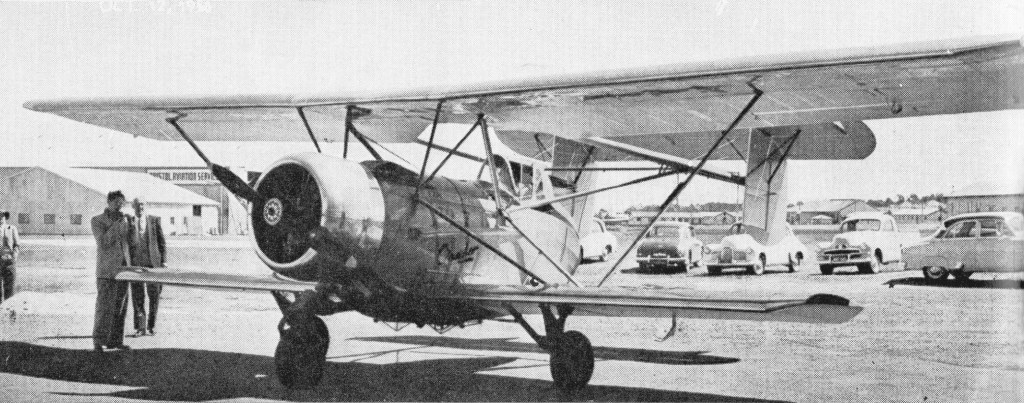
In 1955 Kingsford Smith began design of special agricultural type which materialised as the PL-7 Tanker biplane. Fuselage was mild-steel tank, tail carried on tubular booms, tricycle landing gear. Flew September 1956.
Kingsford Smith Aviation Service Pty Ltd
Australia
Formed in 1946 from Kingsford Smith Air Service. Undertook sales, servicing and overhaul of light and medium aircraft, and in 1955 began design of special agricultural type which materialised as PL-7 Tanker biplane. Fuselage was mild-steel tank, tail carried on tubular booms, tricycle landing gear. Flew September 1956. Later Cropmaster was entirely different low-wing monoplane, and special Auster conversions were offered. To these were added (1959/1960) E.P.9 conversion, details of which were supplied to Lancashire Aircraft. Company sold out in 1963 to Victa Ltd. of Milperra, Sydney.
Kimura HK-1
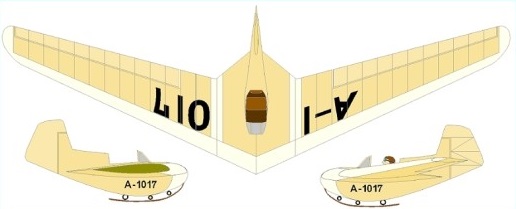
The Kimura HK-1 was a glider designed by Hidemasa Kimura and built by Ito Airplane Works in Japan in 1939 to investigate the possibilities of tailless aircraft. It was a single-seat design with an open cockpit, swept wings, and a single tail fin. The HK-1 made a total of 169 test flights between 15 December 1939 and 7 March 1940, towed aloft behind a car.
By this time, the glider’s success had attracted the attention of the Army, which arranged to purchase the aircraft. It was taken to the Tachikawa factory for testing, but was crashed after only 13 flights, on 16 April 1940. The design proved sufficiently interesting for the Army to commission further research into the tailless concept, which would lead to the Kayaba Ku-2.
Wingspan: 10.00 m (32 ft 10 in)
Length: 3.50 m (11 ft 6 in)
Height: 1.80 m (5 ft 11 in)
Wing area: 14.0 m2 (151 ft2)
Maximum speed: 85 km/h (53 mph)
Crew: One pilot
Kimfly Onyx
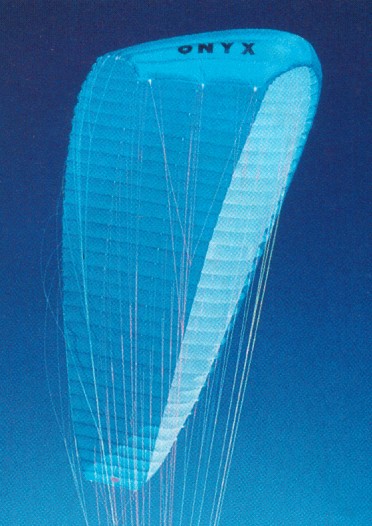
Paraglider circa 1998.
Onyx L
Wing area: 29.4 sq.m
Pilot weight: 70-85 kg
No. of cells: 37
Wing span: 11.55 m
Aspect ratio: 4.5
Min sink: 1.2 m/s
Max speed: 43 kph
Price (1998) 2400 DM
Onyx M
Wing area: 26.7 sq.m
Pilot weight: 55-75 kg
No. of cells: 37
Wing span: 11 m
Aspect ratio: 4.25
Min sink: 1.2 m/s
Max speed: 43 kph
Price (1998) 2400 DM
Onyx XL
Wing area: 31.5 sq.m
Pilot weight: 80-105 kg
No. of cells: 39
Wing span: 12.25 m
Aspect ratio: 4.7
Min speed: 1.2 m/s
Max speed: 43 kph
Price (1998) 2400 DM
Kimfly Lapys

Paraglider new in 1998.
Lapys L
Wing area: 30.4 sq.m
Pilot weight: 75-90 kg
No. of cells: 52
Wing span: 12.5 m
Aspect ratio: 5.1
Price (1998) 3000 DM
Lapys M
Wing area: 30.4 sq.m
Pilot weight: 65-75 kg
No. of cells: 50
Wing span: 11.9 m
Aspect ratio: 4.9
Price (1998) 3000 DM
Lapys XL
Wing area: 32 sq.m
Pilot weight: 85-105 kg
No. of cells: 54
Wing span: 13 m
Aspect ratio: 5.3
Price (1998) 3000 DM

