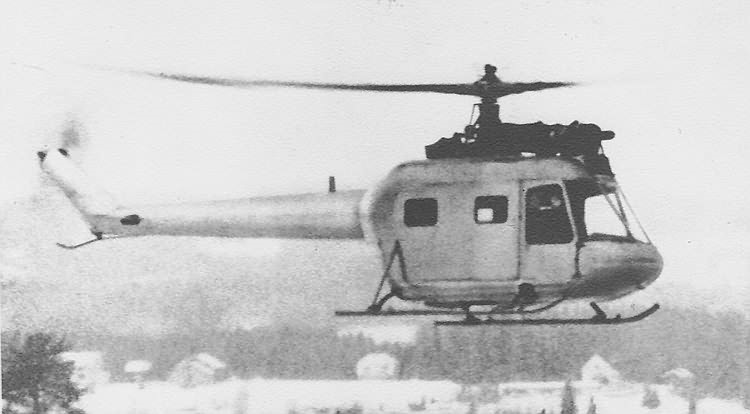
One prototype of the 1960 (some sources say 1962) four-seat Kjeller PK X-2 experimental helicopter was built, powered by a 800 shp GE YT-58 turbine engine and with a 13.00 m rotor diameter.
Built with some H-19 parts, it crashed in February 1965.
One prototype of the 1960 (some sources say 1962) four-seat Kjeller PK X-2 experimental helicopter was built, powered by a 800 shp GE YT-58 turbine engine and with a 13.00 m rotor diameter.
Built with some H-19 parts, it crashed in February 1965.
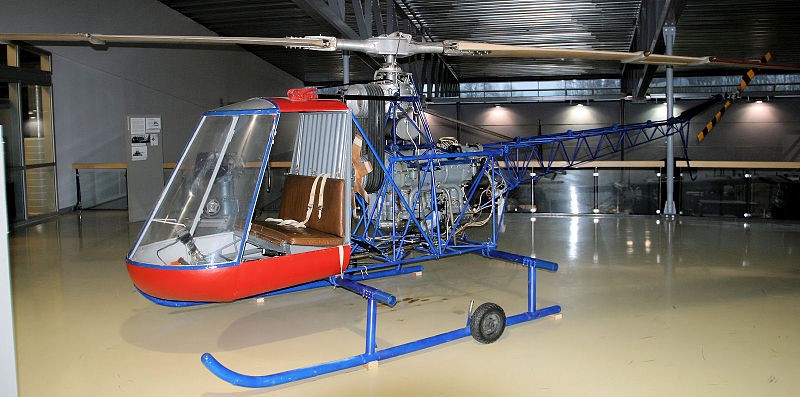
The Kjeller PK X-1 was a two-seater helicopter developed at Kjeller Flyfabrikk under the leadership of engineer Paul Kjølseth. The PK X-1 first flew in 1955, but was considered a purely experimental helicopter and never evaluated in terms of performance.
Further development of PK X-1 was cancelled in 1956 in favour of the development of PK X-2. Aeronautical calculations were made by Erik Tandberg and the powertrain was made by Torbjørn Syverstad.
The PK X-1 was equipped with a 180 hp Franklin 60440-C4 (Some sources say a 200 hp Ranger) and the rotor diameter was 9.26 m.
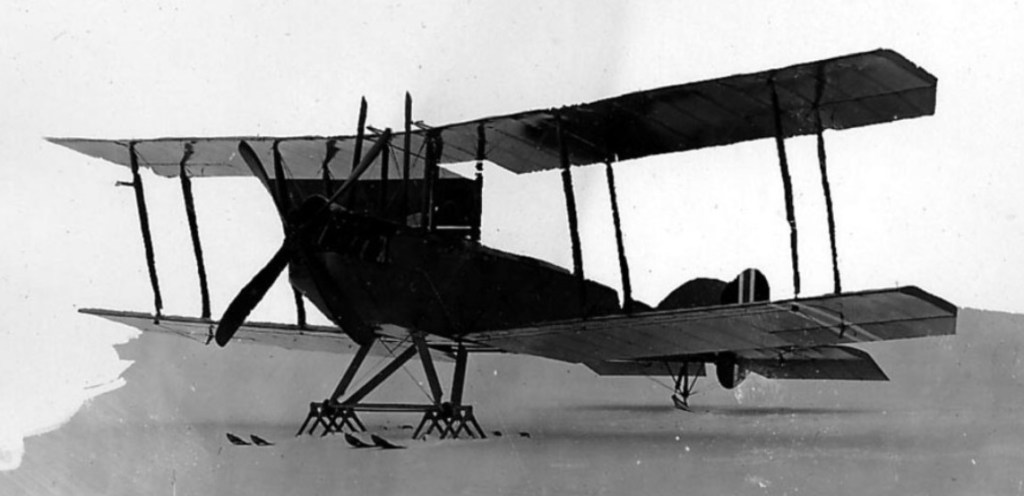
The Kjeller Aircraft Factory FF.5 was a reconnaissance biplane in two variants, The T.1 was based on R.A.F BE.2e, and the second was T.1B, which based on Avro-504.
The FF.5 was intended to replace F.F.1 and F.F.2 trainers in Norway. The one F.F.5/T.1 built, in 1918, was unsuccessful.
NB: T.1B and T.1C were unrelated Avro 504-based designs
The F.F.2 ‘ombygd’ or ‘Norskbygt’ was a 1916 Maurice Farman MF.11 copy based on the F.F.1 airframe.
The machine gun-armed F.F.3 Hydro of 1918 was a float-fitted Farman biplane development (although it is preserved on wheels).
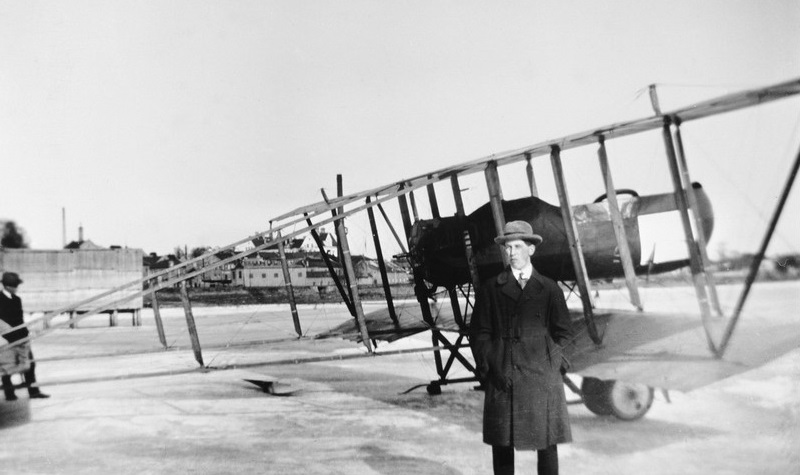
Lillestrømmen Aeroplanværksted (Lillestrøm Airplane Workshop)
Hærens Flyvemaskinfabrik (Army Flying Machine Factory)
This state-owned factory was established in 1914 at Kjeller airfield at Lillestrøm north of Kristiania (Oslo). The original name was Lillestrømmen Aeroplanværksted (Lillestrøm Airplane Workshop), in 1915 it become the Hærens Flyvemaskinfabrik (Army Flying Machine Factory) which had relocated from Sagene in Kristiania.
The name Kjeller Flyfabrikk didn’t appear until Aug 1927.
The Norwegian Army Aircraft Factory, located at Kjeller. Built under license during the 1930s Fokker C.V as the F.F.7 Hauk (Hawk) and de Havilland Gipsy Moth and Tiger Moth. Also did repair and overhaul of military-aircraft equipment, and experimental work.
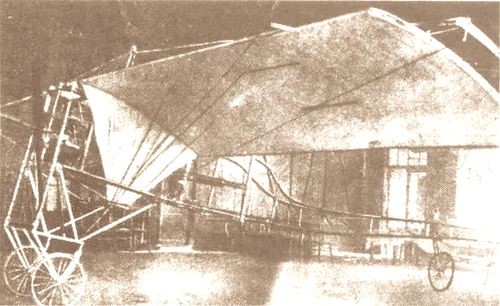
Slovenian aviation pioneer Alphonse Kjuder and Ivan Renčelj were self-taught in the field of aviation. The head and financing of the project was Kjuder, while Renčelj was the main designer and builder. The plane was powered by a five-cylinder Anzani and embodied some unusual solutions – the wing could be moved sideways to achieve lateral control and in case of an accident it could be turned perpendicular to brake the plane. It was exhibited in mid-October 1911 in Ljubljana. It apparently never flew.
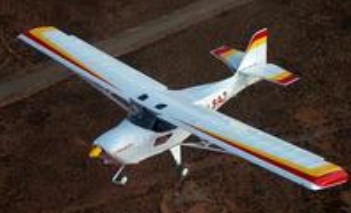
Comes as a taildragger or tricycle.
2009 Price: US$50000
Stall: 34 kt / 39 mph / 63 kmh
Cruise: 85 kt / 98 mph / 157 kmh
VNE: 113 kt / 130 mph / 209 kmh
Empty Weight: 260 kg / 573 lbs
MTOW Weight: 550 kg / 1213 lbs
Climb Ratio: 1000 ft/min / 5 m/s
Take-off distance (50ft obstacle): 390 ft / 120 m
Landing distance (50ft obstacle): 490 ft / 150 m
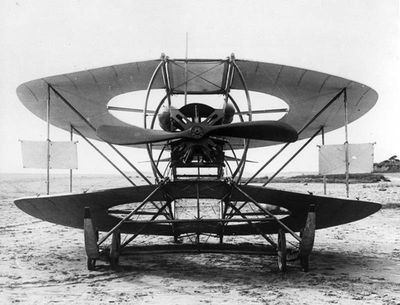
John Kitchen’s annular biplane was built in 1910. It was sold to Cedric Lee, who also had visions of revolutionary annular designs. Together with George Tilghman Richards, he tested the aeroplane at Famine Point near Heysham, Lancashire during 1911 without any success. Finally it was destroyed when it’s hangar was blown down in a gale.
Chas. B Kirkham (1882-1969) was a friend and collaborator of Glenn Curtiss. He made motorcycle engines from about 1900, and in 1910 an aero engine. In 1915 he joined Curtiss in engine work and is chiefly known in connection with the famous D-12. Wanting a fighter worthy of his K-12 engine, with its small frontal area, Kirkham planned a two-seat triplane with excellent streamlining, first flown July 5,1918. To this record-breaker the name Kirkham Fighter, 18-T or Curtiss-Kirkham was applied, though the Curtiss name alone was later used for land and sea versions. U.S. Army had 18-B biplane equivalent, also sometimes called Curtiss-Kirkham. Navy’s two 18-Ts were later adapted for racing. In 1920s Kirkham’s company Kirkham Products designed aircraft to special order.

The 1911 Kiraly-Berkovics monoplane was designed and built by Andor Kiraly, Berkovics was Contributor and/or Pilot, in Hungary.
Span: 39’4″
Weight empty: 573 lbs

