
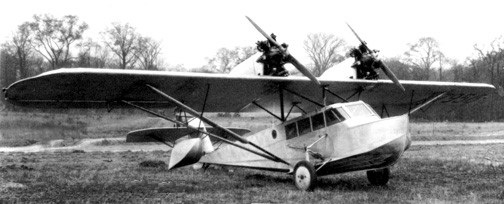
A 1931 eight-passenger high-wing cantilever monoplane amphibian flying-boat, it was powered by two 225hp radial Packard DR-980 diesel engines mounted on muitistrut pylons on the wing upper surface. The TA-3 received certification ATC 2-291.
A 1931 eight-passenger high-wing cantilever monoplane amphibian flying-boat, it was powered by two 225hp radial Packard DR-980 diesel engines mounted on muitistrut pylons on the wing upper surface. The TA-3 received certification ATC 2-291.
Towle TA-2 was built as a successor to the WC model. In 1930 one was built, NX491H, powered by two 240hp Wright Whirlwind J-6 on a faired housing and wing struts were omitted. Only the one was built.
Engines: 2 x Wright Whirlwind J-6, 240hp
Wingspan: 56’0″
Length: 42’0″
Useful load: 2257 lb
Max speed: 120 mph
Cruise speed: 100 mph
Stall: 55 mph
Range: 500 mi
Thomas Towle was an engineer who had been involved with many early aircraft designs. Having just co-designed the Eastman E2 Sea Rover, Towle was commissioned by Henry McCarroll to promote Detroit’s aviation production capabilities.
The 1928 Towle WC was built for businessman H G McCarroll and USN Lt George Pond by a group of Detroit engineers under the direction of Towle. An all-metal wing design (Towle F-2) essentially eliminated ribs and spars with its unique, internal zig-zag pattern of corrugated aluminum as a framework. The covering also was corrugated sheet aluminum. Wings were strut-braced. One WC was built, NX7956.
Priced at $25,000, the WC flying boat was first flown in November 1928. The prototype WC flew as far as Brazil before engine reliability issues forced the cancellation of the round-the-world flight attempt.
The 1930 TA-1 was the first production version of the WC with 150hp Comet engine. The one bult was registered NX5328.
WC
Engines: 2 x Comet, 150hp
Wingspan: 52’0″
Length: 35’0″
Useful load: 11,670 lb
Max speed: 115 mph
Cruise speed: 95 mph Stall: 45 mph
Range: 350 mi
Seats: 6
TA-1
Engines: 2 x Comet, 150hp
Towle Marine Aircraft Engineering Company was an American aircraft manufacturer of light amphibious aircraft.
Founded in 1927 in Detroit, Michigan, the Towle Marine Aircraft Engineering Company, and its successor Towle Aircraft Company (1928-1932) were founded by former Stout Metal Airplane Division of the Ford Motor Company engineer Thomas Towle. Incorporated initially to build a custom round-the world amphibious aircraft, and follow-on aircraft based on the design.
In a 1930 patent, Towle listed the Towle Aircraft Company as part of the Michigan Amphibian Airplane Corporation.
At the height of the depression, financing was difficult. Towle’s TA-3 used diesel engines on load from Packard, and was funded by Dr. Adams, a “painless dentist” of the Detroit region.
1933: Ended operations for other endeavors.
In 1936 Oliver Topliff built the Quail or Model A ultralight N14834. The single-place open (later closed) cockpit monoplane was powered by a 15hp Saxon engine.
Springfield IL.
USA
Light plane builder in 1936.
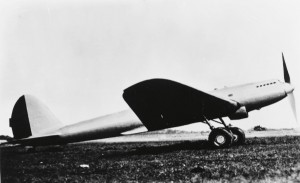
The aviation laboratory of the Tokyo Imperial University immediately became a mecca for Japanese students of aeronautics. Among its foremost achievements was the Kokenki, an experimental long-range monoplane that employed a domestically built airframe and a revamped version of a German engine. The plane flew over the Kanto Plain region, which includes Tokyo and its neighbouring prefectures, for 62 hours non-stop after taking off on May 13, 1938. The flight translated into a cruising distance of 10,651.01 km, a world record at the time and still Japan’s only aviation record certified by the International Aeronautical Federation.
Professor Tanakadate, who started out as a researcher of geomagnetism and earthquakes, became interested in aviation after witnessing the flight of an airship in France in August 1907, while attending a Paris meeting of the General Conference on Weights and Measures. That experience, along with the findings he gleaned from an aerodynamics book he obtained from a British researcher, stimulated his interest in aviation science and set him on course to become one of Japan’s earliest and most important pioneers in the field.
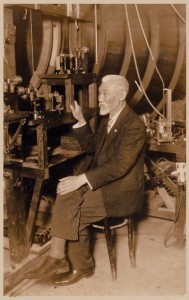
On returning home, Tanakadate built a wind tunnel, the first such device in Japan. His apparatus, created from a nagamochi, a wooden drawer used for storing kimonos, was fed air from one side and had a small glass window in the side through which to observe how a scale-model airplane, hung from the ceiling inside the tunnel, would react to the air flow. He may have used the wind tunnel to test scale models of the first glider to fly in Japan.
Tanakadate frequently emphasized that it was vitally important to fully understand the basics of all related phenomena when it came to aeronautical research. His advocacy for comprehensive learning resulted in the opening in 1918 of Aeronautical Research Institute attached to the University and the commencement of an aeronautical course in the Department of Shipbuilding. This course expanded to become the Department of Aeronautics in 1920.
The Sport Trainer was built by Edgar B Todd in 1933. A two place, open cockpit monoplane, it was registered N12574 c/n 5 and powered by a 65hp Velie engine.
The Light Express was built by Edgar B Todd in 1927 as a three-section parasol monoplane with a Clark-Y airfoil. A single seater, the baggage compartment was convertible into a passenger seat.
Only one was built.
Engine: Curtiss OX-5, 90hp
Wingspan: 40’0″
Length: 22’4″
Useful load: 330 lb
Max speed: 120 mph
Cruise speed: 110 mph
Stall: 55 mph
Range: 700 mi
Seats: 1-2
 All Aero