Allied Aircraft Corp Sport-Trainer

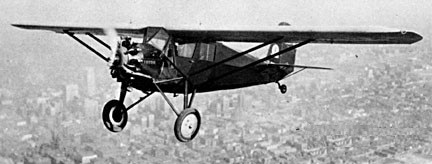
The circa 1939 two-place Allied Sport-Trainer was powered by a 95hp Menasco Pirate B4 engine, and also offered with the 125hp C4 model. Optional “Weathure Closure” canopy and turtleback fairing.

Engine: 95hp Menasco Pirate B4
Wingspan: 32’8″
Length: 22’10”
Useful load: 615 lb
Max speed: 125 mph
Cruise: 107 mph
Stall: 47 mph
Range: 400 mi
Seats: 2
Engine: 95hp Menasco Pirate B4
Wingspan: 32’0″
Length: 23’3″
Useful load: 600 lb
Max speed: 125 mph
Cruise: 107 mph
Stall: 47 mph
Range: 400 mi
Ceiling: 12,000′

Engine: 125hp Menasco Pirate C4
Max speed: 148 mph
Cruise: 125 mph
Stall: 47 mph
Ceiling: 14,000 ft
Fiat CR.41

Retaining the gull-wing upper mainplane centre section or the CR.30, but possessing larger overall dimensions, a heavier armament and a more powerful engine, the CR.41 was first flown on 30 March 1935 with a 730 hp Gnome-Rhone 14Kfs Mistral Major 14-cylinder air cooled radial. Armament comprised two fuselage-mounted 12.7mm and two wing-mounted 7.7mm guns, and various two- and three-blade variable-pith propellers were ested on the sole prototype during a protracted flight test programme, and in the course of which alternative armament installations were evaluated, including one comprising two 20 mm cannon and another consisting of four 12.7mm machine guns.

Further development was discontinued in favour of the CR.42

Engine: 730 hp Gnome-Rhone 14Kfs Mistral Major
Max speed: 252 mph / 405 kph
Endurance: 1 hr 45 min
Empty weight: 2888 lb / 1310 kg
Loaded weight: 4156 lb / 1885 kg
Wingspan: 31 ft 8 in / 9.65 m
Length: 24 ft 4 in / 7.42 m
Height: 8 ft 8 in / 2.64 m
Wing area: 243.59 sq.ft / 22.63 sq.m

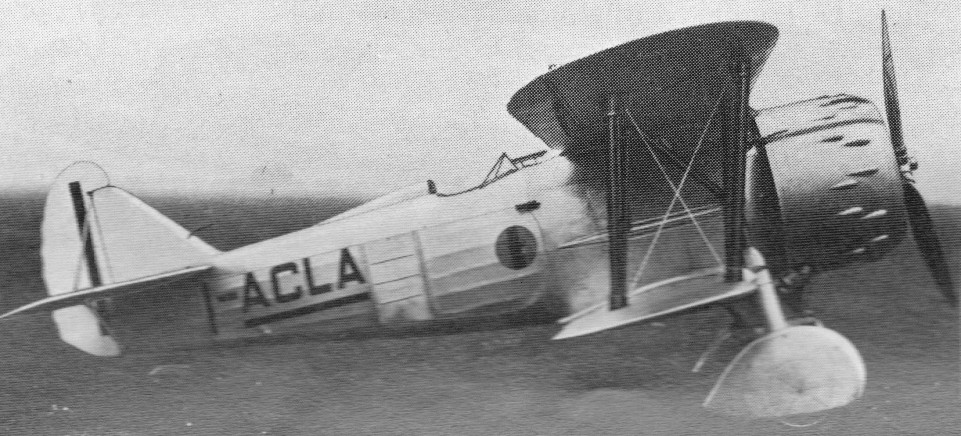
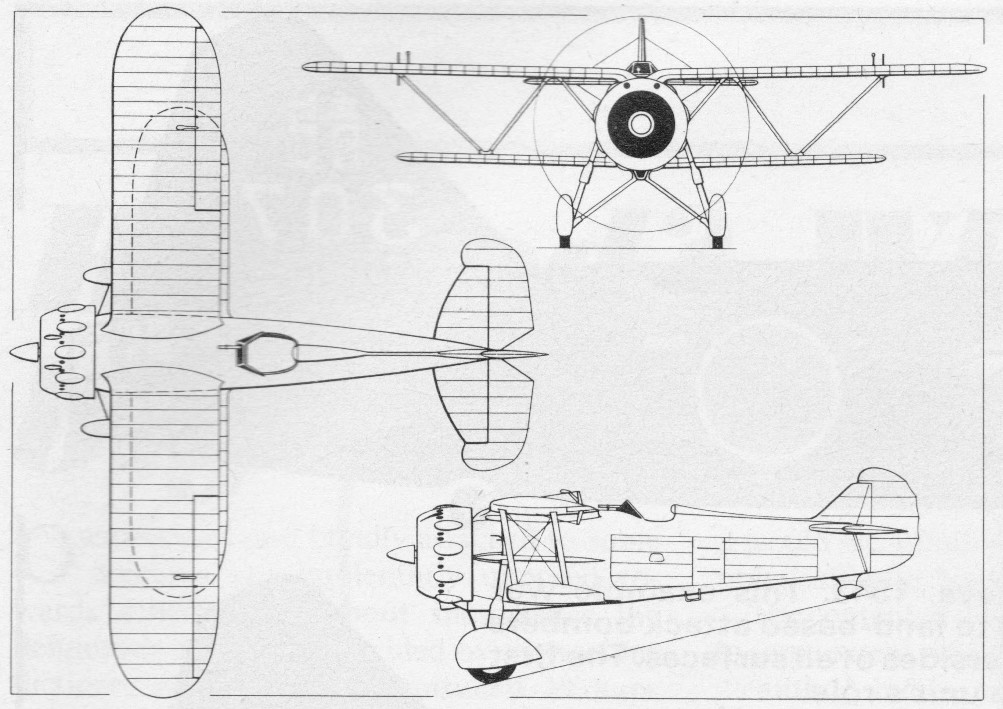
Fiat CR.40

Evolved in parallel with the CR.33 but completed and flown earlier owing to engine availability, the CR.40 was powered by a radial air-cooled engine, unlike the preceding Fiat fighters.

The prototype CR.40 was flown in March 1934 with a 550 hp Alfa Romeo-built Bristol Mercury I engine. Provision was made for two synchronised 12.7mm machine guns and the structure was of steel and light alloy with fabric skinning.

The CR.40 attained a maximum speed of 234 mph / 377 kph and reached an altitude of 9840 ft / 3000 m in 6.83 minutes, but climbing qualities and stability proved inferior to those of the CR.32.

A second prototype, the CR.40bis, also tested in 1934, differed only in having a Fiat A 59 R (a licence-built P&W Hornet) engine rated at 690 hp at 6560 ft / 2000 m and driving a flight-variable two-pitch propeller.

The CR.40 indirectly led to the production CR.42.

CR.40bis
Engine: Fiat A 59 R, 690 hp
Wingspan: 30 ft 6 in / 9.30 m
Length: 22 ft 10 in / 6.96 m
Height: 8 ft 6 in / 2.60 m
Wing area: 224.97 sq.ft / 20.90 sq.m
Empty weight: 2645 lb / 1200 kg
Loaded weight: 3748 lb / 1700 kg
Max speed: 241 mph / 388 kph at 6560 ft / 2000 m
Endurance: 1.83 hr

Fiat CR.33

A derivative of the CR.32 designed to take the 690 hp A 33 RC 35 supercharged engine, the CR.33 differed little externally from its predecessor but had marginally larger overall dimensions and was fitted with a ground-adjustable three-blade propeller. Armament comprised two fuselage-mounted 12.7mm guns and two wing-mounted 7.7mm weapons, and an internal bay could accommodate either 12 x 4.4 lb / 3 kg anti-personnel bombs or camera equipment. Although the Fiat A 33 RC 35 engine was completed in 1935, difficulties with this engine delayed prototype trials of the CR.33 until 1937, by which time the air-cooled radial engines were officially favoured for fighter installation, and the development programme was restricted to three prototypes.

Engine: 690 hp A 33 RC 35
Span: 32 ft 2 in / 9.80 m
Length: 24 ft 9.5 in / 7.56 m
Height: 8 ft 6 in / 2.60 m
Wing area: 241.11 sq.ft / 22.40 sq.m
Empty weight: 2998 lb / 1360 kg
Loaded weight: 4211 lb / 1910 kg
Max speed: 262 mph / 422 kph
Max range: 435 mi / 700 km