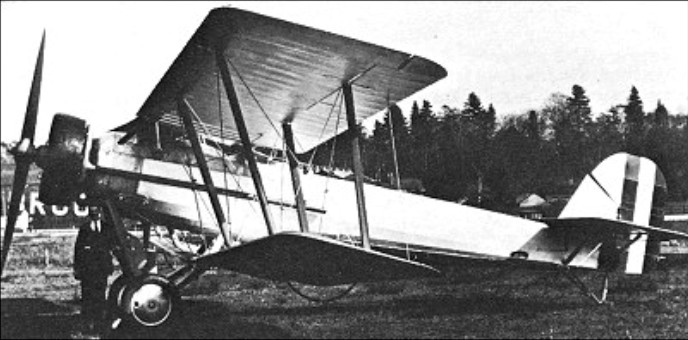
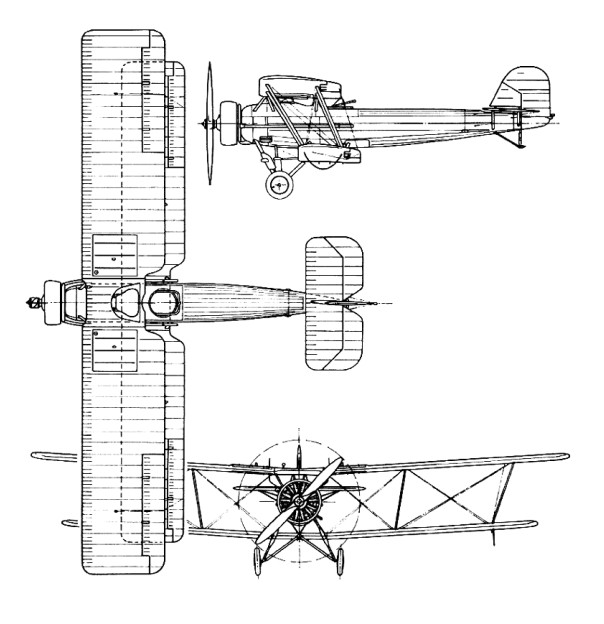
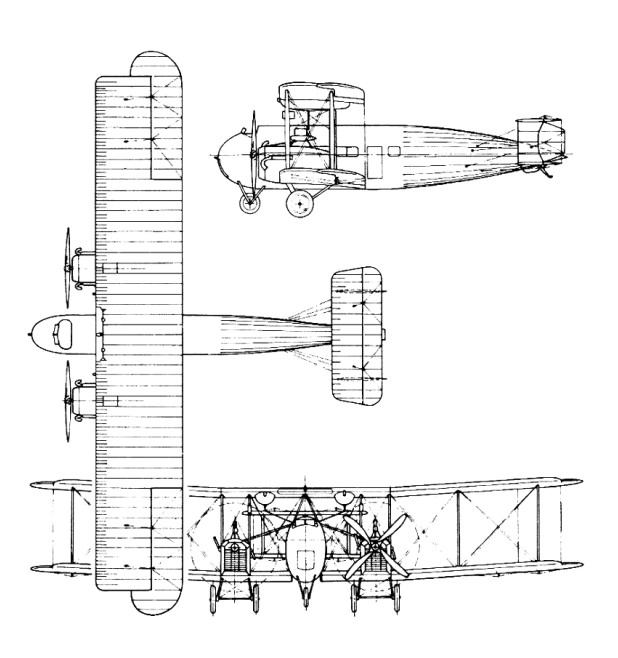
Vickers 113 Vespa

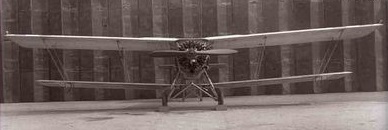
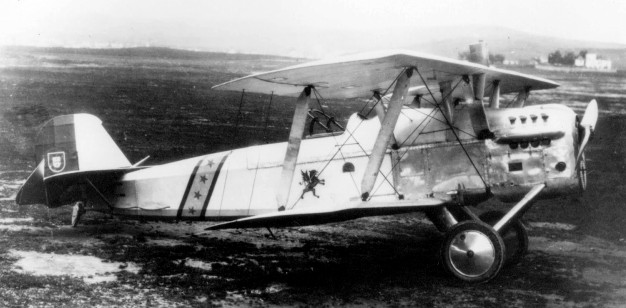
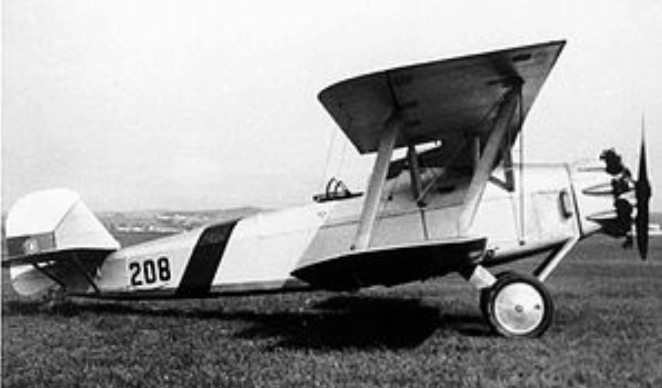
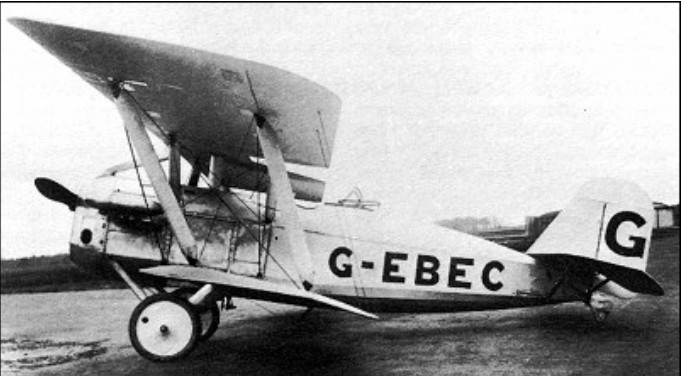
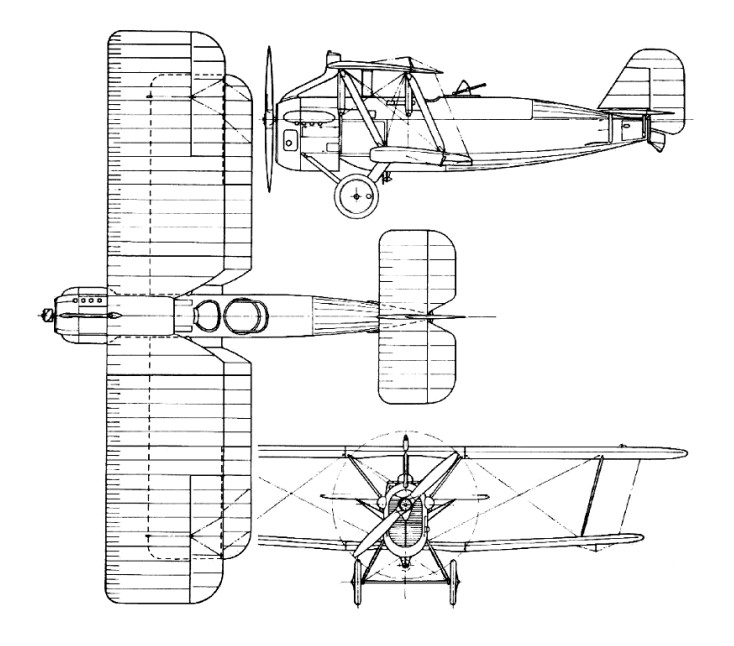
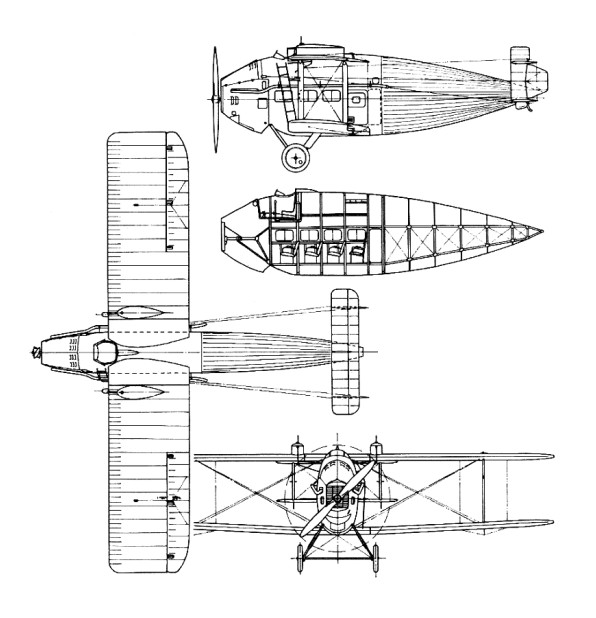
The Vickers Type 113 Vespa Mk I first flown in September 1925 was built as a private venture to the requirements of Air Ministry Specification 30/24 for an army cooperation aircraft. An unequal-span well-staggered biplane with tandem open cockpits, it was powered as first flown by a Bristol Jupiter IV radial; the Vespa was underpowered with this engine, which was then replaced by a 339kW Jupiter VI. After being damaged in an accident during June 1926 it was rebuilt with wings of metal basic structure and redesignated Type 119 Vespa Mk II but, although tested successfully, it was not ordered for the RAF. However, six Type 149 Vespa Mk III aircraft with a number of airframe refinements were supplied to Bolivia during 1929, in which year four aircraft with 365kW Armstrong Siddeley Jaguar VIC engines were ordered for the Irish Army Air Corps and designated Type 193 Vespa Mk IV, four more aircraft with some improvements subsequently being built for Ireland as the Type 208 Vespa Mk V.

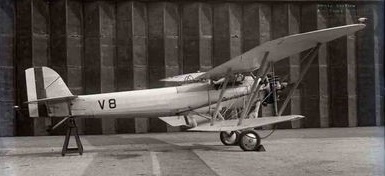
Vickers Type 208 Vespa V, serial V8, delivered to Baldonnel 5 April 1931 and written-off 12 June 1940.

During 1930 the Vespa Mk II was modified to a standard similar to the Irish Vespa Mk IVs and, powered by a 395kW Bristol Jupiter VIIF engine, became designated Type 210 Vespa Mk VI. It was used for demonstrations in China, but on return to the UK was modified yet again, and with a Bristol Pegasus ‘S’ supercharged engine installed was redesignated Type 250 Vespa Mk VII, being used on 16 September 1932 to establish a new world altitude record of 13404m. Following that it was acquired by the Air Ministry and used by the RAE for high-altitude research.

Vickers Type 208 Vespa V, serial V8, delivered to Baldonnel 5 April 1931 and written-off 12 June 1940.

Gallery

Engine: 1 x 400hp Bristol Jupiter IV
Empty weight: 1120 kg / 2469 lb
Wingspan: 15.24 m /50 ft 0 in
Length: 9.53 m / 31 ft 3 in
Height: 3.12 m / 10 ft 3 in
Wing area: 52.12 sq.m / 561.01 sq ft
Max. speed: 203 km/h / 126 mph
Ceiling: 6187 m / 20300 ft
Crew: 2
Armament: 2 x 7.7mm machine-guns

Vickers Vespa

Vickers Type 93 Valparaiso I / Type 92 Valparaiso II / Type 168 Valparaiso III

Valparaiso I

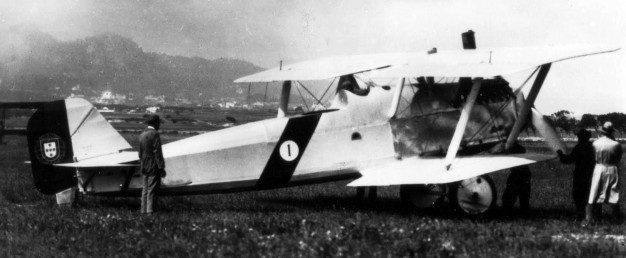
The Vickers Valparaiso was a British light bomber biplane of the 1920s. It was designed by Vickers as a development of its Vixen for export. It was renamed Valparaiso to distinguish it from the Vixen, which as it used classified government equipment, was unavailable for export. Two versions were available, one powered by the same Napier Lion as the Vixen, known as the Type 93 Valparaiso I, while the Type 92 Valparaiso II was powered by the Rolls-Royce Eagle engine. Other than their engines, the Valparaisos were very similar to the Vixen I, both being single-bay biplanes with wooden wings and steel tube fuselages. Both versions were purchased by Portugal, who ordered 10 Valparaiso Is and four Valparaiso IIs, with the Lion-powered aircraft to serve as reconnaissance bombers and the lower powered Valpariso IIs to serve as advanced trainers. In 1928, Portugal decided to license produce a modified Valparaiso powered by a Gnome et Rhône Jupiter radial engine, and a single Valparaiso was modified by Vickers to use the Jupiter, followed by the production of 13 aircraft, designated Type 168 Valparaiso III by OGMA (Oficinas Gerais de Material Aeronáutico).

Valparaiso II

The Portuguese aircraft proved to be successful in service, with two carrying out a long distance tour from Portugal to its African colonies of Angola and Mozambique and back in 1928, with the success of the aircraft resulting in the decision to license produce the Valparaiso III. The radial-powered Valparaisos also proved successful in Portuguese service, remaining operational until 1943, finally being replaced by Westland Lysanders.

A single Valparaiso I (actually the prototype), was sold by Vickers to Chile in 1924. It was successful in Chilean service, resulting in an order for a further 18 modified aircraft, which reverted to the original name of Vixen, as the Vixen V.

Valparaiso III

Variants:

Type 93 Valparaiso I
Napier Lion-powered export version of Vickers Vixen. 11 built.

Type 92 Valparaiso II
Rolls-Royce Eagle-powered version. Four built.

Type 168 Valparaiso III
Version powered by Jupiter radial for Portugal. 13 licensed built by OGMA.

Operators:
Chilean Air Force
Aeronáutica Militar (Portuguese Army Aviation)

Valparaiso I
Engine: 1 × Napier Lion IA 12-cylinder water-cooled W-block, 468 hp (349 kW)
Length: 29 ft 0 in (8.84 m)
Wingspan: 40 ft 0 in (12.20 m)
Height: 11 ft 8 in (3.56 m)
Wing area: 526 sq.ft (48.9 sq.m)
Empty weight: 3,128 lb (1,422 kg)
Loaded weight: 4,720 lb (2,145 kg)
Maximum speed: 118 kn (136 mph, 219 km/h) at 10,000 ft (3,050 m)
Cruise speed: 96 kn (110 mph, 177 km/h)
Range: 478 nmi (550 mi, 886 km)
Service ceiling: 19,500 ft (5,950 m)
Rate of climb: 951 ft/min [8] (4.8 m/s)
Wing loading: 8.97 lb/sq.ft (43.9 kg/sq.m)
Power/mass: 0.099 hp/lb (0.16 kW/kg)
Climb to 10,000 ft (3,050 m): 10 min 15 sec
Armament:
2 × forward-firing .303 in (7.7 mm) Vickers machine gun
1 × .303 in (7.7 mm) Lewis Gun in observers cockpit
Crew: Two

Vickers 71 Vixen

A single Valparaiso I (actually the prototype), was sold by Vickers to Chile in 1924. It was successful in Chilean service, resulting in an order for a further 18 modified aircraft, which reverted to the original name of Vixen, as the Vixen V.

71 Vixen I
Engine: 1 x 450hp Napier Lion I
Max take-off weight: 2143 kg / 4725 lb
Empty weight: 1406 kg / 3100 lb
Wingspan: 12.19 m / 40 ft 0 in
Length: 8.84 m / 29 ft 0 in
Height: 3.96 m / 13 ft 0 in
Wing area: 48.87 sq.m / 526.03 sq ft
Max. speed: 221 km/h / 137 mph
Ceiling: 5913 m / 19400 ft
Crew: 2
Armament: 2-3 x 7.7mm machine-guns
Bombload: 227kg

Type 71 Vixen I

Vickers 78 Vultue I / 95 Vulture

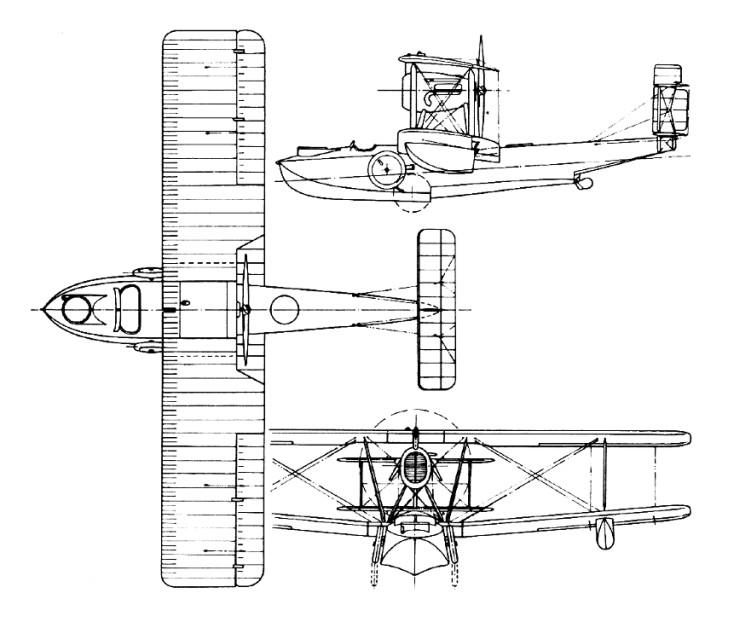
During 1918 Vickers designed a light amphibian with biplane wings and tail unit, its Consuta plywood hull being built by the company’s S. E. Saunders subsidiary and incorporating an enclosed cabin seating four passengers. Its powerplant, a 205kW Rolls-Royce Falcon, was strut-mounted below the upper wing to drive a pusher propeller. Designated Vickers Viking, it was flown for the first time in late 1919. It was in a forced landing with this aircraft, on 18 December 1919, that the company’s famous chief pilot, Sir John Alcock, was killed.

From this Viking I was developed a series of aircraft with progressive improvements, especially to the hull (some of which had open cockpits), and differing powerplant. They comprised the one-off Viking II (268kW Rolls-Royce Eagle VIII) and Viking III (336kW Napier Lion), followed by the production Type 54 Viking IV. Of the 26 that were sold, examples in several type numbers went to the armed services of Argentina, Canada, France, Japan and the Netherlands, and for civil use in Argentina, Canada, the Soviet Union and the USA. Ironically, Sir Ross Smith, knighted like Sir John Alcock for a Vickers Vimy pioneering flight, was killed in an accident with a Viking IV on 13 April 1922. The final version was the Viking V with Napier Lion engine, two built for service with the RAF in Iraq.

The aircraft that was to have been the Viking VI, with redesigned wing structure and single 450 HP Napier Lion engine with a four blade pusher propellor, was designated Type 78 Vulture I; a second example with a 268kW Rolls-Royce Eagle IX had the designation Type 95 Vulture II but was later re-engined with a Napier Lion. These two aircraft were used during 1924 in an unsuccessful round-the-world flight attempt.

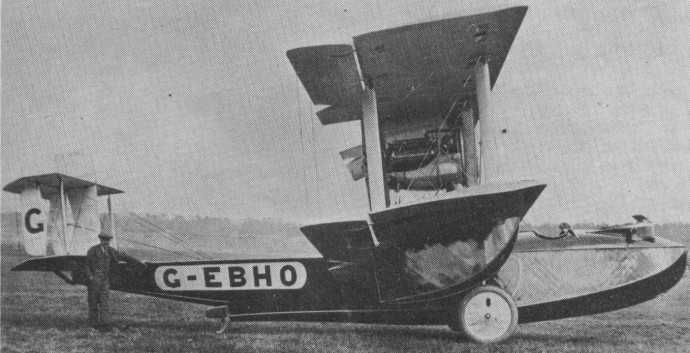
The Vickers Type 95 Vulture, G EBHO, was registered to Vickers Ltd on August 9, 1923. It was a three seat amphibian powered by a single 450 hp Napier Lion and was one of two designed by R. K. Pierson for Sqn Ldr A. C. S. MacLaren’s round the world flight. This attempt began at Calshot on March 25, 1924, and ended with a take off crash at Akyab, Burma.

On May 24 the other aircraft, G EBGO, was shipped to Akyab from Tokyo, where it had been positioned earlier, to continue the flight. This also ended prematurely with a forced landing in heavy seas near the Aleutian Islands on August 2, 1924.

Last of the Viking series, at first designated Viking VII but later named Type 83 Vanellus, was a single aircraft for evaluation by the RAF as a three-seat (pilot, observer/gunner and gunner) open-cockpit fleet-spotter; it differed primarily from its predecessors by having a monoplane tail unit. The 15.24m span Viking IV with Napier Lion powerplant had a maximum speed of 182km/h at sea level.

Vickers Vulture

Vickers 72 Vanguard / 103 Vanguard / 170 Vanguard

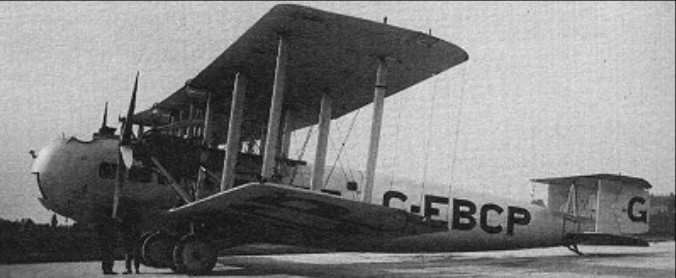
A one-off civil variant designated Type 72 Vanguard, accommodating 23 passengers and powered by two Napier Lion engines (later 485kW Rolls-Royce Condor III engines as the Type 103 Vanguard) entered service with Imperial Airways in May 1928. It was destroyed in an accident in late 1928 when being tested after modification of the tail unit as the Type 170 Vanguard.

Type 103 Vanguard
Engines: 2 x Rolls-Royce Condor III, 485 kW
Passengers: 23

Vickers Vanguard

Vickers 61 / 63 / 74 Vulcan

In early 1921 design was initiated of the Vickers Vulcan transport, a biplane of 14.94m span with a deep oval-section fuselage completely filling the space between the equal-span wings. It accommodated the pilot in an open cockpit forward of the upper wing, with below and behind him a roomy enclosed cabin for six to eight passengers. To limit selling price to the minimum, the low-cost war-surplus 268kW Rolls-Royce Eagle VIII engine was installed in the first six aircraft (Type 61) to be completed, but as a number of performance problems were encountered the last two examples (Type 74) had the 336kW Napier Lion. One of the early production aircraft was completed as a cargo carrier (Type 63) for Air Ministry evaluation, but was subsequently reconverted as a passenger carrier and used with one other Eagle-powered and the two Napier Lion-powered aircraft by Imperial Airways on European service. Their very limited reliability meant the Vulcan had a short useful life, only one or two surviving in service beyond the mid-1920s.

Type 74
Engine: 1 x Napier Lion, 336kW
Max take-off weight: 3062 kg / 6751 lb
Wingspan: 14.94 m / 49 ft 0 in
Max. speed: 180 km/h / 112 mph
Passengers: 6-8

Vickers 61 Vulcan

Vickers 57 Virginia I / 115 Virginia VIII

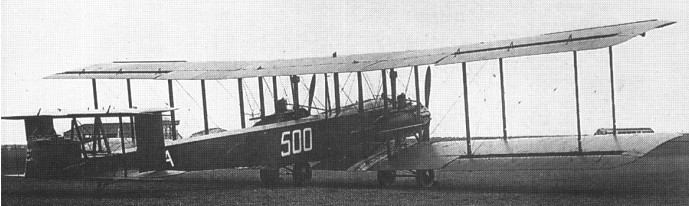
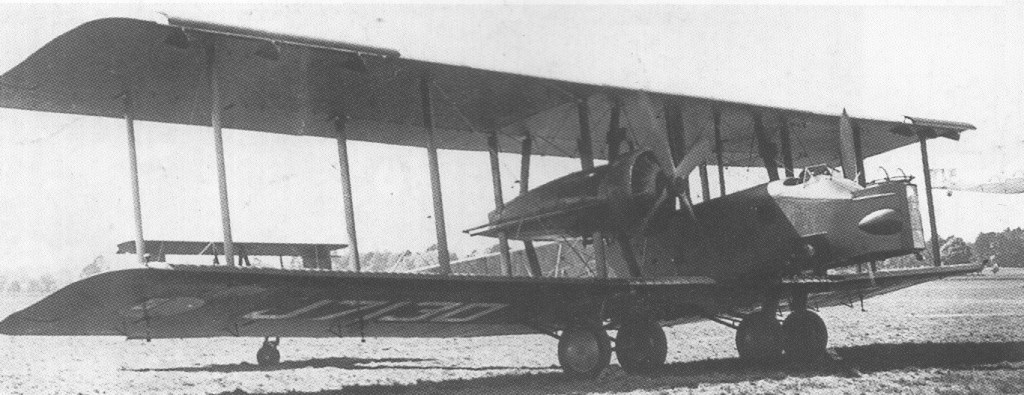
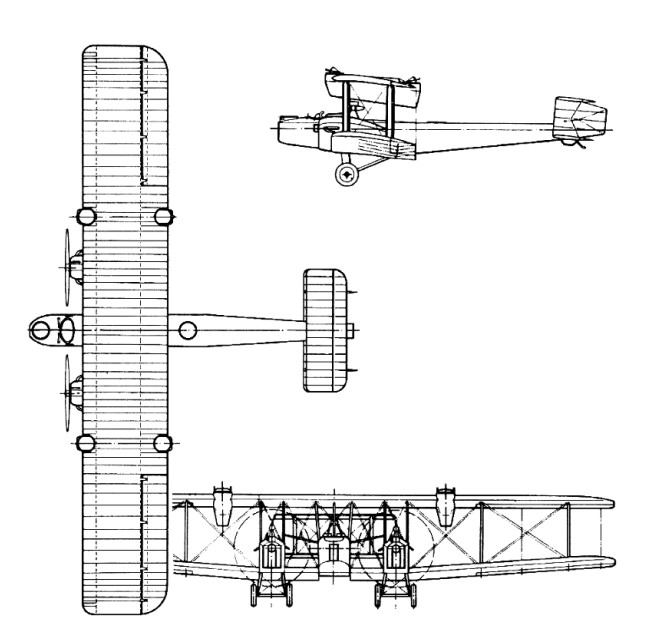
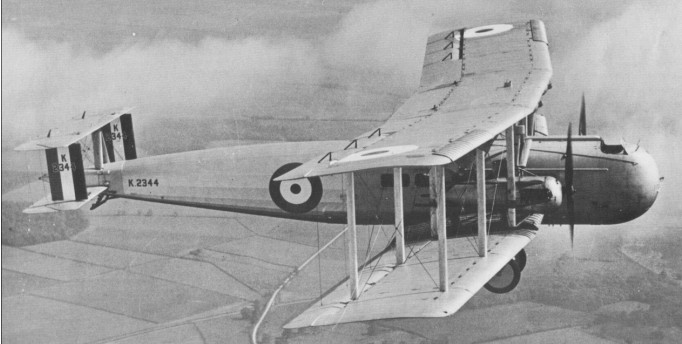
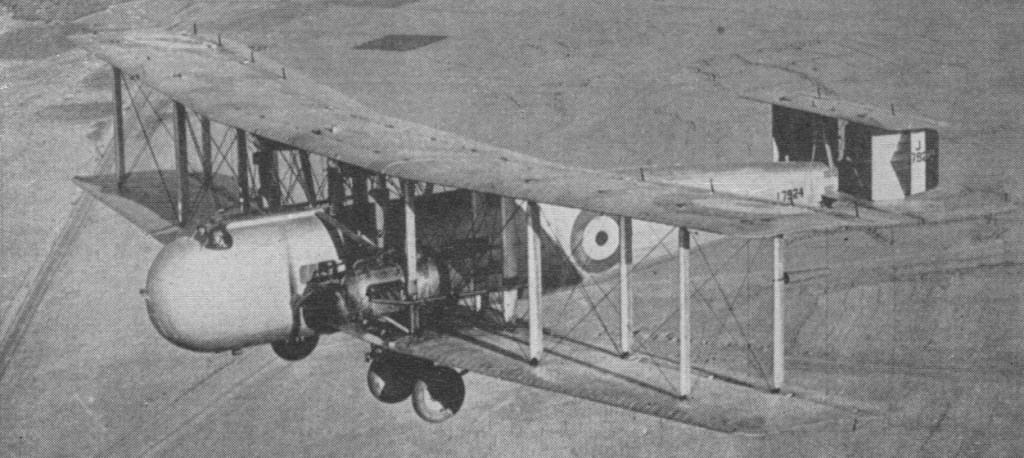
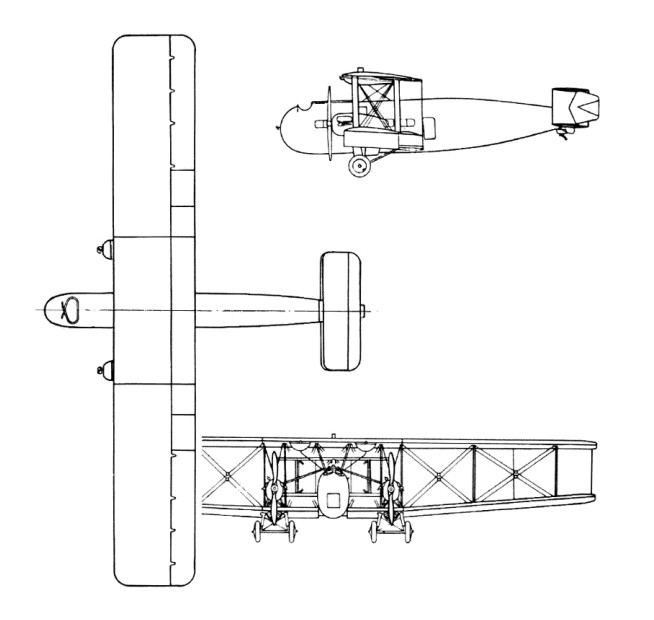
Designed to meet the requirements of Air Ministry Specification 1/21, two aircraft were ordered initially, designated Virginia I and Virginia II. The former was the first to fly (on 24 November 1922), powered by two 335kW Napier Lion engines. It was basically an enlarged version of the Vickers Vimy, but had its Napier Lion engines mounted on the lower wings and enclosed in rectangular nacelles. Construction was mainly of wood and fabric with a fairly extensive amount of wire bracing. The second Virginia differed by having close-fitting engine cowlings; a Lamblin cooling radiator mounted between the landing-gear legs; a lengthened nose to provide more room for the bomb-aimer and, for the same reason, a slight decrease in intended bomb load; and a variable-incidence tailplane which could be adjusted in flight.

The Virginia prototype first flew on 24 November 1922 but initially both the Virginias were unstable in flight, leading to modifications which included dihedral on both wings instead of on the lower wing only, introduction of larger rudders, an additional fin, and re-siting of the engines further forward.

The first production contract was for two Virginia Mk.III aircraft, generally similar to the Virginia II but provided with dual controls and changes in armament. Like the earlier prototypes, these were subsequently modified to later standards. Four additional aircraft were ordered in 1923. Power plant comprised two 349kW Napier Lion Series II engines. Again, these aircraft were later updated, being fitted with metal wings, and ended their lives as Mk.Xs.

The type began to enter service as the Virginia Mk III, replacing the Vimy bombers of Nos 7 and 58 Squadrons, the first of eight regular and two auxiliary squadrons to operate the type.

The two Virginia Mk.IVs differed in electrical equipment and bomb load. First major production version (22 built) was the Mk.V, which had a third rudder, first test-flown on a Mk.IV aircraft; otherwise these aircraft were generally similar to the Mk.III. They were modified subsequently to later marks. The Mks III to VI had dihedral on the lower wings and unswept outer wings. Interestingly, Vimys were still being delivered at this time.

The Virginia Mk.VI (25 built) was the first production version to include dihedral on both upper and lower wings as standard; design of the wing-folding mechanism was improved. It was followed by 11 Mk.VIIs, which introduced still further changes to improve stability – including introduction of Frise ailerons and sweepback on both wings. These represented such an improvement in flight characteristics that many earlier aircraft were modified subsequently to this Mk.VII standard.

To provide adequate defence for these large and comparatively slow bombers there had been a number of experiments to locate gunners in ‘fighting tops’ – nacelles attached to the trailing edge of the upper wing. Apart from the aerodynamic problems, the gunners suffered from the cold and it was decided to introduce instead a gunner’s position at the tail-end of the fuselage. This involved not only modification of the rear fuselage but increased tailplane span and a leng-thened nose to maintain good stability. These aircraft (eight built) became designated Mk.IX and some earlier aircraft were converted subsequently to this standard. Final version was the Mk.X, which introduced a metal structure with fabric covering and introduced leading-edge slats and a tailwheel in place of the, original skid (50 built). A large number of earlier aircraft were converted to include the more powerful engines, hydraulic wheel brakes, landing lights, and auto pilot which distinguished this, the last of the series.

Total production of the Virginia series was 124, the type finally replaced as a bomber by the Heyford and Whitley in 1937, surviving aircraft being relegated to parachute training for four more years.

Virginia Mk X
Type: four-seat heavy night bomber
Powerplant: 2 x Napier Lion V, 425kW (570 hp)
Span: 26.72m (87ft 8in)
Length: 18.97m (62ft 2.75 in)
Height: 5.54 m / 18 ft 2 in
Wing area: 202.34 sq.m / 2177.97 sq ft
Armament: 3 x 7.7-mm (0.303-in) machine-guns
Bombload: 1452 kg (3,200 lb) internal
Empty weight: 4377 kg / 9650 lb
Max T/O weight: 7983 kg (17,600 lb)
Max speed: 174 km/h / 108 mph at 4,920ft
Operational range: 985 miles / 1585 km
Ceiling: 4725 m / 15500 ft

Vickers Virginia

Vickers Victoria

The Victoria 22-troop transport was built between the Vernon and Valentia. Production for the RAF totalled 94 aircraft. Entering service in 1926, it was powered by two 425kW Napier Lion engines. A commercial counterpart, the Vanguard, was less successful.

The Victoria is best remembered for its role during the Kabul airlift, when people and baggage were transported out of Kabul during tribal disturbances.

Gallery

Mk.VI
Engines: Pegasus
Maximum level speed: 177km/h

Vickers Victoria

Vickers Vernon

Vernon I

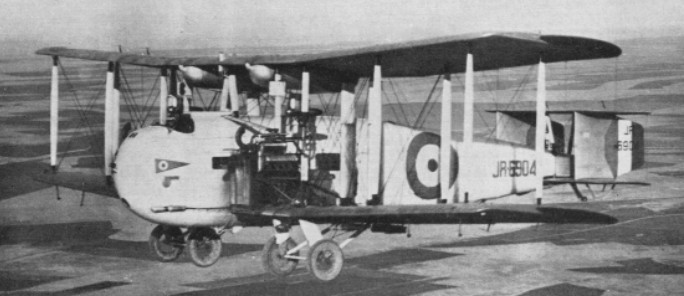
The Vernon was a development of the Vimy/ Vimy Commercial, having much the same wing plan, and being powered by the same type of engine the 375 h.p. Rolls Royee Eagle VIII. First flying in 1921, instead of a bomber style of fuselage, with gun rings fore and aft, the Vernon carried no defensive armament, and had a spacious hull designed to carry troops and stores. It was, however, fitted with bomb racks and could be used as a bomber.
The Vernon served from 1922 26 with Nos 45 and 70 Squadrons of the RAF in India, Cyprus and Iraq. Apart from its role in the evacuation of sick British troops from Iraq in 1922, the Vernon was the chief transport aircraft used on the celebrated Cairo Baghdad air mail service in the mid 1920s. In 1923, when Squadron Leader A. T. Harris commanded the Squadron, he cut away a hole in the nose and fitted a high altitude drift bomb sight. This, with a bomb aimer using the prone position, made the Vernon a very fine bomber indeed, capable of far greater accuracy than any other contemporary aircraft.
The maker’s figure for the maximum all up weight of the Vernon was 12,000 lb, but this had been increased by Middle East Headquarters to 12,500 lb. In order to give them sufficient range to make the desert crossing safely from Ziza to Ramadi, a cylindrical tank holding 150 gallons temporarily fitted inside the hull.

Vernon Mk I aircraft (20 built) differed little from the Vimy Commercial, but the Vernon Mk II (25) introduced 336kW Napier Lion II engines and the Vernon Mk III (10) had Lion III engines, increased fuel tankage and oleo-pneumatic landing gear. The Vernon was superseded by the Victoria from 1927.

Engines: 2 x 375 hp Rolls Royce Eagle VIII (later 450 hp Napier Lion II)
Wing span: 68 ft 1 in (20.75 m)
Length: 42 ft 8 in (13.00 m)
Gross weight: 12544 lb (5,690 kg)
Max speed: 118 mph (190 km/h) at S/ L with Lion engines
Accommodation: Crew of 3 plus 11 passengers
Typical range: 320 miles (515 km) at 80 mph (128 km/h)

Vickers Vernon

Vickers (Aviation) Ltd / Vickers-Armstrong

Vickers was formed in Sheffield as a steel foundry by the miller Edward Vickers and his father-in-law George Naylor in 1828. Naylor was a partner in the foundry Naylor & Sanderson and Vickers’ brother William owned a steel rolling operation. Edward’s investments in the railway industry allowed him to gain control of the company, based at Millsands and known as Naylor Vickers and Company. It began life making steel castings and quickly became famous for casting church bells. In 1854 Vickers’ sons Thomas (a militia officer known familiarly as ‘Colonel Tom’) and Albert joined the business and their talents – Tom Vickers as a metallurgist and Albert as a team-builder and salesman – were key to its subsequent rapid development. “Its great architects,” the historian Clive Trebilcock writes, “Colonel T.E. (1833-1915) and Albert (1838-1919) Vickers… provided both inspired technical leadership… and equally astute commercial direction. Both men were autocrats by temperament, but neither shunned advice or avoided delegation; each, but particularly Albert, had a marked gift for the selection of talented subordinates.”

Vickers (Aviation) Ltd / Vickers-Armstrong Article

In 1863 the company moved to a new site in Sheffield on the River Don in Brightside.

The company went public in 1867 as Vickers, Sons & Company and gradually acquired more businesses, branching out into various sectors. In 1868 Vickers began to manufacture marine shafts, in 1872 they began casting marine propellers and in 1882 they set up a forging press. Vickers produced their first armour plate in 1888 and their first artillery piece in 1890.

Vickers bought out the Barrow-in-Furness shipbuilder The Barrow Shipbuilding Company in 1897, acquiring its subsidiary the Maxim Nordenfelt Guns and Ammunition Company. at the same time, to become Vickers, Sons & Maxim.

Ordnance and ammunition made during this period, including World War I, was stamped V.S.M.

The yard at Barrow became the “Naval Construction Yard”. With these acquisitions, Vickers could now produce a complete selection of products, from ships and marine fittings to armour plate and a whole suite of ordnance. In 1901 the Royal Navy’s first submarine, Holland 1, was launched at the Naval Construction Yard. In 1902 Vickers took a half share in the famous Clyde shipyard John Brown and Company.

Further diversification occurred in 1901 with the acquisition of a proposed business which was incorporated as The Wolseley Tool and Motor Car Company and in 1905 the goodwill and patent rights of the Siddeley car. In 1911 a controlling interest was acquired in Whitehead and Company, the torpedo manufacturers.

Vickers Airships Article

In 1911 the company name was changed to Vickers Ltd and expanded its operations into aircraft manufacture by the formation of Vickers Ltd (Aviation Department) on March 28, 1911, under Capt. H. F. Wood, and a Vickers School of Flying was opened at Brooklands, Surrey on 20 January 1912. Production rights for Esnault-Pelterie REP tractor monoplane obtained in 1911; several variants built before First World War.

In 1912 Vickers produced Type 18 Destroyer for Admiralty; pusher-engined gun-carrying fighter from which evolved, via successive E.F.B. (Experimental Fighting Biplane) prototypes, the F.B.5 and F.B.9 “Gunbus” fighters of First World War. Later front-gunned tractor-engined F.19 was less successful. During war also built RAF B.E.2 series, B.E.8, F.E.8, and S.E.5a and Sopwith 1 1/2-Strutters under license. Vickers Vimy of 1917 remained standard RAF bomber throughout 1920s: one used by Alcock and Brown for first non-stop Atlantic crossing by airplane on June 14/15 1919. Vimy Commercial was 11 -passenger airliner with enlarged fuselage; Vernon troop transport developed from this.

In 1919, the British Westinghouse electrical company was taken over as the Metropolitan Vickers Electrical Company; Metrovick. At the same time they came into Metropolitan’s railway interests.

Vimy and Vernon succeeded respectively by Virginia and Victoria in mid-1920s, followed by Pegasus engined development, the Valentia.

By the end of 1924 Armstrong’s was virtually bankrupt. The bank of England discreetly moved in, and eventually brought pressure to force a merger with Vickers, using the Sun Insurance Company as their front to guarantee the new company, now called Vickers Armstrong. It was a condition of the rescue that the new company would restrict themselves to ship building, heavy engineering, and predominantly armaments.

A reorganisation during 1926 led to the retention of the rolling stock group: Metropolitan Carriage wagon and Finance Company and The Metropolitan -Vickers Company and the disposal of: Vickers-Petters Limited, British Lighting and Ignition Company, the Plywood department at Crayford Creek, Canadian Vickers, William Beardmore and Co, and Wolseley Motors.

In 1927, Vickers merged with the Tyneside based engineering company Armstrong Whitworth, founded by W. G. Armstrong, to become Vickers-Armstrongs, Ltd. Armstrong Whitworth had developed along similar lines to Vickers, expanding into various military sectors and was notable for their artillery manufacture at Elswick and shipbuilding at a yard at High Walker on the River Tyne. Armstrongs shipbuilding interests became the “Naval Yard”, those of Vickers on the west coast the “Naval Construction Yard”. Armstrong Whitworth Aircraft was not absorbed by the new company.

In 1928 the Aviation Department became Vickers (Aviation) Ltd and four months later acquired Supermarine, which became the “Supermarine Aviation Works (Vickers) Ltd”. In 1938, both companies were re-organised as Vickers-Armstrongs (Aircraft) Ltd, although the former Supermarine and Vickers works continued to brand their products under their former names. Supermarine became Vicker-Supermarine in 1929. 1929 saw the merger of the acquired railway business with those of Cammell Laird to form Metropolitan Cammell Carriage and Wagon (MCCW); Metro Cammell.

Vickers’ own products continued in early 1930s with Vildebeest torpedo- bomber and Vincent general-purpose biplane. June 1935 saw first flight of Pegasus engined long-range Wellesley bomber, first RAF aircraft to use system of geodetic construction devised by Dr. B. N. (later Sir Barnes) Wallis, who remained head of research until early 1970s. Subcontract production included Armstrong Whitworth Siskin IIIAs (1929-1930), Hawker Harts (1932-1934) and Hart Trainers (1936). In March 1936 the prototype was flown of R. J. Mitchell’s supreme design, the Supermarine Spitfire; and in June 1936 prototype of Vickers Wellington twin-engined bomber.

Vickers’ main concern up to and during Second World War was production of Wellington bomber and Avro Lancaster; Wellington replaced at end of war and early postwar by its non-geodetic successor, the Warwick. In August 1946 came first flight of VC1 Viking, first postwar British transport to enter airline service. Subsequent products included four-jet Valiant (first British V-bomber); world’s first turboprop airliner to enter production/service, the Viscount; and in 1959 the four-turboprop Vanguard airliner.

In 1960 the aircraft interests were merged with those of the Bristol, English Electric Company and Hunting Aircraft to form the British Aircraft Corporation. This was owned by Vickers, English Electric and Bristol (holding 40%, 40% and 20% respectively). BAC in turn owned 70% of Hunting. The Supermarine operation was closed in 1963 and the Vickers name for aircraft was dropped in 1965. Under the terms of the Aircraft and Shipbuilding Industries Act BAC was officially nationalised in 1977 to become part of the British Aerospace group, which exists today in the guise of BAE Systems.

The Aircraft and Shipbuilding Industries Act also led to the nationalisation of Vickers’ shipbuilding division as part of British Shipbuilders. These had been renamed Vickers Armstrong Shipbuilders in 1955, changing again to Vickers Limited Shipbuilding Group in 1968. This division was privatised as Vickers Shipbuilding and Engineering Ltd (VSEL) in 1986, later part of GEC’s Marconi Marine. It remains in operation to this day as BAE Systems Submarine Solutions.

With their steelworking operations also nationalised into British Steel the remnants of Vickers became Vickers plc. In 1986, Vickers acquired the armaments manufacturer Royal Ordnance Factory, Leeds, which became Vickers Defence Systems. Other acquisitions included automotive engineers Cosworth in 1990, waterjet manufacturer Kamewa in 1986 and Norwegian marine propulsion and engineering company Ulstein in 1998. 1998 also saw the sale of Rolls-Royce Motors and Cosworth to Volkswagen Group for £430 million, beating out BMW’s offer of £340 million.

Vickers remained independent until 1999 when the then Vickers plc was acquired by Rolls-Royce plc who sold the defence arm to Alvis plc, which became Alvis Vickers. Vickers plc and the subsidiaries retained by Rolls-Royce were renamed Vinters in March 2003. This Vickers name lived on in Alvis Vickers, until the latter was acquired by BAE Systems in 2004 to form BAE Systems Land Systems.

BAE Systems announced on 31 May 2012 that the ex Vickers Defence Systems factory on Scotswood Road, Newcastle would close at the end of 2013.