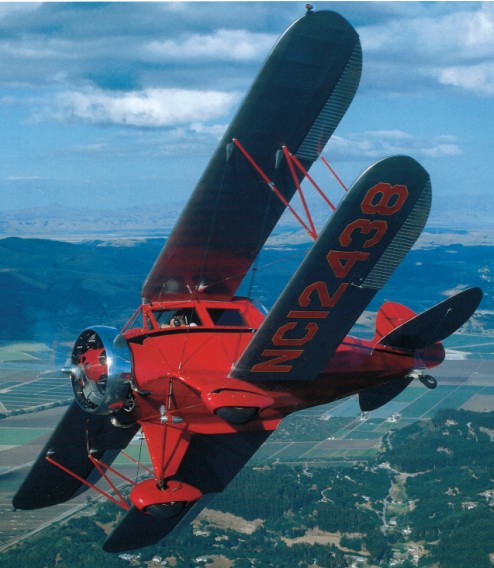
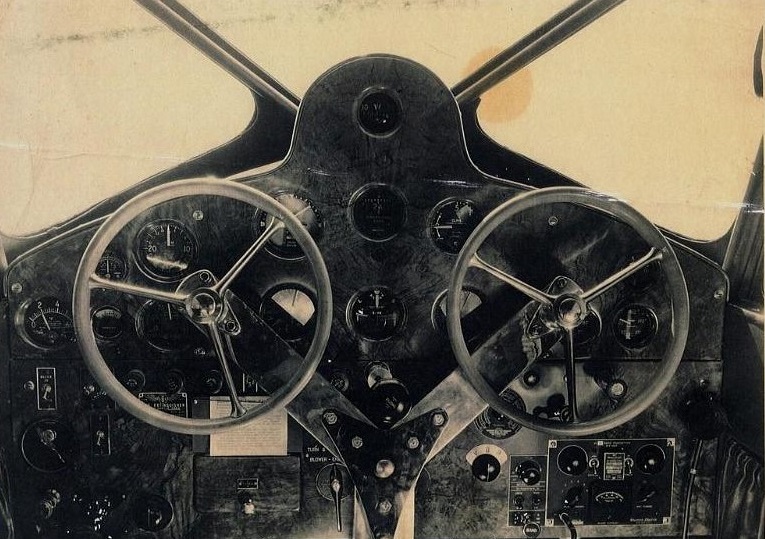
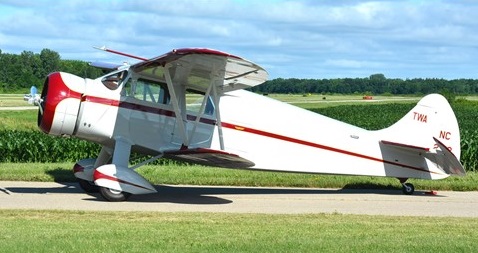
The 1931 Waco Model C “QDC” four place cabin biplane marked the entry of Waco in the field of cabin aircraft to compete with such established manufacturers as Bellanca and Stinson. The ship was powered with a Continental 165 hp engine and equipped with a metal propeller, cowl ring, electric starter, dual controls, brakes and tail wheel. The control wheel is on a jointed column, so that the ship can be piloted from the right or left, and the rudder pedals are dual.
The QDC was slightly shorter that the UOC and was 500 lb lighter. WACO replaced the QDC in 1933 with its most successful cabin design, the UIC.
The four place ODC of 1931 was priced at $5,885, and was modified to QDC.
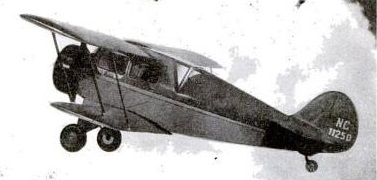
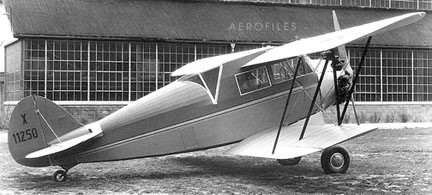
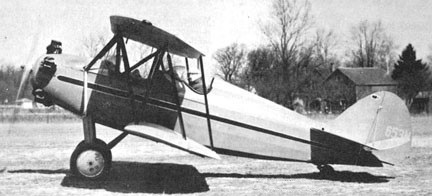
Waco ODC NX11250
Two 1931 PDC (ATC 2-388) were specially modified three seat cabin biplanes built on special order.
WACO delivered 83 UICs before replacing the model with the UKC/YKC/CJC series of standard cabin aircraft in 1934. These trendy airplanes became a favourite of aviators like Jacqueline Cochran and corporate magnates such as Henry Dupont.
Forty 1934 UKC (ATC 528) were built selling for $6,285, redesignated UKC-S Standard in 1935, and UKS-6 in 1936.
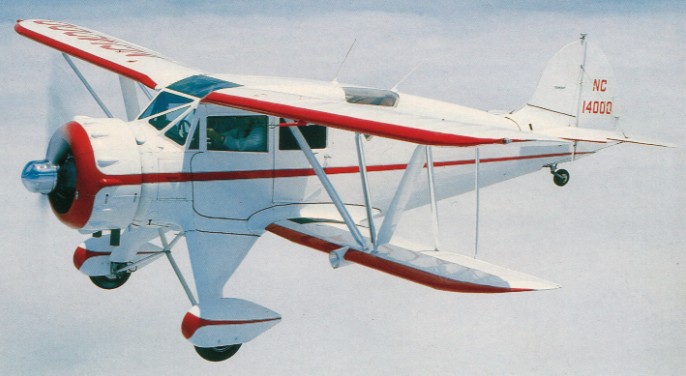
Waco replaced the QDC in 1933 with its most successful cabin design, the UIC. Powered by a 210-horsepower Continental radial engine, the UIC was a four-person biplane with a conventional fixed tail wheel landing gear. The well-appointed cabin was accessed by automobile-style doors on each side, with a pair of individual front seats and a roomy rear bench seat for another two passengers.
The UIC’s fabric-covered fuselage was constructed from welded steel tubing, shaped with wooden formers and stringers while the wings were fabricated with spruce spars, spruce and wooden ribs, and aluminium edges. Ailerons on both wings were covered in aluminium and connected with push-pull struts that operated them in pairs. The UIC’s stable handling characteristics were considered to be forgiving, with good performance. Delivered with a full set of flight controls and instrumentation, the UIC was priced at a modest $6,000, well within the reach of smaller corporations and airlines.
WACO delivered 83 UICs (ATC 499), including prototype NC13061, selling for $5,985 before replacing the model with the UKC/YKC/CJC series of cabin aircraft in 1934.
More than fifty 1935 YOC at $6,895-7,295, and YOC-1 at $7,995 (ATC 569) were built.
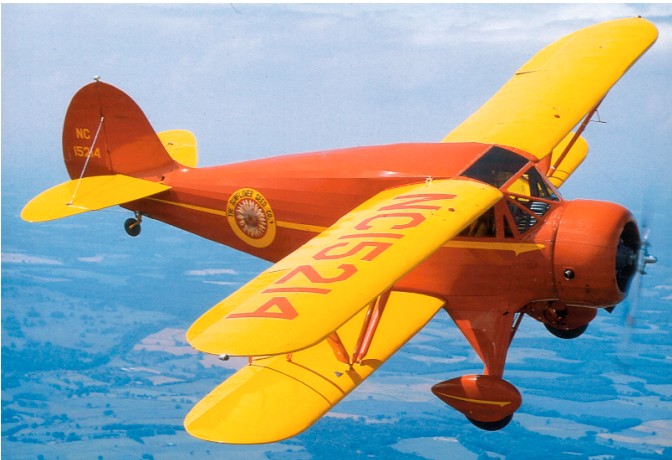
Waco YOC NC15234
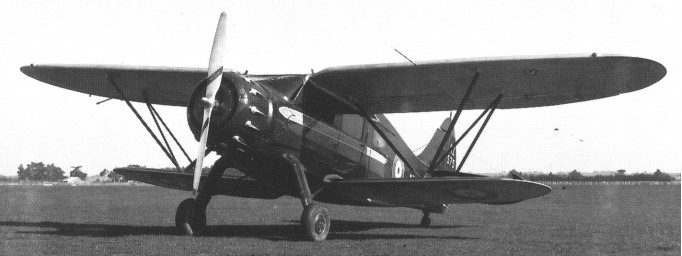
One YOC-1 was impressed by the USAAF as UC-72N (NC14683 or NC15248). South African Air Force impressed at least ten Wacos of different types (CUC and YOC).
Four 1935 UOC (ATC 568) were built, priced at $6,850-7,375. Two civil UOC were NC500/NC303E and NX14631.
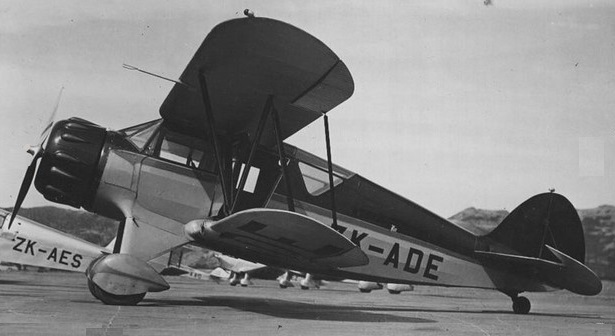
Waco UOC ZK-ALA
The Royal New Zealand Air Force impressed one UOC (ZK-AEL/AEA). The Argentine Navy operated EQC-6 and one UOC.
The Waco ‘F’ series of biplanes supplanted and then replaced the earlier ‘O’ series of 1927/33. The ‘F’ series had an airframe which was smaller and about 450 pounds (200 kg) lighter than the ‘O’ series, while continuing to provide accommodation for three persons in tandem open cockpits. A similar performance to the earlier model was obtained on the power of smaller and more economical engines.
The initial models were the INF (125 hp / 93 kW Kinner engine) with around 50 built, KNF (100 hp / 75 kW Kinner, about 20 built, ATC 313, at $3,630) and the RNF (110 hp / 82 kW Warner Scarab, nearly 150 built), all of which had externally braced tailwheel undercarriages. Many further sub-models followed with more powerful engines of up to 225 hp / 168 kW. The most powerful in the range was the ZPF of 1936/37, intended for executive use.
Waco KNF NX653N
Only four 1931 MNF’s (ATC 393) were built; NC11213, NC11222, NC11239 and NC11246, priced at $4,475.
MNF
Al Menasco used the MNF to help promote his engines. A Heywood air-operated starter, caster action tail wheel, compass, navigation lights, first-aid kit and fire extinguisher were standard equipment on the MNF. NC11213 has the optional, Hamilton Standard ground adjustable prop. Brakes were optional.
The first QCF was finished on May 12, 1931. Thirty-one were built in 1932.
QCF-2
The ‘F’ series was popular with private owner pilots for sporting and other uses and continued in production through the late 1930s. The tandem cockpit UPF-7 was adopted by the Civilian Pilot Training Program and continued in production until 1942 by which time over 600 had been built.
One EPF-6 was built in 1936 and test-flown.
The 1936 VPF-6 was similar to the VPF-7 but with narrower landing gear and smaller wing cut-out. It was advertised as available, but none was produced. The 1937 VPF-7 (ATC 642) was the export version of the UPF-7. Priced at $9,500, six went to Guatemala, all of which returned to the US in 1959.
Waco VPF-7 NC78435
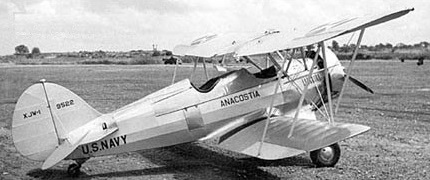
Waco XJW-1 9522
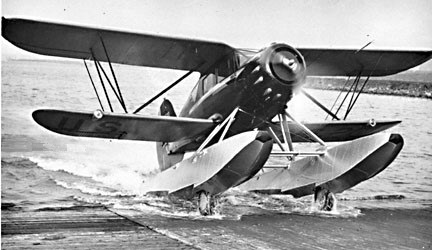
Two, 9521/9522, XJW-1 of 1934 were a USN version of the UBF as hook-up trainer and mail shuttle for the dirigible Macon.
Waco XJW-1 9522
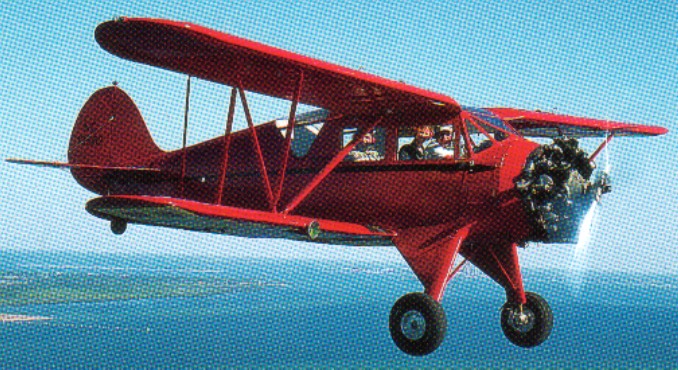
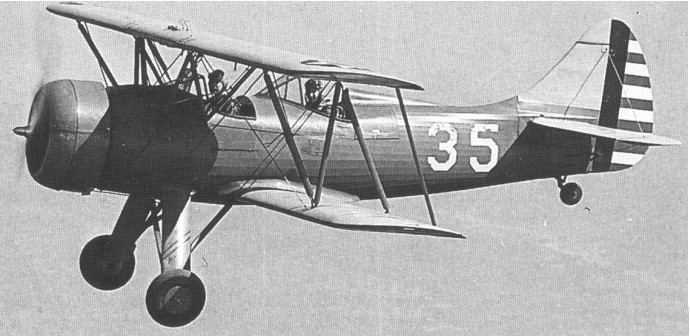
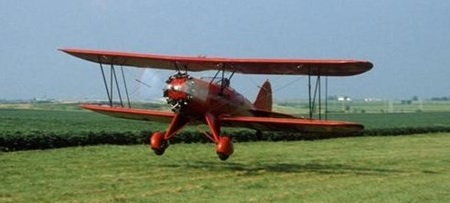
In 1937 Waco introduced its Model UPF-7 as an open-cockpit biplane with a 164-kW (220-hp) Continental W-670-K radial engine and seating for two or three. The type was intended for training and sport use. A single example was evaluated by the USAAC as a primary trainer during 1939 with the designation XPT-14.
Waco XPT-14 39-702
The 1939 XPT-14 39-702 crashed in testing on 11 October 1939.
Then followed 13 YPT-14 service trials aircraft, which were later re-designated PT-14.
Waco YPT-14
A single civil 1937 Model UPF-7 (ATC 642) was impressed in 1941 with the designation PT-14A. However, another 600 aircraft of the same basic type were ordered, priced at $9,500, with three engine types for the Civilian Pilot Training Program that undertook pilot training at educational institutions to provide a pool of trained pilots in the event of war. Another 31 similar aircraft were bought by the Civil Aeronautics Authority for its own flying unit, and 14 to the USAAF as YPT-14.
Waco UPF-7 1941
One QNF model was built. It flew, but presented nose-heaviness problems.
The three place YPF-6 and YPF-7 OF 1935 (ATC 586) featured a sliding canopy and unit price of $8,395. Five were built as YPF-6 (NC15700, NC15606, NC15711, NC16579, NC17470) and three re-designated in 1937 as YPF-7 (NC17710, NC17715, NC20907).
Waco YPF-6 NC16579
Waco YPF-7
Three ZPF-6 (ATC 586) were built in 1936, NC15707, NC16579, and NC17470, featuring a sliding canopy. The price was $7,385.
Two ZPF-7 were built in 1938, NC17710 and NC17715.
Waco ZPF-7 N29962
Approximately 600 came out of the Troy, Ohio factory between 1937 and 1942.
The WACO Aircraft Company of Ohio Inc had built three replicas by December 2011, which they designated MF.
Military operators
The Guatemalan Air Force received at least 1 Waco YMF-7 in 1934, which was still in airworthy condition in 1998.
The United States Army Air Corps adopted the UPF-7 as the PT-14, with one XPT-14 and 13 YPT-14s being purchased, with an additional UPF-7 impressed in 1942 as a PT-14A. Some were operated by the United States Navy.
PT-14
Waco CPF of Brazilian navy
The 1932 PBF (ATC 491) was priced at $4,415. Basically the same as PCF with modified ‘B’ wings. Four were built; NC13029, NC13049, NC13428, and NC13446.
Waco PBF NC13029
Three 1931 PCF (ATC 453) were built; NC11476, NC11483, and NS12439, priced at $4,415. The PCF-2 (Certified ATC#473 2 October 1931) featured a new cross-braced undercarriage.
Waco PCF NS12439
177 1930 Waco RNF were built (ATC 311, and 2-255 and 2-311) for weight changes. They were priced at $4,195-4,320, or $4,450 with an optional 125hp Warner engine.
Waco RNF NC853V
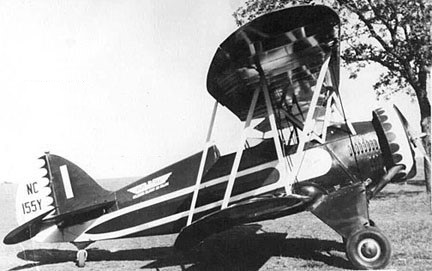
Waco UBF NC155Y
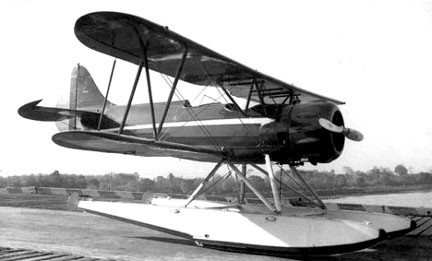
Priced at $5,025, about 11 1932 Waco UBF and UBF-2 (ATC 473) were built, of which 2 went to the USN as XJW-1 dirigible “skyhooks”, and one was fitted with EDO floats in 1933; NC13074.
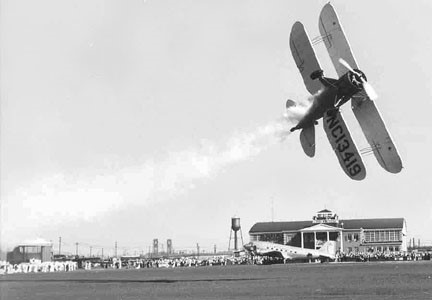
Waco UBF-2 NC13419
Eighteen of the 1934 UMF-3 and -5 (ATC 546) were built at $6,530, of which 4 went to Guatemala, and 3 to the Cuban Navy. They were the forerunner of the UPF-7.
Waco UMF-3 NC14041
The YMF-3 (ATC 542) of 1934 was powered by a 225hp Jacobs L-4. Powered by a 245hp Jacobs L-4, the YMF-5 appeared in 1935 for $6,795. Eighteen were built.
The design was revived around.1990 by Classic Aircraft Corp of Lansing MI as the YMF-5 Super.
Waco YMF-5 NC14067
Considerable numbers of ‘F’ series biplanes, both original and newly built, remained in service in mid-2009.
INF Certified ATC#345 2 August 1930 Engine: Kinner B-5, 125 hp (93 kW) Span: 29 ft 7 in (9.1 m) Length: 20 ft 10 in (7 m) Height: 8 ft 5 in (2.5 m) Wing area: 244 sq ft (22.7 sq m) Empty weight: 1870 lb (848 kg) Loaded weight: 2650 lb (1202 kg) Maximum speed: 128 mph (206 km/h) Cruise speed: 96 mph Stall: 40 mph Range: 370 mi Seats: 3 Price: $4,110 50 built
KNF Certified ATC#313 12 April 1930 Engine: Kinner K-5, 100 hp (75 kW) Wingspan: 29’7″ Length: 21’4″ Useful load: 776 lb Max speed: 100 mph Cruise speed: 85 mph Stall: 40 mph Range: 430 mi Seats: 3 20 built
PCF Engine: Jacobs LA-1, 170 hp (127 kW) Wingspan: 29’7″ Length: 20’10” Useful load: 972 lb Max speed: 119 mph Cruise speed: 101 mph Stall: 42 mph Range: 430 mi Seats: 3 3 built
PCF-2 Certified ATC#473 2 October 1931 Engine: Jacobs LA-1, 170 hp (127 kW) new cross-braced undercarriage
QCF QCF-2 Certified ATC#416 9 April 1931 Engine: Continental A70, 165 hp (123 kW) Wingspan: 29’7″ Length: 20’4″ Useful load: 864 lb Top speed: 125 mph Cruise: 108mph Stall: 45 mph Range: 430 mi Seats: 3 31 built Prototype NC11241
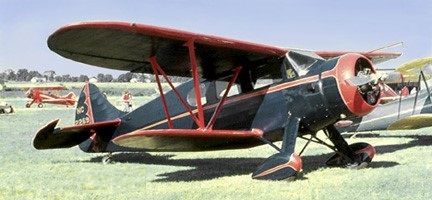
UBF / UBF-2 / XJW-1 Engine: Continental R-670, 210 hp (157 kW) Wingspan: 29’6″ Length: 20’9″ Useful load: 920 lb Max speed: 132 mph Cruise speed: 116 mph Stall: 42 mph Range: 400 mi Seats: 3 Two UBF designated XJW-1 were used by the US Navy as hook-up trainers for the Curtiss F9C Sparrowhawk airship-borne fighters. Around 11 built
1932 UBF
UMF / UMF-3 / UMF-5 Engine: Continental R-670A, 210 hp (157 kW) Wingspan: 30’0″ Length: 23’2″ Useful load: 1015 lb Max speed: 143 mph Cruise: 128 mph Stall: 47 mph Range: 460 mi Seats: 3 longer wider fuselage and larger vertical fin 18 built
Waco UPF-6 Engine: Continental R-670, 210 hp (157 kW) Seats: 2-3 Prototype for UPF-7
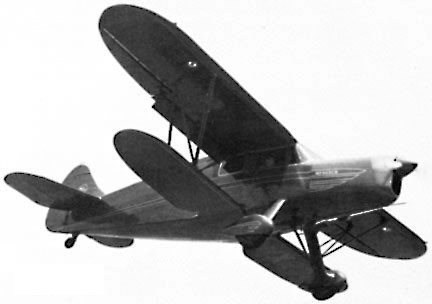
UPF-7 / PT-14 tandem training version with wider-track undercarriage (USAAC) Engine: l x Continental R-670-3 or W-670-6A, 164kW (220 hp) or Continental R-670-6, 220 hp Wingspan: 30 ft 0 in (9.14 m) Wing area: 244 sq.ft (22.67 sq.m) Length: 23 ft 1 in (7.04 m) Height: 8 ft 5 in (2.57 m) Max TO weight: 2,650 lb (1202.02 kg) Empty weight: 1,870 lb (848.22 kg) Maximum speed: 128 mph (207 km/h) Cruise speed: 114 mph (185 km/h) Stall: 50 mph Range: 400 miles (644 km) Service ceiling: 14,800 ft (4,511 m) Armament: none Seats: 2-3 14 became YPT-14 trainers 40-014 – 40-026 over 600 built
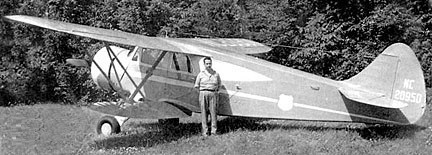
Seventeen 1937 AGC-8 (ATC 664) were built at a $9,895 price. Two were impressed by the USAAF as UC-72P (NC20905 and NC20909) in 1942, two were exported, and two were later modified as EGC-8 (X=NC2334 and NC19364).
Waco AGC-8 NC20950
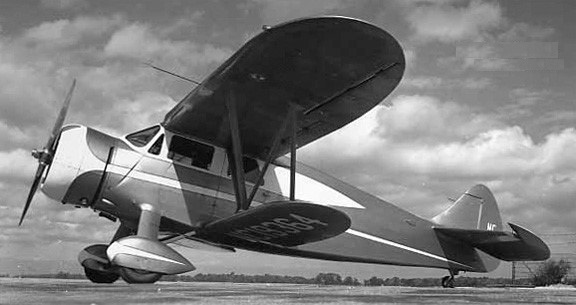
The EGC-7 Custom Cabin of 1937 (ATC 639) sold for $10,390. Thirty-eight were built, of which 30 went to Brazil, and 3 to the USN/USCG as J2W. Seven were civil (NC1312, NC2209, NC2239, NC2241, NC17706, NC17724, and NC17749). Manufacturing rights were granted to the Brazilian government in 1939, but it is unknown if any were produced there.
Waco EGC-7 NC2269
Seven EGC-8 (ATC 665) were built from 1937; NC2279. NC2329, NC19354, NC19357, NS19365, NC19382, and NC19375, plus 2 conversions from AGC-8 (NC2334 and NC19364) selling for $12,680. Four were impressed by the USAAF as UC-72B.
Waco EGC-8 AGC-8 conversion NC19364
One, NX2334, was tested with a 260hp Menasco D-6 for the MGC-8.
Waco EGC-8 NX2334 with Menasco D-6
Most military operators operated either a single example, or a very small number. Military operators included Exército Brasileiro of Brazil (30 EGC-7), the Royal Netherlands Air Force possibly impressed an EGC-7, Nicaraguan Air Force (EGC-7), and the Royal Air Force impressed one ZVN-8 in 1942 as UC-72B and four ZGC-7 in 1942 as UC-72E.
1938 Waco AGC-8 NC2312
The 1937 built DGC-7 Custom Cabin (ATC 639) sold for $10,390. Two examples were built: NC2239 and NC17706.
No one ever ordered the 1937 YGC-7 and the 1938 YGC-8 had new flaps.
Twenty-eight 1937 ZGC-7 (ATC 627) were built at $8,935, of which 4 were impressed by the USAAF as UC-72E.
Waco ZGC-7 NC17459
Four 1937 ZGC-8 (ATC 664) were built at $10,495; NX=NC2272, NC19355, c/n 5053 to Argentina, NC19360, VT-AKD. The first one (prototype, c/n 5001) was later modified with an L-6 engine as an AGC-8.
AGC-8 / UC-72P Engine: Jacobs L-6, 300 hp (224 kW) Propeller: Hamilton Standard 2B20-9 Wingspan: 34’9″ Length: 27’7″ Useful load: 1472 lb Max speed: 164 mph Cruise speed: 145 mph Stall: 55 mph Range: 600 mi Seats: 4-5 17 built, two modified to EGC-8 Two impressed by USAAF as UC-72P
DGC-7 Engine: Wright R-760-E1, 285 hp (213 kW) Two built
Waco S3HD / S2HD Super Sport Engine: P & W Wasp Jr. TB, 400 hp (298 kW) Wingspan: 32’9″ Length: 25’1″ Useful load: 965 lb Max speed: 188 mph Cruise speed: 163 mph Stall: 60 mph Range: 500 mi Seats: 2 1 built
S2HD Engine: P & W Wasp SB, 450hp
S3HD-A Engine: P&W Wasp T, 320hp Useful load: 1458 lb Max speed: 173 mph Cruise speed: 151 mph Stall: 65 mph Range: 640 mi
Waco WHD Multipurpose Military Biplane with 420 hp (313 kW) Wright R-975 engine. Max speed: 191 mph Cruise speed: 166 mph Seats: 2
Waco CMD Multipurpose Military Biplane with 250 hp (186 kW) Wright J-6-7 variant of WHD. None built. Seats: 2
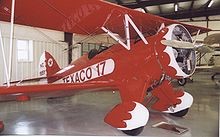
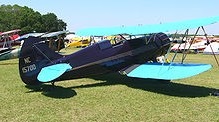
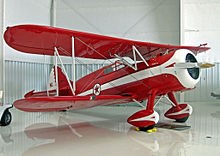
The Waco A series is a range of light American-built twin side-by-side seater sporting biplanes introduced in 1932 as an affordable private-owner aircraft with cross-country range and baggage capacity and a more sporting image than the larger Waco F series. The A series offered a number of engine options which had varying sub-designations. The power range lay between the KBA with a 100 hp (75 kW) Kinner engine and the later UBA with a 210 hp (157 kW) Continental powerplant.
Waco RBA
The PLA “Sportsman” of 1933 (ATC 502) introduced a longer wider fuselage and a higher useful load and had a 170 hp (127 kW) Jacobs LA-1 radial engine. With a side-by-side cockpit with sliding canopy, four were built; NC13067, NC13073, NC13401, and NC13410, priced at $4,285.
Waco PLA NC13401
The last model in the series was the ULA, also of 1933, with a 210 hp (157 kW) engine.
1932 Waco RBA, N12444, C/N: 3593
Relatively few were produced and the type survives in small numbers in 2009.
Waco PBA
The 1932 Waco BBA was powered by a 165hp Wright J-5 and featured an enclosed, side-by-side cockpit. Possibly there was only one conversion for motor installation tests since there is no record of actual production.
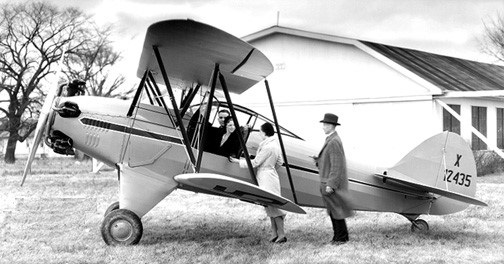
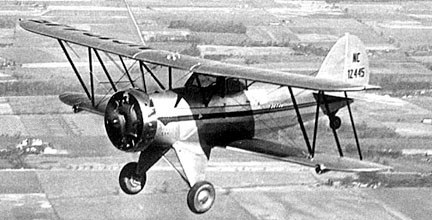
The 1932 Waco IBA (ATC 465) featured a two place side-by-side canopied cockpit. Priced at $4,059, three were built; NC12435, NC12446, and NC12453.
Waco IBA NC12453
The 1932 Waco KBA (ATC 460) built was registered NX/NC12435 and sold for $3,585. Featuring a two place side-by-side canopied cockpit and became the Waco IBA with an engine upgrade.
Waco KBA NX12435
The 1932 PBA (ATC 464) featured a side-by-side canopied cockpit and was priced at $4,285. Six were built; NC12435, NC12445, NC12448, NC12466, NC13038, and NC13054.
Waco PBA NC12445
The 1932 RBA (ATC 466) carried two side-by-side with a canopied cockpit. Priced at $4,195, four were built; NC12435, NC12442, NC12444, and NC13401. Higher speeds were reached with rerated 125hp Warner and cowling.
Waco RBA
The 1932 three seat Waco RCA sold for $4,195.
The 1932 TBA (ATC 474) featured a side-by-side cockpit with an optional canopy. They were available for $4,490 but none was produced. The three place open cockpit TCA was available for $4,285 but there was no actual production. The three place open cockpit UCA was a planned project (for $4,895), but produced as the UBA.
At least six 1932 Waco UBA (ATC 479) were built, priced at $4,895, with side-by-side cockpit and optional canopy.
Waco UBA NC13041
Waco ULA NC14300
One 1933 ULA Sportsman (ATC 511) was built, NC14300, featuring a side-by-side cockpit with sliding canopy. The price was $4,895.
Variants:
BBA Engine: 1 × 165 hp (123 kW) Wright J-5
KBA Engine: 1 × 100 hp (75 kW) Kinner K-5 Wingspan: 27′ 5″ Length: 21′ 11″ Max speed: 101 mph Cruise speed: 86 mph Stall: 40 mph Useful load: 726 lb Range: 380 mi Seats: 2 1 built
IBA Engine: 1 × 125 hp (93 kW) Kinner B-5 Wingspan: 27’5″ Length: 21’11” Useful load: 683 lb Max speed: 110 mph Crise speed: 93 mph Stall: 39 mph Range: 450 mi Seats: 2 side by side Canopy optional 3 built
RBA Engine: 1 × 110 hp (82 kW) later 125 hp (93 kW) Warner Scarab 4 built
RBA Engine: 1 × Warner Scarab SS40&50, 125 hp Length: 21 ft 0 in Wingspan: 29 ft 6 in Height: 8 ft 8 in Empty weight: 1,250 lb Gross weight: 1,949 lb Maximum speed: 104 mph Cruise speed: 91 mph Range: 400 miles Service ceiling: 12,800 ft Rate of climb: 500 ft/min Crew: 1 Capacity: 1 passenger





















 All Aero