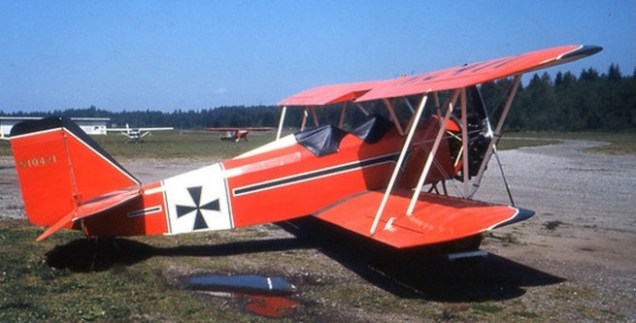
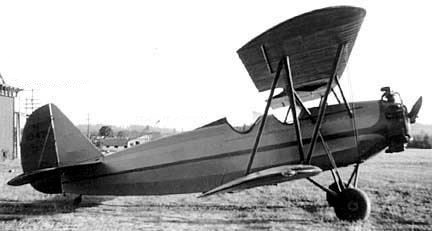
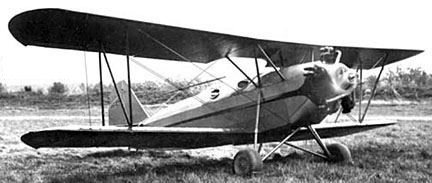
Addyman Zephyr

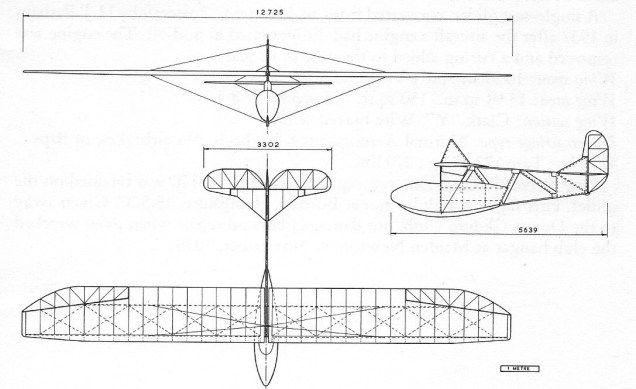
The second design of Erik T.W. Addyman was the Zephyr. A single-seat sailplane built in 1933 by Addyman.

The Zephyr was of very light conventional wooden construction, with a primary type fuselage with a ply and fabric covered nacelle cockpit.

The undercarriage was a main keel, plus tail bumper. No airbrakes or flaps were fitted. The wings were wire braced.

One only was built, flown by Addyman from many fields in the Lake District and the Pennines before the war. It is believed that the Zephyr was not flown after the war and it remained in storage until Mr Addyman died in 1963. The Zephyr was the acquired by J.C. Riddell but it was found to be suffering from glue failure. It was stored in Riddell’s factory in Hunslet, Leeds.

In September 1970, when it was to have become the property of NAPS as BAPC.39, but it was mysteriously burned before delivery.

Wingspan: 12.73 m / 41 ft 9 in
Length: 5.64 m / 18 ft 6 in
Wing area: 18.12 sq.m / 195 sq.ft
Aspect ratio: 9.5
Tare weight: 83.91 kg / 185 lb

Addyman STG / Standard Training Glider

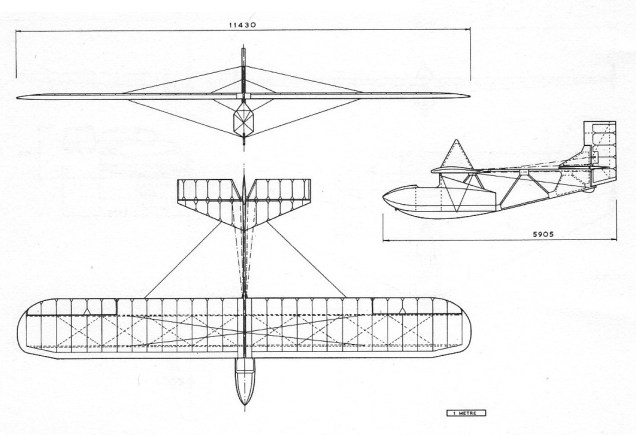
Erik T. W. Addyman designed and built his STG single seat primary glider at Harrogate, UK, for low cost basic training. As such, it was a simple, wooden, aerodynamically unrefined aircraft with a relatively low aspect ratio wing, a cockpit nacelle under it and a flat open truss girder fuselage aft. The unswept wing had parallel chord with blunt tips and was built around two spars. There were no flaps or airbrakes. Above the wing landing wires ran from about mid-span on each wing from the spars to the top of a centrally mounted inverted V-strut; below, similarly arranged flying wires ran to the lower nacelle longerons.

Attached immediately behind the single open cockpit headrest at the forward wing spar, the nacelle extended rearwards only to the wing trailing edge, suspended from an inverted V pair of struts to the rear spar. A landing skid extended over most of the length of the nacelle. Aft of the nacelle, the fuselage was an uncovered converging Warren girder structure carrying the tail surfaces and braced laterally by wires to the mid-span wing points. The fin was very small but carried an almost rectangular rudder which extended to the fuselage keel via a cut-out in the elevators. The tailplane was straight tapered, with a swept leading edge. A wire tail bumper completed the undercarriage.

The STG was built at Harrogate and flew for the first time in June 1934.

It seems that two STGs were built. One of them was originally based at Wigan, the other at Harrogate. Addyman was the Honorary Secretary of The Aircraft Club, Harrogate; a letter from him to Flight in July 1942 says that one STG was there, “overhauled”, and another was three-quarters built, though the former was unable to fly because of a Government ban on glider use at that point of the War. The fate of the partially built STG is not known. There were plans to build another after World War II but construction probably did not start. The two completed aircraft survive in store in 2010.

Another STG was begun, intended for powered flight using an Anzani engine. Parts of this machine, which has become known as the Addyman UL (UltraLight), also survive in store.

Wingspan: 37 ft 6 in (11.43 m)
Wing area: 187.0 sq ft (17.37 m2)
Aspect ratio: 7.5
Airfoil: Gŏttingen 436
Length: 19 ft 4 in (5.90 m)
Crew: 1

Addyman, Erik T. W.

Glider pilot Erik T.W. Addyman designed two gliders at Harrogate, UK, in the 1930s, despite having previously lost a hand in a gliding accident.

Addyman intended to produce an ultralight aircraft from an airframe similar to his Standard Training Glider. It was started in 1936 and was to have an Anzani engine but it was never completed. It became the property of The Aeroplane Collection Ltd (formerly Northern Aircraft Preservation Society) as BAPC.16. It was in store at Irlam, Manchester, UK.

Addems, Walter J

1916
Loda IL.
USA

First airplane, a glider, was built in 1916 from plans in Aviation Week and flown successfully enough to qualify the teenager for membership in the Early Birds organization.

1920
Judd IA.
USA

c.1955
Atherton CA
USA

On retirement from a career flying for Natl Air Transport and UAL, Addems became well regarded for his faithful reproductions of classic aircraft.

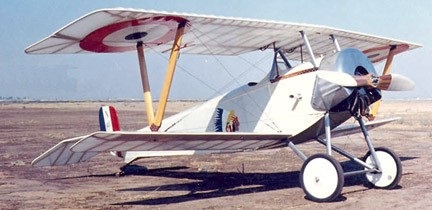
Addems-Nieuport 11 replica

Adcox Student Prince

Adcox Student Prince NC10471 s/n 2

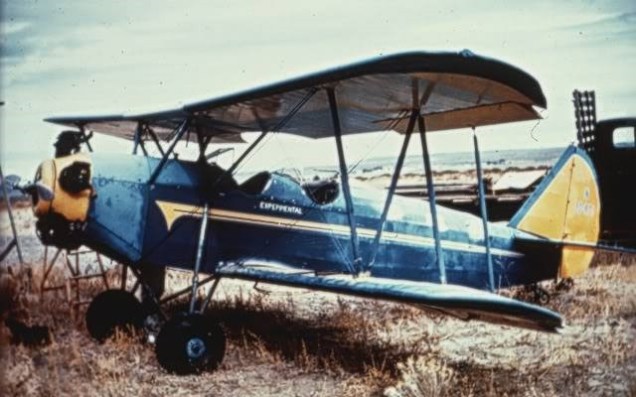
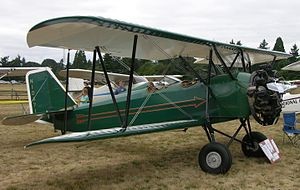
The Adcox Student Prince was a two-seat open-cockpit biplane designed by Basil Smith and built by the students of the US Adcox Aviation Trade School in 1929. It was based on the one-off Adcox Special, and the first example flew on 17 September 1929 (piloted by Basil Smith), powered by an 85hp Cirrus Mk III. The Cirrus, with inherent dependability problems, was soon replaced by 100hp Kinner K-5.

A single example of a Student Prince X (NC10686) was produced in 1931 powered by a 90hp ACE engine.

A total of six were built of which only 3 were certificated (NC263V, NX828M, NC893K) under ATC 2-258. The other three being restricted to flights within Oregon. The last one ended up certificated after WW2 as an amateur-built aircraft.

As of 2004, a single example remains registered in the United States, which was successively re-engined with 100hp Kinner K-5, then 110hp Warner Scarab Junior, Comet 150hp, 150hp Wright-Hisso A and 220hp Continental E-225 in 1963.

Gallery

Student Prince
Engine: 1 × Cirrus Mk III, 85 hp (63 kW)
Wingspan: 30 ft 3 in (9.22 m)
Length: 23 ft 6 in (7.16 m)
Useful load: 585 lb
Maximum speed: 110 mph (177 km/h; 96 kn)
Cruise: 85 mph
Stsll: 37 mph
Range: 500 mi (434 nmi; 805 km)
Capacity: 2

Adcox Cloud Buster / A-100 / Cloud Buster Junior / Bidwell Cloud Buster

The 1931 Adcox Cloud Buster was a two place, enclosed monoplane, powered by a 40hp Salmson AD-9.

Only one was built, as a student project and registered NC10644.

The craft was repowered in 1936 with 65hp LeBlond.

This appears in some regs as a product of Bidwell-Yale Aviation Co. As the Adcox A-100, it was sold to Groat Aeronautical, who sold it to Shirley P Yale Air Service, who in turn sold it to William B Bidwell on 20 Agust 1931, at which time it was called Cloud Buster Junior. It then went through several other owners before being scrapped in 1938.