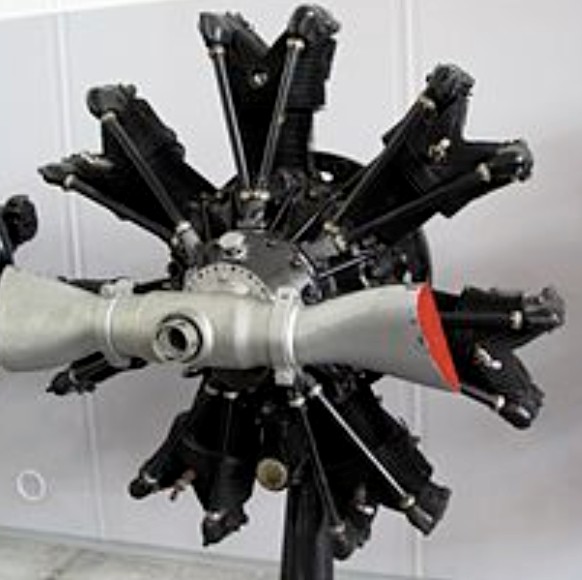
The Warner Scarab Junior was an American, five-cylinder, air-cooled, radial aero engine first run in November 1930. It was a scaled-down derivative of the seven-cylinder Warner Scarab, developing 90 hp (70 kW) against the Scarab’s 110 hp (80 kW).
Applications: Aeronca L Culver Dart Rearwin Sportster
Specifications: Warner Scarab Junior 50 Type: Five-cylinder, air-cooled, radial piston engine Bore: 4.25 in (108 mm) Stroke: 4.25 (108 mm) Displacement: 301 cu in (4.93 L) Length: 14 in (35.5 cm) Height: 36.5 in (93 cm) Dry weight: 237 lb (107.5 kg) Valvetrain: 1 inlet and 1 exhaust valve per cylinder Fuel system: 1 Holley carburetor Fuel type: 54 octane Avgas Power output: 90 hp (67 kW) at 2,050 rpm Compression ratio: 5.2:1 Power-to-weight ratio: 0.38 hp/lb (0.62 kW/kg)
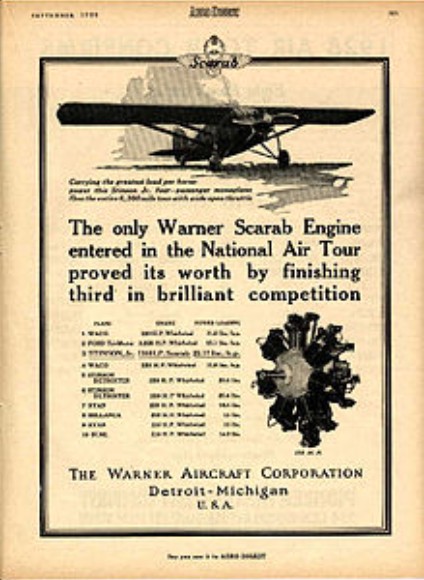
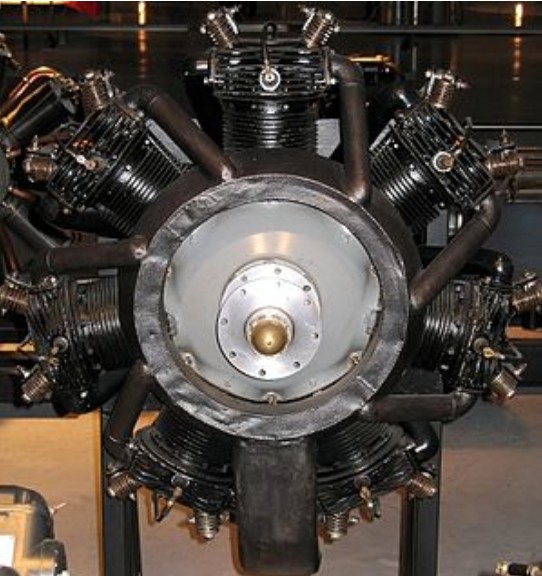
First run in November 1927, the Warner Scarab is an American seven-cylinder radial aircraft engine, that was manufactured by the Warner Aircraft Corporation of Detroit, Michigan in 1928 through to the early 1940s. In military service the engine was designated R-420.
Warner Scarab engine advertisement for 1928 in Aero Digest
Amongst the many uses for the Scarab, the engine was fitted to the Cessna Airmaster and the Fairchild 24 (UC61 or Argus). Notably, in 1942, it was put into use powering the Sikorsky R-4, the first helicopter to be put into production.
Warner Scarab
The Warner 145 and 165 HP engines are the most commonly seen of the small radials for US-built pre-WWII era aircraft, in large part because of good parts availability due to the engines having been used on WWII Fairchild UC61s and Meyers OTWs.
Warner engines are also in demand as realistically sized, though far more powerful, replacement powerplants for many replica or restored World War I era airplanes which were originally fitted with rotary engines.
An air or hand-electric starter were available at extra cost.
Variants: Scarab A 7-cyl. air-cooled radial engine introduced in 1928, the Scarab developed 125 hp (93 kW) at 2,050rpm from 422 cu in (7 l) with a dry weight of 285 lb (129 kg).
Scarab Junior A 5-cyl. version introduced in 1930 developing 90 hp (67 kW).
Super Scarab 165 Increased capacity 7-cyl engine developing 165 hp (123 kW) at 2,100rpm from 499 cu in (8 l) with a dry weight of 332 lb (151 kg).
Super Scarab SS-50 Alternative company designation for the Super Scarab.
Super Scarab SS-50A A 145 hp (108 kW) de-rated Super Scarab.
Super Scarab 185 With the capacity increased further, developing 185 hp (138 kW) – 200 hp (149 kW) from 555 cu in (9 l).
R-420 Military designation of the Scarab
R-500 Military designation of the Super Scarab 165
R-550 Military designation of the Super Scarab 185
145 Alternative designation for the Warner Super Scarab SS-50A
165 Alternative designation for the Warner Super Scarab 165
185 Alternative designation for the Warner Super Scarab 185 (Primarily a helicopter application).
Applications: CAC Wackett Cessna Airmaster Cessna Model AW Curtiss XC-10 Davis D-1 Faichild 22 C7E, C7F Faichild 24 C8B (UC61 or Argus) Fleet Model 1 Gee Bee Sportster Harlow PJC-2 Meyers OTW Monocoupe 110 Pasped Skylark Ryan S-C Ryan ST-W Sikorsky R-4 Stinson SM-2 Waco RSO Waco RBA Waco BNF and RNF
Specifications:
Type: 7 cylinder, fxed radial, air cooled 4 stroke Approved Type Certificate No.2 Military Rating: 110 hp at 1850 rpm Commercial Rating: 110 hp at 1850 rpm Displacement: 422 cu.in Compression ratio: 5.2-1 Bore: 4 1/4 in Stroke: 5 1/4 in Length: 29 in Diameter: 35 1/2 in Weight: 270 lb Fuel consumption: not more than .55 lb/hp/hr Oil consumption: not more than .025 lb/hp/hr Lubrication: Force feed Ignition: Dual Scintilla Magneto Carburation: 1 Stromberg Spark plugs: 2 per cylinder A.C. Price: $2700
Scarab 50 Type: Seven-cylinder, air-cooled, radial piston engine Bore: 4.25 in (108 mm) Stroke: 4.25 in (108 mm) Displacement: 422 cu in (6.92 L) Length: 14 in (35.5 cm) Height: 36.5 in (93 cm) Dry weight: 292 lb (132.5 kg) Valvetrain: 1 inlet and 1 exhaust valve per cylinder Fuel system: 2 Stromberg carburetors Fuel type: 67 octane Avgas Oil system: Dry sump Cooling system: Air-cooled Power output: 125 hp at 2,050 rpm Compression ratio: 5.15:1 Power-to-weight ratio: 0.43 hp/lb
The 1932 Dale RD-9 was a two-place cabin biplane pusher with folding wings, reportedly scaled up from model airplane plans.
One was built, registered N12526 c/n CW-1, powered by an 80hp LeRhône rotary. Built 15 May 15/32, it reported to CAA as “not in service” on 12 November 1932, then “junked” 27 January 1934. The registration was cancelled on 18 June 1934.
The Walter Scolar was a Czechoslovakian nine-cylinder, aircooled, radial engine for powering light aircraft that first ran in 1936. With a displacement of 8 litres (490 cu in), it produced 132 kW (180 hp) at 2,500 rpm.
Applications: Beneš-Mráz Beta-Scolar
Specifications: Scolar Type: 9-cylinder radial piston engine Bore: 105 mm (4.13 in) Stroke: 100 mm (3.94 in) Displacement: 7.8 L (488 cu in) Dry weight: 155 kg (342 lb) Valvetrain: One intake and one exhaust valve per cylinder Fuel system: Carburettor Fuel type: Petrol Cooling system: Air-cooled Power output: 132 kW (180 hp) at 2,500 rpm Compression ratio: 5.4:1 Power-to-weight ratio: 0.85 kW/kg (0.52 hp/lb)
The Walter Castor was a Czechoslovakian seven-cylinder, aircooled, radial engine for powering aircraft that was first run in 1929. The Super Castor was a nine-cylinder development.
Applications: Aero A.35 Aero A.304 (Super Castor) Airspeed Envoy Breda Ba.25 Dornier Do K Fizir F1V Hopfner HV-6/28 Letov Š-28 Rogozarski AZR Savoia-Marchetti S.71
Specifications: Castor Type: 7-cylinder radial piston engine Bore: 135 mm (5.3 in) Stroke: 170 mm (6.7 in) Dry weight: 248 kg (547 lb) Valvetrain: One intake and one exhaust valve per cylinder Fuel system: Zenith carburettor Fuel type: Petrol Cooling system: Air-cooled Power output: 194 kW (260 hp) at 1,850 rpm (maximum power) Compression ratio: 6:1 Power-to-weight ratio: 0.78 kW/kg (0.48 hp/lb)

 All Aero