Waterman Whatsit

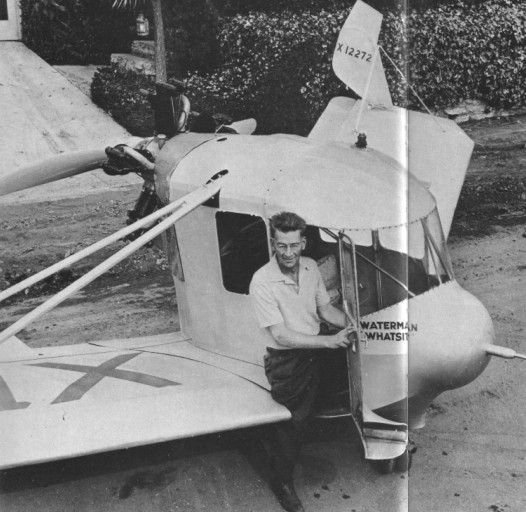
Waldo D. Waterman of Santa Monica, California, produced in 1934 design for a two-seat tailless monoplane as a simple private aircraft.

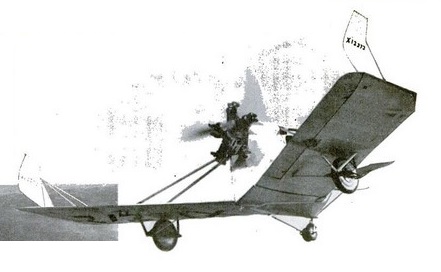
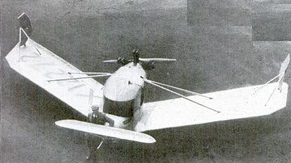
Waldo D. Waterman of Santa Monica, California, produced in 1931 a design for a two-seat tailless monoplane as a simple private aircraft. With a 15° swept-back conventional wing with tip rudders, mounting a fuselage nacelle; front elevator, a front boom featured a trim feature—two small machinists’ vises that could be slid to positions of advantage and then tightened.

With a tricycle gear with steerable nose wheel, this was the first airplane to be equipped with “elevon” control.
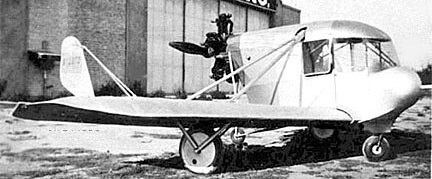
Waterman spent several days taxiing around the field, feeling out the plane’s characteristics, then finally tried a faster taxi down the runway, gradually advancing the throttle. On the threshold of take-off, the front wheel dropped into a gopher hole, the doors flew off their hinges, and the “Whatsit” flew at minimal altitude for about 30 feet before coming to a brutal halt. The first actual “flying wing” monoplane was rebuilt to enter a 1933 safety plane competition, winning one of the only two awards out of 30 entries.
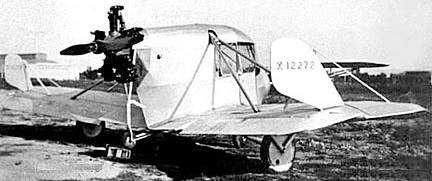
Powered by a 100hp Kinner K-5 pusher engine, the two place Whatsit, registered NX12272 became known as Arrowplane and led to the 1937 version.
Waterman Airplane Corp

Waterman Aircraft Mfg Co
Ontario Aircraft Corp

1909:
Waldo Dean Waterman
San Diego CA.
USA

1919:
Waterman Aircraft Mfg Co
3rd & Sunset
Venice CA.
USA

1922:
Ontario Aircraft Corp
Ontario CA.
USA

1931:
Metropolitan Airport
Van Nuys CA.
USA

Waldo D. Waterman of Santa Monica, California, produced in 1934 design for a two-seat tailless monoplane as a simple private aircraft.

Corporation formed 1935 to develop roadable aircraft with detachable wings and motor-car engine driving propeller by vee belts.

1939: Ended operations.

1947: Continued building various aircraft as personal endeavors.

In 1967 produced the W-11 Chewy Bird, his 11th design, as test bed for Chevrolet Con/air motor car engine.

Waterhouse & Royer Aircraft Roamair / Romair / McDaneld Roamair / Romair

Waterhouse Roamair NC990

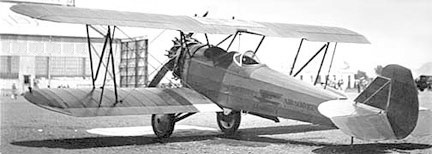
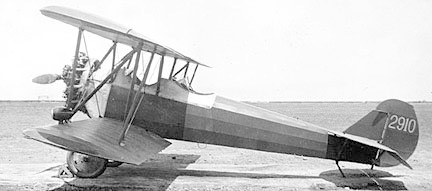
Designed by William Waterhouse and Lloyd Royer, the 1925 Roamair / Romair 2-3 place open cockpit biplane was built with various engines.

Both spellings were chosen, but Royer’s steadfast claim of “Romair” is tempered by some photos showing “Roamair” on the tail.

Waterhouse Roamair N2910

Five were built:
NC990 c/n 18 with Wright J-5, to Pacific Coast Air Service, rebuilt in 1931 as a crop duster with 220hp Wright J-6, and re-registered NR12785

c/n 50 NR1637 with 160hp Curtiss C-6, also used as a crop duster

N2537 with 90hp Curtiss OX-5 in 1926, rebuilt in 1929 with 150hp Hisso as N4867

N2910 with 140hp Bailey Bulls-Eye, also for PAT

N3663 (possibly c/n 1) with 150hp Curtiss K-6, planned for 1928 Nationals cross-country race, but was damaged in a hard landing, possibly rebuilt in 1928 as NX7641 with 150hp Hisso.

Waterhouse & Royer Aircraft

1925: (William J) Waterhouse & (Lloyd) Royer Aircraft
Glendale CA.
USA

1926: Operations sold to Klamath Air Service (Pacific Air Transport), Klamath Falls OR. USA

Waterhouse was a respected structural analyst and engineer who “… undertook an assignment late in 1927 for the Mexican Government, which wanted to [produce] its own aircraft. Two monoplanes were constructed by Tijuana Aircraft Co, headed by Gov Abelardo Rodriquez of Baja California. Plans were furnished by the Mexican War Department and adapted by Waterhouse. The planes, completed in early 1928.

1928: Waterhouse & Associates Design Engrs
6331 Hollywood Blvd
Hollywood CA.
USA

Waterhouse Cruzair

The 1926 Cruzair two place cabin high wing monoplane was designed by William Waterhouse and built with assistance from Ryan Mechanics Monoplane Co.

Registered N1724 and N2138 it was also seen spelled Cruizair.

Partial plans reportedly were sold to T Claude Ryan as a project for the Mahoney-Ryan Flight School and were responsible for the Ryan M-1 Brougham design.

It was first flown on 12 July 1926 piloted by Franklin Young.

N2138 was bought from Pacific Air Transport by motion picture stunt pilot Dick Grace and extensively modified for his abortive Hawaii-San Francisco transpacific attempt on 4 July 1927. It was shipped back to California and rebuilt as Ryan Mechanics Co Miss Southern California for competitions.

Only the one was ever built.

Engine: 200hp Wright J-4
Wingspan: 36’0″
Length: 23’10”
Useful load: 910 lb
Max speed: 138 mph
Cruise speed: 117 mph
Stall: 45 mph
Range: 550 mi

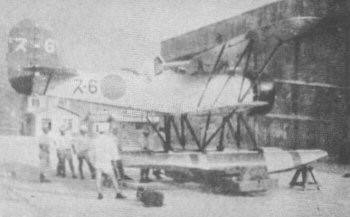
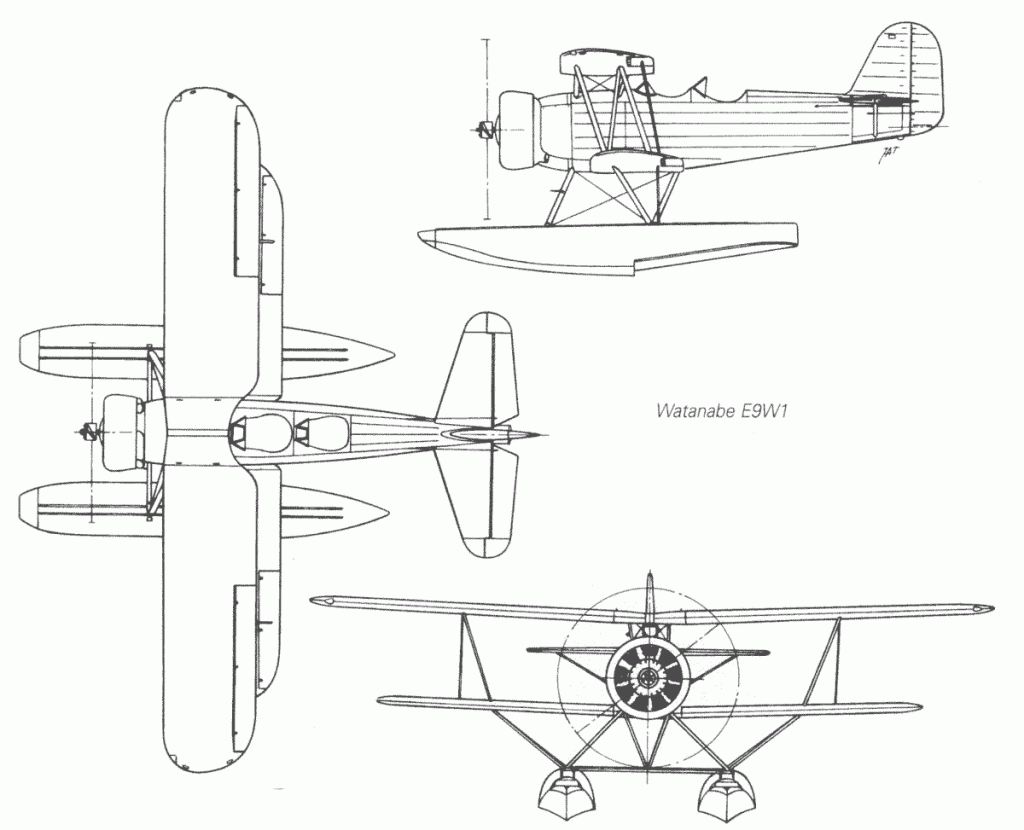
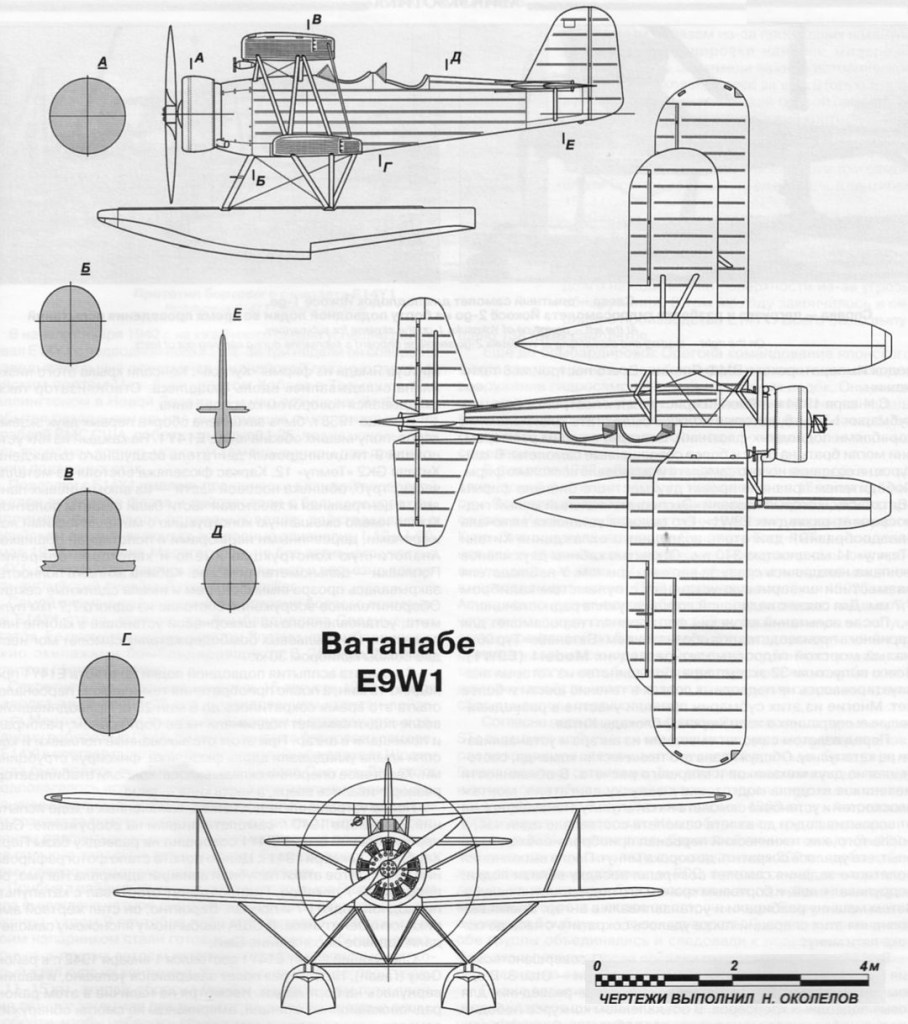
Watanabe E9W1 / Navy type 96 / Kyushu E9W1 / Nakajima E9N1

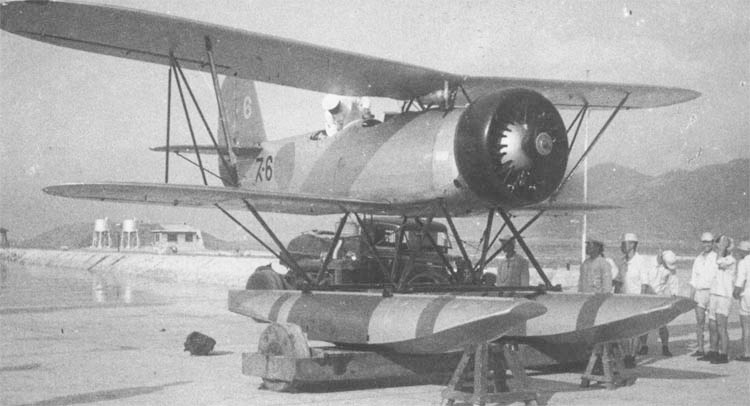
In January 1934, the Imperial Japanese Navy had a requirement for a two-seat reconnaissance seaplane to be operated from its J-3 type submarines, and placed an order with Watanabe Ironworks for design and development of an aircraft to meet this requirement.

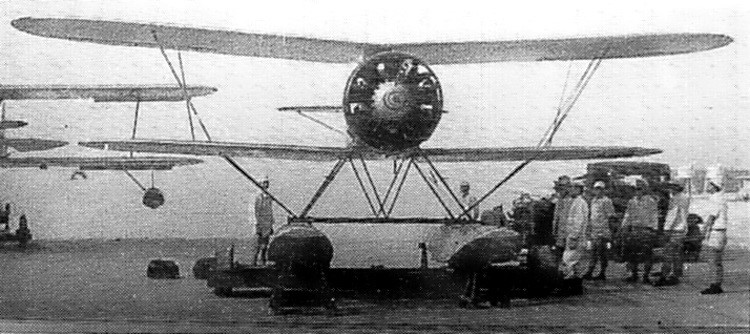
The E9W was a two-seat single-engine twin-float unequal-span seaplane designed to be easily dismantled for hangar stowage on a submarine, capable of being reassembled in two minutes 30 seconds and disassembled in one minute 30 seconds. It was armed with a 7.7 mm (0.303 in) machine gun operated by the observer.

The first of three prototypes flying in February 1935.

Following successful testing of one of the prototypes on the submarine I-5, an order for a production batch of 32 aircraft, designated E9W1, was placed. It was also built by Nakajima as the E9N1.

The aircraft entered service in 1938 with the Imperial Japanese Navy Air Service as the Navy Type 96 Small Reconnaissance Seaplane with the last being delivered in 1940. Although it was in the process of being replaced by the Yokosuka E14Y monoplane, it was still in front line service at the time of the Japanese attack on Pearl Harbor, remaining in service until July 1942, being used to direct their parent submarines onto Chinese ships attempting to pass the Japanese blockade of the South China Sea. The E9W1 was given the reporting name Slim in 1942 by the Allies of World War II.

E9W1
Engine: 1 × Hitachi Tempu II, 224 kW (300 hp)
Wingspan: 9.91 m (32 ft 9½ in)
Wing area: 23.51 sq.m (252.95 sq.ft)
Length: 8.00 m (26 ft 3 in)
Height: 3.71 m (12 ft 2 in)
Empty weight: 882 kg (1,940 lb)
Gross weight: 1,253 kg (2,756 lb)
Maximum speed: 232 km/h (144 mph)
Cruising speed: 148 km/h (92 mph)
Range: 731 km (454 miles)
Endurance: 4.9 hours
Service ceiling: 6,740 m (22,100 ft)
Crew: 2 (pilot, observer)
Armament: 1 x 7.7mm (0.303in) machine gun

Watanabe

Watanabe Tekkosho Kabushiki Kaisha
Japan
The Watanabe Ironworks (K. K.WatanabeTekkosho) began making aircraft parts during 1920s, building trainers from 1931. Ki-51 Army Type 99 still serving 1941, but obsolete. Developed seaplanes (E13A, E14Y) during Second World War; fighters (A5M and J7W); K10W1 trainer, copied from North American NA-16, built in 1941; production after first 26 given to Nippon. Built K11W1 bomber crew trainer in 1940, and copy of Bucker Bu 131 Jungmann. In 1942 produced Q14Tokai three-seat long-range naval patrol aircraft. Reorganized as Kyushu Hikoki K.K. in 1943 and products known retrospectively under that name.