A glider built between wars and allocated BGA.172 in 1931. It survived WW2 with the Bristol Gliding Club.
Inter-Wars
Wilcox T-12-1 Sport Trainer / Collier T-21-1
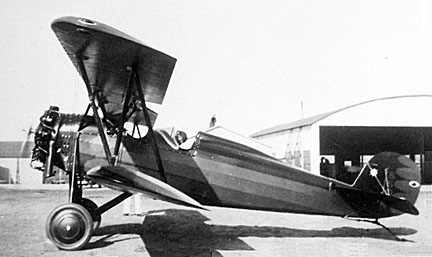
Wilcox ran an airport, located NE of Tulsa in Verdigris, that consisted of associated hangars and an office on 300 acres. William Collier built a number of planes there, reportedly including the 1930 T-12, until he relocated to Kansas.
The T-12-1 Sport Trainer was possibly first registred N550V.
T-12-1 Sport Trainer
Engine: 110hp Warner Scarab (originally a Siemens)
Wingspan: 31’6″
Length: 21’7″
Seats: 2
Wilcox Aeronautics Inc
H F Wilcox Aeronautics Inc
Verdigris OK.
USA
Circa 1930 Wilcox ran an airport, located NE of Tulsa in Verdigris, that consisted of associated hangars and an office on 300 acres. William Collier built a number of planes there, reportedly including the T-12, until he relocated to Kansas. At least one of the hangars with the Collier name was still standing, overgrown and unused, in the ’80s.
Wilford WRK / Pennsylvania Aircraft Syndicate Wilford Gyroplane
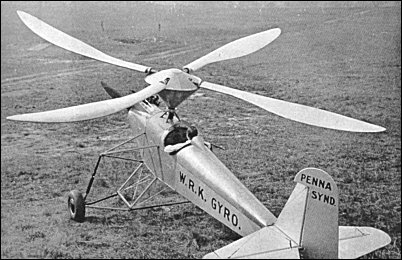
In 1928 Wilford visited Europe, and while there acquired the patent rights for the United States of a rotary wing aircraft conceived by a German named Rieseler. In 1929 Wilford began building his own gyroplanes.
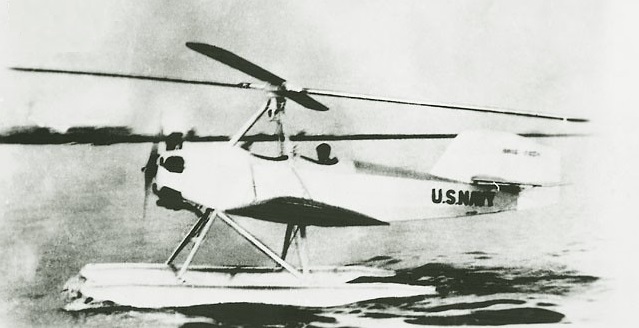
The idea behind this American/German partnership was a scheme for feathering the pitch of the blades rotating round the hub instead of the blade flapping system which La Cierva employed in his autogyros. The feathering control, operated through a system of cams, affected only the lateral parts of the circle described by the rotor.
Wind-tunnel tests proved the effectiveness of the idea.
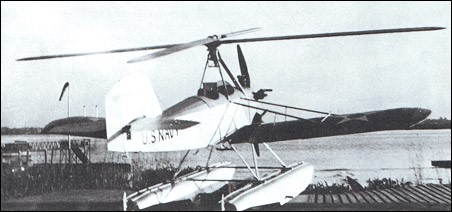
A Fleet XOZ-1 was modified to an autogiro configuration by the Pennsylvania Aircraft Syndicate, with a four-bladed autogiro rotor, held aloft over the forward cockpit by four steel struts, replacing the upper wing. The lower wing was retained and supports added, and the wheeled undercarriage was replaced by twin floats. The two-bladed wooden airscrew was retained, as were the two open, tandem cockpits. Wingspan was 8.33m.
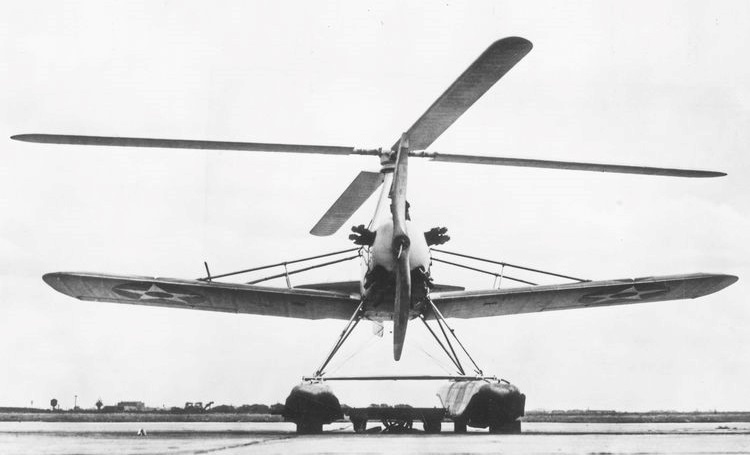
The first Wilford gyroplane (X794W) made successful first flight on August 5, 1931 at Paoli, Pennsylvania, piloted by Frank P. Brown. The original model had an engine of only 85hp.
As a result of these tests, various improvements were later made, such as a much more powerful engine, increase in the size of the rotor, and extension of pitch control to the four quadrants of the circle described by it.
A single-seat open-cockpit autogiro the ship made hundreds of successful flights before its crash in 1935, killing pilot Joseph McCormick. Model designation from initials of Wilford and German aero engineers Walter Reiseler and Walter Kreiser, upon whose patented 1927 designs the ship was based. A second version in 1934, for USN and NACA tests, was built up from a Fleet N2Y-1 fuselage and tail group as Pennsylvania XOZ-1 (8602). It proved very successful, when tested by the National Advisory Committee for Aeronautics, but nothing tangible ever materialized.
WRK Gyroplane
Number of seats: 1
Engine: 1 x ACE Mark III 85hp, repowered with 165hp Jacobs
Wingspan: 7.01m
Rotor diameter: 9.14m
Height: 3.05m
Weight fully loaded: 816kg
Max. speed: 190km/h
Min. speed: 50km/h
Wilford, E Burke
Wilford’s first aircraft, built in conjunction with Vincent Burnelli and entered for the Guggenheim Safe Airplane Contest in 1927, was especially designed for low-speed landing.
In 1928 Wilford visited Europe, and while there acquired the patent rights for the United States of a rotary wing aircraft conceived by a German named Rieseler.
1929: E Burke Wilford, Paoli PA.
In 1929 Wilford began building his own gyroplanes.
1934: Pennsylvania Aircraft Syndicate, Philadelphia PA.
The idea behind this American/German partnership was a scheme for feathering the pitch of the blades rotating round the hub instead of the blade flapping system which La Cierva employed in his autogyros.
Wiley Post Model A / Straughn-Holmes A
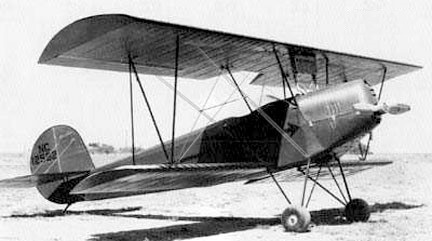
Wiley Post Aircraft Corp was founded in Oklahoma City in 1935 to build Model A (ATC 2-478, ATC 561), cheap two-seat aircraft. Designed by Ross Holmes and Glenn Stearman and powered by a 40hp Straughn AL-1000 converted Model A Ford engine, the first example was built by Straughan Aircraft. Reportedly was first developed as a parasol monoplane at Cessna factory. The ATC was issued in 1934.
One prototype (NX12561) and two production Model As were built in 1931-32 (N11919 and NC12582). Originally price at $1,438, it was $1,692 in 1935.
One 60hp experimental B NX493N was built.
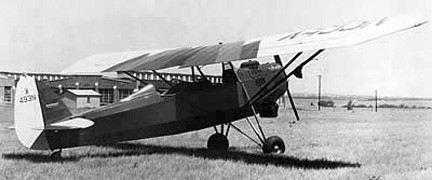
Wiley Post acquired rights to Straughan assets 1935, and transferred production to Oklahoma City. Thirteen Model As built before company liquidated after Wiley Post’s death.
Engine: 40hp Straughn AL-1000 (converted Ford A)
Wingspan: 28’6″
Length: 19’9″
Useful load: 393 lb
Max speed: 82 mph
Cruise speed: 70 mph
Stall: 28 mph
Range: 110 mi
Seats: 2
Wiley Post Aircraft Corp
Founded in Oklahoma City in 1935 to build Model A, cheap two-seat aircraft. Powered by converted Model A Ford engine, the first example was built by Straughan Aircraft. Wiley Post acquired rights to Straughan assets 1935, and transferred production to Oklahoma City. Thirteen Model As built before company liquidated after Wiley Post’s death.
Wilcoxsen M-1 Monoplane / The Cloud-Boy
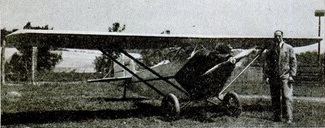
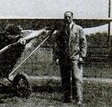
Ray Wilcoxsen of Indiana, USA, built in 1930 an aircraft for the light plane market, powered by a rebuilt Henderson motor cycle engine.
Wilcoxsen received a Commerce Department permit to fly the plane and planned to sell complete aircraft for $960 and plans for homebuilders.
Engine: Henderson motorcycle, 27 hp at 3000 rpm
Wingspan: 27 ft 3 in
Length: 14 ft 6 in
Empty weight: 280 lb
Fuel capacity: 7 USG
Max speed: 76 mph
Wilcoxsen, Ray
Indiana
USA
Built in 1930 the Wilcoxsen M-1 Monoplane “The Cloud-Boy”.
Wilbur 1931 Airplane
In 1931 Joe W Wilbur of Exeter NH., USA built a two place, open cockpit, monoplane N998M c/n M-2A. Powered by an 80hp Anzani, it was sold on 15 March 1937 and relocated in New Jersey. It was scrapped on 17 March 1938.
 All Aero