Gloster G.14 Gannet

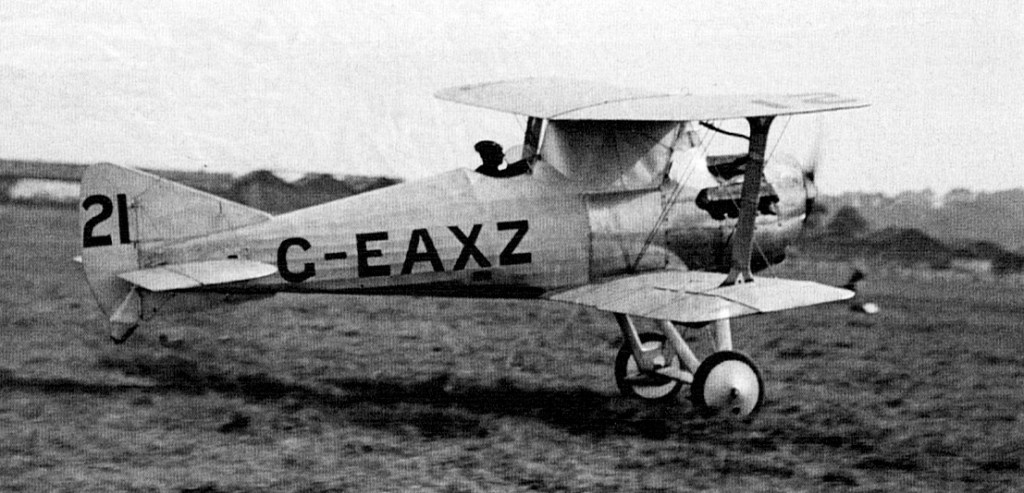
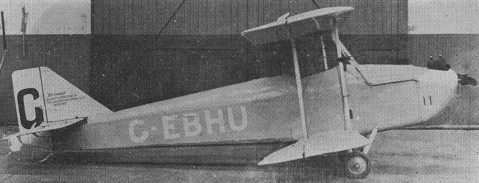
The Gloster G.14 Gannet, G EBHU, was registered on August 15, 1923 to the Gloucestershire Aircraft Co. Ltd. it was designed by H. P. Folland and built for the 1923 Lympne Trials, from which it retired when its 750cc Carden two stroke engine had cooling troubles.
In 1924 it was re engined with a 698cc Blackburne Tomtit, with which it had a top speed of 72 m.p.h. Although its registration was cancelled on January 25, 1928, the Gannet was exhibited at the 1929 Aero Show at Olympia.

Gloster Mars 1 / Bamel

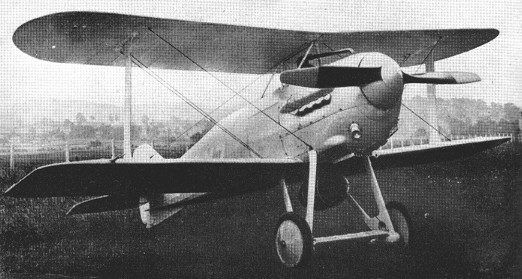
Britain’s Gloucestershire (Gloster) Company designed, built and flew the Mars 1 single seat racer in three weeks, as the prototype for a new fighter. It won the Aerial Derby in 1921, 1922 and 1923, and set up a British speed record of 196.6 mph.

Jimmy James, Gloster test pilot, taking off from Hendon at the start of the Aerial Derby on 16 July 1921. James won the Hendon-West Thurrock-Epping-Essex-Hertford-Hendon at 163 mph winning trophy and £600.

Designed by H. P. Folland, the Mars I or ‘Bamel’ was a single-seat racing biplane: the greater part of the fuselage, landing gear and tail unit being constructed from components similar to those used in the well-known Nieuport Nighthawk, which the company took over in 1920.

Engine: 1 x Napier Lion, 336kW
Max. speed: 316 km/h / 196 mph

Gloster Aircraft Co Ltd / Gloucestershire Aircraft Company Ltd

Formed in 1917 as the Gloucestershire Aircraft Company Ltd. to take over subcontract work from the Aircraft Manufacturing Company and H. H. Martyn & Co Ltd. of Cheltenham. D.H.4 and D.H.6 fuselages had been built by Martyn, and by the end of the war the company had supplied 461 Bristol Fighters and 165 RAF F.E.2bs, as well as Nieuport Nighthawks and other fuselages.
Fifty Nighthawks, renamed Sparrowhawks, were built for Japan to a 1920 order, and were shortly followed by the first true Gloucester aircraft, the Bamel single-seat racing biplane, designed and built in less than four weeks. H. P. Folland, joined the company soon after the Bamel’s completion. A line of biplane fighters followed, the Grebe and Gamecock being notable successes, and in 1926 the company was renamed Gloster Aircraft Company Ltd. moving its main factory to Hucclecote, Gloucester.
Up to 1930, all but one of their machines had been single-engined, the exception being the A.S.31, which was not originally a Gloster design but based on the de Havilland DH.67B.

Joining the Hawker Siddeley Group in 1934, Gloster continued fighter production with the Gauntlet and Gladiator, the latter being the RAF’s last biplane fighter. Henry Folland, Gloster’s chief designer, would leave Gloster when it was taken over by Hawker in 1937.

During the Second World War Gloster built 2,750 Hurricanes and 3,330 Typhoons, and produced Britain’s first jet aircraft to specification E.28/39, the first of two single-jet prototypes flying in 1941 and leading to the twin-jet Meteor of 1944. A total of 3,545 Meteors was produced by Gloster and Armstrong Whitworth. Gloster’s final production aircraft was the twin-jet delta-wing Javelin all-weather interceptor, flown in 1951, of which 435 were produced for the RAF. Gloster ceased aircraft production in 1956.
Gloster, Armstrong Whitworth and Avro joined Hawker Siddeley Aviation in 1965.
Gerner GmbH

Germany
Foundation date not known, but by 1931 had built a two-seat all-steel light aircraft, the G.II.R, powered by BMW or Salmson engine. Later version was G.II.R6 with Hirth H.M.60 engine. Completely taken over in 1934 by specially formed new company, Adlerwerke GmbH of Frankfurt.

Gerin V-6E Varivol

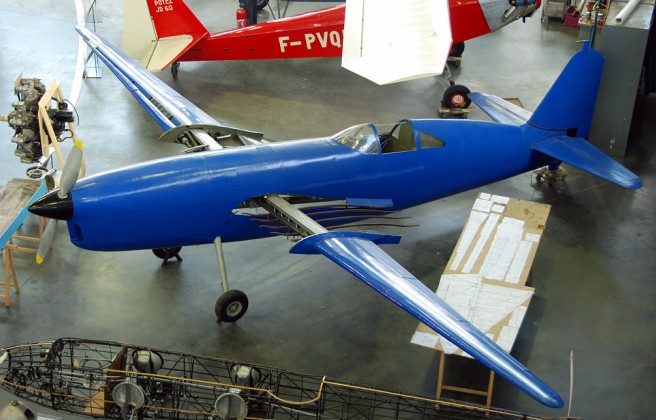
Jacques Gerin developed an aircraft with variable wingspan and wing area, the Varivol, during the 40’s. Wing trailing edges could be wound in and out by electric motor.

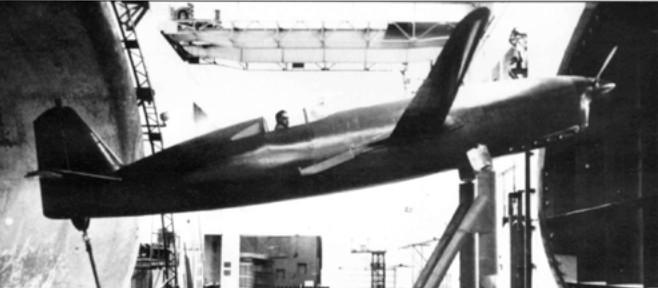
Full-scale tests in a wind tunnel at Chalais Meudon, were followed by flying tests in March 1936.

Pilot M. Demimuid was killed in a Varivol crash on November 29, 1936, but this was not attributable to variable-wing mechanism, which was intact.

Forgotten in a barn for 50 years, the craft was then restored by the Musée Régional de l’Air d’Angers.

Gerin

France
Jacques Gerin developed a biplane with variable wing area, the Varivol. Wing trailing edges could be wound in and out by electric motor. Full-scale tests in windtunnel at Chalais Meudon followed by flying tests in March 1936. Pilot M. Demimuid killed in Varivol crash on November 29,1936, but this was not attributable to variable-wing mechanism, which was intact.

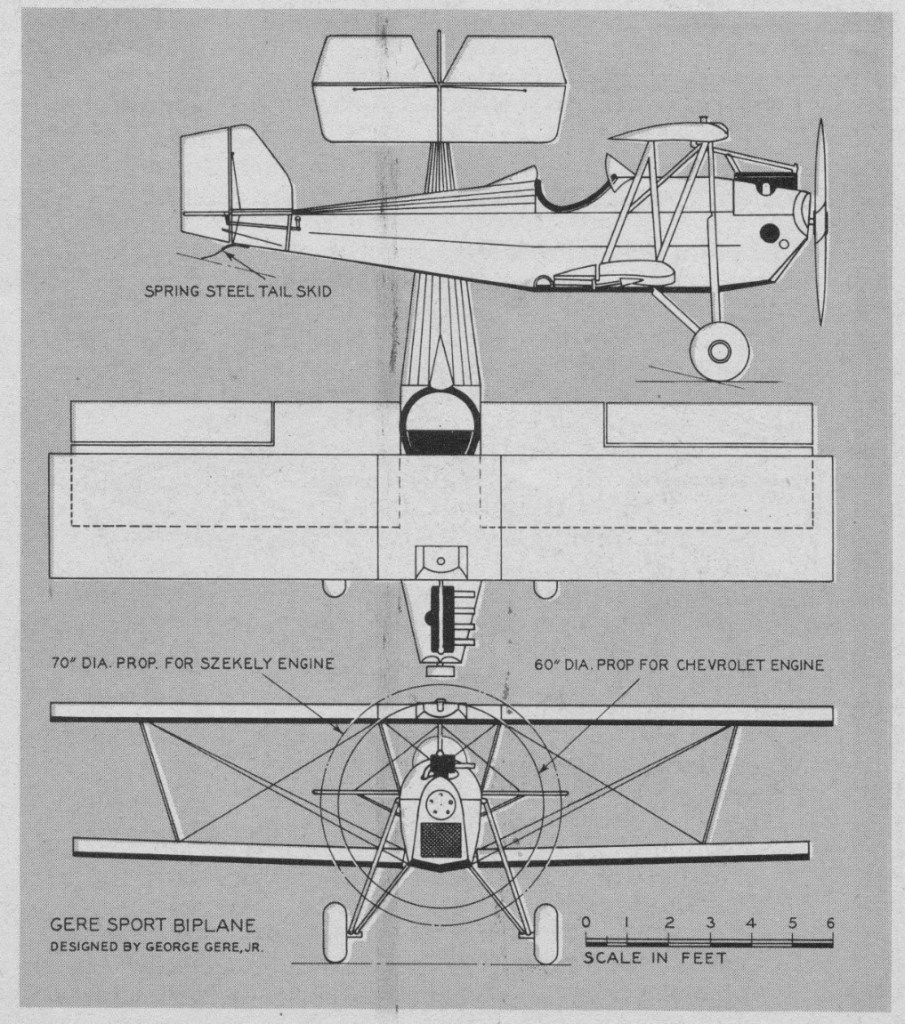
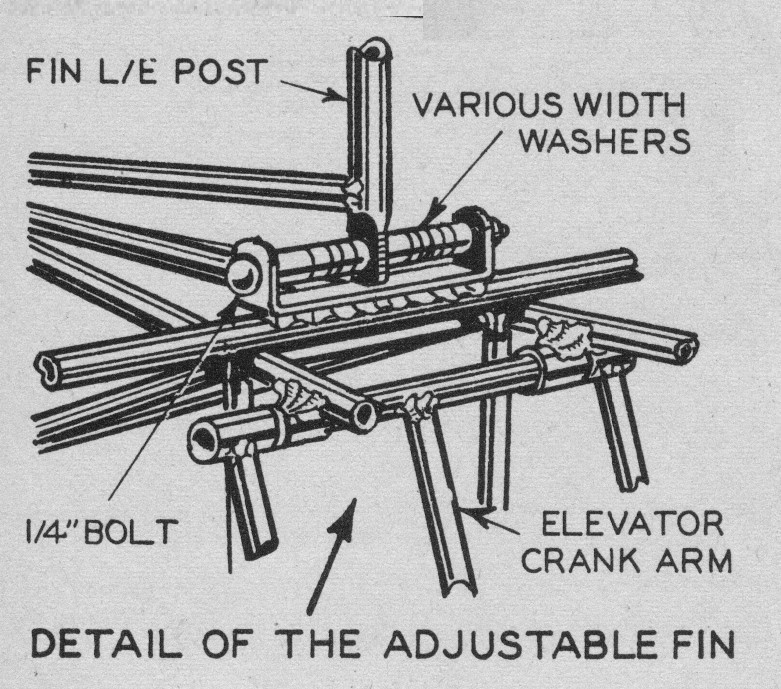
Gere Sport

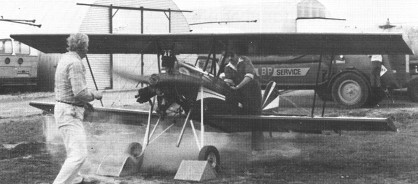
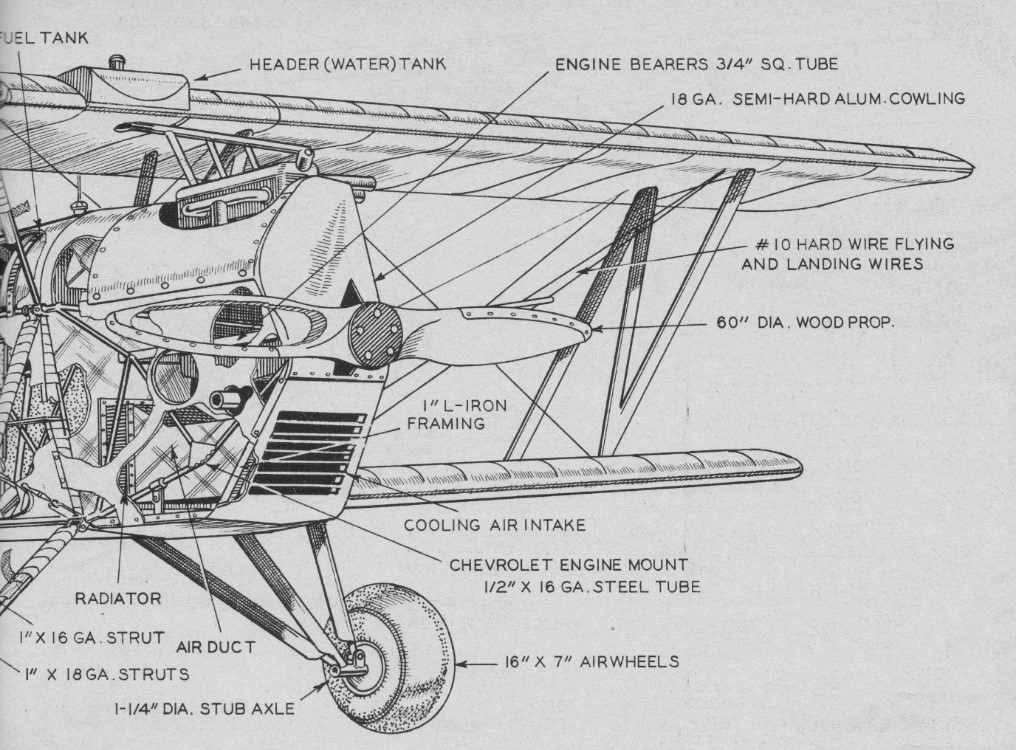
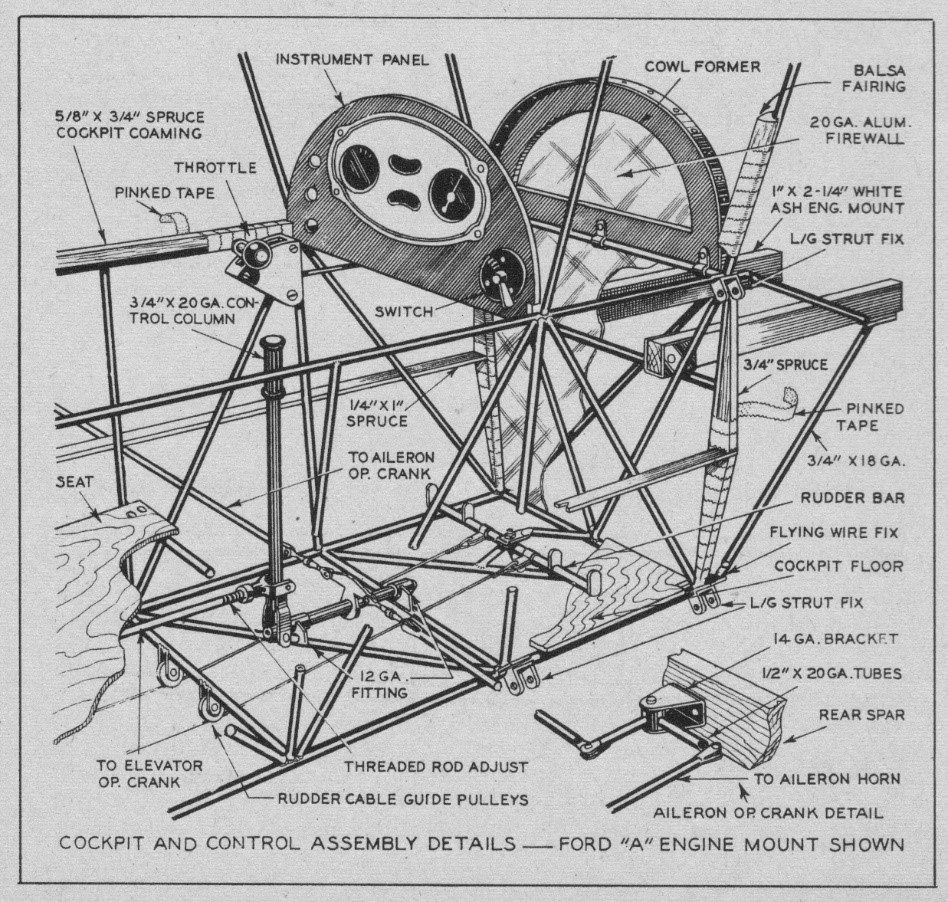
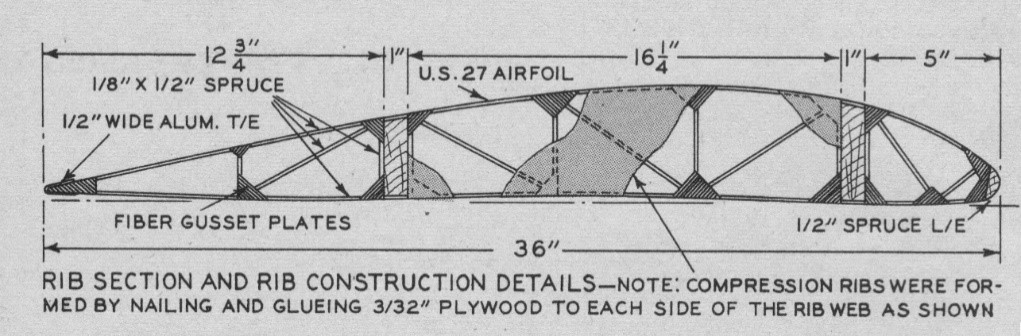
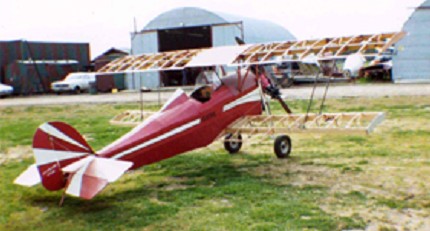
The Gere biplane was designed and built by 19-year-old student at the University of Minnesota George (Bud) Gere in 1932 and 1933. Gere was killed in a powered iceboat accident shortly before the plane was completed and his father, George Gere Snr arranged to have the final touches made. The Gere design eliminated shock struts and depended on large diameter air-wheels to take landing loads.

The biplane was test flown by Elmer Wall, a Mohawk Aircraft company test pilot, at Wold-Chamberlin Field, Minneapolis, Minnesota, in 1933.

Although the 4-cylinder Chevrolet car engine was not really suitable, Wall and other pilots who flew it had high praise for its performance.

Mr Gere donated the plane to the School of Aeronautics of the University after the flight tests were completed.

It was one of the most popular pre-World War II single seat homebuilts.

In 1933 Anthony Smokowitz of Vulcan MI., USA, modified Gere Sport N13698 c/n S-9405 with a 60hp Dayton Bear, then in 1936 a 55hp Lambert, and in 1938 a 60hp Dayton Bear again.

Engine: Szekely 3 cyl radial, 40 hp.
Seats: 1