Before the war and during the 1940s the best-known sailplanes to emerge from Switzerland were the Moswey range of training and competition single seaters designed by Georg Muller and produced by the Hegetschweiler firm.
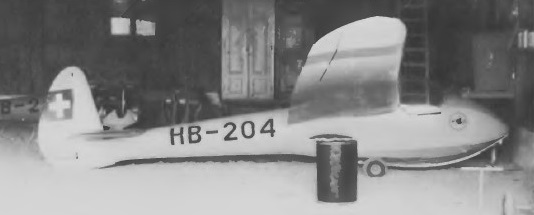
The Moswey 1 trainer of 1930 was followed in 1935 by the Moswey II, which had cantilever shoulder-mounted gull wings of 45 ft 3 in span. This was of conventional plywood and fabric construction, and in 1937 the Moswey II was among the types participating in the first International Competition to be held at the Wasserkuppe in Germany.
One Moswey II and three Mk IIAs were still on the Swiss register at the beginning of 1964.
Before the war and during the 1940s the best-known sailplanes to emerge from Switzerland were the Moswey range of training and competition single seaters designed by Georg Muller and produced by the Hegetschweiler firm.
The Moswey 1 trainer of 1930 was a braced high wing glider of 43 ft 6 in span, and this was followed in 1935 by the Moswey II.
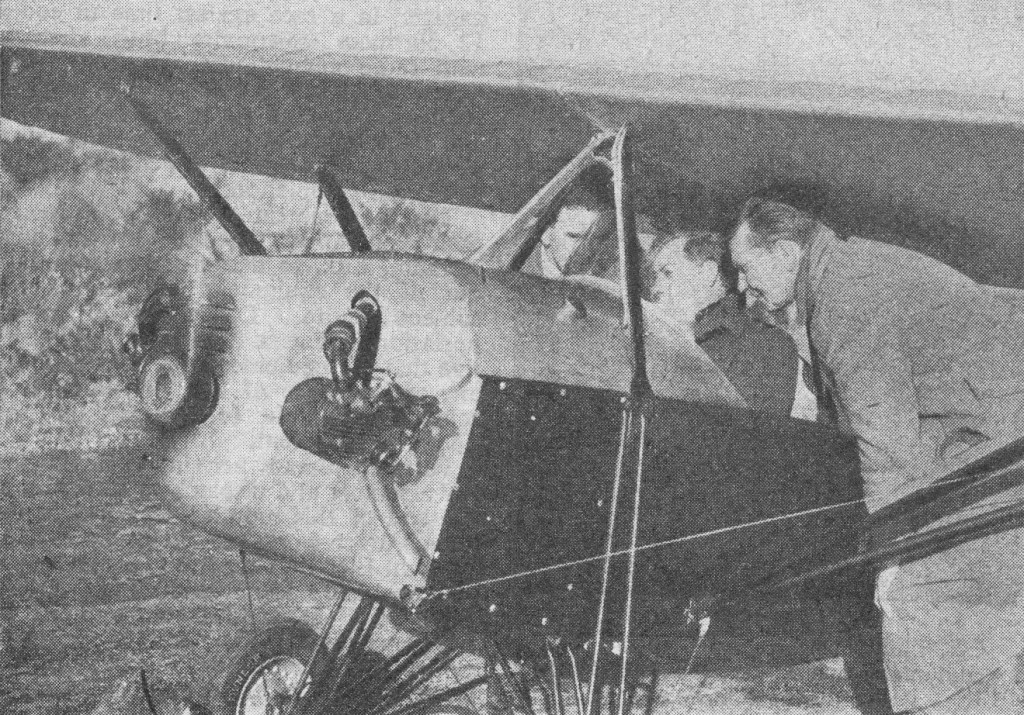
In 1919 Ed Heath designed and built his Feather biplane, designated the MA-2. It was his first ultralight airplane.
This was a single place plane with a two-cylinder Thor motorcycle engine modified by Heath’s company.
The propeller was fitted with two auxiliary blades, to act as a fan for engine cooling. The landing gear was equipped with a third wheel, extending out in front to prevent nose-overs.
Heath planned to sell these planes $1,200 ready to fly, $990 less engine and $250 for the kit of materials to build your own (less engine). The engine could be bought separately for $250.
Before Heath could get the Feather into production, the bottom dropped out of the airplane market with WW1 surplus aircraft available.
Engine: Thor 76 cu.in, 18 hp Wingspan: 20 or 24 ft Weight: 270 lb Cruise: 45 mph Seats: 1
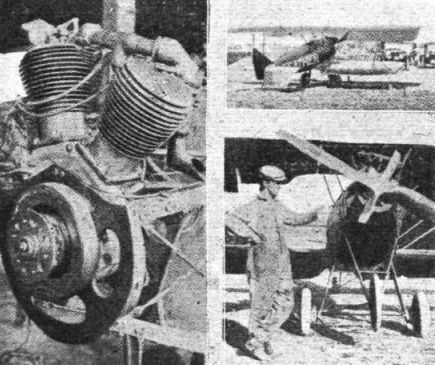
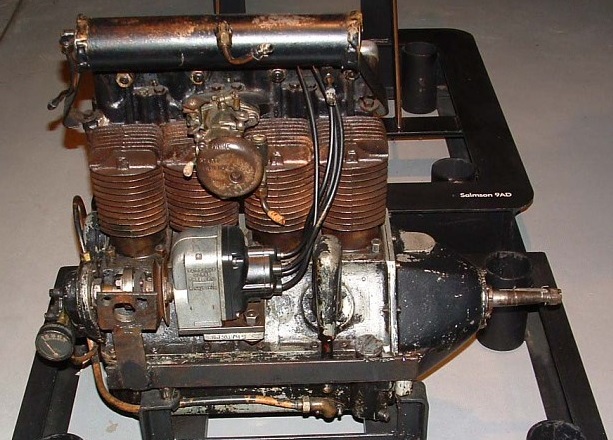
Henderson was a manufacturer of 4-cylinder motorcycles from 1912 until 1931. They were one of the largest and fastest motorcycles of their time. Many of the Henderson “DeLuxe” engines were converted by the Heath Airplane Company as Model B-4s which featured a modified lubrication system, different valves, and removal of the transmission. The B-4 mainly powered the small and economical Heath Parasol monoplane, which Heath sold in kit form for homebuilders in the 1920s and ‘30s.
The Heath Airplane Company’s Model B-4 was an in-line, four-cylinder, air-cooled Henderson motorcycle engine converted for use in aircraft by modifying the lubrication system and the valves. The B-4 mainly powered the small and economical Heath Parasol monoplane, which Heath sold in kit form for homebuilders in the 1920s and ’30s.
The low-cost, reliable Henderson motorcycle engine was well-suited for the Heath airplane design because it helped make sport flying affordable for many people. Service was simple and economical because parts were cheap and easy to obtain throughout the country.
Type: Reciprocating, In-line, 4 cylinders, air cooled Power rating: 30 hp / 22.4 kW at 3,000 rpm Displacement: 83 cu in / 1400 cc Bore and Stroke: 70 mm (2.8 in.) x 89 mm (3.5 in.) Weight: 119 lb / 54 kg Length 64.1 cm (25.25 in.) Width 36.8 cm (14.5 in.) Height 61 cm (24.0 in.)
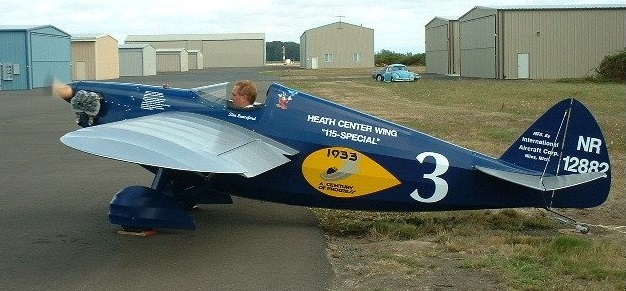
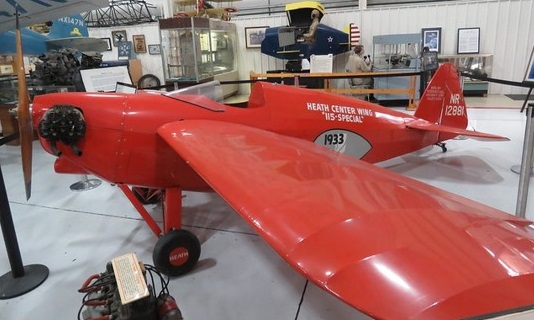
Heath CNA-40 C/N TD-3, Heath 115 Special Racer NR 12882 restored 2007
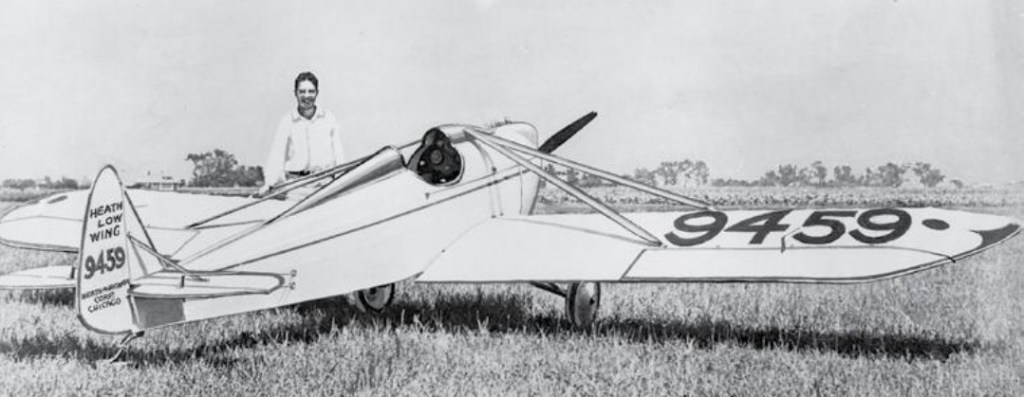
The 1933 Heath CNA 115 Special is a competition version of CNA-40 with clipped wing and bigger propeller for improved performance in races.
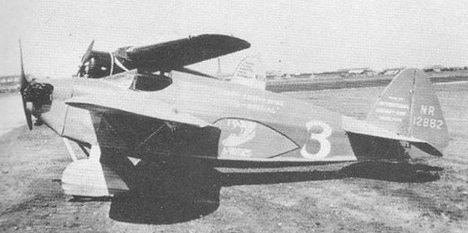
Heath CNA NC12892 was modified for racing and named the 115 Special. Higher turtledeck, shorter tapered wings, wheels pants, and general overall refining improved performance. After appearing in the 1933 races, NR12882 was returned to ATC status which included longer constant chord wing with full span ailerons. It did retain the raised turtledeck.
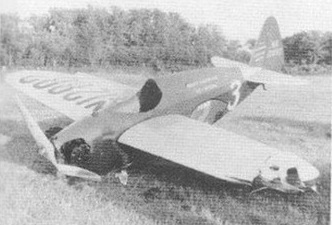
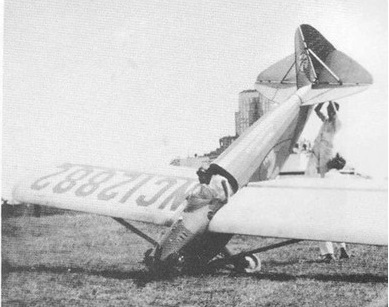
The first flight of NR12882, after modifications, ended with an engine failure. Pilot Bill Kysor ran out of altitude and ended in a ditch bordering Niles Airport.
Following the Chicargo races, after it was returned to ATC status, NC12882 suffered another incident.
One was built as Hansen Special, NR282W, and restored in 1965.
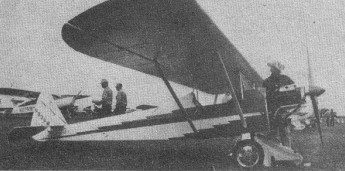
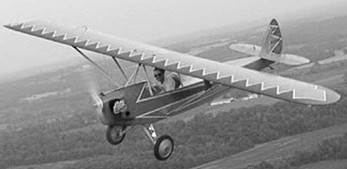
Designed and built originally in the U.S.A. by Ed. Heath during the early 1930s, this single seat sports aeroplane was built in large numbers prior to the 1939-45 War. The Parasol was powered mainly with Heath’s own conversion of the 25-hp Henderson motorcycle engine. Production was undertaken for an early version of this aircraft in Australia, as early as 1931 by the Adcock-Heath Co.
The fuselage is built of welded steel tube and is fabric covered. The wings consist of two solid spruce spars, built-up wooden ribs, compression struts and internal bracing. Externally, the wings are braced by steel tubes to the fuselage. The empennage is built of wood, the fin and tailplane being externally braced. The whole aircraft is fabric covered. Two 5 Imp. gallon fuel tanks are installed at the root end of each wing half, the fuel being gravity fed to the engine.
While some were factory built, and the last model actually received an Approved Type Certificate (ATC) in 1932, the majority were homebuilt from factory-supplied kits or from magazine plans. Still being built, this single-seater is usually powered by either a Volkswagen conversion or a 65 hp Continental and is constructed of wood, fabric and tubular steel.
A Plymouth Aero Club member flew a Parasol in the UK powered by a Douglas dirt track motor cycle engine.