Built in 1928 by Richard E Young in 1928, the Model A / Special cabin biplane first flew on 5 October 1928. The registration NX7960 was cancelled on 1 January 1959.
Engine: Warner Scarab, 90hp
Wingspan: 28’0″
Length: 19’6″
Seats: 4
Built in 1928 by Richard E Young in 1928, the Model A / Special cabin biplane first flew on 5 October 1928. The registration NX7960 was cancelled on 1 January 1959.
Engine: Warner Scarab, 90hp
Wingspan: 28’0″
Length: 19’6″
Seats: 4
Ypsilanti MI.
USA
Airplane builder circa 1928.
Circa 1922 J.J.Young built a single place coaxial rotor helicopter. The rotors consisted of carved propellers driven by a rotary engine. It is not known if the machine was flown.
Oklahoma City OK.
USA
A coaxial rotor helicopter c.1922.
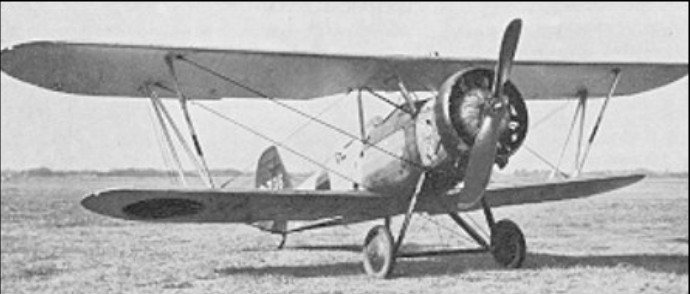
The most important of the Yokosuka-designed trainers, was the Yokosuka K5Y1, first flown during December 1933. Adopted in January 1934 as the Navy Type 93 Intermediate Trainer, it was built to a total of 5,770 by the end of the Pacific war, being allocated the Allied codename ‘Willow’. Built in three versions, with float and wheel landing gear, the 11.00m span K5Y1 with a 254kW Hitachi Amakaze radial engine had a maximum speed of 212km/h.
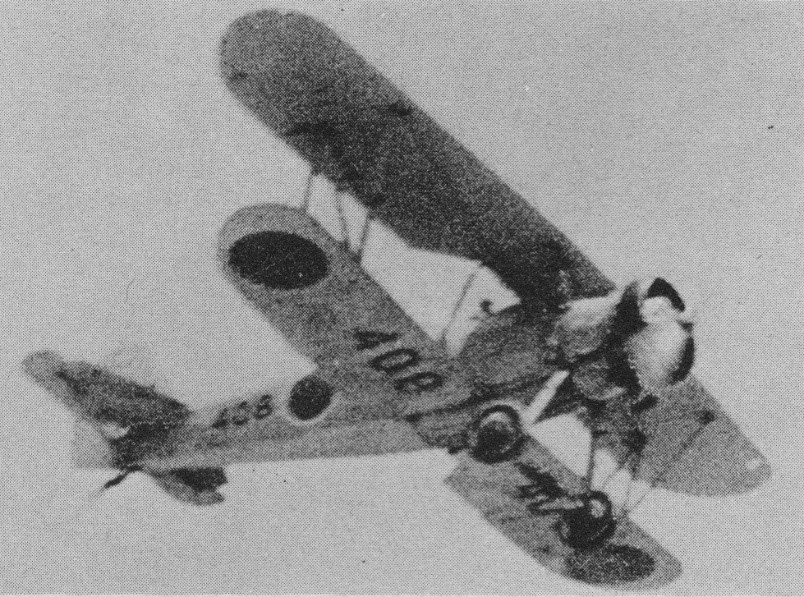
Produced by seven different manufacturers over 12 years the K5Y was called Akatombo or Red Dragon by the Japanese as the Type 93 basic trainers were painted bright red-orange.
K5Y1
Engine: 1 x Hitachi Amakaze-11, 255kW
Max take-off weight: 1500 kg / 3307 lb
Empty weight: 1000 kg / 2205 lb
Wingspan: 11.0 m / 36 ft 1 in
Length: 8.05 m / 26 ft 5 in
Height: 3.2 m / 11 ft 6 in
Wing area: 27.7 sq.m / 298.16 sq ft
Max. speed: 212 km/h / 132 mph
Cruise speed: 140 km/h / 87 mph
Ceiling: 5700 m / 18700 ft
Range: 1020 km / 634 miles
Crew: 2
Armament: 2 x 7.7mm machine-guns
Bombload: 2 x 30-kg and 10 x 10-kg


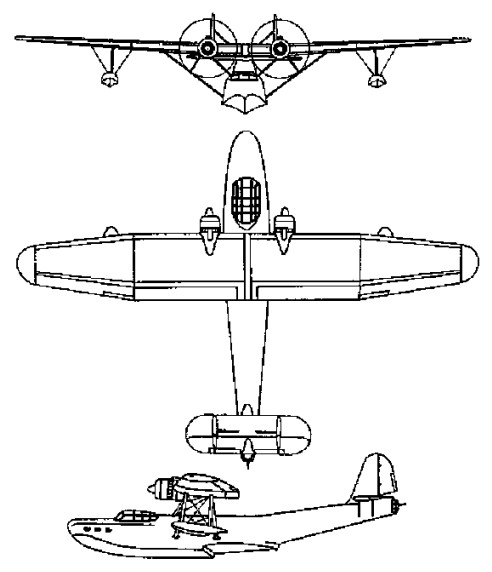
In 1934 the staff of the Yokosuka Navy Arsenal turned their hand to the design of a twin-engined flying-boat, the Yokosuka H5Y powered by two 895kW Mitsubishi Shinten 21 radial engines. Although built to a total of 20 during 1936-40 as the Navy Type 99 Flying-Boat, its performance was disappointing and, consequently, was deployed only on second-line duties.

Early in the war an unidentified twin-engined flying boat was spotted on non-combat duty around Japanese Naval bases. The allied code name ‘Cherry’ permitted identification before the manufacturer’s name and designation was discovered through prisoner interrogation over a year later.
H5Y1
Engine: 2 x Mitsubishi Shinten-21, 895kW
Max take-off weight: 12500 kg / 27558 lb
Wingspan: 31.57 m / 104 ft 7 in
Length: 20.52 m / 67 ft 4 in
Max. speed: 305 km/h / 190 mph
Ceiling: 5200 m / 17050 ft
Range: 4700 km / 2921 miles
Crew: 6
Armament: 3 x 7.9mm machine-guns
Bombload: 500kg

The Yokosuka B4Y1 three-seat carrier attack bomber was designed to meet a requirement of 1934, the evaluation of five prototypes with different power-plant being followed by 205 production aircraft built during 1937-38. Designated officially as the Navy Type 96 Carrier Attacker, these aircraft were used as advanced trainers after Pearl Harbor but, as the Allies believed they were still in first-line service, the type was allocated the code-name ‘Jean’.

B4Y1
Engine: 1 x Nakajima Hikari-2, 630kW
Max take-off weight: 3600 kg / 7937 lb
Empty weight: 2000 kg / 4409 lb
Wingspan: 15.0 m / 49 ft 3 in
Length: 10.15 m / 33 ft 4 in
Height: 4.36 m / 14 ft 4 in
Wing area: 50.0 sq.m / 538.20 sq ft
Max. speed: 278 km/h / 173 mph
Ceiling: 6000 m / 19700 ft
Range: 1580 km / 982 miles
Crew: 3
Armament: 1 x 7.7mm machine-guns
Bombload: 800-kg torpedo or 500kg of bombs

Yokosuka’s B3Y1 Navy Type 32 carrier biplane bomber first flew in 1932.
Yokosuka’s B3Y1 Navy Type 32 carrier biplane first flew in 1932. Some 200 B4Y1 attack aircraft followed, those remaining in service Second World War known as “Jean” to the Allies. The D4Y Suisei (“Judy” two-seat
carrier dive-bomber was in service by the Battle of Midway in 1942 and appeared also in D4Y2-S nightfighter and D4Y4 suicide attack variants. The P1Y1 Ginga (“Frances”) twin-engined naval attack bomber/nightfighter entered production in 1943 at Nakajima factories. Yokosuka developed also the MXY-7 Ohka (Cherry Blossom) kamikaze piloted missile-bomb, derisively dubbed Baka (“fool” in Japanese) by the U.S. Navy, and of which production by various manufacturers totalled about 800.
Designed by Pavel Yeyemeyev as a single-seater aerobatic trainer, the Yeremeyev Staliniets-3 (Russian: Еремеев “Сталинец-3”) was built between March and May 1935 by enthusiasts in Yeisk.
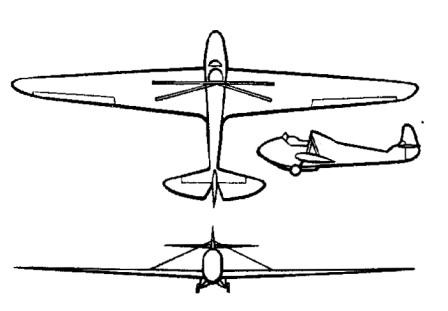
The Staliniets-3 was an all-wood single-seater glider, unlike its previous model, the “Staliniets-3” was conceived as a high-low-wing monoplane using inverted V-uprights. The wing design used the TsAGI R-II profile proposed by the engineer PP Krasilschikov and had a trapezoidal shape in the plane, with rounded ends.
The fuselage, with an oval section and covered in plywood, made the transition in the tail area towards a small keel to which the offset and elliptical rudder was attached. The stabilizers were located in the middle of the empennage, braced by uprights to the rear fuselage structure.
The pilot was located in an open cockpit in the forward region of the fuselage. The landing gear was of the conventional type and featured small wheels located on the sides of the fuselage.
Built in Yeisk by Yeremeyev in 1935, the Staliniets-3 glider was entered in the XI National Sailing Competitions held in Koktebel between September 6 and October 6, 1935. In these competitions its performance was good.
The pilots who flew it highlighted that it presented good control and was able to respond without problems to the controls during the execution of school piloting figures. Its landing speed was considered high, but the glider handled the manoeuvre meekly.
The only problem pointed out by the pilots was that the pedals in the cockpit were very close to each other, which brought confusion and fatigue on long flights.
Staliniets-3
Wingspan: 10.09 m
Wing area: 9.25 m²
Aspect ratio: 12.8
Length: 4.60 m
Height: 1.20 m
Empty weight: 131 kg
Ailerons area: 0.90 m²
Wing loading: 22.8 kg / m²
Accommodation: 1
 All Aero