315 Passaic St
Rochelle Park NJ.
USA
Circa 1929 built one aircraft
315 Passaic St
Rochelle Park NJ.
USA
Circa 1929 built one aircraft
In 1917 the Maryland Pressed Steel Company of Hagerstown, MD hired Bellanca as a consulting engineer.
The aircraft department of Maryland Pressed Steel Company at Hagerstown, Maryland, built designs of Joseph Bellanca, who in 1919 developed single-seat CD biplane powered by 35 hp Anzani engine, and the CE two-seat biplane. With the conclusion of WWI, Maryland Pressed Steel’s contracts were cancelled and the company entered into receivership. Thus, the CE never went into production. Activity ceased and Bellanca joined Omaha Aircraft Corporation in Autumn 1921.
Based at Woking, Surrey, with premises at Brooklands, the partnership of H. P. Martin and G. H. Handasyde built series of monoplanes from 1908 to 1914. Martinsyde Ltd. was registered in 1915 and undertook subcontract production of RAF B.E.2c and S.E.5A.
The first original wartime design was S.1 single-seat scout, built October 1914. The G.100, a large single-seat fighter with Beardmore engine, appeared in late 1915. Later examples with more powerful Beardmore engine were designated G.102; both known colloquially as Elephant, derived from their size.
Six prototypes of the F.3 fighter were ordered in 1917, and developed into the F.4 Buzzard which was ordered in quantity although only 52 had been delivered by Armistice in 1918. Some civil use in developed forms, some sold to overseas air forces.
The company went into liquidation 1921.
With the liquidation of the Martinsyde company in February 1924, and the acquisition of its stores, stocks and goodwill by the Aircraft Disposal Company (A.D.C.), the latter continued development of the Buzzard (see Aircraft Disposal Company A.D.C.1).
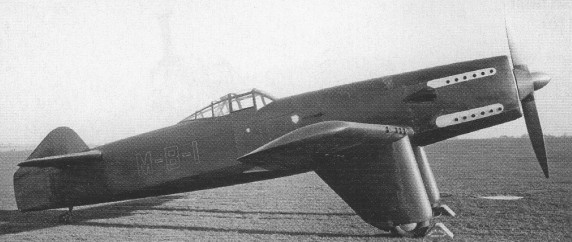
In 1935, with a company employing 35 people, Air Ministry Specification F5/34 called for a single seat monoplane interceptor armed with six or eight machine guns. A retractable undercarriage was required and an enclosed cockpit; a speed of at least 275mph (442kph) at 15,000ft (4,572m) was stipulated.
This requirement was taken up by Bristol (Type 146 835hp/622kW Bristol Perseus), Vickers (Venom 625hp/466kW Bristol Aquila), and Gloster (G.38 840hp/626kW Bristol Mercury IX). James Martin submitted the MB.2.
Funded as a private venture, Napier lent an air cooled Dagger M.3 24 cylinder upright ‘H’ type engine with a rated output of 798hp at 5,500 ft / 1675m. The Dagger was not yet fully developed and suffered from lack of power yet the particular engine (No 77101) eventually installed in the MB.2 seems never to have given any trouble. Cooling air was exhausted through a controlled outlet on the fuselage underside.
Other equipment to support the MB.2 included a fixed pitch, two bladed wooden airscrew from the Airscrew Company and Jicwood Ltd and a set of eight Browning 0.303 in machine guns, taken from the first batch manufactured under licence in Britain, in 1937. The build phase for the MB.2 began in March 1936, the month of the first flight by the prototype Spitfire.
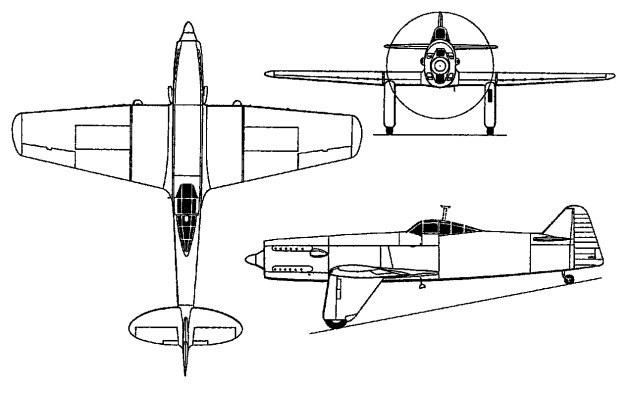
Conceived for manufacture in large numbers by semi¬skilled workers at low cost, the M.B.2 employed a steel-tube structure with fabric skinning, and carried an armament of eight 0.303-in (7,7-mm) Browning guns in the wings. The depth of the fuselage was virtually constant from nose to tail and vertical tail surfaces were eliminated, the rudder being hinged to the sternpost behind the elevators.
The MB.2’s airframe employed the previous steel tube process, but stronger, and metal skinning was used more widely. The enclosed cockpit was placed well back and given a raised canopy with glazing fore and aft.
The canopy was hinged to starboard but could not be jettisoned. The rear glazed area of the hood enclosed an electrically operated extendible crash post which was automatically actuated when the flaps were lowered. The fuselage lines were square cut, the depth being almost constant from engine to sternpost. A tubular cradle supported the engine which had stub exhaust ports. The metal covered areas of the fuselage, forward of the aft cockpit area, were equipped with quick release inspection panels held with Dzus fasteners.
The wingspan was shorter than the fuselage length, but designed to enhance stability and control in yaw. The wing was constructed as a centre section and two outer panels. A small amount of dihedral was employed and the wing tapered slightly along the leading edge but more acutely along the trailing edge. Blunt tips were provided, together with inset ailerons. The wing carried the eight machine guns in two clusters of four, outboard of the undercarriage.
Martin elected to employ the rear fuselage as the fin, with the rudder hinged to the sternpost, the design lacking any conventional fin at all, in order to reduce weight and drag. With balancing of the fuselage keel area, the tailplane was high mounted so that the rudder could operate effectively.
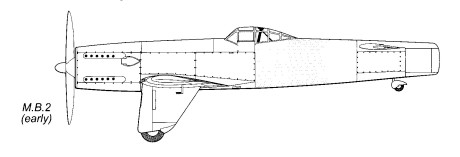
To save development time the undercarriage was fixed, with trouser fairings. To reduce drag further, Martin fitted the oil cooler in the leading edge of the port fairing. A 60 lb/sq.in pneumatic system operated the split flaps and the wheel brakes. There was no hydraulic system.
The aircraft was generously provided with inspection and maintenance access points. The engine complete could be removed and replaced in less than 90 minutes. The complete outer wing assembly could be removed in 25 minutes. The machine guns, together with their ammunition tanks, were locked in position with pins, removal via a very large access panel taking just five minutes.
The private venture MB.2 prototype was completed in July 1938, the Air Ministry making RAF Harwell available for flight tests. The MB.2 arrived late in the month, painted in a strange “air force green” livery overall, and sporting the totally unofficial identity ‘M B 1’.

Val Baker first flew this prototype on August 2, 1938, a few days after the sixth production Spitfire had been delivered to the RAF. He found that directional stability was poor. The aircraft was quickly fitted with a vestigial fin, and also at that time, allotted the civil registration G AEZD. Even with the addition of the miniature fin, Baker found the handling unsatisfactory, though he achieved a level speed of 320mph (515km/h) at a weight of 5,530 lb (2,500kg), which included guns and ammunition.
After initial company tests, the Air Ministry accepted the MB.2 for evaluation purposes, the aircraft being repainted overall deep olive green and allotted the service serial P9594. It arrived at A&AEE, then still at Martlesham Heath, during November 1938. James Martin went with the aircraft and explained to those concerned his thinking behind the configuration.
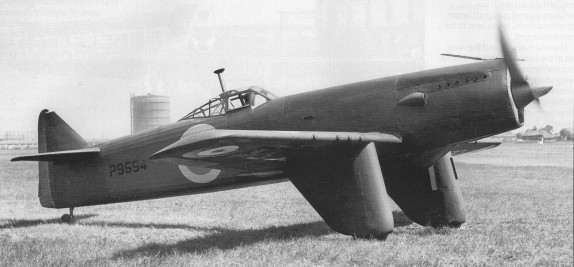
In the official A&AEE report, which was issued the following month, the MB.2 received high praise as a piece of engineering. As a flying machine it was unpopular. The ease of maintenance and accessibility drew considerable acclaim. The cockpit area attracted mixed comments. It was praised as warm and comfortable, roomy and draught free, but the unjettisonable canopy was criticised. The wind down side windows were popular but an openable direct vision panel ahead was needed. The cockpit was assessed as difficult to enter and an extra step was suggested. However, the excellent view from the cockpit drew favourable comment, as did the crash pylon.
Flap actuation also attracted criticism; the flaps were operated by a simple lever which provided full flap for landing, without an intermediate setting, and only a meagre warning light showed when they were down. The A&AEE suggested a more positive flap position indicator, and also different trimming facilities. Armament arrangements were praised; the guns were made accessible through quick release hatches and working platforms were formed into the wing upper surfaces.
The handling of the MB.2 was unacceptable to the testing authorities. The elevators were over sensitive, particularly with power off; lower gearing was suggested. Ailerons left much to be desired, being ineffective at low speeds and heavy at high speeds. The rudder layout was found to be particularly poor and produced considerable yaw even with small movements. At high power, even full left rudder could not prevent a gentle turn in the opposite direction. Stability in all three planes was thus found wanting, and consequently the MB.2 made a poor gun platform. Finally it was an uncomfortable ride for the pilot.
After the tests at Martlesham P9594 returned to Denham, where the fin and rudder were modified once more, taking on a larger and more conventional appearance. A study was also carried out to enlarge the tailplane, in order to improve pitch behaviour and encourage gliding properties. The modifications appear to have rectified the stability and control problems, for Val Baker was able in May 1939 to give an inspired demonstration at Heston, which included steep, low level turns and a dive at some 400mph (644km/h). It seems that the length of the Dagger, which might have reduced power of manoeuvre except in roll, was offset by the comparatively short wing span.
The Air Ministry purchased the only MB.2 built in July 1939 intending to use it as a test bed, the aircraft eventually returning to Denham where it was dismantled in 1941.
Engine: One 798hp (595kW) Napier Dagger M.3 24 cylinder H-¬type piston
Max speed 320mph (514km/h)
Normal range 300 miles (482km)
Operational ceiling 31,000ft (9448m)
Empty weight 3,840 lb (1,741kg)
All up weight 5,400 lb (2,449kg)
Wingspan 34ft (10.3m)
Length 34ft 6in (10.3m)
Height 12ft 3in (3.3m)
Wing area 235sq.ft (21.8sq.m)
Armament: Eight 0.303 in Browning machine guns.
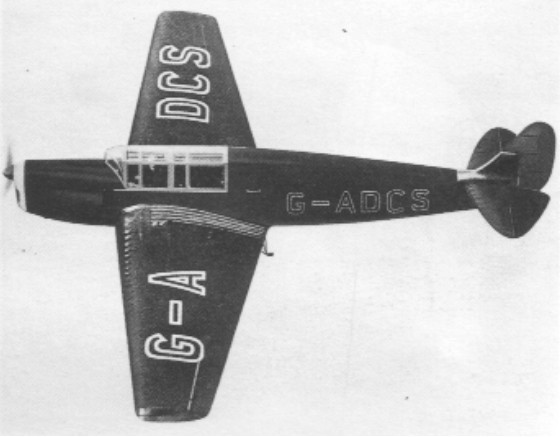
The M.B.1 was built primarily to demonstrate Martin’s original patented system of lattice-girder construction patented by James Martin in 1931. Designed during the late summer of 1934 and was a two seat low wing cabin monoplane.
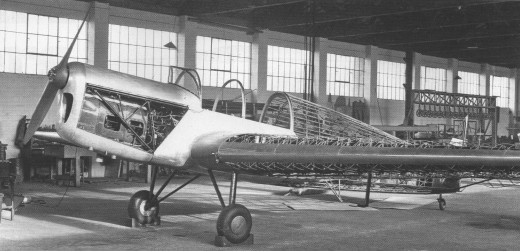
The entire primary structure was built from thin gauge high tensile steel tube, cut to a precise length with a hacksaw. The tube ends were secured to each other either by brazing or (more frequently) by flattening, brazing and drilling the ends, then fastening with a bolt to a castle nut brazed inside a small cylindrical insert fixed in the adjacent tube. The advantages of this type of metal structure were simplicity and lightness of construction, versatility, and the benefit that unskilled labour could be utilised during manufacture. Martin was especially concerned that his new aircraft, known simply as the MB.1, should be straightforward to construct and maintain. Because very little light alloy was used in the manufacture, delay and cost through heat treatment and anti corrosion processes was avoided to a great extent. All the elements for the tubular structure, inserts, saddle¬-washers and castle nuts, were produced in house.
The low set monoplane wing of the MB.1 wing spar was based on three span wise thin gauge steel tube booms, two forming the aft surface, one mounted almost vertically above the other, and the third forming the leading edge. These booms became thinner, and tapered towards each other towards the wingtip. The wide base of this pyramidal spar, together with the large diameter of its component booms, provided considerable strength, especially in torsion. Inserts and bolts secured linking tubes which were used to add to the spar strength. Wing ribs constructed from brazed small diameter T.5 tube were then bolted to the spar, as were the wing stringers. Welded aluminium fuel tanks of long, thin triangular section were mounted inside the spars. The wings of the MB.1 were designed to fold, to minimise storage space, the folding procedure being a one man operation. The same method of manufacture was also used on the tail surfaces.
The rear section of the fuselage was also of bolted tube. Machined, flanged steel sleeves, attached to the longerons at focal points, provided stringers, the area being faired by light metal hoops of near oval shape. The mid and forward fuselage construction was principally of brazed tube. Evidence of Martin’s attention to systems detail was provided by the cock assemblies, for fuel supply, pump isolation and other functions which were loaded with a spring ball giving ‘feel’ when they were actuated.
The MB.1 was powered by a 160hp (119kW) Napier Javelin IIIA six ¬cylinder inverted in line engine, with electric starting, lent to Martin Baker by Napier. A fixed pitch two bladed wooden airscrew was fitted, the engine installed in a brazed tubular mounting. The practical nature of the MB.1 was particularly evident around the nose where the doping pump had connections to both the carburettor and the induction pipe, the inlet manifold being lagged and warmed, the fuel and oil filters being easily accessible.
The cowling side panels could be supported from their hinges in a horizontal position to form shields should maintenance be necessary while the engine was running.
The MB.1 was entirely fabric covered apart from the fin and the wing walkways which wore Duralurnin skins. Undercarriage arrangements were very simple and again employed tubular construction with uncomplicated shock absorber struts and low pressure tyres.
By the end of March 1935 the aircraft was completed and it was taken by road to Northolt. It was eventually given the civil registration G-ADCS, and Capt Baker took the aircraft for its first flight in April 1935, painted black overall. He found that it possessed good flying qualities and had a maximum speed of 125 mph. The company recorded that ‘DCS had “sound inherent flying qualities”.
With severe cash flow problems, only one MB.1 was built, flying for only a few hours before being placed in storage at Denham after work began on the M.B.2, but in August 1939 the M.B.1 was inspected (and rejected) byAir Ministry representatives for possible impressment into national service.
It is 99 per cent certain that it was burnt in an April 1940 fire at Denham, which destroyed the existing factory. It was definitely not lost in a fire in March 1938.
Engine: One 160hp (119kW) Napier Javelin IIIA six cylinder in¬line piston
Max cruising speed 140mph (225kph)
Stalling speed 50 mph (80kph)
Endurance 3 hrs 30 mins
Empty weight 1,5601b (707kg)
All up weight 2,3501b (1,065kg)
Wing span 37ft (11.2m)
Length 28ft 10in (8.7m)
Height 9ft 9in (2.9m)
Wing area 206sq.ft (19.1sq.m)
Martin’s first design was a side by side two-seat low wing monoplane with a Cirrus Hermes engine. The drawings for the M.1 were prepared during late 1929. Engine runs and other ground tests were made on a completed fuselage which vindicated the chosen arrangement; however, the project was not completed due to lack of funds.
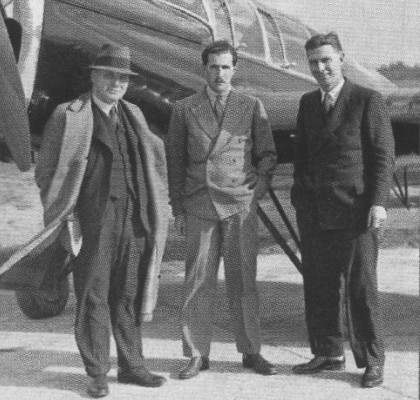
Martin-Baker Aircraft was established on August 17,1934, when Mr James Martin joined forces with Capt Valentine Henry Baker (and Mr Francis Francis, who provided the finance) to form the new company at Higher Denharn near Uxbridge in Buckinghamshire. The three men all became directors of the firm, which initially operated under the name “Martin’s Aircraft Works”.
The first objective was to build the experimental M.B.1 two-seat light aircraft. The original offices and works buildings at Denharn were destroyed by fire on April 26, 1940, but by mid-1941, some new modern buildings had been built to replace them. A July 1941 Air Ministry report noted how the conduct of the company’s affairs was characterised by the usual indifference to accounting detail, often found when technical men with outstanding ideas were financed by a wealthy man, all of whom were following an ideal rather than making a profit. The Ministry found no evidence of slackness or extravagance at Martin-Baker, but an air of quiet efficiency about the offices and factory and all connected with them.
Martin was born in September 1893, Martin went on to become an engineer and inventor, designing and building a wide variety of machines when a teenage. In 1929 Martin established his own engineering firm but when he became chief designer and managing director of Martin-Baker in 1934, aviation became his chief interest.
Valentine Henry Baker was born in August 1888 and served with all three Services in the First World War (during which he was awarded the Military Cross and the Air Force Cross). In 1917 he became a flying instructor, and resulted in the establishment of his flying school at Heston, Baker’s students included several members of the royal family and Arny Johnson. In Martin-Baker his main job was company test pilot.
James Martin had evolved a method of steel-tube construction and built experimental MB.1 two-seat light aircraft to demonstrate construction system, flown March 1935. In 1935, with a company employing 35 people, James Martin called for the latest Air Ministry Specification F5/34, to find out what the RAF would require of a new interceptor fighter. Private venture MB.2 eight-gun fighter with Napier Dagger engine flown 3 August 1938. MB.3 experimental fighter with Napier Sabre first flown 31 August 1942, followed by MB.5 with Rolls-Royce Griffon 83 driving contrarotating propellers, which made maiden flight May 23,1944.
Martin-Baker became a leading manufacturer of ejection seats, having made first live firing on May 11,1945.
With the experience gained from the conversion of Motor Cadet PFA.1385, P.J.Martin began building a definitive motor glider which he call the Martin Slug.
It was given the PFA number 1388 and was to be powered by a VW engine.
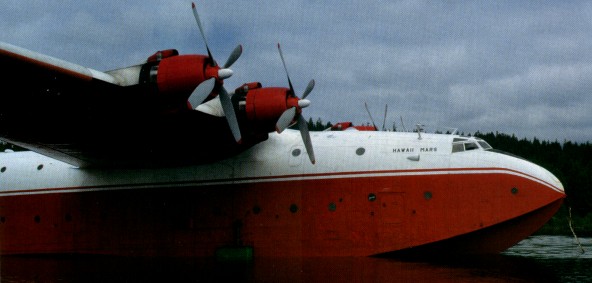
On 23 August 1938 the US Navy ordered from Martin a single prototype of the Martin 170 design for a patrol bomber of flying-boat configuration.
The tip of the tail is almost 50 feet above water level while the wing span is 200 feet, greater than a Boeing 747, and the two level interior is as big as a 15 room house with a long circular staircase connecting the two decks. The control surfaces are all fabric covered.
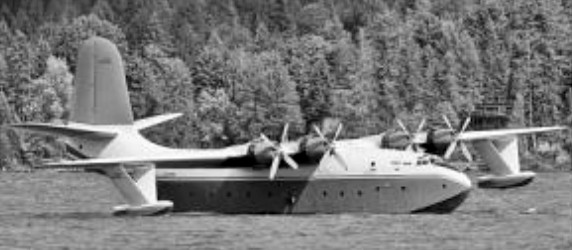
Designated XPB2M-1, it was the world’s largest flying-boat when flown for the first time on 3 July 1942, but by then the United States had become involved in World War II and it was decided not to proceed with procurement of the type as a patrol bomber. Instead, the boat was modified for use in a transport role, becoming re-designated XPB2M-1R and entering service in December 1943. It remains the largest flying-boat to have been operated by the US Navy and an early demonstration of its capability came in 1944, when a 9299kg cargo was delivered to Hawaii in a 7564km round trip completed in only 27 hours 36 minutes, resulting in a US Navy order for a production version under the designation JRM-1 Mars. This covered 20 aircraft to be completed specially for the transport role, but the end of World War II brought contract cancellations and only five were built, plus a single JRM-2 for operation at a higher gross weight. When the five JRM-1s were later modified to this latter standard they became redesignated JRM-3. These 60.96m span aircraft were powered by four 1715kW Wright R-3350-8 engines, and an appreciation of their capacity can be gained from the fact that on 19 May one of them, Marshall Mars, carried a total of 301 passengers, plus its crew of seven.
In 1948, carrying a load of 25 passengers, 17 crew, and 22,000 lb of freight, JRM ‘Carolina Mars’ flew from Hawaii to Chicago non-stop. This 4000-mile flight was the longest made by a flying boat.
In ten years of military service between 1946 and 1956 and the five logged some 87,000 accident free hours. They established the world flying boat lift record of 30,992 kg (68,327 pounds) and carried a record 350 troops.
The propeller driven Mars were declared obsolete in 1956 and Forest Industries Flying Tankers Ltd, Canada, purchased four, the other having been lost in a fire.
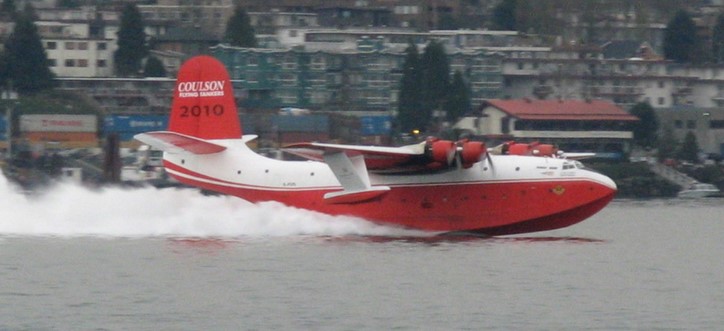
With a fibre glassed Douglas Fir plywood 6.000 gallon tank installed in the cargo area it could scoop up the 32 tons of water within 22 seconds while the flying boat skimmed the surface at about 70 knots.
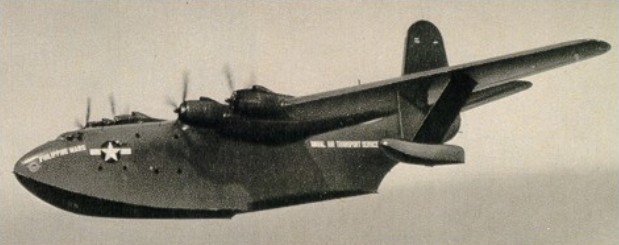
Martin 170 / JRM Mars
Engines: 4 x Wright R-3350-18 Cyclone, 1620kW / 2170 hp
Max take-off weight: 67130 kg / 147997 lb
Empty weight: 34300 kg / 75619 lb
Wingspan: 61.0 m / 200 ft 2 in
Length: 36.6 m / 120 ft 1 in
Height: 13.6 m / 44 ft 7 in
Wing area: 242.0 sq.m / 2604.86 sq ft
Max. speed: 380 km/h / 236 mph
Cruise speed: 300 km/h / 186 mph
Ceiling: 5200 m / 17050 ft
Range w/max.fuel: 9300 km / 5779 miles
Crew: 7
Passengers: 40

The Martin Model 156 was intended to be a successor aircraft to the M130 for Pan American Airways.
Lateral buoyancy was provided by seawings rather than conventional sponsons or outboard floats. Interior furnishings provided for either a maximum of 46 passengers or a more luxurious arrangement allowing for night sleeping for a reduced number of passengers. Four 1,000-hp nine-cylinder radial engines were mounted in nacelles on the leading edge of the center section.
Only one was built and it was sold to the Russians in 1937. The sale included a complete set of production drawings as the Russians intended to mass produce the aircraft. WWII and invading Germans ruined their plans. The single type was used by the Russians for troop movements during the war. It is distinguishable from the M130 by the twin tails structure.
Engines four 1,000-hp Wright Cyclones
Gross wt. 63,000 lb
Empty wt. 30,414 lb
Top speed 190 mph
Cruise 156 mph
Takeoff 70 mph
Range 2,410 miles
Ceiling 15,500 ft
Seats 46.
 All Aero