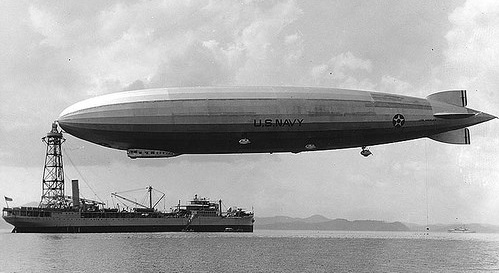
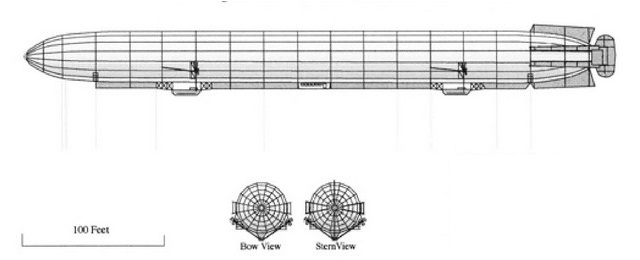
Built by Luftschiffbau Zeppelin GmbH as LZ 126 in 1923-1924 and handed over to the United States as a part of war reparations as the US Navy rigid airship ZR-3 USS Los Angeles. LZ126 has a distinction of being the first German-built dirigible to cross the Atlantic.
USS Los Angeles, upside down after a turbulent wind from the Atlantic, Lakehurst, New Jersey, 1926
Four airships on the ground (USS Akron, USS Los Angeles, Goodyear RS-1, Pony Blimp)
The Los Angeles (ZR-3) served with the U.S. Navy until decommissioned in 1932, and dismantled in 1939. The longest-serving US military airship.
Despite those promising army orders Colsman, as director of the Zeppelin Airship Company, saw the need to commercialise the basis of airship production in order to fund further development. His proposal was to form a passenger airline service linking the main cities of Germany, and in November 1909 the company with a capitol of 3 million Marks was founded in Frankfurt and Main.
DELAG, the Deutsche Luftschiffahrts-Aktiengessellscaft, was funded in part by the Hamburg-Amerika Shipping Company and from money raised by those cities involved in the undertaking. Each city, in addition, provided ‘aerial harbours’; erecting airship sheds at their own expense to house the fleet of airships. Although no scheduled passenger services ensured, excursion flights of several hours’ duration at 100 Marks per head proved popular to Germans and foreigners alike over the next four years of operation.
The first airship destined for service was the LZ-7 Deutschland, with a capacity of 681,000 cu.ft and able to carry passengers in comfortable Pullman-style accommodation in a cabin amidships. LZ7, named Deutschland, first flew on 19 October 1910, and was placed in service by Delag.
Unfortunately, following a successful deliver flight the airship was wrecked after crashing in the Teutoburger Wald in unfavourable weather conditions and was replaced by LZ8.
The LZ-3 sailed along the Rhine valley and onto Switzerland covering 200 miles. The performance galvanised the authorities in to action: firstly by an award of 500,000 Marks from the Government Airship Commission to aid research, and secondly the placing of an order for two Zeppelins for the Army.
The stringent conditions laid down for the purchase contract included a twenty-four hour endurance flight to cover a distance of no less than 500 miles with a crew of 20, and to include a landing on return. Zeppelin realised the LZ-3 did not possess the endurance necessary to comply with these conditions and proposed the construction of a larger ship, the LZ-4.
The LZ-4 had an increased capacity of 528,000 cu.ft and it was powered by two engines delivering a total of 210 hp. Provision was made for a keel cabin and more efficient multiple bow and stern elevators were fitted, which, in conjunction with larger rudders, improved the lateral and vertical stability.
In July 1908 the LZ-4 made a twelve-hour flight along the Rhine and on into Switzerland, the whole trip proving to be completely trouble free. The following month the twenty-four hour army trial rook place. Initially all went well, with the airship sailing placidly along the valley of the Rhine. However, just short of Mainz the forward engine failed, causing the LZ-4 to make an emergency landing on the River Rhine.
Here the airship was secured to the bank and repairs were carried out on a sheltered reach of the river, from where after a few hours the flight was able to continue. By now darkness was coming on, and Count Zeppelin undertook the first night flight by a rigid airship, cruising confidently over the villages and towns of southern Germany.
Towards dawn, further engine trouble occurred necessitating a diversion to Stuttgart for repairs to be effected at the Daimler works. The airship landed at the village of Echterdingen where a landing party of soldiers was assembled to take the handling lines and make the ship secure. During the afternoon while waiting for the engines from Daimler to arrive, the wind freshened to such an extent that the ground crew were unable to hold the ship. The airship was wrenched from them and smashed to the ground where it instantly caught fire and in the space of minutes it had become a mass of twisted molten metal.
The 70-year-old Count Zeppelin vowed to carry on. Within hours of the news of the loss of the LZ-4 appearing in the papers a spontaneous outpouring of popular support in what he was trying to achieve was demonstrated by the German people. From all over the nation money and promises of donations came flooding in to Friedrichshafen, and within a short time more than 6 million Marks (£5 million) had been subscribed.
LZ-4 Engines; 2 x Daimler, 105 hp Capacity: 428,000 cu.ft Length: 446 ft Width: 41 ft Height: 50 ft Gross lift: 15.5 tons Useful lift: 3.75 tons Max speed: 34 mph Range at cruise: 180 miles Ceiling: 2000 ft Crew: 25
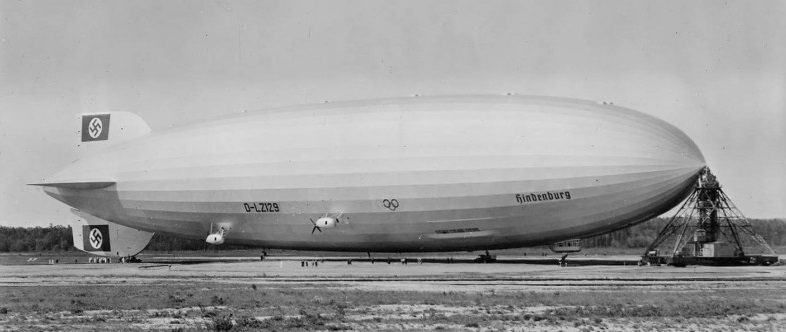
Hindenburg carried 72 passengers, with a sealed smoking room, and a specially-made lightweight cast-aluminium grand piano for entertainment. As Germany did not have non-flammable helium gas available, hydrogen was used.
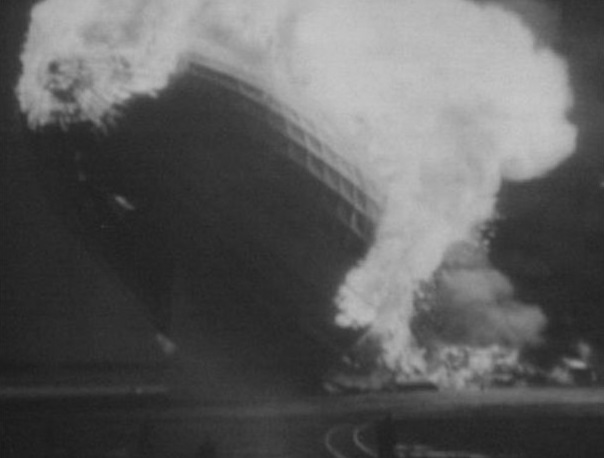
In 1936 a service across the Atlantic was opened with the new Zeppelin, the Hindenburg. Between March 1936 and May 1937 63 flights were made before the Hindenburg disaster, which occurred while landing at Lakehurst Naval Air Station in New Jersey.
The Hindenburg crashed at Lakehurst, New Jersey on 7 May 1937, on the first flight of the year. As she was being moored to the mast, the airship burst into flames. Thirty-six people were killed.
D-LZ-129 Zeppelin LZ 129 Hindenburg of Deutsche Zeppelin Reederei.
Graf Zeppelin, the only airship ever to fly around the world, was nearly 240 m (787 ft) long. Some 850,000 cattle donated skins to contain its 105,000 cubic metres (3,708,000 cubic feet) of hydrogen, and 36 crew were on hand to serve 20 passengers with fine Rhine wines from crystal glasses in a burgundy-carpeted dining room as the ship cruised down to Rio on its transatlantic run.
On September 18, 1928, LZ127 Graf Zeppelin made her first flight.
LZ 127 Graf Zeppelin over Washington DC, 1928
The Graf Zeppelin, built between 1926 and 1928, made 590 flights and retired in 1937.
Designed by Charles Rocheville, the sole 1928 American Albatross B-1 NX6772 was sold in 1929 to (Alva Roy) Ebrite Aero Corp of Long Beach CA, for charter work and is sometimes seen as Ebrite New Albatross, reportedly repowered with 400hp P&W Wasp. It was used for 1929 endurance record attempts by John Gugliemetti and Lee Schoenhair, but without success.
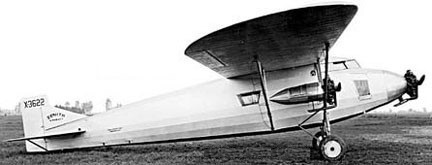
The sole 1927 Albatross Z-12, or Schofield Albatross, NX3622, succeeded, after four attempts, in taking off with 9898 lbs, 2.47 times its empty weight, in a 1928 demonstration flight.
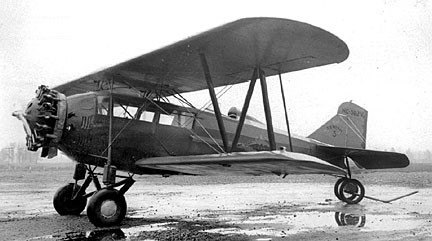
The 1927 Albatross Z-6 six place biplane was designed by Charles Rocheville, Albin Peterson. Three were built: NX578K, N7076, and NX707E, and one conversion: NX7580.
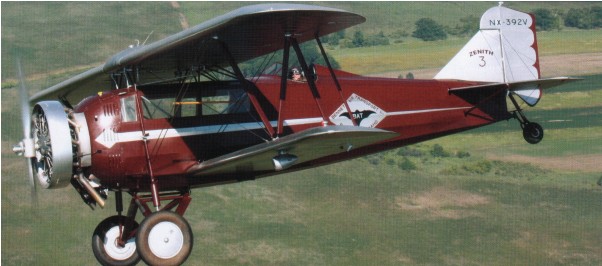
The two Albatross Z-6-A (ATC 2-269) of 1928 seated four in the cabin. For $20,000, one was for Bennett Air Lines in Idaho (NC392V), and one with ATC 2-212 for 450hp Wasp SC conversion (NC134W).
Zenith Z-6-A NC392V
NC392V was restored in 2006 at PAR, Maryland Heights MO.
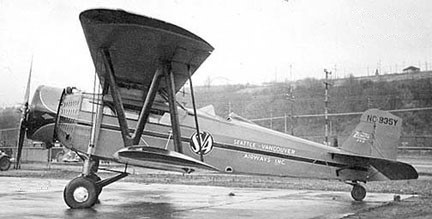
Three Albatross Z-6-B were built in 1929 (ATC 2-315). At $20,000, they were NC835Y, NC935Y, and NC977Y.
The sole 1928 Zenith Aircraft Mfg Co P-1 Sport three place open cockpit biplane was registered N7580 c/n P-1. Powered by a 180hp Hisso E, it was scrapped on 10 November 1939.





 All Aero