Fabrica Aeroplana I Hydroplana Zmaj
Czechoslovakia
Fabrica Aeroplana I Hydroplana Zmaj founded in 1927 by Jovan Petrovic to produce under license the Hanriot H-41, Gourdou-Leseurre B-3 and Dewoitine D-27 fighters. Indigenous designs included a Wright-engined observation aircraft, an observation seaplane, and the two-seat Fizir AF-2 Amphibian.
Four out of five Yugoslav aircraft plants were in close proximity to each other, built in and around Belgrade: Ikarus, Rogožarski, Zmaj and Utva. The fifth one was DFA (Državna Fabrika Aviona – State Aircraft Factory) which was located in Kraljevo.
Inter-Wars
Zlin Z-XII / Z-212 Tourist
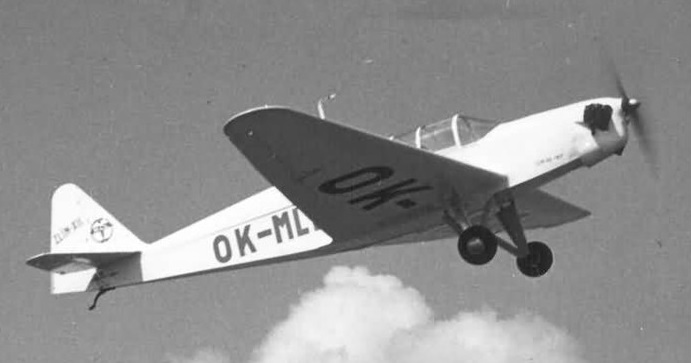
The Zlín Z-XII was a Czechoslovak twin-seat sports aircraft and the first major design success by the Zlínská Letecká Akciová Společnost (Zlín) aircraft manufacturing company after its founding in Otrokovice after the takeover by the Bata Group.
The low-wing all-wooden aircraft was designed by Jaroslav Lonek. Two prototypes, with different engines, were presented in April 1935. These were subjected to an extensive test program.
The Z-XII, equipped with a 33 kW (44 hp) ZLAS or 47 kW (63 hp) Zlin Persy II engine emerged as the winner from the tests. The Z-212 was an improved version, equipped with a Walter Mikron engine. The aircraft could also come with an open cockpit or with a cockpit hood.

It was a very popular aircraft and it was exported to many countries including Czechoslovakia, Egypt, France, Hungary, Japan, Italy, Romania, Sweden, and South Africa.
Production of the Z-212 ran under German supervision after the occupation of Czechoslovakia. The German Luftwaffe operated Z-XIIs and Z-212s until 1943, and about 20 Z-XIIs went to Slovakia with Slovenské vzdušné zbrane. One aircraft was impressed into Yugoslav Royal Air Force military service in April 1940. The Czechoslovak Air Force operated this type post war under designation K-72. One Zlin 212 Tourist was impressed into service in India in 1942.
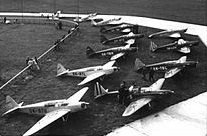
One Z-212 was captured by the Americans at the end of World War II. It was later used for sightseeing flights. Another Z-XII survived the war, being disassembled into parts in Otrokovice. It was later rebuilt and flew with the registration OK-ZJD.
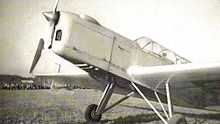

A total of 201 Z-XII and 58 (other sources mention 51) Z-212 were built. Replicas of Z-XII and Z-212 have been built.
Z-XII
Engine: 1 × Zlin Persy II, 45 kW (61PS, 60hp)
Length: 7.80 m (25.59 ft)
Wingspan: 10.00 m (33 ft)
Wing area: 12 m²
Empty weight: 290 kg (639 lbs)
Loaded weight: 520 kg (1,146.40 lbs)
Maximum speed: 155 km/h (96 mph)
Cruise speed: 135 km/h (84 mph)
Range: 300 km (186 mi)
Service ceiling: 3,800 m (12,467 ft)
Rate of climb: 3 min to 270 m
Crew: 2
Zimmerman 1931 Biplane
In 1931 Hugh E Zimmerman of Omega OK., USA, built a single place, open cockpit biplane registered N995N. Power was originally a Ford engine, and later a 90hp Wright-Gypsy.
Zimmerman, Hugh E
Hugh E Zimmerman
Omega OK.
USA
Circa 1931 built a biplane
Zimmerman Flying Pancake

The 1935 single place low-aspect-ratio “flying pancake” developed in off-times by C H Zimmerman, John McKellar, and Richard Noyes, then with NACA, for design competition with Ercoupe and Stearman- Hammond. US patent #2,108,093 was issued to Zimmerman in 1938. Although rejected by NACA at too radical, despite its potential as a stall-proof airplane, elements of the design surfaced later in Vought V-173 and Vought-Sikorsky XF5U-1.
Unable to synchronize the motors, rather than risk an accident the project was abandoned and it never flew.
Engines: 2 x 25hp Cleone
Wingspan: 7’0″
Seats: 1
Zielenski 1930 Monoplane
Built by Edward Zielenski in 1930, three place monoplane N10400 was powered by a 120hp Quick engine.
Zielenski, Edward
Edward Zielenski
Boston OH.
USA
Circa 1930 built a monoplane
Zeppelin-Staaken E.4/20

Designed in 1917 by Adolf Rohrbach, the Staaken E-4 was a stressed metal monocoque fuselage canatlevered monoplane four-engined passenger aircraft with galley, w.c., baggage stowage and full communications. The most advanced aircraft of its time, the E.4/20 flew successfully in 1920. Completed after the armisitice and extensively tested by the Allies who ordered it destroyed because of its potential as a bomber – it was faster than any Allied fighter of the day. It was dismantled in 1922.
E-4/20
Engines: 4 x Maybach IVa, 190kW
Max take-off weight: 8500 kg / 18739 lb
Wingspan: 31.0 m / 102 ft 8 in
Length: 16.6 m / 54 ft 6 in
Wing area: 106.0 sq.m / 1140.97 sq ft
Max. speed: 230 km/h / 143 mph
Cruise speed: 211 km/h / 131 mph
Range w/max.fuel: 1200 km / 746 miles
Crew: 3
Passengers: 12-18

Zeppelin-Staaken / Zeppelin-Lindau
Zeppelin-Werke Staaken GmbH
Zeppelin-Werke Lindau GmbH
This company was established under the patronage of Graf von Zeppelin, located formerly at Gotha, to design and construct aircraft with Claudius Dornier as chief designer, the Riesenflugzeug (giant aeroplane) “R” series bombers. The company’s first product, the Rs I multi-engined flying-boat, was wrecked before its first flight, but three differing examples were developed progressively, designated Rs II, Rs III, and Rs IV.
The Staaken design team evolved four-, five- and six-engined bombers, leading to the four-engined R.VI which was built by Automobil and Aviatik, Ostdeutsche Albatros Werke and Luftfahrzeugbau Schütte-Lanz and carried out successful raids against Allied territory, dropping bombs as large as 1,000kg. A floatplane version of the R.VI, the Staaken L, was wrecked during trials in 1918.
Other aircraft built by Zeppelin-Lindau included the C.I, C.II, D.I and VI biplanes, and Cs.I two-seat monoplane seaplane. Developed the Gs.I commercial flying-boat after the Armistice, which was broken up on the instructions of the Allied Control Commission. An advanced four-engined all-metal monoplane airliner, the E.4/20, flew successfully in 1920 but was then destroyed by order of the Allied Control Commission under the terms of the Armistice.
In 1922 the company was renamed Dornier GmbH.
Zeppelin LZ130 Graf Zeppelin II

Commissioned in September 1938, more than a year after the Hindenburg disaster, LZ-130 never entered the transcontinental passenger service. Instead, she was used for propaganda flights over Germany and recently annexed Sudetenland. In summer of 1939, the Graf Zeppelin II was sent on an espionage flight which wasn’t a success.
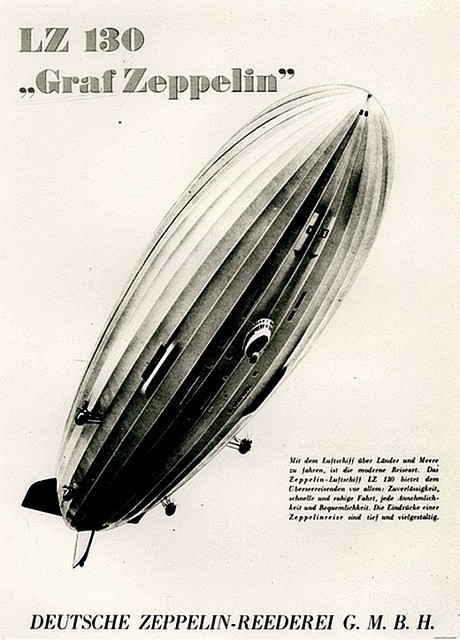
The last giant rigid airship Graf Zeppelin II flew for the final time on 20 August 1939, 12 days before World War Two started, and was scrapped the following year.
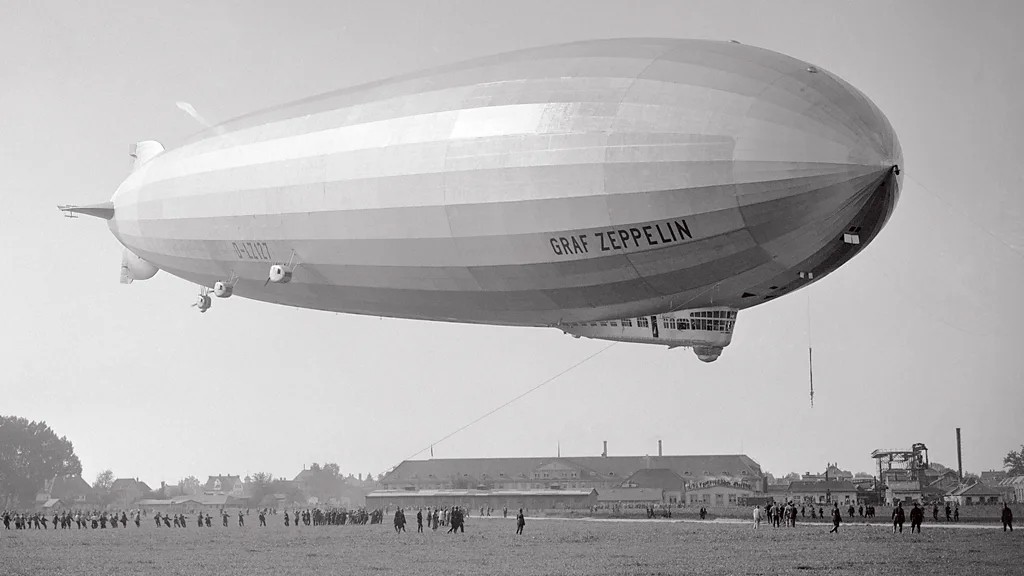
In April 1940 Hermann Goering, a renowned zeppelin-hater, ordered to dismantle the LZ130 together with her namesake, the retired LZ127. Zeppelin hangars in Frankfurt were destroyed by explosives on May 6 the same year, exactly three years after the Hindenburg was lost.
 All Aero