The subsequent PN-9 (converted from one of the PN-8s) and two newly built PN-10 aircraft were similar to the PN-8. The engines had problems-the Navy always preferred simpler, air-cooled engines-and radial engines were thus used to produce the later PN-12.
The PN-9, however, was a good performer. On 1-2 May 1925, Navy Lieutenants Clarence H. Schildhauer and James R. Kyle, on a test flight over Philadelphia, broke the world endurance record for Class C seaplanes by remaining aloft for 28 hours, 35 minutes, 27 seconds.
The following 1 September, the PN-9 took off from San Francisco for Pearl Harbor. With Commander John Rodgers-Naval Aviator No. 2-in command and navigating, and a crew of four, the aircraft was heavily laden with 1,278 gallons of fuel in its tanks and another 50 gallons in five-gallon cans. The plane nevertheless ran out of fuel and came down several hundred miles short of its destination. Despite an extensive air search, the PN-9 was lost at sea for ten days. Rodgers and his crew, meanwhile, improvised. Relying on their training as sailors, they fashioned a sail out of the lower wing’s fabric and set out for Kauai Island. After covering about 450 miles they were sighted on 10 September by the submarine R-4 (SS-81) about ten miles short of their goal. Still, the aircraft had flown 1,841 statue miles, a record for Class C seaplanes that stood for almost five years.
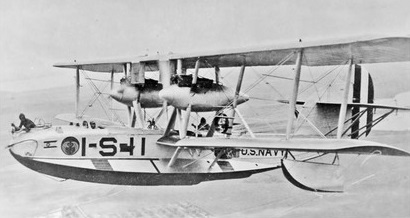
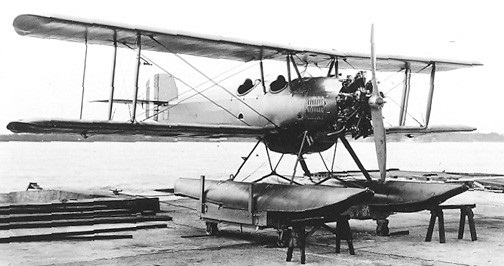
Construction of the PN-7 was begun during 1923, the first being completed in January 1924 and the second in June. While it retained the wooden hull of the PN-5, the PN-7 incorporated an entirely new set of single-bay biplane wings, fabric covered, and metal construction that utilised a muck thicker section USA 27 airfoil in place of the RAF 6 of the PN-5. The increase in lift permitted a significant reduction in both wingspan and area, plus the strength resulting from the deeper spars required only one bay of struts outboard of the engines. In place of the old Liberty engines, experimental Wright T-2 powerplants were tractor-mounted in neat, streamlined nacelles with the water radiators slung under the upper wing centre section.
Trials conducted during 1924 indicated vastly improved performance. Although the wing design was successful, the engines were unreliable, and the wood hull required considerable maintenance.
PN-7 Engines: 2 x Wright T-2, 525 hp Prop: 2 blade fixed pitch Armament: 2 x .30 mg Bombload: 4 x 230 lb Max speed: 105 mph Ceiling: 9200 ft Range: 655 mi Empty weight: 9637 lb Loaded weight: 14,203 lb Span – upper: 72 ft 10 in Length: 49 ft 1 in Wing area: 1217 sq.ft
Immediately after World War I, the emphasis in naval aviation was on carrier operations, and patrol-plane development was carried out on a very limited budget. Building on the F-5-L flying boat-developed from the British-designed Felixstowe F.5 aircraft-the Naval Aircraft Factory (NAF) in Philadelphia produced an improved version of the twin-engine flying boat, which was redesignated PN-5 in 1922. 1 The designation PN-6 was used for two modified variants (originally F-6-L). In 1922 the F6L became Naval Aircraft Factory PN-6.
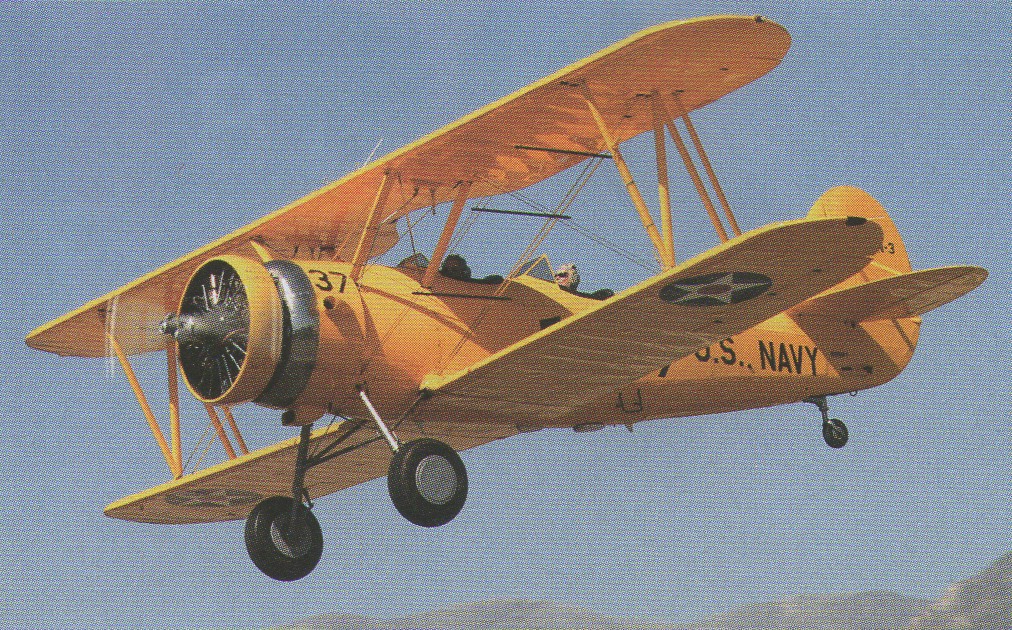
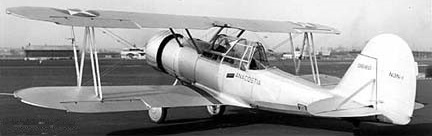
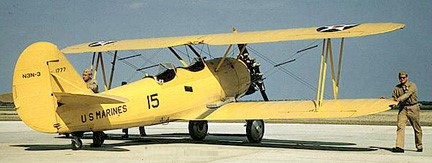
Designed for the US Navy in 1934, and outwardly similar to the service’s current Consolidated NY-2 and -3, the N3N featured an all-metal primary structure covered with fabric except along the fuselage sides, which featured removable alloy panels. The XN3N-1 prototype, 9991, flew in August 1935 with a 164-kW (220-hp) Wright J-5 radial, an engine that was out of production but stocked in considerable numbers.
XN3N-1
The prototype was evaluated as a landplane and floatplane, resulting in a 1935 order for 179 N3N-ls (0017/0101, 0644/0723, 0952/0966), at about $25,000 unit cost. The N3N-1S was a single-float version.
The XN3N-1 became an N3N-1.
NAF N3N-1 0680
Single XN3N-2 (0265) in 1936 and XN3N-3 (N3N-1 conversion 0020) prototypes were used to evaluate the 179-kW (240-hp) R-760-96 engine that was then used in the last 20 N3N-ls and retrofitted in the earlier aircraft.
There followed, in 1940, 816 N3N-3s (1759/1808, 1908/2007, 2573/3072, 4352/4517) with a revised tail and modified landing gear, and the N3Ns were amongst the Navy’s most important wheel- and float-equipped primary trainers throughout World War II.
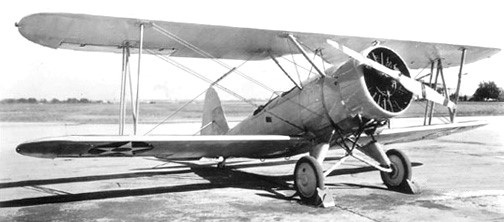
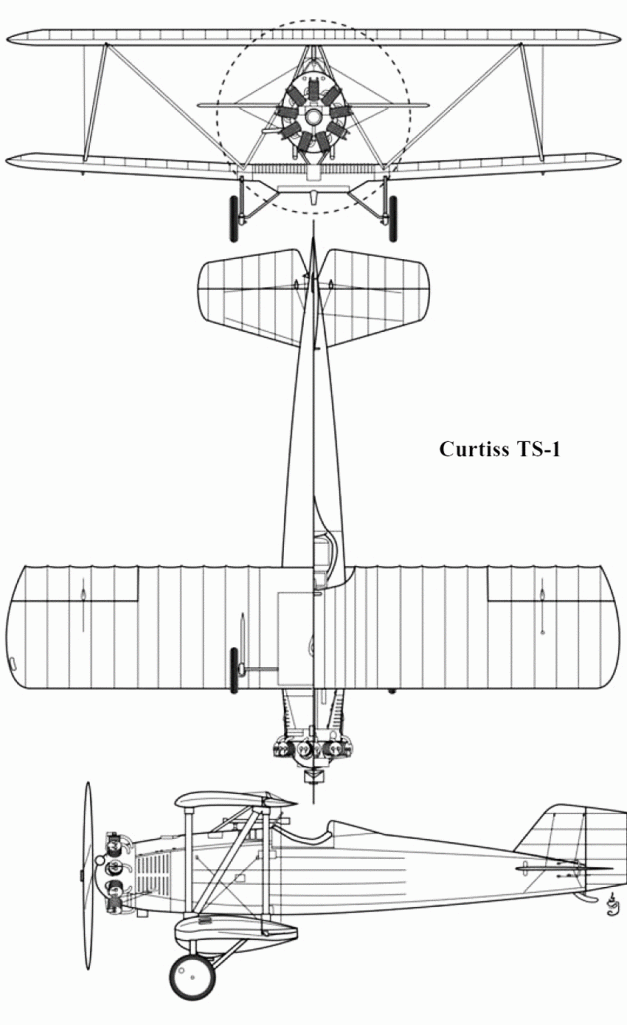
Rex Buren Beisel of the Naval Aircraft Factory desiggned a simple fighter powered by a 200 hp (150 kW) Lawrance J-1 air-cooled radial engine. Its boxy fuselage was suspended between the upper and lower wings (essentially having both dorsal and ventral sets of cabane struts), with the center area of the lower wing enlarged to accommodate a fuel tank.
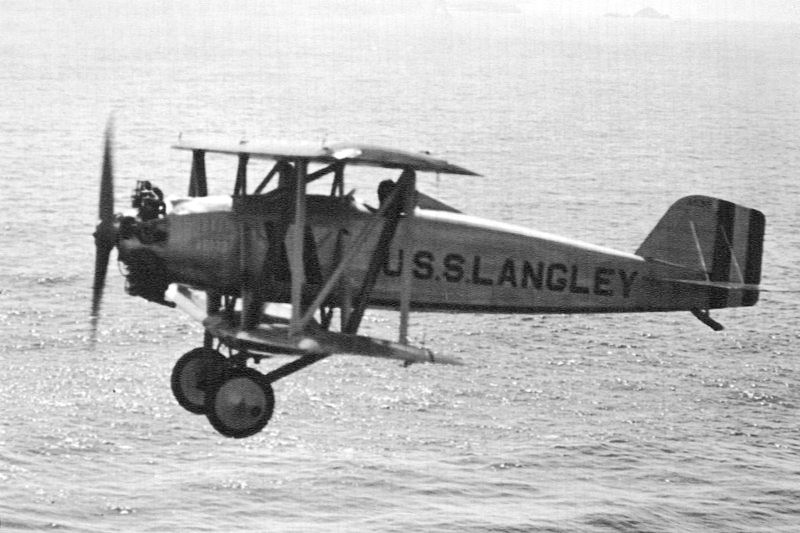
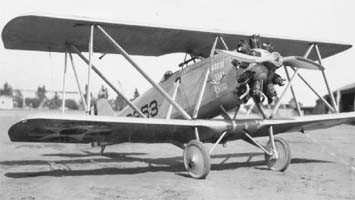
First flying on August 10, 1921, the TS biplane fighter was the first aircraft designed specifically for the US Navy to be used with aircraft carriers. At the NAF plant, five TS-1 (A6300- 6304) aircraft were built to assess the accuracy of the calculations of the contracting companies for payment for the work they had performed.
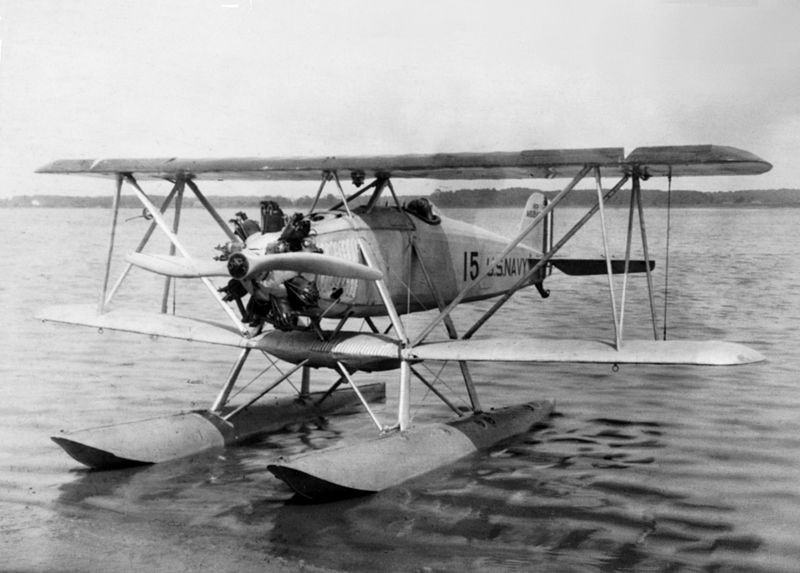
The NAF provided Curtiss with the plans to build the aircraft, and the result, designated TS-1, arrived at Anacostia on May 9, 1922. The TS-1 from Curtiss was delivered with wheels, so the NAF also designed wooden floats to enable their use on vessels other than aircraft carriers. Testing went well, and in late 1922 the Navy ordered 34 planes from Curtiss, with the first arriving on board the USS Langley (CV-1) in December. The NAF built another five themselves, as a test of relative costs, as well as four more used to experiment with water-cooled inline engines.
Curtiss TS-1
In addition to operating from the carrier deck, the TS-1s served for several years in floatplane configuration aboard destroyers, cruisers, and battleships. The aircraft were slung over the side by crane. Squadron VO-1 operated this way from 1922, and VF-1 flew its float-equipped TS-1s from battleships in 1925 and 1926.
The TS-1 was not universally liked by its crews. Positioning of the lower wing below the fuselage resulted in short wheel struts. This, and the wheels’ placement close to each other, caused considerable problems with ground looping.
NAF also built two TS-2 (A-6446-6447) powered by a 240 hp (180 kW) Aeromarine engine, and two TS-3 (A-6448-6449) powered by a 180 hp (130 kW) Wright-Hispano E engine. One TS-3 was modified by changing the airfoil section to participate in the 1922 Curtiss Marine Trophy race and received the TR-2 designation, later it was used as a training aircraft for the US Navy team, preparing for the Schneider Cup competitions in 1923.
In May 1924, the TS-1 was re-designated as FC-1. They were retired in 1929.
Two all-metal versions of the aircraft, F4C-1s, were developed by Curtiss.
TS-1 Engine: 1 × Lawrance J-1, 200 hp (149 kW) Wingspan: 25 ft (7.62 m) Wing area: 228 ft² (21 m²) Length: 22 ft 1 in (6.7 m) Height: 9 ft 7 in (2.9 m) Empty weight: 1,240 lb (562.5 kg) Loaded weight: 2,133 lb (967.5 kg) Maximum speed: 106.8 knots (123 mph, 198 km/h) Cruising speed: 165 km / h Range: 418.8 nmi (482 mi, 775.7 km) Service ceiling: 16,250 ft (4950 m) Rate of climb: 909 ft/min (4.61 m/s) Armament: one 7.62mm Browning machine gun Crew: 1
USA The U.S. Naval Aircraft Factory at Philadelphia, Pennsylvania, was authorized in 1917 and established in early 1918. Its first, and major, task was the construction of 150 Curtiss H-16 patrol flying-boats. Built improved H-16s as F-5L, as well as Hanriot seaplanes and Loening two-seat monoplanes. Original designs of NAF include the PT-1/2 torpedo seaplanes of 1922; TS-1/3 carrier-based biplane fighters of 1922; and extensively-built N3N-1/3 primary trainer biplanes, which originated in 1934 and remained in service for 27 years. Production in Second World War included 300 Vought-designed OS2 N-1 observation/scout monoplanes, and 156 Consolidated PBN Nomads (better known as the PBY Catalina).
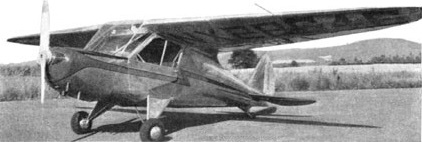
The Mercury N-1 of 1940 was a two place all-metal monoplane featuring a unique X-spar, slotted cantilever wing with interchangeable front and rear spars. Only the one was built, NX28646, and retractable landing gear was planned for production models, of which none were built. The N-2 designation was apparently for this one, and specs were the same except for higher speeds (projected: Maximum 155 mph / Cruise 138 mph / Stall 55mph).
Production was curtailed by the war but the design reappeared in 1947 as the Midwest Mercury.
 All Aero