
1937
1937
Best known as Nippi, original Yokohama works date from 1935. Atsugi works followed for maintenance and repair of Japanese aircraft and of U.S. Navy aircraft in region. Yokohama manufactured components/assemblies for Japanese aircraft and Boeing airliners. Has carried out YS-11EA ECM conversions (first flown 1991).
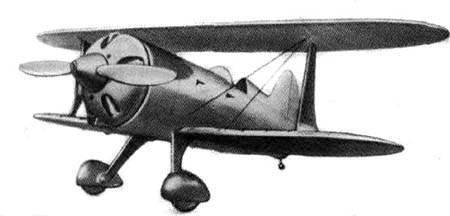
The last of the NV family of trainers was the NV-6 (UTI-6) (Russian: Никитин НВ-6 (УТИ-6)) designed as an advanced aerobatic trainer.
The NV-6 had a biplane configuration with a straight lower wing and an 8º raked upper wing and a slightly larger wingspan. Both wings were braced by a single I-pillar and tension cables. Ailerons were only included on the lower wing.
The construction was mixed. The fuselage featured a welded JMA tube structure, while the wings were made of wood with fabric covering. The center section of the fuselage and the wing of the NV-1 were used, which in this case was installed as the lower wing.
The tail unit was of the monoplane type with the stabilizers constructed of fabric-wrapped duralumin.
The landing gear was of the conventional type, with a tail wheel. The cantilever main landers featured simple balloon wheels with teardrop-shaped streamlined fairings.
The power plant consisted of an MG-11F engine with a special carburettor designed by MA Kossov to be able to perform inverted flight and a two-blade propeller.
The NV-6 was built at the request of the OSOVIAJIM at the OKB-30 facilities during 1939, but it would not be until December 1940 that an engine could be obtained. In that winter several flights were carried out by Nikitin and the pilot VV Shevchenko, which demonstrated good behavior of the aircraft. Unfortunately, the static resistance tests had not been carried out and the TsAGI, under these conditions, did not give authorization for the development of official flights. This problem lasted until the start of the war and from then on it became impossible to pursue further development.
Powerplant: One 165 hp MG-11F
Wingspan: 7.0m
Wing area: 14.0m²
Length: 5.8m
Empty weight: 560 kg
Loaded weight: 750 kg
Wing loading: 53.6 kg/m²
Power Load: 4.5kg/hp
Fuel and oil capacity: 80+20 kg
Speed at sea level: 270 km/h
Landing speed: 75 km/h
Landing run: 170 m
Take-off run: 50 m
Endurance: 2.5 hours
Ceiling: 4500m
Accommodation: 1
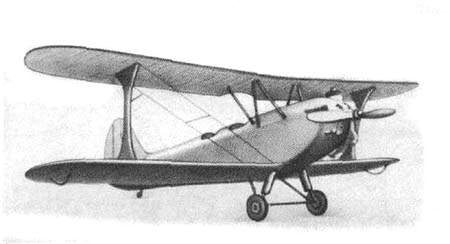
The central direction of the OSOVIAJIM and the Technical Scientific Society of Aviation (Aviavnito) presented a joint contest in 1934 for a training aircraft. Among all the designs submitted, the proposal by VV Nikitin with a scheme similar to that of Polikarpov ‘s classic U-2 was selected as the winner, although with only ¾ wingspan and improved aerodynamics. This model received the designation NV-5 (Russian: Никитин НВ-5).
The NV-5 had a structure very similar to the Polikarpov U-2 and was basically built in wood with fabric covering.
The wings on the biplane wingbox were attached by I-stanchions with cable turnbuckles. On the NV-5 prototype the ailerons were designed similar to those on the U-2, but were later replaced by louvered ones.
The landing gear, with a conventional structure, had a tail skid in its initial version, soon being replaced by a tail wheel. The main landers featured 500 mm diameter balloon wheels, but with the possibility of substituting them for the nominal ones used on the U-2.
The prototype was developed using MA Kossov’s MG-40 engine and a propeller designed by Kuznietsov for use in light aircraft, which proved highly effective. The engine featured a mount with rubber damping.
The NV-5 was designed as a primary training aircraft and the first example saw the light of day only in 1937. The aircraft passed flight tests without difficulties, which were carried out by 15 different pilots, covering a total of 250 flights, in which landings were made with both wheels and skis. As a conclusion, it was determined that the aircraft responded to all flight safety requirements, also presenting a simple construction.
The biggest problem was related to the engine. The MG-40 did not go beyond being an experimental example because it was decided not to produce it. Under these conditions, the determination was made in 1938 to test the 165 hp MG-11F engine, with which the characteristics of the device showed a noticeable increase. This version was called NV-5bis and after the tests the Osoaaviajim request for its serial production was received and later also that of the UVVS.
The only example built was disassembled with the objective of preparing the plans for the series production of the training model that was renamed U-5.
Overall the U-5 was a development of the NV-5bis primary trainer with a new metal blade, simplified fuselage structure, and TsAGI-876 profiled wings instead of the earlier Hettingen-476. The ailerons and tail control surfaces featured duralumin structures with a new rigid control system.
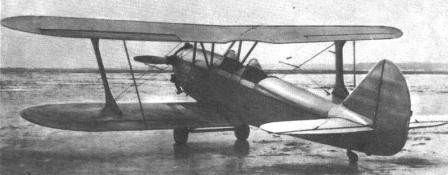
In 1937 the first machine, named U-5, began tests, which fully confirmed the builders’ calculations. In both factory and state tests, more than 60 people participated and all expressed positive opinions about the new aircraft.
Series production of the model was planned with a 100 hp M-11 powerplant, but only three prototypes were developed in 1938, which were followed by four pre-production aircraft between 1938 and 1939, some of which used the improved M-11 powerplant. 120hp 11G.
One example of the U-5, used as a transitional trainer, featured a fixed ShKAS machine gun located on the intrados of the lower right wing, firing forwards outside the propeller disc and the capacity to carry four RS non-guided reactive rockets. This allowed the pilots, in addition to the development of the piloting technique, to practice aerial fire.
The U-5bis was generally similar to the U-5 but with a 165-180 hp MG-11F powerplant. At the request of the UVVS, a prototype and four pre-series examples were produced in 1939, which also passed the tests successfully.
In general, 12 examples of the U-5 were built at OKB-30 between the prototypes and the series heads. The planned serial production was never executed because despite the excellent performance obtained, the U-5 could not displace the U-2 and UT-2 that were already in full production process.
A special version of the U-5 was built in 1942 at the request of the Moscow Air Defense Command (MVO). The modification was carried out in the MVO system repair shops, where VV Nikitin had started working as the main builder and technologist.
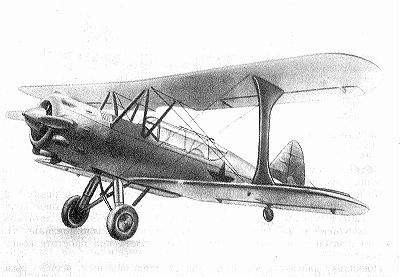
The main difference consisted in the installation of a 330 hp MG-31F engine, which brought with it the need to reinforce the entire structure. The upper wing was taken from a Polikarpov I-153 fighter, which was trimmed at its base to achieve the same wingspan as the original U-5s. The fuselage in this version was conceived in skeletal form using welded ZOXGSA steel tubes and covered with plywood.
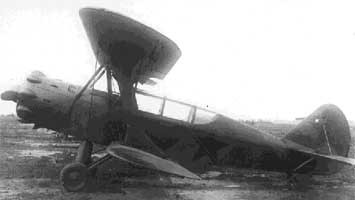
The new model known as LSh according to the initials of L ioxki Shtabnoi or Light for staffs (in the literature the name U-5 MG-31F is commonly used), was conceived as a three-seater liaison aircraft with a fully glazed closed cockpit. The pilot was located in front with the two passengers located on a board in the form of a longitudinal bench behind.
The weight of this empty version reached 800 kg with a takeoff weight of 1400 kg. Cruising speed was around 240 km/h with a top speed of 272 km/h. The range with reserves for 4.5 hours was about 1000 km.
The LSh was an excellent aircraft that was widely used in the period 1942-1945, making more than 600 flights on the Leningrad to Stalingrad fronts. During this period, it carried out operations in the midst of combat situations, receiving direct bullet hits, which caused it to have to be repaired several times, but the engine never stopped responding.
NV-5
Powerplant: One 140 hp Kossov MG-40
Wingspan: 9.82 m
Wing area: 25.0 sq.m
Length: 7.7m
Empty weight: 612 kg
Loaded weight: 850 kg
Wing loading: 34 kg/sq.m
Power load: 6.1 kg/hp
Fuel and oil capacity: 75+12 kg
Speed at sea level: 202 km/h
Landing speed: 60 km/h
Landing run: 110 m
Take-off run: 120 m
Endurance: 5.5h
Ceiling: 6000m
Time to 1000m: 3min
Time to 3000m: 12min
Accommodation: 2
NV-5bis
Powerplant: One 165 hp MG-11F
Wingspan: 9.82 m
Wing area: 25.0 sq.m
Length: 7.7m
Speed at sea level: 220 km/h
Landing speed: 60 km/h
Endurance: 4 hours
Time to 1000m: 3min
Time to 3000m:11min
Fuel and oil capacity: 75+12 kg
Accommodation: 2
U-5 prototype
Powerplant: One 100 hp M-11
Wingspan: 9.84 m
Wing area: 25.53 sq.m
Length: 7.62m
Empty weight: 700 kg
Speed at sea level: 170 km/h
Landing speed: 60 km/h
Fuel and oil capacity: 75+12 kg
Accommodation: 2
Pre-production U-5
Powerplant: One 120 hp M-11G
Wingspan: 9.84 m
Wing area: 25.53 sq.m
Length: 7.62m
Empty weight: 711 kg
Loaded weight: 974 kg
Wing loading: 37.8 kg/sq.m
Power load: 8.7 kg/hp
Fuel and oil capacity: 75+12 kg
Speed at sea level: 170 km/h
Maximum speed on the road: 181 km/h
Landing speed: 65 km/h
Landing run: 65 m (10 s)
Take-off run: 70 m (9 s)
Endurance: 3.0h
Ceiling: 3750m
Time to 1000 m: 5 min
Accommodation: 2
U-5bis
Powerplant: 180 hp MG-11F
Wingspan of upper plane: 9.84 m
Wingspan of lower plane: 9.24 m
Wing area: 25.53 sq.m
Length: 7.62m
Empty weight: 773 kg
Loaded weight: 1036 kg
Wing loading: 40.6 kg/sq.m
Power Load: 7.5kg/hp
Fuel and oil capacity: 75+12 kg
Speed at sea level: 205 km/h
Landing speed: 70 km/h
Landing run: 120 m (10 s)
Take-off run: 70 m (7 s)
Endurance: 2.5 hours
Ceiling: 4500m
Time to 1000 m: 3.8 min
Time to 3000 m: 18.4 min
Accommodation: 2
U-5 LSh
Powerplant: One 330 hp MG-31F
Wingspan: 9.84 m
Wing area: 25.53 sq.m
Length: 7.75m
Empty weight: 880 kg
Normal flight weight: 974 kg
Maximum takeoff weight: 1400 kg
Wing loading: 54.8 kg/sq.m
Power load: 4.25 kg/hp
Fuel and oil capacity: 250+30 kg
Maximum speed at sea level: 272 km/h
Cruising speed: 240 km/h
Landing speed: 75 km/h
Landing roll: 130m (11sec)
Takeoff Run: 40m (6sec)
Practical range: 1000 km
Practical ceiling: 4500 m
Crew: 1
Payload capacity: 2 passengers
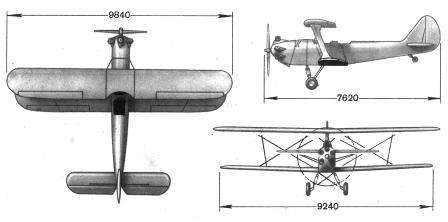
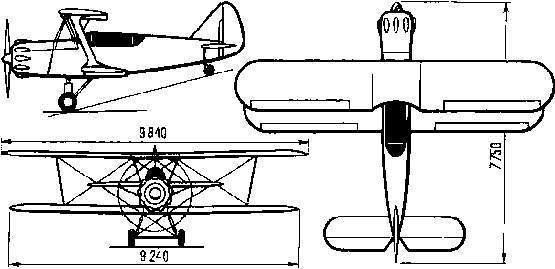
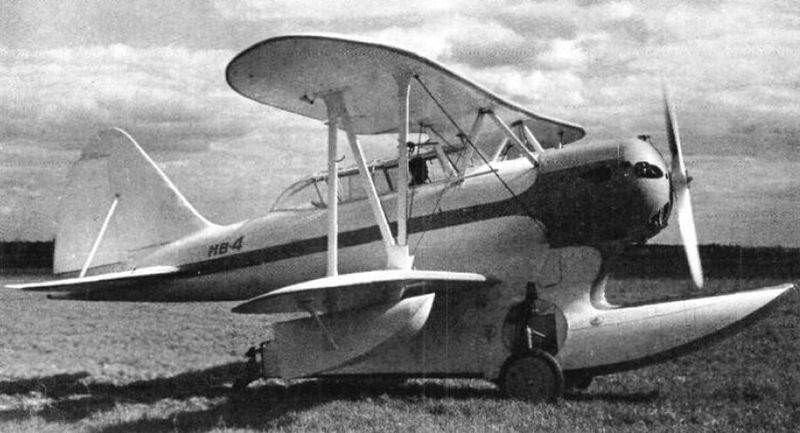
In the middle of 1934 Nikitin proposed to build an amphibious aircraft with characteristics similar to those of the North American model Grumman G-15 Duck.
The Nikitin NV-4 (Russian: Никитин НВ-4) was designed as a two-seater biplane built of wood with a central float.
The double-spar wooden wings were rectangular in shape with rounded ends and were braced by N-studs and tension cables. The control planes and surfaces were covered with fabric. The upper plane was located in a sun visor configuration, resting on a structure fixed to the fuselage and had a split on the trailing edge to improve the pilot’s visibility from the cockpit. Each lower plane was attached to the sides of the fuselage junction structure with the central float. The upper wing featured ailerons and the lower landing flaps.
The fuselage was conceived with a semi-monocoque structure with a circular cross section. The rear region was conceived using glued sheets. The single-gear central float was inserted into the fuselage skin to form an integral whole. The plywood covering reached 5 mm in the redient area and 3 mm in the upper part.
The tail section featured an empennage constructed of fabric-wrapped duralumin. The tailplanes were braced to the empennage structure by means of rigid uprights.
The landing gear was of the conventional type. The main landers were retracted into cavities located in the sides of the floats. The tail wheel was located in the posterior region of the redient. The retraction system was manual, using a crank.
The two crew members were located in tandem in a closed cabin with ample glazing. The cabin presented equipment for carrying out night flights.
The selected power plant was the M-11 piston engine of only 100 hp, carefully faired and a two-blade propeller.
The construction was carried out in Moscow in 1936. The NV-4 prototype showed quite good results in flight, so it was decided to use the NV-4 as the basis for the development of a military model as a reconnaissance seaplane that unsuccessfully participated in the unofficial contest for embarked aircraft developed in 1939, which was won by the Beriev KOR-2.
Soon Nikitin would be assigned to fulfill new tasks, so the work on the NV-4 could not be continued.
NV-4
Powerplant: 1 × 100 hp M-11
Wingspan: 10.80 m
Wing area: 28.50 m²
Length: 8.70m
Empty weight: 825 kg
Normal takeoff weight: 1090 kh
Power Load: 10.9 kg/hp
Fuel and oil capacity: 90+15 kg
Wing loading: 38.2 kg/m²
Maximum speed at sea level: 160 km/h
Landing speed: 65 km/h
Accommodation: 2
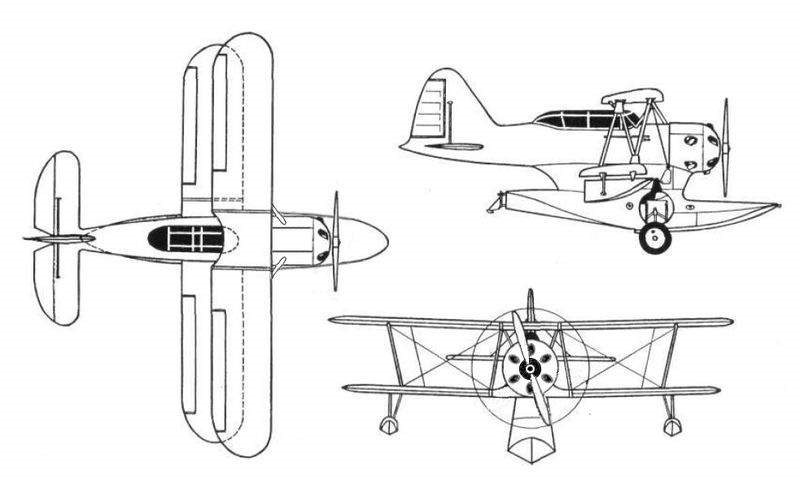
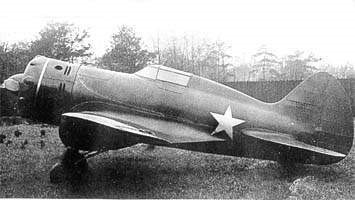
Among VV Nikitin’s designs, the NV-2 (Russian: Никитин НВ-2) single-seat training aircraft developed in 1935 as a low-wing single-seat monoplane, the NV-2 was a fairly advanced development of the 1933 NV-1 sport plane.
Structurally it was a single-seater with a low wing made of wood. Its monocoque fuselage was constructed of glued wood and covered with fabric. Like most of this manufacturer’s aircraft, the NV-2 was characterized by its excellent finish.
The wing, built in an integral way, had an area of 11 square meters and its construction was also made of wood covered with 2 mm plywood up to the last spar and covered with glued fabric.
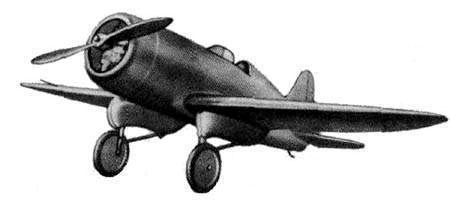
The NV-2 introduced retractable landing gear with the main landing gear retracting into the underwing pants. The tail skid was located in the lower rear area of the fuselage.
The power plant used was the 100 hp M-11 under a NACA cowl that allowed it to reach a speed of 230 km/h and an operating ceiling of 5800 meters.
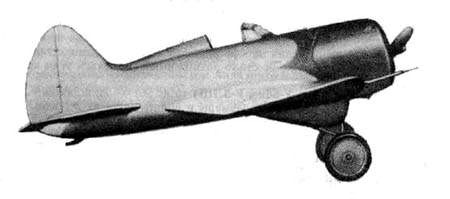
The prototype was manufactured mainly by students of the Moscow Aviation Technological Institute (OKB-30), based on resources provided by OSOVIAJIM and saw the light of day in 1935.
The flight characteristics were excellent and leading pilot instructors from Moscow flying clubs flew on the NV-2. Its operational life exceeded 150 flights.
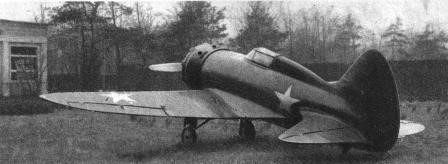
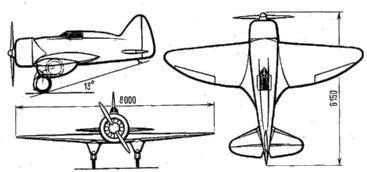
In 1938 the OKB-30 developed an improved version powered by the 165 hp MG-11. Named NV-2bis, this model successfully passed the state tests and the VVS became interested in the model, ordering the production of a small series under the name UTI-5.
The UTI-15 was designed in general similar to the NV-2 but presented structural reinforcement to introduce the more powerful MG-31 engine. The construction of the model was very clean, being even superior to the stock I-16 in this aspect.
The request for its construction came from the leadership of the VVS, but the prototype was flown in 1938 by pilots from the NII VVS, the GVF and the OSOVIAJIM. Overall, the UTI-5 was flown by more than 40 pilots. It was concluded that the aircraft was quite good and met the requirements for a training aircraft for fighter functions and on the other hand, the decision to install a ShKAS synchronized machine gun with 250 rounds on the model, facilitated the possibility of combat training.
The VVS requested a series of 20 copies. Construction started, but was cancelled when the Yakovlev UT-2 was ordered for production at the same factory.
NV-2
Powerplant: 1 x 100 hp M-11
Wingspan: 8.0m
Wing area: 11.0 m²
Length: 6.15m
Height: 2.14m
Tail span: 2.85 m
Empty weight: 385 kg
Loaded weight: 750 kg
Power load: 7.50 kg/hp
Fuel and oil capacity: 250+25 kg
Wing loading: 68.0 kg/m²
Speed at sea level: 230 km/h
Cruising speed: 205 km/h
Landing speed: 75 km/h
Practical range: 320 km
Endurance: 10 hr
Ceiling: 5800m
Accommodation: 1
NV-2bis
Powerplant: 165 hp MG-11
Wingspan: 8.0m
Wing area: 11.0m²
Length: 6.15m
Height: 2.14m
Empty weight: 435 kg
Loaded weight: 800 kg
Power load: 4.85 kg/hp
Fuel and oil capacity: 250+25 kg
Wing loading: 72.7 kg/m²
Speed at sea level: 260 km/h
Landing speed: 75 km/h
Endurance: 7h
Ceiling: 7000m
Accommodation: 1
UTI-5
Powerplant: One 300 hp MG-31
Wingspan: 8.0m
Wing area: 11.0 m²
Length: 6.3m
Height: 2.14m
Empty weight: 560 kg
Loaded weight: 950 kg
Power Load: 3.2kg/hp
Fuel and oil capacity: 250+30 kg
Wing loading: 86 kg/m²
Speed at sea level: 350 km/h
Landing speed: 75 km/h
Endurance: 4.5 hr
Ceiling: 8000m
Armament: One 7.62mm ShKAS machine gun / 250 rounds.
Accommodation: 1
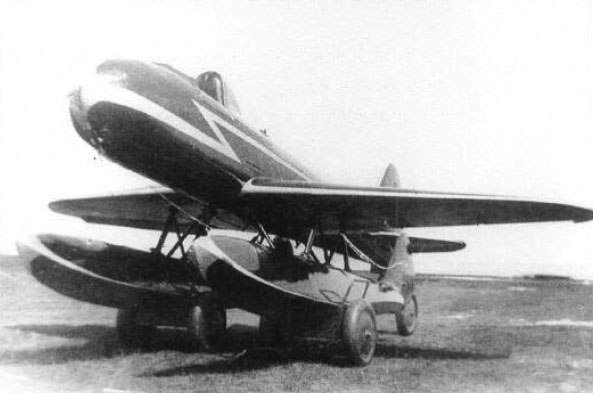
The PSN-2 was a single seat glider floatplane designed to test the concept and guidance equipment for a range of guided glider bombs proposed by S.F. Valk in 1933. Designed by M.M. Yefimo the Nikitin PSN-2, (Planer Spetsial’nogo Naznachenaya – glider for special purpose) was designed by MM Yefimov and produced in the USSR from 1934 by V.V. Nikitin.
Constructed of wood, the PSN-2 was a sleek monoplane aircraft with two floats attached to the wing with struts, an open cockpit in the extreme nose of the fuselage and extra fins at the aft end of each float. The PSN-2 could be carried aloft under a mother-ship or aero-towed off water. Beaching gear was available for manoeuvring the aircraft when not on the water.
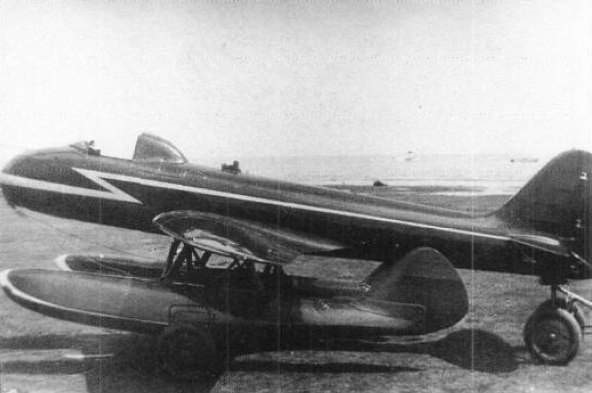
A prototype was built at factories No. 23 and No. 379. First flown in June 1940, the planned mission of the pilotless production version of PSN-2 included a 40 km (25.85 mile) range flown at 700 km/h (435 mph), guided to the target with the KVANT Infra-red guidance system. Flight testing was carried out in 1940, but work was discontinued on 19 July 1940 after an order from the commissioner of the naval forces. Between July 1 and 23, 1940, three tows were carried out over the water and 10 take-offs with flight heights of up to 275 meters. A Beriev MBR-2 was used as a tug.
Only the one was built.
PSN-2
Wingspan: 7m
Wing area: 9.47 sq.m
Length: 7.7m
Height with floats: 2.7 m
Empty weight: 830 kg
Loaded weight: 1,800 kg
Maximum speed: 168 km / h
Seats: 1
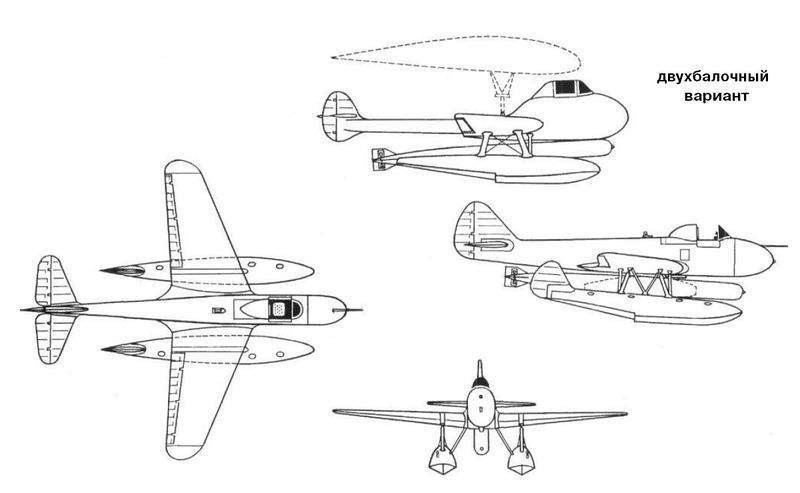
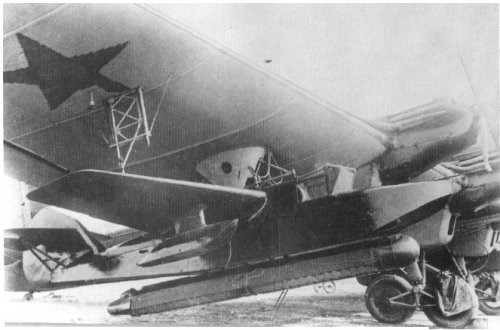
From 1933 a series of special projects was initiated under the PSN banner (Planer Spetsial’nogo Naznachenaya – Glider for Special Purposes). A proposal was made by S.F. Valk for a glider anti-shipping bomb with Infra-Red guidance, which was expanded to include DPT (long-range glider torpedo), LTDD (Long-range flying torpedo) and BMP (towed mine glider). To evaluate the Kvant Infra-Red guidance a piloted anti-shipping missile version was produced as the Nikitin PSN-1. Vasilii Vasilyevich Nikitin and N.G. Mikhelson designed a small single-seat monoplane flying boat glider with floats at approx 1/2 span, carrying a torpedo underneath. The PSN-1 was carried aloft by either Tupolev TB-3 or Tupolev TB-7 motherships and released at the appropriate height.
At least 10 were built in the USSR from 1937 and many of these were flown during trials of the autopilot and the Kvant (Quantum) guidance system.
PSN-1
Powerplant: 1 × MG-11F
Wingspan: 18 m (26 ft 3 in)
Empty weight: 970 kg (2,138 lb)
Gross weight: 2,000 kg (4,409 lb)
Maximum speed: 168 km/h (104 mph, 90 kn)
Crew: 1
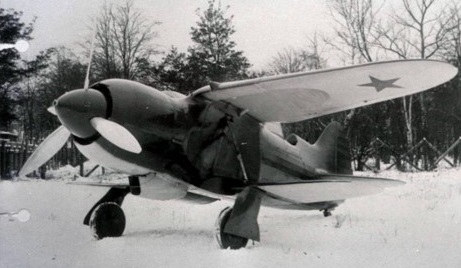
After the IS-1 further improvements were made which led the IS-2. The IS-2 first flew in 1941 with a new M-88 radial engine, and although it produced the same power as the M-63 on the IS-1, it had a smaller diameter and was thus more aerodynamic giving it a top speed of 316mph. Armament was upgraded from four 7.62mm ShKAS MG’s firing at 1800rpm to two ShKAS and two 12.7mm DShK MG’s firing at 600rpm.
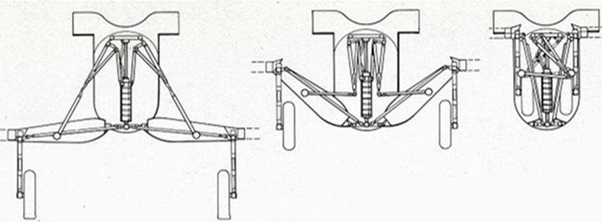
Ultimately, while the design proved its concept, the added weight from the actuating mechanism almost completely negated the added lift from the lower wing and left the IS-2 in a useless limbo where it was less maneuverable but faster than contemporary biplanes and more maneuverable but slower than contemporary monoplanes.
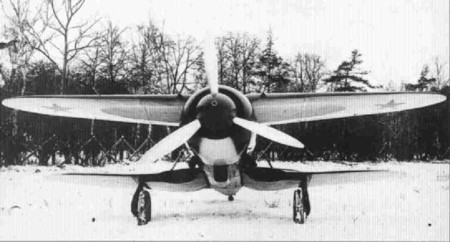
Development was cancelled to to these disappointing performance figures and the German invasion of Russia.
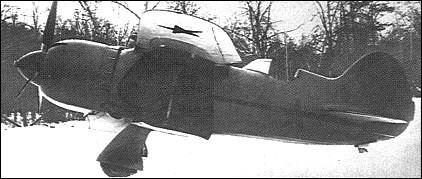
Engine: 1,100hp Shvetsov M-88
Wingspan: 27.4ft (8.3m)
Length: 23.4ft (7.1m)
Height: 10.7ft (3.3m)
Wing Area: 497.8 sq.ft (46.3 sq.m)
Empty Weight: 6,555lbs (2,973kg)
Loaded Weight: 6,941lbs (3,148kg)
Wing Loading: 13.9lbs/sq.ft (68.1kg/sq.m)
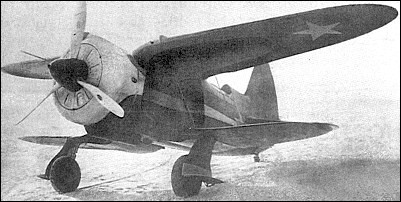
The IS-1 (Istrebitel Skladnoi or folding fighter) was conceived by Nikitin’s Test pilot Vladimir V Shevchenko and designed in collaboration with Vasili V Nikitin. Polymorphic in concept, it could translate from biplane to monoplane configuration and back again in the air. He created the IS-1 by modifying an I-153. He added a retractable lover wing that was pneumatically of hydraulically raised into the upper wing. Control was provided through means of a three-position switch with first raise the landing gear, then raise the wing.
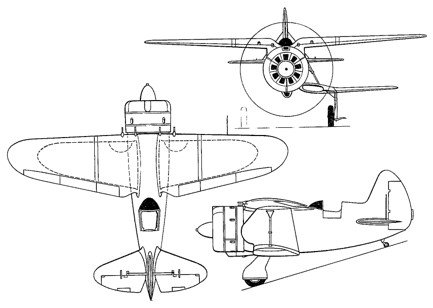
The IS-1 was intended to take-off as an unequal-span biplane, subsequently retracting its main wheels pneumatically into the lower wing and then folding this wing (again pneumatically), the centre section into recesses in the fuselage sides and the outer panels into shallow depressions in the upper wing. Theoretically, the lower wing could be extended during combat to increase manoeuvrability.
The IS-1 was powered by a 1,100hp Shvetsov M-63 nine-cylinder radial and carried an armament of four 7.62mm ShKAS machine guns. Construction was all metal and the prototype was flown for the first time on 6 November 1940, the lower wing being successfully retracted and extended within 7-10 seconds during subsequent trials. Refinement of the basic design for series production had meanwhile resulted in the IS-2, only one prototype of the IS-1 being completed.
Engine: 1,100hp Shvetsov M-63
Wingspan: 8.60 m / 28 ft 3 in
Length: 6.79 m / 22 ft 3 in
Wing area: 13.0-20.8 sq.m / 139.93 – 223.89 sq ft
Take-off weight: 2300 kg / 5071 lb
Empty weight: 1400 kg / 3086 lb
Max. speed: 453 km/h / 281 mph
Range: 600 km / 373 miles
Armament: 7.62mm ShKAS machine guns
 All Aero