During 1928 the Phantom Knight Aircraft Co built a three-place, open cockpit biplane powered by a 90hp Curtiss OX-5 engine. The aircraft was registered NX7927 c/n 1.
Inter-Wars
Phantom Knight Aircraft Co
Oak Park IL.
USA
Built two aircraft during 1928-9.
Pfenninger Elfe
The Elfe series started from a 9 m sailplane designed by W.Pfenninger before World War II. A new design was introduced by him in 1947 to become the Elfe 2, probably the first sailplane with a laminar flow airfoil. Subsequently the series was further developed by Markwalder to become the Elfe PM-3 (brought to the US in the sixties), then by Albert Neukom the Elfe M, Elfe MN and AN66 before the Standard Elfe S-1
Pfeifer Sport
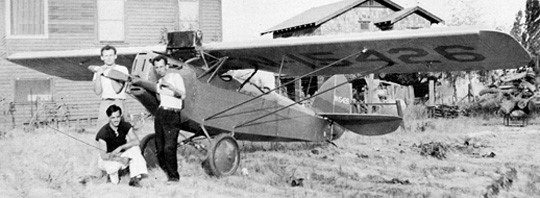
The 1936 Sport was a two place open cockpit monoplane. Registered N15426 c/n J-4 it was first flown on 6 May 1936 and powered by various motors from 50hp Ford B to 90hp Warner. The original crashed at Santa Susana CA on 9 August 1941 (p: John Toborg) and the registration was cancelled.
Originally a reworked Pietenpol, a version of this plane was built by Pfeifer in 1975 with a 110hp Corvair auto engine and higher parasol wing (span: 30’5″).
Pfalz D.VII

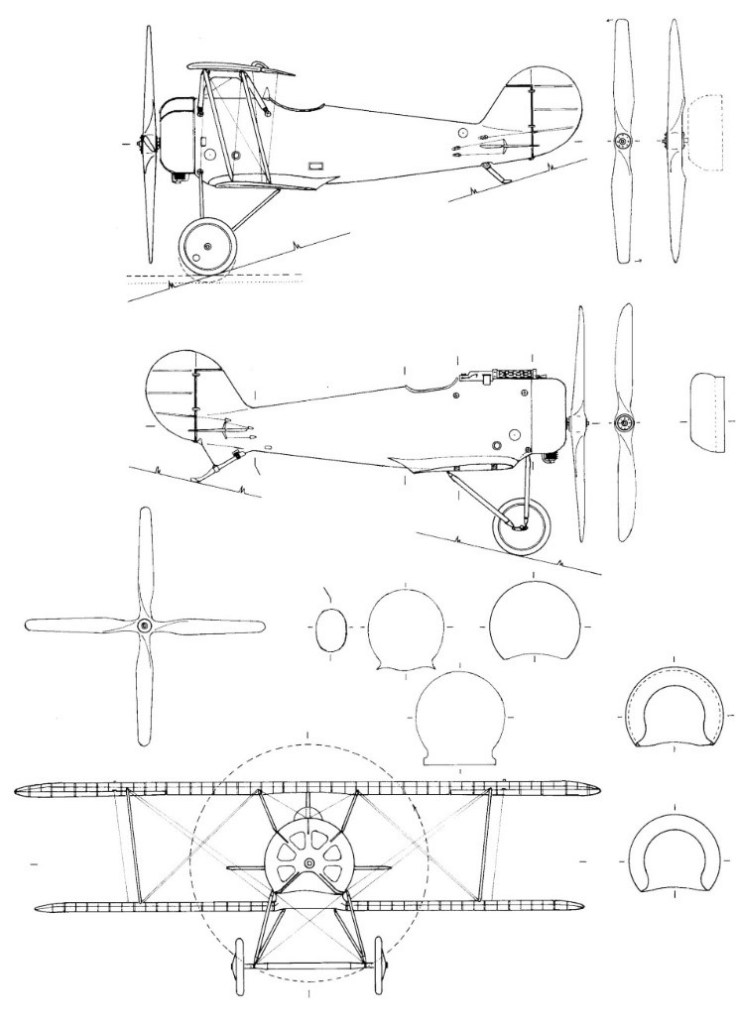
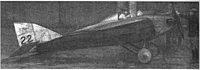
The D.VII was a single-bay biplane with staggered, parallel-chord wings. It had simple parallel interplane struts; the upper centre section was supported on each side by a three-sided rectangular frame, open at the bottom where it was mounted on the upper fuselage. There were externally connected ailerons on both upper and lower planes.
Behind the D.VII’s rotary engine its fuselage was of rounded cross-section, with the single-seat, open cockpit just below the upper wing’s trailing edge, where there was a small cut-out for better upward vision. The horizontal tail was mounted at mid-fuselage; the fin was straight-edged and carried a full, rounded and horn balanced rudder. The D.VII had a simple fixed conventional undercarriage, with mainwheels on a single axle supported at each end by a thin V-form pair of struts. There was a generous tailskid. The D.VII had a pair of fixed LMG 08/15 machine guns, the standard German single-seat fighter armament of the time.
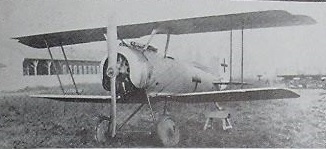
Beginning its flying programme near the end of 1917, the Pfalz was fitted with three types of rotary engines in testing: the 108 kW (145 hp) Oberursel U.III, the Goebel Goe.III and the Siemens-Halske Sh.III, the last two both producing 119 kW (160 hp). These drove both two and four blade propellers. Both balanced and unbalanced ailerons were tried.
The D.VII was one of three Pfalz aircraft which competed at the first D-Type contest held at Adlershof in January and February 1918, the others being the D.VI and the D.VIII. It gained its Type Certificate in February 1918 but did not receive a production order.
Powerplant: 1 × Siemens-Halske Sh.III, 120 kW (160 hp)
Propeller: 2-bladed
Wingspan: 7.52 m (24 ft 8 in)
Wing area: 17.20 m2 (185.1 sq ft)
Length: 5.65 m (18 ft 6 in)
Height: 2.85 m (9 ft 4 in)
Empty weight: 520 kg (1,146 lb)
Gross weight: 715 kg (1,576 lb)
Maximum speed: 190 km/h (120 mph, 100 kn) at 4,000 m (13,215 ft)
Endurance: 1.5 hr
Time to 6,000 m (18,290 ft): 25.25 min
Armament: 2 × LMG 08/15 7.9 mm (0.311 in) Spandau machine guns
Crew: One
Engine: 160 h.p. Oberursel U III
Span: 8.1 m. (26 ft. 7 in.)
Length: 5.55 m. (18 ft. 2 5/8 in.)
Height, 2.7m. (8 ft. 10 1/4 in.)
Wing area: 17.2 sq.m. (186 sq.ft.)
Empty weight: 483.5 kg. (1,064 lb.)
Loaded weight: 738 kg. (1,624 lb.)
Endurance: 1.5 hr
Armament: 2 × LMG 08/15 7.9 mm (0.311 in) Spandau machine guns
Crew: One


Peyret-Mauboussin PM XI
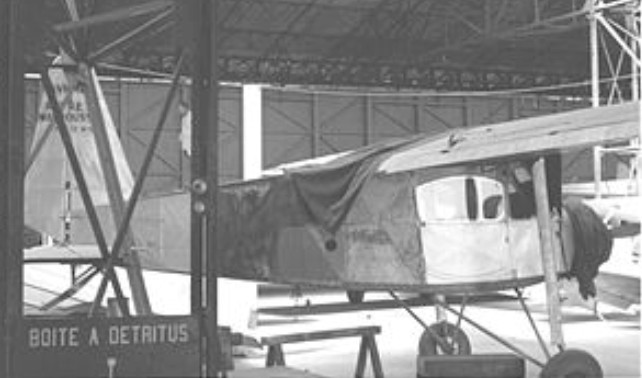
The PM XI was designed by Louis Peyret and Pierre Mauboussin as a Salmson-engined two-seat touring and sporting aircraft of wooden construction. Two examples were built.
The aircraft first flew in 1930. The second aircraft F-AJUL took part in the Challenge International de Tourisme 1930 touring planes’ contest, piloted by Charles Fauvel, but it damaged a landing gear in a compulsory landing. This plane F-AJUL was later flown by Rene Lefevre from Paris to Tananarive, Madagascar, between 1 and 14 December 1931. The total distance flown was 11,000 km at an average speed of 120 km/hour. This aircraft is stored without wings at the Musee Castel-Mauboussin at Cuers-Pierrefeu airfield near Toulon in southern France, and can be viewed by prior permission.
Engine: 1xSalmson 9 Ad 40 h.p.
Length: 5.50 m
Span: 11.75 m
Height: 2.86 m
Wing area: 14.7 sq.m
Empty weight: 322 kg
Loaded weight: 530 kg
Maximum speed: 160 km/hour
Ceiling: 4,500 m
Range: 600 km
Peyret-Mauboussin PM-10
Circa 1929
Engine: Scorpion ABC, 34 hp
Best glide ratio: 16-1
Seats: 1
Peyret-Nessler Libellule
A 1928 single/two-seat parasol lightplane, 1 x 12hp Salmson 3-cyl
One was built (F-AISQ) as a single seater but often flown with Mde Eric Nessler as passenger.
Peyret-le Prieur Hydroplan
A 1924 light biplane seaplane trainer designed for Yves le Prieur (of aerial rocket & aqualung design fame)
Engine: 1st trials 16 hp 4-cyl Sergant, then replaced by 45 hp Anzani 6
Peyret Avionette / Monoplan
A 1922-23 moto-aviette (very light a/c) with “moteur auxiliaire” of conventional layout.
1 x nose-mounted 16 hp air-cooled upright inline 4-cyl Sergant A
The wings folded up on approach, Lympne trials 13 Oct 1923, Alexis Maneyrol killed
 All Aero