Ross RS-1 Zanonia

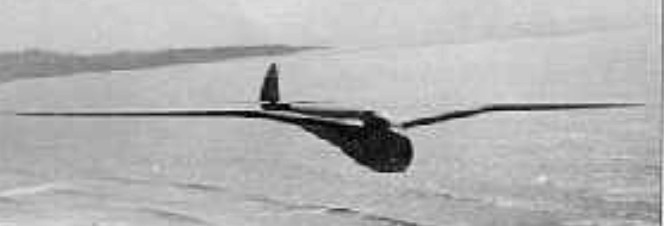
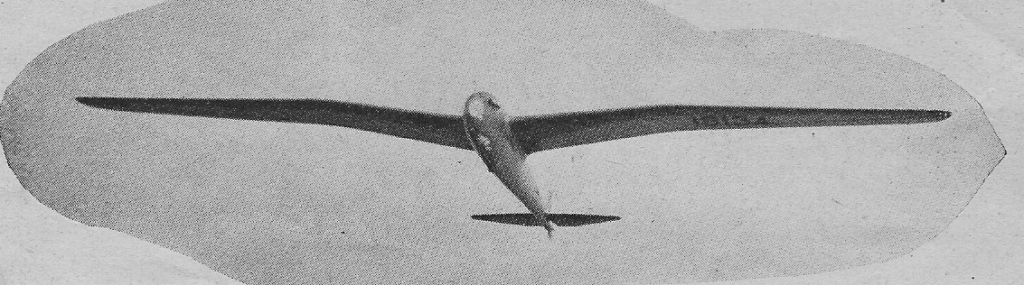
Harland Ross built the all wood RS-1 in 1937 for Harvey Stephens, hence the designation. It was one of the first small-span high-performance sailplanes. The lines of the ship were inspired by the Lippisch Fafnir II and the name comes from an Australian seed with good gliding characteristics.

Ross flew the RS-1 in the 1937 U.S. Nationals and placed 3rd behind Peter Riedel and Richard du Pont. The ship placed 2nd in the Easton design competition.

Later, owned and piloted by John Robinson, it made American Soaring history by winning the 1940, 1941 and 1946 Nationals, placing third in 1947 and second in 1948, and setting National distance record of 466 km. /290 miles in 1940 and 523 km. /325 miles in 1947 and the world altitude record of 10,211 m. / 33,500 ft. in 1949. Robinson also completed the Worlds’s first Diamond badge using the RS-1

Wing span: 14.02 m / 46 ft
Wing area: 11.61 sq.m / 125 sq.ft
Empty Weight: 150 kg / 330 lb
Aspect ratio: 17
Airfoil: NACA 2418,2412
Payload: 122 kg / 270 lb
Gross Weight: 272 kg / 600 lb
Wing Loading: 23.43 kg/sq.m / 4.8 lb/sq.ft
Water Ballast: 0
L/DMax: 30 77 kph / 42 kt / 48 mph
MinSink: 0.70 m/s / 2.3 fps / 1.36 kt
Seats: 1
No. Built: 1
Ross R-2

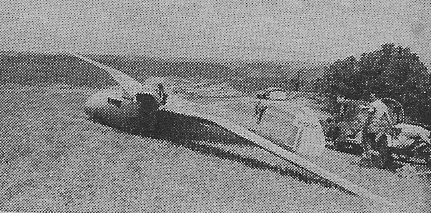
The R-2 was quite similar to the RS-1 but the gull wing had a 48 ft. span and an all-moving tail was used. It made the first wave flight I the U.S. on Oct. 25, 1938, at White Mountain, New Hampshire.

Wingspan: 46 ft
Length: 20.5 ft
Wing area: 125 sq.ft
Aspect ratio: 17
Empty weight: 280 lb
Gross weight: 470 lb
Min sink: 2.5 f/sec
Glide ratio: 23-1

Rose Parakeet / Hannaford Bee

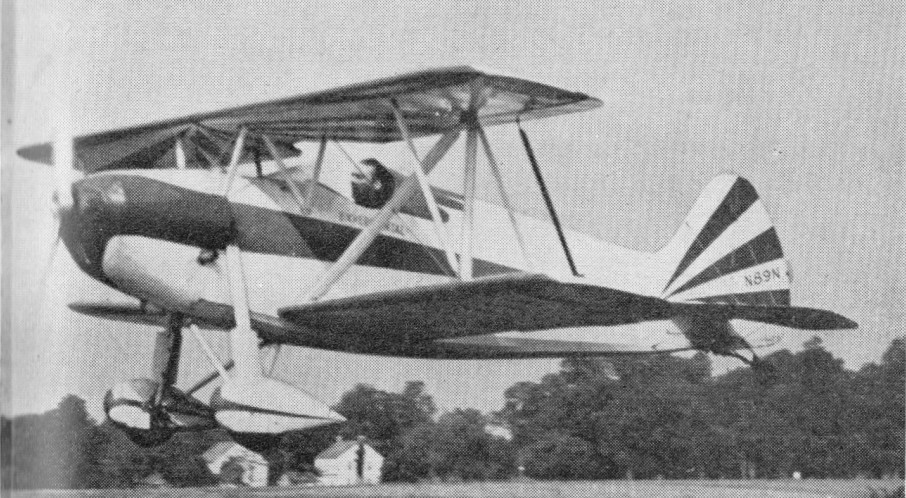
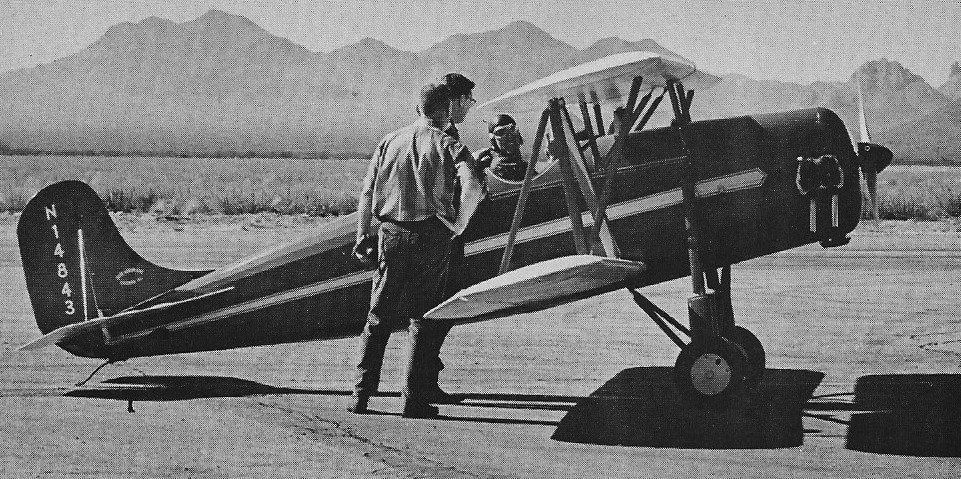
As flying began to recover from the depression, the little Rose Parakeet appeared in 1934. This was built by the Rose Aeroplane & Motor Co. of Chicago, Illinois. Powered with the new (and relatively expensive) 37-hp Continenal A.40 flat-four engine, it drew heavily on the layout of the old Lincoln Sport but incorporated welded steel-tube fuselage and tail construction and greatly modified wing rigging. The airfoil was a Rose design, nearly symmetrical. In spite of winning an ATC, only eight were built before the venture folded.

After acquiring in 1948 the manufacturing and marketing rights to the prewar Rose Parakeet single-seat sports biplane from Rose Aeroplane & Motor Company, Hannaford Aircraft Co offered production versions of the airplane with 40- 85hp engines. The design reappeared in the post-World War II homebuilt boom as the “Hannaford Bee,” the plans for which were available to the homebuilders. With 65-to 90-hp engines, the Bees, and some refurbished Parakeets became very suitable sport planes.

The design was revived in 1969 by Doug Rinehart, who used a 100-hp Continental 0-200 engine and intended to make the new Parakeet an ATC’d model for the general aviation market. The market did not accept it.

Replica:
Westphal Rose Parakeet

Gallery

Parakeet
Engine: Continental, 80-90 hp
Wingspan: 20 ft
Wing area: 116 sq.ft
Length: 17 ft
Empty weight: 550 lb
Gross weight: 860 lb
Wing load gross: 7.2 lb/sq.ft
Wing load 777lb aerobatic: 6.6 lb/sq.ft
Pwr load Gross: 9.5 lb/hp
Pwr load aerobatic: 8.5 lb/sq.ft
Top speed: 135 mph
Cruise: 120 mph

Parakeet
Engine: Lycoming, 125 hp
Wingspan: 20 ft
Length: 17 ft
Cruise: 135 mph

Roos-Bellanca Airplane Co.

USA
Established 1922 at Omaha, Nebraska, to produce aeroplanes designed by Professor G. Bellanca, first being the Bellanca C.F. high-wing monoplane of about 1924, powered by an Anzani engine. Prof. Bellanca left the partnership in 1923 and joined the Wright Aeronautical Corporation the following year. Wright built several Bellanca monoplanes, the last of which established a world endurance record, remaining in the air for more than 51 hours.