In 1935 F C Austin built a single place, open cockpit monoplane, registered N11582, powered by a 35hp Ford engine.
Inter-Wars
Algate 1
The 1930 Algate 1 was a single-place monoplane, powered by an Algate engine, and registered NC434V c/n A-1.
The registration was cancelled on 2 February 1933.
Algate Aircraft Corp
pres: William M McDaniel
223 E 9th St,
Kansas City MO.
USA
Built the Algate 1 in 1930
Alfaro X-13 / Ingalls Safety Airplane
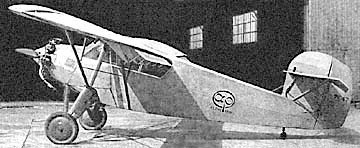
The 1928 Alfaro X-13 NX7647 was an entry in the Guggenheim Safe Aircraft Competition. A two-place powered by a 110hp Warner Scarab, the variable-lift wing featured spoilers, and a trailing-edge flap that contained a shutter to seal the gap between the wing and flap. Did not qualify because of its lack of slow-speed control, and failure to meet the required maximum speed of 110mph.
Also seen as Ingalls Safety Airplane.
Alfaro Autogyro / Pitcairn-Cierva PCA-2-30 / Pitcairn PA-11
In 1930 Alfaro built the Alfaro Autogyro under contract from Pitcairn. The one built, NX759W, was also known as the Pitcairn-Cierva PCA-2-30, and possibly as Pitcairn PA-11.
A two-place, open cockpit autogyro powered with a 110hp Warner engine, it first flew on 18 August 1930.
Alcor C-6-1 Junior
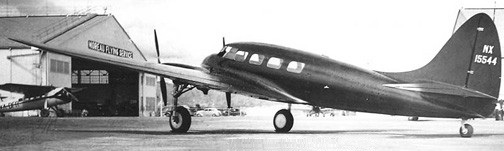
The 1937 Alcor C-6-1 Junior eight-pace cabin monoplane, with retracting undercarriage, registered NX15544, crashed in final testing.
Only the one was built. Often incorrectly referred to as “Lockheed Alcor.”
Engines: 2 x 150hp Menasco C-6
Wingspan: 49’0″
Length: 31’8″
Useful load: 2059 lb
Max speed: 211 mph
Cruise: 190 mph
Seats: 8
Akin, Earl T
Breckenridge TX.
USA
Akin was reportedly experimenting with manned flight about the same time as the Wright brothers, but his early flights were in gliders. The c.1935 AA was Akin’s one-place design, but only a brief descriptive paragraph was found. He designed and built gliders, and was one of the first to be towed to altitude by a plane. He also made a record-breaking flight from NYC to Washington DC (glider or plane?) and constructed several powered aircraft. He built a 2pCmwM called the Buckaroo with deep-chord, tapered wings, about the 1930s possibly registered N11936.
American Eagle A-229
The 1929 American Eagle A-229 was a two-place open cockpit biplane powered by a 90hp Curtiss OX-5 engine and priced at $2,995.
American Eagle A-139
The 1930 American Eagle A-139 was a special clipped-wing 251 Phaeton as a racer, with 200hp Wright J-4 for Jack Foster at the 1930 Nationals. Registered NR562H, it was refitted with stock wings after it was found there was no particular benefit in the short spans.
Twenty-four were built.
American Eagle A-129
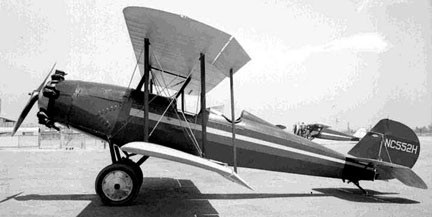
Designed by Giuseppe Bellanca, the 1929 American Eagle A-129 (ATC 124) was initially designed as a replacement for the Porterfield Flying School’s A-101s. Priced at $4,895 they became popular with sportsman pilots and more than 400 were built.
A 1929 company brochure shows manufacture under ATC 17 and priced $2,995-7,195 for eight engine options up to 200hp Wright J-4.
A-129
Engine: 90hp Curtiss OX-5
Wingspan: 30’0″
Length: 23’5″
Useful load: 800 lb
Max speed: 105 mph
Cruise: 90 mph
Stall: 35 mph
Range: 500 mi
Seats: 2-3
A-129
Engine: 100hp Kinner K-5
Wingspan: 30’0″
Length: 23’5″
Useful load: 800 lb
Max speed: 105 mph
Cruise: 90 mph
Stall: 35 mph
Range: 500 mi
Seats: 2-3
A-129
Wingspan: 30’0″
Length: 24 ft
Useful load: 850 lb
Max speed: 95 mph
Cruise: 83 mph
Stall: 34 mph
Range: 475 mi
Seats: 2-3
 All Aero