Ta-Ho-Ma Airplane & Motor Co
pres: B H Vanderveld
64 W Randolph St, Chicago IL. USA
Circa 1929 built aircraft
Ta-Ho-Ma Airplane & Motor Co
pres: B H Vanderveld
64 W Randolph St, Chicago IL. USA
Circa 1929 built aircraft
In 1932 Taft built a seaplane, N13159 c/n A1, with a 90hp LeBlond. The registration was cancelled on 30 July 1934.
Built in 1928 the sole Taft Kingfisher, N368, was a 3 place open cockpit biplane flying boat.
First flying on 6 Feb 1928, the Kingfisher became the Whittelsey Amphib.
Engine: 110hp LeBlond 7DF pusher
Wingspan (upper): 37’0″
Wingspan (lower): 18’0″
Length: 28’9″
Useful load: 600 lb
Max speed: 90 mph
Cruise speed: 65 mph
(Philip E) Taft Airplane Corp, Elizabeth City NC
1930: Acquired by Whittlesey Ltd
Airplane builder
From 1937 Tachikawa produced a number of interesting designs which did not go into series production. These included the R-38 two-seat parasol-wing monoplane primary trainer.
From 1937 Tachikawa produced a number of interesting designs which did not go into series production. These included the TS-1 single-seat ultra-light low-wing cabin monoplane.
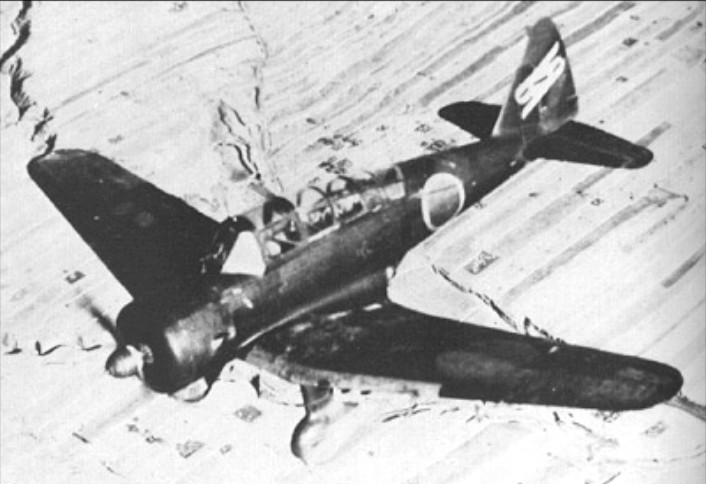
In 1937 army air headquarters authorized the construction of two prototypes of a two seat army cooperation aircraft developed by Ryokichi Endo’s design team from Tachikawa Hikoki K K (Tachikawa Aircraft Company).
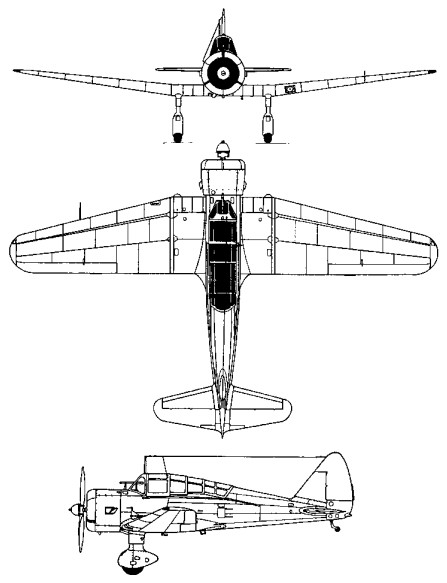
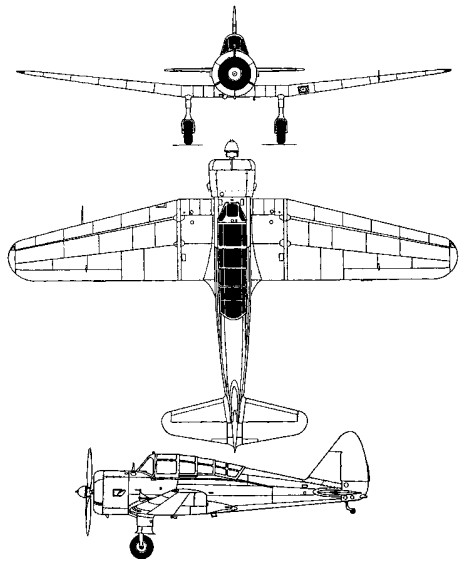
The first of two prototypes was flown on 20 April 1938 flew from Tachikawa airfield, the Tachikawa Ki-36 was a cantilever low-wing monoplane of all-metal basic structure, covered by a mix of light alloy and fabric. Landing gear was of fixed tailwheel type, the main units enclosed in speed fairings, and power was provided by a 336kW (450-hp) Hitachi Ha-13 radial engine. The two-man crew was enclosed by a long ‘greenhouse’ canopy and both men had good fields of view, that of the observer being improved by clear-view panels in the floor.
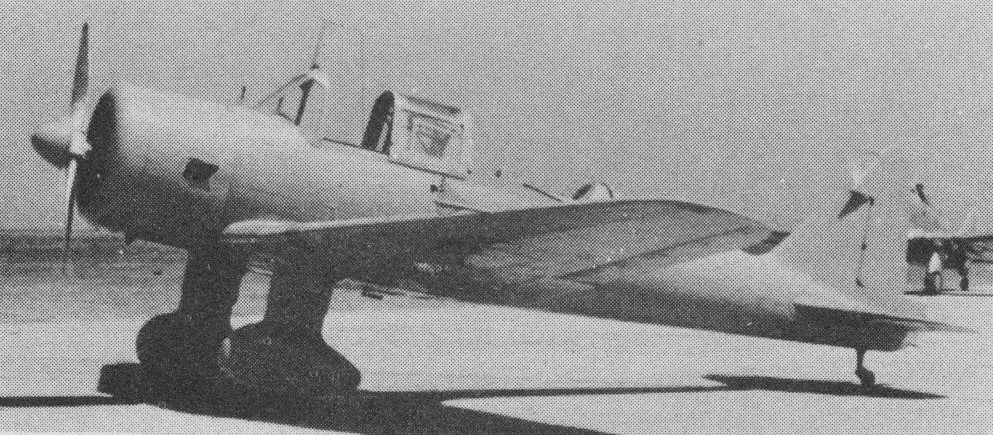
The aircraft was very sensitive to the controls and fully satisfied the army, although later production aircraft incorporated a 2′ wing washout to counter a tendency to stall which had become apparent during very tight manoeuvring.
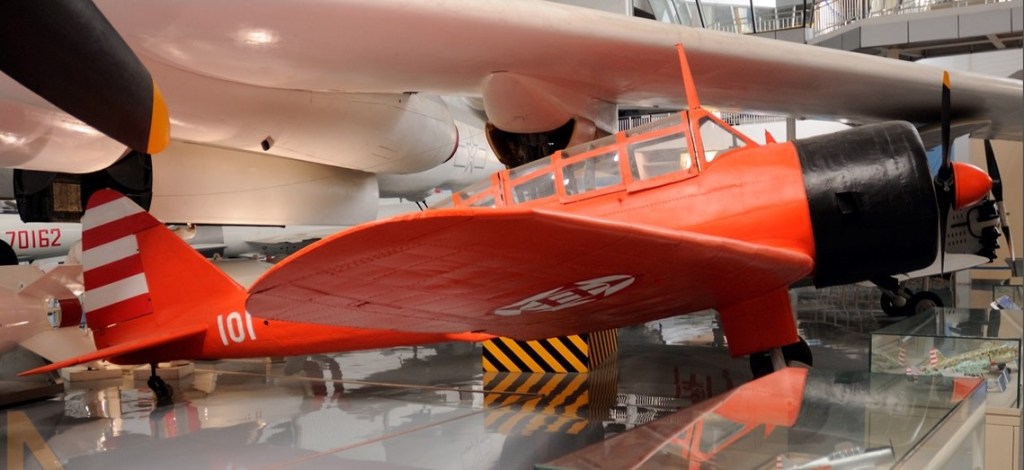
The type was ordered into production in November 1938 as the Army Type 98 Direct Co- Operation Plane. Generally similar to the prototypes, the type was armed with two 7.7mm (0.303-in) Type 89 machine guns, one in the engine cowling synchronized to fire through the propeller, and the other on a flexible mounting operated by the observer, and introduced the more powerful Hitachi Ha-13a engine. Up to 150 kg (330 lb) of bombs were carried on underwing racks. In 1939 Kawasaki joined the production programme.
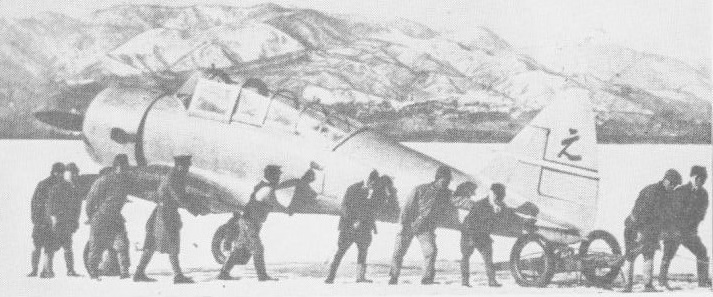
When construction ended in January 1944, a total of 1,334 had been built by Tachikawa (862) and Kawasaki (472).
The handling characteristics and reliability of the Ki-36 made the army realize that it was ideal for use as an advanced trainer, resulting in development of the Ki-55, intended specifically for this role and having armament reduced to a single forward-firing machine-gun. Following the testing of a prototype in September 1939, the army ordered this aircraft as the Army Type 99 Advanced Trainer; when production was terminated in December 1943 a total of 1,389 had been built by Tachikawa (1,078) and Kawasaki (311).
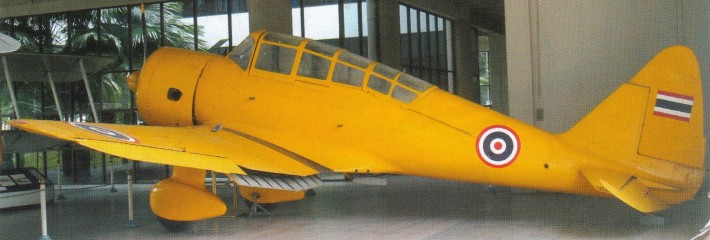
Both versions were allocated the Allied codename ‘Ida’, and the Ki-36 was first deployed with considerable success in China. However, when con¬fronted by Allied fighters at the begin¬ning of the Pacific War it was found to be too vulnerable, being redeployed in China where it was less likely to be confronted by such aircraft.
Ki 36s were employed against the Allies from December 1941, but were withdrawn from 1943 onwards, in which role, with wheel spats removed and necessary equipment modifications, they were very successful, so much so that production as the Army Type 99 Advanced Trainer or Ki 55 was initiated by both Tachikawa and Kawasaki. . In the closing months of the war, many examples of both versions were pressed into service as suicide bombers carrying a 250 kg (550 1b) or 500 kg (1100 lb) bomb. Allied name for all models was Ida.
Twenty-four Ki-55 served with the RTAF throughout the period of Japanese ascendancy and the immediate post war period. One survives.
Ki-36
Engine: one 380-kW (510-hp) Hitachi Ha- l3a radial
Maximum speed 348 km/h (216 mph) at 1800 m(5905 ft)
Cruising speed 235 km/h (146 mph)
Service ceiling: 8l50 m (26740 ft)
Range 1235 km (767 miles)
Empty weight 1247 kg (2749 lb)
Maximum take-off 1660 kg (3,660 lb)
Wing span 11.80 m (38 ft 8.6 in)
Length 8.00 m (25 ft 3 in)
Height 3.64 m (11 ft 11.3 in)
Wing area 20.00 sq.m (215.29 sq.ft)
Armament: two 7.7-mm (0.303-in) machine-guns
Bombload: 150 kg (331 lb)
Crew: 2
Ki-55
Engine: 1 x Hitachi Ha-13a, 380kW
Span: 11.8 m (38 ft 9 in)
Length: 8 m (26 ft 3 in)
Height 3.64 m (11 ft 11.3 in)
Wing area 20.00 sq.m (215.29 sq.ft)
Empty weight: 1292 kg / 2848 lb
Gross weight: 1721 kg (3794 lb)
Maximum speed: 348 km/h (216 mph).
Cruising speed 235 km/h (146 mph)
Ceiling: 8200 m / 26900 ft
Range: 1060 km / 659 miles
Crew: 2
The third prototype of the Ki 9, intended as a primary trainer, was flown in early 1935 but exhibited poor handling qualities because of its smaller, lighter engine and the consequent displacement of the centre of gravity. The Ki 9 was therefore abandoned as a primary trainer, and the army air force asked Tachikawa to produce, later that year, two prototypes of a new primary trainer biplane, the Ki 17.
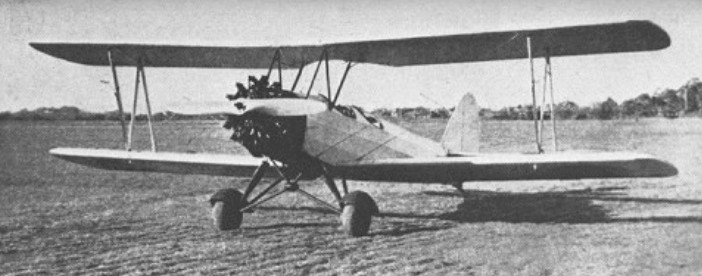
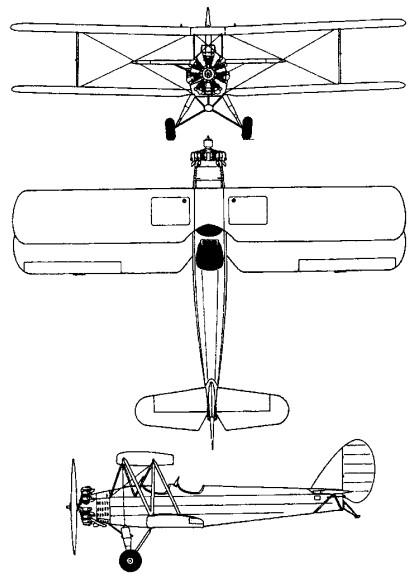
The Tachikawa Ki-17 biplane had a slimmer fuselage, more square-cut equal-span wings and a redesigned tailplane, engine uncowled and a simplified landing gear.
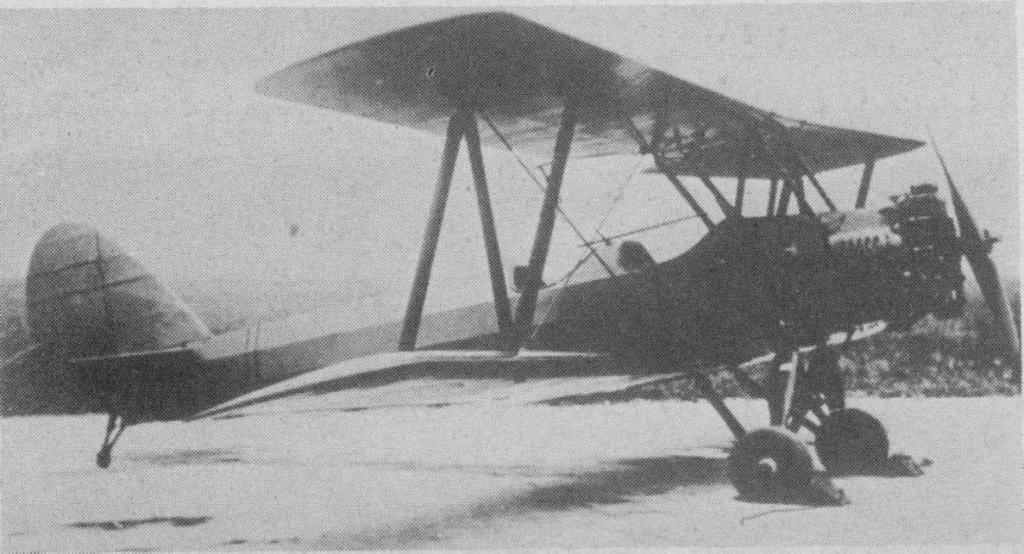
The first of two prototypes was flown in July 1935 powered by a 150 hp Hitachi Ha 12 seven¬ cylinder radial engine driving a two blade propeller. Trials were successful and the only major change made to subsequent production aircraft was the deletion of the upperwing ailerons to eliminate oversensitive control inputs.
Between 1936 and 1943 Tachikawa completed 658 series Ki-17s and the type was used at four major flying schools and the Army Air Academy. The Ki-17 bore the official designation Army Type 95 III Primary Trainer, Allied codename ‘Cedar’. Some Ki 17s were later transferred to liaison or communications duties.
Ki-17
Engine: 1 x Hitachi Ha-12, 112kW
Max take-off weight: 914 kg / 2015 lb
Loaded weight: 639 kg / 1409 lb
Wingspan: 9.82 m / 32 ft 3 in
Length: 7.85 m / 26 ft 9 in
Height: 2.95 m / 10 ft 8 in
Wing area: 26.2 sq.m / 282.01 sq ft
Max. speed: 170 km/h / 106 mph
Ceiling: 5300 m / 17400 ft
Crew: 2
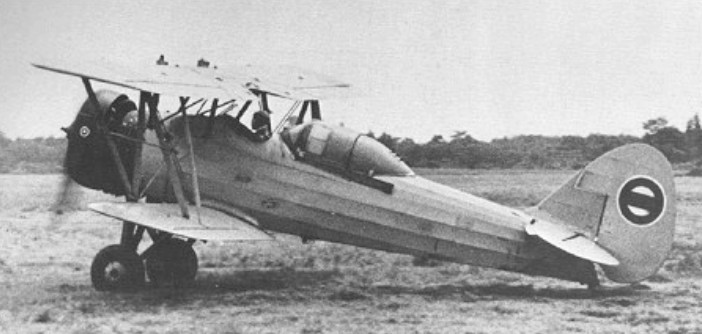
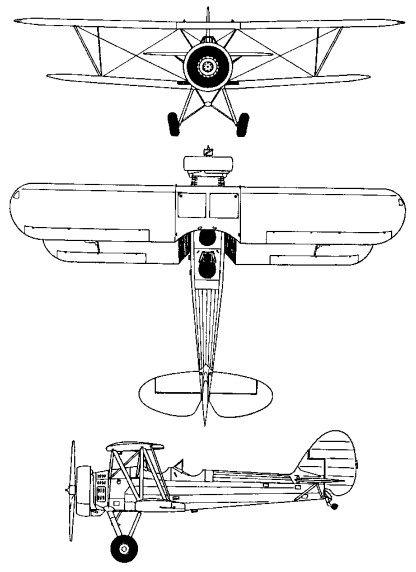
The Ki 9 had been designed in 1934 by Ryokichi Endo to satisfy a Japanese army air force requirement for a primary and intermediate trainer, capable in the latter case of 220 km/h (137 mph) and an endurance of 3½ hours.
First flown on January 7, 1935, the first and second prototypes were each powered by a 350 hp / 261kW Hitachi Ha 13a nine cylinder radial engine; the third aircraft, prototype for the primary trainer version, had a lower powered Nakajima NZ seven cylinder radial engine of 150 hp / 112kW.
Tests indicated centre of gravity problems for the proposed primary trainer and the Ki-9 was developed in the higher-powered intermediate training role only. As Tachikawa had suggested, the army air force found that one aircraft could not successfully carry out both duties, and accordingly the Ki 9 was ordered into production in 1935 only as the Type 95 1 Medium Grade (intermediate) Trainer.
Production deliveries began in 1935. Designated the Army Type 95-1 Medium Grade Trainer Model A and later given the Allied codename ‘Spruce’, the Tachikawa biplane had complex split-axle landing gear with fairings over the top of the wheels. In 1939 this was modified and simplified, the fuselage slightly shortened and all-up weight reduced. The resulting Army Type 95-1 Model B or Ki-9 Kai had improved manoeuvrability and flight characteristics. Both versions were used widely for blind-flying training with a folding hood over the rear cockpit, and at least one was modified with a glazed canopy over the rear cockpit for use as a staff officer transport.
Production by Tachikawa ended in 1942 after completing 2395 (in addition to the three prototypes), but in 1944 45 a further 220 were manufactured by the Tokyo Koku K.K.
It served with the army air force throughout the remainder of the 1930s and until the end of the Second World War. Some Ki 9s were used for reconnaissance or communications duties, and the type also served with the air forces of Cochin China, Manchuria and Thailand during the Pacific war. After the war, captured examples were employed for a time by the insurrectionist Indonesian forces.
The Ki-9 received the allied code name ‘Spruce’.
Ki-9 Model A
Engine: 1 x Hitachi Ha-13a, 261kW
Max take-off weight: 1580 kg / 3483 lb
Loaded weight: 1120 kg / 2469 lb
Wingspan: 10.32 m / 33 ft 10 in
Length: 7.52 m / 24 ft 8 in
Height: 3.1 m / 10 ft 2 in
Max. speed: 240 km/h / 149 mph
Ceiling: 5800 m / 19050 ft
Crew: 2
Shin Tachikawa Kokuki Kabushiki Kaisha
New name from 1936 of Ishikawajima Aircraft Company Ltd.
Built for Japanese Army Air Force the Ki-9 and Ki-17 two-seat biplane trainers from 1935-1942 and 1935-1944 respectively; Ki-36 Army co-operation monoplane and its trainer derivative, the Ki-55 (1938-1944 and 1939-1943); the twin-engined Ki-54 multipurpose trainer-transport (1940-1945) and, under license as the army Type LO, 64 examples of the Lockheed Model 14 twin-engined transport. Other ventures included the Ki- 74 long-range pressurized twin-engined reconaissancebomber of 1944-1945 and prototypes of the twin-engined reconaissance Ki-70, Ki-77 and Ki-94 high-altitude “heavy” fighter. Company re-formed November 1949 as Shin Tachikawa Kokuki Kabushiki Kaisha. Built prototypes of the R-52 lightplane (first all-Japanese post-war aircraft) and R-53 in 1950s.
 All Aero