Tatlin Letatlin

The “Letatlin” during a gliding parade in Moscow in 1933

The ornithopter designed by Vladimir Tatlin from 1929 to 1932 and Tatlin built three versions of his machine. The word Letatlin is formed from the verb letat (fly), associated with the name of its creator, Tatlin. In the Stalin years, Tatlin, one of the major artists of the constructivist movement of the Soviet revolutionary years, designed his ornithopter inspired from birds.

Tatlin had carried out a trial flight that hadn’t worked out.

The ornithopter designed by Tatlin from 1929 to 1932 had disappeared. It had been more or less abandoned for twenty years in a warehouse belonging to the Molino Russian Federation Central Air force museum, next to Star City, the Youri-Gagarin cosmonaut training center fifty kilometers away from Moscow. It was the KSEVT, team, the space culture center in Slovenia, that by chance came across the machine in a precarious state during a protocol visit to the Monino museum in 2014. In February 2014, they were taken to the historical part of the Monino museum where one can see pioneers’ flying machines, since the Russians went into aeronautics very early. Miha Turšič, director of KSEVT until 2016, member of the collective Postgravityart, spotted the Letatlin in the corridors of the Monino museum in April 2014.

While the group was in discussion, Miha Turšič went ahead, getting a bit lost in the aisles of the museum, and suddenly I found myself face to face with a machine that looked like a plane but wasn’t one. He knew of the Letatlin and there it was right in front of him. We immediately asked if they knew what they had there, one of the most iconic works of 20th century art. They told us: “Yes, it’s an old Russian artist who built sort of flying machines rather like Leonardo de Vinci.” They had no idea of the importance of the piece. They considered it as best as an experimental flying machine that had never flown. Tatlin was mentioned, but with no context.

It was Letatlin n°3 that was found. It would have reached Monino in 1996 after being damaged on the way back from a presentation in an exhibition in Athens and was left there, abandoned in the context of complicated years following the collapse of the USSR.

Restoration of the “Letatlin”

The Molino Air force museum had just retrieved it a year earlier from the museum storeroom where it lay in bits in a corner, deteriorated, really damaged, and they had reassembled it to hang it in their museum.

The “Letatlin” restored in the Tretiakov gallery in Moscow

It was obvious that a renovation was necessary for the Letatlin. The Monino museum and the Tretiakov gallery finally found an agreement for its renovation. Turšič went to Moscow at the end of December 2017 to meet the curator of the museum and saw it displayed in the 20th century art collection.
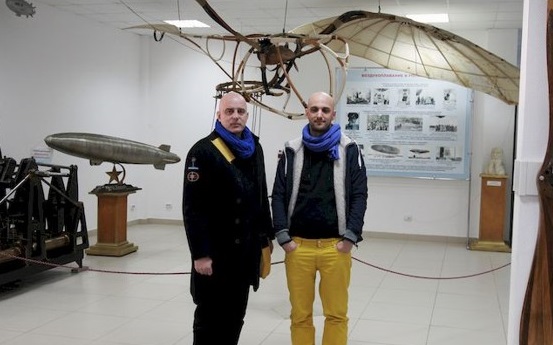
Dragan Živadinov and Miha Turšič in front of the “Letatlin” at the Monino museum on April 11, 2014.

The Letatlin finally found the perfect place for its presentation to the public.
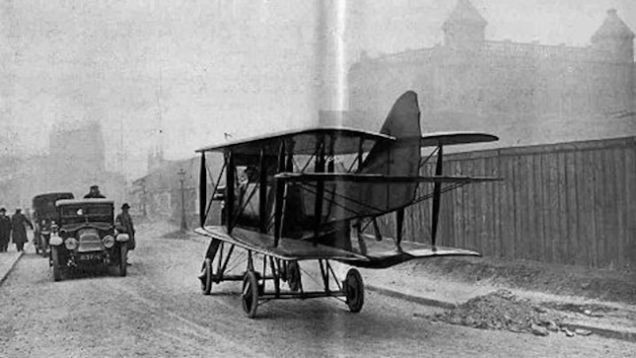
Tampier T.4

Tampier developed also for the French Army a two-seat reconnaissance aircraft designated T.4, which also featured a two-cylinder auxiliary engine. This was not only intended for main engine starting, but was also used to power a generator in flight to provide essential electrical services, and in particular to make possible the use of early air-to-ground communication equipment.

Tampier Avion-Automobile

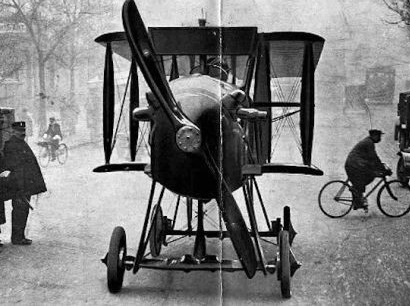
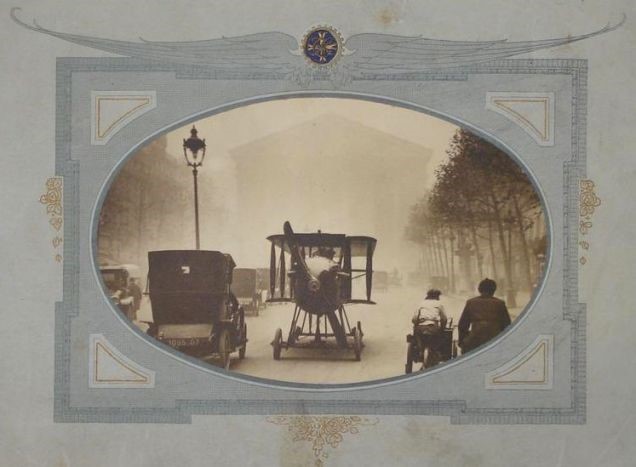
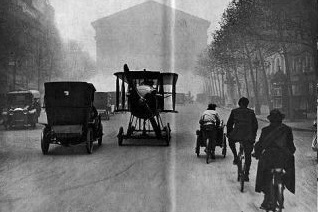
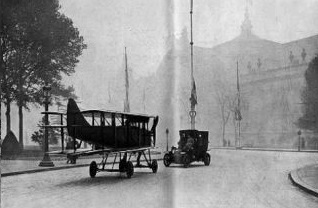
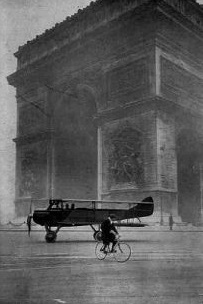
Frenchman Rene Tampier started up again after World War I and successfully built a four-wheeled bi-plane with foldable wings. Tampier first drove his Avion-Automobile in October 1921 and exhibited it at the 1921 Paris Salon, after a two-hour drive in the city. It flew two weeks later.

Tampier opted for two separate powerplants: a small four cylinder motor driving the vehicle’s rear axle, and a 300 hp Hispano Suiza V 12 aero engine to get it airborne. The biplane wings folded back alongside the fuselage for motoring. The pilot sat facing the tail when driving.

Between 1922 and 1925 Tampier built several different versions of the Avion Automobile, all of which he drove and flew, but as a vehicle it was cumbersome and awkward and the idea was never adopted commercially.

Tampier, Rene

Exhibited a folding-wing roadable biplane at the 1921 Paris Salon. This had an auxiliary engine to drive the landing wheels, which could be used also as a self-starter for the main engine. When driven on the road it travelled tail first. He developed also for the French Army a two-seat reconnaissance aircraft designated T.4, which also featured a two-cylinder auxiliary engine. This was not only intended for main engine starting, but was also used to power a generator in flight to provide essential electrical services, and in particular to make possible the use of early air-to-ground communication equipment.

Talleres MWT-1

Dr Watter conducting first engine run

In June 1933 the Mexican Government decided to send one of Mexico’s best pilots, Francisco Sarabia, non-stop from Mexico to Seville, Spain, in a Mexican built aircraft.

Th task was given to Angel Lascurain, Juan Guillerme Villasana, Adrian del Pase, Juan Brelivet and Michael Watters.

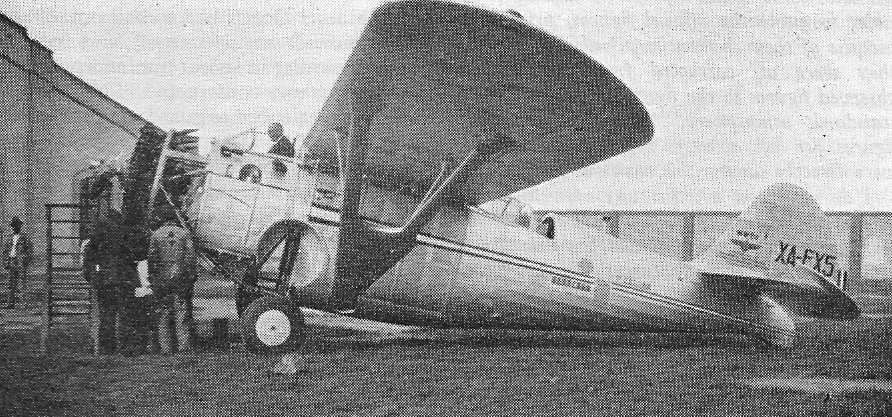
The plane was built in the Talleres Nacionales de Constructcienes Aeronauticas. Built in 1934 it was powered by a Pratt & Whitney Wasp of 550 hp and had a retractable undercarriage. The aircraft incorporated the first Watter Cowling.

The registration was XA-EX5, model designation MWT-1, and named ‘Barberan y Collar’ after famous Spanish fliers. The red, white, and green striping was after the colours of the Mexican flag.

Due to a weak landing gear, the plane had a slight accident on 16 June 1934, when it ground-looped during landing and take-off tests at Mexico City Central Airport. Pilot Sarabia and passenger Watter were not injured.

For various political reasons the entire project collapsed and the plane was put in storage. The engine was sold to a high officer in the Mexican Air Force.

Engine: Pratt & Whitney Wasp, 550 hp
Wing span: 16.68 m
Chord: 2.3 m
Incidence: 3 deg
Length: 9.85 m
Height: 2.80 m
Empty weight: 1620 lb
MAUW: 5597 lb
Fuel capacity: 5000 lt / 3380 kg
Oil capacity: 284 lt / 255 kg
Crew: 2
Baggage capacity: 190 kg
Max speed: 270 kph
Cruise: 200 kph
Landing speed: 130 kph
Ceiling: 2000 m
Endurance: 70 hr
Range: 11,600 km

Talleres Azcarate OE-1

In 1928, the National Aviation Shops produced two sesquiplanes to the designs of Brig Gen Juan F Azcarate, who had assumed command of Mexican Army Aviation, these, the Azearate OE 1 light bomber and recon-naissance aircraft and the Azearate E trainer, both entering limited production at Balbuena, three of the former and 10 of the latter being built in 1929.

Talleres Azcarate E

Azcarate E

In 1928, the National Aviation Shops produced two sesquiplanes to the designs of Brig Gen Juan F Azcarate, who had assumed command of Mexican Army Aviation, these, the Azearate OE 1 light bomber and recon-naissance aircraft and the Azearate E trainer, both entering limited production at Balbuena, three of the former and 10 of the latter being built in 1929.

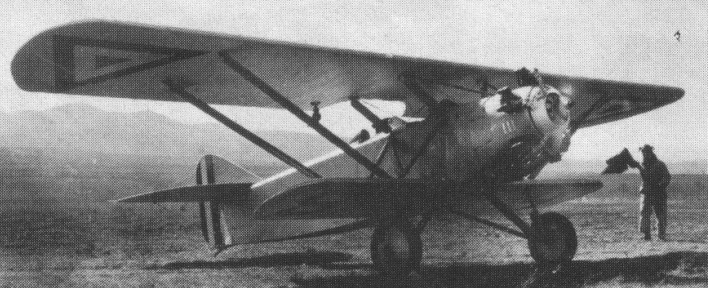
The Azcarate E is primarily of wooden construction, the cew of two in tandem with full dual controls. A single 0.30in machine gun was mounted in the rear cockpit.

Serveral squadrons were equipped with the type until the mid-1940s, still serving with the Mecican School of Military Aviation.

Engine: Wright J-5, 220 hp
Max speed: 100 mph
Cruise: 82 mph

Talleres Nacionales De Construcciones Aeronauticas / TNCA / Talleres Generales De Aeronautica Militar

Mexico
National Aircraft Manufacturing Workshops, established November 1915 at Valbuena, near Mexico City. Began by building Bleriot, Morane-Saulnier and other foreign types under license. Own first products were the Microplane Veloz single-seat fighter biplane of 1918 and the Series A two-seat general-purpose biplane. Followed in late 1920s by the Azcarate-E training and reconnaissance sesquiplane. Aircraft design halted by Government 1930, but shortly afterwards built Chance Vought O2U Corsairs under license. Later products included Teziutlan primary trainers in 1942 and, in late 1940s, the prototype TTS-5 six-seat twin-engined general-purpose transport.

Ta-Ho-Ma B

Ta-Ho-Ma built the model B three place open cockpit biplane in 1929. Power was from a 100hp Siemens-Halske SH-12, or optional 180hp Hisso E.

The price was $4275. A total of four model A and B were built, registered NC475, NC536, NC537, and NC538.

Engine: 100hp Siemens-Halske SH-12
Wing span: 30’0″
Length: 21’0″
Useful load: 874 lb
Max speed: 115 mph
Cruise speed: 105 mph
Stall speed: 33 mph
Range: 425 mi

Ta-Ho-Ma A

In 1929 Ta-Ho-Ma was selling the model A, three place open cockpit biplane.

Power was the 150hp Hisso E, or optional 90hp Curtiss OX-5. The model A sold for $3,750, or $2,500 less motor.

A total of four model A and B were built, registered NC475, NC536, NC537, and NC538.

Engine: 150hp Hisso E
Wingspan: 32’0″
Length: 21’8″
Usful load: 795 lb
Max speed: 135 mph
Cruise speed: 115 mph
Stall speed: 35 mph
Range: 575 mi