As a forerunner of the nowadays Turkish Aeronautical Association, the Turkish Aircraft Foundation was founded on 16.02.1925. In accordance with the statute, the TTaC was to collect donations to buy new aircraft for the Turkish Air Force. In the years 1925-1935, 250 new aircraft could be procured by the actions of the TTaC. Some aircraft (like e.g. the Bréguet XIX B-2) was TTaC. In 1935 the statute of the foundation was modified. From that time it was supposed to function not as procurement organ for the Air Force, but rather execute sports activities in civilian aviation.
Upon reorganisation, the civil flying school, Turkish Bird (Türkkusu), was founded on 03.05.1935. Finally the association assumed its new name Türk Hava Kurumu (THK) on 24.05.1935. In 1936 the THK began to manufacture gliders for internal demand. Therefore a carpenter plant was built at Akköprü near Ankara. Then in 1939, when World War II began, some German and Polish aircraft designers were able to save themselves by detouring into Turkey. As the Turkish Government was also pressed badly in distress because of the world-political situation, it was decided that aircraft under license be manufactured, with the help of the experienced foreign designers. As a result a new aircraft plant was built at Etimesgut near Ankara in 1941.
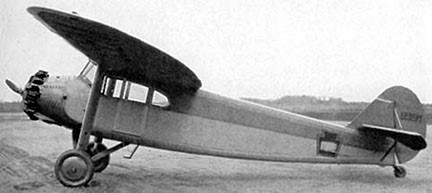
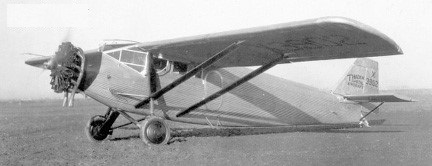
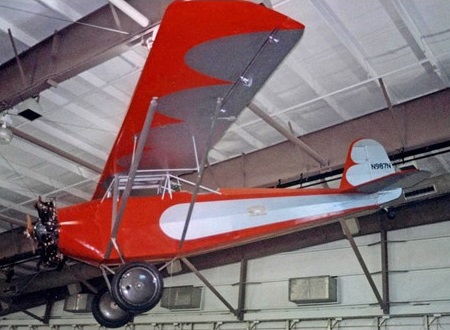
Aircraft factory of the Turkish Air League formed 1941 at Etimesgut, near Ankara. At first the Miles Magister 1A Mk.I primary training aircraft was manufactured under license. Later Turkish designed aircraft were added. Built several gliders, including the THK-1 12-seat troop transport glider, and five types of light aircraft: the THK-2 single-seat aerobatic trainer; THK-5/5A twin-engined light transport/ambulance; THK-11 three-seat pusher-engined twin-boom light tourer; THK-15 tandem two-seat primary trainer; and THK-16 twin-jet trainer. Also built about 100 Miles M.14s under license, Turkish Air League control ceased 1952.
After World War II, the Turkish Government’s interest in its own aircraft production program, rapidly decreased. In addition, enormous aircraft supplies had come from the USA. Therefore it is not surprising that at the beginning of the fifties the THK aircraft plants were experiencing great difficulties. In order to prevent the worst of it, the government decided to transfer the available plants to the Mechanical and Chemical Industries Corporation (Makine ve Kimya Endüstrisi Kurumu, MKEK).
In 1952 Makina ve Kimya Endustrisi Kurumu / MKEK / Mechanical and Chemical Industry Corporation took over THK factory at Ankara, together with existing designs. THK-15 became the MKEK Model 1, THK-16 the Model 2, THK-5 and 5A the Models 5 and 5A, THK Prototype 14 the Model 6 and THK-2 the Model 7.
Türk Hava Kurumu Uçak Fabrikası – Turkish Air Agency Aircraft Factory
Numbered THK Uçak Fabrikası aircraft designations were applied only to original designs. So, for example, the licensed THK-Miles 14 Magister bears no relationship to the THK-14 (a 2-seat training glider).
Designations may be rendered as T.H.K.1 or THK.1 but the most common style seen in modern Turkish publications is THK-1.
THK designs were taken over by MKE with added ‘MKEK’ designations.
 All Aero