The prototype of an improved Martin 3-0-3 had been flown on 20 June 1947, but with it was decided instead to develop a new Martin 4-0-4. This incorporated the wing structural revisions and introduced a pressurised and slightly lengthened fuselage, accommodating as standard a crew of three or four and 40 passengers.
The airliner was unveiled in 1949 and immediately ordered by a variety of air carriers, gaining 101 orders from TWA and Eastern. The subsequent 4-0-4 was introduced in 1950 with a fuselage 39 inches longer, slightly more powerful engines than the 202, and pressurization.
The onset of the Korean War suddenly made airplane materials significantly more expensive, and Martin found itself filling orders at a loss and stopped production.
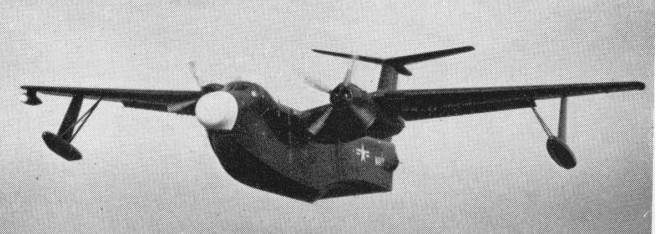
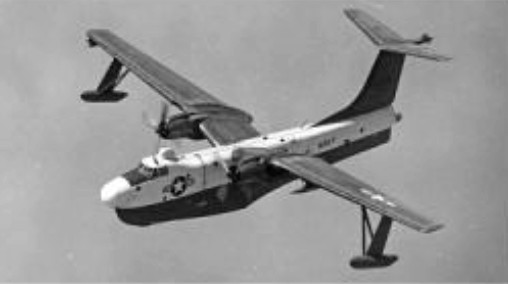
Two or these 40-passenger transports were in service with the U.S. Coast Guard in 1955 as the RM-1, similar to the civil Martin 4-0-4 airliner.
Martin RM-1
A total of 148 of the 2-0-2, 3-0-3, and 4-0-4 types were built until 1952. Examples served well into the 1980s with commuter airlines.
RM-1 Engines: two 2,400 h.p. Pratt & Whitney R2800-34W Span: 93 ft. 3 in. Weight: 44,900 lb. Max. Speed: 312 m.p.h.
4-0-4 Engines: 2 x 2400hp Pratt Whitney R-2800 CB-16 Max take-off weight: 20366 kg / 44900 lb Empty weight: 13211 kg / 29125 lb Wingspan: 28.42 m / 93 ft 3 in Length: 22.73 m / 74 ft 7 in Height: 8.66 m / 28 ft 5 in Wing area: 80.27 sq.m / 864.02 sq ft Cruise speed: 502 km/h / 312 mph Ceiling: 8840 m / 29000 ft Range: 3058 km / 1900 miles Seats: 52
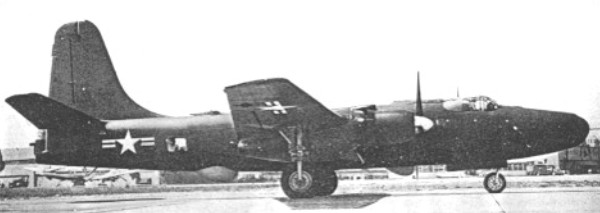
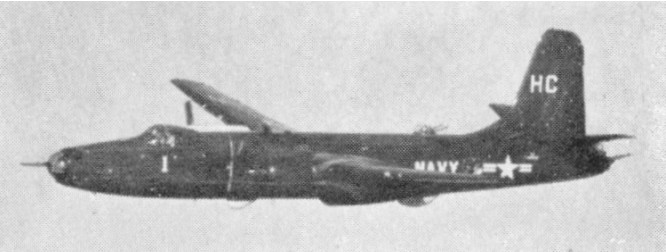
The US Navy made several attempts to gain the benefit of high over-target performance combined with long range by introducing mixed powerplant. The Martin Model 219 patrol bomber represented one of the results of such a specification, two XP4M-1 prototypes being ordered on 6 July 1944. The first was flown on 20 September 1946 as a cantilever shoulder-wing monoplane with retractable tricycle landing gear. Its powerplant comprised two 2218kW Pratt & Whitney R-4360-4 Wasp Major radial engines, but each nacelle also incorporated a 17,350kg thrust Allison J33-A-17 turbojet. After a protracted development programme 19 P4M-1 production aircraft were built, the first being delivered to US Navy Squadron VP-21 on 28 June 1950, and all served with this unit. Most of them were converted into P4M-1Q Elint aircraft, one being shot down.
P4M-1 Engines: 2 x Pratt Whitney R-4360-20A piston engines, 2424kW + 2 x Allison J33-A-10A, 2087kg Max take-off weight: 40000 kg / 88185 lb Wingspan: 34.75 m / 114 ft 0 in Length: 25.50 m / 83 ft 8 in Height: 7.95 m / 26 ft 1 in Wing area: 121.79 sq.m / 1310.94 sq ft Max. speed: 660 km/h / 410 mph Ceiling: 10545 m / 34600 ft Range: 4570 km / 2840 miles Armament: 2 x 20mm cannons, 4 x 12.7mm machine-guns, 2700kg of bombs
As a new US Navy patrol flying-boat, Martin developed the Model 237 design, combining the wing and upper hull of the Mariner with the new lower hull structure. A PBM-5 Mariner served as the prototype XP5M-1 which, when ordered into production, was given the name Marlin.
The modified hull of the XP5M-1 incorporated radar-directed nose and tail turrets, as well as a power-operated dorsal turret, and power was provided by two 2424kW Wright R-3350 radial engines.
This prototype flew for the first time on 30 May 1948, but it was not until two years later that the P5M-1 was ordered into production, the first of these series aircraft being flown on 22 June 1951.
Initial deliveries, to US Navy Squadron VP-44, began on 23 April 1952 and the type remained in service until the mid-1960s.
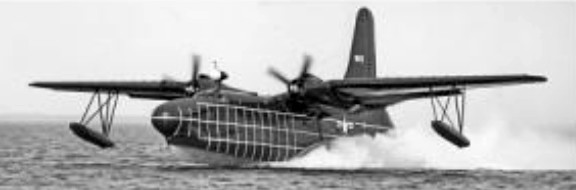
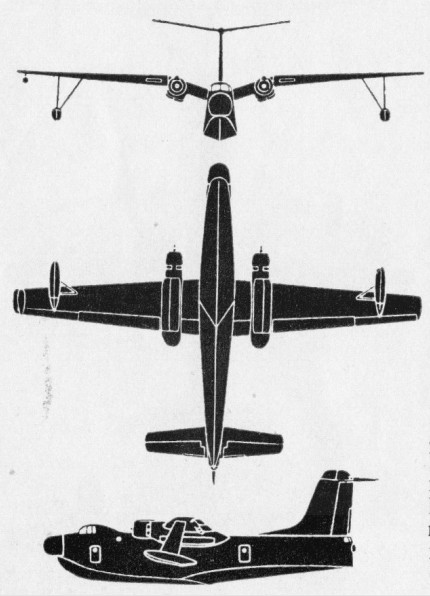
Martin P5M-1
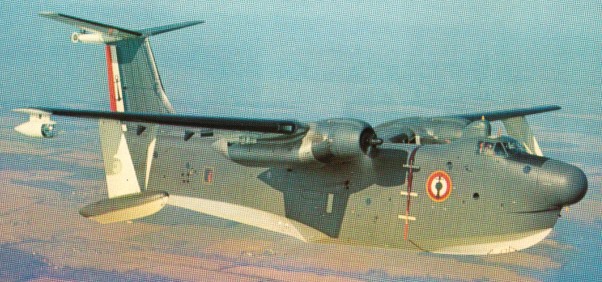
In addition to those operated by the US Navy, 12 of the later P5M-2 version were supplied to France under the American MAP for use by the Aeronavale in 1959. In the French Aeronavale, where they were used for maritime patrol out of Dakar, West Africa, until 1964, after which they were returned to the Navy. The P5M 2 Marlin could carry up to 8,000 lb (3,629 kg) of assorted weapons. The P5M-1 has a low mounted ” dihedral ” tailplane, different hull shape and lower-powered engines, compared to the P5M-2.
The first of 28 P5M-2 Marlins to undertake a modernisation program was delivered to the US Navy in 1959.
Martin aircraft production ceased December 20,1960 when the last P5M- 2 Marlin was handed over to U.S. Navy.
Claiming high operational costs, the Coast Guard turned over all of its P5Ms to the Navy in 1961. Lacking most military equipment, they were used as crew trainers as P5M-1T and P5M-2Ts.
In September 1962, when all American military forces adopted the tri-service designation scheme, the P5M-1 became the P-5A, the P5M-1S the SP-5A, the P5M-1T the TP-5A, the P5M-2 the P-5B, the P5M-2S and P5M-2T the PT-2B.
SP-5B / P5M2
In 1964, in an attempt to boost take-off power, one SP-3B was tested with a tail mounted 3000 lb.st Pratt & Whitney J60 turbojet engine. They were not adopted for service.
No Marlins went to the reserves. As they were retired, they were stored until sold as scrap. A Navy SP-5B of VP-40 made the last operational flight on 6 November 1967.
Model 270
The XP5M-1 prototype was later used (as the model 270) to test the 15:1 hull configuration for the P4M SeaMaster.
P5M Engines: 2 x Wright R-3350-32WA Turbo-Compound, 2573kW Max take-off weight: 38555 kg / 85000 lb Empty weight: 22900 kg / 50486 lb Wingspan: 36.02 m / 118 ft 2 in Length: 30.66 m / 100 ft 7 in Wing area: 130.62 sq.m / 1405.98 sq ft Max. speed: 404 km/h / 251 mph Ceiling: 7300 m / 23950 ft Range: 3300 km / 2051 miles Armament: 3600kg of weapons Crew: 11
P5M-2 Marlin Naval patrol bomber flying boat Engines: 2 x Wright R3350-32W Turbo-Cyclone, 3450 h.p Wingspan: 118 ft. 2in (36.02 m) Wing area: 1406.3 sq.ft Length: 100 ft. 7in (30.66 m) Height: 32 ft 8.5 in (9.97 m) Empty weight: 50,485 lb Max TO wt: 85,000 lb (38,555 kg). Loaded weight: 73,055 lb MTOW: 76,635 lb Fuel capacity: 4410 gal Max speed: 251 mph at SL Ceiling: 22,400 ft Normal range: 2050 mi Max range: 3,600 miles Armament: 2 x 20mm tail mounted guns Bombload: 16,000 lb Crew: 7
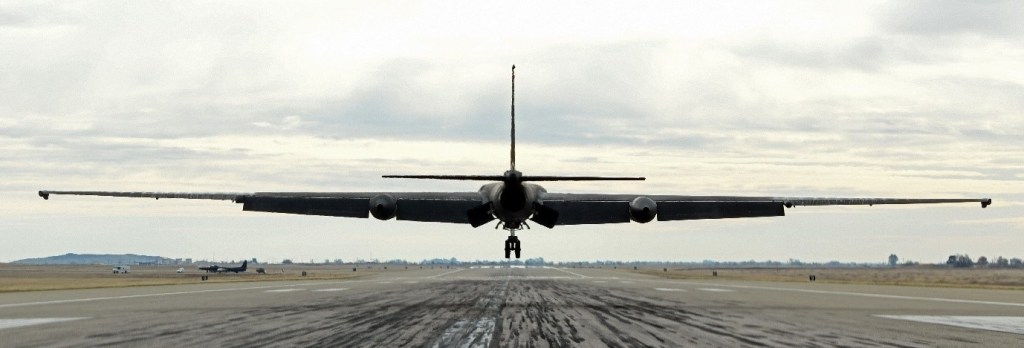
The U 2 was designed by Kelly Johnson to fly high and far. His equation stressed simplicity: flush rivets, high aspect ratio wet wing, ultralight structure, stunning power to weight ratio. Conceived originally to meet a CIA requirement for an aircraft with the potential of operating at extreme altitude and first flown in the mid-1950s, the U-2’s unique capabilities rendered it virtually immune from interception, and made possible repeated overflights of the Soviet Union, as part of the intelligence-gathering efforts of that era.
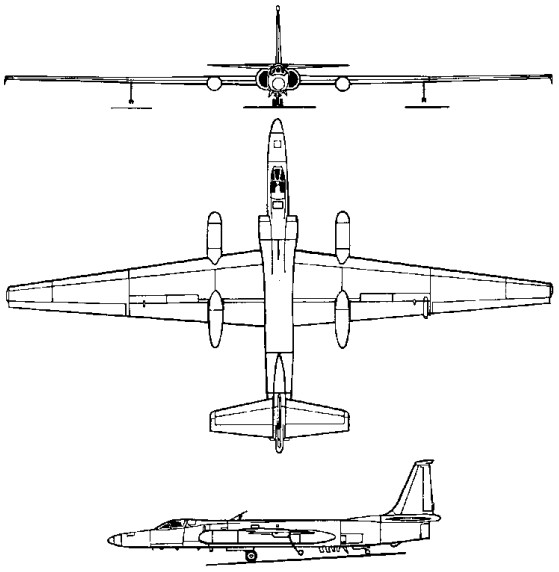
The requirement for high altitude and long range needed an aircraft with low wing loading, the latter large quantities of heavy fuel to confer the necessary range. Therefore the U-2 is of very lightweight construction, dispensing with conventional landing gear and pressurisation to save extra weight, and having wings of large area. Landing gear is of bicycle type with single wheels fore and aft, and balanced on the ground by wing-tip ‘pogos’ – a strut and wheel device which drops away when the U-2 becomes airborne – was selected. The pilot is accommodated on a light-weight seat, dressed in a semi-pressure suit with his head enclosed in an astronaut-type helmet, and forced to breathe pure oxygen for his survival. A medium-powered turbojet is adequate to lift this lightweight aircraft, and long range is possible by shutting it down and gliding for long periods.
Development of the U-2 began in the spring of 1954 to meet a joint CIA/USAF requirement for a high-altitude strategic reconnaissance and special-purpose research aircraft. It took place in the Lockheed ‘Skunk Works’ at Burbank, California, where – after acceptance of the design in late 1954 – two prototypes were hand-built in great secrecy by a small team of engineers. The aircraft’s true purpose was cloaked under the USAF U-for-Utility designation U-2, and the first flight took place on or about 1 August 1955. Once military power is on the engine for takeoff, the throttle was not touched again until ready for descent. Speed is kept fairly constant at Mach 0.715, and excess power was traded for cruise-climb altitude gain.
At about the same time US President Dwight D. Eisenhower was proposing his ‘Open Skies’ policy, one of mutual East/West aerial reconnaissance of territories. President Eisenhower hoped that his policy would reduce tension between East and West, thus preventing the growth of the nuclear arms race. Unfortunately the Soviet Union would have nothing to do with this proposal. Consequently ‘Kelly’ Johnson’s new ‘spy plane’ assumed greater importance. The prototypes were followed by production of about 48 single-seat U-2A and U-2B with differing power plant, and five two-seat U-2D. Some U-2B were converted later to U-2D standard.
By 1960 about 25 U-2s had operated from bases in Japan, Pakistan, Turkey and Europe since 1957 on flights around and over Russian-controlled territory.
An additional batch of 12 U-2R was ordered in 1967. A new version, known as the TR-1, entered production as a tactical-reconnaissance aircraft, equipped with a variety of electronic sensors.
Referred to as just U-2, there has been reference to a U-2B and U-2D, as well as single-seat and two-place versions. Early Lockheeds were powered by a single 11,000-1b thrust P&W J57, later models are reported to have the more powerful J75P-13. Forward landing gear is dual pneumatic type, approximately 20 in diameter, is non-steerable; rear gear is dual hard rubber of approximately 8″ diameter and steerable. A lightly stressed thin skin covers the U-2. Lockheed Martin’s Skunk Works has rewired the U-2s over the years during maintenance checks to make the aircraft compatible in the electro-magnetic interference environment.
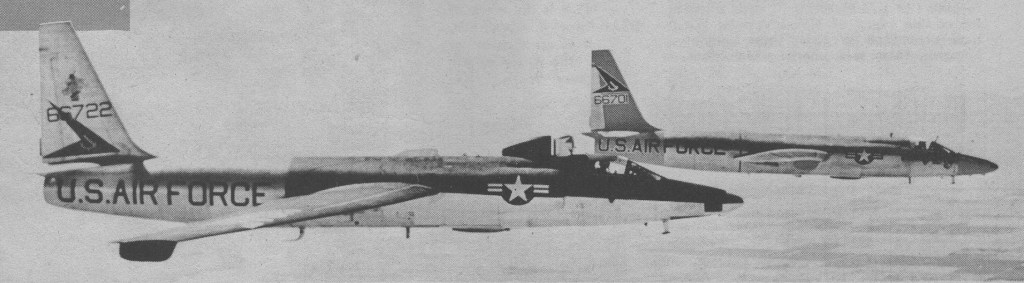
The initial U-2As built by Lockheed in the 1950s either have been destroyed by accidents, combat or have been retired. They have been operating from Edwards AFB since 1957. The 40% larger U-2R was developed in the late 1960s, and deliveries to the Air Force started in 1969.
In addition to photo and electronic reconnaissance, U-2 were used for weather reconnaissance, high-altitude research, measurement of radiation levels, and for the tracking and recovery of space capsules. They were used for reconnaissance during the Cuban crisis, in Vietnam and during the Arab-Israeli conflict.
The destruction of the U-2B aircraft being flown by Francis ‘Gary’ Powers on 1 May 1960 brought an abrupt halt to this phase of activities, CIA attentions then focussing on the People’s Republic of China which in the early 1960s was fast emerging as a major nuclear power.
In August 1964 an Air Force U-2 crashed bear Boise, Idaho, the Chinese Nationalist Air Force officer pilot being trained at Davis-Monthan AFB 4080th Wing, parachuted to safety. This was the first indication that Chinese Nationalist pilots were being trained in the US. Three U-2s piloted by Chinese Nationalist pilots from Formosa bases had been shot down over Communist China, the first in September 1962. The US had reported selling only two U-2s the Formosa.
U-2 and TR-1 operations are usually conducted in what is best described as a ‘permissive’ environment on the friendly side of important frontiers.
Powered by the Pratt & Whitney J75, the craft rotates in less than 200 feet as wheeled outriggers fall away. Climbing at 160 knots and 6,000 plus fpm initially, sustaining 45 degrees pitch up. Only to the 45,000 foot physiological limit in the two seat trainer version without pressure suits, but the U 2 will climb to 70,000 plus. Stressed for 1.7 positive Gs and half a G negative, the U 2 demands a gentle hand.
Scrupulous energy management alti¬tude, attitude, airspeed, power setting ¬measures successful landings. Each ex¬cess foot at the threshold puts you 1,000 foot farther to touchdown. Two point land¬ings are essential; touching front wheel first causes ballooning in ground effect.
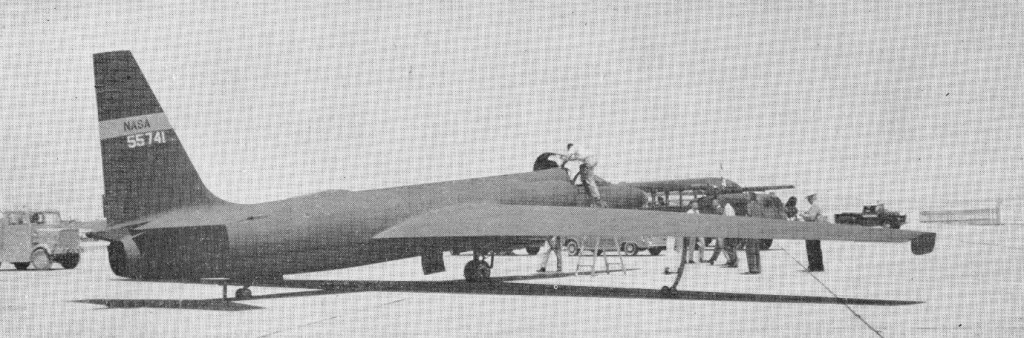
A couple of original production examples were assigned to NASA.
The Strategic Air Command use the U-2R which entered service in the late 1960s and which differs from its predecessors by virtue of greatly increased length and wing span. The U-2R was joined by an increasing number of TR-1s, these externally being very similar although they are intended for tactical rather than strategic missions. At least 25 of these were ordered by the USAF in 1968.
From 2002, Lockheed Martin upgraded the 31 strong U-2 fleet with state of the art glass cockpit displays and controls as the U-2S.
The service bought 37 TR-1 s in the 1980s, with the last one delivered in 1989, and these were the core of the U-2S and U-2STs in operation by the 9th Reconnaissance Wing here. The replacement of the Pratt & Whitney J75 turbine engine by the General Electric F101-GE-F29 turbofan in the 1990s caused the redesignation of the U-2R to the U-2S. The GE engine was later redesignated the F 118-GE-101.
The F 118 fuel consumption is some 16% less than the J75, which allows for a 1,220-naut.-mi. increase in range, or increased time on station. The 1,300-1b. lower weight of the General Electric engine also allows a 3,500-ft. increase in operational altitude and an increased payload. The U-2’s primary defense against both aircraft and surface-to-air missiles is its altitude, although newer variants of air-to-air and surface-to-air missiles can reach the U-2’s altitude. The reconnaissance aircraft is equipped with a radar warning system, but not with active defenses, such as flares or chaff.
The Air Force will still only say that the U-2 will fly above 70,000 ft., but the actual normal operational altitude is below 80,000 ft. and above 75,000 ft.
For descent almost everything possible on the aircraft is extended. The throttle to idle, lowered landing gear, raised spoilers and flaps in the gust-up configuration and extended fuselage-mounted speed brakes. Once stable on descent, the rate is dose to 3,000 fpm. A speed of Mach 0.715 is used to 53,000 ft., when a speed of 160 kt. is established. In the case of either an engine or electrical failure, with the aircraft descending clean, it could easily take longer than an hour to descend from altitude. The battery in the U-2S has a life of about 1 hr. and would run out just about when you needed to talk with the tower about deadstick landing instructions. The pilot also is able to raise the spoilers for landing with a micropump and accumulators, a new feature to the U-2.
Pilots claim that the U-2 is one of the hardest aircraft to land because of the need to stall the aircraft on landing and touch down rear wheel first, not to mention the effect of wind on the glider-like aircraft.
TR-1A
The U-2 aircraft was ordered back into production in 1979 as a high altitude tactical reconnais¬sance platform, this time as the TR-1A. The TR-1A is designed for tactical reconnaissance primarily in the European theatre, using UPD-X side-looking airborne radar (Slar) for surveillance up to 55km into hostile territory from friendly areas.
The first TR-1A flew on 1 August 1981 and the USAF acquired 26 of these single seaters plus two two-seat TR-1Bs. In 1984 the TR-1A flew with the precision location/strike system (PLSS) and, following successful trials, at least some of the fleet were to be allocated to this role. PLSS involves the use of three TR-lAs to detect and locate emitters and then direct attacks upon them.
In 1982 the USAF began taking delivery. Using the same basic airframe as the U-2R, the TR-1A high altitude battlefield reconnaissance aircraft was operational with the USAF flying from bases in Europe including the UK in 1990. It is equipped with an advanced sideways looking airborne radar (SLAR) and incorporates the latest ECM.
Two examples of a two-seat variant known as the TR-1B were assigned to training duties at Beale AFB, California. The TR-1B trainer has a second, raised cockpit in tandem.
ER-2
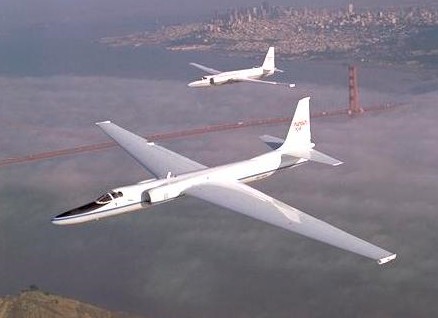
Replacing earlier U 2C’s, NASA took delivery of three ER-¬2’s, (the NASA designation for the TR 1A). The three are 80¬1063 / N706NA, 80 1069 / N708NA and 80 1097 / N709A. The first was delivered in June 1981 and the last (80 1097) was delivered in April 1989. Two are owned by NASA, while the third is leased from the USAF.
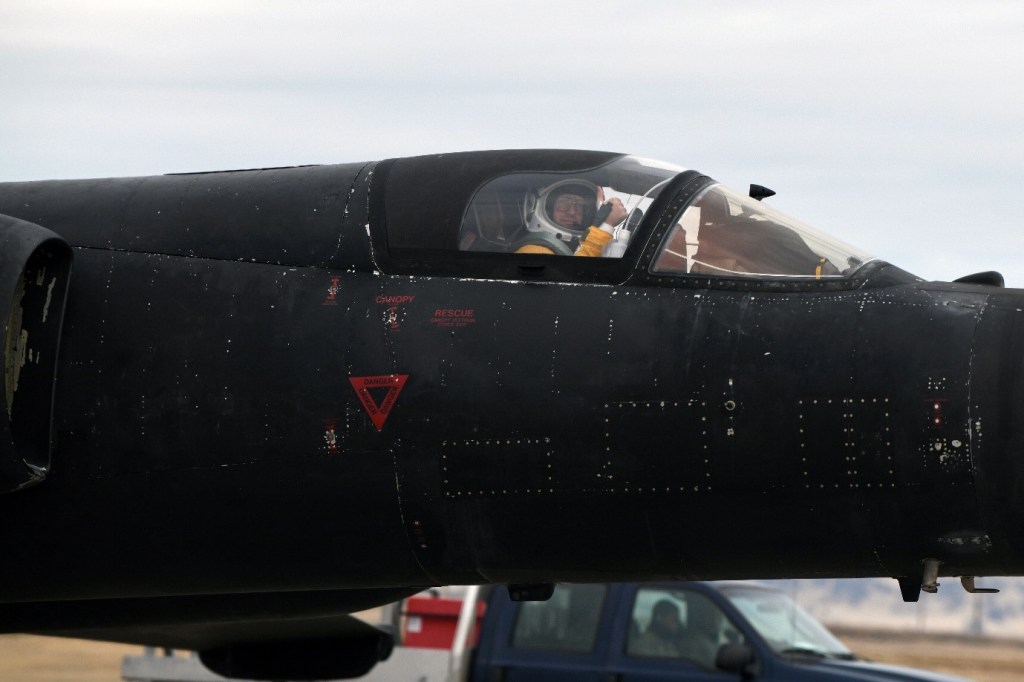
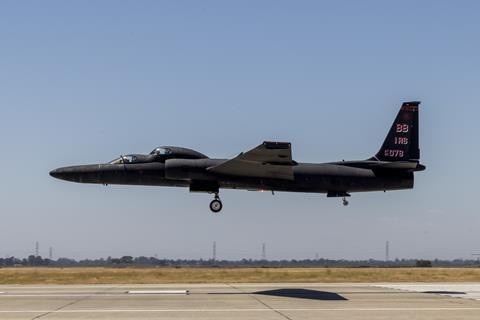
A Lockheed U-2S Dragon Lady, assigned to the 9th Reconnaissance Wing (RW) at Beale Air Force Base (AFB), California, successfully completed a test flight equipped with an AI algorithm under the control of USAF pilot, Maj “Vudu” on December 15, 2020. The first US military aircraft to fly with an artificial intelligence (AI) co-pilot.
Maj “Vudu” USAF U-2S Dragon Lady pilot assigned to the 9th RW on December 15, 2020.
The U-2S, developed by Air Combat Command’s U-2 Federal Laboratory, the algorithm – known as ARTUμ – was named in reference to the fan-favourite droid, R2-D2, from the Star Wars franchise. The system is designed to completed specific in-flight tasks that would otherwise have been completed by the pilot.
During the test flight, ARTUμ took control of the U-2’s sensors and tactical navigation systems, leaving Maj “Vudu” to fly the aircraft and coordinate with the AI on sensor operation. The Dragon Lady flew a reconnaissance mission during a simulated missile strike, in which ARTUμ was responsible for locating enemy launchers, while the pilot looked out for threatening aircraft. Both the human pilot and AI co-pilot shared the U-2’s radar throughout the test sortie.
The USAF adds that the test flight “was part of a precisely constructed scenario, which pitted the AI against another dynamic computer algorithm in order to prove the new technology.” It explained that control of the U-2’s sensors was handed over to ARTUμ after take-off, which then used insight gained from more than half-a-million computer simulated training missions to manipulate the sensors in-flight. Maj “Vudu” and ARTUμ successfully teamed-up during the demonstration to share the Dragon Lady’s sensors and all mission objectives were achieved, the service concluded.
A Lockheed U-2S Dragon Lady high-altitude reconnaissance aircraft, 9th Reconnaissance Wing (RW), Beale AFB, California, on December 15, 2020.
A two-seat TU-2S trainer variant of the U-2 logged a more than 14h flight covering over 6,000nm (11,110km) while overflying the 48 contiguous states of the continental USA setting a new endurance record for the type. The US Air Force (USAF) confirmed the flight on 1 August, noting the long-distance sortie launched from the U-2 fleet’s home base at Beale AFB in California’s Sacramento Valley on 31 July 2025. The success of the long-endurance mission pushed the U-2S “beyond its known limits”, the air force says. “The flight itself maxed out the operational range of the U-2 and placed the pilots at the edge of their physiological limit,” the service notes.
TU-2S
The timing of the record-setting sortie was likely deliberate. The USAF is seeking to retire is fleet of 24 operational U-2S and three TU-2S jets by 2026, while advocates for the Cold War-era platform look for arguments to keep the type flying.
U-2A Engine: 1 x Pratt & Whitney J57 P 37A turbojet, 11,200 lb (5,080 kg) st. Wing span: 80 ft 0 in (24.38 m). Length: 49 ft 7 in (15.11 m). Height: 13 ft 0 in (3.96 m). Gross weight: 15,850 lb (7,190 kg). Max speed: 495 mph (797 km/h) at 40,000 ft (12,200 m). Crew: 1. Armament: None. Typical range: 2,200 miles (3,540 km).
U-2B Engine: 1 x Pratt & Whitney J75. Seats: 1.
U-2C Engine: 1 x Pratt-Whitney J75-P-13B, 7711kg Max take-off weight: 10225 kg / 22542 lb Wingspan: 24.38 m / 80 ft 2 in Length: 15.24 m / 49 ft 8 in Height: 4.57 m / 14 ft 12 in Wing area: 52.49 sq.m / 565.00 sq ft Cruise speed: 740 km/h / 460 mph Op speed: Mach .73 to .80 Ceiling: 27000 m / 88600 ft Range: 4635 km / 2880 miles at 475-mph at 70,000-ft Flight endurance: 7.5 hr Crew: 1 Rate of climb: 8,000 fpm at 160-kt Time to 30,000 ft: 5 min Time to 50,000 ft: 9 min Time to 60,000 ft: 12.5 min Cruise climb to 70,000 ft: 28 min Indicated airspeed (IAS) above 70,000 ft:110 kt Mach buffet speed: 115 kt IAS / 410 kt TAS
U-2D Engine: 1 x Pratt & Whitney J75. Seats: 2.
U-2R Range: 3,000-plus miles (2,609 nautical miles).
U-2S
TR-1A Engine: 1 x Pratt & Whitney J75-PW-13B turbojet, 7711 kg (17,000-lb) thrust Estimated maximum cruise speed at over 21335 m (70,000 ft) 692 km/h (430 mph) (Mach 0.57) Operational ceiling est: 27430 m (90,000 ft) Maximum range: 4825+ km (3,000+ miles). Fuel internal: 4450 lt. Endurance: 12 hr. Air refuel: No. Seats: 1. Empty weight: about 7258 kg (16,000 lb) Maximum take-off 18144 kg (40,000 lb). Wing span 31.39 m (103 ft 0 in) Length 19.20 m (63 ft 0 in) Height 4.88 m (16 ft 0 in) Wing area about 92.90 sq.m (1,000 sq ft).
TR-1B Seats: 2.
ER-2 Engine: 1. Wing span: 105 ft. Op alt: 68,000 ft. Endurance: 8 hr.
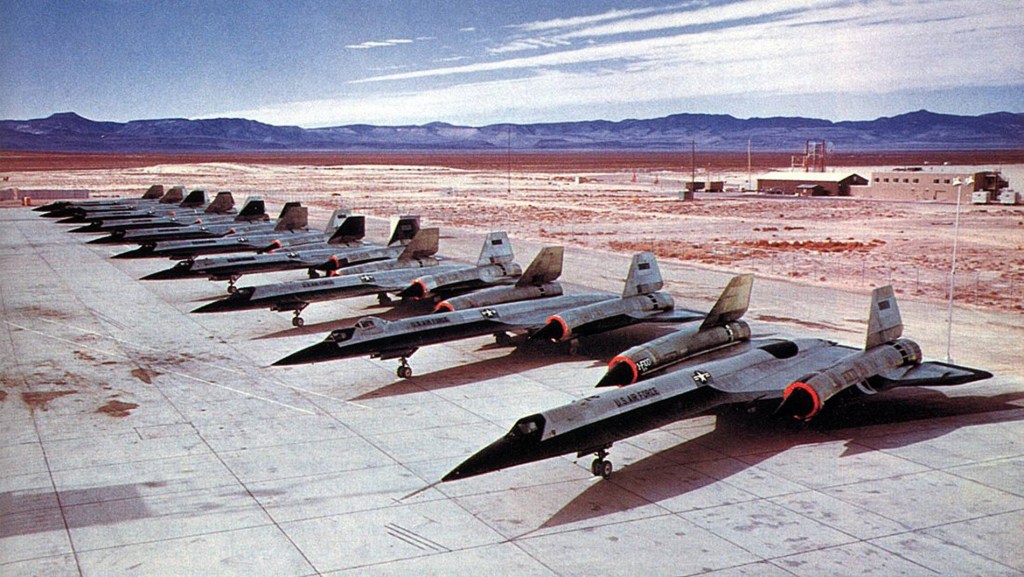
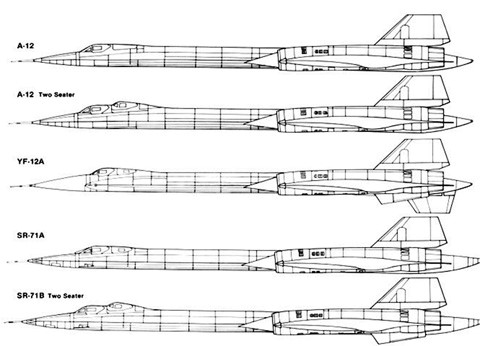
A-11 / A-12 In response to a programme for the construction of a high-speed, high-altitude, long-range reconnaissance conventional aircraft, funded by and earmarked for service with the Central Intelligence Agency (CIA), a number of US companies submitted proposals for consideration, Lockheed’s ‘Ox-cart’ from the design team led by C. L. ‘Kelly’ Johnson eventually being adjudged most suitable, and this duly received the go-ahead in the autumn of 1959.
Construction of the prototype (60-5932) single-seat A-12, as the machine was officially known, forged ahead at the ‘Skunk Works’, the virtually complete prototype being taken by road to the remote Groom Lake flight test facility during January 1962 for final assembly and flight testing. The A-12 got airborne for its first official flight on 26 April 1962, this event being preceded by a totally unexpected ‘hop’ during the course of high-speed taxi trials two days earlier.
Construction was largely of titanium to maintain structural integrity, as localised skin temperatures of up to about 427°C could be reached through air friction.
Lockheed A-12
In the early days of the flight test the first A-12 relied upon two Pratt & Whitney J75 turbojet engines for power, the same company’s J58 turbo-ramjet engine not being installed until much later in the year. Almost inevitably, with such a sophisticated machine, the project suffered from many problems during the early stages of flight testing, these being experienced in virtually every area, but despite this the CIA apparently began to take formal delivery of its initial fleet of 10 aircraft (serial numbers 60-6924/6933) shortly before the end of 1962 and these were later joined by a second batch of five A-12s (60-6937/6941). Of these 15 machines, one (60-6927) was completed as a two-seater for training duties, this differing from its counterparts by virtue of having a second, raised, cockpit and featuring conventional J75 engines which bestowed a maximum speed of about Mach 1.2, well below that of the standard A-12 which was apparently capable of approximately 3860 km/h 2,400 mph) or Mach 3.6 at altitudes in the order of 28040 m (92,000 ft), figures which significant exceeded those records established by the YF-12A at the beginning of May 1965.
A-12
In addition, the last two production examples of the A-12 were configured to carry the GTD-21B drone and these also featured a second crew station aft of the pilot’s cockpit, his housing the Launch Control Officer. As far is is known the GTD-2 1 B/A- 12 pairing was not employed operationally but the drone may have undertaken reconnaissance missions after launch from a specially configured Boeing B-52H Stratofortress.
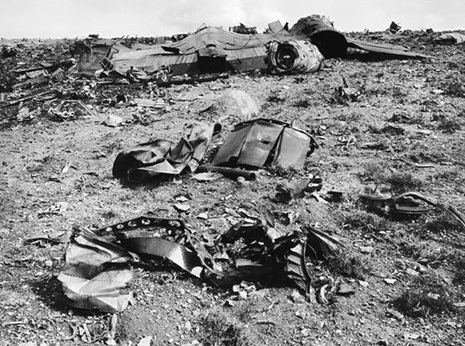
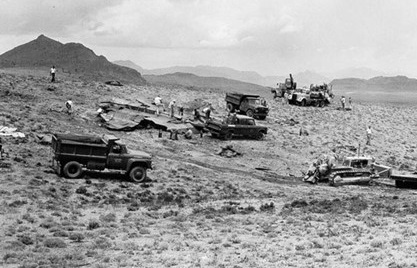
This A-12 crashed near Wendover, Utah in 1963 after entering an unrecoverable flat spin. Pilot Ken Collins managed to eject safely. He then successfully deterred several locals, who had come to his aid with the canopy of the shadowy A-12 on the back of their pickup, from the crash site by telling them the wreck was that of an F-105 Thunderchief with a nuclear weapon onboard. That same day, the CIA administered sodium pentothal to ensure Collins had divulged every last detail of the incident. When the men in black later carried him home, still heavily under the drug’s influence, Collins’ wife angrily assumed he’d been out drinking all day with his friends. Several decades later, the retired A-12 pilot was finally able to reveal the truth. X-Plane hunters continue to find components of the top secret aircraft wreck at the remote site.
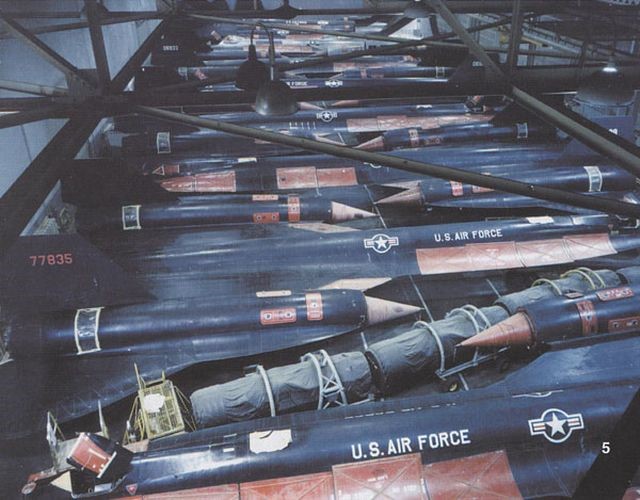
As far as operational employment is concerned, the CIA continues to maintain a tight-lipped silence about the A-12 but the type’s great speed coupled with its capacity for inflight-refuelling made range considerations virtually irrelevant, the major factor in mission scheduling almost certainly being one of crew fatigue. In view of this and the nonstop 24140km. (15,000-mile) missions accomplished by the later SR-71A it would seem reasonable to assume that intelligence-gathering was accomplished from Groom Lake until at least the summer of 1968, which most sources state as marking the cessation of A-12 activity. In addition, Kadena Air Base on the Pacific island of Okinawa has also been linked with A-12 operations as well as those of the SR-71A, and could well have served for some considerable time as a forward operating location for CIA intelligence gathering activities directed against the People’s Republic of China and North Korea. Reliable reports attest that such activity ceased abruptly on 5 June 1968 following the loss of A-12 60-6932, apparently after take-off from Kadena. By then the SR-71A had attained full operational status and the latter type is believed to have assumed responsibility for A-12 missions at about this time. Eight of the 15 A-12s eventually appeared in open storage at Palmdale during October 1977 though where they had spent the intervening nine years remains a mystery.
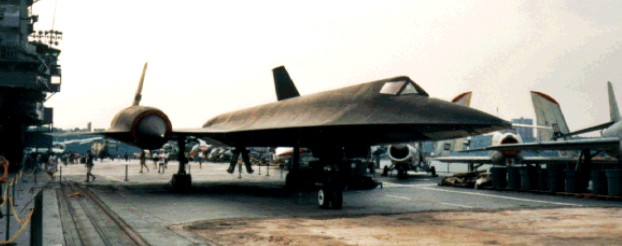
Lockheed A-12s while in secret storage at Palmdale, CA
In a Presidential announcement of February 1964, Lyndon Johnson formally revealed the existence of the ‘A-11 aircraft’.
YF-12
YF-12A
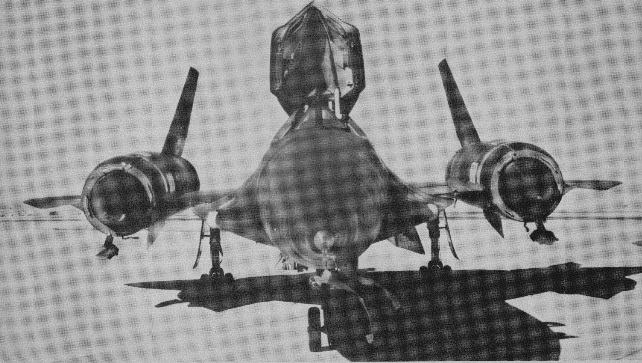
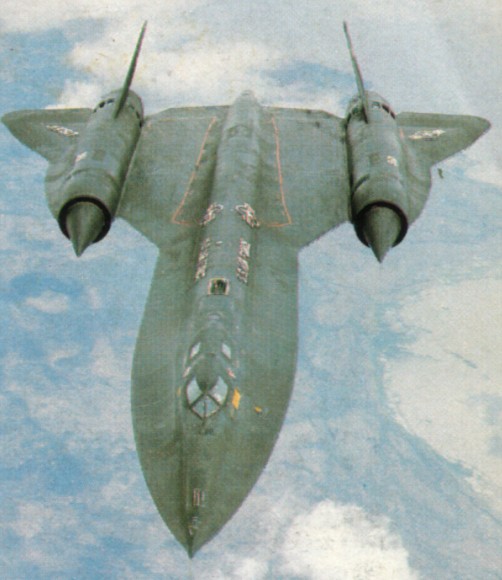
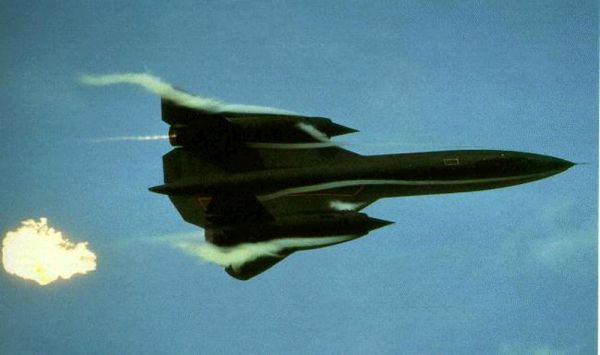
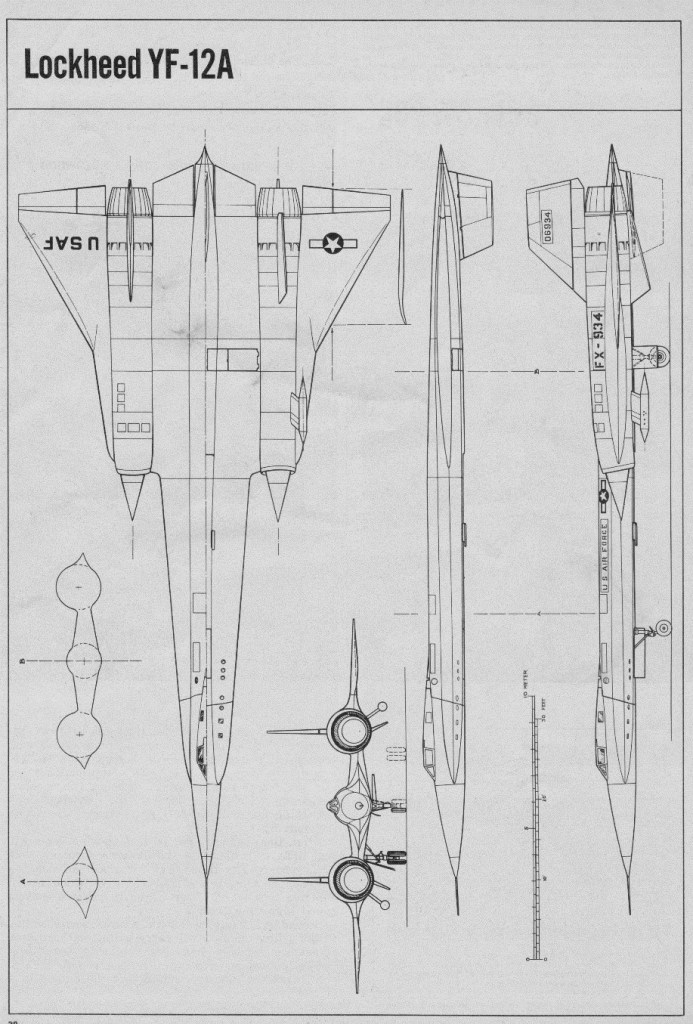
The second major ‘Blackbird’ variant to appear was the YF-12A, and it was this model which formed the basis of the Presidential announcement of February 1964 when Lyndon Johnson formally revealed the existence of the ‘A-11 aircraft’, adding that it was then under test as a long-range interceptor’. Three aircraft (606934/6936) of this type were built, the first example making its maiden flight from Groom Lake on 7 August 1963. Eventually to become the most publicly visible of all the ‘Blackbirds’, the three aircraft all featured significantly different nose contours, the forward fuselage chine having had to be redesigned to permit the installation of the Hughes AN/ASG- 18 long range radar required in the interceptor role. Armament was intended to be the Hughes AIM-47A air-to-air missile, four of which would have been housed internally, occupying space which was presumably given over to reconnaissance sensors and systems on the A-12. The type is based on advanced aerodynamics using a blended fuselage/wing design built largely of titanium alloys and covered in a special heat-radiating paint that led to the type’s nickname. The powerplant comprised a pair of 32,500-lb (14740-kg) afterburning thrust Pratt &Whitney J58 (JT11D-20B) bypass turbojets (or turbo-ramjets) which at high speeds produced their power not only as direct thrust from the exhaust nozzle but also as suction at the inlet. The fighter derivative of the basic model was the experimental YF-l2A, of which at least four were produced with the A-11’s original short fuselage, a Hughes pulse-Doppler fire-control system and, in the fuselage chine bays originally used for the carriage of reconnaissance equipment, four AJM-47A air-to-air missiles. The YF-12A never served operationally, but was important in several evaluation programmes.
The YF-12A programme, seen as important in its own right, distracted attention from the more sinister A-12, the model which mounted an assault on several world records at the beginning of May 1965, capturing the headlines and setting new marks for sustained altitudes and speed with what appeared to be consummate ease. That the A- 12 was able to exceed these figures handsomely was not brought to anyone’s attention.
Subsequently, the YF-12As and a single YF-12C (itself simply the demilitarized second production SR-71A with the bogus serial number (06937) spent most of their flying careers at Edwards AFB, California, eventually being used until 1999 by NASA in a major research effort into high-speed flight. This came to an end during 1979, the sole surviving YF-12A (60-6935) being turned over to the USAF Museum at Wright-Patterson AFB, Ohio, in November while the YF-12C was apparently placed in storage at Palmdale. Of the other two YF-12As, 60-6934 fell victim to a landing accident at Edwards at a fairly early stage, most of the rear fuselage later being used as a basis for the sole SR-71C, while 60-6936 was destroyed Arhen it crashed on approach to Edwards during June 1971.
Crewed by a pilot and flight test engineer, these aircraft flew under NASA for 10 years.
On 1 May 1965, a YF-12A established records including 2062 mph and 80,000 ft sustained horizontal flight. The YF-12As were capable of speeds in excess of Mach 3 and of sustained supersonic flight at heights of up to 24,385m.
The YF-12A paved the way for the SR-71A ‘Blackbird’ strategic reconnaissance platform that was retired from first-line USAF service in 1989, but even so the whole programme is still shrouded in secrecy and uncertainties.
SR-71
SR-71A
On Dec. 28, 1962, Lockheed got the contract to build the first group of SR-71s, which were to become the largest and best known branch of the Blackbird family. Bob Gilliland made the first flight on Dec. 23, 1964. One year after the YF-12, the first SR-71 arrived at Beale Air Force Base, California, operational home of the Black¬bird. First flown on 22 December 1964, the SR-71 is an unarmed strategic reconnaissance aircraft. The SR-71B and SR-71C are training variants.
Developed from the A-12 and flown for the first time during December 1964, the Lockheed SR-71A was the world’s fastest operational aircraft, approximately 12 examples being active with the 9th Strategic Reconnaissance Wing at any given time. Possessing the ability to survey 260000 sq.km (100,000 sq miles) of the Earth’s surface in just one hour, the SR-71A routinely cruises at Mach 3 at altitudes in excess of 24385 m (80, 000 ft) during the course of its duties, and is able to gather a variety of data by virtue of highly classified but interchangeable photographic and electronic sensors which are installed to meet specific mission objectives. Deliveries to Strategic Air Command began in January 1966, and it is believed that a total of 32 aircraft was built, this figure including two examples of the two-seat SR-71B plus a single SR-71C, the latter model also being a two-seater for pilot training, built of components taken from crashed aircraft and a structural test specimen.
Unlike the A-12, the SR-71 is a two-seat aircraft with additional accommodation for a Reconnaissance Systems Officer (RSO). Externally, this model also differed from its predecessors in that it has a fully extended chine which is much broader around the nose while the rear fuselage boat-tail was extended by some 1.83 m (6 ft) aft of the trailing edge to improve overall fineness ratio and provide additional fuel capacity. JP-7, the fuel used by the SR-71, is so special due to its properties for operations at the high temperatures caused by Mach 3 cruise that the aircraft has its own fleet of tankers, designated KC-135Q.
The configuration of this aircraft results from extensive wind-tunnel testing to evolve a minimum-drag fuselage providing maximum speed while keeping kinetic heating to the minimum; and to maintain the best possible handling characteristics at supersonic, take-off (about 370km/h) and landing (about 278km/h) speeds. Power plant comprises two 144.6kN Pratt & Whitney turbojets. The 36,287kg of special fuel for these engines – which is contained within upper-fuselage and inner-wing tanks – acts as a heat sink for the entire aircraft, fuel temperature being raised to 320°C before being injected into the engines. Highly complex air intakes with computer-controlled fail-safe systems are essential to ensure that smooth airflow to the engines is maintained over the enormous forward speed range of 0-3,200km/h, at the upper limit of which the engines are virtually operating as turbo-ramjets.
An initial batch of six aircraft formed the subject of the first contract which was placed in December 1962, and the first example took to the air for its maiden flight from Palmdale on 22 December 1964.
Deliveries to the designated operating agency (Strategic Air Command) began on 7 January 1966, the first example assigned actually being the second SR-71B to be produced. SR-71As began to follow during June of the same year to the 9th Strategic Reconnaissance Wing.
Attaining operational status in mid-1967, over 16 years later virtually everything about the SR-71’s usage and mission-related sensor equipment was still the subject of a stringent security blanket, although the USAF has revealed that it can survey 100,000 square miles of the Earth’s surface in one hour’. It seems certain that the intelligence-gathering effort entails unauthorized overflights of potentially hostile territory every now and then. However, since much valuable data can be obtained without recourse to actual overflight, it seems probable that many missions are of a peripheral nature, the SR-71A operating in international air space at extreme altitude whilst going about its duties.
Operations were routinely conducted from two forward operating locations by aircraft detached from the wing’s headquarters at Beale AFB, California. Kadena in Okinawa, normally had three aircraft attached at any time, while Mildenhall in the United Kingdom was the location of the second SR-71 detachment which usually controled the activities of two aircraft. In addition, 9th SRW’s headquarters at Beale served as the centre for crew training. The two-crew members, comprising a pilot and a reconnaissance systems operator, both wear full pressure suits similar to those of astronauts.
Regardless of the equipment fitted, it is apparent that the ‘Blackbird’ was highly regarded as an intelligence-gathering tool, clear evidence of this being provided by the massive expense incurred in supporting just a handful of aircraft. There is the large fleet of Boeing KC- 135Q Stratotankers (specially modified to carry the SR-71A’s unique JP-7 fuel. In addition, the unique aspects of high-altitude flight require the services of a large physiological support division, further 9th SRW infrastructure including a reconnaissance technical squadron with the task of processing data, and an extensive training element which uses several Northrop T-38A Talons as well as a surviving SR-71B.
A total of 31 new-build SR-71 Blackbird aircraft were constructed in addition to the SR-71C. Of the total production, 29 examples (64-17950/17955 and 64-7958/17980) are SR-71As, the two remaining (64-17956/17957) being completed SR-71Bs with a second, raised, cockpit for pilot training duties. 64-17956, was originally built as an SR-71A, but was later converted to an SR-71B trainer by the addition of a second cockpit. Two aircraft were converted.
They have the capability to survey an area of 155,400sq.km within an hour and in 1976 established a closed-circuit speed record of 3,367.221km/h; a world absolute speed record of 3,529.56km/h; and a sustained-altitude record of 25,929.031m.
Including all three members of the ‘Blackbird’ family, production of new airframes totalled just 49, a fiftieth hybrid machine being completed with parts from a wrecked YF-12A and an engineering mockup.
The SR-71 left US Air Force service in January 1990. On a flight from the West Coast to the East Coast, where the aircraft was to retire to permanent static display at the Smithsonian, the Blackbird set a new transcontinental speed record, flying from Los Angeles to Washington D.C. in 1 hour, 4 minutes, and 20 seconds, averaging a speed of 2,124 mph.
SR-71
SR-71
Records Absolute speed: 2193.17 mph / 3529.56 kph – 28 July 1976 1000km / 621.1mi closed circuit speed: 2092.294 mph / 3367.221 kph – 27 July 1976 Sustained flight in horizontal flight: 85,059 ft / 25,939 m – 28 July 1976
Lockheed SR-71A Blackbird Engines: 2 x P&W JT11D, 32,500 lb / 14,742 kg thrust Wingspan: 55 ft 11 in / 16.94 m Length: 107 ft 5 in / 32.74 m Height: 18 ft 6 in / 5.64 m Wing area: app 1000 sq.ft / 92.9 sq.m Empty weight: 60,000 lb / 27,216 kg MTOW: 170,000 lb / 77,111 kg Speed: 2250 mph / 3620 kph Ceiling: 100,000 ft/ 34,800 m Range: 2980 mi / 4850 km Seats: 2
SR-71A Engines: two Pratt & Whitney J58 turbo-ramjet engines, 14742-kg (32,500-1b) afterburning thrust. Wing span 16.94 m (55 ft 7 in) Wing area: 167.2 sq.m / 1799.72 sq ft Length 32.74 m (107 ft 5 in) Height 5.64 m (18 ft 6 in) Wing area 166.76sq.m (1,795 sq ft). Empty weights: 27216 kg (60,000 lb) Maximum take-off 78019 kg (172,000 lb) Fuel capacity 13,000+ USG Maximum speed at 24385 m (80,000 ft) 3661 km/h (2,275 mph) or Mach 3.35 Operational ceiling 26060 m (85,500 ft) Maximum unrefuelled range at Mach 3: 5230 km (3,250 miles). Crew: 2
When in August 1957 the US Navy needed an advanced ASW/maritime patrol aircraft, it was suggested that a variant of a type then in production would be most suitable for this requirement. Lockheed proposed a developed version of the L-188 Electra, gaining an initial research and development contract on 8 May 1958.
Lockheed’s Model 186, which retained the wings, tall unit, power plant and other components of the commercial Electra, as well as much of the fuselage structure which was, however, shortened and provided with a 6.9m3 weapons bay, and there are 10 under-wing pylons for a variety of stores. The first Lockheed P 3 Orion, NP 3A BuNo 148276, was converted from the third L.188 Electra airliner by removing 7ft (2.1m) from the fuselage, flying from Burbank in August 1958. The air¬craft saw extensive use as an aero-dynamics test bed. It was eventually transferred to NASA.
Pressurised for the higher altitudes, the aircraft can operate from sea level, (usually 200ft minimum) up to 30,000 ft with a speed range from 140 to 405 knots. The engines are four x 4600 hp Allison turbo props with Hamilton Standard propellers. Maximum all up weight at take off is 14,500 lbs (6577 kg) higher than the original airliner at 127,500 lbs (57,800 kg) including a maximum of 60,000 lbs (34,000 lites) of fuel.
This was followed by the Lockheed YP3V-1 operational prototype, later named Orion, which first flew on 25 November 1959. The first production P3V-1 was flown on 15 April 1961, with initial deliveries being made to US Navy Patrol Squadrons VP-8 and VP-44 on 13 August 1962, by which time the type had been redesignated the P-3.
In August 1963 a US Navy crew flew a P-3A nonstop from California to Japan, 5280 miles, in 14 hr 30 min. After several demonstration flights it returned nonstop in 14 hr 5 min.
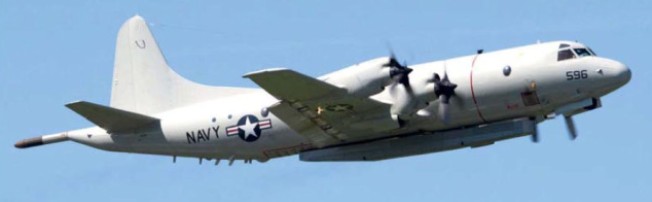
One hundred and fifty seven P-3As and 144 P-3Bs followed and production switched to the origi¬nal P-3C in 1968. P-3C is powered by 4,910 ehp (3 661 kW) Allison T56-A-14 turboprops. Progressive development of the P-3C’s systems through Update I and II has led to the production P-3C Update III model. The first P-3C Update III, with IBM Proteus acoustic processors, was delivered in May 1984. Update IV will improve the P-3’s ASW capability by the use of new acoustic processing systems and Litton AN/ALR-77 tactical ESM equipment. The P-3G would also feature Allison 501 turboprops in place of the T56-A-14s of the preceding model.
By 1994, production in Georgia was with wings built by Daewoo Aerospace in Korea and tail surfaces by Jetstream Aviation at Prestwick in Scotland, and remaining in production in the U.S.A. until 1995.
The first Kawasaki-assembled P-3C Orion was accepted by the Maritime Self-Defence Force at Gifu, Japan, on 27 May 1982. Flown for the first time on 17 March 1982, this aircraft was built from knocked-down components, and Kawwasaki was scheduled to deliver four more by March 1983. All were to be assigned to the 4th Air Group at Atsugi AB, near Tokyo.
Following the assembly in Japan of four P-3C aircraft from Lockheed-built components, Kawasaki produced the Lockheed Martin P-3C Orion for the JMSDF; 101st and final aircraft delivered in 1997, when four EP-3/UP-3D electronic intelligence/training variants remained to be delivered up to the year 2000.
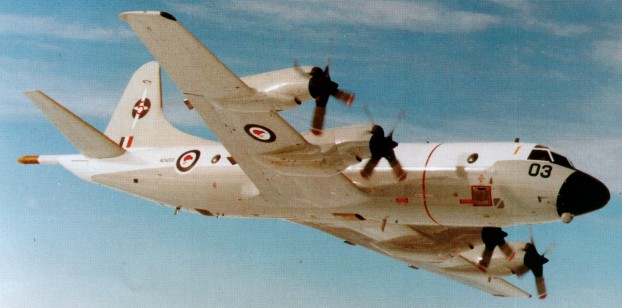
Other export P-3s feature various equipment changes: Australian P-3Cs used Marconi Avionics AQS-901 acoustic processing; the 21 Canadian CP-140 / CP-140A Auroras have S-3 Viking avionics; and New Zealand’s P-3Bs are fitted with Boeing’s UDACS display and control consoles. The US Customs Service became the first customer for Lockheed’s P-3 (AEW&C) airborne early warning aircraft in May 1987. These aircraft will have a reduced mission system suitable for their task, while the full AEW&C aircraft would have a General Electric AN/APS-138 radar and APA-171 rotodome above the fuselage, together with a M1L1553A communications and data handling system. During 1984 Lockheed converted an ex-RAAF P-3B to serve as the AEW&C prototype, featuring the dorsal “rotodome”. Designated EP-3Es and converted from P-3As, twelve versions serve with the US Navy to provide electronic surveillance. The EP-3s are equipped with APS-120 radar plus extensive jamming, detection and analysis equipment.
The significantly upgraded Australian Orions, designated AP-3C, were introduced into service in 2002 and are fitted with a variety of sensors, including digital multi-mode radar, electronic support measures, electro-optics detectors (infra-red and visual), magnetic anomaly detectors, identification friend or foe systems, and acoustic detectors.
The major changes since the Orion entered service have been in avionics equipment and capability, and more than 640 have been built to 1989, with the type then continuing in production (at Marietta, Georgia) until 1995/56 for South Korea, who ordered eight P-3C Update Ills in December 1990. Other Orions were in service in Iran, the Netherlands, New Zealand, Norway, Pakistan, Portugal, Spain and NASA and NOAA.
P-3 LSRS
The last of 18 upgraded AP-3C Orions was formally handed over to the RAAF in 2005. The first upgrade was performed by L-3 Communications in the USA and the remainder by L-3 and then Tenix in Australia. The programme was completed four years behind schedule.
L-3 Communications re-delivered the first of six P-3Ks to the RNZAF with sensor, communications and navigation systems upgrades in July 2005.
P3V-1 Orion Engines: 4 x Allison T56-A-10W, 4500 hp Wing span: 99 ft 8 in Length: 116 ft 8 in Height: 33 ft 8 in Wing area: 1300 sq.ft MTOW: 125,500 lb Max speed: 460 mph at 20,000 ft Service ceiling: 27,000 ft Endurnce -2 engines: 8 hr at 220 mph at 1000 ft
P-3B Orion Engines: 4 x Allison, 4910 shp. Wing span: 99 ft 8 in (30.37 m). Length: 116 ft 10 in (35.61 m). Height: 33 ft 8.5 in (10.29 m). Max TO wt: 134,000 lb (60,780 kg). Max level speed: 476 mph ( 765 kph).
P-3C Orion Engine: 2 x Allison T56-A-14 turboprop, 4910 shp / 3661kW. Installed thrust: 14,640 kW. Wingspan: 30.38 m / 99 ft 8 in Length: 35.61 m / 116 ft 10 in Height: 10.27 m / 33 ft 8 in Wing area: 120.77 sq.m / 1299.96 sq ft Empty wt: 27,890 kg / 61492 lb MTOW: 127,500 lb (57834 kg) Heavywt model MTOW: 135,000 lb (61,236 kg). Warload: 9070 kg. Max speed: 476 mph @ 15,000 ft. Cruise: 340 kt. Initial ROC: 880 m / min. Ceiling: 8600 m. T/O run: 1290 m. Ldg run: 845 m. Fuel internal: 34,830 lt. Max range: 4500nm. Endurance: 3 hr on station. Crew: 10 Air refuel: No. Armament: 9000kg
P 3K Engines: 4x Allison T56. Length: 36m. Wingspan: 30m. Height: 10m. Weight: 57,800kgs. Max range: 7100kms (3850 NM). Cruise speed: 260 750 km/hr. Endurance: 15hrs with 2 engines shut down to conserve fuel. Cruise speed: 195 205 km/hr. Equipment: Rescue winch 270kg max load, nightsun search light, nightvision goggles. Armament: 2 x M60D 7.62 machine guns. Crew: 2 pilots, 2 flight engineers, 2 navigators, 1 air electronics officer, 3 air electronics ops, 1 air ordnanceman Seating: up to 20.
Lockheed Martin AP-3C Orion Engine: Four Allison T56-A-14 (4600 shaft horsepower) Length: 35.6m Height: 10.44m Wingspan: 30.8m Maximum weight: 61,200Kg Maximum speed: 750 km/h (405 knots), Cruise speed: 650 km/h (350 kts) at 26,000 feet Loiter speed:370 km/h (200 kts) Endurance: 15 hours Crew: 13, two pilots (captain and co-pilot), two flight engineers, tactical co-ordinator, navigator/communication officer, sensor employment manager, six airborne electronic analysts.
Lockheed P 3 Sentinel Engine: 4 x T 56 A14, 3314 shp Length: 116.798 ft / 35.6 m Height: 33.793 ft / 10.3 m Wingspan: 99.738 ft / 30.4 m Wing area: 1300.291 sq.ft / 120.8 sq.m Max take off weight: 142024.1 lb / 64410.0 kg Weight empty: 61497.5 lb / 27890.0 kg Max. payload weight: 80526.6 lb / 36520.0 kg Max. speed: 410 kt / 760 km/h Landing speed: 112 kt / 208 km/h Cruising speed: 328 kt / 608 km/h Initial climb rate: 1968.5 ft/min / 10.0 m/s Service ceiling: 28297 ft / 8625 m Wing loading: 109.27 lb/sq.ft / 533.0 kg/sq.m Range: 2071 nm / 3835 km Crew: 10
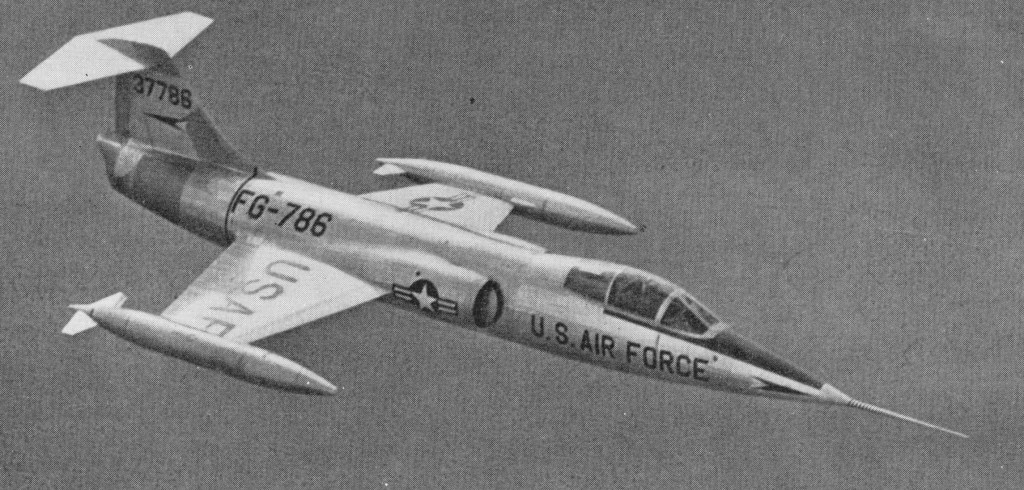
Lockheed were aware that USAF experience in Korea had shown the need for an air-superiority fighter able to operate from forward airfields and climb rapidly from the ground to engage in high-level combat. The Model 83 was designed to fulfil these roles, and in formulating his design “Kelly” Johnson attempted to keep it as cheap, small and readily maintainable as possible. Tendered to the USAF as an unsolicited proposal, it was necessary for competitive bids to be received and the USAF notified a formal requirement for such an aircraft in late 1952.
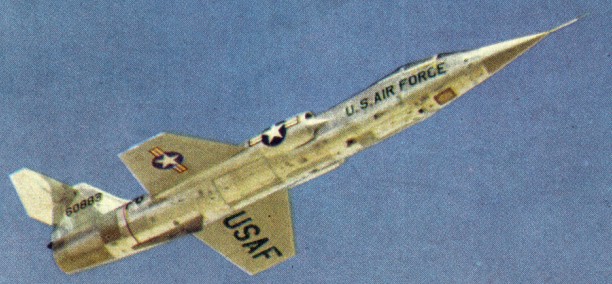
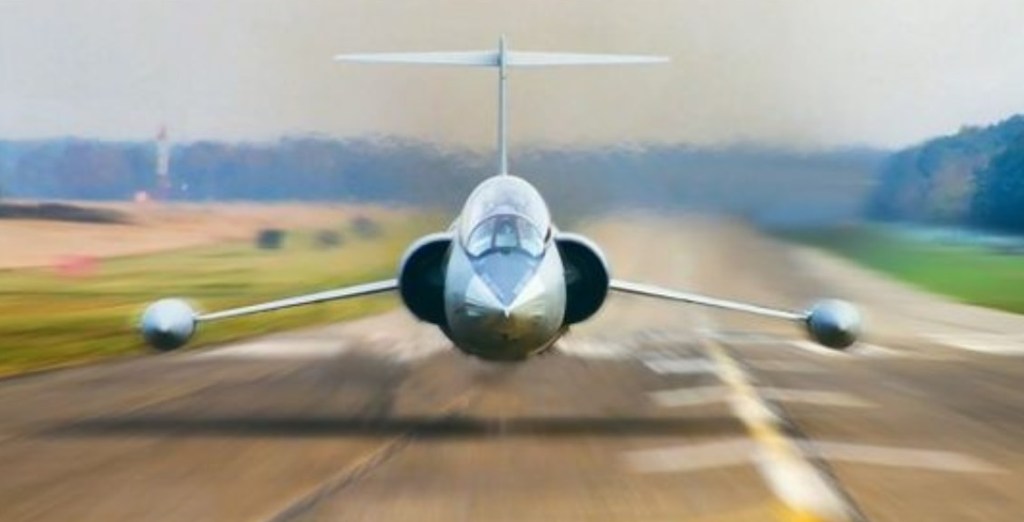
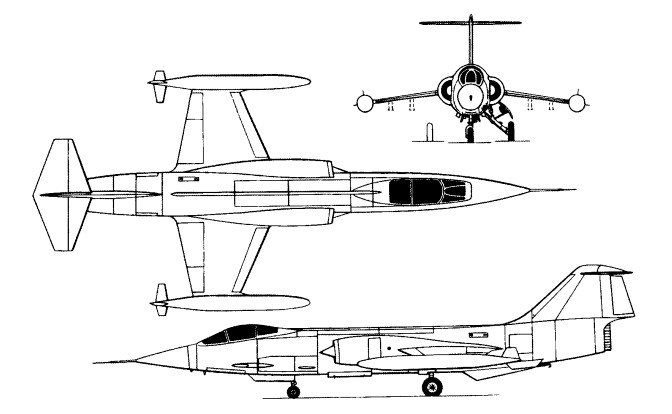
Submissions were received from North American and Republic; but as both of these companies were already heavily involved in fighter development and production, Lockheed’s proposal was selected cautiously: two XF-104 prototypes being ordered for development and testing. The long fuselage was tailored round the J79 engine, and the flying surfaces were small, unswept and very thin, with 10 degrees of anhedral. A token monoplane wing mid-set on the fuselage – this latter assembly wrapped tightly round a powerful turbojet engine – needle-nosed and T-tailed. All wheels, with a single wheel on each unit, retract forward into the fuselage. Able to demonstrate a level speed of around 2,250km/h and to climb to a height of 25km in about 4.5 minutes, the Press dubbed the Starfighter the “missile with a man in it”.
XF-104
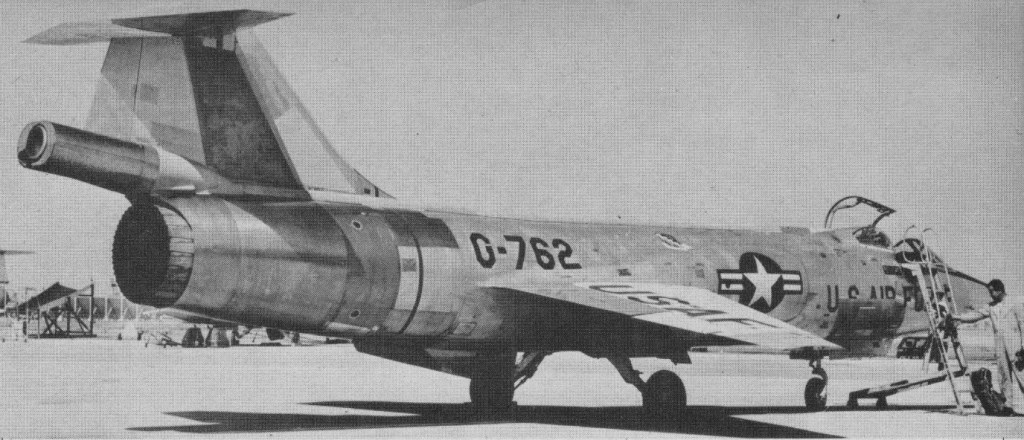
The XF-104 had a narrower and shorter rear fuselage compared to the production models. The two prototypes had a 10,500 lb Wright J65-W-6 turbojet but all subsequent aircraft had a J79 turbojet.
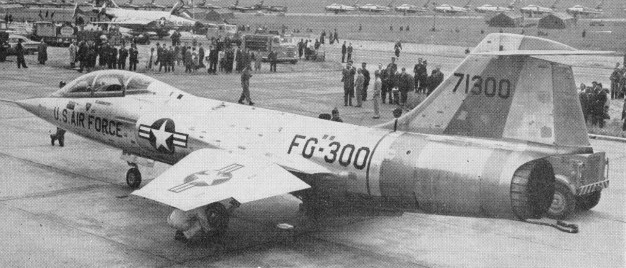
The first of these flew on 28 February 1954, followed by test and evaluation aircraft. It was not until 26 January 1958 that the first production F-104A began to enter service – as interceptors – with Air Defense Command’s 83rd Fighter Interceptor Squadron. The US Air Force had already lost interest in the type and took only 296 Starfighters.
F-104A (170) and multi-mission F-104G (77) served with the USAF, as well as F-104B (26) and F-104D (21) two-seat operational-trainer counterparts of the A and C respectively.
Lockheed F-104B Starfighter
The type was then saved by the creation of the F-104G multi-role version for production by a multi-national European consor¬tium as well as for Japan.
Winner of a previous so-called ‘sale of the century’ and used by several NATO air arms for many years. During its heyday the Starfighter formed the backbone of the NATO alliance’s air power and a number of reconnaissance-configured aircraft were produced, sensor packages varying considerably according to the specialized requirements of the parent air arm.
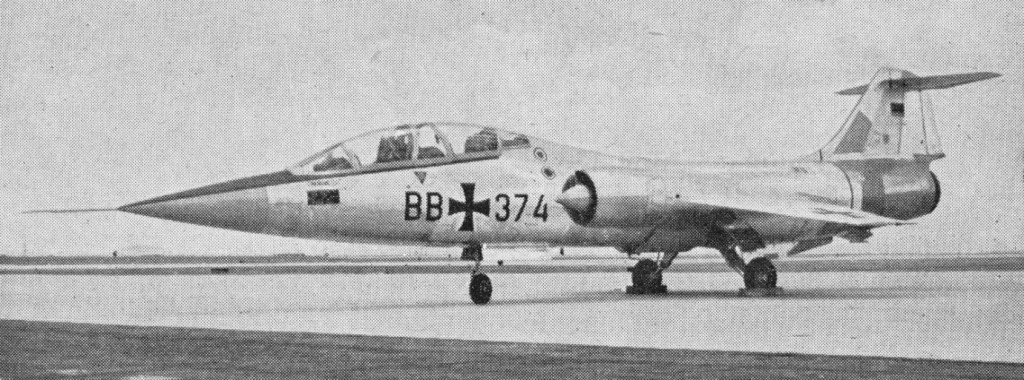
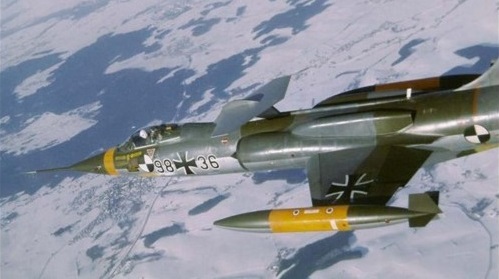
The German Luftwaffe, in their technological zeal, had insisted on overloading the F-104 with equipment which made it much heavier and more complex than the original model. The Starfighter programme began to go wrong after the first had been delivered in May 1961. The German pilots, even after extensive training in Arizona, were not fully experienced. The Starfighter, in the words of General Steinhoff, then inspector of the Luftwaffe, “was forever jealous of the pilot’s full attention. It rewarded discipline with deeds of airmanship; it could punish the dilatory of those who gave themselves to distractions. It was a marvel in capable hands, and merciless to the careless”.
Up to December 1968 ninety-one Starfighters crashed. With each series of Luftwaffe crashes the original choice of the Starfighter became more contentious, and by the time of the 1966 elections the Starfighter bribery scandal played a role in the fall of the Chancellor, Ludwig Erhard. Deliveries of 30 F-104F trainers to the Luftwaffe began in mid-1960.
F-104F
The most widespread variant was the RF-104G, which featured a belly fairing containing cameras, installation of these necessitating the removal of the M61 Vulcan rotary cannon armament. West Germany, Italy and the Netherlands all operated this variant of the Starfighter for a time, although the Netherlands used the standard F-104G for reconnaissance tasks, using the Orpheus pod to accomplish this mission. The German Luftwaffe and Marineflieger used the RTF-104G two-seater.
Following development by Lockheed of the multi-mission F-104G, more than 1,000 came from production lines in Belgium, Germany, Holland and Italy to equip the air forces of those nations. Similar versions were built under licence in Canada and Japan. Lockheed also built 179 F-104G for export or for supply to friendly nations through the Military Assistance Program. These were essentially similar in appearance to their European counterparts and were fitted with three Hycon KS-67A cameras, examples being delivered to Norway and Taiwan, most of the Norwegian specimens being passed on to Turkey.
In 1964 West Germany cut down the intended size of its Luftwaffe because of shortages of funds and manpower. They will reduce the nine F-104G Starfighter squadrons to seven, and two Fiat G.91 reconnaissance squadrons instead of four. First line strength will be 380 F-104G’s and 170 G.91’s.
F-104G 26+11
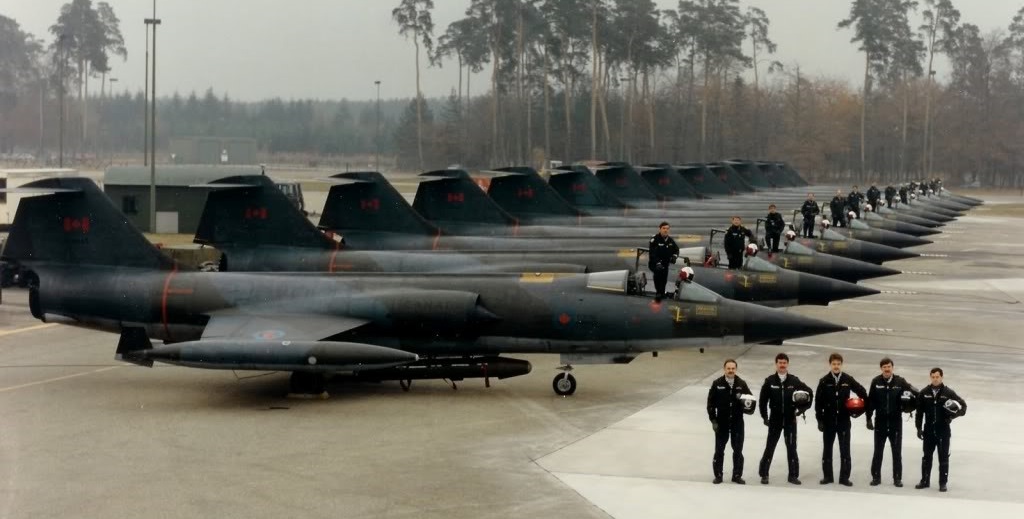
The Canadian built CF-104 Starfighter was one of the most successful jet fighter aircraft to serve with Canada’s Air Force. A total of 340 fighters were built under license by the Canadian government. The CF-104 was designed as a light-weight nuclear strike aircraft. The aircraft were retired from service in 1986 after being used for over 25 years until they were was replaced by the CF-18. Canada’s CF-104 (Canadian-built F-104G) was also originally engaged in reconnaissance duty, aircraft assigned to this task being fitted with a prominent belly-mounted pod containing a battery of Vinten cameras.
Canadair CF-104 Starfighter
Thirty-nine CF-104D models built by Lockheed were purchased by the Canadian Air Force for training.
The CF-104 (single seat version) was built in Canada under license by Canadair in Cartierville, Quebec. The first aircraft produced by Canadair flew in May 1961, with 200 single seaters (CF-104) being produced for the RCAF. 22 Lockheed-built two seaters (CF-104D) were also used by the RCAF. The aircraft in later years provided a measure of unparalleled stability in the low-level, high speed environment until phased out in 1986. The majority of the Starfighters were transferred to the Turkish Air Force. After the RCAF production order was filled in June 1963, Canadair produced another 140 aircraft for other countries.
On 19 May 1964 Jacqueline Cochran set a world speed record of 1429.297 mph for women flying an F-104G over a 10 mile straightline course at Edwards Air Force Base, California. The Mach 2.2 flight broke her similar mark of 1273.109 mph.
Production ended in America, but in 1966 the first prototype of the Aeritalia built F 104S flew for the first time. The Italian Air Force is receiving a total of 205 aircraft, and Turkey received 40 from 1974. Power is provided by one 17,900 lb thrust (with afterburning) General Electric J79 GE 19 turbojet engine. Armament in an air to air role consists of two Sparrow and two or four Sidewinder missiles, plus the 20 mm M 61 multi barrel cannon. In an attack role bombs, rockets, and other weapons up to a weight of 7,500 lb (3400 kg) can be carried on nine wing and fuselage stations.
Post-war Mitsubishi built Lockheed F-104J Starfighters with Kawasaki. Eventually Japan ordered 230 Starfighters – nearly all of them built under licence by Mitsubishi in Japan. Lockheed was estimated later to have paid bribes of about $1.5 million to Japanese officials, and a fee of $750,000 to Yoshio Kodama, one of the most powerful people in Japan.
Total Starfighter pro¬duction was 2,282 units.
A Starfighter, built from non-serviceable ex-military aircraft components by American Darryl Greenmayer over a ten-year period, was the fastest and most complex “homebuilt” aircraft ever completed. With this aircraft, prepared by American Jet Industries in California and known as the Red Baron RB-104 Starfighter, he raised the world speed record over a 3km low-level course to 988.26 mph / 1,590.45 kph on 24 October 1977 at Tonopah, Nevada. The RB-104 was lost in an accident in 1978.
For training in the aerospace field, three early Starfighters have been modified to NF-104A standard by the addition of a 6,000 lb thrust (2722 kgp) Rocketdyne AR-2 booster and reaction jet controls for exploration missions up to heights of nearly twenty five miles. USAF pilots training for the X-20 Dyna-Soar roles use the NF-104A to learn atmosphere re-entry techniques.
NF-104A
The NF-104A is designed to fly regularly to 25 miles altitude. The Rocketdyne engine is throttleable from 50 to 100% power. The NF-104A provides spaceflight experience at a fraction of X-15 operating costs.
The NF-104A was to zoom climb to over 90,000ft where atmospheric pressure was about 6 millibars. About 1% of the pressure at sea level. In the near vacuum the only way to control the plane at the top of its ballistic arc was with jets of hydrogen peroxide for pitch, yaw and roll control. The jet engine would be shut down at about 70,000ft to prevent it from exceeding temperature limits. If not shut down, the engine would have introduced yaw motion challenging the ability to control the aircraft. During the descent, at about Mach 1.8, enough air would pass through the intake ducts to allow a re-start or a dead-stick landing would be made. On 10 December 1963, Chuck Yeager reached 108,700 ft (Yeager wanted to set a new world altitude record) when a pitch up caused the NF-104A to fall on its back and enter a flat spin. At 14,000 ft hr ejected.
Versions F-104A (interceptor) F-104B (two-seat trainer) F-104C (tactical strike) F-104D(two-seat trainer) F-104G (definitive multi-role warplane with a strengthened structure, more power, and revised electronics) TF-104G (F-104G trainer) F-104J (F-104G ver¬sion for Japan) F-104S (improved air defense version developed in Italy) CF-104 CF-104D (CF-104 two-seat trainer). NF 104A RB-104
Specifications
F-l04A Armament: 1 x six-barrel M-21 20mm Vulcan cannon & 2 x Sidewinder AAMs.
F-l04G Engine: 1x 15,800-lb (7,167-kg) reheated thrust General Electric J79-GE-7 or llA turbojet or Turbo-Union J79-MTU-J1K. Wing span 21 ft 11 in (6.68 m) Wing area 196.1 sq ft (18.22 sq.m). Length 54 ft 9 in (16.69 m) Height 13 ft 6 in (4.11 m) Empty weight 14,900 lb (6,758 kg) Maximum take-off weight 28,779 lb (13,054 kg). Fuel capacity: 847 Imp.Gal External fuel: 2 x 162 Imp.Gal under wing, 2 x 142 Imp.Gal tip tanks Maximum speed 1,450 mph (2,333 km/h) or Mach 2.2 at 36,000 ft (10,975 m) Initial climb rate 55,000 ft (15,765 m) per minute Service ceiling 58,000 ft (17,680 m) Range 1,550 miles (2,495 km) Range w/max.payload: 370 km / 230 miles Armament: one 20-mm multi-barrel cannon Bombload: 4,310 lb (1,955 kg) of disposable stores. Crew: 1 Wheel tract: 8 ft 9 in Wheelbase: 15 ft 1 in
TF-l04G Seats: 2.
RF-104G Engine: one General Electric J79GE- 1 IA turbojet, 7167-kg (15, 800-1b) afterburning thrust. Maximum low level speed 1473 km/h (915 mph) or Mach 1.2 Maximum stabilized speed at 12190 m (40,000 ft) 2124 km/h (1,320 mph) or Mach 2.0 Tactical radius with external fuel 1110 km (690 miles) Empty weight 6486 kg (14,300 lb) Maximum take-off: 11352 kg (25, 027 lb). Wing span 6.68 m (21 ft 11 in) Length 16.69 m (54 ft 9 in) Height 4.11 m (13 ft 6 in) Wing area 18.22 sq.m (196.1 sq ft).
F 104S Wing span: 21 ft 11 in (6.68 m). Max speed: M2.2.
Lockheed CF-104D Mk.2 Engine: General Electric J79-19 turbojet 11,810 lbs. thrust, 17,900 lb. with afterburner Maximum Speed: Mach 2 Loaded weight: 26,800 lb (12,156 kg) Span: 21 ft 11 in (6.4 m) Length: 58 ft 3 in (17.7 m) Height: 13 ft 6 in (4.1 m) Wing area: 196 sq ft (18.2 sq m)
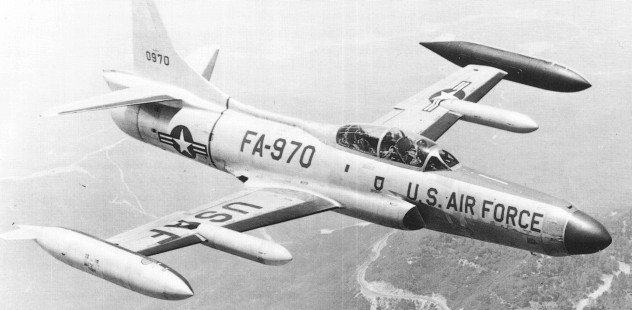
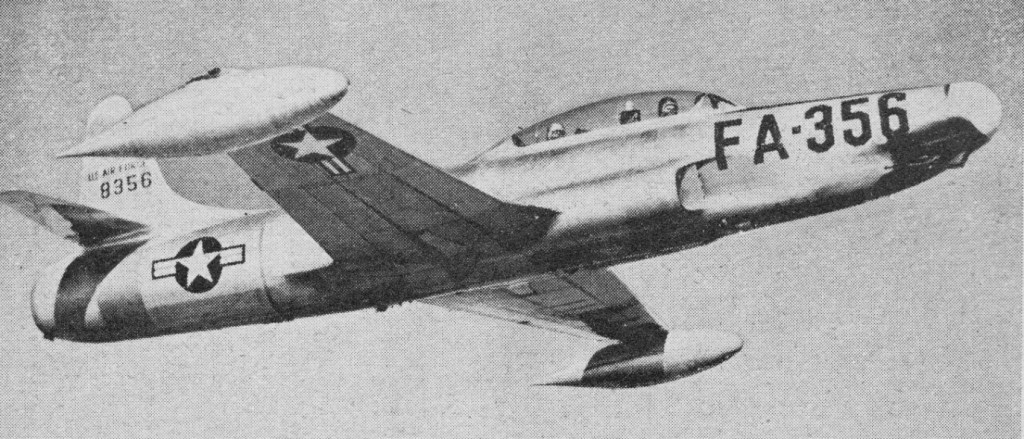
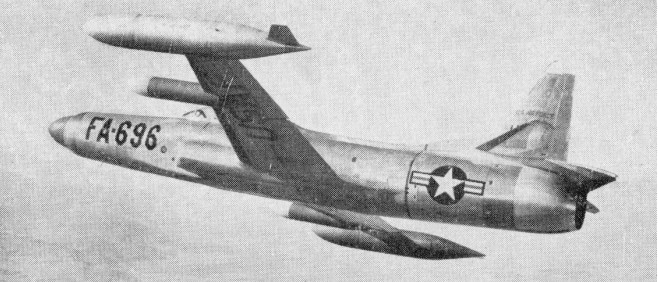
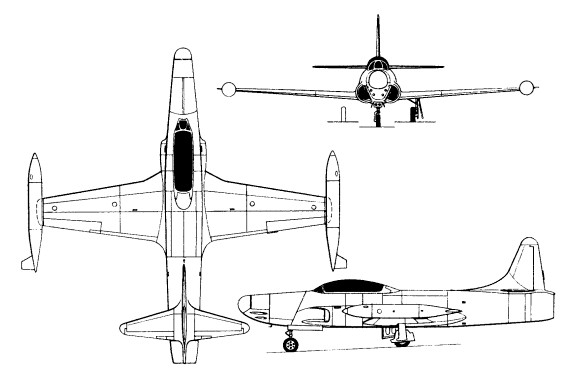
The F-94 Starfire was evolved to satisfy a requirement for a two-seat all-weather radar-equipped fighter. It originally used many of the main components and the production facilities of the two-seat T-33 trainer. The prototypes were converted T-33A, each with a new 26.69kN Allison J33-A-33 turbojet, radar equipment installed in the fuselage nose and accommodation for the radar operator in the rear cockpit. Its 1,200 lb. of electronic equipment includes automatic target location, tracking and rocket-firing radar. Armament of four 12.7mm guns was retained in the forward fuselage.
Deliveries of production F-94A began in June 1950. These incorporated the wings, landing gear and centre fuselage of the T-33, with a new nose and rear fuselage (former to house the radar and the latter for the afterburner installation). All hydraulic, electric and control systems were similar to those of the F-80C.
1948
The F-94A were followed in 1951 by F-94B which differed in having square wingtips with centrally mounted Fletcher tip-tanks of larger capacity and improved shape, raised to the wing centre-line, and a revised hydraulic system.
The final version was the F-94C with a thinner wing, longer nose, swept horizontal tail surfaces, larger vertical surfaces, a more powerful engine, and the radome centred in the fuselage nose and surrounded by a ring of 24 air-to-air rockets housed in firing tubes, faired by a retractable shield. Two pods (one mounted on each wing) could together accommodate 24 more rockets. A total of 544kg of electronic equipment included automatic locating, tracking and firing instruments, Westinghouse autopilot, Sperry Zero-Reader, ILS, etc.
F-94C
A total of 854 production Starfires were built. The USAF’s first turbojet-powered all-weather interceptor, the type served primarily with Air Defense Command for national defence.
F-94C Engine: 1 x Pratt & Whitney J48-P-5 turbojet with afterburner, 6,250 lb / 28.2kN thrust Max take-off weight: 10970 kg / 24185 lb Empty weight: 5764 kg / 12708 lb Wingspan: 11.38 m / 37 ft 4 in Length: 13.56 m / 44 ft 6 in Height: 4.55 m / 14 ft 11 in Wing area: 21.63 sq.m / 232.82 sq ft Max. speed: 1030 km/h / 640 mph Ceiling: 15665 m / 51400 ft Range: 1296 km / 805 miles Armament: 48 x 2.75 in Crew: 2
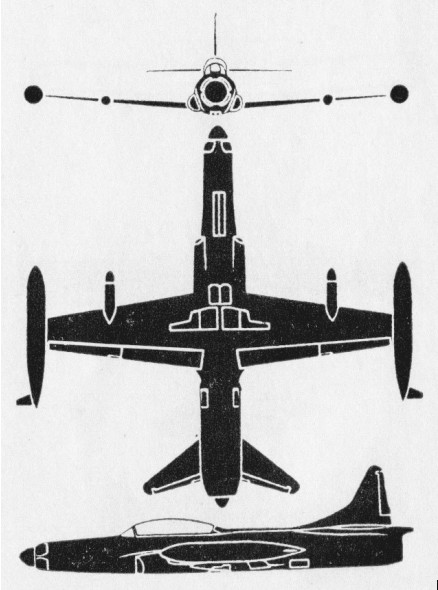
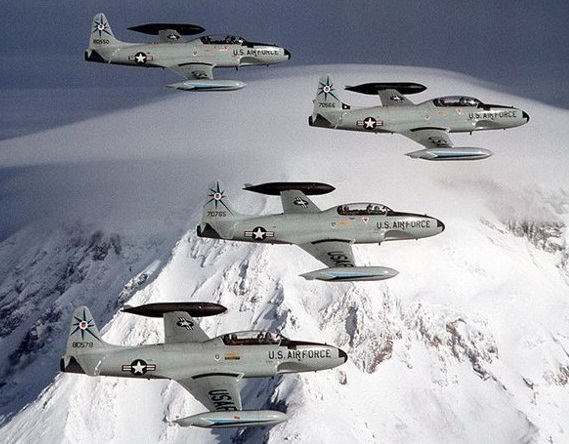
In December 1945 the USAAF began to receive its first jet fighter, the Lockheed P 80 Shooting Star, and it soon became clear that a trainer version was essential. Lockheed’s P-80 Shooting had developed into a lengthened-fuselage two-seat trainer version, designated originally TF-80C. The first of these flew on 22 March 1948.
In addition to the fuselage ‘stretch’, a second cockpit in tandem was provided with dual controls, the transparent canopy was extended to cover both cockpits and the armament of the F-80 was deleted. Original engines were Allison J33-35 single-shaft turbojet engines with a thrust rating of 5,200 lbs.
Test pilot Jim Fitzgerald was killed during an approach to landing in the first T-33 that Lockheed built.
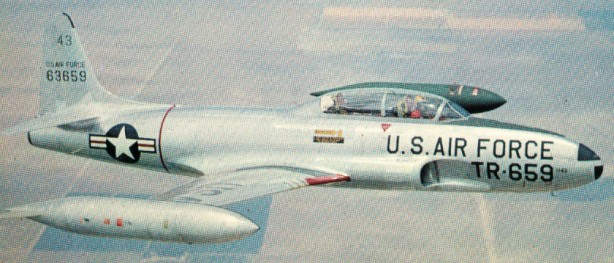
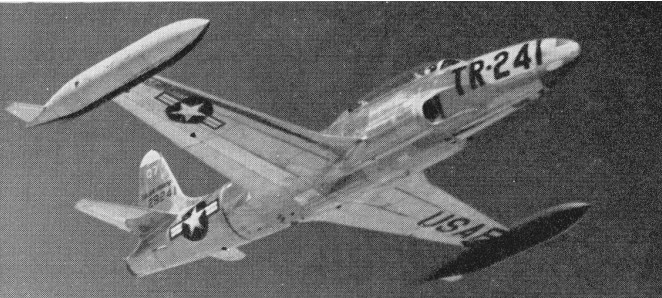
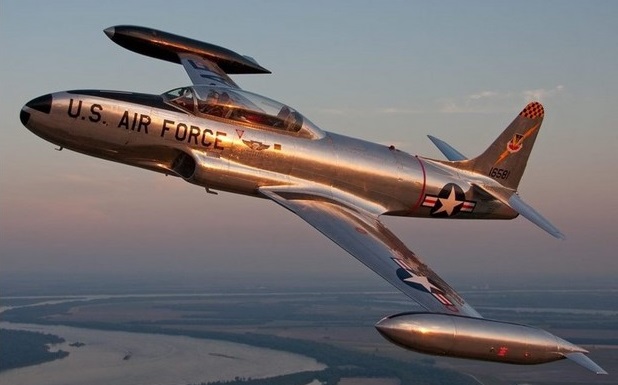
T-33A
The type eventually became the USAFs standard jet trainer, many being supplied to foreign nations under the Military Aid Program. 1,058 were supplied to friendly nations under the program. They were also built for service with the US Navy and Marine Corps under the designation TV-2, later T-33B.
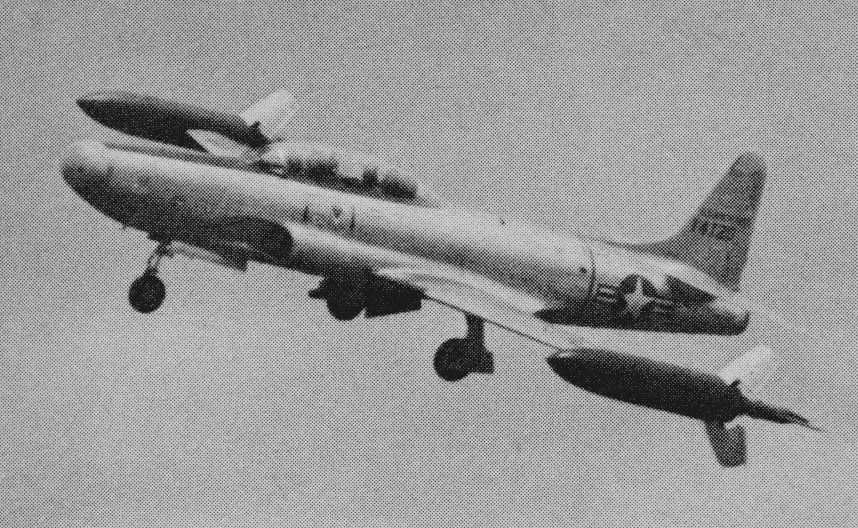
TV-2 Seastar
A total of 128 TF-80C were built before the designation was changed to T-33A in May 1949.
Derived from T 33 as shipboard trainer, a total of 271 T-1 Seastar trainers were built for U.S. Navy during 1957 58.
Variants included small numbers modified as DT-33A drone directors and AT-33A armed close-support aircraft.
After a production run of 11 years the 5691th and last Lockheed T-33A Shooting Star was delivered by Lockheed at the beginning of August 1959.
A total of 5,691 were built by parent company, 656 built in Canada (by Canadair Ltd as CL 30 Silver Star with Nene 10), and 210 built in Japan (by Kawasaki). The aircraft was supplied to the air arms of some twenty-five countries.
In 1963 Libya started its own Air Force when the US turned over two T-33 and a C-47 at Wheelus AFB.
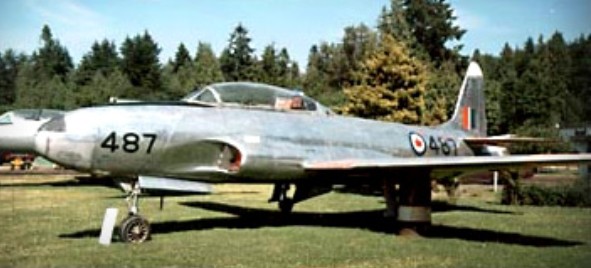
Canadair was given a contract in September 1951 to manufacture the T-33 with the first flight being in December 1952. The Canadair CL-30′ Silver Star’, later designated CT-133, was a tandem two-seat, armed trainer version of the T-33A, powered by a Rolls Royce Nene 10 turbojet, delivering 5,400 lb thrust. 636 were built under licence for the Royal Canadian Air Force from 1952. It was used as an instrument flight trainer whilst in service with the Canadian forces in Germany. The Silver Star Mks. 2 and 3 differed from the U.S. manufactured T-33A in being powered by a Rolls-Royce Nene 10 turbojet. Armament consisted of two nose-mounted 12.7 mm (0.5 in) machine-guns plus various light bombs, rockets and machine-gun pods. It had a service ceiling of 48,000 feet, a maximum speed of 600 mph at sea level and a cruising speed of 455 mph. The normal range was 1,025 miles and the maximum range was 1,275 miles. Canada gave T-33s to Bolivia, France, Greece, Portugal and Turkey under the Mutual Aid programme.
CL-30 Silver Star
By the end of 2000, 7 nations in the world still listed the T-33 as “in service.”
Circa 1964 a T-33, modified and operated for USAF Flight Dynamics Lab at Wright Patterson AFB, by Cornell Aeronautical Laboratory, has a variable drag system provided by servo-driven petals mounted on wing tanks. Simulation of flight path and handling qualities of lifting-body re-entry vehicles was made on both front and back of the power curve.
Cornell Aeronautical Laboratory modified T-33
Cornell Aero Lab at Cornell University in Ithaca, New York, had a variable-stability aircraft, a Lockheed NT-33A Shooting Star, which Neil Armstrong flew, testing experimental sidestick controller.
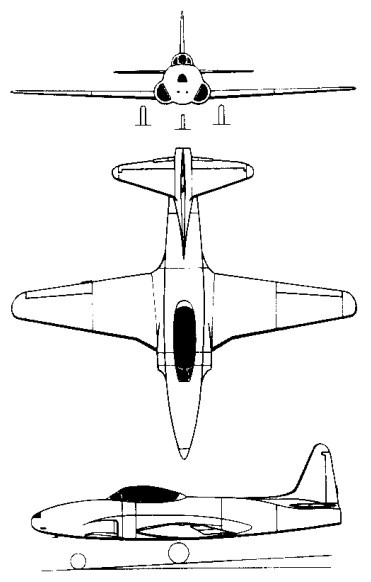
T-33 Engine: 1 x Allison J-33-A-5, 24.0kN Max take-off weight: 5900 kg / 13007 lb Empty weight: 3810 kg / 8400 lb Wingspan: 11.9 m / 39 ft 1 in Length: 11.5 m / 37 ft 9 in Height: 3.6 m / 11 ft 10 in Wing area: 22.0 sq.m / 236.81 sq ft Max. speed: 965 km/h / 600 mph Ceiling: 14700 m / 48250 ft Range w/max.fuel: 2150 km / 1336 miles Crew: 2
T-33A Engine: 5,400 lbs.t. (2450 kgp) Allison J33 A 35. Max level speed: 543 mph (874 kph). Max speed, 600 mph (966 kph) at sea level Cruise, 430 mph (692 kph) Initial climb, 5,525 fpm (28 m/sec) Service ceiling, 47,500 ft (14,477 m) Range, 1,345 mls (2164 km). Empty weight 8,084 lb (3 667 kg) MTOW, 11,965 lb (5428 kg). Wing span, 38 ft 10.5 in (11.85 m) Length 37 ft 9 in (11.49 m) Height: 14 ft 4 in (3.45 m) Wing area, 237 sq.ft (22 sq.m).
T-33A Engine one 5,400-lb. Allison J-33-A/4 turbojet with w/water-alcohol injection. Gross wt. 16,800. Empty wt. 8,440. Total fuel: 813 USG; 230 in each tip tank. Max Speed 525 mph. Long range cruise 455 mph. Range 1,000 nm. Ceiling 47,000′. Seats (ejection) 2.
T 1A Seastar Engine: 6,100 lbs.t. (2 767 kgp) Allison J33 A 22 turbojet. Max speed, 580 mph (933 kph) at 35,000ft (10 668 m) Cruise, 410 mph (660 kph) Initial climb, 6,330 fpm (32.1 m/sec) Service ceiling, 40,000ft (12 192 m) Range, 967 mls (1566 km). Empty weight, 11,965 lb (5 428 kg) Loaded weight, 15,500 lb (7 031 kg). Wing span, 42 ft 10 in (13.05 m) Length, 38 ft 6.5 in (11.73 m) Wing area, 240 sq.ft (22.3 sq.m).
Canadair CL-30 Engine: Rolls Royce Nene 10 turbojet, 5100 lb (2,315 kg) Span: 37 ft 7 in (11.48 m) without tip tanks Wing Span: 38 ft 10.5 in Length: 37 ft 9 in (11.49 m) Height: 11 ft 8 in (3.6 m) Wing area: 238 sq ft (22.11 sq m) Empty weight: 8,440 lb (3,832 kg) Loaded weight: 18,400 lb (8,217 kg) Maximum speed: Mach .787 Armament: Two .50 calibre Browning machine guns
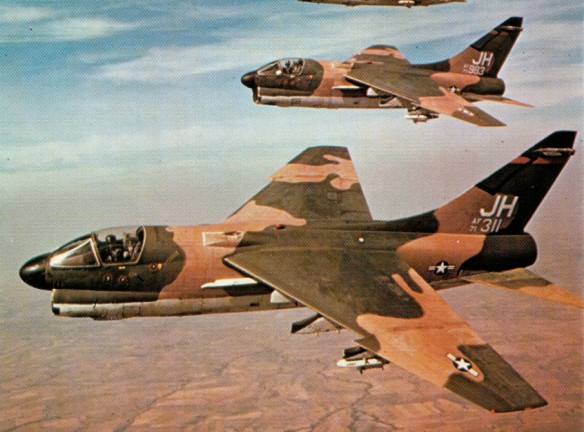
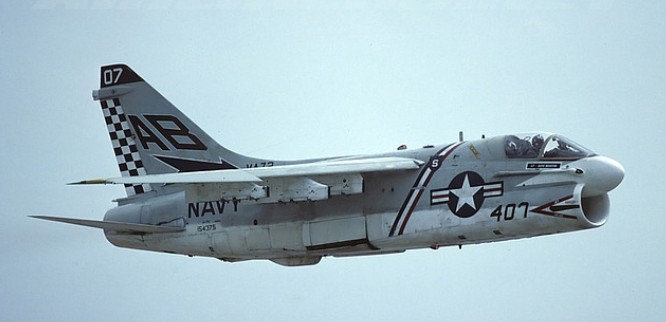
In principle, both the Navy and Marine Corps were to have replaced the Skyhawk with the winner of the VAL contest, designed to requirements issued in May 1963. Vought won this competition with the A 7 Corsair II, early in 1964, the resulting A 7A making its first flight on 27 September 1965. Powered by a single Pratt & Whitney TF30 P 6 turbofan of 11,350 lb (5 147 kg), the A 7A had an empty weight of 14,857 lb (6738 kg), a total of eight weapon pylons, and a design catapult gross weight of 32,500 lb (14 740 kg). The Corsair II was clearly going to cost far more and require more maintenance effort than the smaller, simpler Skyhawk. In addition, it may well have been that the A 7 provided capabilities that were far in excess of those demanded by the Marines for the short range close support mission. The two services therefore went their separate ways, the Navy adopting the Corsair II, while the Marine Corps funded a further stage of Skyhawk development. Produced to a US Navy specification in the 1960s for a carrier-based light attack aircraft, the Vought A-7 Corsair II was based on the earlier F-8 Crusader interceptor and first flew on 27 September 1965. The designers made the structure simpler, and by rejecting supersonic performance made it possible to use a smaller and more efficient turbofan engine and carry a much heavier load of fuel and weapons. Comprehensive electronics were added for flying and attacking surface targets at night or in bad weather. Required to operate with a larger load of conventional ordnance than the standard naval fighter-bomber of the day the Douglas A-4 Skyhawk, it enjoyed a rapid development period, and by December 1967 was in operational service over Vietnam. It can operate from rough airstrips and carry bomb loads up to 6,800kg (15,000 lb). With 12 bombs hung under the wings it can fly at 1040 km/h (646mph. The first Corsair II version, the A 7A, entered service with the US Navy in 1966. Subsequent versions, most of them with an Allison/Rolls Royce TF41 engine, have introduced further combat capabilities, including blind precision attack on surface targets and a rapid fire six barrel gun.
Three naval Corsair variants were produced before the USAF commissioned a new mode, designated A-7D. This was all extensively improved variant with a far more capable nav/attack system, as part of a completely revised avionics fit, and a licence-built Rolls-Royce Spey turbofan providing more power than the Pratt & Whitney TF30 installed in earlier aircraft. Such were the changes that the A-7D had only 25 per cent commonality with the original A-7A, Production of the A-7D totalled 459 between 1968 and 1976, the survivors operated with Air National Guard (ANG) units, some aircraft having seen service in Vietnam during 1972, flying from Thailand. Deliveries of a combat-capable trainer, the A-7K, involved 32 aircraft (31 new and a converted A-7D which acted as prototype) between 1980 and 1983, one being issued to each ANG squadron and the rest to a training group.
A-7E
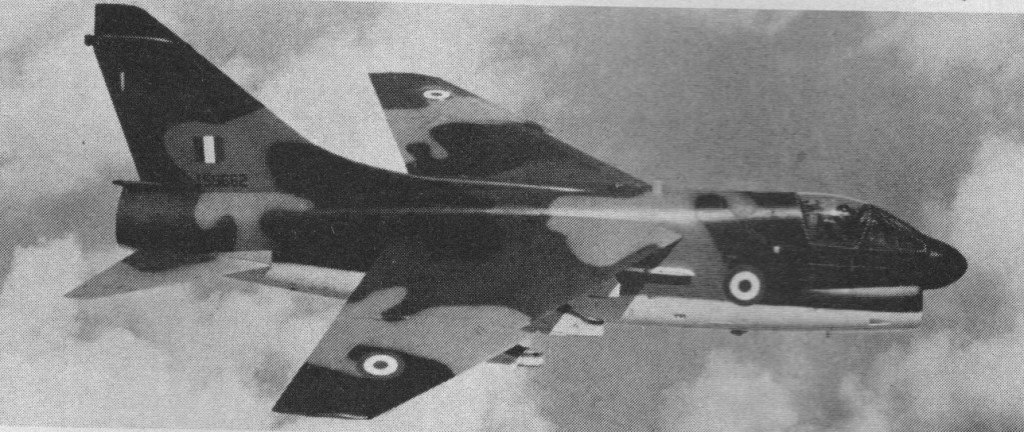
Vought flew the first example of the A 7H Corsair II, a land based version of the A 7E of which 60 had been ordered for service with the Royal Hellenic air force, on 6 May 1975.
A-7H Corsair
Land-based export versions comprised six (five new) TA-7H trainers for Greece; and 44 A-7P plus six TA-7P aircraft for Portugal, The latter variants are TF30-engined A-7As rebuilt with more capable A-7E avionics.
A 7A Corsair II Engine: Pratt & Whitney TF30 P 6 turbofan, 11,350 lb (5 147 kg), Empty weight: 14,857 lb (6738 kg) Hardpoints: 8 Catapult gross weight: 32,500 lb (14 740 kg) Bomb load: 6,800kg (15,000 lb). Max speed ext. load: 1040 km/h / 646mph.
A 7B Corsair II
A-7D Corsair II Engine: one 6804-kg (15,000-lb) thrust Allison TF41-A-2 (Rolls-Royce Spey) turbofan. Wing span 11,80 m (38 ft 9 in) Length 14.06 m (46 ft 11½ in) Height 4.90 m (16 ft ¾ in) Wing area 34,83 sq.m (375 sq ft). Empty weight: 8676 kg (19,127 lb) Maximum take-off 19061 kg (42,000 lb) Maximum speed: 1110 km/h (690 mph) SL Maximum speed: 1040 km/h (646 mph) at 1525 m (5,000 ft) with 12 227-kg (500-lb) bombs Ferry range 3670 km (2,280 miles) on internal fuel Armament: one internal M61A1 20-min rotary cannon (with 1,000 rounds); six under-wing and two fuselage pylons for over 6804 kg (15, 000 lb) of stores, including AIM-9 Sidewinder AAMs on fuselage attachments.
A-7E Corsair II Engine : TF41 (Rolls Royce RB 168-62 Spey), 66747 N / 6804 kp Length : 46.129 ft / 14.06 m Height : 16.010 ft / 4.88 m Wingspan : 38.681 ft / 11.79 m Wing area : 375.018 sqft / 34.84 sq.m Max take off weight : 42005.3 lb / 19050.0 kg Weight empty : 17571.6 lb / 7969.0 kg Max. speed : 607 kts / 1125 km/h Wing load : 112.14 lb/sq.ft / 547.00 kg/sq.m Maximum range : 2411 nm / 4465 km Range : 2411 nm / 4465 km Range (max. weight) : 918 nm / 1700 km Crew : 1 Armament : 1 MK 20mm M61 A1/1000rds, 9072kg ext. 8pts.









 All Aero