First of the “Century fighters”, the prototype F-100 flew on 25 May 1953 piloted by George Welch. Powered by a Pratt & WhitneyJ57 turbojet and augmented by an after¬burner, it flew faster than sound on its maiden flight.
Originally known as the “Sabre 45”, because of its 45-degree swept wing, the F-100 is a completely new design and was the first U.S.A.F. operational aircraft to fly supersonic in level flight. In very large-scale production as standard U.S.A.F. day fighter in 1955. Established World Speed Record of 755.15 mph on 29 October 1953.
The whole F-100 structure is immensely strong and rigid; so much so that assembly jigs are rendered unnecessary, the parts being simply put together. The wing interior is largely taken up by huge forgings, machined into honeycombs or grids; some of the outer skins are machined from sheet of no less than 3in original thickness. There was talk of the aircraft being made by Commonwealth (Australia) and Canadair.
The F-100 has an all-moving tailplane and inset ailerons, each in two sections, and automatic leading-edge slats. Ailerons were located inboard and flaps were omitted. Flaps were on the F-100D and F only. An air-brake is under the centre fuselage. The tricycle undercarriage has single wheels on each main unit ad twin wheels on the nose unit. The mains retract inward into the fuselage and nose wheels retract rearward.
The initial production version was the F-100A, a single-seat day fighter powered by a 43.15kN J57-P-7 or P-39 engine. Armament comprised four 20mm M-39E cannon plus external stores on six under-wing hardpoints.
F-100A Super Sabre
By May 1954, the U.S.A.F. had accepted delivery of a fair number of F-100As, but some had already been damaged or written-off in accidents. The F-100A was grounded in November 1954 because of transonic control problems. The height of the rudder had been reduced by some 18in and a corresponding amount added to the fin. The F-100 lands at nearly 180 mph. There are no landing flaps, but the ventral airbrake can be used on the approach.
North American F-100A Super Sabre
The F-100A production model first flew on 29 October 1951. 203 of the F-100A and RF-100A were built, the last 35 having an 11,700 lb thrust J57-P. The RF-100A was a photo-reconnaissance conversion of the F-100A with a deeper camera-carrying front fuselage.
RF-100A 53-2600
The 1956 F-100B designation was not applied as it was extensively redesigned as the F-107.
The F-100C (NA-214, -217, -222) appeared as a single-seat fighter bomber with strengthened wings, up to 3,402kg of bombs on eight underwing hardpoints, in-flight refuelling capability and 75.62kN (with afterburning) Pratt & Whitney J57-P-21A turbojet engine. First flown on 17 Jnuary 1955, 476 were built. An F-100C set the first world speed record to exceed Mach 1 on 20 August 1955 at 822.135mph.
The TF-100C of 1956 was a planned two-place trainer version modified from F-100C 54-1960, which instead became a prototype for the F-100F. Only the one was built.
TF-100C 54-1960
The similar F-100D (NA-223, -224, -235, -245) introduced design refinements, including a taller fin, landing flaps; supersonic autopilot, low-level bombing system, and could be armed with four Sidewinder or two Bullpup missiles, or 3,402kg of external weapons in addition to its standard four 20mm cannon.
F-100D 55-2851
First flown on 24 January 1956, 1274 F-100D were built.
F-100D cockpit
The final version built was the F-100F (NA-234, -255, -261, -262), first flown on 1 March 1957. It was a lengthened tandem two-seat operational trainer and tactical attack aircraft, armed with two 20mm cannon and capable of carrying 2,722kg of external stores. A total of 339 were built.
F-100F 56-3752
Operation Julius Caesar, involving the first flight by jet fighter aircraft over the North Pole, was conducted on 7 August 1959 with the landing of two USAF F-100F fighters at Eielson, Alaska AFB, southeast of Fairbanks, Alaska. The flight from Wethersfield, Essex, was completed in 9 hr 37 min.
Total production was 2294 aircraft when the line closed in October 1959.
After cancelling all airshows for two big summer months the Airforce Thunderbirds reverted back into F-100s in August 1965 to complete the season. They had started in Republic F-105s but a series of accidents throughout the Air Force grounded all Thunderchiefs.
F-100 Engine: 1 x P+W J-57-P-21 turbo-jet, 66.7kN Max take-off weight: 12700 kg / 27999 lb Empty weight: 9500 kg / 20944 lb Wingspan: 11.6 m / 38 ft 1 in Length: 14.3 m / 46 ft 11 in Height: 4.9 m / 16 ft 1 in Wing area: 35.8 sq.m / 385.35 sq ft Max. speed: 1216 km/h / 756 mph Ceiling: 15250 m / 50050 ft Range: 920 km / 572 miles Armament: 4 x 20mm machine-guns, 2720kg of bombs and missiles Crew: 1
North American F 100 Super Sabre Engine: Pratt & Whitney J-57-P-21A, 75645 N Length: 46.982 ft / 14.32 m Height: 14.665 ft / 4.47 m Wingspan: 38.747 ft / 11.81 m Max take off weight: 34839.0 lb / 15800.0 kg Max. speed: 751 kt / 1390 km/h Service ceiling: 45013 ft / 13720 m Range: 1304 nm / 2415 km Crew: 1 Armament: 4 mg. 3402 kg bombs
F-100A Super Sabre Engine: 10,000 lb. thrust Pratt & Whitney J57-P-7 turbojet, with afterburner. Wingspan: 36 ft. 7 in Length: 45 ft. 3 in Loaded weight: approx. 27,000 lb. Max. speed: over 760 m.p.h. Ceiling: over 50,000 ft. Range: over 1,000 miles. Armament: 4×20 mm cannon, Crew: 1.
F-100C Engine: Pratt & Whitney J57-P-21A, 16,950 lb w/afterburner Wingspan: 38 ft 9.25 in Wing area: 385.2 sq.ft Length: 54 ft 3 in Height: 16 ft 2.25 in Wheel track: 12 ft Fuel capacity: 987 Imp.Gal External fuel: 2 x 208 Imp.Gal + 2 x 187 Imp.Gal Armament: 4 x 20mm cannon Hardpoints: 6 External load: 6000 lb
F-100D Engine: Pratt & Whitney J57-P-21A afterburning turbojet, 17,000 lb / 7711 kg Wingspan: 38’10” / 11.82 m Wing area: 385.0 sq.ft / 35.77 sq.m Length: 47’2″ / 14.36 m Height: 16 ft 3 in / 4.95 m Wheel track: 12 ft Empty weight: 21,000 lb / 9525 kg MTOW: 34,832 lb / 15,800 kg Fuel capacity: 987 Imp.Gal External fuel: 2 x 208 Imp.Gal + 2 x 187 Imp.Gal Max speed: 864 mph / 1390 kph / M1.3 at 35,000 ft / 10,670 m Cruise speed: 565 mph Initial ROC: 16,000 fpm / 4877 m/min Range: 600 mi / 966 km Service ceiling: 46,000 ft / 14,020 m Armament: 4 x 20 mm cannon Hardpoints: 6 Bombload: 7500 lb / 3402 kg
F-100F Engine: Pratt & Whitney J57-P-21A, 16,950 lb w/afterburner Wingspan: 38 ft 9.25 in Wing area: 385.2 sq.ft Length: 57 ft 3 in Height: 16 ft 2.25 in Wheel track: 12 ft Fuel capacity: 987 Imp.Gal External fuel: 2 x 208 Imp.Gal + 2 x 187 Imp.Gal Armament: 2 x 20mm cannon Hardpoints: 6 External load: 7500 lb Seats: 2
In the summer of 1944, North American Aviation completed the project design for a jet fighter using a wing based on that of the P 51 but with a completely new fuselage with a straight through jet duct from a nose inlet. Two designs were prepared, the second being a longer and heavier aircraft for the USAAF (this was later delayed and finally emerged as the XP 86, the first of the sweptwing Sabre family). The original proposal became the NA 134, ordered by the US Navy as the three XFJ-1 prototypes with the name Fury on January 1, 1945. The Navy became aware of German swept-wing data in the summer of 1945 but, unlike the USAAF, decided not to incorporate it in the new jet fighter.
A US Navy contract for the building of three XFJ-1 prototypes was awarded on 1 January 1945. Designed around the General Electric J35 axial flow turbojet, NAA chose a simple configuration with a nose intake and straight through airflow to the engine in the rear fuselage. This necessitated putting the cockpit above the intake ducting and resulted in a short and stumpy looking fuselage. The armament of six 12.7mm machine guns was installed on the sides of the nose. Fuel was housed in the fuselage and in tip tanks on production aircraft.
Like the same company’s XB 45 four jet bomber, the XFJ 1 was little more than jet propulsion applied to an advanced traditional airframe, with a laminar wing similar in profile to the P 51. The first flight was made at Inglewood on November 27, 1946, the engine being the 1733 kg (3820 lb) thrust General Electric J35 2 (TGA80) axial. By this time Inglewood was building 100 production FJ 1 Furies, with the Allison J3-A 5 2, virtually the same engine but rerated at 1814 kg (4000 lb) thrust, and with full carrier equipment and six 0.3 in (12.7 mm) guns. Features included small dive brakes above and below the non¬-folding wings, tip tanks, a primitive ejection seat and a ‘kneeling’ nose gear for stacking in a tight nose to tail line below decks. Desig¬nated NA 141, this batch was cut to 30 in 1948. Deliveries of these aircraft began in March 1948 with Allison-built engines and served only with VF 5A, soon restyled VF 51, between November 1947 and May 1949. In 1948 VF-5A (later VF-51) became the first jet unit to complete a seagoing tour of duty, aboard USS Boxer, the first carrier landing having been on March 10, 1948.
The Fury was quickly overtaken by the rapid pace of jet fighter development and remained in front line USN service for only 14 months before being relegated to Naval Reserve units. VF-5A / VF-51 was only operational squadron to fly the aircraft.
FJ-1 Fury 1948
One of the prototype FJ-1s achieved a speed of Mach 0.87 in 1947 when, the fastest by any US fighter to that point.
FJ-2
Though the original Fury was no better than several other fighters of the day, the Air Force clearly had made a major advance with the F 86 Sabre, and despite the Cutlass, Skyray and even the later McDonnell Demon the Navy decided to order a naval version of the Sabre in 1950. Confusingly, it decided to designate this FJ 2, instead of F2J, and to perpetuate the name Fury, thereby funds easier to obtain by suggesting that the type was a mere improved FJ 1 instead of a totally new aircraft. The first of the new NA 179 / XFJ-2 Fury prototypes flew on December 27, 1951 (piloted by Bob Hoover). It was essentially an F 86E with four 20 mm (0.79¬in) M 2 guns, an A frame arrester hook, catapult hooks and a lengthened nose leg, the General Electric J47 13 engine remaining.
With successful conclusion of initial carrier qualification trials aboard the USS Midway, this type was ordered into quantity production. Deliveries began in 1954, but only 200 had been completed by 1954 when production switched to the FJ-3.
North American FJ-3 Fury
Carrier qualification was outstanding, and the Columbus, Ohio, factory (previously a Curtiss Wright facility) constructed 300 of the much refined FJ 2 production type, with 2722 kg (6000 1b) thrust J47 2 engine, modified power folding wings, wider track landing gear and APG 30 radar gunsight. Production was assigned lower priority than the F 86F, and when the Korean war ended orders were cut to 200; all were delivered in the first nine months of 1954. All served with shore based Marine fighter squadrons, with bomb racks and, from 1955, the new Sidewinder AAM.
On 3 March 1952, the design of a new Fury shipboard fighter began around the newly-available Sapphire engine, built by Wright and Buick as the J65 2 at 3538 kg (7800 1b) thrust, fed by an enlarged duct which made the fuselage deeper. Assigned the designation FJ-3, the new fighter differed from the FJ-2 primarily in having a redesigned fuselage with a deeper air intake to accommodate the Wright J65 engine, as the US-built version of the Sapphire was known. The fifth FJ-2 was adapted to take the new engine as the NA 196 XFJ-3 and flew on 3 July 1953, and the first of 389 production FJ-3 (NA 194), powered by a J65-W-4 engine rated at 7,650 lb st (3 470 kgp) and carrying an armament of four 20-mm cannon, followed on 11 December 1953. De¬liveries to the US Navy began in September 1954, and, in the following year, the wing slats were discarded in favour of extended leading edges, while, with the 345th aircraft, additional wing stores stations were introduced for 500- or 1,000-lb (227- or 454-kg) bombs or rocket packs. The navy later added 214 NA 215 models with the W 4D engine, but cut this back to an extra 149 only, for a total of 538. In August 1956, as the 538th and last FJ-3 was delivered, a new weapon capability was introduced in the form of the Sidewinder AAM. 80 aircraft subsequently being modified as EJ-3Ms which augmented cannon armament with a pair of the AAMs.
FJ-3 Fury
This fighter/bomber equipped 17 navy and four marine squadrons, and VF 21 in January 1956 became the first combat unit to embark aboard the super carrier Forrestal. (The first FJ 3 unit at sea was VF 173, aboard Bennington, in May 1955.)
From August 1956 a total of 80 FJ 3s were converted to fire Sidewinders as the FJ 3M, while later others were rebuilt as drone targets and as drone (RPY) directors. The FJ¬3D controlled the Regulus 1 ship launched cruise missile, while the FJ 3D2 was parent aircraft to F9F 6K and KDA target aircraft. By 1959 surviving FJ 3s were being rebuilt with a long chord wing, without slats, with integral wing fuel tanks and either three or four weapon pylons. In 1962 the new designations became DF 1C, DF 1D and MF 1C.
In 1953 Columbus, which from the start had a competent and aggressive design and project staff, proposed a completely re-egineered Fury with much enhanced capability. This was soon accepted, and a rebuilt FJ 3 styled NA 208 and with the Navy designation XFJ-4, flew on October 16, 1953. Hardly any part was common to earlier Furies. The wing was much broader and thinner, with mid span ailerons and full integ-ral tankage, inboard high lift flaps and small fences on a fixed leading edge. The sweep was 35 degrees. The very deep reprofiled fuselage combined with the wing to increase internal fuel capacity by M, and with the four underwing pylons all loaded the gross weight was increased by the same proportion compared with the original FJ 2. The tail was thinner, and the vertical surface taller, and much of the engineering was that of the F 100C then in production at the Ohio factory. Main gears had levered suspension and further widened track, and the result was a superior carrier based attack aircraft.
Production FJ 4 (NA 209) Furys flowed from February 1955, the engine being the 3493 kg (7700 1b) thrust J65 16A. The first batch of 150, completed in March 1957, were followed by 222 FJ 4B (71 followed by 151 improved NA 244) which finally closed out production of Sabres and Furys in the United States in May 1958. The FJ 4B had a stiffer wing with six pylons, LABS (Low Altitude Bombing System) for nuclear toss¬-delivery, extra air brakes on the rear fuselage and other changes. It was entirely configured as an attack bomber, and cleared to fire the ASM N 7 Bullpup air to surface guided missile in January 1957.
North American FJ-4B Fury
Five Bullpups could be carried, with the radio command guidance pod on the sixth pylon. In the revised Department of Defense numbering scheme the FJ 4 became the F 1E, and the FJ4B the AF 1E. The AF equipped nine navy and three marine corps attack squadrons, before being progressively transferred to the reserve in 1962 65. A little-¬known research programme involved mixed-power trials using two FJ 4 Furys with North American hydrogen peroxide rockets mounted in a fuselage extension above the normal jetpipe, and with nose extensions housing instrumentation.
Introduced to service in 1957, the FJ-4B was finally retired from the front-line inventory in late 1962 although it continued to fly with second-line squadrons and Reserve units for several more years, the post-1962 designations being F-1C (FJ-3), MF-1C (FJ-3M), F-1E (FJ-4) and AF-1E (FJ-4B). Lesser-used variants were the FJ-3D and FJ-3D2 (DF-1C and DF-1D) drone-director conversions.
FJ-1 Fury Engine: one 4.000-lb (1,814-kg) thrust Allison J35-A-2 turbojet Maximum speed 547 mph (800 km/h) at 9000 ft (2,745 m) Initial climb rate 3,300 ft (1,006 m) per minute Service ceiling 32,000 ft (9,755 m) Range w/max.fuel 1500 miles (2,414 km) Empty weight 8,843 lb (4,011 kg) Maximum take-off weight 15,600 lb (7,076 kg) Wing span 38 ft 2 in (11.63 m) without tip tanks Length 34 ft 5 in (10.49 m) Height 14 ft 10 in (4.52 m) Wing area 221.0 sq ft (20.53 sq.m) Armament: six 0.5-in (12.7-mm) machine guns Crew: 1
FJ-2 Fury Engine: GE J47
FJ-3 Fury Engine: 1 x Wright J-65-W-16A, 3470kW Max speed at sea level, 681 mph (1 096 km/h) Max speed at 35,000 ft (10 670 m) 623 mph (1 002 km/h) Initial climb, 8.450 ft/min (42,93 m/see) Range (clean), 990 mls (1 593 km) Empty weight, 12,205 lb (5536 kg) Loaded weight (clean), 17,189 1b(7 797kg) Span, 37 ft 1 ½ in(11,31 m) Length, 37ft7in(11.45m) Height, l3ft 8 in(4,16 m) Wing area, 302.3 sq ft (28,08 sq.m)
FJ-4 Engine: 1 x Wright J-65-W-16A, 3470kW Max take-off weight: 9131 kg / 20131 lb Empty weight: 5 992 kg Wingspan: 11.91 m / 39 ft 1 in Length: 11.07 m / 36 ft 4 in Height: 4.24 m / 13 ft 11 in Wing area: 31.46 sq.m / 338.63 sq ft Max. speed: 1094 km/h Range: 2390 km / 1485 miles Armament: 4 x 20mm cannon Crew: 1
FJ-4 Engine: 1 x Wright J-65-W-16A, 7700 lb Wingspan: 11.91 m / 39 ft 1 in Length: 37 ft 6 in Height: 12 ft 8 in Wing area: 31.46 sq.m / 338.63 sq ft Max take-off weight: 9131 kg / 20131 lb Empty weight: 5 992 kg Fuel capacity external: 583 Imp.Gal. Max. speed: 687 mph at SL Max ROC: 7500 fpm Range: 2390 km / 1485 miles Max range: 2700 mi Armament: 4 x 20mm cannon Crew: 1 Wheel track: 11 ft 7 in Wheelbase: 16 ft 9.5 in Underwing hard points: 6
FJ-4B/AF 1E Fury Powerplant: one 3493-kg (7,700-lb) thrust Wright J65-W-16A turbojet Maximum speed 1094 km/h (680 mph) at sea level Service ceiling 14265 m (46800 ft) Range 4458 km (2,770 miles) with maximum external fuel. Empty weight 6250 kg (13,778 lb) Maximum take-off weight 12701 kg (28,000 lb) Wing span 11.91 m(39 ft 1 in) Length 11.07 m(36 ft 4 in) Height 4.24 m (13ft 11 in) Wing area 3l.46 sq.m (338.66 sq ft) Armament: four 20-mm cannon External ordnance 2722 kg (6,000 lb)
To meet a US Army Air Force requirement for a day fighter that could be used also as an escort fighter or dive-bomber, North American submitted a design known as the NA-140.
Two XP-86 prototypes of the NA-140 design were contracted in late 1944, but when German research data on the characteristics of swept wings became available soon after the end of the war, North American sought USAAF agreement to redesign the XP-86 to incorporate swept wings and tail surfaces. This cost a year’s delay, and it was not until 1 October 1947 that the first prototype was flown with flying surfaces swept at 35 degrees, then powered by a Chevrolet-built General Electric TG-180 (or J35-C-3) turbojet of 1701kg thrust; on 25 April 1948, by then re-engined with a General Electric J47 turbojet as the YP-86A, this aircraft exceeded a speed of Mach 1 in a shallow dive.
The first production version was the P-86A, powered initially by a 2200kg thrust General Electric J47-GE-1 turbojet and flown first on 20 May 1948. A month later USAF redesignation resulted in the P-86A becoming the F-86A and in 1949, by which time it had gained the name Sabre. The new fighter began to enter service with the USAF’s 1st, 4th and 81st Fighter Groups, the 94th Squadron of the 1st Fighter Group receiving the first in February 1949.
On 5 September 1948 at Cleveland, Ohio, an F-86 made an attempt on the world absolute speed record. As a result of faulty timing this flight, estimated to have averaged 669 mph, cannot be claimed as an official record.
F-86A 5 September 1948
F-86A production totalled 554, the majority having 2359kg thrust J47-GE-3, -7, -9, or -13 turbo-jets.
Just six months after it was assigned to duty, the F-86 set a world speed record of 670.9 mph. Later the Sabre beat its own record, upping the bar to 715 mph.
The F-86B (deeper fuselage and larger tyres) and F-86C (redesigned fuselage) did not enter production. The F-86C developed into the YF-93A.
The most extensively built was the F-86D (2,054), a redesigned all-weather/night fighter with a nose radome for all weather fighter duties and rocket armament instead of machine guns. The F-95 designation was assigned initially to the radar-equipped, all-weather interceptor version of the North American F-86 Sabre. The first two YF-95A airframes (50-577/ 578) were hastily assembled in 1949 with the nose configuration but not the radar of production aircraft. The two YF-95As also lacked the missile armament and afterburner of the production machine, being equipped instead with an extremely crude external reheat device at the exhaust for the 2460kg thrust General Electric J47-GE-17 turbojet engine. By the time the first of these machines had been completed and made its first flight on 22 December 1949 with company test pilot Joseph Lynch at the controls, it had been redesignated F-86D.
F-86D / YF-95 Dog Sabre
The F-86D, -K, and -L had a 35 degree sweepback wing with leading edge slats (slots I the F-86L) and trailing edge flaps. The F-86D and -L had a retractable pack of twenty-four 2.75in air-to-air rockets in the bottom of their forward fuselage, the -K having four 20mm cannon.
Subsequent production included the 1950 F-86E (NA-170, -172) with an all-moving tailplane and power-boost controls, and the F-86F (1,539) with a new wing and J47-GE-27 engine. 336 F-86E were built, plus 60 built by Canadair as Sabre Mk.III/IV.
The F-86F was the last day fighter version to be produced by North American and served with many, including Argentina, Nationalist China, Ethiopia, South Korea, Pakistan, Peru, Philippines, Portugal, Saudi Arabia, Spain, Thailand, and Venezuela. Mitsubishi assembled 300 F-86F in Japan for the Japanese Air Self-Defence Force.
The F-86F had the 35 degrees sweptback wings, with tailplane and elevators linked for co-ordinated movements. Fuel tanks are in the fuselage and two or four underwing jettison able tanks were available.
F-86E 51-2721
The sole 1951 F-86G was a provisional designation for an engine test-bed with a modified J47. Production of 406 were completed as F-86D.
The F-86F, QF-86F, RF-86F, and TF-86F (NA-172, -176, -191, -193, -202, -204, -206, -210, -227, -231, -238, -256) of 1952 had new leading edge and boundary layer fences, and six nose guns. First flying on 19 March 1952 (p: George Smith). 2,540 were built, of which one was converted as RF-86F photo-recon and two as two-seat TF-86F (NA-204, -216) trainer (first flying on 5 January 1954). Many were later used as QF-86F targets and drones. The NA-231, 238, and -256 were 300 exports to Japan.
RF-86F 52-4808
TF-86F 52-5016
Destined to be the final production version of the Sabre (477) for the USAF, the F-86H featured a deeper fuselage to accommodate the larger air intake required by an 8,920 lb st (4 046 kgp) General Electric J73-GE-3 engine and permitting a substantial increase in internal fuel capacity. The first F-86H was flown on 30 April 1953 piloted by Joe Lynch, this retaining the slatted wing of the F-86E. Two prototypes were built, 52-1975 and 52-1976. Subsequent aircraft omitted the slats and adopted the extended wing leading edge introduced during F-86F production the final 10 aircraft having both slats and extended wing. Intended for the fighter-bomber role, the F-86H had four underwing stores stations, and could carry a pair of 1,000-lb (463,6-kg) GP bombs or 750-lb (340-kg) napalm bombs in addition to drop tanks, or a 1,200-lb (544-kg) 100-kT nuclear store under the port wing.
F-86H 53-1298
First flying on 4 September 1953, deliveries of the F-86H (NA-187, -203) to the USAF commenced in January 1954, the first 113 having an armament of six 05-in (12,7-mm) machine guns which gave place to four 20-mm cannon in subsequent aircraft, and a total of 473 (plus two pre-series) F-86H Sabres was built with the last being accepted on 11 April 1956.
The F-86K (120) was a simplified version of the F-86D. Evolved from the F-86D specifically for supply to NATO forces under the MDAP, the F-86K differed from its predecessor primarily in having a simpler fire control system and cannon armament which could be supplemented by a pair of AIM-9B Sidewinder AAMs, and was 8’; longer. Development began on 14 May 1953, two F-86D-40s being modified as YF-86K(NA-205) prototypes (52-3630, -3804) and the first of these flying on 15 July 1954. These were subsequently sent to Italy to serve as pattern aircraft for similar aircraft assembled under licence by Fiat. The parent company built 120 F-86Ks, deliveries commencing in May 1955, these being powered by a 147-GE-17B engine rated at 5,425 lb st (2460 kgp) and boosted to 7,500 lb st (3402 kgp) with afterburning, built in armament comprising four 20-mm cannon.
North American F-86K 54-1231
Of the NAA-built F-86Ks (NA-213, -221, -232, -242), 60 were supplied to Norway and 59 to the Netherlands. The first Fiat-assembled F-86K was flown on 23 May 1955, a total of 221 (from North American-built kits of components) being delivered of which 63 were supplied to the Italian air arm, 60 to France, 88 to Germany, six to the Netherlands and four to Norway. The last 45 Fiat-assembled aircraft had the extended wing of the F-86F-40, others being retroactively modified. The Dutch F-86Ks were passed on to Turkey in 1963-64, and, in 1967-68, 47 ex-German aircraft were passed to Venezuela, four of the latter being sold to Honduras in 1969.
In total, 341 were built, plus those license-built by Fiat in Italy, with four 20mm nose cannon.
Production from North American-built kits of components began in Japan, with Mitsubishi leading a group of Japanese companies which first assembled, then increasingly constructed, a total of 300 similar to the F-86F and RF-86F.
The designation F-86L was applied in 1956 to rebuilds (981) from F-86Ds, which introduced a 2’ increased span wing, leading edge slats and electronic equipment integrating them into the American SAGE air defence system.
North American F-86L 52-10143
In 1952 North American installed a 6000lb Avro-Canada Orenda in one F-86A-5 pulled from their own production line as an experimental prototype F-86J (NA-167).
Canadair built a single Sabre Mk.I, based on the original F-86A was followed by 60 F-86Es for the USAF refitted with GE J47, followed by 290 generally similar Sabre Mk 2 fighters, comprising 230 for the RCAF and 60 for the Mutual Defense Assistance Program. These were similar to the F-86E and were fitted with imported J-47-GE-13 engines, rated at 5200 lb.
Canadian production continued with 438 Sabre Mk 4 for the RAF with General Electric engines. Many Mk.2s were brought up to Mk.4 standard.
With the selection in 1948 by the RCAF of the F-86A Sabre as its next-generation fighter it was envisaged from the outset that the indigenous Orenda engine would replace the J47. In the event, this intention was to be frustrated by delays in power plant availability, and it was not until 30 July 1953 that a pre-¬series aircraft was flown with the Canadian engine as the CL-13A Sabre 5.
Almost three years prior to this event, North American had re-engined an F-86A-5 with an Orenda 3 as the F-86A/O, this having flown in October 1950, and the 100th F-86E licence-built airframe completed by Canadair had been similarly powered as the CL- 13 Sabre 3 (alias F-86J) and flown on 4 June 1952.
The Canadair SabreMk.3 was a North American-built F-86E converted for the Avro Orenda engine.
This gave considerably improved performance so the RCAF ordered 470 Sabre Mk.5s based on the F-86F and powered by a 6355 lb Orenda 10.
Twenty-four Canadair Sabre 5 were ordered by Israel and some were completed before the order was cancelled.
Israeli Sabre 5
Powered by a 6,355 lb st (2 883 kgp) Avro Orenda 10 turbojet, the Sabre 5 retained the armament of six 05-in (12,7-mm) machine guns and had the slatless extended wing leading edge introduced by the F-86F. A total of 370 Sabre 5s was built, of which 75 were presented to the Federal German Luftwaffe, before production deliveries commenced of what was to prove the definitive Canadair-built model, the CL-13B Sabre 6 first flown on 2 November 1954. This differed essentially from the Sabre 5 in having the two-stage Orenda 14 of 7,275 lb st (3 300 kgp) and initial aircraft had a similar wing to that of the Sabre 5, but later Sabre 6s reinstated wing slats. Of the 655 Sabre 6s built, six were supplied to Colombia, 34 to South Africa and 225 to Federal Germany.
The CL-13C was a Sabre 5 with an area ruled fuselage and the CL-13E was a Sabre 6 fitted with an afterburner.
JA+111 Canadair CL-13B Sabre Mk.6 1625
The Sabre 6 served the RCAF from 1950-68. The Sabre 6 with its extra power and slatted wings served in many air forces around the world into the 1970’s, though it stood down in Canada in 1968.
Canadair CL-13 Sabre 6
The Commonwealth Aircraft Corporation in Australia also became involved in Sabre production, modifying the F-86F airframe for two 30mm Adens and the 3402kg thrust Rolls-Royce Avon 26 engine. The more powerful engine involved extensive redesign of the fuselage, including a larger intake.
The prototype, first flying on 3 August 1953, and the first 22 production Avon-Sabres had imported Avon RA.7 turbojets and retained the Sabre’s leading-edge slats. These were designated Mk.30, first flying on 13 July 1954.
CA-27 Avon-Sabre
They were followed by 20 Sabre Mk 31s with Commonwealth-built Avon 20 and with the slats replaced by extended wing leading-edges.
Subsequently 69 Sabre Mk32 fighters with Australian-built engines were produced.
The wings had a 35 degree sweepback and the tailplane had 10 degrees dihedral. Slotted trailing-edge flaps and tricycle undercarriage were fitted. The main wheels retract inward into the fuselage and the nosewheel retracts rearward. Airbrakes are on each side of the rear fuselage. Fuel tanks are in the fuselage.
Commonwealth Aircraft Corporation Sabre Mk.32
The RAAF received its aircraft 1956, based at Williamstown, NSW.
More than 9,000 Sabres were built; 1,815 of them in Canada.
The German Luftwaffe purchased 225 Sabres from Canadair and in addition received 75 under MDAP arrangements.
This fighter was the prime contender against the North Korean MiG-15, typically flown by Russian and Chinese pilots. The tally at the end of the war was telling, both about American technology and pilot skills. By the end of hostilities, it had shot down 729 MiGs, loosing only 76 Sabres—a victory ration of 10:1. During the Korean War, approximately 22 Canadian pilots were attached to the USAF (United States Air Force) and flew Sabres in combat.
The Royal Thai Air Force received 45 F-86F-30/40 Sabres. Designated ‘Fighter Type 17’, they served from 1961 to 1973.
A radical development of the F-86 Sabre was the FJ Fury naval fighter.
Bob Hoover tested an F-86D that had the horizontal tail located at the bottom of the fuselage. This was a testbed for the future F-100, which would feature a similar configuration. One of the design characteristics of the test bed was that the dive brakes were located on the top of the fuselage instead of the lower section. When the brakes were extended, the plane pitched down and not up as would be the case with the conventional F-86s.
F-86A Sabre Engine: 1 x General Electric J47-GE-3, -7, -9, or -13 Span: 37ft 1in Length: 37ft 6in Height: 14ft 9in Empty Weight: 10,854lbs Max Take-off Weight: 15,800lbs Max Speed: 679mph at sea level Cruising Speed: 533mph Service Ceiling: 48,000ft Range: 660miles Time to 40,000ft: 10.4 mins Fuel Capacity is 436 gallons internal – external two 100 gallon drop tanks
F-86A/O An F-86A-5 re-engined to serve as the prototype of the Canadair CL-13 Sabre
F-86D Engine: General Electric J47-GE-33, 7650 lb with re-heat Wingspan: 11.30 m / 37 ft 1 in Length: 12.29 m / 40 ft 4 in Height: 4.57 m / 15 ft 0 in Wing area: 287.9 sq ft Max take-off weight: 20,550 lb Empty weight: 11,905 lb Max. speed: 1138 km/h / 707 mph Ceiling: 16640 m / 54600 ft Max ROC: 15,600 fpm Range: 1344 km / 835 miles Armament: 24 x 69.9mm missiles Crew: 1
F-86F Engine: 1 x General Electric J47-GE-27, 5970 lb / 26.3 kN Wing span: 39 ft 1 in (11.91 m) Wing area: 287.9 sq.ft Length: 37 ft 6 in (11.43 m) Height: 14 ft 8 in (4.47m) Empty weight: 10,950 lb Max TO wt: 20.195 lb Wheel track: 8 ft 3 in Max level speed: 655 mph at SL Cruise speed: 603 mph Service Ceiling: 49,600 ft / 15,100 m Range: 1270 mi Ceiling: 50,000 ft Armament: 6 x 0.5in mg Bombload: 2 x 1000 lb bombs
YF-86H Engine: GE YJ73, 9300 lb Wingspan: 39’1″ Length: 38’8″ Useful load: 8016 lb Max speed: 692 mph Range: 1040 mi Ceiling: 49,000 ft
F-86H Engine: G.E.C. J73, 8920 lb Max speed at sea level, 692 mph (1114 km/h) Max speed at 35,000 ft (10 670 m) 617 mph (993 km/h) Initial climb, 12,900 ft/min (65,53 m/sec) Range (two 200-US gal/757-lt drop tanks), 1,040 mls (1674 km) Empty weight, 13,836 lb (6 276 kg) Loaded weight (with two drop tanks), 21,852 lb (9912kg) Span, 39ft 1½ in(l1,92m) Length, 38ft l0in(11,84 m) Wing area, 313.37 sq ft (29,11 sq.m)
F-86K Engine: General Electric J47-GE-17B, 7450 lb with re-heat Span, 37 ft 1.5 in (11,31 m) Length. 40 ft 11 1/8 in (12,47 m) Height, 15 ft0 in (4.57 m) Wing area. 287.9 sq ft (26,7 5 sq.m) Empty weight. 13,367 lb (6063 kg) Loaded weight (clean), 18,379 lb (8337kg) Max speed at sea level, 692 mph (1114km/h) Max speed at 40,000 ft (12 190 m), 612 mph (985 km/h) Initial climb, 12.000 ft/min (60,96 m/sec) Range (with two 120-US gal/454-lt drop tanks), 744 mls (1197 km)
F-86L Engine: General Electric J47-GE-33, 7650 lb with re-heat Wingspan: 39’1″ Length: 40’3″
Canadair Sabre Mk.I
Canadair Sabre Mk.2 Engine: GE J47-GE-13, 5200 lb
Canadair Sabre Mk.3 Engine: Avro Orenda
Canadair Sabre Mk.4 Engine: GE J47-GE-27, 5800 lb
Canadair Sabre Mk.5 Engine: Orenda 10, 6500 lb
Canadair F-86 Sabre 6 Engine: Avro Canada Orenda 14 turbojet, 7275 lb Dimensions as for F-86A Wing Span: 37 ft 11.5 in Empty weight; 10,618 lb / 4816 kg Loaded weight (clean): 14,613 lb / 6628 kg MTOW: 17,560 lb / 7965 kg Engine: Orenenda 14, 7275 lb / 3300 kg Max speed at sea level, 710 mph (1143 km/h) Max speed at 36,000 ft (10 975 m) 620 mph (998 km/h) Range: 363 miles / 584 km Ferry range: 1486 miles / 2391 km Service ceiling: 54,700 ft / 16,460 m Initial climb, 11,800 ft/ min (59,94m/sec) Rate of Climb: 35,000 ft / 10,670m in 4 min 42 sec Armament: 6 x 0.50in (12.7mm) mg , 1602 rounds total (267 rounds per gun)
CA-27 Avon-Sabre Engine: Commonwealth Rolls-Royce Avon 26, 7500 lb.s.t Wingspan: 37 ft 1 in Wing area: 312 sq.ft Length: 37 ft 6 in Height: 14 ft 5 in Wheel track: 8 ft 4 in Empty weight: 12,000 lb MTOW: 17,300 lb Max speed: 700 mph at SL Max ROC: 12,000 fpm Service ceiling: 50,000 ft Max range: 1150 mi Armament: 2 x 30mm Aden cannon Bombload: 2 x 1000 lb
The first heavy attack type to see service from aircraft-carriers of the US Navy, the North American AJ Savage was developed (as the North American NA-146) using two Pratt & Whitney radial engines, augmented by a tail-mounted Allison J33 turbojet. In practice the type saw only limited use in the strategic bombing role for which it had been designed, being replaced from the mid 1950s onwards by the Douglas A3D Skywarrior, but several were subsequently modified to serve as inflight-refuelling tankers with a hose-and-reel unit in place of the turbojet.
In order to meet the specification’s demands a large aircraft was required, this in turn dictating the need far an unusual composite powerplants configuration – a pair of Pratt & Whitney R-2800 Double Wasp radials as the primary engines augmented by an auxiliary Allison J33 turbojet in the lower rear fuselage.
This third engine was intended to provide a high speed ‘dash’ capability during the attack phase of the aircraft’s operation and for extra boost on takeoff when required. Other features included shoulder mounted folding wings, tricycle undercarriage, wing tip fuel tanks and (on the first models) dihedral tail planes.
An initial contract for three prototype XAJ-l (NA-146) aircraft was awarded to North American in late June 1946, and construction of these got under way almost immediately although more than two years were to elapse before the Savage took to the air for the first time on 3 July 1948. In its original guise the Savage was manned by a crew of three and was intended to carry a 4536-kg (10,000-lb) weapon load in an internal bomb bay in the aircraft’s belly. The three prototypes (121460 to 121462), were fitted with a flat horizontal tail.
North American AJ-1
These were followed by 55 initial production AJ-1s (NA-156, -160, and -169, 122590 to 122601, 124157 to 124186, and 124850 to 124864), the first one flying on 10 May 1949. The horizontal tail with dihedral. Production-configured aircraft began to enter service with Composite Squadron VC-5 in mid-September 1949, but it was not until the end of August 1950 that this unit was considered operationally ready, this marking the climax of several months of sea-borne trials aboard the USS Coral Sea. The AJ-1 was re-designated A-2A in 1962. The first carrier landings were performed aboard USS Constellation in August 1950. The first variant to see service with the US Navy was the AJ-l, of which 40 were built, and these were followed by 55 examples of the AJ-2 (NA-163and NA-184, 130405 to 130421, and 134035 to 134072) which featured slightly more powerful radial engines as well as increased fuel capacity, a slightly longer fuselage and a taller fin and rudder to improve handling qualities. The AJ-2 first flew on 19 February 1953 and was re-designated A-2B in 1962.
North American AJ-2 Civil borate bomber N101Z
This photo is AJ-2 130418, probably taken in 1971, possibly at Bridgeport CT. It is wearing markings applied by Avco Lycoming while used an engine test-bed, registered N68667. Following its naval use, it was used as a fire bomber in Oregon, registered N101Z, before going to new owners. In 1984 it was flown to the Naval Air Museum at Pensacola and is now on display in USN markings.
Preceding the AJ-2 bomber was the photo-reconnaissance AJ-2P (NA-175 and NA -183, first flight 30 March 1952) equipped with 18 cameras for day and night photography at high and low altitudes, photo-flash bombs in the weapons bay, automatic control of most of the cameras, the associated electronics equipment in a modified nose and additional fuel capacity. Four US Navy combat squadrons were still operating the AJ-2 in 1958 and these received AJ-2Ps.
A total of 30 AJ-2Ps was built, 128043 to 128051, 129185 to 129195, 130422 to 130425, and 134073 to 134075, this being the last model to see squadron service, not being retired from the active inventory until the beginning of 1960. The AJ-2P has distinctive radar “thimble” nose and zero-dihedral stabilizer.
AJ-2P Savage
A number of AJ-1s and AJ-2s were converted to flight refuelling tankers with a hose-and-reel unit installed in the weapons bay. The few Savages still in service in September 1962 when all USAF and USN aircraft designations were combined into the existing Air Force system were redesignated A-2A (AJ-1) and A-2B (AJ-2).
AJ Air Tankers of Van Nuys CA converted two as fire fighters after removing the J-33 in the tail, showing one in action with no big prop spinners and a firefighting scheme with a big #88 about 1988.
In 1948 North American began work on the NA-163 turboprop-powered derivative of the AJ-1 Savage, two prototypes being ordered in September of that year. The US Navy specified major changes, including deletion of the Allison J33 booster engine, and the first prototype North American XA2J-1, 124439, did not fly until 4 January 1952. Development was hampered by problems with the Allison XT40-A-6 engines, each of which comprised two T38 engines driving contra-rotating propellers through a gearbox, allowing either T38 in each unit to be shut down for long-range cruise. The three-man crew was provided with a pressurised cabin and defensive armament comprised two 20mm guns in a remotely-controlled barbette. Maximum offensive load was 4911kg of bombs. The completed second prototype, 124440, was never flown. One ended up being burned in a fire-fighting demo at Edwards AFB in 1962.
AJ-2 Savage Engines: 2 x 2,500-hp (1864-kW) Pratt & Whitney R-2800-48 radial and 1 x 4,600-lb (2087-kg) thrust Allison J33-A-10 turbojet Max speed: 628 km/h (390 mph) Service ceiling: 12190 m(40,000 ft) Range 3540 km (2,200 miles) Empty wt: 12247 kg (27,000 lb) Maximum take-off wt: 23396 kg (51,580 lb) Wing span 21.77 m (71 ft 5 in) Length 19.23 m (63 ft 1 in) Height 6.22 m (20 ft 5 in) Wing area 77.62 sq.m (835.5 sq ft) Armament: up to 4536 kg (10,000 lb) of bombs carried internally. Crew: 3
AJ-2 Engines: 2 x Pratt & Whitney R-2800-44W, 1790kW + Allison J33-A-19 auxiliary turboprop, 2087kg Max take-off weight: 23973 kg / 52852 lb Wingspan: 22.91 m / 75 ft 2 in Length: 19.20 m / 62 ft 12 in Max. speed: 758 km/h / 471 mph Crew: 3
AJ-2P Savage Carrier-based photo-reconnaissance and attack bomber Engines: 2×2,400 h.p. Pratt & Whitney R2800-48W and 1 x 4,600 lb. thrust Allison J33-A-10 turbojet. Wingspan: 71 ft. 5 in Length: 65 ft. Loaded weight: 55,000 lb. Max. speed: 425 m.p.h. Ceiling: 40,000 ft. Typical range: More than 3,000 miles at 290 mph Payload: 12,000 lbs internal Operational equipment: 18 cameras Armament: 2 x 20mm cannon Crew: 3
XA2J-1 Engines: 2 x Allison XT40-A-6 turboprops Armament: 2 x 20mm cannons, 4900kg of weapons Crew: 3
The Vigilante was designed as a Mach 2 carrier-based attack aircraft capable of carrying nuclear or conventional bombs. The airframe has high-set wings sweptback at 37.5 degrees, and sweptback tail surfaces, both horizontal and vertical surfaces consisting of one-piece all-moving surfaces. There are three section spoilers instead of ailerons. Three-section leading-edge flaps are on each wing. There is a flap blowing system for the trailing-edge flaps. The wingtips fold upward, fin-tip sideways and fuselage nose upward for stowage on board ship. The engines are mounted side-by-side in the rear fuselage, with wedge-shape air intakes on each side of the fuselage. A tricycle undercarriage has a single wheel on each unit, the nosewheel retracts inward and mains retract inward.
Two YA3J-1 (NA-233, -247 / 145157/145158) were built, powered by 16150 lb GE YJ79-GE-2. First deliveries were made to the US Navy were made in June 1961 for service trials. They became YA5-A in 1962.
57 production A3J-1 (NA-247, -258, -263, -269, -272) attack aircraft were delivered to the US Navy during 1960, becoming operational on board USS Enterprise in February 1962 (146694/146702, 147850/147863, 148924/148933, 149276/149299). These became A-5A.
A-5A 147856
A-5A 147858
In 1962 six A3J-2 (NA-269) were built (149300/149305) with Additional fuel in a humped fuselage-top decking. First flying on 29 April 1962, they became A-5B.
First flying on 30 June 1962, 55 A3J-3P (149306/149317, 150823/150842, 151615/151634, 151726/151728, 156608/156643) were built as a long-range photo-recon version of the A3J-2, plus 59 converted A-5A and A-5B. These became A-5C/RA-5C in 1962.
North American A-5C 156638
North American RA-5C
The other major version of the Vigilante was the RA-5G, a reconnaissance type of which more than 90 were built as new; most of the A-5A were subsequently converted to this standard.
A3J-1 Engines: 2x General Electric J79-GE-2, 10,500 lb (15,000 with reheat) Wingspan: 53 ft Length: 73 ft Height: 20 ft
A3J-1 / A-5A Engines: 2 x J-79, 17000 lb Wingspan: 53’0″ Length: 76’6″ Max speed: 1385 mph Cruise speed: 805 mph Stall: 156 mph Range: 985 mi Ceiling: 43,800′
A3J-3P / A-5C / RA-5C Engines: 2 x J79, 17860 lb Length: 76’6″ Useful load: 42,090 lb Max speed: 1290 mph Cruise speed: 783 mph Stall: 154 mph Range internal fuel: 547 mi Range max fuel: 944 mi Ceiling: 48,400′ Combat radius: 1,500 mi
RA 5C Vigilante Engines: 2 x GE J-79-8(N) turbo-jet, 75.6kN Max take-off weight: 27300 kg / 60187 lb Wingspan: 16.2 m / 53 ft 2 in Length: 22.3 m / 73 ft 2 in Height: 5.9 m / 19 ft 4 in Wing area: 65.0 sq.m / 699.65 sq ft Max. speed: M2+ Ceiling: 18300 m / 60050 ft Range: 3700 km / 2299 miles Crew: 2
Designed to provide Frontal Aviation with a tactical fighter offering secondary ground-attack capability, and capable of meeting contemporary Western fighters on more than equal terms, the MiG-23 was designed around the primary aim of an aircraft that could operate effectively without being tied to massive concrete runways. The Mikoyan bureau is known to have adopted two approaches to this requirement: first was the Ye-23 (or Ye-230) prototype of tailed-delta configuration and incorporated high-lift devices to give STOL capability, powered by a single turbofan engine supplemented by a battery of Kolesov lift-jets amidships for VTOL operations; the alternative prototype was the Ye-231, which deleted the lift-jets and replaced the delta wing by a variable-geometry wing.
The prototypes were evaluated during 1966-67, with a decision to develop the swing-wing Ye-231 finalised probably during 1968, resulting in the pre-production MiG-23S ‘Flogger-A’ which, powered by a Tumansky R-27 turbojet with an afterburning thrust of 10200kg, first entered service for operational evaluation in 1970-71.
At about this time it must have been decided to optmise the MiG-23 as an air-combat fighter, and to develop a dedicated ground-attack parallel version, which was allocated the designation MiG-27. In consequence, aerodynamic changes were made to the MiG-23, the fuselage structure being lightened and more advanced avionics being introduced by the time the initial MiG-23M version entered service in 1973. More or less simultaneously the dedicated attack variant was developed and, while having much in common with the MiG-23, this was sufficiently different to warrant the allocation of the separate designation MiG-27.
The most significant differences are the MiG-27s fixed-geometry air inlets and afterburner nozzles, which indicate a simplicity of design permitted by the mission requirement of only transonic speed, compared with Mach 2.35 attainable by the MiG-23. The aircraft is capable of carrying large variety of bombs, unguided rockets, and missiles. The twin-barreled GSh-23 cannon was replaced with Gatling-type 23-mm one.
The maiden flight was performed in August 1970. First of the MiG-27 variants, the MiG-27 ‘Flogger-D’ features a nose sharply tapered from the windscreen and containing a laser ranger and marked-target seeker, and a six-barrel 23-mrn gun is positioned beneath the belly. Pilot vision is improved for attack missions by a raised seat and canopy, and low-pressure tyres are compatible with rough-field operation. Issued in quantity to the Soviet tactical air force, Frontal Aviation, the ‘Flogger-D’ has an export counterpart in the MiG-23BN ‘Flogger F’.
About 1978, the first MiG-27s became operational with the Soviet Air Force. Flogger D is distinguished by its armoured forward fuselage, which is steeply sloped in the absence of a radar.
In 1981, the MiG-27 ‘Flogger-J’ was first noted, this differing from the ‘Flogger D’ in further nose revision, with a lip on the top and a blister fairing beneath, and leading edge extensions. Podded guns on two wing pylons have barrels which can be depressed for attacking ground targets without recourse to a steep dive.
India has acquired a production licence for the ‘Flogger-J’ and began manufacture in 1985. Hindustan Aeronautics rolled out its first locally assembled MiG-27M, known as the Bahadur, for the Indian Air Force in December 1984. The first Indian Flogger J squadrons were declared operational during 1986.
Other Flogger variants identified by Nato are the MiG-23 Flogger K interceptor with dog¬tooth notches in the wing gloves, and the MiG¬-27 Flogger J with revised under-nose sensors and leading-edge root extensions. Flogger F and Flogger H export models combine the Mig-27’s forward fuselage with the Mig-23’s airframe, intakes, and nozzle, while Flogger E has the M1G-21’s Jay Bird radar in place of the High Lark.
Both the MiG-23 and MiG-27 are in large-scale use with the former Soviet air force, an estimated 3,000 reported being operational. They served with the Warsaw Pact air forces, and were exported to t’he air arms of Algeria, Angola, Bulgaria, Cuba, Czechoslovakia, East Germany, Egypt, Ethiopia, Hungary, India, Iraq, Libya, North Korea, Poland, South Yemen, Syria and Vietnam.
MiG-27 Flogger-D Type: single-seat variable-geometry strike aircraft Engine: one 11500-kg (25,353-1b) (dry / reheat: 78 / 113 kN) thrust Tumansky R-29B-300 afterburning turbojet Wingspan, full extension (16′ sweep) 14.25 m (46 ft 9 in), fully swept (72′) 8.17 m (26 ft 9½ in) Length 16.00 m (52 ft 6 in) Height 4.35 m (14 ft 4 in) Wing area, spread 27.26 sq.m (293.4 sq ft) Maximum take-off weight: 18000-20670 kg (39,863-45570 lb) Empty wt: 10.760 kg / 28.778 lb Maximum speed Mach 1.5 at altitude / 1123 mph / 1807 kph Maximum speed Mach 1.1 at sea level Service ceiling 16000 m (52.495 ft) Range: 480 mi / 780 km Combat radius lo-lo-lo mission 390 km (242 miles) with four 500-kg (1,102-1b) bombs and two AA-2s T/O run: 900 m Ldg run: 900 m Warload: 4500 kg Fuel internal: 5750 lt Air refuel: No. Armament: one fixed six-barrel 23-mm gun Hardpoints: five weapon pylons and two rear-fuselage racks External max weight: 4000 kg (8,820 lb) Crew: 1
The MiG-25 was designed in 1962 to intercept high altitude, high speed aircraft such as the F-108 Rapier program, the Mach 3 capable XB-70 Valkyrie and more important the A-12 which resulted in the SR-71 spy plane. Some say the posed threat of the XB-70 was the main (and only) reason for the MiG-25 design, but MiG OKB revealed that the mean reason was to counter the A-12/YF-12 program. When the XB-70 Valkyrie development stopped in 1963, the development of the MiG-25 continued.
The bureau was instructed to ignore virtually every aspect of flight performance but outright speed, rate of climb and service ceiling in an airframe that was to be developed quickly by the use of existing technologies. This removed the possibility of delays and helped to ensure that the interceptor would be available at the time of the B-70s proposed service debut in 1964. The bureau chose a nickel-steel alloy as the primary airframe material, with titanium alloy leading edges.
The MiG-25 was later allocated the NATO reporting name ‘Foxbat’, but when news came that the North American B-70 programme had been cancelled, emphasis of MiG-25 development was shifted to high-speed reconnaissance rather than interception.
A cantilever high-wing monoplane with swept leading edges, a slender fuselage blended into the engine air inlets. With twin outward-canted vertical tail surfaces and all-moving horizontal tail surfaces, the MiG-25 is constructed primarily of steel, with titanium used for the leading edges of wing and tail unit to maintain structural integrity despite the high temperatures resulting from kinetic heating.
It has two afterburning turbo fans each capable of delivering 110 kN (24,700 lb) of thrust. It is equipped with a simple but very powerful radar for long range missile guidance. The MiG-25 relies on ground control radars for guidance to the target.
On 6 March 1964 the first MiG-25 prototype, designated Ye-155-R-1, made its maiden flight. Although this first prototype was a dedicated reconnaissance aircraft, it was soon followed up by an interceptor prototype. The Ye-155-P-1 made its first flight on 9 September 1964.
As the Ye-266. It featured a large fuselage (comprising mainly the powerplant arrangement of two Tumanskii R-31 afterburning turbojets plus their variable-geometry inlets and fully variable nozzles), high-set wings of broad chord and a modest sweep of 400 declining to 380 outboard of the outer pylon, slab tailplane halves and outward-canted vertical tail surfaces.
The first mention in the West that this aircraft, identified by the MiG design bureau as the Ye-266, had flown came in April 1965 with a Soviet claim that the aircraft had established a new speed record in a 1000km closed circuit. An E-266 achieved a speed of 1,441.5 mph (2,320 km/h) over a 1000 km closed circuit course with a 4,409 lb (2,000 kg) payload in April 1965. In October 1967 an E-266 raised this record, shortly after establish¬ing a 310 mile (500 km) closed circuit speed record (without payload) of 1852.61 mph (2981.5 kph). In the same month the E 266 also set a payload-¬to-height record by lifting a 2,000 kg load to an altitude of 98,349 ft (29,977 m). Since that time, further records have been set by the developed Ye-266M, holding the absolute world altitude record of 37650m.
On 17 May 1975 an E-266N established a climb record to 35,000m / 114,629ft of 251.3 seconds, piloted by A. Fedotov. The aircraft also re-took the time to 25,000m / 82,021ft at 154.2 seconds (piloted by A. Fedotov), to 30,000m / 98,425ft at 189.7 seconds (piloted by P. Ostapenko).
The MiG-25 was first displayed in 1967.
The Ye-155-R-1 led to the first production type of the recce MiG-25, designated MiG-25R. In 1970 these aircraft were redesignated MiG-25RB when a bombing capability was added.
In the mean time the Ye-155-P-1 led to the MiG-25P which was armed with up to four AAMs carried under the wings. The MiG-25P entered service in 1970 with the Soviet Air Forces. The MiG-25P (Foxbat-A) was the first interceptor model, improved Sapfir-25 radar, fire control and engines resulted in the MiG-25PD and PDS or Foxbat-E.
The first reconnaissance derivative to appear was the MiG-25R ‘Foxbat-B’, which features a total of five vertical/ oblique cameras in the nose section ahead of the cockpit. SLAR (SideLooking Airborne Radar) apparatus is also installed in the forward fuselage, whilst this model and the later ‘Foxbat D’ both employ a different wing of shorter span than that of the interceptor.
Apart from airbases in the Soviet military Baltic area like Bryusterport, Kaliningrad, Pllau, Palanga, Baltiysk and Riga, the Soviet Union also used support bases in Poland for reconnaissance operations over the Baltic. One of these is Kolobrzeg on the Polish coast, where the MiG-25R Foxbat-B was stationed. The Foxbat was regularly timed at speeds of almost 1,850 mph / M2.8 at altitudes of more than 70,000 ft. The MiG-25Rs of Kolobrzeg can look deep into NATO areas with long-range cameras, and to do this they fly via the GDR along the borders of the Federal Republic and Denmark. Because the Foxbat is so fast, at maximum speed it covers almost 30 miles per minute, the aircraft flying reissuance missions sometimes inadvertently flies over West European territory. So it happened that a Foxbat-B in 1983, due to starting its turn too late, flew some miles over Danish territory. The Soviet MiG-25R which, apart photographic missions, can also be used for radar reconnaissance (Foxbat-D), is part of the 24th Soviet Air Army stationed in Poland.
The variants for the recce role are the MiG-25RB/RBV/BBT and the later MiG-25RBK/RBS/RBSh and RBF models which had improved radar, sensors and cameras.
The Foxbat-B is also thought to have entered service in 1970, and it is known that four Soviet air force aircraft of this type were deployed to Egypt in the spring of 1971, making a number of forays from Cairo West to conduct reconnaissance sorties over the Israeli occupied Sinai peninsula and down Israel’s coast. Israeli attempts to intercept these with McDonnell Douglas F4E Phantoms met with no success, and the MiG-25Rs remained in Egypt until the autumn of 1975,
The ‘Foxbat-B’ was followed in due course by the Foxbat-D, generally similar in appearance although it lacks the camera installation and also incorporates a larger SLAR, located slightly farther aft and much closer to the cockpit. 1984 estimates indicate that a combined total of about 160 examples of the ‘Foxbat-B’ and ‘Foxbat-D’ models were present with Soviet tactical air forces, others having been supplied to Algeria, India, Libya and Syria since 1979. India was one of the biggest operator of MiG-25s among the export countries but was planning to have phased out the aircraft by 2005.
The conversion of more than 300 Foxbat A interceptors to MiG-25M Foxbat E standard, with more modern radar/missile combination and more powerful R- 31 F engines for better performance at lower altitude in the “look¬down/shoot- down” role. The aircraft are distinguished by a small infrared sensor under the nose. The Foxbat B also has 137.3kN uprated Tumansky R-31 turbojets.
The MiG-25BM was developed from the MiG-25RB recce-bomber. The -25BM or Foxbat-F is basically a MiG-25RB with ECM equipment instead of the recconnaissance equipment. It is developed for the suppression of enemy air defences, especially SAM radar sites and is armed with the Kh-58 stand-off anti-radiation missiles. The MiG-25 Foxbat-F is a conversion of older aircraft with AS-11 “Kilter” missiles for the anti-radar role.
The Foxbat A high-altitude interceptor was followed by a MiG-25U Foxbat C two-seat trainer. Two seat trainer variants are the MiG-25PU for the interceptor types, MiG-25RU for the recce types, and the basic MiG-25U variant. All designated as Foxbat-C by NATO.
Over 1200 have been built, of which about 75% were interceptors. Limited production of the MiG-25 series continued in 1987.
MiG-25s have been used extensively by the VVS, and versions have been exported also to Iraq. Production terminated in 1984 in favour of the MiG-31.
Operators: Russia Algeria Azerbaijan Belarus Bulgaria India Iraq Libya Syria Ukraine
Specifications:
E 266 Engines: 2 x 24250 lb (11,000 kg) st after burning turbojet engines Wing span: approx 40 ft 0 in (12.20 m) Length: approx 69 ft 0 in (21.00 m) Speed (1967 closed circuit record): 1,814,81 mph (2,920.67 km/h) over a 621 mile (1,000 km) course Crew: 1
MiG-25 Engines: 2 x Tumanski R-31, 123.0kN Max take-off weight: 35000 kg / 77162 lb Empty weight: 20000 kg / 44093 lb Wingspan: 15.0 m / 49 ft 3 in Length: 25.0 m / 82 ft 0 in Height: 6.0 m / 19 ft 8 in Wing area: 56.8 sq.m / 611.39 sq ft Max. speed: 3000 km/h / 1864 mph Ceiling: 37000 m / 121400 ft Range w/max.fuel: 2575 km / 1600 miles Range w/max.payload: 1260 km / 783 miles Crew: 1
MiG-25 Engines: 2 x Tumanski R-31 turbojet, 24,250 lb / 11,000 kg Wingspan: 45 ft 9 in / 13.95 m Length: 78 ft 1.75 in / 23.82 m MTOW: 79,800 lb / 36,200 kg Max speed: 2113 mph / 3400 kph Range: 1490 sm / 2400 km
Mig-25 Foxbat A Engine: 2 x Tumansky R-31. Installed thrust (dry / reheat): 182 / 240 kN (27,116 lb / 12,300 kg). Wingspan 45 ft 9 in (13.95 m) Length 78 ft 1.75 in (23.82 m) Height 20 ft 0.25 in (6.10 m) Wing area 611.7 sq ft (56.83 sq.m) Empty weight: 44,092 lb (20,000 kg) Maximum take-off 37,425 lb (17,011 kg) Warload: 2000 kg Max speed: 2,115 mph (3,404 km/h) or Mach 3.2 at 36,090 ft (11,000 m) Time to height: 2.5 min / 11,000 m Initial climb rate: 41,010 ft (12,500 m) per minute Service ceiling 80,050ft(24,400m) TO run: 1400 m Ldg run: 2200 m Fuel internal: 17,400 lt Air refuel: No Range:1400 mi / 2260 km Combat radius: 702miles (1,130 km) Armament: 4 x AA-6 Acrid air-to-air missile Seats: 1
MiG-25R Type: single-seat all-weather tactical/strategic reconnaissance aircraft Powerplant: two Tumansky R-31 turbojets, 11 000-kg (24,250-1b) afterburning thrust Maximum speed 3400 km/h (2,115 mph) or Mach 3.2 Service ceiling 27000 m (88,580 ft) Normal operational radius 1095 km (690 miles) Ferry range 2575 km (1,600 miles) Empty weight: 19595 kg (43,200 lb) Maximum take-off weight: 33400 kg (73,635 lb) Wingspan 13.40 m (44 ft 0 in) Length 23.82 m (78 ft 1 ¾ in) Height 6.10 m (20 ft 1/4 in) Wing area 56, 00 sq.m (603 sq ft).
MiG-25 RB Engine: 2 x Soyuz / Moscow R 15 BD 300 , 107753 N / 10984 kp Length: 70.702 ft / 21.55 m Height: 19.685 ft / 6.0 m Wingspan: 43.898 ft / 13.38 m Max take off weight: 90846.0 lb / 41200.0 kg Weight empty: 49215.6 lb / 22320.0 kg Max. speed: 1620 kts / 3000 km/h Cruising speed: 1350 kts / 2500 km/h Service ceiling: 75459 ft / 23000 m Range: 1150 nm / 2130 km Fuel capacity: 4028 gal / 15245 lt Crew: 1 Armament: 5000kg bomb
MiG-25 BM Engine: 2 x Soyuz / Moscow R 15 BD 300 , 107753 N / 10984 kp Length: 70.702 ft / 21.55 m Height: 19.685 ft / 6.0 m Wingspan: 43.898 ft / 13.38 m Max take off weight: 90846.0 lb / 41200.0 kg Weight empty: 49215.6 lb / 22320.0 kg Max. speed: 1620 kts / 3000 km/h Cruising speed: 1350 kts / 2500 km/h Service ceiling: 75459 ft / 23000 m Range: 1150 nm / 2130 km Fuel capacity: 4028 gal / 15245 lt Crew: 1 Armament: 4x Kh58 (AS-11 Kilter) 200km anti radar msl.
MiG-25PD Powerplant: two 110 kN (24,700 lb st) Soyuz/Tumansky R-15BD-300 afterburning turbofans Length 23.82m (78 ft 1¾ in) Height 6.10m (20 ft ¼ in) Wing span (over tip 14.02m (45ft 11¾ in) Weights clean 20.000 kg (44,100 lb) Max Take-Off Weight 36.720 kg (80,950 lb) Max level speed at 13.000m (42,650 ft) more than Mach 2.83 or 3.000 km/h (1,865 mph) Max level speed at sea level 1.200 km/h (745 mph) Service ceiling 20,700m (67,900 ft) Armament: up to four long range Air-to-Air Missiles such as the R-23 and R-40, and up to four short range IR guided AAMs like the R-60 and R-73A.
Designed to provide Frontal Aviation with a tactical fighter offering secondary ground-attack capability, and capable of meeting contemporary Western fighters on more than equal terms, the MiG-23 was designed around the primary aim of an aircraft that could operate effectively without being tied to massive concrete runways. The Mikoyan bureau is known to have adopted two approaches to this requirement: first was the Ye-23 (or Ye-230) prototype of tailed-delta configuration and incorporated high-lift devices to give STOL capability, powered by a single turbofan engine supplemented by a battery of Kolesov lift-jets amidships for VTOL operations; the alternative prototype was the Ye-231, which deleted the lift-jets and replaced the delta wing by a variable-geometry wing.
First flying in June 1967, with a decision to develop the swing-wing Ye-231 finalised probably during 1968, resulting in the pre-production MiG-23S ‘Flogger-A’ which, powered by a Tumansky R-27 turbojet with an afterburning thrust of 10200kg, first entered service for operational evaluation in 1970-71.
At about this time it must have been decided to optmise the MiG-23 as an air-combat fighter, and to develop a dedicated ground-attack parallel version, which was allocated the designation MiG-27. In consequence, aerodynamic changes were made to the MiG-23, the fuselage structure being lightened and more advanced avionics being introduced by the time the initial MiG-23M version entered service in 1973. More or less simultaneously the dedicated attack variant was developed and, while having much in common with the MiG-23, this was sufficiently different to warrant the allocation of the separate designation MiG-27.
The series production Flogger B (MiG-23M) entered service in 1973, using an R-29 engine. The High Lark radar fitted to the Flogger B gave it a limited look-down capability, improved in 1978 by the addition of an under-nose infrared sensor. The export version of the Flogger B being the Flogger E.
The MiG-23MF, known to NATO as ‘Flogger-C’, differs from other versions by having a shorter dorsal fin, new sensors and a lighter radar.
Identified by Nato are the MiG-23 Flogger K interceptor with dog¬tooth notches in the wing gloves, and the MiG¬-27 Flogger J with revised under-nose sensors and leading-edge root extensions.
There is also a MiG-23U Flogger C two-seat operational trainer, with an R-27 engine and Jay Bird radar, and featuring a longer cockpit and deeper dorsal spine.
Issued in quantity to the Soviet tactical air force, Frontal Aviation, the MiG-27 ‘Flogger-D’ has an export counterpart in the MiG-23BN ‘Flogger F’, which retains the original 125070-kg (27,557-lb) R-29 afterburning turbojet (plus variable inlets and nozzle) and twin-barrel cannon.
The Flogger G was a modified version of the Flogger B interceptor with smaller dorsal fin. The similar MiG-23BN ‘Flogger-H’, another ‘high-speed’ variant, is distinguished by two avionics pods astride the lower fuselage, forward of the nosewheel doors.
Engine: 1 x R-29B, 120.2kN Wingspan: 8.2-14.3 m / 26 ft 11 in – 46 ft 11 in Length: 16.8 m / 55 ft 1 in Height: 5.5 m / 18 ft 1 in Wing area: 27.3 sq.m / 293.85 sq ft Max take-off weight: 18000 kg / 39683 lb Empty weight: 11000 kg / 24251 lb Max. speed: 2500 km/h / 1553 mph Ceiling: 18600 m / 61000 ft Range w/max.fuel: 3000 km / 1864 miles Range w/max.payload: 960 km / 597 miles Armament: 1 x 23mm cannon, 2000kg of weapons Crew: 1
Mig-23MF Flogger B Engine: 1 x Tumansky R-29, 25,353 lb / 11,500 kg thrust Span: 46 ft 9 in / 14.25 m spread Span: 26 ft 9.5 in / 8.17 m swept Length: 59 ft 6.5 in / 18.15 m Height: 14 ft 4 in / 4.35 m Wing area: 293.4 sq.ft / 27.26 sq.m Range: 1180 mi / 1900 km Ceiling: 60,040 ft / 18,300 m Speed: 1522 mph / 2450 km Bombload: 6614 lb / 3000 kg Armament: 1 x 23 mm GSh-23L cannon Seats: 1
Mig-23 Flogger G Engine: 1 x Tumansky R-29B. Installed thrust (dry / reheat): 78.5 / 122 kN Span: 14.3 m / 8.2 m Length: 18.5 m Wing area: 27 sq.m Empty wt: 8200 kg MTOW: 18,000 kg Warload: 2000+ kg Max speed: 2.4+ Mach Ceiling: 20,000 m TO run: 900 m Ldg run: 900 m Combat radius: 1300 km Fuel internal: 5750 lt Air refuel: No Armament: 6 x AAM, 1 x 23 mm Hard points: 5
Designed in the 18 months following the Korean War, the Mikoyan-Gurevich bureau concentrated on a small day interceptor of the highest possible performance. Prototypes were built with both swept and delta wings, both having powered slab tailplanes, and the delta was chosen for production. At least 30 preproduction aircraft had flown by the time service delivery started.
The definitive prototypes with R-11 engines were the Ye-2A with swept wings and the Ye-5 with delta wings, these flew in May and June 1956 respectively, and were soon involved in comparative trials that showed the tailed delta configuration to have slight performance and operational advantages. The Ye-5 therefore became the basis for the Ye-6 prototype that was used to eradicate the various propulsion and flight-control problems besetting the programme, and in 1958 production was authorized of the MiG-21 fighter. The initial production version (NATO Fishbed-A) was built in only limited numbers from 1958. Power was provided by a Tumansky R-11 turbo-jet engine rated at 50kN (with after-burning). The initial MiG-21 included Fowler flaps, fully powered controls, upward ejection seat fixed to the rear of the front-hinged canopy (which incorporated the whole front of the cockpit enclosure except the bullet-proof windshield) to act as a pilot blast-shield, and internal fuel capacity of only 410 gal. Armament was two 30 mm NR-30 in long fairings under the fuselage, the left gun usually being replaced by avionics.
The Soviet Union had developed the K-13 (NATO Atoll) infra-red homing air-to-air missile and two pylons for two K-13 were fitted to the more powerful MiG-21F of 1959. The F became known to NATO as Fishbed-C and was a short-range clear-weather fighter (one 30mm cannon only) powered by a 56.4kN / 12,676lb st (with afterburning) Tumansky R-11. This had radar ranging, 515 gal fuel, broader fin, upward-hinged pitot boom attached under the and two dorsal blade aerials. In most 21 Fs the port cannon is removed, to save weight and provide space for the electronic pack serving two K 13A air to air missiles (AAMs), simple copies of Sidewinder called Atoll by NATO, carried on underwing rails. As the 21F matured, the fin was increased in chord and the braking parachute moved to a cylindrical box at the base of the rudder, while various aerials betrayed the presence of such standardized electronics as the UHF/VHF in the fin cap, rear warning radar (Sirena 3) and SRO series SIF/IFF (called Odd Rods by NATO). Exports began in April 1963 with the F-12 for Finland and F 13 for India (which called it Type 74) and Iraq. Czech-built aircraft (still called 21F) did not have the rear-view windows in the front of the dorsal spine. The F was also the type supplied to China in 1959 and used as the pattern for the Chinese-built F-8. As the oldest active variant it was also the first exported or seen in the West.
MiG-21F
In 1964 it was reported the unit cost to India was $500,000. India lost two of its first six in a mid-air collision in December 1963 and a second batch of six was scheduled for June 1964 delivery.
The MiG-21 programme spawned its own series of developments through various prototypes, and there were also a number of experimental and record-breaking prototypes such as the Ye-33 version of the MiG-21U operational conversion trainer used for climb and altitude records for women pilots; the Ye-66 version of the MiG-21F used for a speed record; the Ye-66A with a U-2 rocket in a belly pack for an altitude record, the Ye-66B with twin rockets; the Ye-76 version of the MiG-21PF for a number of women’s records; the Ye-8 with a powered canard foreplane to validate such a feature for the proposed MiG-2lSht attack fighter; the MiG-21DPD with two direct-lift jets in an extra fuselage bay on the centre of gravity, and the A-144 with a scaled-down version of the wing proposed for the Tupolev Tu-144 supersonic airliner. Trials in the direct-lift approach started with the MiG-21DPD to validate the basic concept.
1961 Soviet Aviation Day fly-past
At Tushino in 1961 the prototype was displayed of what became the 21PF, with inlet diameter increased from 27 in to 36 in, completely changing the nose shape and providing room for a large movable centre-body housing the scanner of the R1L AI radar. Other changes included deletion of guns (allowing simpler forward airbrakes), bigger mainwheels (causing large fuselage bulges above the wing), pitot boom moved above the inlet, fatter dorsal spine (partly responsible for fuel capacity of 627 gal) and many electronic changes.
Fishbed E is the NATO name for the C or D version with extra broad fin, relocated brake chute and restored gun armament in the form of the GP 9 belly pack housing the GSh 23 twin barrel 23 mm (0.90 in) gun, with predictor sight and simple radar ranging. The MiG 21FL, from lokator (locator), has the R2L (Spin Scan B) radar. Extra broad fin and relocated chute are standard, as is the F2S¬300 engine, but not SPS or ATO rockets. India calls this the Type 77, and it was the first version made under licence by Hindu¬stan Aeronautics, some 100 being assembled from Soviet parts in 1966 70 and about another 96 with increasing Indian content in 1970 73. The 1964 MiG-21PF ‘Fishbed-D’ was the first of a new series with search/track radar to improve all-weather capability. It has an uprated engine with afterburner and rocket ¬assisted take-off.
The MiG-21F ‘Fishbed-C’ paved the way for the MiG-21PF ‘Fishbed-D’ of 1960 with the uprated R-11F engine and an enlarged inlet to allow the incorporation of R1L ‘Spin Scan-A’ radar in the centrebody, the MiG-21PFS ‘Fishbed-E’ with blown flaps and a ventral pod carrying a 23mm GSh-23L two-barrel cannon.
A further development, the MiG-2IPFM ‘Fishbed-F’ incorporating all the sequential improvements of earlier models, was soon superseded by the MiG-21PFMA ‘Fishbed¬ J’ which is a multi-role aircraft with four underwing pylons and a GSh 23-mm twin-barrel gun. It also carries four radar-homing ‘Atoll’ air-to-air missiles.
All PF had an uprated engine, late models had take-off rocket latches and final batches had completely, new blown flaps (SPS) which cut landing speed by 25 mph and reduced nose-up attitude for better pilot view. The FL was the export PF (L = lokator, denoting R2L radar) with even more powerful engine. Like the F models rebuilt in 1963-4, this can carry the GP-9 gunpack housing the GSh-23 23 mm twin-barrel gun, has a still further broadened vertical tail and drag-chute repositioned above the jetpipe. The PFS was the PFP with SPS blown flaps, while the PFM was a definitive improved version with another 19 in. added to the fin (final fillet eliminated), a conventional seat and side-hinged canopy, and large flush aerials in the fin. One-off versions were built to prove STOL with lift jets and to fly a scaled -analogue- of the wing of the Tu-144 SST.
From the MiG 21PFM stemmed a 1966 model, the PFMA, called Fishbed J. This was a supposed multi role version with four underwing pylons, provision for a belly tank or GP 9 gunpack, either ‘Jay Bird’ radar or infrared versions of K 13A and with three tank fitted pylons to offset the reduced internal fuel capacity of 2600 litres (572 Imp gal), despite the new deep dorsal spine giving an almost straight line from canopy to fin. Other changes included a zero/zero seat (ejector seat usable at zero height and zero speed), improved weapon aiming subsystem with alpha (angle of attack) sensor in a fairing on the left side of the nose, and pitot boom offset to the right. The -J featured an internal GSh-23L cannon.
The PFMA, made in huge numbers, and since 1973 has been built in India as Type 88, produced by Hindustan Aeronautics in 1973 78. The R-13 turbojet was introduced about 1970 in the multirole MiG-21M Fishbed J. After 1971 production switched to the re-engineered third-generation MiG-2lbis Fishbed L, with more internal fuel and updated avionics. The MiG 21MF is the all weather fighter/bomber variant of the MiG 21 family. It is derived from the MiG 21 F, but is much heavier, more powerful and equipped with a large avionics suite. The original reconnaissance model was the MiG-21R Fishbed H (based on the MiG21PFMA which introduced the large dorsal spine, a common feature of the ‘Fishbed’), produced in several sub-types with equipment ranging from basic internally-mounted optical cameras (occupying the area previously used to accommodate the integral twin-barrelled GSh-23 23-mm cannon armament) to an external pod system known to house forward and oblique cameras plus infra-red linescan apparatus. Powered by a single Tumansky R-11 turbojet, all variants of the MiG-21R can also operate with wingtip-mounted electronic countermeasures pods. More recently, the principal ‘Fishbed H’ reconnaissance derivative was the MiG-21RF which is essentially similar to the MiG-21MF in relying on the Tumansky R-13-300 engine offering greater power and featuring increased airflow despite being no larger. Sensor packages and equipment are probably the same as those incorporated in the earlier MiG-21R variant.
(23+99) Mikoyan-Gurevich MiG-21 US 01685134 – marked 215
Other versions include the MiG-21U, MiG-21UM, and MiG-21US NATO code name Mongol two-seat operational trainer and the ‘Fishbed-K’ which had modifications to the airframe of the basic ‘MF’ type. The Mongol A was a conversion of the Fishbed C, while the Mongol B had broad chord fin of the later single seat variants.
The first of the third-generation types was the MiG-21bis ‘Fishbed-L’ with a stronger yet lighter airframe and updated avionics.
The 1987 final MiG-21bis ‘Fishbed-N’ has the 73.6kN-thrust Tumansky R-25 turbojet and provision for more modern weapons. Indian licence manufacture was scheduled to end early in 1987. Also licence built in China as the Shenyang J-7 types (F-7 for export).
Code-named Mongol and called Type 66 in India, the U is the tandem trainer, the US has SPS flaps and UM the R-13 engine and four pylons. Many other versions have been used to set world records. About 10,000 MiG-21s have been built, and among users are Afghanistan, Algeria, Bangladesh, Bulgaria, China, Cuba, Czechoslovakia, Egypt, Finland, East Germany, Hungary, India, Indonesia, Iraq, North Korea, Poland, Romania, Syria, Vietnam and Yugoslavia.
In 1963 pilots assigned to test India’s MiG-21’s claimed to have reached mach 2. Previously rated at mach 1.7, this implied the USSR was supplying R37F engines estimated at 13,00 lb thrust with afterburner as used in the E-66 world speed record holder. The Indian government had asked USSR for other “modifications” and had received seven so far. Indian production was planned to begin by the end o 1965.
Over 15 variants were developed and more than 8000 aircraft were produced. Pakistan is still taking delivery of improved versions of the F-7, produced by China, to replace its Chinese F-6 aircraft (basically an improved version of the MiG-19). The MiG-21-93 is one of the upgrades for the Fishbed, especially Indian MiG-21s are or will be upgraded to this version. Also IAI introduced an upgrade package, called the MiG-21-2000, Elbit refurbished and updated Romanian MiG-21s to the MiG-21 Lancer standard.
Produced from 1959 to 1985, not including the Chengdu J-7 variant, 10,645 were produced in the USSR, 657 in India, and 194 in Czechoslovakia.
MiG-21F (Fishbed-C) Engine: Tumanski R37F (4500/6000kp) Length: 44.16 ft / 13.46 m Height: 14.764 ft / 4.5 m Wingspan: 23.458 ft / 7.15 m Wing area: 247.572 sqft / 23.0 sq.m Max take off weight: 17088.8 lb / 7750.0 kg Weight empty: 12017.3 lb / 5450.0 kg Max speed: 1145 kts / 2120 km/h Service ceiling: 57415 ft / 17500 m Wing load: 69.09 lb/sq.ft / 337.0 kg/sq.m Maximum range: 999 nm / 1850 km Range (max. weight): 648 nm / 1200 km Crew: 1 Armament: 1 MG 30mm, 2x Atoll A/AM
MiG-21FA Engine: 1 x Tumansky single-shaft turbojet with afterburner Wing span 23 ft 5½ in (7.15 m).
MiG-21FL Engine: 1 x Tumansky R-11-G2S-300 single-shaft turbojet with afterburner, 13,668 lb (6200 kg) Wing span 23 ft 5½ in (7.15 m)
MiG-21PF (Fishbed-D) Radar inlet centrebody Powerplant: one 60.00 kN (22,110 lb st) Tumanskii R-11 F2-300 turbojet with afterburning Fuselage length 12.285m (40 ft 3½ in) Height 4.806m (15 ft 9 in ) Wing span 7.154m (23ft 5½ in) Take-off weight (clean) 7,750 kg (17,085 lb) Max Take-Off Weight estimated 8,800 kg (19,400 lb) Max level speed at 13,000m (42,650 ft) Mach 2.05 or 2,175 km/h (1,353 mph) Max level speed at sea level Mach 1.2 or 1,300 km/h (809 mph) Service ceiling 19,000m (62,320 ft) Armament: 2 R-13R (AA-2 Atoll) IR air-to-air missiles or two rocket pods, with each up to 16 57mm unguided rockets, carried on two underwing pylons and one 490 liter (129 gal) drop tank carried on the centre line
MiG-21PFS (Fishbed-E) Engine: 1 x Tumansky R-11-G2S-300 single-shaft turbojet with afterburner, 13,668 lb (6200 kg) Wing span 23 ft 5½ in (7.15 m).
MiG-21PFM (Fishbed-F) Blown flaps Engine: 1 x Tumansky R-11-G2S-300 single-shaft turbojet with afterburner, 13,668 lb (6200 kg) Wing span 23 ft 5½ in (7.15 m).
MiG-21PFMA (Fishbed-J) Type: single-seat fighter Engine: 1 x Tumansky R-11-G2S-300 single-shaft turbojet with afterburner, 13,668 lb (6200 kg) Wing span 23 ft 5½ in (7.15 m).
MiG-21 Fishbed K Engine: 1 x Tumanski R-13-300, 14,550 lb / 6600 kg thrust Empty weight: 12,302 lb / 5580 kg Wingspan: 23 ft 5.5 in / 7.15 m Length: 51 ft 8.5 in / 15.76 m Height: 13 ft 5.5 in / 4.10 m Wing area: 247.6 sq.ft / 23.0 sq.m MTOW: 20,723 lb / 9400 kg Speed: 1385 mph / 2230 kph Ceiling: 50,000 ft / 15,250 m Range: 460 mi / 740 km Bombload: 3307 lb / 1500 kg Armament: 1 x 23mm GSh-23L cannon Seats: 1
MiG-21PFMA Engine: Tumanski R-11F2S-300, 13,668 lb. Wingspan: 23 ft 5.5 in / 7.15 m Length: 51 ft 8.5 in / 15.75m MTOW: 20,725 lb / 9400 kg Max speed: 1335 mph / 2150 kph Ferry range: 1118 sm / 1800 km Armament: 1 x 23 mm cannon (200 rds), up to 2000 kg external load.
MiG-21M Engine: 1 x Tumansky single-shaft turbojet with afterburner Wing span 23 ft 5½ in (7.15 m)
MiG-21MF Fishbed-J Engine: 1 x Tumansky R-13-300 single-shaft turbojet with afterburner, 14,550 lb (6600 kg) Wing span 23 ft 5½ in (7.15 m) Length (excluding probe): 48 ft ½ in (14.6 m) Height: 14 ft 9 in (4.5 m) Empty wt: 12,346 lb (5600 kg) MTOW: 21,605 lb (9800 kg) Maximum speed: 1,285 mph (2070 km/h, Mach 2.1) Initial ROC (clean): 36,090 ft (11,000 m)/min Service ceiling: 59,050 ft (18,000 m) Range (high, internal fuel): 683 miles (1100 km) Maximum range (high, three tanks) 1,118 miles (1800 km)
Mikoyan Gurevich OKB MiG 21 MF Engine: Tumanski R-11, 637650 N / 65000 kp Length: 45.932 ft / 14.0 m Height: 14.764 ft / 4.5 m Wingspan: 23.458 ft / 7.15 m Wing area: 247.572 sqft / 23.0 sq.m Max take off weight: 20727.0 lb / 9400.0 kg Max speed: 1204 kts / 2230 km/h Wing load: 83.85 lb/sq.ft / 409.0 kg/sq.m Range: 972 nm / 1800 km Crew: 1 Armament: 2x MG 23mm/100rds, 2-4 Atoll o. 1000kg / 4 St.
MiG-21SMT/SMB (Fishbed-K)
MiG-21bis-A (Fishbed-L) Engine: Tumansky R37F (4500/6000kp) Wing span: 23 ft 5.5in (7.15 m) Length: 45.932 ft / 14.0 m Height: 14.764 ft / 4.5 m Wing area: 247.572 sqft / 23.0 sq.m Max take off weight: 19514.3 lb / 8850.0 kg Weight empty: 12017.3 lb / 5450.0 kg Wing loading: 78.93 lb/sq.ft / 385.0 kg/sq.m Max speed: 1145 kts / 2120 km/h / M 2.11. Initial climb rate: 29527.56 ft/min / 150.00 m/s Service ceiling: 57415 ft / 17500 m Range: 999 nm / 1850 km Crew: 1 Armament: 2x ext. 500kg zB 2x Atoll A/A
MiG-21bis-B (Fishbed-N) Powerplant: one 69.61 kN (25,650 lb st) Tumanskii R-25-300 turbojet with afterburning Fuselage length 12.285m (40 ft 3½ in) Height 4.10m (13 ft 5½ in) Wing span 7.154m (23ft 5½ in) Take-off weight (clean) 8,725 kg (19,235 lb) Max Take-Off Weight 10,400 kg (22,925 lb) Max level speed at 13,000m (42,650 ft) Mach 2.05 or 2,175 km/h (1,353 mph) Max level speed at sea level Mach 1.4 or 1,450 km/h (902 mph) Service ceiling 17,800m (58,400 ft) Armament: one 23mm GSh-23L two-barrel cannon with 200 rounds; 1500 kg (3,307 lb) of disposable stores, Hardpoints: five (including centre line)
MiG-21bisF Fishbed N Single seat multi-role fighter Engine: Tumanskii R-25, 16,535 lb / 7500 kg Wingspan: 23 ft 5 in / 7.15m Height: 13 ft 5 in / 4.10 m Wing area: 247.58 sq.m / 23.00 sq.m Empty weight: 22,464 lb / 5200 kg Max TOW: 17,549 lb / 7960 kg Max speed: 1385 mph / 2229 kph / M2.1 at 36.090 ft / 11,000m Iniial rate of climb: 57,900 fpm / 17,675 m/min Service ceiling: 50,030 ft / 15,250m Eange: 721 miles / 1160 km Armament: 1 x 23mm twin barrel cannon Bombload: 4409 lb / 2000 kg
MiG-21R Type: single-seat reconnaissance Wing span 23 ft 5½ in (7.15 m).
MiG-21RF Type: single-seat tactical reconnaissance aircraft Powerplant: one Tumansky R- 3-300 turbojet, 6600-kg (14,550-1b) afterburning thrust Maximum speed at sea level 1300 km/h (810 mph) or Mach 1.06 Maximum speed at altitude 2230 km/h (1,385 mph) or Mach 2.1 Service ceiling 17500 m (57,400 ft) Range with maximum fuel 1670 km (1,038miles) Maximum take-off weight 9400 kg (20,723 lb) Wimgspan 7.15 m (23 ft 5 ½ in) Length 15.76 m (5 1 ft 8 ½ in) Height about 4.06 m (13 ft 4 in) Wing area 23.00 sq.m (247.6 sq ft).
Authorization for the development of the MiG 19 to succeed the MiG 17 then entering service was granted in 1951, although design work had begun the previous year. The MiG-¬19 followed the basic layout of its predeces¬sors, the MiG-15/MiG-17 series, although twin engines were adopted, and was designed to perform similar roles single seat clear-¬weather interception, with ground attack as a secondary mission but with performance improvements all round.
The MiG-19 was on the drawing board as the I-350 before even the MiG-15 had been encountered in Korea, the five prototypes being ordered on 30 July 1951. Maj Grigori Sedov flew the first I 350 design, also known as the Type SM, on 18 September 1953 on the power of two non-afterburning AM-5 engines giving only 4,410 lb thrust each.
Despite the high wing loading and bold sweep angle of 55 (at 25% chord), the MiG-19 handled well, large fences and Fowler flaps giving satisfactory low-speed control With afterburning engines the MiG-19 became the first Russian supersonic fighter and it was put into production on a very large scale in the second half of the following year.
Deliveries to the Soviet air force began early in 1955, and 48 flew in formation at that year’s Soviet Aviation Day, held at Tushino. Early MiG-19s were pow¬ered by a pair of Mikulin AM 5 axial flow turbojets each producing 2250 kg (5000 lb) of thrust dry and 3040 kg (6700 lb) with after¬burning. The engines are mounted side by-¬side in the rear fuselage and fed from a divided annular intake in the nose. The three-¬spar wings are tapered and swept back by 55 deg at 25% chord, with a full chord fence on each side. Anhedral is about 4.5 deg. The large area Fowler flaps can be used at up to 800 km/h (495 mph) in combat, and lateral control in later aircraft is effected by ailerons assisted by spoilers, this arrangement having been used first on the MiG-15SD.
The area ruled fuselage has a cylindrical nose and carries a cluster of air scoops at the rear to cool the afterburners, with others on either side of the spine feeding the elec¬tronics bays. Air brakes were fitted to the fuselage sides in early models, later aircraft having an additional one mounted ventrally. The fin and fuselage mounted tailplanes are swept back.
After about 500 had been delivered the MiG-19S (stabilizator) supplanted the early model with the fixed tailplane and manual elevators replaced by a fully powered slab. At the same time the old armament of a 37 mm (1.46 in) N 37 cannon with 40 rounds in the right hand side of the forward fuselage and a 23 mm (0.90 in) NR 23 with 80 rounds in each wing was replaced by three of the new 30 mm NR-30 guns, one in each wing root and one under the right side of the nose and was fitted with two air to¬-surface weapon stations under the wings. A large ventral airbrake was also added.
Fuel is carried in four fuselage cells with a total capacity of 2170 litres (477 Imperial gal) and can be supplemented by a pair of underwing drop tanks containing 800 litres (176 Imperial gal) each. A dorsal spine housing control, running between the cockpit and the tail, was introduced into the MiG¬-19S. A fully duplicated hydraulic system was employed and the tailplane was geared electro mechanically to operate at a nearly con¬stant rate of stick force per g. An electrical system was provided to operate the tailplane in the event of hydraulic failure. The MiG-19S entered full service in the second half of 1956.
In 1956 the AM-5 engine was replaced by the newer and more powerful Tumansky RD 9Bs each rated at 2600 kg (5730 lb) dry and 3250 kg (7165 lb) with reheat, increasing peak Mach number from 1.1 to 1.3. The new fighter was designated MiG-19SF (forsiro¬vanni, increased power) which was code named Farmer C and has been built in very large numbers.
The corresponding MiG-19PF (perekhvatchik, inter¬ceptor) has an Izumrud Al radar (called “Scan Odd” by NATO) in a bullet carried on the inlet duct splitter, with the ranging unit in the upper inlet lip. The final production version was the MiG-19PM (modifikatsirovanni), with guns removed and pylons for four early beam-rider air-to-air missiles (called “Alkali’ by NATO), an all weather version fitted with the X band Scan Odd fire ¬control radar using dual pulse repetition fre¬quencies. The main antenna was housed in a bullet fairing mounted on the central intake splitter, with the complementary ranging radar installed in the upper lip.
A two seat version, the MiG¬19UTI, was also delivered.
All MiG-19s can carry the simple K-13A missile (the copy of Sidewinder, called “Atoll” by NATO) and underwing pylons can carry two 176 gal drop tanks plus two 551 lb weapons or dispensers. The Mig-19 was out of production in 1957.
The type was supplied to China knocked-down MiGs for Chinese construction before relations soured in 1960, and the Shenyang National Aircraft Factory has copied the MiG 19S as the F 6 (first flight in December 1961). Production of the F-6 was stepped up from about 1966 and it is thought that several thousand have been built, including counterparts of the MiG-19PF and SF. F-6 became the standard equipment of the Chinese Air Force of the People’s Liberation Army from mid-1962. China has developed a number of variants of its own design. One is a tactical reconnaissance aircraft, while the TF-6 is a trainer version and the A-5 (formerly referred to as the F-9 and F-6 bis) a strike fighter with different appearance because of its pointed nose radome between the semi-circular side air intakes. The span of the A-5 has also been increased to about 10.2m. Maximum level speed of this version is estimated to be close to Mach 2.
Chinese built F 6s have been supplied to ‘friendly’ coun¬tries, including Pakistan, and are thought to incorporate indigenously developed improve¬ments. The Pakistani aircraft have performed well in periodic clashes against Western ¬supplied types and MiG 21s operated by the Indian air force.
Phased out of production in the Soviet Union during the late 1950s, the Mikoyan-Gurevich MiG-19 continued to be built in China under a licence agreement of January 1958. The J-6 (Jianjiji 6, or Fighter Aircraft Type 6) is normally credited to the Shenyang production facility, although a second assembly line is located at Tianjin. First of the Chinese production models was the J-6 equivalent of the MiG-19S/SF day fighter, this giving way to the J-6A/MiG19PF limited all-weather interceptor and the later J-6B/MiG-19PM, the latter augmenting gun and rocket armament by AA-1 ‘Alkali’ AAMs. An improved MiG-19SF, known as the J-6C and identified by a brake parachute housing at the base of the fin was in production in 1984, as was J-6Xin (‘New J-6’) which featured a sharply-pointed radome in the engine air intake for a Chinese-developed airborne gun-ranging radar. The JZ-6 (Jianjiji Zlienchaji 6) is a MiG-19R reconnaissance version equivalent with the forward fuselage cannon replaced a camera array. Despite limited Soviet production of a MiG-19UTI, Chinese requirements for a dual control trainer were met by a local design to produce the JJ-6 (Jianjiji Jiaolianji 6), with its 0.84 m (2 ft 9 in) fuselage extension. Several thousand J-6s have been built for the Chinese army and navy air forces since 1961, whilst export variants (known as the F-6 and trainer FT-6) serve in Albania, Bangladesh, Egypt, Iraq, Pakistan, Tanzania and Vietnam as interceptors and close-support aircraft. The J-6 is well liked by its pilots as a manoeuvrable fighter and stable weapons platform, Pakistan’s aircraft having been improved by the addition of a third (under-fuselage) fuel tank, US-designed AIM-9B/J Sidewinder AAMs and Martin-Baker PKD Mk 10 automatic zero-zero ejection seats.
Total production possibly exceeds 10,000, including licence-manufacture as the Lim-7 in Poland, S-105 in Czechoslovakia and F-6 in China.
The MiG 19 has also been used as a testbed in a number of experimental programmes. Under the designation SM 10 it was used for in flight refuelling trials from 1955, and in 1957 the SM 12.
SM 30 was the bureau designation of a pre-¬series MiG 19 which was used for catapult takeoff trials in 1956, and three years later the SM 50 underwent tests while fitted with RD¬9BM turbojets of 3300 kg (7275 lb) thrust each with reheat, augmented by a U 19 rocket motor producing 3200 kg (7055 lb). A maximum speed of 1800 km/h (1118 mph) was attained, and a height of 20 000 m (65 600 ft) was reached in eight minutes.
MiG-19 Single-seat fighter Engines: 2 x Mikulin AM-5 turbojets, 6.700 lb (3,040 kg) thrust (afterburner rating) Wing span 29 ft 6.5 in (9 m) Height 13 ft 2.25 in (4.02 m) Max speed (typical) 920 mph @ at 20,000 ft (M 1.3)
MiG-19 Single-seat fighter Engines: 2 x Mikulin VK-5 turbojets, 8818 lb Wing span: 36 ft 6 in Length: 44 ft 3 in Height 13 ft 6 in MTOW: 19,840 lb Max speed: 860 mph at 36,000 ft (M1.3) Max OC: 15,000 fpm Service ceiling: 58,000 ft Max range: 850 mi
MiG-19S Single-seat fighter Engines: 2 x Mikulin AM-5 turbojets, 6.700 lb (3,040 kg) thrust (afterburner rating) Wing span 29 ft 6.5 in (9 m) Length: 42 ft 11.25 in (13.08 m) Height 13 ft 2.25 in (4.02 m) Max speed (typical) 920 mph @ at 20,000 ft (M 1.3) Gross weight: 8700 kg (19180 lb)
MiG-19SF Single-seat fighter Engines: 2 x Klimov RD-9B turbojets, 7,165 lb (3250 kg) thrust (afterburner) Wing span 29 ft 6.5 in (9 m) Length: 42 ft 11.25 in (13.08 m) Height 13 ft 2.25 in (4.02 m) Initial ROC: 22,640 ft (6900 m)/min Service ceiling: 58,725 ft (17,900 m) Max speed (typical) 920 mph @ at 20,000 ft (M 1.3) Empty wt: 12,698 lb (5760 kg) Loaded wt (clean): 16,755 lb (7600 kg) MTOW: 19,180 lb (8700 kg) Max range (high. with two drop tanks): 1,367 miles (2200 km)
MiG-19 Engines: 2 x turbo-jet RD-9B(N), 31.9kN Max take-off weight: 8600 kg / 18960 lb Wingspan: 9.0 m / 29 ft 6 in Length: 12.5 m / 41 ft 0 in Height: 4.1 m / 13 ft 5 in Wing area: 23.0 sq.m / 247.57 sq ft Max. speed: 783 kts / 1450 km/h / 901 mph Service ceiling: 18600 m / 61000 ft Range w/max.fuel: 2200 km / 1367 miles Range w/max.payload: 1400 km / 870 miles Armament: 3 x 30mm machine-guns, missiles Crew: 1
MiG-19PF All-weather interceptor Engines: 2 x Klimov RD-9B turbojets, 7,165 lb (3250 kg) thrust (afterburner) Wing span 29 ft 6.5 in (9 m) Length: 44 ft 7 in Height 13 ft 2.25 in (4.02 m) Max speed (typical) 920 mph @ at 20,000 ft (M 1.3) Max range (high. with two drop tanks): 1,367 miles (2200 km)
MiG-19PM All-weather interceptor Engines: 2 x Klimov RD-9B turbojets, 7,165 lb (3250 kg) thrust (afterburner) Wing span 29 ft 6.5 in (9 m) Length: 44 ft 7 in Height 13 ft 2.25 in (4.02 m) Max speed (typical) 920 mph @ at 20,000 ft (M 1.3) MTOW: 20,944 lb (9500 kg) Max range (high. with two drop tanks): 1,367 miles (2200 km)
Lim-7
S-105
F-6 / Shenyang/Tianjinj-6C Powerplant: two 3250-kg (7,165-lb) Shenyang Wopen-6 (Tumansky R-9BF-811) afterburning turbojets Maximum speed, clean 1540 km/h (957 mph) or Mach 1.45 at 11000 m (36,090 ft) Maximum speed 1340 km/h (833 mph) or Mach 1.09 at low level Service ceiling 17900 m (58,725 ft) Empty weight 5760 kg (12,698 lb) Normal take-off weight, clean 7545 kg (16,634 lb) Maximum take-off with external stores about 10000 kg (22,046 lb) Wing span 9.20 m (30 ft 2.25 in) Length, excluding probe 12.60 m (41 ft 4 in) Height 3.88 m (12 ft 8.75 in) Wing area 25.00 sq.m (269 sq ft). Armament: three internal 30-mm NR30 cannon (one on starboard side of nose, two in wing roots); wing pylons for two 250-kg (551 -1b) bombs or four rocket packs, plus fuel tanks.


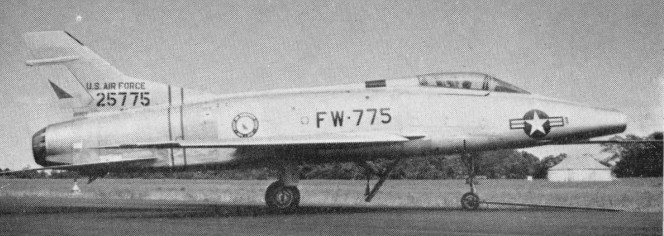


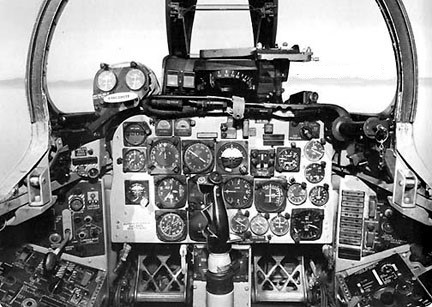
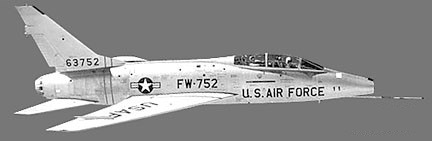


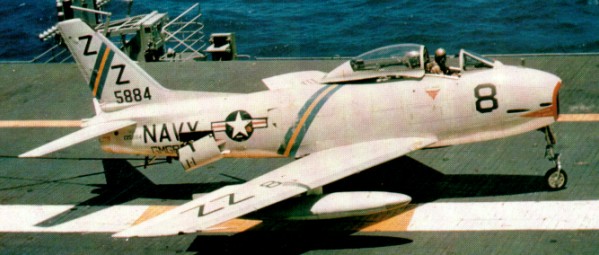
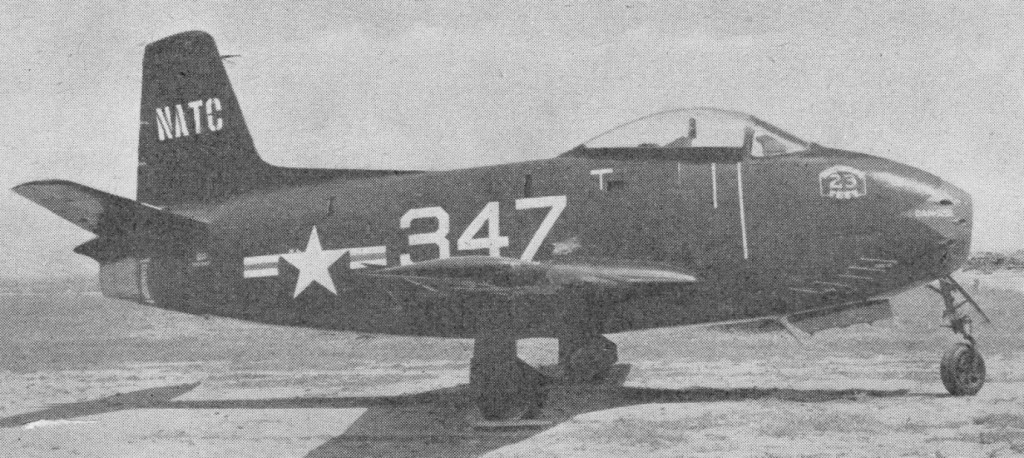
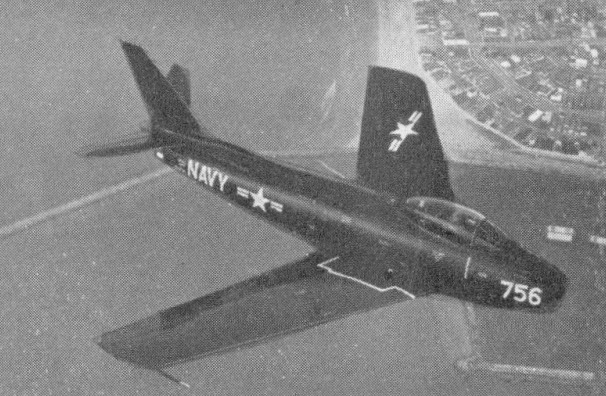


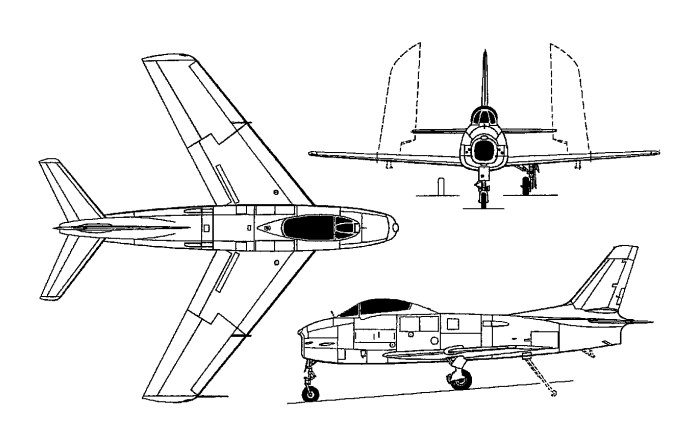


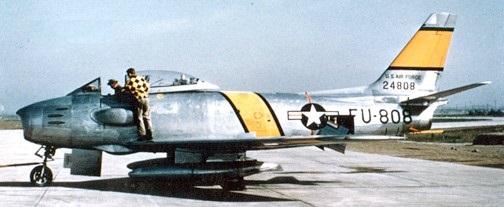

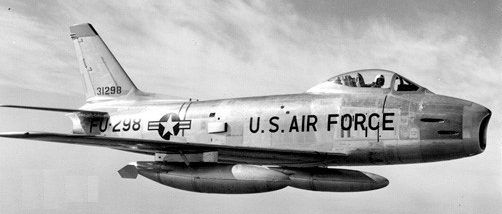


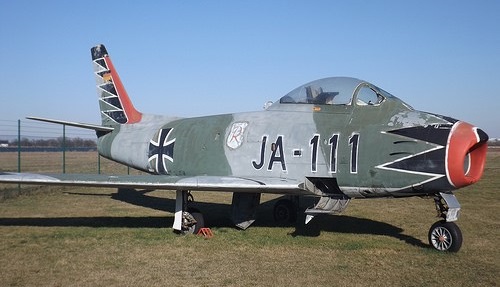
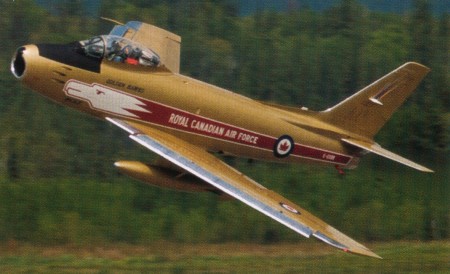

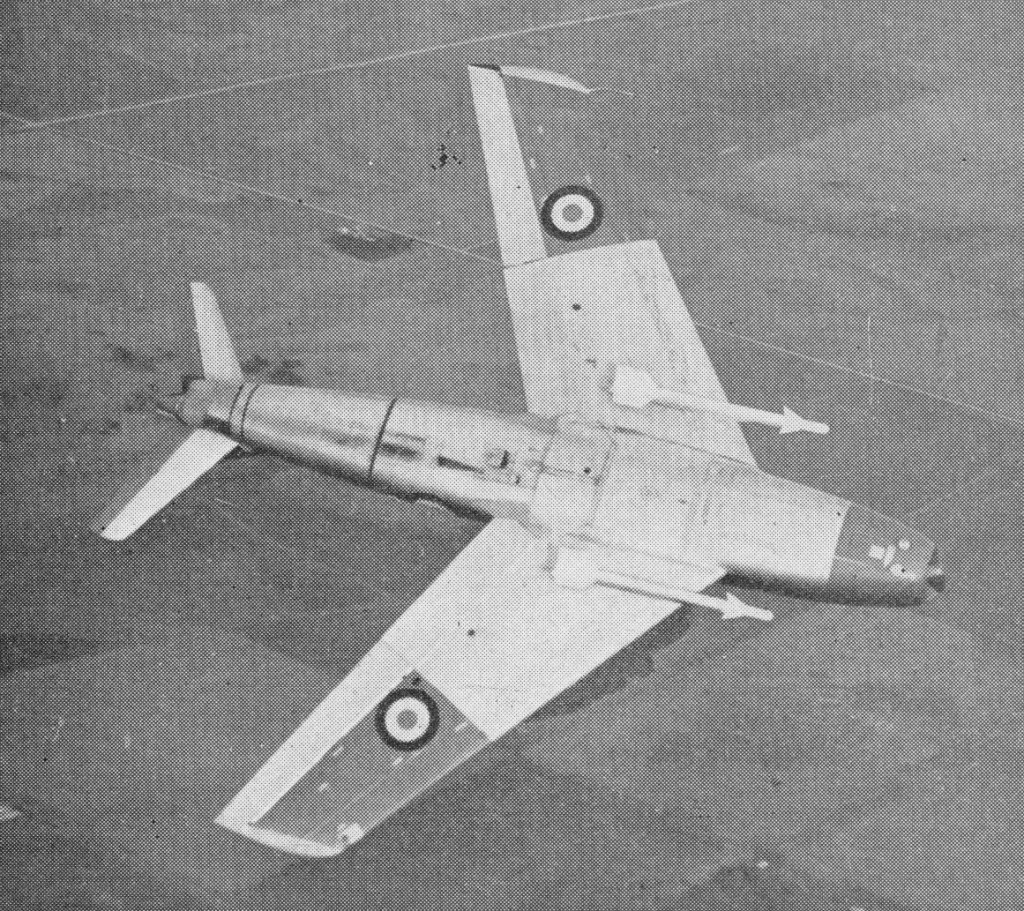

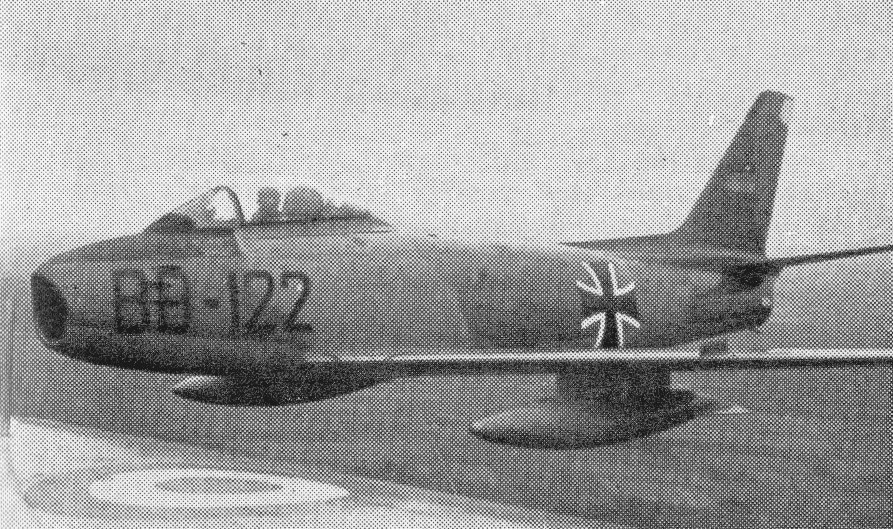


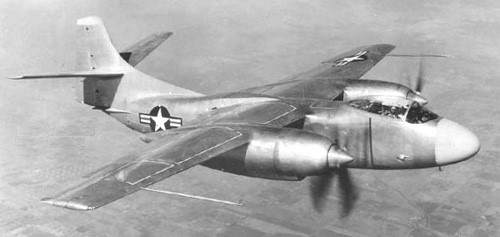
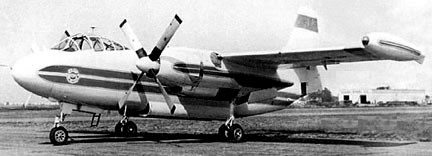


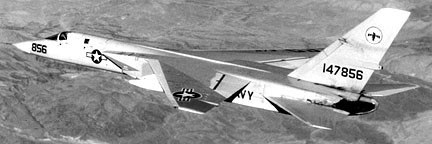
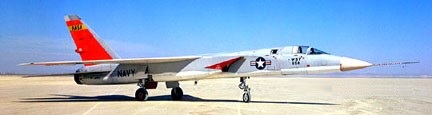

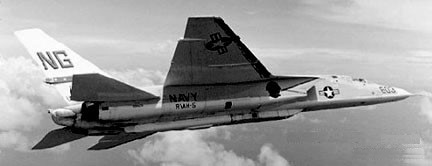

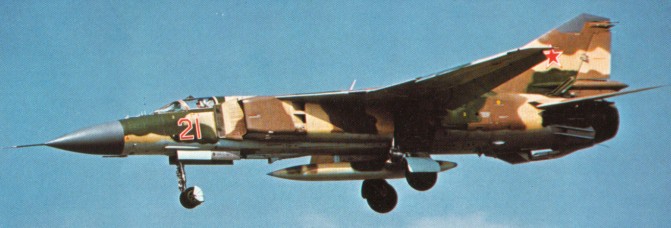

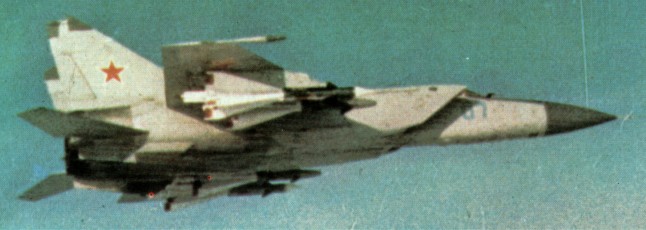


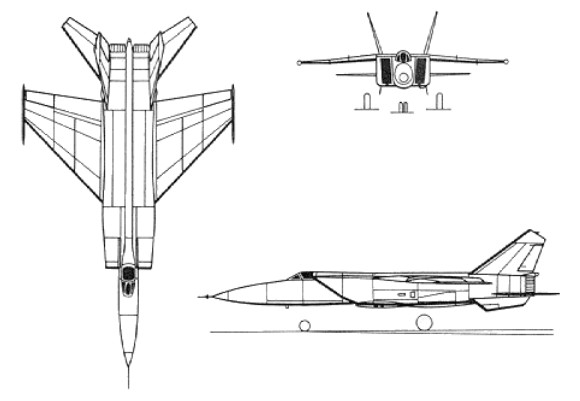


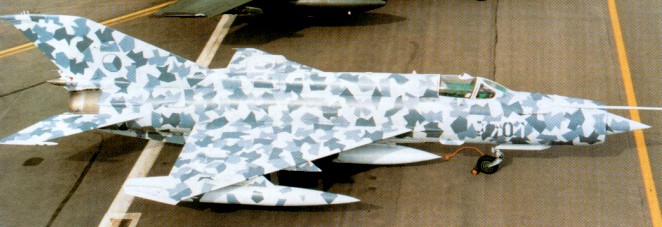
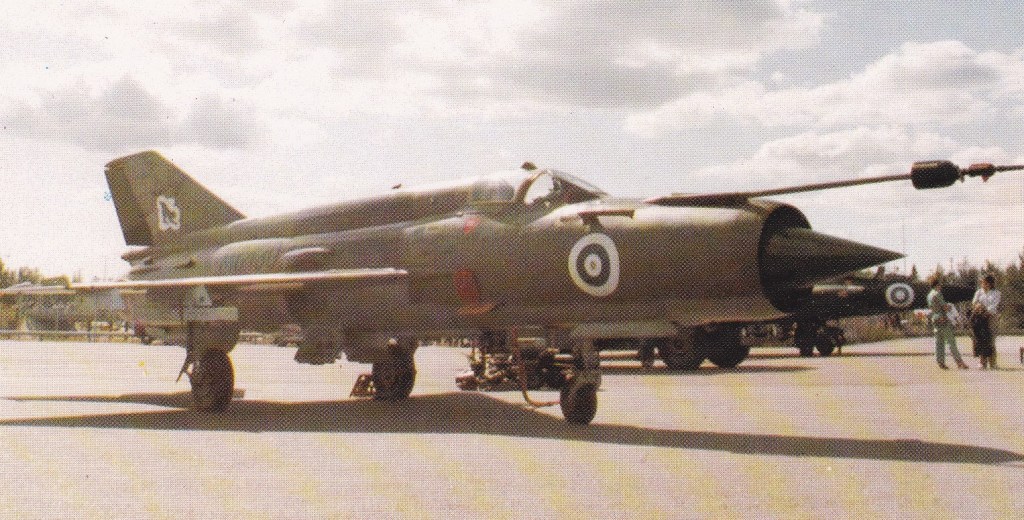
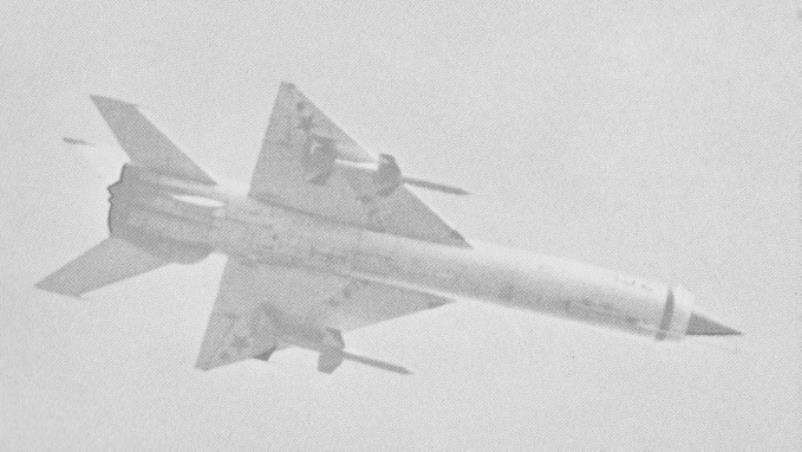

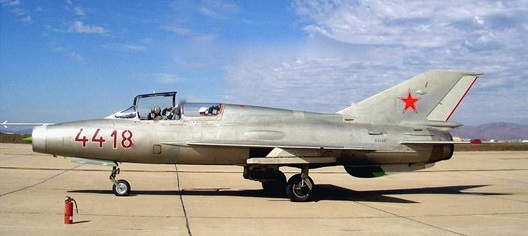
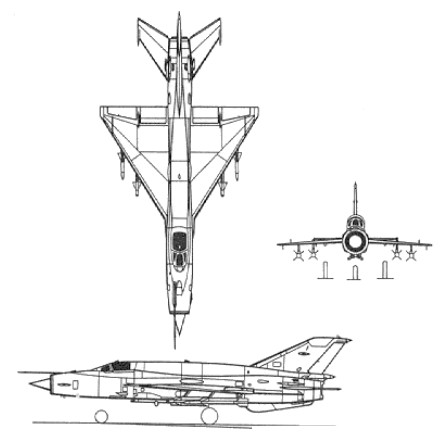

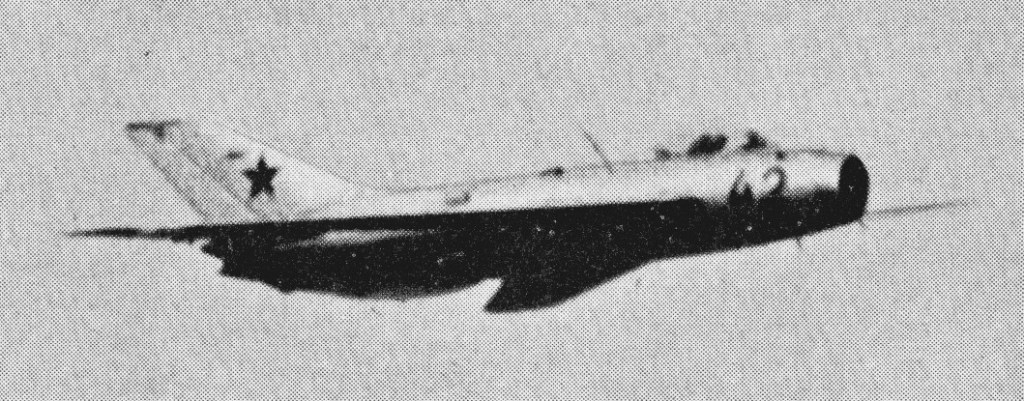
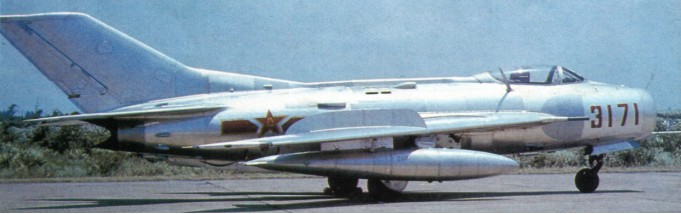

 All Aero