The Superrnarme Attacker prototype had been built to a 1944 specification. The single-seat jet fighter flew for the first time on July 27, 1946. The machine was flown by Supermarine’s test pilot, Mr Jeffrey Quill, from the A&AEE at Boscombe Down, where, as there is not at the firm’s aerodrome at High Post, there is a runway.
The prototype, T5409, was seen at the SBAC show at Radlett the following month.
Named Attacker, the aircraft uses a Rolls-Royce RB.41 (later Nene) centrifugal flow turbojet, a new fuselage and tail mounted on the laminar flow wings of the Spiteful with radiators removed.
The undercarriage was also taken from the Spiteful. The wing retained the Spiteful’s four cannon armament but the radiators for its Griffon piston engine were removed and replaced by fuel tanks.
The result was the Attacker F.Mk.1, a mediocre fighter whose main advantages were cheapness and easy handling at low level. This was put to use by adding bombs in the Attacker FB.Mk.1 version, and the Attacker FB.Mk.2 had powered ailerons and a stronger met¬al-framed canopy. The last of 145 of the three marks was delivered in 1953, also exported to Pakistan, and served until 1957.
Three prototypes were ordered in August 1944 but development was slower than anticipated due to delays in laminar flow wing research, with low speed handling problems proving difficult to solve. As the RAF had begun to lose interest in the aircraft, it was decided that the last two prototypes would be navalised.
The first prototype flew on 27 July 1946 and the second on 17 June 1947 (the name “Attacker” applied on the same day), this differing in having longer stroke undercarriage, smaller fin, enlarged tailplane, increased fuel capacity, arrester hook and an ejection seat. Folding wings would not appear until the production versions were built. By then, the RAF was no longer a prospective customer and the aircraft was ordered only tor the Royal Navy Fleet Air Arm.
The first production Attacker F.1 flew on 5 May 1950 and operational service began in August 1951 with No 800 Squadron FAA. Subsequent versions were the FB.1 fighter-bomber with provision for underwing ordnance and the FB.2 which differed mainly in its Nene Mk.102 engine with a throttle acceleration control unit to prevent flameout if the throttle was opened quickly, such as when performing a go-around. The Attacker served with only two FAA front line squadrons and had been relegated to Volunteer Reserve units by 1954 and retired two years later.
The only export was to the Pakistan Air Force, which received 36 ‘denavalised’ aircraft between 1951 and 1953 for operation from land. These lacked the folding wings and arrester gear of the Royal Navy’s aircraft but were otherwise similar to the Attacker F.1.
Attacker F.Mk.1 Engine: 1 x Rolls-Royce “Nene 3”, 22.24kN Max take-off weight: 5339 kg / 11771 lb Empty weight: 3826 kg / 8435 lb Wingspan: 11.25 m / 37 ft 11 in Length: 11.43 m / 38 ft 6 in Height: 3.02 m / 10 ft 11 in Max. speed: 950 km/h / 590 mph Ceiling: 13700 m / 44950 ft Range: 950 km / 590 miles Armament: 4 x 20mm cannon Crew: 1
Attacker FB.Mk 2 Engine: one 2313-kg (5, 100-lb) thrust Rolls-Royce Nene Mk 102 turbojet Maximum speed 950 km/h (590 mph) at sea level Initial climb (light weight 5216 kg/1,500 lb) 1935 m (6,350 ft) per minute Service ceiling (maximum weight) 11890 m (39,000 ft) Range (with 1 137-litre/250-Imp gal belly tank) 1700 km (1,060 miles) Empty weight 4495 kg (9,910 lb) Maximum take-off 7938 kg (17,500 lb) Span 11.26 m (36 ft 11 in) Length 11.43 m (37 ft 6 in) Height 3.03 m (9 ft 11 in) Wing area 21 sq.m (226 sq ft) Armament: four 20-mm Hispano Mk 5 cannon Bombload: two 454-kg (1,000-lb) bombs or eight rockets
Known originally as the Supermarine N.113, the Scimitar F.1 was a large single-seat, twin-engined naval carrier-borne interceptor fighter and strike aircraft for the Royal Navy. The Royal Navy’s first single seat fighter capable of supersonic flight.
The Scimitar has mid-set sweptback wings, with slight anhedral, and dog-tooth leading edges. Blown trailing edge flaps are fitted. There are swept back tail surfaces with 10 degrees of anhedral on the tailplane. Conventional ailerons, rudder and one-piece all-moving tailplane are fitted. Engine air intakes are on each side of the fuselage by the cockpit. A tricycle undercarriage has single wheels on each unit, the mains retracting into the fuselage and the nosewheel retracts rearward. Internal tanks can be supplemented by four underwing tanks of up to 800 Imp.Gal total capacity. A flight refuelling probe can be fitted on the starboard side of the nose. The original armament was four 30mm Aden guns.
1957
The prototype flew for the first time on 19 January 1956 and deck-landing trials were successfully completed on HMS Ark Royal in July 1957.
Scimitar F.1
The first of 76 production aircraft flew on 11 January 1957 and the first operational squadron (No 803) was formed in June 1958 and embarked on HMS Victorious in the following September.
Scimitar F.Mk 1 Engine: 2 x Rolls-Royce Avon 202 turbojet, 50.04kN / 11,250 lb Max take-off weight: 15513 kg / 34200 lb Empty weight: 10869 kg / 23962 lb Wingspan: 11.33 m / 37 ft 2 in Length: 16.87 m / 55 ft 4 in Height: 5.28 m / 17 ft 4 in Wheel track: 14 ft 1 in Wing area: 45.06 sq.m / 485.02 sq ft Max. speed: 1143 km/h / 710 mph Cruise speed: 14020 km/h / 8712 mph Ceiling: 14020 m / 46000 ft Range: 2288 km / 1422 miles Armament: 4 x 30mm cannons, 4 x 454kg bombs or missiles Crew: 1
Originally known to NATO as the Ram-J (tenth new type seen at Ramenskoye), it was identified subsequently as the Sukhoi Su-25. The Su-25 ‘Grach’ (Rook), NATO callsigned ‘Frogfoot’, is a dedicated strike attack aircraft designed for the Close Air Support and Anti-Tank roles from Tbilisi Aerospace Manufacturing (TAM). The Su-25 is designed to withstand heavy enemy fire relying on the heavily armoured airframe and cockpit, seperated engine bays and foamed internal fuel tanks. The design sacrifised speed for low-level maneuvrability, low-speed handling and weapons accuracy. A special design feature are the wingtips which split at the rear to form airbrakes, this to furthur improve low-speed handling. The nose houses a laser rangefinder which also acts as target designator. Above the tailcone at the back of the aircraft is a Sirena-3 radar warning system located.
The aircraft may be operated from high mountain runaways (at 3000 m above sea level). The rear cockpit is equipped with a periscope to improve the vision of the front during takeoff, landing and flight. The rear cockpit of an instructor is additionally equipped with a failure simulator of the aviation instruments and systems in the front cockpit and flight controls with the priority action.
The Su-25 carries stores on ten underwing pylons. The inner pair are plumbed for external tanks, and the outer pair are for Atoll or Aphid air-to-air missiles. Armament includes an internal 30mm cannon, and equipment fitted includes a headup display and a laser range-finder. The Su-25 also features unusual wing-tip split-flap speedbrakes and a split rudder.
By 1982, a trials squadron was operating in Afghanistan against tribesmen opposing the Soviet occupation. This opportunity has been taken to develop operational techniques, including co-ordinated low-level attacks by Mil Mi-24 Hind helicopter gunships and Su-25s in support of ground troops.
Deployment of the single-seat close-support Su-25K began in 1978, and it saw considerable operational service during the former Soviet Union’s involvement in Afghanistan (the first machines to be deployed being pre-production aircraft, designated T-8) and the ruggedness of the design was revealed in dramatic fashion on numerous occasions. One particular aircraft, flown by Colonel Alexander V. Rutskoi, was actually heavily damaged on two occasions, once by anti-aircraft fire, then by Sidewinder air-to-air missiles launched by Pakistani Air Force F-16s. On each occasion the pilot managed to return to his base. The aircraft was repaired, repainted and returned to service. Rutskoi was less lucky – while flying a second Su-25 on a combat mission, his aircraft was hit by anti-aircraft fire and a Blowpipe shoulder-launched missile, which exploded in the starboard engine. The aircraft still flew, but another burst of AA brought it down. Rutskoi ejected and spent some time as a prisoner of the Pakistani authorities before being repatriated. However, operations in Afghanistan also revealed a number of serious shortcomings. For example, the close positioning of the Su-25’s engines meant that if one took a hit and caught fire, the other was likely to catch fire, too. When the ‘Frogfoot’ first encountered the Stinger shoulder-launched missile, four aircraft were shot down in two days, with the loss of two pilots; it was found that missile fragments shredded the rear fuselage fuel tank, which was situated directly above the jet exhaust.
First production variant was the Su-25 (NATO Frogfoot-A), the Su-25K being the first export variant of the type. While Warsaw Pact Su-25Ks resembled early Su-25 models both externally and internally, the Su-25Ks exported to Iraq and North Korea had downgraded avionics and fire control systems. The Su-25BM (Su-25BMK for export) is a modified variant of the Su-25 (Frogfoot-A) capable of towing aerial targets for air-to-air and ground-to-air gunnery training. The internal cannon was deleted.
Su-25K
The Su-25 Frogfoot subsonic ground-attack aircraft entered service with the Czech Air Force in 1984, having become fully operational in the Soviet Union in 1983.
The Su-25UB Frogfoot-B (Su-25UBK for export) is the two-seat trainer variant developed as a combat transition trainer for the Russian Air Force. The Su-25UB/UBK is equipped with the same avionics and systems as the Su-25 Frogfoot-A and is fully combat capable and able to use the same ordnance. Again Su-25UBKs exported to non-Warsaw Pact countries were equipped with downgraded avionics and fire control systems.
SU-25-UB
Development of the Su-25UB as an advanced trainer for the Russian Air Force led to the unarmed Su-25UT two-seat trainer, which is also known as Su-28. The cannon, armor, fire control systems, ECM systems and all other combat equipment was deleted, as well as five of the hardpoints and the chaff/flare dispensers. Although intended to replace the L-29 Delfin and L-39 Albatros trainers it never did. Only one aircraft was flown in August 1985, appearing in the colours of DOSAAF, the Soviet Union’s paramilitary ‘private flying’ organization, which provided students with basic flight training. The aircraft, which actually outperformed the L-39, appeared in many aerobatic displays.
The Su-25UTG is a navilized version of the Su-25UT trainer, with a strengthened undercarriage and arrester gear, which was used to familiarize Navy pilots with carrier procedures. One Su-25UT was converted to Su-25UTG, the major change being the braking parachute being replaced by the arrester hook. No more were built.
As a result of lessons learned during the Afghan conflict an upgraded version known as the Su-25T was produced, with improved defensive systems to counter weapons such as the Stinger. The improvements included the insertion of steel plates several millimetres thick between the engine bays and below the fuel cell. Following this modification no further Su-25s were lost to shoulder-launched missiles. In total, 22 Su-25s and eight pilots were lost in the nine years of the Afghan conflict.
The Su-25TM, also known as Su-39, is improved version of the Frogfoot based on the Su-25UB combat trainer. Avionics and systems were considerably upgraded, making the aircraft capable of conducting missions at night and under all weather conditions. The main role of this variant is the Anti-Tank role. The weapons systems also allow the Su-25TM or Su-39 to be used in the Anti-Ship role and has a limited air-to-air combat capability against helicopters and other low speed aerial targets. Survivability is increased using additional armor, reduced infrared signature, chaff/flare dispensers, IR jammer and more RWR antennas. System upgrades include auto pilot, better nav/attack systems and sensors, Low Light Level Television/Forward Looking Infra Red (LLTV/FLIR) pod, cockpit displays, wide-angle HUD. Production will depend on export orders. The Su-25TK and Su-34 were proposed designations used for the export version of the Su-25TM. The Su-34 designation was later re-used for the Su-27IB Flanker.
The Su-25SM is the designation used for upgraded standard production Su-25 single-seat aircraft, and Su-25UBM the designation for a similar upgrade for the Su-25UB. The upgrade is carried out by the 121 ARZ plant at Kubinka Air Base. In 2001, the first Su-25SM was completed followed by a second aircraft in 2003. The test programme was completed in 2005, and the 121 ARZ started series upgrade of the Russian Air Force Su-25 fleet. The first six aircraft were completed in 2006 and handed over to the Russian Air Force on December 28, 2006. They received new serials; side number 01 thru 06. Six more Su-25SMs are scheduled for delivery in 2007, and eight for 2008. Two attack regiments will convert to the Su-25SM, starting with the 368th Attack Aircraft Regiment at Budyonnovsk.
Main element of the Su-25SM upgrade is the new PrNK-25SM nav/attack system with satnav receiver, colour multi-purpose LCD, and SUO-39 fire control system. The upgrade is claimed to offer two to three times greater accuracy in weapons delivery and up to ten times in navigation accuracy. The upgrade also replaced the obsolete RWR with the L-150 electronic intelligence station and enables the use of R-73 advanced IR guided air-to-air missiles and KAB-500Kr TV-guided bombs.
Su-25SM
Work on the upgrade of the first Su-25UB two-seat combat trainer to Su-25UBM standard in a similar upgrade started in May 2005 according to AFM, but recently it is reported it is planned for 2007. The Su-25KM ‘Skorpion’ is a Su-25K upgrade offered by the collaboration between Elbit Systems and Georgia’s TAM (Tbilisi Aerospace Manufacturing). Improvements include Multi Function Color Displays, new HUD, Elbit Mission Computer, and an optional Helmet Mounted Display. On 27 October 2004, the first Su-25KM Skorpion was delivered to the Turkmenistan Air Force. This makes the Turkmenistan Air Force the first customer for the new variant. Georgia had already overhauled 43 standard Su-25s for Turkmenistan as a part payment for Georgian debts for the supply of gas, which is also believed to be the payment for the Su-25KM delivery.
The Russian Air Force took delivery of its first six upgraded SU-25SM Frogfoots in late December 2006.
Five Iraqi Su-25K and two Su-25UBK Frogfoots fled to Iran during Operation Desert Storm in 1991. Two of these Su-25Ks entered service with the Islamic Revolutionary Guards Corps Air Force (IRGCAF), after having been refurbished with help from Georgian technicians. The IRGCAF also has about 30 Su-25UBK two-seat combat trainers on order from Russia’s Ulan-Ude Aviation Plant.
Images of Ukrainian Su-25 carrying two fuel tanks and four five-tube B-13L rocket pods for firing 13 122mm unguided rockets that appeared on social media on 10 May 2023 confirmed that Ukraine managed to restore at least one of the four Su-25s that North Macedonia donated to Kyiv in 2022 to an airworthy, combat capable condition. The single-seat aircraft (Bort No ‘Blue 51) – complete with full Ukrainian Air Force (UkAF) markings – was spotted wearing the factory construction number ‘09015’, which identifies the airframe as North ex-Maceedonia Air Force Su-25v(formally registered as ‘121’) of 101 Aviation Squadron and previously based at Petrover Air Base (AB), near Skopje. This aircraft, together with three more Frogfoots – single-seat Su-25s ‘122’ and ‘123’, and dual-seat Su-25UB ‘120’ – and related spare parts, tools and weapons were donated to Kyiv, together with a variety of other military equipment of Soviet origin, by Skopje. The freshly restored Su-25 passed a general overhaul and was upgraded to the Su-25M1(K)-standard before it joined the UkrAF’s 299th Tactical Aviation Brigade (BrTA ‘Lt.Gen. Vasyl nikiforov’. That unit was tasked with providing close air support for Ukranian ground forces and the Ukrain Navy.
Su-25K (Frogfoot-A) Engines: 2x Soyuz/Tumanski R-195 turbojet Max Thrust: 9,920 lb. Military Thrust: 9,920 lb. Wing Span: 47.11 ft. / 14.36 M Length: 50.95 ft. / 15.53 M Height: 15.75 ft. / 4.80 M Wing Area: 362.74 Sq ft. / 33.70 Sq M Weight Empty: 20,944 lb. / 9,500 Kg Max. Takeoff Weight: 45,195 lb. / 20,500 Kg Power & Performance Max. Thrust Loading: 0.44 Maximum Wing Loading: 124.59 lb. per Sq. ft.; 608.31 Kg / Sq. M Max Speed at sea level 975 km/h: 526 knots, 604.9 mph, 974.152 km/h Operational Ceiling: 22,950 ft. / 6,995 M Armament: one AO-17A 30 mm twin-barrel gun 250 rounds Bombload 4400 kg (9,700 lb) External hardpoints 10 or 11
Su-25BM/BMK (Frogfoot-A)
Su-25UB/UBK (Frogfoot-B) Engines: 2 x 2 ТРД Р-195, 4500 kg Wingspan: 14,36 m Length: 15,53 m Height: 5,20 m Wing area: 30,10 sq.m Empty weight: 10050 kg Normal TO weight: 15100 kg Maximum TO weight: 18500 kg Normal landing weight: 11825 kg Maximum landing weight: 13200 kg Maximum military load: 4000 kg Internal fuel: 3430 lt External fuel: 4 x ПТБ-800, 820 lt each or 2 x ПТБ-1150, 1160 lt each Practical ceiling: 7000 m Maximum speed SL: 940 km/h Maximum speed at altitude: М=0.82 Range SL: 495 km Range at altitude: 1000 km Range with 4хПТБ-800: 1980 km Takeoff roll normal mass: 500 m Takeoff roll maximum takeoff mass: 1050 m Landing roll normal landing mass: 550 m Landing roll maximum landing mass: 750 Maximum loading: +6,5/-2,0 Armament: ВПУ-17А, double-tube with 30-mm gun ГШ-30, 250 bullets Hardpoints: 10 Crew: 2
Su-25UT (Su-28, Frogfoot-B)
Su-25UTG (Frogfoot-B)
Su-25T/TM (Su-39)
Su-25TK (Su-34)
Su-25SM
Su-25UBM
Su-25 Engines: 2 x R-195, 44.1kN Wingspan: 14.4 m / 47 ft 3 in Length: 15.5 m / 51 ft 10 in Height: 4.8 m / 16 ft 9 in Wing area: 33.7 sq.m / 362.74 sq ft Weight empty: 20947.5 lb / 9500.0 kg Max take-off weight: 17600 kg / 38802 lb Max. payload weight: 19183.5 lb / 8700.0 kg Max. speed: 526 kt / 975 km/h / 606 mph Ceiling: 7000 m / 22950 ft Range w/max.fuel: 1250 km / 777 miles Range w/max.payload: 375 km / 233 miles Landing speed: 116 kt / 215 km/h Initial climb rate: 16732.28 ft/min / 85.0 m/s Armament: 1 x 30mm cannon, 4000kg Hardpoints: 10 Crew: 1
Su-25 ‘Frogfoot’ Engine: 2 x Tumansky R-13 Installed thrust (dry): 83 kN Empty wt: 9500 kg MTOW: 19,200 kg Wingspan: 15.50 m (50 ft 10 in) Length 14.50 m (47 ft 6 in) Wing area: 34 sq.m Fuel internal: 5000 lt. Air refuel: No Armament: one multi-barrel cannon beneath the centre fuselage 10 hardpoints for some 4000 kg (8,818 lb)
In 1965, the Soviet government instructed the Sukhoi design bureau to begin design studies of a new variable-geometry strike aircraft in the same class as the General Dynamics F- 111. One criteria was that the new aircraft must be able to fly at very low level in order to penetrate increasingly effective air defence systems. Conceived as a replacement for the Su-17/20/22 Fitter series fighter-bomber, the Su-24 Fencer was the first Soviet aircraft to incorporate an integrated combat avionics system combining a computer bombsight, weapons control system and anavigation/terrain avoidance system. In order to survive on the modern SAM infested battlefield, bombers would need to be capable of high speed (Mach 1 plus) low level penetrations in all weather conditions, depending on terrain masking, electronic jamming and precision weapons delivery to accomplish their mission. Lastly, in order to meet Soviet multi mission capabilities, the new aircraft would have to be adaptable to tactical reconnaissance and air interceptor missions.
An early test aircraft incorporating a delta wing VTOL (Vertical Take Off and Landing) design with separate lift and cruising engines was abandoned because of poor low level handling characteristics. Successes with the variable geometry wings of the MiG-23 Flogger interceptor and Su-17 Fitter offered another option; variable geometry allowed for acceptable performance at all altitudes and airspeeds. The first successful flight test of the Fencer-A occurred in 1970.
Initial Fencer-A production aircraft were equipped with variable aperture intakes on the engines, which allowed for a high altitude maximum speed above Mach 2, but since the Su-24 wouldn’t be spending much of it’s life at high altitude, and such speeds were not possible at low altitude, the actuators were later dropped to save weight and reduce maintenance requirements. Deliveries of the first production version, the ‘Fencer-A’, began in 1974.
Several variants were produced, culminating in the Su-24M ‘Fencer-D’, which entered service in 1986. This variant has in-flight refuelling equipment, upgraded nav/attack systems, and laser/TV designators. The Su-24MR is a tactical reconnaissance version. The Su-24 is known to NATO by the reporting name ‘Fencer’.
Su-24SR
The Sukhoi Su-24 ‘Fencer’ is a Russian frontline bomber. It is capable of delivering nuclear and conventional weapons in all-weather conditions day and night. The two powerful AL-21F turbojets combined with the variable-geometry wing and a terrain avoidance system or TFR enables the Su-24 to fly low-level at supersonic speeds. The variable-geometry wing has the following settings: 16 degrees (take-off and landing), 35 degrees (cruise), 45 degrees (high speed manouvering), 60 degrees (supersonic flight). Its crew consists of a pilot and a navigator/weapons station officer which are seated side by side in the cockpit cabin (pilot port-side). Apart from the nav/attack system radar and the TFR the nose also contains a second radar scanner for ranging airborne targets.
Early production variants of the Su-24 were limited to a weapon load of 7000 kg with six hardpoints. But design changes during production soon introduced two additional under-wing pylons and another one on the centre-line under the fuselage. Now with a total of nine hardpoints the Su-24 is able to carry up to 8000 kg (17,637 lb). Two R-60 AAMs can be carried for self-defense.
The most important bomber variant of the Su-24 was the Su-24M. Also known as Fencer-D by NATO designation, this upgraded Su-24 is equipped with more advanced systems. It features an advanced nav/attack targeting system which combined with the Kaira-24 laser ranger/designator enables the use of laser-guided and TV-guided weapons. Navigation and radio communication systems were also upgraded. The addition of an in-flight refuelling system greatly improved the aircraft’s range and flexibility.
The Su-24MR is a dedicated tactical reconnaissance version of the Su-24M. All weapon systems were removed to make space for the recce equipment. The Su-24MR is equipped with a complex system of sensors and cameras. It has radar-tracking equipment, infra red and television cameras, panoramic and perspective photo cameras, but also laser and radiation detection systems. The systems can be operated manually or automatically. The Su-24MP is another variant based on the Su-24M upgrade. The Su-24MP is a electronic warfare (EW) platform. The jamming equipment is situated in a container on the centre-line below the fuselage. Just like the Su-24MR it has lost its Air-to-Ground capability, but can be equipped with 2 or 4 R-60 IR-guided missiles for self defense.
Su-24MK is the export variant of the Su-24M which was developed for friendly Arabian nations. There are almost no differences between the Su-24MK and the original Su-24M. Reportedly 20 aircraft were exported to Syria, 15 to Libya, and 24 (some say 25) to Iraq. During 1990 Russia delivered 12 Su-24MK Fencers to the the Islamic Republic of Iran Air Force (IRIAF). The IRIAF has modified these aircraft to use Western weapons, such as the C-802 Noor anti-ship cruise missile. After Operation Desert Storm began, Saddam sent 24 Iraqi Su-24MKs to Iran. These have since been integrated in the IRIAF Su-24 fleet. In 2002 all Iranian Su-24s were modified with inflight refuelling probes to receive fuel from the IRIAF KC-707 tankers.
Su-24M2 is an upgrade of the baseline Su-24M model by Russia’s Gefest company. The Su-24M2 is equipped with a new advanced SVP-24 computer plus the latest software, which improves navigational accuracy and non-guided weapon delivery precision. The 4th Combat and Conversion Training Centre (CCTC) based at Lipetsk has been running the operational evaluation program for the new upgrade since a few years. At least five Russian Air Force aircraft have been upgraded to Su-24M2 standard and reportedly also seven Su-24MK aircraft delivered to Algeria have been upgraded.
The Fencer entered service in 1974. Four versions have been identified, the latest in 1983. Fencer B differs from Fencer A in having a brake parachute bullet fairing at the base of the fin. Fencer C, introduced in 1981, has this feature as well as radar homing and warning receiver antennas on the fin and intakes. Fencer D has detail differences, including an under-fuselage reconnaissance sensor and in-flight refuelling capability.
There are some 835 Su-24 Fencer variable-geometry interdictor/strike aircraft in Soviet service in 1987, and production continued until 1992. The aircraft equipping Soviet strategic, tactical, and naval air forces.
Su-24 (Fencer-A) Engine: 2 x turbojet. Installed thrust (dry / reheat): 150 / 215 kN Span: 17.5 m / 10.5 m Length: 21.3 m Wing area: 42 sq.m Empty wt: 19,000 kg MTOW: 41,000 kg Warload: 11,000 kg Max speed: 1.2 Mach Ceiling: 17,500 m Combat radius: 950 km
Su-24 (Fencer-C) Engine: 2 x turbojet. Installed thrust (dry / reheat): 150 / 215 kN Span: 17.5 m / 10.5 m Length: 21.3 m Wing area: 42 sq.m Empty wt: 19,000 kg MTOW: 41,000 kg Warload: 11,000 kg Max speed: 1.2 Mach Ceiling: 17,500 m Combat radius: 950 km
Su-24M (Fencer-D) Powerplant: two 109.8 kN (24,690 lb st) Saturn/Lyulka AL-21F-3A afterburning turbofans Length 24.59m (80 ft 8.25 in) Height 6.19m (20 ft 3.75 in) Wing span fully swept 10.36m (34 ft 0 in) Wingspan fully spread 17.64m (57 ft 10.5 in) Wing area: 51.0-55.2 sq.m / 548.96594.17 sq ft Take-off (‘clean’) 19.000 kg (41,885 lb) Max Take-Off Weight 39,700 kg (87,520 lb) Max level speed at 11,000m (36,090 ft) Mach 2.2 / 2.320 km/h / 1,441 mph Ceiling 17,500m (57,415 ft) Range w/max.fuel: 2500 km / 1553 miles Range w/max.payload: 560 km / 348 miles Armament: one 23 mm GSh-6-23 six barrel gun or one 30 mm GSh-6N-30 six barrel cannon in later versions Bombload: 8000 kg (17,637 lb) Hardpoints: 8 Crew: 2
Derived from the swept-wing Su-7 Fitter A (NATO code name), essentially by fitting variable-sweep outboard wing panels, the Su-17 was first revealed in 1967, and labelled ‘Fitter-B’ by NATO but dismissed as a research version.
Under the leadership of Nikolai Zyrin, the Sukhoi OKB adapted an Su-7BMK as a low risk, low cost variable wing geometry demonstrator. Mid-span pivot points were introduced so that the outer wing panels could be sweptback from 28 degrees to 45 degrees and 62 degrees positions. As the Su-7IG (Izmenyaemaya Geometriya, or variable geometry), or S-22I, the demonstrator flew on 8 August 1966, proving the efficacy of the variable-geometry arrangement and providing the basis for a production aircraft, the Su-17. This entered the VVS-FA inventory in 1970.
The Su-17 was powered by the Lyulka AL-21F-3 turbojet with a military power of 7800kg and 11200kg with afterburning. Maximum external stores load was 4000kg distributed between nine external stations, and built-in armament comprised two 30mm cannon.
Not until the mid-1970s did it dawn on the West that the modification, together with a more powerful but fuel efficient engine and new avionics, had resulted in a vastly improved aircraft with doubled weapon load, 30 per cent greater range and substantially better short-held take-off characteristics. So successful has been the aircraft that numerous versions are in service with Frontal Aviation, the Soviet naval air arm, Warsaw Pact and left-leaning countries abroad.
An upgraded version, the Su-17M (S-32M), entered production in 1974, this having a drooped and lengthened – by 38cm –fuselage nose with ventral Doppler navaid pod. This, like the preceding Su-17, was exported as the Su-20 (S-32MK), recipients including Algeria, Egypt, Iraq, North Korea, Vietnam and Poland.
By 1972 the initial Fitter B version was in limited service. Sukhoi Su-17 variants based in eastern Europe and the USSR have been progressively improved from the basic Fitter-C.
Whereas the Fitter B had been a straightforward adaptation of the Fitter A airframe, the Fitter C took the process of incremental design development a stage further. The wing remained basically similar to that of the v g prototype but was now mated with a derivative engine of the original AL 7F series turbojets. This, the similarly dimensioned AL 21F, offered a respectable increase in power and a modest improvement in SFC. A nominal increase in internal fuel capacity was acquired by adopting the deeper fuel housing dorsal spine that had been introduced by the two seat Su 7U as a means of compensating for some of the ill afforded loss in tankage that had inevitably accompanied the introduction of a second seat in a dimensionally barely lengthened (by 12 in/30cm) fuselage.
Su-17
The result was a tactical fighter capable of lifting from much shorter airstrips almost double the ordnance load and carrying it some 25 30 per cent further. A multi role warplane toting respectable payloads over reasonable radii. This was more than could be claimed for the preceding fixed geometry Fitter¬ A, the good low level gust resistance and manoeuvrability, and highly regarded handling qualities of which the Fitter C reputedly retained. Within little more than two years of its FA debut, Fitter C was being exported to WarPac countries and Middle Eastern recipients of Soviet military aid.
The export version of Fitter C was referred to by its recipients as the Su 20, and there is some evidence to suggest that this designation is also used by the V VS. Su 20s were in service with the air forces of Algeria, Czechoslovakia, Egypt, Iraq, Libya, Syria and Poland.
Su-20
Fitter C was the first series production model, with the Lyulka AJ-21F engine. The Fitter C was supplied to Warsaw Pact and other allies as the Su-20. Replacing the Fitter C was the ‘Fitter D’, appearing in 1976, with its undernose terrain avoidance radar and a marked-target seeker in the inlet centre-body. The laser ranger was accommo¬dated within the lower half of the intake centrebody and the fuselage nose was lengthened 1.25 ft (38 cm) to permit a flat, elongated lozenge shaped avionics housing to be mounted beneath the nose, ahead of the nosewheel bay, the aft end of this housing apparently accommodating doppler. No attempt would seem to have been made on Fitter D to compensate for the inevitable destabilising effect resulting from this longer and deeper forebody.
6138 Sukhoi Su-20 R 74828
A design change introduced with Fitter F and to be retained by succeeding variants of the Sukhoi ground attack fighter was an increase in the diameter of the rear fuselage, this increase being vertically asymmetric. A conversion trainer, the ‘Fitter-E’, parallels the Fitter-G except for a slightly drooped forward fuselage and lack of a port wing root gun, whilst the ‘FitterG’ operational trainer has a taller, straight-topped fin and a marked-target seeker. Newest of the single-seat variants is the ‘Fitter-H’ which has the revised fin and a deep dorsal fairing behind the canopy, presumably for extra fuel tanks.
A further export derivative using the basic Su-17M airframe, but re-engined with a Tumansky R-29BS-300 augmented turbojet with a max thrust of 11500kg, received the designation Su-22 and was supplied to Angola, Libya and Peru. Featuring a deeper forward fuselage and enlarged spine, and a redesigned tail to restore yawing stability, yet a further single-seat version, the Su-17M-1, appeared in mid-1979. The Su-17M-2, which appeared almost simultaneously, differed in equipment fit, with the export version, the Su-22M-2, supplied to both Libya and Peru, having the Tumansky engine. The definitive single-seat production versions were the Su-17M-3 and M-4, the former supplied to Hungary as the Su-22M-3 and the latter to Afghanistan, Czechoslovakia, East Germany and Poland as the Su-22M-4. These AL-21F-powered models embodied much improved avionics and introduced extra stations for R-60 or R-73 close range AAMs.
Su-22M-4
Export versions of the Su-17 ‘Fitter-C have a reduced avionics fit and are designated Su-20, but when the Su-22 ‘Fitter-F’ appeared as a ‘Fitter-D’ counterpart, its bulged rear fuselage revealed a change of engine to the 11500-kg (25,353-lb) thrust Turnansky R-29B afterburning turbojet for even better performance. A ‘Fitter H’ counterpart, the Su-22 ‘Fitter-J’, is similarly powered and identified by a more angular dorsal fin. Su-22s are also employed as interceptors with AA-2 ‘Atoll’ AAMs. A Tumansky-powered two-seater has been noted in Soviet service, the Fitter E is a two-seat Su-17 with a drooped nose, a feature retained by the Fitter G trainer, which also introduced a deeper fuselage spine. Fitter H, a single-seater distinguished by its dorsal fairing and drooped nose, can carry two AS-7 Kerry radio-command air-to-surface missiles. The twin wing root mounted 30 mm NR 30 cannon are retained by Fitter H, which, like preceding variable geometry Fitters, has four fuselage and four wing stores stations. Two of the fuselage stations – at least, on export examples (eg, Libya) – are “wired” for Atoll IR homing AAMs, providing some defence capability. The inboard wing and the fuselage stores stations can each lift “iron” bombs of up to 1,102 lb (500 kg), and the former and two of the latter may be fitted with adaptor shoes for radio command guidance AS 7 Kerry ASMs, or the various anti radiation missiles, such as AS 9.
Peru purchased its first Su-22s in 1976, comprising 32 single seat Su-22s and 4 two seat Su-22Us.
The latest version of the Su-17 ground-attack aircraft appeared in 1984. The Fitter K is distinguished by an intake extending forward of the fin root.
With more than 3,000 built, including two-seat training variants, production of the Su-17 terminated in 1984.
Poland received a total of 90 single-seat Su-22M4s and 20 two-seat Su-22UM3Ks, which were deployed within four tactical bomber regiments based at Piła, Powidz, Mirosławiec, and Swidwin. The first example arrived in Poland in August 1984.
Su-22
After Poland joined NATO in 1999, its Su-22s underwent limited upgrades, the air force deciding to continue flying the Soviet-type, as well as the MiG-29 Fulcrum fighter. Among others, the Fitters received NATO-standard avionics and more modern VHF/UHF communication systems. Also, service life was extended by 10 years on 18 of the aircraft, with work performed in-country, at Bydgoszcz, from 2014. In the process of modernization, the jets traded their former green and brown camouflage for a low-visibility two-tone gray scheme.
While the Su-22’s original role was as a low-level strike specialist, with a secondary reconnaissance mission, toward the end of its Polish service, it was also used for adversary work.
The retirement of the last Polish Su-22s was finally enabled by the arrival of the Korea Aerospace Industries FA-50 light combat aircraft, acquired as part of a multi-million-dollar South Korean arms package. The initial 12 FA-50GFs (representing the initial Block 10 configuration) were delivered to Poland between July and December 2023. Another 36 of the more advanced FA-50PL (Block 20) aircraft were also on order.
In terms of crewed combat aircraft, the Polish Air Force donated 14 of its MiG-29s to Ukraine, leaving 14 more based at Malbork, where they are expected to serve until 2027.
Su-17 Fitter C Engine: 1 x Lyuika AL-21F-3, 11,200 kg / 24,691 lb thrust Installed thrust (dry / reheat): 76.5 / 110 kN Span: 14.0 m / 45 ft 11.25 in spread Span: 10.60 m / 34 ft 9.5 in swept Length: 19.2 m / 63 ft 0 in Height: 5.35 m / 12 ft 6.5 in Wing area: 40.10 sq.m / 431.65 sq.ft spread Wing area: 37.20 sq.m / 400.4 sq.ft swept Empty wt: 10,900 kg / 24,030 lb MTOW: 17,700 kg / 39,020 lb Max speed: 2305 kph / 1432 mph Initial ROC: 13,800 m / min Ceiling: 18,000 m / 59,055 ft T/O run: 1000 m Ldg run: 600 m Range: 1255 km / 780 mi Combat radius: 700 km Fuel internal: 4000 lt Air refuel: no Armament: 2 x 30 mm NR-30 cannon Hard points: 8 Bombload: 4000 kg / 8818 lb Seats: 1
Su 17M Fitter D
Su-17M-4 Fitter K Max take-off weight: 19500 kg / 42990 lb Wingspan: 10.04-13.66 m / 33 ft 11 in-45 ft 10 in Length: 19.10 m / 63 ft 8 in Height: 4.86 m / 16 ft 11 in Max. speed: 2220 km/h / 1379 mph Range: 2300 km / 1429 miles Crew: 1
Su-17 ‘Fitter-G’ Type: single-seat variable-geometry ground-attack fighter Armament: two 30-mm NR-30 cannon (with 70 rpg) in wing roots Hardpoints: four underwing and four underfuselage weapon pylons for up to 4000 kg (8,818 lb) Powerplant: one 11200-kg (24,691-lb) thrust Lyulka AL-21F-3 afterburning turbojet Maximum speed 2300 km/h (1,429 mph) or Mach 2.17 at altitude Maximum speed 1285 km/h (798 mph) or Mach 1.05 at sea level Initial climb rate 13,800 m (45,275 ft per minute) Service ceiling 18000 m (59,055 ft) Combat radius with 2000 kg (4,409 lb) of stores 630 km (391 miles) on a hi-lo-hi mission Combat radius with 2000 kg (4,409 lb) of stores 360 km (224 miles) on a lo-lo-lo mission Wingspan, extended (28 deg sweep) 14. 00 m (45 ft 11 in), fullyswept (62 deg) 10. 60 m (34 ft 9.5 in) Length 18.75 m (61 ft 6.25 in) Height 4.75 m (15 ft 7 in) Wing area, extended 40.1sq.m (432 sq ft)
In second quarter of 1960 Sukhoi proposed the Su-15-40 interception system, consisting of the Su-15 aircraft, Vikhr-P radar (reduced version of the Smerch radar of the Tu-128) and K-40 (AA-6 ‘Acrid’) missiles. Compared to the Su-11-8M complex, the new system offered better range, maximum launch distance and could launch from any direction including head-on. Construction of five Su-15 (designated T-58) prototypes began in mid-1960, equipped with a single AL-7F2 engine and rectangular side air intakes, based on experience with the P-1 and T-49.
On 5 February 1962, the resolution approving the Su-15 construction passed, but required it to be a modernised Su-11. The ‘first stage’ Su-15 aircraft were to be equipped with modernised armament system from the Su-11, consisting of the Oryol-D58 radar and K-8M1 missiles. ‘Second stage’ aircraft were to be equipped with the new Smerch-AS (Taifun) radar and K-8M2 (R-98) missiles.
Development of a single-seat interceptor fighter providing better supersonic performance while (initially) preserving a fundamentally similar wing was begun as the T-5 in the late ‘fifties. This was a larger aircraft than the preceding T-43 and was powered by paired Tumansky R-11 turbojets with lateral air intakes. Retaining the tailed-delta configuration and 57 degree sweepback at wing quarter chord, the interceptor was built as the T-58 prototype and flown on 30 May 1962
Sukhoi failed to retain its place in the work schedule of the Novosibirsk factory. Yakovlev’s Yak-28P ‘Firebar’ replaced the Su-11 on the production line at Novosibirsk. 443 aircraft were built between 1962 and 1967. The Su-15 needed to be largely superior to the Yak-28P in order to have it enter series production. The Su-15 proved much better with the exception of its range. The Yak-28’s configuration of engines in underwing nacelles limited its performance and flight handling. In 1964 Yakovlev introduced the Yak-28-64 with a configuration similar to the Su-15, but to no avail.
State acceptance tests of the T-58-8M1 interception complex started in August 1963, later the K-8M1 missiles were followed by the K-8M2. On 3 April 1965 the T-58-8M2 was officially commissioned and designated Su-15-98 consisting of the Su-15, RP-15 (Oryol-D58) radar and R-98 (K-8M2) missiles. In 1966 series production at Novosibirsk began, the first pre-series Su-15 made its first flight from Novosibirsk on 6 March 1966. The superiority of the Su-15 over the Yak-28P was obvious and the production line was cleared.
As the Su-15, 10 examples participated in the July 1967 air display at Domodedovo. Flagon B was an experimental derivative exhibited at Domodedovo in 1967, but not seen since. Three lift jets mounted in the centre fuselage conferred STOL (short take¬off and landing) performance, and the outer 40% of each wing was of reduced sweep, thereby increasing area without extending the tips.
The initial version, effectively confined to a large pre-series for service evaluation, possessed a wing similar to that of the Su-9 and Su-11, with some 30cm removed adjacent to the fuselage each side. The Oryol-D Al radar and two R-8 AAMs were fitted, and power was provided by two R-11F2S-300 turbojets each rated at 3900kg and 6200kg with max afterburning. The virtually pure delta wing gave place on the next version, the Su-15T (the suffix signifying introduction of Taifun radar), to a cranked leading edge with outboard sweepback reduced to 47 degrees, overall span remaining unchanged. Su-15T production was limited to 10 aircraft delivered during 1969.
The Su-15 Flagon A has a classic mid-wing monoplane layout with a highly swept 57 degree delta-shaped wing and tailplane. This layout is very similar to that of its predeccessors Su-9 and Su-11 as well as the contemporary MiG-21. The Su-15 different from these designs by having two engines and lateral air intakes. This arrangement of the air intakes was needed to enable the use of a larger antenna for the radar, needed to increase the detection range of the radar. The Lyulka AL 21F 3 turbojets, each producing 7800 kg (17200 lb) of dry thrust and 11200 kg (24700 lb) with afterburning were arranged side-by-side, being fed from ram¬type intakes with splitter plates mounted on the fuselage sides. Variable area nozzles are used.. The tricycle landing gear consisted of a front leg with a single wheel retractable into the fuselage and main carriage consisting of single wheels, which retract inwards into the wing compartments.
Late production series Su-15 received a number of aerodynamic changes to improve handling characteristics during take-off and landing. The new wing features a greater surface area and the other sweep angle was decreased to 45 degrees, resulting in the so called ‘cranked-delta’. The new wing reduced the landing and take-off speeds as well as the induced drag in flight. NATO recognised the rewinged aircraft as ‘Flagon-D’.
The aircraft also received a UPS boundary layer control system and R-11F2SU-300 engines adapted to the UPS. The UPS system blowns air from the engine compressor to the surface flaps, enabling higher deflection angles of the flaps, 45 for landing and 20 degrees for take-off. However the engine compressors delivered insufficient power, and deflection remained limited to 25 and 15 degrees respectively.
Apart from new weapons and avionics, the ‘second stage’ Su-15T/TM received also the new R-13-300 turbojects. The R-13-300 was more poweful and slightly improved acceleration and range. It also enabled full use of the UPS system. The air intakes were slightly bigger to accodomate the greater airflow required for the R-13s. The aircraft also received a longer front undercarriage leg to improve wing incidence at take-off and reduce the danger of foreign objects damage (FOD).
Late production Su-15TM received ogive shaped radome (bullet shaped) replacing the more aerodynamic cone design. The cone shape caused the more powerful Taifun-M radar to produce inner reflections of the radar pulse in the nose.
The basic Su-15 was fitted with the RP-15M Oryol-D58M radar (NATO ‘Skip Spin’), a modernised variant of the Oryol-D58 radar with better resistance to jamming. The Oryol-D58 was developed from the Oryol radar of the Su-11 and was fitted with a larger antenna. ‘Second Stage’ Su-15T aircraft were equipped with the more powerful Taifun radar, based on the Smerch-A radar of the MiG-25P. It was only fitted to 10 Su-15T aircraft, all subsequent Su-15 production aircraft (Su-15TM) features the improved Taifun-M (NATO ‘Twin Scan’). The Taifun-M was the last of the first generation of Russian fighter radars.
The Su-15 was equipped with the Lazur-S (ARL-S) command datalink, the onboard component of the Ground Controlled Intercept (GCI) system. The ground based operator could transmit commands via UHF radio or via the encoded datalink. In case of the datalink, the Lazur-S would receive, decode and transmit the commands to the pilot in the form of course, speed and altitude indicators as well as single message as ‘afterburner on’, ‘radar on’ etcetera. After having been guided to the target by GCI commands, the target could then be engaged using the Su-15’s onboard radar.
The Su-15TM was equipped with the Lazur-SM and SAU-58 automatic control system enabling fully automatic mode in which the modernised Vozdukh-1M GCI system directly transmitted commands to the aircraft’s control, without pilot intervention. The automatic system could guide the interceptor to the target, engage the radar, launch the missiles at the target, exit from the attack, return to base and enter landing approach to an altitude of 50-60 meters.
Late production Su-15TM were fitted with the modified SAU-58-2, which was able to read low-altitude radio altimeter data. The Vokdukh-1M GCI system could now guide the Su-15TM at low altitude (200 meters) and intercept low-flying targets, which could not be tracked by the Taifun radar because it could not distinguish targets against the ground background. But pilots refused these low level flights with the Su-15TM. By now the MiG-23 with Doppler radar had become available and developement ceased.
Other avionics included IFF, Sirena-2 (Sirena-3 on Su-15TM) Radar Warning Receiver (RWR), and navigation equipment.
The cockpit is fitted with the KS-4 ejection seat designed by Sukhoi. In the top center of the instrument panel a single hooded display is located for the radar. A simple K-10T sight is installed to aim the R-69 missiles and cannons.
The Su-15UT and Su-15UM are two trainer variants, with the cockpits placed in tandem, although with seperate canopies. For communication between the cockpits an intercom is used. The instructor cockpit also features a retractable periscope providing forward vision for the instructor during landing.
The Su-15 carried two medium range air-to-air missiles of the K-8 (AA-3 ‘Anab’) family on underwing PU-1-8 (later PU-2-8) launchers. The K-8 range of missiles were developed as part of the interception system aimed at destroying enemy bombers. Although the Su-15 as part of the Su-15-98 was originally intended to carry the R-98 (K-8M2) missile, initially the R-8M1 (K-8M1) was also used. With the Taifun-M radar, the Su-15TM was equipped with the improved R-98M (K-8M3). All of these missiles were available with IR or semi-active radar seeker, normally the Su-15 is seen carrying one of each variant.
Later the IR-guided R-60 short-range missile was added to the Su-15s inventory by adding two small innerwing pylons. The underfuselage pylons were replaced by the BD3-59FK type, enabling carriage of the UPK-23-250 gun containers as well as a number of unguided air-to-ground weapons. The new PU-2-8 pylons could also carry unguided air-to-ground weapons. However the Su-15 lacked the fire control systems needed for effective delivery of these against ground targets.
In 1967 the first Su-15 entered service with the 148th Pilot Combat Training Centre of the Soviet Air Defence Forces ( Protivo Vozdushnaya Oborona – PVO) at at Savasleyka. 611th IAP at Dorokhovo, near Moscow, was the first operational unit to receive the Su-15 and began military operational tests in September 1967 with 10 series production aircraft which continued until July 1969. The Su-15 gradually replaced the Sukhoi Su-9 and Su-11 and Yakovlev Yak-25M and Yak-28Ps.
While the Su-15 was in series production, a number of improved design features were developed, tested and subsequently introduced with a new production series. The most important change in the basic Su-15 variant was the new cranked wing design, and later the addition of short range weapons. Another improvement was the new ogival radome on late production Su-15TMs, as discussed earlier as well. Unlike the West, the Soviets did not perceive these improved production series aircraft as new variants.
Development of a two-seat training version of the Su-15 began in 1965 as soon as the Su-15 was approved for serial production. In 1965 the PVO preferred a combat capable trainer, and in October that year the committee approved the U-58 design which only differed in having a two-seat cockpit. A U-58 prototype was planned to be built in 1967, but the choice of radar delayed the production. The U-58 had originally be planned with the Korshun-58, a development of the Oryol radar. However in 1967, the Taifun radar was favoured.
A two-seat trainer was desperately needed, since the single-seat Su-15s were rolling of the production line. Development of the trainer was divided in a simple U-58T training version without radar and reduced avionics and a fully capable U-58B. Flagon C is a two seat trainer with secondary combat capability.
The U-58T featured a lengthened fuselage, two-seat cockpit, slightly reduced internal fuel capacity, and lacked the radar and weapons. The U-58T prototype made its first flight on 26 August 1968 and completed state acceptance tests on 3 July 1970 receiving the Su-15UT designation. Series production was started in the same year and continued until 1972.
The definitive wing appeared on the Su-15TM (Taifun modifikatsiya) which became the major production version in 1972 and achieved operational status in the second half of 1973. This introduced a further variation of the cranked planform with a span extension of 60cm, the improved Taifun-M radar, and Gavrilov-developed R-13F-300 turbojets rated at 4237kg and 6600kg with afterburning. Armament, too, was upgraded, two additional wing pylons being introduced inboard and a pair of IR-homing R-23TE and two radar-guided R-23RE AAMs normally being carried. Twin pods each containing a twin-barrel 23mm cannon could be carried side-by-side on fuselage pylons. From 1975, the conical radome was replaced by one of ogival shape, production of the Su-15TM ending in the late ‘seventies after manufacture of some 1,500 interceptors of this type.
The U-58B prototype with Taifun radar made its first flight on 24 June 1970, but tests were stopped soon because of the forward shift in gravity caused by the radar.
Since the second half of 1973, the Flagon-D has been joined in the ranks of the IAP-VO Strany by an appreciably more effective model, the Flagon-F, with uprated avionics signified by an appreciably larger radome and more powerful turbojets indicated by enlarged intakes and intake ducting. It would seem probable that, whereas the Flagon-C and -D are powered by a pair of Lyulka AL-7F engines, the Flagon-F has two Lyulka AL-2lFs. Flagon D and E have compound sweep wings similar to those adopted for Flagon 13, and Flagon E which has been in service since the second half of 1973 additionally has more powerful engines and uprated avionics. The larger radar dish results in an original nose radome.
The Su-15-98 system was named the first stage of the Su-15 interceptor programme. With the new Taifun radar and R-98M missile, the new Su-15TM would create the Su-15-98M interception system to operate with the modernised Vozdukh-1M CGI system. On 31 Janary 1969 the first T-58T modernised interceptor with Taifun radar started its test programme. Before testing had been finished, series production began and 10 Su-15T aircraft were produced in 1970-1971, before it switched to the T-58M with Taifun-M radar, designated Su-15TM for service. This new version of the Taifun corrected some problems encountered during testing. The Taifun-M was far more powerful than the Oryol radar which resulted in a longer range, but also neccessary adjustments to the radome shape.
The last variant to enter series production was the Su-15UM trainer. This new combat capable trainer was based on the Su-15TM. This time the fuselage length and internal fuel tanks remained unchanged from the Su-15TM and only the radar and some avionics were removed to accomodate the instructor cockpit. Although just like the Su-15UT, it did not carry the radar, it was combat capable using the heat-seeking R-98MT and R-60 missiles as well as the gun pods. The last two were introduced to all Su-15s versions by now. The U-58TM prototype was first flown on 23 April 1976 and state acceptance tests had been completed by 25 November 1976. A small number of Su-15UM were produced between 1976 and 1979.
Standard armament is a pair of AA 3 Anab air to air missiles, one fitted with an infrared seeker and the other employing semi active radar guidance; the missile pylons are mounted beneath each outer wing panel. Twin side by side fuselage pylons are pro¬vided for 600 litres (132 Imp gal) auxiliary fuel tanks and some aircraft carry twin 23¬mm (0.90 in) GSh 23 cannon forward of these pylons. Fire control and illumination for the radar guided A A 3 are provided by an X¬band Skip Spin radar, with an effective range of 40 km (25 miles), mounted in the Su 15’s nose. Later versions may be fitted with the AA 6 Acrid or AA 7 Apex air to air missiles, possibly in conjunction with a derivative of the MiG 25’s Fox Fire radar.
The introduction of transistors meant the end of the Su-15 development as well as the production of armed variants. Production stopped in 1975 with only the Su-15UM trainer being produced until 1979. In the 1970s the Sapfir-23 radar had been developed for the MiG-23 ‘Flogger’ using transistor technology and Doppler effect. The MiG-23 radar could distinguish low flying targets against the ground, such a look-down/shoot-down capability was impossible for the Su-15TM. Sukhoi attempted to make the Su-15TM more capable against low flying targets by introducing the SAU-58-2 flight control system, enabling very low-level flight. However the MiG-23 also proved to have much better performance. From the MiG-23ML the MiG-23P interceptor version was developed for the PVO by integrating it systems with the Vozdukh-1M CGI system.
The Su-15 aircraft combined with its Oryol-D58 radar and R-98 missiles formed the Su-15-98 interception complex and was operated within the Vozdukh-1 ground controlled incept (GCI) system of the Soviet Air Defence forces (PVO). Entering service in the 1970s the modernised Su-15TM version was equipped with the Taifun-M radar and R-98M missiles, forming the Su-15-98M complex. The Su-15 together with its bigger brother the MiG-25 guarded the Soviet airspace throughout the 1970s and 1980s until gradually replaced by the more capable Su-15TM and later the MiG-23P, which also meant the end of further Su-15 developments. By the end of the 1980s all older Su-15 and Su-15UT versions had been withdrawn from service, by then also the MiG-31 and Su-27 advanced interceptors had entered service. However most of the Su-15TM fleet were not replaced but scrapped in the early 1990s as required by the Conventional Forces in Europe (CFE) treaty.
A total of 1290 aircraft were produced between 1966 and 1979 at the state aircraft production plant in Novosibirsk, a small number continued service in the Ukrainian Air Force until 1996.
The aircraft was liked by its pilots for its safety, resulting from its two engines, automatic landing approach system and light handling. However it became also infamous because of its involvement in dubious shoot-downs of several civil airliners, in particular KAL007 which killed 269 civilians.
Events: 10 Jan 1960 – First flight of T-49 experimental prototype, by Anatoliy Koznov Spring 1960 – Su-15 name first appears in Su-15-40 interception system proposals 5 Feb 1962 – Resolution on building the Su-15 (T-58) passed 30 May 1962 – First flight T-58D-1 prototype from Zhukovskiy field, by Vladimir Ilyushin 4 May 1963 – First flight T-58D-2 prototype, by Vladimir Ilyushin Aug 1963 – State acceptance trials for T-58-8M1 interception complex started 2 Oct 1963 – First flight T-58D-3 prototype 3 Apr 1965 – T-58-8M2 interception complex commissioned, designated Su-15-98 6 Sept 1965 – First flight T-58L (converted from T-58D-2) with skids, by Vladimir Ilyushin 1966 – Start Su-15 Series production at Novosibirsk factory 1966 – T-58D-1 and pre-series Su-15 test new cranked wing design. 6 June 1966 – First flight T-58VD (converted from T-58D-1) STOL prototype, by Yevgeniy Solovyov 1967 – Service entry Su-15 with PVO Sept 1967 – Start military operational tests with 10 series aircraft from 611th IAP 26 Aug 1968 – First flight U-58T (Su-15UT) trainer, by Yevgeniy Kukushev 31 Jan 1969 – First flight T-58T (Su-15T) with Taifun radar, by Vladimir Krechetov Jul 1969 – End military operational tests 1969 – From 11th series onwards, production aircraft receive new wing and UPS system. NATO ‘Flagon-D’ 24 June 1970 – First flight U-58B combat trainer, by A. Gribaschev 3 July 1970 – U-58T completes state acceptance tests and is designated Su-15UT. NATO ‘Flagon-C’ 18 Aug 1970 – Start of state acceptance tests for T-58TM (Su-15TM) with Taifun-M radar. 1970 – Start of series production Su-15T and Su-15UT at Novosibirsk Dec 1971 – Su-15T production switched to Su-15TM. May 1972 – First flight experimental T-58R with TFR. 3 July 1972 – First flight Su-15bis (converted series Su-15TM) at Novosibirsk 20 Dec 1972 – Su-15bis completes tests successfully. 1973 – Start of fitting new-build and existing Su-15 aircraft with small inner-wing pylons for R-60 5 Apr 1973 – End of state acceptance tests Su-15TM. NATO ‘Flagon-E/F’ 22 Jan 1974 – T-58D-2 on display at the Monino Museum 21 Jan 1975 – Government resolution for commissioning of the Su-15-98M interception complex finally passed. 15 Feb 1975 – Military tests of Su-15TM start at 148th PVO Pilot Combat Training Centre at Savasleyka. 1975 – End of Su-15TM serial production. 2 Apr 1976 – Su-15 intercepted a Japanese P-2V Neptune patrol aircraft when it penetrated Soviet airspace near Sakhalin Island. The Su-15 fired two missiles, but missed the target. 23 Apr 1976 – First Flight U-58TM combat trainer at Novosibirsk, piloted by Vladimir Vylomov and V. Belanin 25 Nov 1976 – State acceptance tests for U-58TM completed, designation Su-15UM assigned. NATO ‘Flagon-G’ 1976 – Peak year, Su-15s account for 98.700 flying hours this year 20 Apr 1978 – Two Su-15TM (431st IAP, Afrikanda) piloted by Captain A. Bosov and Captain Gromov intercept Korean Air Lines (KAL) Boeing 707 when it entered Soviet airspace near Murmansk, flying from Paris to Canada. After signalling failed, Bosov was ordered to shoot it down. He fired a R-60 missile, destroying the left outer engine and wingtip. The 707 made a forced landing on frozen Lake Korpiyarvi, 30km from the border with Finland. Among 110 passengers and crew, two had been killed. 20 Jul 1978 – Military tests of Su-15TM completed. 1979 – End of Su-15UM series production, last Su-15 made, a total of 1290 Su-15 aircraft were produced. 18 Jul 1981 – Su-15TM (166th IAP, Sandar) piloted by Captain V. Kuliapin intercepts Argentine Canadair CL-44 transport coming from Iran over Georgia. Kuliapin rammed the target crashing both aircraft. Kuliapin ejected and survived. (also reported to have been Su-15T) 8 Aug 1981 – According to ACIG.org, Su-15TM piloted by Captain O. Terbanov shoots down Argentinian DC-8 using R-98 missile. 31 Aug 1983 – Su-15TM ‘Red 17’ (41st IAP, Sakhalin) piloted by Major G. Osipovich intercepted Korean Air Lines flight KAL-007 en route from Canada to Korea, having strayed from its route several hundred kilometres entering Soviet airspace. The Boeing 747-200 was shot down by two R-98 missiles killing all 269 passengers and crew. 1990 – According to official CFE data, the PVO had 230 Su-15s based in the European and 90 more in the Asian part of the USSR. 2 Sept 1990 – Last known combat action. Su-15TM, piloted by Captain I. Zdatchenko, shoot down a reconnaissance balloon at 12000m (39,140ft) over the Kola Peninsula. 19 Nov 1990 – CFE treaty signed, Soviet combat aircraft in Europe had to be reduced to 5150, 1461 aircraft had to be withdrawn. 17 July 1992 – CFE treaty goes into force, remaining Su-15s are scrapped 17 Mar 1993 – At Samara AB, the first four Su-15s are scrapped in the presence of Western representatives for the CFE treaty 1996 – Remaining Ukrainian Su-15TM of the 62nd Air Defence Fighter Regiment, based at Belbek, are mothballed.
Variant Overview
Development/Pre-Production Prototypes:
T-58 (1) Original Su-15 (T-58) aircraft for the Su-15-40 interception system powered by a single Lyul’ka AL-7F2 turbojet. The aircraft was based on the Su-11, but had rectangular side intakes, drawing on experience with the experimental P-1 and T-49. The front air intake of the Su-11 design was not suitable because of the large Oryol radar. Construction of prototypes not completed, but airframes used for T-58D.
T-58 (2) Alternative T-58 design with two Metskhvarishvili R-21F-300 turbojet engines, uprated version of the R-11F-300 engine (MiG-21).
T-58D-1 First prototype adapted for two engined layout. Received less powerful R-11F2S-300 engines, since R-21 engine was not ready yet. Air intakes were increased in size for greater air flow required by the R-11 engines, giving the aircraft a slim waist. It was not yet equipped with radar and thus had a shorter nose. First flight 30 May 1962. Several improvements were introduced in 1963-64. In January 1965 the T-58D-1 received new cranked wings and eventually transformed into the T-58VD STOL testbed.
T-58D-2 Second prototype. First flight on 4 May 1963. It was equipped with the Oryol-D58 radar resulting in a longer and wider nose than on the T-58D-1. Later, the T-58D-2 was used as testbed, T-58L.
T-58D-3 Third prototype, first flown on 2 October 1963. Revised fuselage shape. Central part (waist) of the aircraft was straightened adding space for additional fuel tanks. In 1965-1967, the T-58D-3 was used for testing the modernised Oryol-D58M radar and SAU-58 flight control system.
T-59 Parallel development for an interceptor fighter configuration. T-59 has the TsP radar and engine intake similar to that of the T-49.
T-60 Another development similar to the twin-engined T-58 but with oblique rectangular air intakes similar to those of the MiG-25.
Basic Su-15:
Su-15 (T-58D) T-58D was the first version to enter series production. Being designated Su-15 it entered service in April 1965, ASCC NATO designation Flagon-A. Full-scale production began in 1966 and continued until the end of 1970. Initially operated with R-8M1 missiles. It was equipped with the RP-15M Oryol-D58M radar and Tumanskiy R-11F2S-300 turbojets.
T-58M Project based on the modification of the Su-15 into a tactical bomber with vertical lift engines. The design extensively changed the fuselage design with additional air intakes on top and exhausts under the fuselage. The project ultimately resulted in the Su-24.
T-58VD T-58VD (vertikal’nye dvigateli, or vertical engines), NATO Flagon-B, was a testbed for the vertical engine configuration for the T-58M. Converted from T-58D-1 prototype, three small 2350kg Koliesov RD36-35 engines were placed vertically inside the fuselage for short take off and landing. First flight 6 June 1966 by Yevgeniy Solovyov. Tests ran until June 1967. Demonstrated at Domodedovo in July 1967, because of reduced room for fuel in the fuselage because of the engines, range was unsufficient for further development.
Su-15UT (U-58T) Trainer resulting from the U-58 project for a two-seat training version of the Su-15. To speed up development of a trainer, it was decided to remove radar, datalink and RWR. The prototype maiden flight took place on 26 August 1968. Series production started in 1970 and continued until 1972. The fuselage was lenghtened by 45cm and the front fuel tank was reduced by 900 litres, to make room for the instructor cockpit behind the front cockpit. This was somewhat compensated with an additional 190 litre tank in the rear fuselage. A retractable periscope provided forward vision for the instructor. Often Su-15UT can be seen fitted with dummy R-98 missile. NATO ‘Flagon-C’.
U-58B Designation for the armed version of the U-58 trainer, as requested by the PVO back in 1965. One prototype of the two-seat combat trainer was built, fitted with Taifun radar. First flight 24 June 1970 by A. Gribachev. Tests stopped because of unacceptable forward shifted centre of gravity caused by the radar.
Su-15 1969 onwards From the 11th production series in 1969, the Su-15 was fitted with a new wing to reduce take-off and landing speeds and inflight induced drag. The cranked wing with the outer panel swept at 45 degrees was tested on the T-58D-1 prototype in 1966. The aircraft was also fitted with a UPS system, which uses blown air from the engine compressor to enable higher flap deflection. Engines adapted for UPS were designated R-11FSU-300. However the compressors delivered insufficient airflow to make the system effective. NATO designation for rewinged aircraft was ‘Flagon-D’, Soviet designation remained Su-15.
Su-15 1973 onwards From 1973/1974 all new-build and existing aircraft were fitted with K-10T sight and small inner-wing pylons to enable armament of R-60 missiles.
Su-15-30 (T-58D-30) Project in 1966-67 proposing fitting the Su-15 with Smerch-A radar and K-40 missiles of the MiG-25P. The aircraft would also be fitted with two D-30 turbofan engines.
Su-15Sh (T-58Sh) Design proposal for a supersonic ground-attack aircraft in 1969-1970 based on the Su-15. The MiG-27 won the competition.
T-58N Designation used for the proposal of a modernised Su-15 capable of deploying nuclear tactical weapons.
Second Stage Su-15:
Su-15T (T-58T) Su-15 fitted with the Taifun (Typhoon) radar, a variant of the Smerch-A radar from the MiG-25P modified for the reduced space and electrical power of the Su-15. The Su-15T was also fitted with more powerful R-13-300 engines, adjusted air intakes, a longer front leg, SAU-58 automatic flight control system, and some new and upgraded navigation, communication, datalink and RWR. The new engine resulted in slight improvement of acceleration, range, and enabled proper operation of the UPS system. First flight 31 January 1969 by Vladimir Krechetov. Ten Su-15T were built in 1970-71 when defects in the Taifun were revealed.
Su-15U (T-58U) Alternative proposal to Su-15T, fitting the aircraft with the Korshun-58 radar. Work started in 1965 but was cancelled in favour of the Su-15T in 1967.
Su-15TM (T-58TM) (early) Fitted with the modernised RP-26 Taifun-M radar, series production of the Su-15TM was started in Late 1971. The Su-15TM was part of the modernised interception complex designated Su-15-98M, together with the R-98M (K-98M) missiles. The Su-15TM also had the modifications of the Su-15T and late production Su-15 aircraft, including provision for underbelly gun pods and the additional wing pylons for R-60 missiles. NATO ‘Flagon-E’.
Su-15TM (T-58TM) (late) The cone shaped radome was unsuitable for the more powerful Taifun-M radar and resulted in unwelcome radar pulse reflections inside the aircraft nose. Late production models, starting with the 8th series, were therefor fitted with an ogival shaped radome. The underfuselage pylons were replaced with a type capable of the UPK-23-250 gun pods as well as boms, rockets, or tanks. Also the underwing pylons were replaced and made capable of these weapons. Late production aircraft fitted with the SAU-58-2 flight control system and Vozdukh to intercept low-attitude targets. NATO recognised the Su-15TM with ogival nose, as a new variant, and designated it ‘Flagon-F’. Also western sources reported the designation Su-21 for this variant, but this was never used by Russian sources. Production ceased in 1975.
Su-15UM (U-58TM) Two-seat combat trainer developed from the late production Su-15TM. Length of the fuselage and internal fuel tank capacity remained the same this time. Although the Su-15UM has no radar, it was fitted with the ogival shaped radome anyway. But it lacked the SAU-58, datalink, RWR and navigiation system of the Su-15TM. It could be armed with R-98MT and R-60 IR-guided missiles as well as gun pods. First flight U-58TM prototype 23 April 1976 by Vladimir Vylomov and V. Belanin. Small number produced between 1976 and 1979, last series produced Su-15. NATO reporting name ‘Flagon-G’.
Su-15bis (T-58bis) Converted Su-15TM aircraft with R-25-300 engines. The additional thrust resulted in improved acceleration and speed at low altitude. Also ceiling and range were improved. Testing took place from 3 July until 20 December 1972. The Su-15bis passed the tests, but never entered series production because of an insufficient rate of production of the R-25-300 engine for both Su-15bis and MiG-21bis, the latter was considered more important.
Su-15 Flying Testbeds:
T-58L L stands for Lyzhnyi = skid. T-58D-2 with lubricated skid landing gear and longer front leg installed. First flight 6 September 1965, tests continued until 1973. Landing skids were abandoned but the longer front leg entered production on Su-15T produced since 1969.
T-58R Designation used for a series produced Su-15 with Relyef terrain-following radar installed in the nose instead of the radar. First flight in May 1972. Relyef was destined for the Su-24.
LLSu-15 Su-15 with bort number 16 used by the Flight Research Institute at Zhukovsky for testing Soviet chaff and flare dispensers for self defence of aircraft of various classes. Later also used for electronic warfare devices. In 1981-82 the LLSu-15 tested changeable inflight stability and steerability, and a side control stick.
Su-15 IFR First pre-series aircraft (c/n 0015301) was used in 1974 for testing an inflight refuelling system for tactical aircraft within the Sakhalin-6A programme carried out for the Su-24 (T-6). The aircraft carried a refuelling UPAZ pod suspended under the fuselage. Su-15TM (c/n 0215306) was equipped with a fixed refuelling probe on the right of the nose. The Sakhalin system is now common on Russian aircraft, although it was not used by the Su-15.
Notes:
Su-15 designation was also used for Sukhoi’s earlier twin-engines swept-wing interceptor design, which was designated ‘P’ internally. The prototype first flew on 11 January 1949 and was lost on 3 June 1949. A second prototype was never finished.
Su-21 is an incorrect designation for late production Su-15TM, given by Western press.
Specifications:
Su-15 (early) Overall length: 21.44 m Length excl probe: 20.54 m Wing span: 8.616 m Height: 5.00 m Wing area: 34.56 sq.m Empty weight: 10,220 kg Internal fuel: 5,600 kg Normal take-off weight: 16,520 kg Max take-off weight: 17,350 kg Max speed high alt: 2,230 km/h Max speed SL: 1,200 km/h Max cruise speed: 1,550 km/h Service ceiling: 18,500 m Range without aux. tanks:1,260 km Range maximum range: 1,540 km Range intercept radius: 560 km Take-off speed: 395 km/h Landing speed: 315-320 km/h Take-off run: 1,150-1,200 m Landing roll: 1,000-1,100 m G-limit with missiles: 5.0
Su-15UT Length excl probe: 20.99 m Wing span: 8.616 m Height: 5.00 m Wing area: 34.56 sq.m Empty weight: 10,740 kg Internal fuel: 5,010 kg Normal take-off weight: 16,690 kg Max take-off weight: 17,200 kg Max speed high alt: 1,850 km/h Max speed SL: 1,200 km/h Max cruise speed: 1,290 km/h Service ceiling: 16,700 m Range maximum range: 1,700 km Landing speed: 330-340 km/h Take-off run: 1,200 m Landing roll: 1,150-1,200 m G-limit with missiles: 5.0
Su-15 (late) Overall length: 21.44 m Length excl probe: 20.54 m Wing span: 9.340 m Height: 5.00 m Wing area: 36.60 sq.m Empty weight: 10,350 kg Internal fuel: 5,600 kg Normal take-off weight: 16,650 kg Max speed high alt: 2,230 km/h Max speed SL: 1,200 km/h Service ceiling: 18,500 m Range without aux. tanks:1,305 km Range maximum range: 1,600 km Range intercept radius: 560 km Landing speed: 285 km/h Take-off run: 1,100-1,150 m G-limit with missiles: 5.0
Su-15TM ‘Flagon-E’ Length excl probe: 19.56 m Length overall: 21.41 m / 70 ft 3 in Wing span: 9.340 m / 31 ft 8 in Height: 4.843 m Wing area: 36.60 sq.m / 393.96 sq ft Empty weight: 10,874 kg Internal fuel: 5,550 kg Normal take-off weight: 17,200 kg / 37920 lb Max take-off weight: 17,900 kg Max speed high alt: 2,230 km/h Max speed SL: 1,300 km/h Max cruise speed: 1,700 km/h Service ceiling: 18,100 m – 18500m (60,965 ft) Range without aux. tanks:1,380 km Range maximum range: 1,780 km Range intercept radius: 590 km Take-off speed: 370 km/h Landing speed: 285-290 km/h Take-off run: 1,000-1,100 m Landing roll: 850-950 m G-limit with missiles: 5.0
Su-15UM Length excl probe: 19.56 m Wing span: 9.340 m Height: 4.843 m Wing area: 36.60 sq.m Empty weight: 10,635 kg Internal fuel: 5,550 kg Normal take-off weight: 17,200 kg Max take-off weight: 17,900 kg Max speed high alt: 1,875 km/h Max speed SL: 1,250 km/h Max cruise speed: 1,700 km/h Service ceiling: 15,500 m Range maximum range: 1,150 km Take-off speed: 340-350 km/h Landing speed: 260-280 km/h Take-off run: 1,160 m Landing roll: 1,120 m G-limit with missiles: 5.0
In December 1957, the US Navy gave the go-ahead to a new programme for a very high performance helicopter with advanced technology, to replace the S-58 / HSS-1 and to combine the hunter/killer functions in one airframe. Sikorsky was approached again and submitted a project for a big twin turbine aircraft with a boat-type hull and retractable landing gear for amphibious operations. The aircraft had all-weather capability, a good choice of weapons loads and four hours’ endurance. The project was designated S-61.
The main rotor of the medium-tonnage S-61 was of the articulated type, with five interchangeable blades which could be folded automatically by hydraulic actuators. The tail boom could also be folded for stowage on board ship. The all-metal, semi-monocoque single-step boat-type hull was amphibious, the twin mainwheels retracting into two sponsons.
The Sikorsky HSS-2 was the subject of a US Navy contract awarded on 23 September 1957. This called for an all-weather anti-submarine helicopter with ‘dunking sonar’ equipment and able to carry up to 381kg of offensive weapons. The S-61 design had watertight, hull-retractable landing gear in the stabilising floats, and was powered by two General Electric T58 turboshaft engines driving a five-bladed main rotor.
Design Features: Five-blade main and tail rotors. All-metal fully articulated oil-lubricated main rotor. Flanged cuffs on blades bolted to matching flanges on all-steel rotor head. Main rotor blades are interchangeable and are provided with an automatic powered folding system. Rotor brake standard. All-metal tail rotor. Non-folding blades on S-61L and S-61N. Fixed stabiliser on starboard side of tail section. A rotor brake is standard.
The amphibious landing gear consists of two twin-wheel main units, which are retracted rearward hydraulically into stabilising floats, and non-retractable tailwheel. Oleo-pneumatic shock-absorbers. Goodyear mainwheels and tubeless tyres size 6.50 x 10 type III, pressure 4.92kg/csq.m. Goodyear tailwheel and tyre size 6.00 x 6. Goodyear hydraulic disc brakes. Boat hull and pop-out flotation bags in stabilising floats permit emergency operation from water. Non-retractable landing gear on S-61L.
Pilot and co-pilot on flight deck, two sonar operators in main cabin. Dual controls. Crew entry door at rear of flight deck on port side. Large loading door at rear of cabin on starboard side. Crew of three: pilot, co-pilot and flight attendant on S-61L. Main cabin accommodates up to 30 passengers. Standard arrangement has eight single seats and one double seat on port side of cabin, seven double seats on starboard side and one double seat at rear. Rear seat may be replaced by a toilet.
Primary and auxiliary hydraulic systems, pressure 105kg/sq.cm, for flying controls. Utility hydraulic system, pressure 210kg/sq.cm, for landing gear, winches and blade folding. Pneumatic system, pressure 210kg/sq.cm, for blow-down emergency landing gear extension. Electrical system includes one 300A DC generator, two 20kVA 115A AC generators and 24V 22A battery. APU optional.
AlliedSignal AQS-13 sonar with 180 degree search beam width. Hamilton Standard autostabilisation equipment. Automatic transition into hover. Sonar coupler holds altitude automatically in conjunction with Ryan APN-130 Doppler radar and radar altimeter. Provision for 272kg capacity rescue hoist and 3,630kg capacity automatic touchdown-release low-response cargo sling for external loads.
Provision for 381kg of weapons, including homing torpedoes.
The prototype HSS-2 flew on 11 March 1959 and ten pre-production YHSS-2 trials aircraft (147137 to 147146) followed completing service trials in 1960. During flight testing, it proved its ability to hover over one point for more than three hours continuously, and to complete patrols of up to four hours with large fuel reserves. Redesignated as YSH-34A in 1962.
The US Navy ordered the first ten S-61B/HSS-2 for delivery starting in September 1961 and the Sea King began to reach fleet squadrons in September 1961. The helicopters were later redesignated SH-3A Sea King. One of the first production models set up a world speed record of 339 km/h on 5 February 1962. The HSS-2 held all four of the other major international helicopter speed records for distances up to 620 miles.
HSS-2
In the SH-3A version 255 were produced, while eight more (150610 to 150617), ordered as HSS-2Z and subsequently re-designated VH-3A and -3C, were assigned to the special American Presidential Department for personnel transport and evacuation services in case of emergency. First flying on 18 September 1962 eight modifications were produced (147141, and 150610-150617) and 11 new production (159350-159360).
The YSH-3A Sea King and SH-3A were USN anti-sub warfare helicopters. About 250 were built, including 148038, 152104/152139, and 153532/153537, of which one was converted with a modified fuselage to S-61F, three as CH-3B, and three to the USAF as NSH-3A (62-12571/12573).
One set a world helicopter speed record of 192.9mph on 17 May 1961, piloted by P L Sullivan and B W Witherspoon. A highly modified SH-3A set a world helicopter speed record of 210.64mph on 5 February 1962 piloted by R Grafton.
Nine of the SH-3As were transformed into RH-3As with minesweeping equipment, first flying on 2 February 1965, and three were used by the USAF for missile site support and drone recovery. They were the only H-3 to have cargo doors on both sides. A small number of RH-3A minesweeper variants entered service in 1964. Some were to became UH-3A drone targets. Repowered RH-3A were designated RH-3D.
Another 12 SH-3As were converted into the HH-3A for battlefield rescue work, and were fitted with two Emerson TAT-102 turrets mounted at the rear of the two spontoons, and an in-flight refuelling probe.
The H-3 designation was applied to various versions of the S-61 basic design, including S-61B, -61D, -61F, and -61R.
The HH 3E of the USAF Aerospace Rescue and Recovery Service has an inflight refuelling probe, hoist and much special role gear, and has also been developed into the radar equipped HH 3F Pelican advanced search and-rescue helicopter for the US Coast Guard.
In April 1962, the USAF leased HSS-2 / CH-3B (62-12574 to 62-12576), transformed into 27-seat transport aircraft for services linking the Texas Towers radar installations. Another three S-61As upgraded to CH-3B were purchased for this purpose (62-12571 to 62-12573). One later transferred to the USN. Until 1990, the Library of the USAF Museum erroneously filed details of these aircraft under the H-38 designation.
Sixteen S-61A-4s with 31 seats were acquired by the Royal Malaysian Air Force (S-61A-4 Nuri) and nine by the Danish Air Force for rescue work. Danish deliveries were made from December 1964 to May 1965. One went to a civil operator. A total of 38 S-61A were built.
A 1965 S-61F experimental version of the S-61 to test high speeds reached 390 km/h.
From 1966, the anti-sub SH-3A was superseded by the SH-3D, which had a 1044kW / 1419shp T58-GE-10 turbine replacing the original 932kW T58-GE-8Bs, and new electronics. Seventy-two were built; prototype 152139, 152690/152713, 154100/154123, 156483/156506, 158724/158725, 158874/158875, 159026/159029, 159053/159056, and 161207/161212. In addition, several SH-3As were converted to this standard (148998, 151544, 152139, and 153532/153537). VH-3D referred to a conversion.
The first SH-3D delivered in June 1966 was one of six ordered by the Spanish Navy. This was followed by another four for the Brazilian Navy and 73 for the US Navy, and ordered by Argentina.
SH-3D
The 105 SH-3G were USN SH-3A and -3B converted to utility configuration. They were further modified as SH-3H with new anti-sub warfare equipment fitted and UH-3H.
Two SH-3Gs were converted to YSH-3J as prototypes for the LAMPS III program.
The essentially similar CH-124, assembled by United Aircraft of Canada, was supplied to the Canadian navy. The Royal Canadian Navy was the first export customer, ordering 41 of the type. The Royal Norwegian air force acquired S-61A helicopters without ASW equipment for rescue duties, and the Royal Malaysian air force acquired S-61A-4 Nuri helicopters equipped to carry 31 troops or operate in the SAR role.
One hundred and sixty-seven HSS-2, HSS-2A, SH-3D. HSS-2Bs (SH-3H) and a further 18 SAR-configured S-61As were built under licence by Mitsubishi, in a programme which was completed in 1990.
The SH-3H was the standard version in service with the US Navy, with approximately 150 earlier aircraft modified to this standard. Supplemented by small numbers of the surviving SH-3G utility version, which has had all the SH-3H’s anti-submarine equipment removed, SH-3Hs serve regularly on board the Navy’s carriers and at shore bases, but were replaced by the SH-60 Seahawk and Ocean Hawk. Eight of the SH-3s supplied to Spain were modified to SH-3H standard, and three of these were equipped with a Thorn-EMI Searchwater radar in an external inflatable radome (similar to that fitted to Royal Navy Sea King AEW.Mk 3s) for shipboard airborne early warning duties.
Acquired originally for re-supply of its radar stations, the US Air Force CH-3B was essentially a de-navalised SH-3, but the CH-3C that was ordered in November 1962 introduced a number of major changes, including a rear loading ramp.
CH-3C
Originally conceived as XHR3S-1 and allocated the company designation S-61R, the prototype flew on 17 June 1963 and the first CH-3C delivery was made on 30 December 1963. The small flotation sponsons were replaced by larger sponsons and the tail wheel was replaced by a retractable nose wheel. Only one S-61R was built for civilian use and seventy-five CH-3C models were built for the USAF (62-12561/12570, -12577/12582, 63-9676/9691, 64-14221/14237, 65-5690/5700, -12511, and -12777/1280). The R model has an 80 hp auxiliary power unit. An engine change from 969kW T58-GE-1s to 1119kW T58-GE-5S produced the CH-3E in February 1966. Most were later converted to CH-3E or HH-3E standards.
Sikorsky CH-3C 1493
One CH-3C (62-12581) was temporarily used to test de-icing equipment as CH-3C.
Some were later converted to HH-3E standard for the USAF Aerospace Rescue and Recovery Service, being provided with armour, self-sealing fuel tanks, retractable inflight-refuelling probe, rescue hoist and 12.7mm machine-guns for defensive purposes; this was the ‘Jolly Green Giant’ as used in Vietnam. These aircraft have all been replaced by the HH-60. The US Coast Guard operated the HH-3F Pelican, which had advanced electronic equipment for SAR duties, but lacked the self-sealing tanks, armour and armament of the HH-3E. Ordered in August 1965, the US Coast Guard a special version gave all-weather capability, which could safely land on water. The Pelican was virtually identical to the HH-3E, apart from the lack of protection, armament and other military equipment. It had an AN/APN-195 search radar on the port side of the nose. Forty were operated; 1430/1438, 1467/1497 plus 12 USN (158847/158858). These gave way to the HH-60J Jayhawk.
Sikorsky HH-3F 1493
A heavylift version of this helicopter, nicknamed the ‘Payloader’, carried cargoes as heavy as 4990kg. The SH-3 has been replaced by aboard USN carriers by the SH-60F Sea Hawk.
A total of 210 HSS-2 were built (148033 to 148052, 148964 to 149012, 149679 to 149738, 149893 to 149934, 150618 to 150620, and 151522 to 151557) powered by two T58-GE-8 engines. Production continued as SH-3A and ultimately 245 were built.
Civil versions for passenger operations were developed initially as the non-amphibious S-61L which, with a lengthened fuselage to seat up to 30 passengers, was first flown on 6 December 1960 and was FAA-approved on 2 November 1961. S-61Ls entered service with Los Angeles Airways on 1 March 1962. The S-61L is a landplane model, although its hull is sealed against the possibility of making an emergency landing on water, and all undercarriage units are non-retracting. It seats 28 passengers in the standard airline seating layout and carries a flight crew of 3.
Sikorsky S-61L N302Y
Three S 61Ls operated by Los Angeles Airways had each exceeded 10,000 flight hours by February 1968.
Three S 61L was followed by the essentially similar S-61N that was, however, an amphibious version with a sealed hull and stabilising floats that housed retractable landing gear; it was first flown on 7 August 1962 and is still in widespread civil use. The type received FAA certification – the first for a twin-turbine commercial helicopter – in November 1961 and since October 1964 has been cleared for all-weather operation. Production examples have 1500shp CT58-140 shaft turbines.
S-61N
Customers up to January 1968 for the S-61N have been British European Airways (four); Greenlandair (four); Pakistan International and San Francisco & Oakland (three each); Helibuss of Norway (two); and Ansett/A.N.A., Brunei Shell Petroleum, the Canadian Dept. of Transport, Elivie of Italy, Japan Air Lines, KLM, Nitto Airways and Petroleum Helicopters Inc. (one each).
BEA used a sole S-61N on the 35 mile route between Land’s End and the Scilly Isles.
BEA S-61N
The S-61N is the civil version of the military S-61C, and is some four foot longer. The sole example was used by Grumman Corp for many years in support of flight operations from Long Island.
The S-61R differs from the original S-61 in that it has a more boat-type hull, modified to take a rear loading ramp, while the two sponsons have been replaced by two stub wings set farther back, into which the rear members of the tricycle landing gear retract.
The prototype was built by the company as a private venture and flown with a civil registration on 17 June 1963, almost one month ahead of schedule. However, the USAF had already placed an order with Sikorsky in February of that year for 22 aircraft, designated CH-3C, and they began to receive the first helicopters at the end of 1963. Subsequent orders brought the total number for the USAF to 133.
S-61R
The CH-3C was used in the Vietnam War for rescuing pilots who had been shot down and came to be nicknamed the “Jolly Green Giant”. It was given more powerful T58-GE-5 turbines from February 1965 and redesignated CH-3E. The uprated “Green Giant” could carry 26 troops or 15 wounded, or vehicles of equivalent weight, and could also be armed with two Emerson turrets on the leading edges of the two stub wings.
Forty-two CH-3Es were built (66-13291/13296, 67-14702/14725, and 69-5798/5812), in addition to which 41 CH-3Cs were modified to this standard.
Sikorsky CH-3E ex-CH-3C 63-9676
The USAF also asked for specific modifications to be made to this helicopter to meet the demands of the Vietnam War: application of armour; use of supplementary fuel tanks for extended flights; self-sealing internal fuel tanks and a telescopic in-flight refuelling probe. Two of the first aircraft of the 50 to be built in the HH-3E rescue version became famous in 1967 by flying non-stop from New York to Paris (for the Air Show), covering the 6870km journey with nine refuellings by airtankers. Eleven were converted from CH-3E (66-13284/13290, and 68-8282), plus several CH-3Cs.
The CH-3E could seat up to 30 troops or carry 2270kg of cargo.
In 1975 CH/HH-3Es became the first helicopters in the US Air National Guard. Variants of Sikorsky’s S-70 have replaced S-61Rs in US service.
S-61 production by Sikorsky came to an end after two decades on 19 June 1980 and military S-61s served in 30 countries, plus with the US Air Force, Navy, Marine Corps and Coast Guard. Sikorsky built 794 S-61s between 1959 and 1980.
Orlando Helicopters provided extensive spares support for the S-61 and is investigating ways to re-engine existing aircraft to run on alternative petrol, propane and alcohol fuels.
Carson Helicopters have been modifying various versions of the H-3 and HH-3, as S-61A models. This involves the fitting of composite blades.
In response to a Japanese naval specification, Mitsubishi obtained a license to produce the S-61; three were purchased directly from Sikorsky and by February 1972, 43 locally-produced aircraft had been delivered. The first models were assembled from US-built fuselages, rotors, and other components with Mistubishi subsequrntly producing more parts. Procurement in the FY1987 budget amounting to 17 of the HSS-2B variant. HSS-2 deliveries from the Japanese production line began in 1964, and 138 had been completed by mid-1985, some with Marte anti-ship missile armament.
Since 1967 Agusta has been building SH-3Ds under licence in Italy as the Agusta-Sikorsky ASH-3D Silver, following an Italian naval order for an ASW helicopter to replace the old Sikorsky SH-34. An initial batch of 24 was built for the Italian Navy and 20 for the Iranian Navy (three in the VIP version). The Italian SH-3D is identical to the American model, apart from the installation of a Teledyne Doppler radar and a search radar on the left side of the nose. Some 105 ASH-3As with ASW equipment removed were redesignated SH-3G for utility duties, while further conversions which have been made since 1971 are of the SH-3H version, with updated ASW and electronic surveillance equipment.
The only foreign license-holder for the S-61R / CH-3 / HH-3 was Agusta, who began producing it in 1974. The 22 aircraft built by Agusta were all delivered to the Italian Air Force as replacements for the amphibious Grumman Albatross used for search and rescue missions at sea.
Agusta 1974 production was the HH-3F (S-61R). Production of the HH-3F Combat SAR version lasted into mid-1990s.
When production of the AS-61 and ASH-3D, ASH-3TS (Transporto Special, a VIP version) and ASH-3H ceased, Agusta claimed it could re-open the line in 36 months. The Italian firm did recommence building AS-61R (HH-3F) search and rescue helicopters to meet an order for two from the national civil protection service and 13 for the air force. These have upgraded radar, LORAN, FLIR and navigation systems, modifications that were to be retrofitted to the air force’s existing 19 AS-61Rs. Agusta is also the exclusive overhaul and repair agent for Europe and the Mediterranean.
Agusta continued limited production of SH-3 helicopters under licence from Sikorsky in 1987. The ASH-3D/TS is a VIP transport variant, while the naval model is the ASH-3H, which may be used in the ASW/ASV, electronic warfare, SAR, and tactical transport roles. An ASH-3H was to be used to test the British Aerospace/Bendix Helras sonar equipment for the forthcoming EH.101.
Argentina is unique in that it operates both Sikorsky and Agusta built examples.
In Britian, the Royal Navy also chose the S-61 to replace its Wessex. In 1959 Westland acquired the license to build the Sikorsky S-61B, to replace the Wessex in the antisubmarine role. The licence agreement allowed Westland to use the airframe and rotor system of the Sikorsky SH-3 Sea King as the basis for a new ASW helicopter for the Royal Navy. The Royal Navy specification called for a British powerplant with different characteristics from the original one, different electronics and a wide range of mission capabilities. Westland adopted a pair of Rolls-Royce Bristol Gnome turbines for their version of the Sea King, with fully computerized controls and largely British-made ASW equipment. The resultant helicopter is readily identifiable by the dorsal radome of the all-weather search radar. Other avionics systems include Plessey dipping sonar, Marconi Doppler navigation radar and Sperry & New-mark instrumentation.
Following test and evaluation of prototype and pre-production aircraft assembled from Sikorsky-built components, the first British-built HAS Mk.1 production Sea King flew on 7 May 1969 and the first squadrons were formed the following August. At that time, the Sea King HAS.Mk 1 was similar to the Sikorsky SH 3D Sea King, but powerplant comprised two Rolls-Royce Gnome H.1400 turboshaft engines. More significantly, Westland had adapted the large cabin as a tactical compartment for ASW operations, this meaning that the British Sea King was able to operate as an independent unit in an ASW role.
Royal Navy HAS.1 Sea King
The Sea King is not a truly amphibious vehicle, in that any length of time spent in water would irrevocably damage some items of equipment on the hull. It is therefore only designed to land on water in an emergency, the boat-type hull being guaranteed watertight for 15 minutes. The two lateral sponsons contain flotation bags to improve buoyancy.
Westland delivered 56 in 1969 72. The HAS.Mk 1 machines were later modified to Sea King HAS.Mk 2 standard with more powerful Rolls Royce Gnome engines improved equipment, 21 Sea King HAS.Mk 2 helicopters also being built new.
Westland Sea King HAS Mk.2 of 826 Sqn, HMS Tiger
The Sea King HAS.Mk 3 is the RAF search and rescue model with very complete equipment and versatility (SAR models carry up to 22 rescues including stretcher casualties).
The Sea King HC.Mk.4 is the ver¬sion of the Command for the Royal Navy (used for Royal Marine assault transport) with the shipboard features (such as folding blades and tail) but simple fixed landing gear and fitted for 27 troops or 6, 000 lb (2722 kg) of cargo. The Sea King HAS.Mk.5 was a RN ASW model with dramatically up rated avionics, all Sea King HAS.Mk.2s being converted to this standard; 17 were built new and after the Falklands nine more were ordered, The Royal Navy received a small number of Sea King AEW helicopters in response to a need appreciated in the Falklands war of 1982. This model had Thorn EMI Searchwater radar with its antenna in an inflated and swivelling radome pro¬jecting from the right side of the fusel¬age. Key items in the Sea King HAS.Mk.5’s avionics suite are the MEL Sea Searcher surveillance radar with a radome of considerably different shape and size, provision for the launch of passive sonobuoys, LAPADS (Lightweight Acoustic Processing and Display System) by Marconi for the quicker and more precise handling of acoustic data, and a better display sys¬tem. To permit the installation of the extra equipment, the cabin was extended aft by 1.83 m (6 ft), Westland have exported ASW and SAR Sea Kings (including the upgraded Sea King Mk.50 with Bendix sonar for Au¬stralia) to eight countries.
The first of two Westland Sea King Mk.50A for the Australian Navy was shipped to Australia in February 1983 and officially delivered to the RAN on 26 January.
First Australian Navy Sea King Mk.50A
The Royal Navy has ordered seven examples of an advanced version of the Sea King, the HAS.6, for service from 1989 in the ASW/ASV role. The HAS.6 is powered by uprated 1092kW Gnome H.1400-1T engines, and has advanced-design composite main and tail rotors, an uprated gearbox, improved radar, and Sea Eagle ASM armament. The HAS.6 will join the current fleet of HAS.5s, which have MEL Sea Searcher radar in an enlarged dorsal radome, Tans G coupled to Decca 71 Doppler, and GEC Avionics Lapads acoustic processing equipment for both sonar and dunking sonar. Earlier Sea King HAS.2s have been upgraded to HAS.5 standard.
Essentially the same as the HAS.6 are the 20 Sea King Mk.42Bs ordered for the Indian Navy, which will also be equipped with Sea Eagles and a GEC Avionics AQS-902 acoustic processing system. The Indian Navy has received the first of six Mk.42C utility variants of the advanced Sea King, with nose mounted Bendix RDR-1400C radar.
An AEW Sea King, equipped with a Thorn-EMI Searchwater maritime surveillance radar in a retractable radome, has been operational since November 1984. The Searchwater radar gives a 360 degree scan with a multiple target track-while-scan capability. Ten Sea King AEW.2s were being acquired, all converted HAS.2 airframes. Fitted with Thorn-EMI Searchwater surveillance radars during the Falklands war, some have been designated AEW.2As. The AEW7 being based around the Searchwater 2000 radar.
Sea King HAEW Mk.2
Westland has built over 200 Sea Kings, including the Sea King Mk.1, 2 and 5 for the Royal Navy, 22 for the German Navy (Mk.41), 11 for the Norwegian Air Force (Mk.43) and 12 for the Australian Navy (Mk.50).
Westland also produces a tactical transport version of the Sea King, known as the Commando, which first flew on 12 September 1973. It has the same power plant as the Sea King, a fixed landing gear, can carry up to 28 troops or 2,720kg of cargo, and may be armed for assault duties. The Commando Mk 1 is also known as the Sea King Mk 70 and is basically a stripped-out Sea King HAS.Mk 1.
Westland flew the first commando Mk 2 on 16 January 1975. No customer has ever specified the Mk 2’s optional underwing hardpoints. Commando Mk 2Bs have extra seats for two flight attendants.
Commando Mk 1 and Mk 2 versions have been supplied to Egypt and Qatar. Qatar’s Mk 3s have Sea King-like undercarriage sponsons. 17 were initially delivered to the Royal Navy and at least another 30 to Egypt and Qatar.
Deliveries for the Sea King and Commando totalled 326 by the end of 1993.
S-61A Amphibious transport, generally similar to the US Navy’s SH-3A. Accommodation for 26 troops, 15 litters, cargo, or 12 passengers in VIP configuration. General Electric T58 turboshaft engines standard, but Rolls-Royce Gnome H.1200 offered as alternative.
ASH-3 Sea King
S-61A-4 Export version for Malaysia; first ordered on 26 October 1970, known locally as Nuri.
S-61B Initial production version with amphibious capability.
S-61D Export version of SH-3D.
S-61D-4 For Argentine Navy; ordered in 1971.
S-61F Experimental high-speed version with stub wings and auxiliary turbojets.
S-61L Non-amphibious commercial version with modified landing gear, rotor head and stabiliser. First flight of prototype 6 December 1960; FAA certification 2 November 1961.
S-61L Mk II Improved version with more powerful 1,118 kW (1,500 shp) CT58-140-2 turboshaft engines; individual cargo bins; enhanced vibration damping. Accommodation increased to 30 passengers.
S-61N Similar to S-61L, but with sealed hull and stabilising floats (as on SH-3A) for amphibious operations. First flight 7 August 1962.
S-61N Mk II Improved version with more powerful CT58-140-2 engines; individual cargo bins; enhanced vibration damping. Accommodation increased to 26 passengers.
S-61R Development of S-61B; introduced many design changes, including rear loading ramp and new landing gear.
AS-61N1 Silver Licence-built version of S-61N, with slightly shorter fuselage and greater range, by Agusta in Italy.
AS-61R Pelican Licence-built multipurpose SAR version by Agusta in Italy.
ASH-3D/TS Licence-built VIP transport version by Agusta in Italy.
ASH-3D Licence-built multirole naval version built by Agusta in Italy.
CH-3B Version of S-61A operated by USAF for missile site support and drone recovery duties.
CH-3C/E Transport version of S-61R for USAF.
CH-124 / CHSS-2 Anti-submarine helicopter similar to SH-3A, delivered to the Canadian forces in May 1963.
HH-3A Modified version of SH-3A for Search and Rescue duties, with T58-GE-8F turboshaft engines, two electrically powered minigun turrets, high-speed refuelling and dumping system, rescue hoist, upgraded avionics, external auxiliary fuel tanks and armour installation.
HH-3E Version of S-61R for US Aerospace rescue and recovery service.
HH-3F Version of S-61R for US Coast Guard.
RH-3A Conversion of nine SH-3As for mine countermeasures duty with US Navy.
SH-3A / HSS-2 Sea King Initial amphibious ASW version for US Navy; powered by 932kW General Electric T58-GE-8B turboshaft engines.
SH-3D Sea King More powerful ASW development of SH-3A for US Navy, with 1,043kW T58-GE-10 engines and an additional 530 litres of fuel. First delivered in 1966.
SH-3G US Navy conversion of 105 SH-3As into utility helicopters. Six equipped with minigun pods for SAR missions.
SH-3H Multipurpose version of SH-3A and SH-3G with two T58-GE-10 turboshafts; later converted for ASW and anti-missile operations, including lightweight sonar, active and passive sonar buoys, magnetic anomaly detection equipment and radar.
UH-3A Utility version with T58-GE-8B turboshafts.
VH-3A / HSS-2Z Passenger transport version of SH-3A, used on VIP and emergency evacuation for US President and other key personnel.
VH-3D Passenger transport version of SH-3D.
Westland Commando Licence-produced UK version.
Westland Sea King Licence-produced UK version.
Sea King HAS.Mk 1 Initial ASW version for Royal Navy; since updated to Sea King HAS.Mk 2 by Royal Navy; 56 completed
Sea King HAS.Mk 2 ASW/SAR version for Royal Navy with uprated Gnome H.1400-1 turboshafts; 21 completed
Sea King HAR.Mk 3 SAR version for Royal Air Force with Gnome H.1400-1 turboshafts; 16 delivered in 1979 plus three in 1985; upgraded to
HAR.Mk 3A Standard through addition of greatly improved avionics, navigation and communications gear
Sea King HC.Mk 4 Version of Commando Mk 2 for Royal Navy; combines folding rotor and tail of Sea King, non-retractable landing gear of Commando and Gnome H.1400-1 turboshafts; last aircraft delivered in 1990, total production 89; some aircraft modified with RWR, missile approach warning system, chaff/flare dispensers, tactical navigation equipment, and NVG cockpit for Gulf War operations
Sea King Mk 4X Two aircraft, basically as HC.Mk 4; for development use by RAE Famborough
Sea King HAS.Mk 5 Developed ASW/SAR version for Royal Navy with Gnome H. 1400-1 engines and advanced avionics; all Sea King HAS.Mk 2 aircraft upgraded to this standard along with 30 new-build aircraft delivered between 1980 and 1986
Sea King HAS.Mk 6 Substantially improved anti-submarine warfare version for Royal Navy comprising five conversions from Mk 5 standard and 25 new aircraft
Sea King Mk 41 SAR version for Federal German navy with H.1400 turboshafts – 22 built
Sea King Mk 42 ASW version for Indian navy with H.1400 turboshafts – 24 built based on the RN version except for the communications equipment
Sea King Mk 42A ASW version for Indian navy with H.1400-1 turboshafts
Sea King Mk 42B Anti-ship version for Indian navy, H 1400-1 turboshafts and equipped to carry Sea Eagle missiles
Sea King Mk 43 SAR version for Norwegian air force with H.1400 turboshafts – 11 built
Sea King Mk 43A SAR version for Norwegian air force with H. 1400-1 turboshafts
Sea King Mk 45 ASW version for Pakistan navy with H.1400 turboshafts – 6 built
Sea King Mk 47 ASW version with H.1400-1 turboshafts, ordered by Saudi Arabia for Egyptian navy
Sea King Mk 48 SAR version for Belgian air force with H.1400-1 turboshafts – 5 built
Sea King Mk 50 Multi-role version for Royal Australian Navy; developed from Sea King HAS.Mk 1 but with H. 1400-1 turboshafts; two additional but similar aircraft ordered in 1983 were allocated designation Sea King Mk 50A
12 built
Commando Mk 1 Version with H.1400 turboshafts ordered by Saudi Arabia for Egyptian air force
Commando Mk 2 Version with H. 1400-1 turboshafts for Egyptian air force
Commando Mk 2A Version as Commando Mk 2 for Qatar Emiri air force
Commando Mk 2B Version as Commando Mk 2 with VIP interiors for Egyptian air force
Commando Mk 2C Version as Commando Mk 2B for Qatar Emiri air force
Specifications
HSS-2 Engines: 2 x 1250 shp General Electric T-58-GE-8. Main rotor diameter: 62 ft Main rotor disc area: 3019 sq.ft Length: 54 ft 9 in Width over floats: 15 ft 8 in Empty weight: 11,194 lb Normal takeoff weight: 17,768 lb Fuel capacity: 575 gal Max speed: 148 mph at SL Hover ceiling OGE: 6000 ft Range: 535 mi Weapon load: 840 lb
S 61L Engine: 2 x General Electric CT58-140-2 turboshaft, 1,118kW / 1500 shp Rotor dia: 62 ft 0 in (18.9 m) Length: 72 ft 7 in (22.12 m) Height: 17 ft (5.18 m) Max TO wt: 19,000 lb (8620kg) Max level speed: 146 mph (235 kph) Fuel: Forward 796 litres, 757 litres. Total fuel capacity 1,553 lt Range: 292 mi Passenger capacity: 30
S-61N Engine: 2 x General Electric CT58-110-1 turboshaft, 1000kW Main rotor diameter: 18.9m Fuselage length: 18.08m, height: 5.32m, take-off weight: 8618kg, max speed at sea level: 241km/h, ceiling: 3505m, range with max fuel: 443km
S-61N Engines: 2 x General Electric CT58-140-2, 1,118kW / 1500 shp each MAUW: 19,000 lb Empty wt: 12,500 lb Rotor dia: 62 ft Disc loading: 6.3 lb/sq.ft Pwr loading: 7.6 lb/hp Length: 73 ft Height: 18.5 ft Cruise: 120-130 kt Fuel flow @ cruise: 1050 lbs/hr Equipped useful load: 6515 lb Payload max fuel: 2068 lb Range max fuel/ cruise: 533 nm/ 3.4 hr Service ceiling: 12,500 ft Range: 4 hr / 460 nm Pax cap: 25 ROC: 1300 fpm HIGE: 8700 ft HOGE: 3800 ft Max sling load: 8000 lb Fuel cap: 2788/4447 lb Fuel: Forward 796 litres, 757 litres. Total fuel capacity 1,553 lt Opt fuel: 924 litre
S-61R
YHSS-2 Engines: two General Electric T58-GE-6 Rotor diameter: 62’0″ Length 54’9″ Max speed: 166 mph
H-3 (Model S-61) Engines: two GE T58-GE-8C/F turboshafts Main rotor: six-blade Main rotor diameter: 62’0″ Length: 54’9″ Max speed: 160 mph Cruise: 133 mph Range: 625 mi Ceiling: 10,800′
CH-3C Engines: 2 x General Electric CT58-GE-1, 1300 shp / 969kW Main rotor diameter: 18.90m Fuselage length: 17.45m Height: 5.51m Max take-off weight: 9750kg Max speed: 261km/h Cruising speed: 232km/h Hovering ceiling, OGE: 2600m Range with max fuel: 748km Payload: 3630kg
HH-3E Engines: 2 x General Electric CT58-GE-5, 1500 shp each MTOW: 22,500 lb Max ldg wt: 19,500 lb Length: 57 ft 3 in Rotor dia: 62 ft Speed: 162 mph Ceiling: 11,100 ft Range: 465 miles Pax cap: 30 Crew: 2
HH 3F
SH-3A Sea King Engines: 2 x General Electric T58-GE-8B turboshaft, 1,250 shp Main rotor dia: 62 ft (18.9m) No of blades: 5 Length: 72 ft 8 in (22.15 m) Main rotor disc area: 3019 sq.ft. (280.5sq.m) Gross weight: 20,500 lb (9300 kg) Cruise speed: 136 mph (219 kph) Max range: 625 miles (1,005 km) Crew: 4
SH-3D Powerplant: two 1,400 shp (1044 kW) General Electric T58 10 turboshafts Armament: external hard-points for 381 kg (840 lb) / 2 Mk.46 torpedos Maximum speed 267 km/h (166 mph) Range max fuel and 10% res 1005 km (625 miles) Empty weight 5382kg (11,865 lb) Maximum take off weight 9752 kg (21,500 lb) Main rotor diameter: 18.9 m (62 ft 0 in) Fuselage length: 16.69 m (54 ft 9 in) Height 5.13 m (16 ft 10 in) Main rotor disc area 280.5sq.m (3,019.1 sq ft) Max external cargo lift: 9,000 lb Max altitude: 14,700ft Maximum gross weight 21,000 lb Fuel capacity: Forward tank 1,314 lt, centre tank 530 lt, rear tank 1,336 lt. Total capacity 3,180 lt Oil capacity 26.5 litres.
Agusta Sikorsky SH 3D Rotor dia: 62 ft 0 in (18.9 m) Cruise speed: 136 mph (219 km/h)
Westland Sea King (RAAF) Engines Two Rolls Royce Gnome gas turbines Length 22.15 m / 72.671 ft Height 5.13 m / 16.831 ft Width 18.9 m / 62.008 ft Weight 9525 kg / 21,000 lb Speed 230 kph Range 925 km / 574.768 mi Crew 4 (2 Pilots, Tactical Coordinator, Air-crewman) Weapon One 7.62 machine gun
Westland Sea King Powerplant: two 1,660shp (1238 kW) Rolls Royce Gnome H.1400 1 turboshafts Cruising speed at max¬imum weight: 208 km/h (129 mph) Range on standard fuel: 1230 km (764 miles) Max speed: 132 kt Empty weight 6201 kg (13 672 lb) Gross weight: 21,500 lb (9,751 kg) ROC: 615 m/min Fuel cap (aux): 3640 lt (910 lt) No blades: 5 Main rotor diameter 18,9 m (62 ft 0 in) No of blades: Main – 5, Tail – 6 Fuselage length 17.01 m (55 ft 9.75 in) Height 5.13 m (16 ft 10 in) Main rotor disc area 280.5 sq.m (3,019,1 sq ft) Armament: four Mk 46 torpedoes or Mk.11 depth charges HIGE: 5600 ft HOGE: 3500 ft Service ceiling: 10,000 ft Crew: 4 Pax: 28
Westland Commando Fuselage length: 56 ft (17m)
Westland HAS.1
Westland Sea King HAS Mk.5 Engine: 2 x Rolls-Royce Gnome H.1400-1 turboshaft, 1238kW Main rotor diameter: 18.9m Length with rotors turning: 22.15m Height: 4.72m Max take-off weight: 9525kg Loaded weight: 6202kg Cruising speed: 208km/h Range: 1230km Armament: 4 x Mk.46 torpedos or 4 x Mk.11 depth charges
Westland HAS.6
Westland HC.4
Westland HAEW Mk.2 Main rotor diameter: 18.90m Fuselage length: 16.69m Height: 4.74m Max take-off weight: 9500kg Cruising speed: 208km/h Hovering ceiling, OGE: 2500m Range with max fuel: 1200km Duration of patrol: 4-4.5h Crew: 4
Sikorsky CH 124 Sea King Engines: 2 x Rolls Royce Gnome H.1400, 1479 shp Length: 54.757 ft / 16.69 m Height: 15.912 ft / 4.85 m Rotor diameter: 62.008 ft / 18.9 m Max take off weight: 21501.0 lb / 9751.0 kg Weight empty: 15476.9 lb / 7019.0 kg Max. speed: 124 kt / 230 km/h Cruising speed: 114 kt / 211 km/h Service ceiling: 10007 ft / 3050 m Maximum range: 880 nm / 1630 km Range: 880 nm / 1630 km Range (max. weight): 599 nm / 1110 km Crew: 2 Payload: 27 Pax / 2720 Kg Armament: 2720 Kg
Sikorsky originally developed the Model S-56 twin-engined heavy lift helicopter in response to a 1950 Marine Corps requirement for an assault transport able to carry twenty-three fully equipped troops.
A twin-engine solution was chosen, and to save cabin space, it was decided to house the two 1417kW Pratt & Whitney R-2800-50 Double Wasp engines (1566kW R-280054s on late production aircraft) radial engines in outboard nacelles, from which two drive shafts linked up directly with the reduction gear assembly which drove the big five-blade metal rotor. The S-56 was Sikorsky’s first twin-engined helicopter, although the traditional single main rotor layout was retained, this being a 5-blade unit designed to be able to sustain the aircraft in flight with one blade shot away. The 53.80 cu.m cargo bay had a hoist capable of lifting a one tonne load andclamshell nose-opening doors. The main landing gear wheels retracted, but the tailwheel was fixed. The H-37’s tailboom sloped downward toward the tailwheel and ended in a sharply upswept vertical tail unit carrying a four-bladed anti-torque rotor.
In May 1951 the Navy ordered four XHR2S-1 prototypes (133732 to 133735) for USMC evaluation, and the first of these made its maiden flight on 18 December 1953.
Sikorsky XHR2S-1 Prototype
Fifty-five production HR2S-1 (138418 to 138424, 140314 to 140325, 141603 to 141617, and 145855 to 145875) were built, redesignated as CH-37C in 1962.
In 1954 the Army borrowed one of these preproduction machines, designated it the YH-37, and subjected it to operational and maintenance evaluations before returning it to the Marines. On the basis of the large helicopter’s excellent showing during the Army evaluation, Sikorsky was in late 1954 awarded a contract for nine production H-37A Mojaves. The first of these reached Fort Rucker during the summer of 1956, at about the same time the HR2S-1 naval variant was entering regular Marine squadron service, deliveries to Marine Corps Squadron HMX-1 starting in July 1956. The Army subsequently placed orders for a further 85 H-37As, and all ninety-four aircraft were delivered by June of 1960. US Army H-37A Mojave helicopters went into service, initially with 4th Medium Helicopter Transportation Company, in February 1958.
Sikorsky CH-37A
The ninety-four first production, 54-993 to 1001, 55-610 to 650, 57-1642 to 1661, and 58-983 to 1006, were redesignated as CH-37A in 1962.
For several years the S-56 was the western world’s largest and fastest military helicopter, and held two height-with-payload records from 1956-59. 1959 saw the first overseas H-37 deployment, by the Army to Germany.
Production of the S-56 ended in May 1960, but Sikorsky were engaged until the end of 1962 in converting all but four of the H-37A’s to H-37B (later CH-37B) standard. Improvements in this version included the installation of Lear auto-stabilisation equipment, crash-resistant fuel cells and modified nose doors, and the ability to load and unload while the helicopter was hovering. The Navy and Marine S-56’s became CH-37C’s under the 1962 designation system. Some later production S-56’s had 2100hp R-2800-54 engines.
Two of the 60 HR2S-1’s (141646 and 141647) ordered by the Marine Corps were converted into radar patrol craft (military designation HR2S-1W), with a bulbous dielectric radome and AN/APS-20E search radar under the nose and additional crew members for radar picket duties. Records indicate that the Army also evaluated one of the Navy’s two radar-equipped HR2S-1W airborne early warning (AEW) aircraft. This machine (BuNo 141646) retained the AEW variant’s large chin-mounted radome and AN/APS-20E search radar, and was operated in Army markings and two-tone ‘Arctic’ paint scheme.
Sikorsky HR2S-1W
In June 1963 four CH-37Bs were temporarily deployed to Vietnam to assist in the recovery of downed U.S. aircraft. By the following December the Mojaves had recovered an estimated $7.5 million worth of equipment, most of which was sling-lifted out of enemy-dominated areas virtually inaccessible by any other means. That the CH-37 did not see more extensive service in Vietnam is primarily the result of its replacement in the Army inventory by the turbine-powered Sikorsky CH-54 Tarhe, a machine that weighed slightly less than the CH-37 but which could carry nearly four times as many troops or five times as much cargo.
The last CH-37 was withdrawn from Army service in the late 1960s.
The S-56’s rotor and transmission systems were utilised in the development of the abortive Westland Westminster and Sikorsky’s own S-60 and S-64 crane helicopters, but hopes of selling the S-56 on the commercial market were not realised, due mainly to the high operating costs of a piston-engined machine of this size, and a proposal to fit Lycoming T55 gas turbines was not adopted.
A standard S-56 was ordered by Okanagan Helicopters Ltd. of Canada, for delivery in 1956-57.
In all, 150 S-56s were built; a prototype, 55 for the USMC and 94 for the Army.
Engines: Two P&W R-2800-C5 Double Wasp, 2100 hp Rotor diameter: 21.95 m / 90 ft Length: 19.76 m Height: 6.71 m Weight: Empty: 9386 kg Max weight: 15000 kg Speed: Max: 209 km/h Range: Max 233 km Service Ceiling: 2652 m
Engines: 2x 1,900 h.p. Pratt & Whitney R-2800-50 Rotors: 5-blade Main; 4-blade tail. Rotor diameter: 90 ft. Weight: 28,500 lb. Max. speed: over 150 m.p.h. Range: 200 miles at 120 m.p.h. Seats: 2 crew and 26 passengers.
HR2S-1W Engine: 2 x Pratt & WHitney R-2800-50, 1415kW Main rotor diameter: 21.95m Fuselage length: 20.27m Height: 6.71m Max take-off weight: 14060kg Max speed: 196km/h Service ceiling: 2438m Range: 354km
The two seat Shenyang development of the MiG-19SF, the FT 6, is not widely known, despite service with Egypt as well as Pakistan.
Although the Soviet Union built a small number of MiG¬-19UTI two seat trainers, the V VS concluded that a two seat MiG 19 conversion trainer was unnecessary for transitioning and production was terminated, and the Shenyang built FT 6 appears to owe little or nothing to its Soviet predecessor.
Whereas the Russian tandem two seat modification was accommodated within the existing fuselage, the forward section of the FT 6 was lengthened by some 33 in (84 cm) over the original 41 ft 4 in (12,6 m), (without the long nose pitot) by the Shenyang design team to allow room for the second occupant.
This necessitated the addition of two more ventral strakes beneath the rear fuselage as compensatory side area to prevent snaking, giving the FT 6 a total of three strakes in all.
Other differences from the standard F 6 are few, although, in view of the already very limited endurance, to make up for the loss of fuel capacity resulting from the second cockpit, extra tankage had to be provided. A prototype two seater appeared with small tip tanks to rectify this deficiency, but these apparently proved unacceptable on a 58 deg (leading edge) swept wing. The solution adopted on production FT 6s was to remove the two 30 mm NR 30 wing root cannon and insert extra fuel tanks in their bays, leaving only the single similar weapon under the nose for armament training. This leaves the FT 6 with only 150 or so litres (33 Imp gal) less fuel than the single seat version and allows a safe average training sortie time of about 45 minutes.
With the same twin Tumansky RD 911 811 (WP 6) axial flow turbojets as the single seat F 6, with a military rating of 5,732 lb (2600 kg) each, or 7,165 lb (3 250 kg) with reheat, the FT 6 offers virtually identical performance and handling to the F 6, with a maximum limit speed of around Mach 1.25 1.4, and a nominal low level supersonic capability in the clean configuration of some 723 knots (1340 km/h). At a gross weight of around 19,274 lb (8 742,5 kg), with two 167 Imp gal (760 lt) drop tanks, the F 6 has a thrust/weight ratio of 0.86:1. The F 6’s low speed stability and handling are somewhat critical, particularly for inexperienced pilots, and the requirement for a two seat version for conversion training is therefore logical.
Pakistan received its first FT 6s in September 1980. Transitioning pilots complete 20 dual landings in the FT 6 before going solo, plus about 66 sorties in the F 6 to complete the OCU course.
In the opinion of the PAF, the F 6 is probably the cheapest combat aircraft to operate of any in its class, and costs about one sixth as much as the Mirage III or 5 per flying hour. Both types have about the same manpower requirements, at around 50 60 maintenance man hours per flying hour, but spares for the F 6 from China are very considerably cheaper. The F 6 has suffered from the limitations of very short component lives engine TBO, for example, is only 100 flying hours, and 600 hours for the airframe.
Rockwell-Standard Corp North American Rockwell Corp Rockwell International Corp
In 1919, Colonel W.R. Rockwell reorganised a bankrupt axle company in Oshkosh, Wisconsin. Following the Colonel’s development of the first double reduction axles for heavy-duty vehicles, Timken-Detroit Axle company acquired his axle company in 1928.
In 1953, Timken-Detroit merged with Standard Steel Spring Company to form Rockwell Spring and Axle Company. In 1958, the name of the company was changed to Rockwell-Standard Corporation. Rockwell-Standard embarked on a plan of diversification in the late 1950s and 60s and by 1967, it was a major independent producer of a wide-range of automotive components.
In 1965 Rockwell-Standard acquired Snow Aeronautical, continuing to produce agricultural aircraft at Olney as Snow Commanders (as division of Aero Commander), and acquired Intermountain Manufacturing Company (IMCO) 1966. Single-engined Model 112 delivered to customers from 1972. Low-wing twin-engined Rockwell Commander 700 produced jointly with Fuji in Japan. Thrush Commander was very notable specially-designed agricultural aircraft. The entire Thrush Commander range sold to Ayres Corp and then became known by the Ayres name. Shrike Commander 500S terminated 1980 but Commander Jetprops continued by Gulfstream American Corporation.
In 1967, Rockwell-Standard Corporation and North American Aviation merged to create the North American Rockwell Corporation.
Following company reorganization, the former Aero Commander division of Rockwell became part of NAR, and its Shrike, Commander 685 and Turbo Hawk Commander twin-engined business aircraft were marketed under the new company name, together with Quail, Sparrow, Snipe and Thrush Commander agricultural aircraft, and the Darter and Lark Commander single-engined lightplanes.
The Model 112 Commander lightplane and B-1 swing-wing supersonic bomber projects were started before the company name was changed to Rockwell International in 1973.
In 1973 North American Rockwell and Rockwell Manufacturing Company merged to become Rockwell International Corporation. Aircraft production after the 1967 merger included the Aero Commander line of single and twin-engine aircraft, the turboprop OV-10 Bronco armed reconnaissance aircraft, T-2 Buckeye jet trainer, B-1B Lancer supersonic swing-wing bomber, and the Sabreliner executive and light jet transport. Company’s aerospace and defence units purchased by the Boeing Company on December 6,1996, becoming Boeing North American. Similarly, Rockwell Australia became Boeing Australia Ltd.
In 1977 Rockwell International sold its agricultural airplane operation to the Ayres Corporation of Albany, Georgia. The new owners will continue to manufacture the Models 600 and 800 Thrush Commanders. Fred Ayres, who developed the Turbo Thrush PT6 retrofit, plans to begin producing that airplane at his new plant.
1984: Sabreliner Corporation, a new company formed to acquire the former Sabreliner Division of Rockwell International.
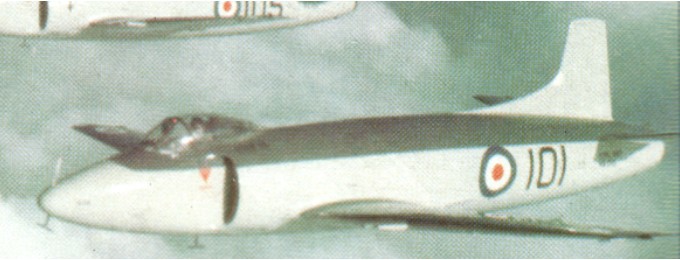


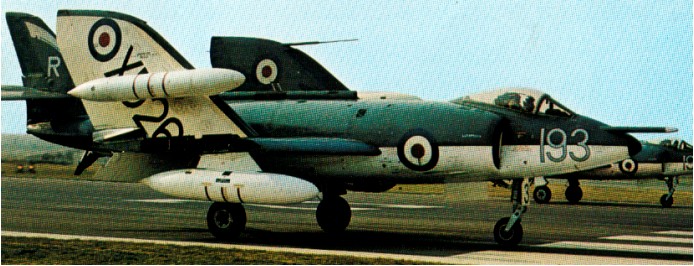
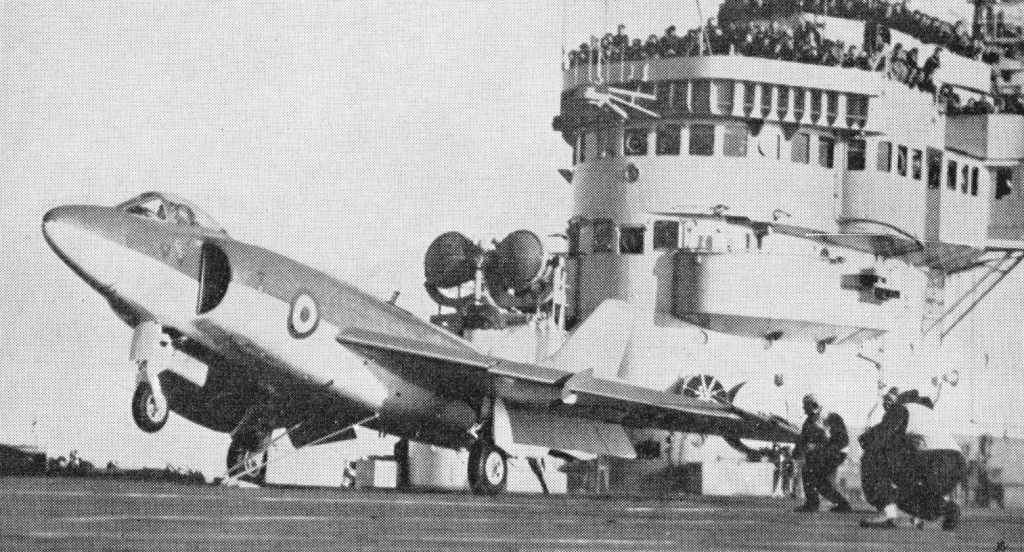


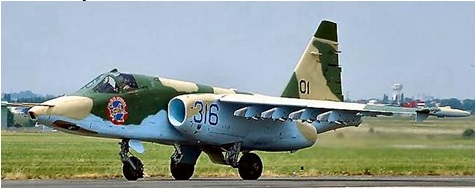

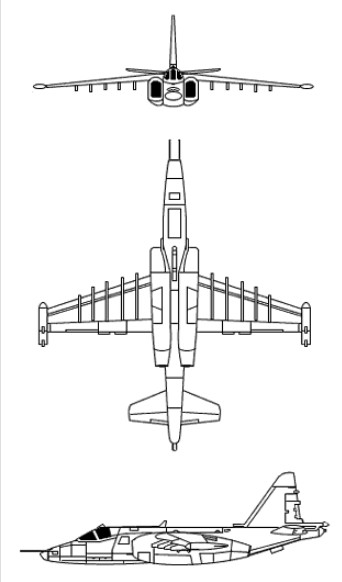


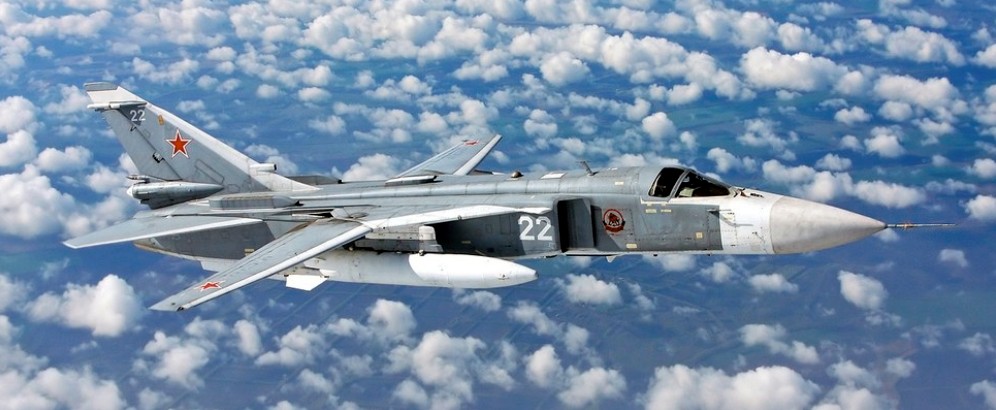
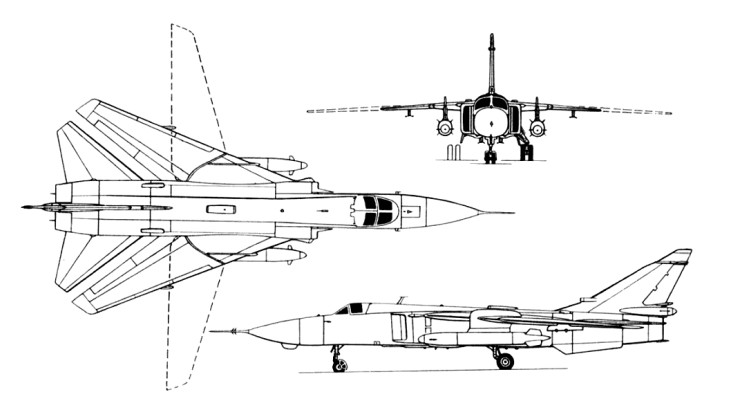

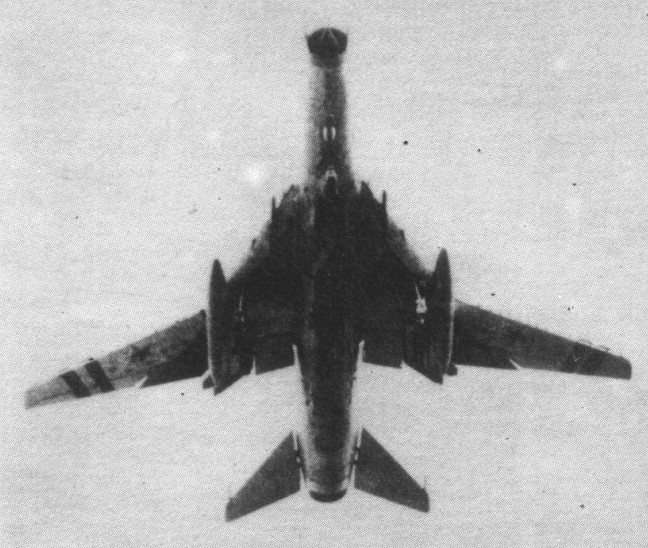

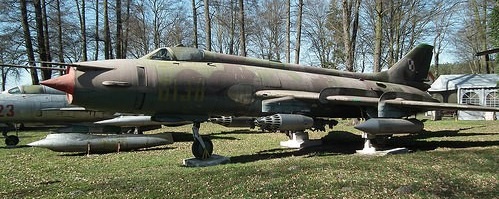


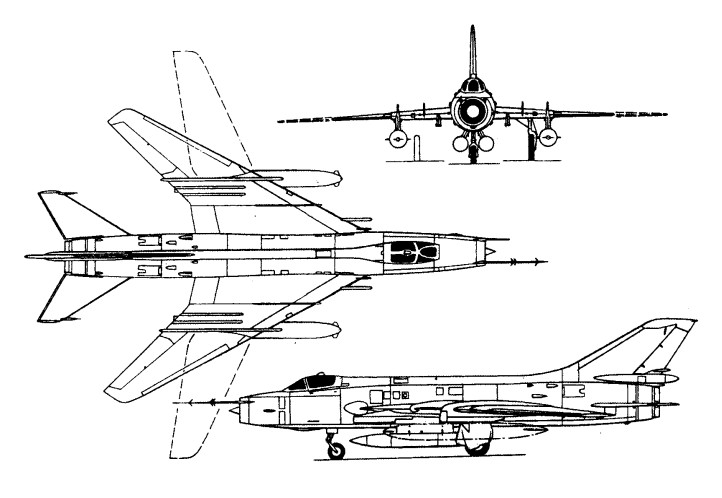


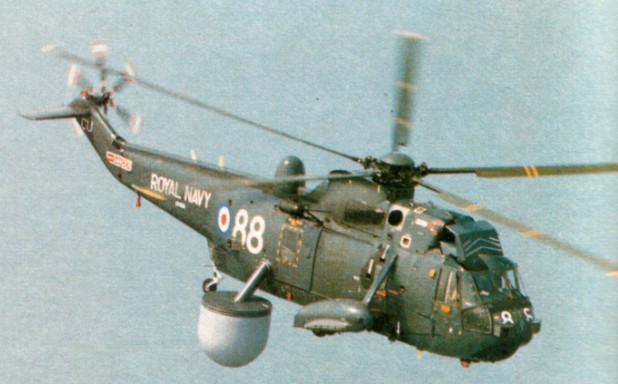

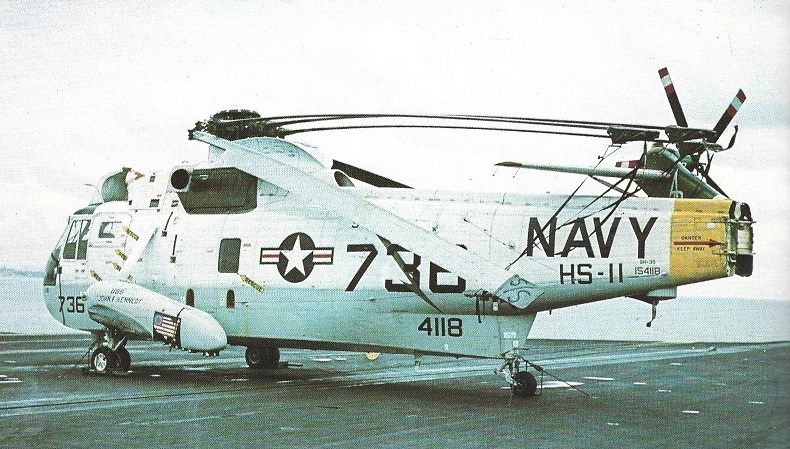

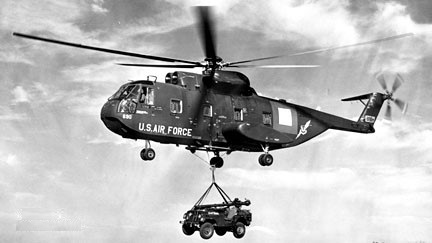

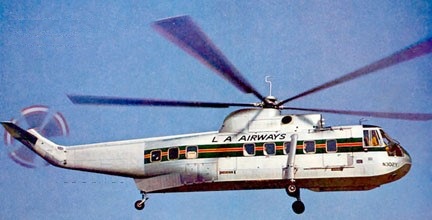

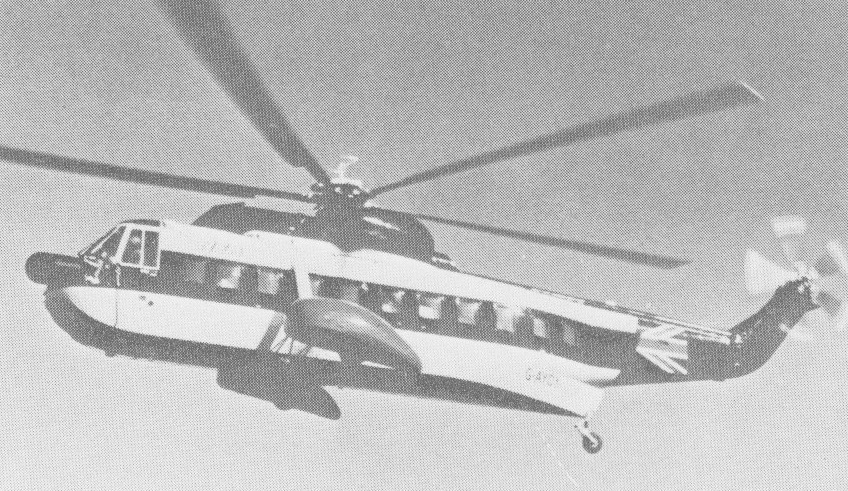
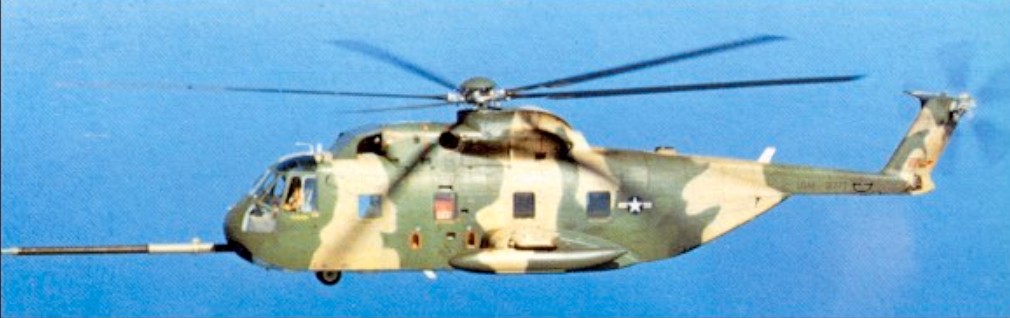
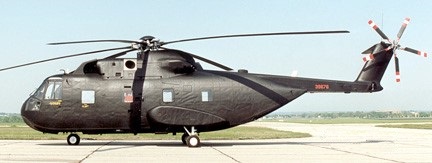
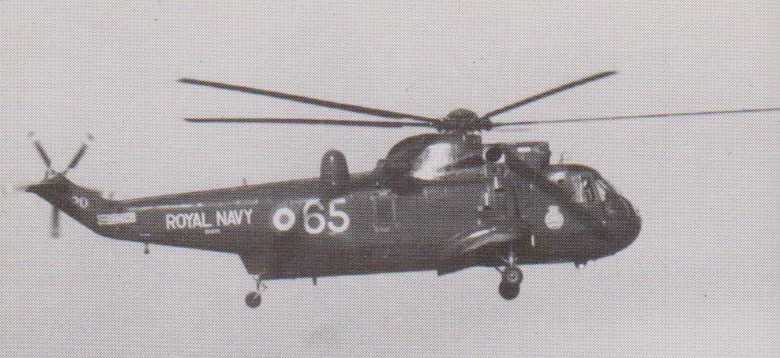


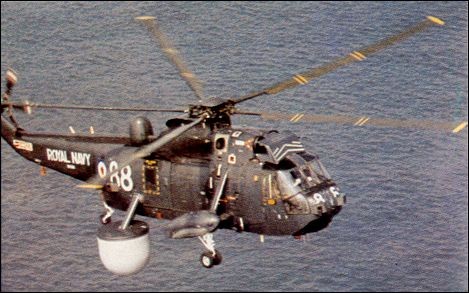

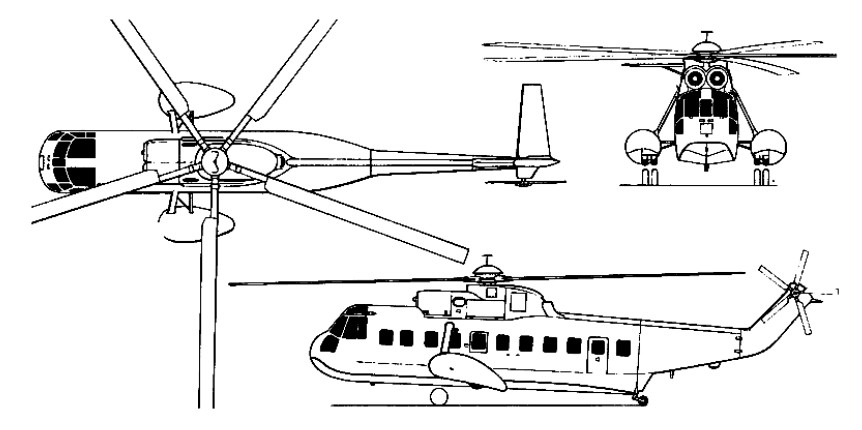
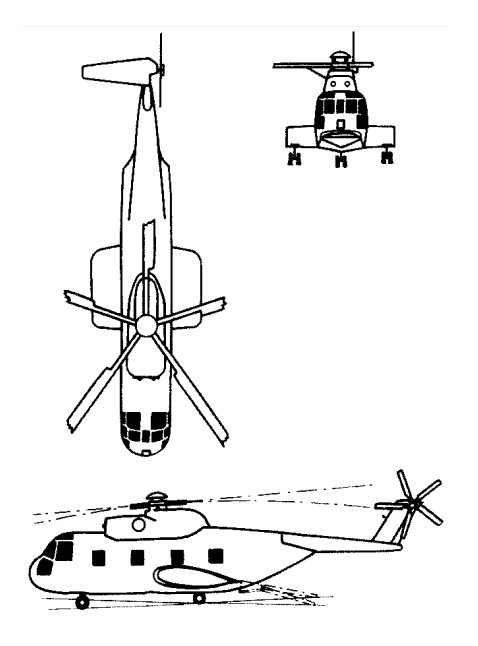

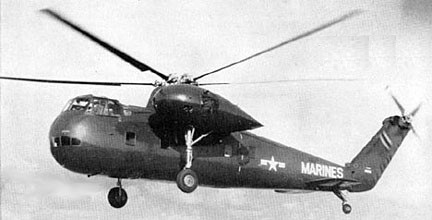
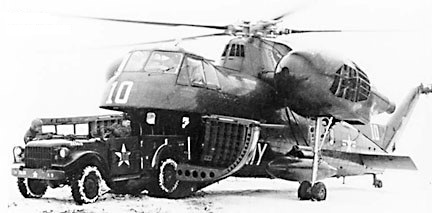


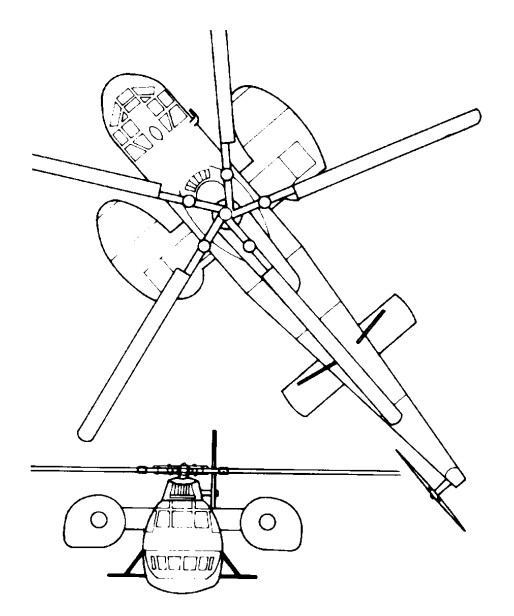

 All Aero