The Avrocar was the brainchild of John Frost, an aeronautical engineer at the Malton-Toronto plant of Avro Canada, who conducted studies in the early 1950s on extremely unorthodox vertical-take-off aircraft, beginning with one design that looked like a shovel blade named the “Avro Ace” or “Project Y-1”. and then moving on to saucer-shaped aircraft, originally designated “Project Y-2”. Frost felt that such vehicles could offer vertical take-off capability as well as high-speed forward flight.
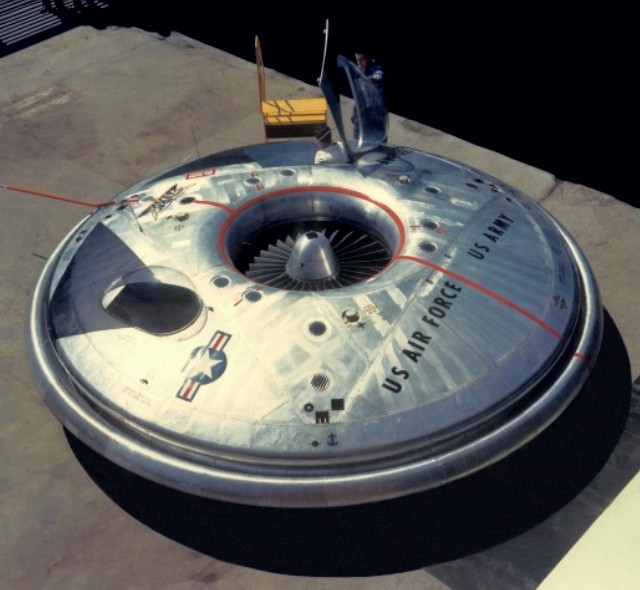
The US military became interested, leading to the award of a US Air Force contract in 1955 for experimental development that evolved through various designations such as “Project Silver Bug”, “Weapons System 606A (WS-606A)”, “Research Project 1194”, and so on. The whole project was originally kept a deep secret since it was felt to be a major potential breakthrough. After considering and eliminating a number of different configurations, the effort focused on development of a proof of concept vehicle named the “VZ-9-AV Avrocar” which was funded by both the US Army and US Air Force. It looked very much like an ordinary but greatly scaled-up modern “Frisbee” toy, 5.5 meters in diameter and 1.1 meters thick at the center (18 by 3.5 feet).
There was a fan 1.5 meters (5 feet) in diameter built into a duct in the center, and two little single-seat cockpits with individual clamshell bubble canopies, and powered by three Continental J69 jet engines, which were arranged in the fuselage in a triangle around the central fan. The exhausts of the jet engines drove the fan and were also ducted around the around the edge of the Avrocar to provide lift at low speed. Engine thrust could be redirected to provide forward thrust, with the saucer-shaped airframe acting as a “lifting body”. Differential thrust could be applied at the sides of the VZ 9 for control purposes.
Frost was extremely enthusiastic about the possibilities of his flying-saucer concept, envisioning an “Avrowagon” for family use, an “Avropelican” for naval use, a scaled-up transport version, and a Mach-2 fighter-interceptor version.
A wind-tunnel test model and a flying prototype were built. The test model was sent to the NASA Ames Center in California for wind-tunnel tests. First tethered flight of the flying prototype (58 7055) was at Malton on 29 September 1959, followed by the first untethered flight on 5 December 1959. After some changes to the control system, some forward flights were made just above the runway at Avro’s Malton factory, starting on May 17th, 1961.
The Avrocar was sup¬posed to fly at speeds of over 483 kph (300 mph) at altitude and have a range of 1600 km (1000 miles), but the little saucer never exceeded 30.5 m (100 ft) during trials.
Although Frost and his staff recognized that the Avrocar was inherently unstable and had incorporated an electromechanical stabilization system, it wasn’t up to the job, and once the Avrocar picked itself up to above chest height and got out of ground effect, it bobbled around drunkenly. An improved stabilization system was considered, but Avro was in chaos due to the cancellation of the “CF-105 Arrow” interceptor program. The chaos filtered down to the Avrocar program, and the US backers of the program lost interest. The program was axed in December 1961.
The flight prototype ended up on display at the US Army Transportation Museum. The wind-tunnel test model in the possession of the Smithsonian Air & Space Museum. It remains in storage at the museum’s Garber Restoration & Storage Facility in Maryland.
Beginning as an A. V. Roe project in 1958, the original Type 748 was planned as a 20-seat short/medium-range feeder airliner. When no interest was shown in the design, it was scaled up in size and the Hawker Siddeley Group, of which Avro was a component company, decided to put the aircraft into production.
The first flight of the prototype took place at Woodford on 24 June 1960. The first production aircraft, capable of seating a maximum of 48 passengers, was designated Avro 748 Series 1. It first flew on 31 August 1961, powered by two 1298kW Rolls-Royce Dart 514 turboprops.
This aircraft has a takeoff run of only 2,750 feet, for STOL performance it has a long-span wing, mounted low, with Fowler flaps driven by an electric actuator. The Rolls-Royce Dart turboprops, mounted with their jet pipes above the wings, are rated at about 2,280 hp, though some military versions have 3,200-hp Darts. Most civil versions of the HS 748 seat 40 to 58 passengers and some are equipped for freight or passenger/freight operations.
Redesignated HS.748 in 1963, later versions included the Series 2 and Series 2A (1967) civil transports; Andover CC.Mk 1 and CC.Mk 2 for the RAF, the CC.Mk 2 being two specially equipped examples for The Queen’s Flight; the Coastguarder variant was also developed, optimised for maritime patrol, flying in 1977.
Six Andovers were delivered to the RAF, two for Queen’s Flight, and four for special passenger service. Prince Phillip Duke of Edinburgh, after completing transition training, used Queen’s Andover CC Mk.2 during his tour of Mexico and Caribbean in October and November 1964.
Hawker Siddeley Andover C.1
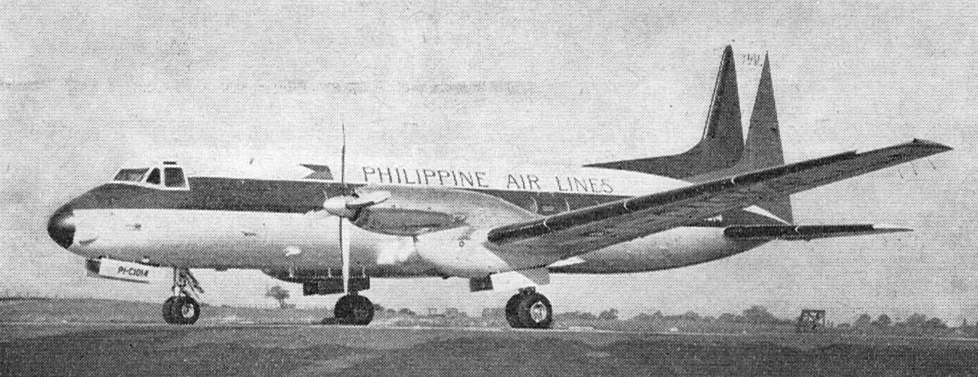
1st of six HS.748 for Philippine Air Lines, handed over at Woodford, 29 September 1967
The 748-2B incorporated a 2000 lb increase in payload, increased span, more powerful engines, and a number of cockpit refinements, flew in June 1979. A production version of the twin-turboprop transport is the Super 748. In its Military Transport form the 748 has a large rear freight door, strengthened floor, and optional military overload take-off and landing weights giving improved payload/range capabilities.
Andover NZ7626
Outwardly, the 748 is similar to the 780 Andover aircraft which differ mainly in having more powerful engines (and reverse pitch propellors), a rear loading ramp, and a kneeling undercarriage. Only 31 Andovers were built, along with six of the Andover CC.2 version of the civil 748. Although developed from the basic Hawker Siddeley 748 and retaining it’s exterior looks, with the exception of the revised tail and straight-in loading ramp, the Andover does have only 20 per cent commonality with the 748. The Andover’s “kneeling” undercarriage allows the aircraft’s fuselage to be lowered to allow easier loading and unloading. The STOL performance for a 42,000 lbs take off, the Andover requires 1,300 ft (to 50 ft), while 1,340 ft is needed for a short field landing (from 50 ft) at 40,000 lbs auw. Reverse-thrust propellors assists the short field performance. Production of all versions, including 79 assembled in India by Hindustan Aircraft from parts manufactured in both countries, totaled 380 aircraft.
HS748-2A Engines: 2 x Rolls-Royce Dart, 2280 shp. Wing span: 98 ft 6 in (15.24 m). Length: 67 ft 0 in (20.42 m). Height: 24 ft 10 in (3.51 m). Max TO wt: 44,495 lb (20182 kg). Max level speed: 278 mph (448 kph).
BAE 748-2B Engines: 2 x Rolls-Royce Dart 7 Mk.535-2, 1,835 shp. Props: Dowty-Rotol 4-blade, 144-in. Seats: 48/50. Length: 67 ft. Height: 24.8 ft. Wingspan: 102.5 ft. Wing area: 829 sq.ft. Wing aspect ratio: 12.7. Maximum ramp weight: 46,700 lbs. Maximum takeoff weight: 46,500 lbs. Standard empty weight: 26,650 lbs. Maximum useful load: 20,050 lbs. Maximum landing weight: 43,000 lbs. Wing loading: 56.1 lbs/sq.ft. Power loading: 12.7 lbs/hp. Maximum usable fuel: 11,200 lbs. Best rate of climb: 1470 fpm. Service ceiling: 25,000 ft. Max pressurisation differential: 5.5 psi. 8000 ft cabin alt @: 25,000 ft. Maximum single-engine rate of climb: 359 fpm. Single-engine ceiling: 10,700 ft. Maximum speed: 250 kts. Normal cruise @ 25,000ft: 230 kts. Fuel flow @ normal cruise: 1257 pph. Endurance at normal cruise: 8.4 hrs: Stalling speed clean: 95 kts. Stalling speed gear/flaps down: 71 kts. Turbulent-air penetration speed: 155 kts.
HS 748 series 2B Engines: 2 x Rolls-Royce Dart Mk 555, 1700kW Take-off weight: 23133 kg / 51000 lb Empty weight: 11644 kg / 25671 lb Wingspan: 31.23 m / 102 ft 6 in Length: 20.42 m / 66 ft 12 in Height: 7.57 m / 24 ft 10 in Wing area: 77.0 sq.m / 828.82 sq ft Cruise speed: 452 km/h / 281 mph Ceiling: 7620 m / 25000 ft Range w/max.payload: 1307 km / 812 miles Crew: 2-3 Passengers: 52
748 Military Engine: 2 x R-R Dart turboprop, 3400 kW. Span: 31.2 m. Length: 20.4 m. Wing area: 77 sq.m. Empty wt: 11,700 kg. MTOW: 23,100 kg. Payload: 5800 kg. Cruise speed: 455 kph. Initial ROC: 430 m / min. Ceiling: 7600 m. T/O run: 1082 m. Ldg run: 387 m. Fuel internal: 6550 lt. Range/payload: 1865 km with 5800 kg. Capacity: 60 pax.
748MF Andover C.1 Engines: 2 x RR Dart 12 Mk 201C, 3,000 shp. MTOW: 50,000 lbs. Fuel cap: 1,440 Imp gallons, + 860 gallons in an integral centre-wing tank. Range: 1,020 nm (1,800 nm with 860 Imp aux). Pax cap: 57 passengers (at 30” pitch). Cruise alt: 20,000 ft. Max speed: 302 mph @ 15,000 ft. Service ceiling: 23,800 ft. Maximum payload: 14,750 lbs. Take off distance mauw: 3810 ft. Landing ground roll max ldg wt (47,600 lbs): 2490 ft.
HS.780 C.1 Engines: 2 x Rolls-Royce Dart 12 Mk.201, 3425 shp. Max payload: 6270 kg.
Hawker Siddeley Andover C Mk 1 Engine: 2 x Rolls Royce Dart R.Da 12 Mk. 210 C, 2929 shp Length: 77.92 ft / 23.75 m Height: 30.085 ft / 9.17 m Wingspan: 98.261 ft / 29.95 m Max. speed: 262 kts / 485 km/h Service ceiling: 24016 ft / 7320 m Range: 1031 nm / 1909 km Crew: 3+44
748-2A Andover CC2 Engines: 2 x RR RDa7 Dart 152, 2280 shp. TBO: 1600 hr. Max cruise: 245 mph. Econ cruise: 243 mph. Stall: 82 mph. Fuel cap: 11628 lb. Fuel flow max cruise: 1850 pph. Fuel flow econ cruise: 1400 pph. Service ceiling: 23,000 ft. SE service ceiling: 13,000 ft. ROC: 1300 fpm. SE ROC: 750 fpm. Min balanced field length: 4050 ft. Payload with full fuel: 8790 lb. Max range: 1828 mile. High speed range: 1068 mile. Max payload: 16,773 lb. Range with max payload: 761 mile. Pressurisation differential: 5.5 lb. Seats: 47. Gross wt: 46,500 lb. Empty wt: 29,727 lb. Useful load: 16,773 lb.
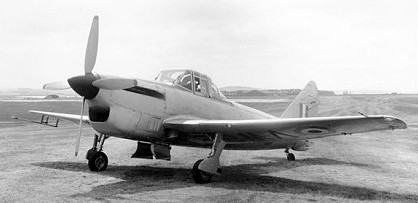
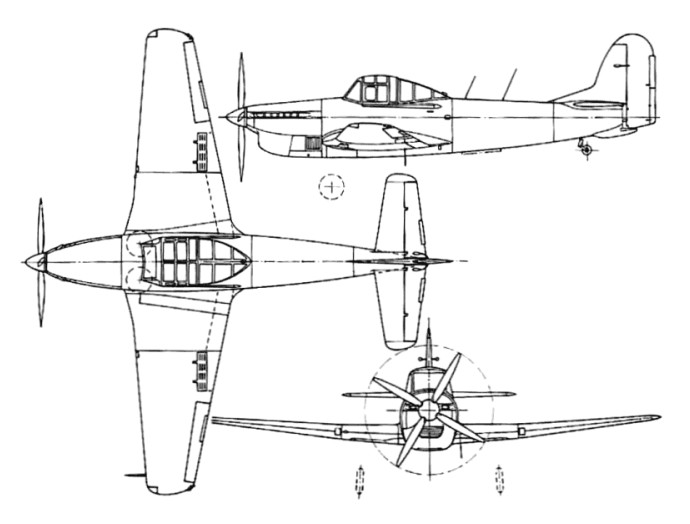
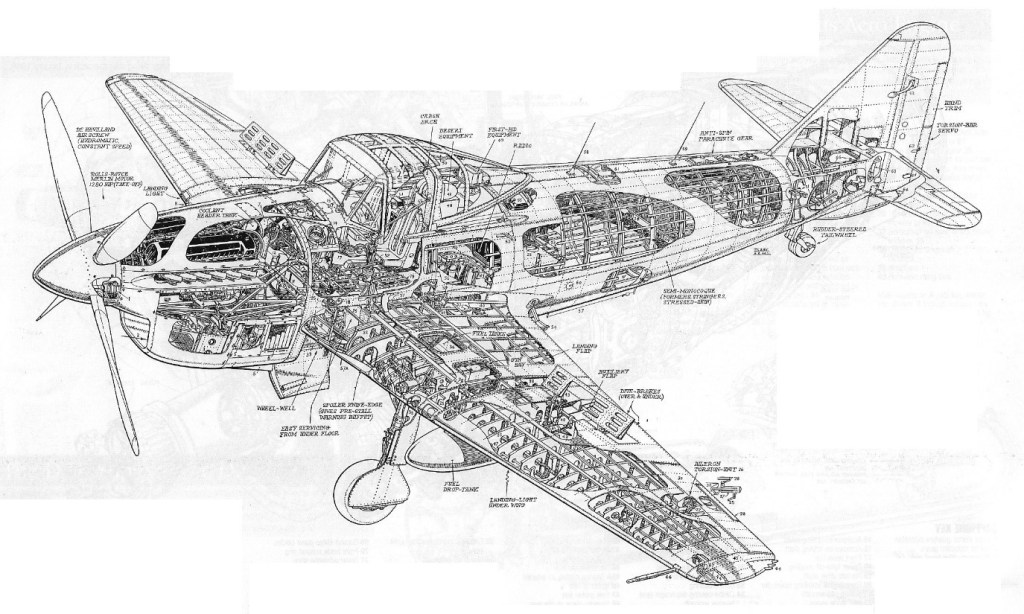
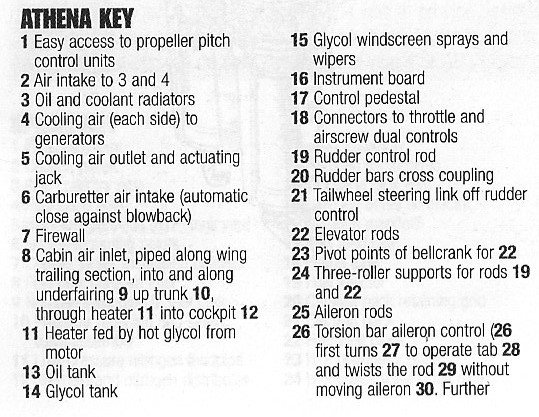
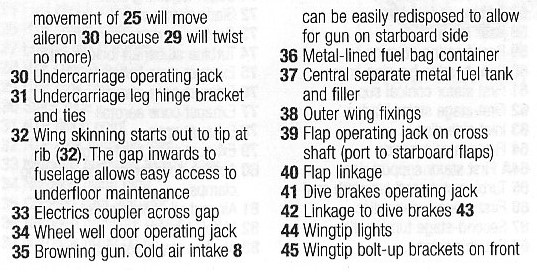
The Athena was a single engine side-by-side two seat trainer with a tail wheel undercarriage. designed to Specification T.7/45 for a three-seat turbo-prop advanced trainer.
Two turbo-prop versions were developed, the Athena T.1 with a 1135 eshp A.S. Mambe A.S.Ma.1, and the Athena T.1A with a 1125 eshp Rolls-Royce Dart R.Da.1
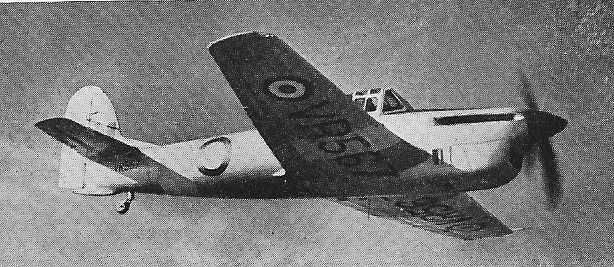
Athena T.2
The design was then modified to meet specification T.14/47, and seventeen pre-production Athena T.2s were built, powered by the 1280 hp / 954kW Rolls-Royce Merlin 35. First flown in 1948, the Athena T.2 advanced trainer was in pro¬duction by 1950. These eventually went to the RAF Flying College, Manby, as gunnery trainers.
Athena T.Mk 2 Engine: 1 x Rolls-Royce Merlin 35, 1280 hp / 954kW Take-off weight: 4256 kg / 9383 lb Empty weight: 2966 kg / 6539 lb Wingspan: 12.19 m / 40 ft 0 in Length: 11.37 m / 37 ft 4 in Height: 3.94 m / 13 ft 11 in Wing area: 25.08 sq.m / 269.96 sq ft Max. speed: 472 km/h / 293 mph Cruise speed: 359 km/h / 223 mph Ceiling: 8840 m / 29000 ft Range: 885 km / 550 miles
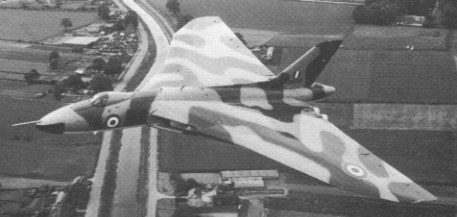
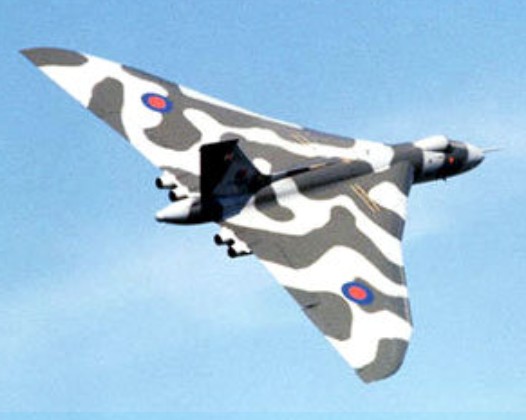
The original Avro 698 Vulcan B1 prototype was developed to Air Ministry Specification B.35/46, issued on 1 January 1947 for Britain to have nuclear bombing capability. The initial design was laid down in 1948 by Roy Chadwick, the technical director of Avro (A.V. Roe and Co. Ltd), and was preceded by the 707 series.
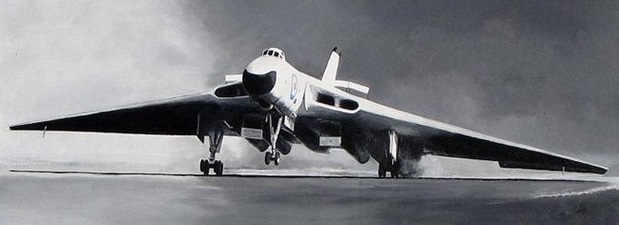
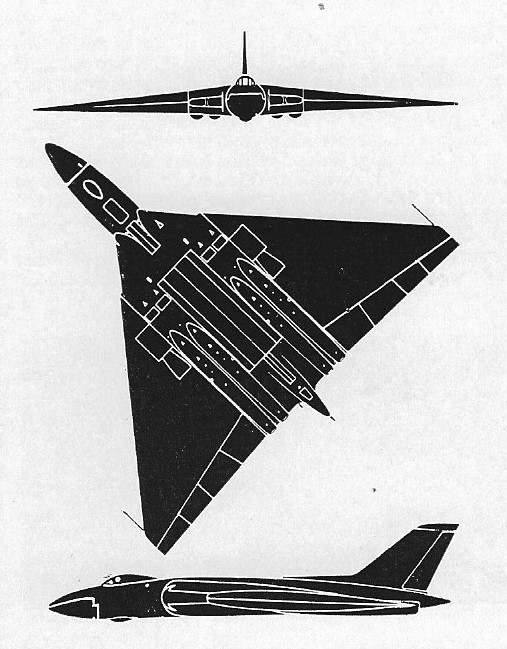
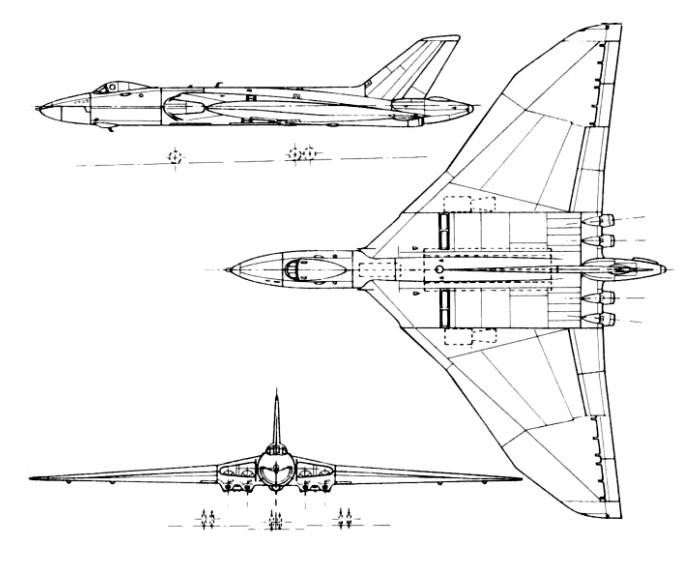
This design featured vertical tail surfaces at the extreme wingtips as opposed to a traditional tail section, offering up a great deal of surface area for improved payload, fuel load and maneuverability. The lack of a true tail section meant that, in some ways, the design was in fact a flying wing. The cockpit was positioned well forward on the fuselage, ahead of the wings and engines, and featured four engines in a staggered internal placement- two engines to a wing. The engines were to be fed by a single large rounded intake. The massive expanse of the wings would have also provided maximum space for internal armament in the form of bomb bays mounted outboard of the dual engine arrangements. Avro designated the new design Type 698 and received the British Air Ministry contract in December of 1947. Along with the Avro design, approval of the Valiant and Victor were also granted, essentially beginning the formation of the V-bomber triangle.
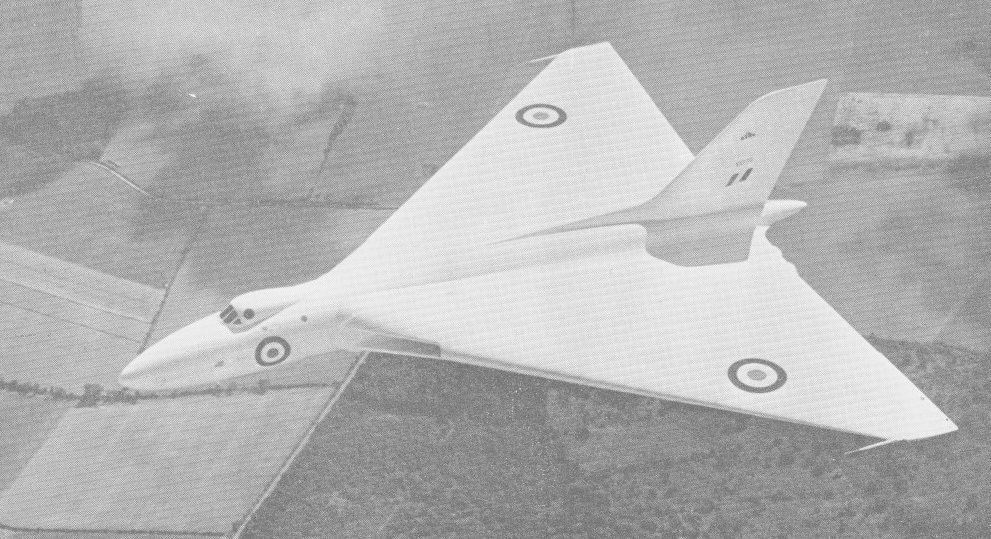
The initial Air Ministry contract called for several forms to be built including two prototypes. Along with this commitment included the construction and delivery of several flight demonstrators. The demonstrators, designated as Type 707, proved an important part of early development of the Vulcan. These development models eventually gave rise to the Type 698 prototype.
Flying for the first time on 30 August 1952, the Avro 698 prototype, VX770, had 6,500 lb.s.t. RA3 Avons, subsequent power-plants included the 8,000 lb.s.t. Sapphire, the 10,000 lb.s.t. Olympus 101s and the 20,000 lb.s.t. Olympus 301s. All four engines could be started, flight instruments aligned and powered flying controls run-up within 20 seconds. It had main qears with a total of 16 tyres, and a five seat crew compartment. A single large weapon bay was provided. The first prototype was later lost in a fatal air show accident in September of 1958.
A second prototype powered by four 10,000lb Bristol Siddeley Olympus 101 – with a slightly longer fuselage to eliminate the need for shortening the nose-wheel leg during retraction – made its first flight on 3 September 1953. Both prototypes featured a delta wing with 52 degree sweepback. The second prototype was later fitted with a “kinked” wing design that showcased differing degrees of sweepback separated into different sections of the wing leading edge. The second was later fitted with wings having a redesigned leading edge with compound sweepback and it made its first flight in this form on 5 October 1955.
Wellington, New Zealand 1959
The fuselage itself was streamlined highly, with the cockpit mounted behind a nose cone assembly and just before the wing root intakes and fuselage extending well forward of the wing roots and some distance aft of the wing trailing edge. Fuel was split between either wing and a central fuselage location, all monitored in-flight by a fuel management system. The bomb bay was centrally held in the fuselage and could be fitted with additional fuel for increased range.
The undercarriage consisted of two main landing gears (retracting forward outboard of the engines) and a nose gear positioned behind and underneath the wingroot intakes. Each main gear was fitted with an eight-wheel bogie and retracted forwards while the nose gear and its two wheels retracted backwards. The empennage featured a single large dorsal fin extending from about the midway portion of the fuselage, with the base of the fin extending vertically out from about the extreme end point of the engines. The tail cone housed a drag chute to improve the aircraft’s landing distance.
The Avro Vulcan provided accommodation for five standard crew personnel consisting of the pilot and copilot, a systems operator, a navigator and a radar operator along with additional seating for two more. The pilot and copilot had a view out of the front of the cockpit through a five panel windscreen with framing as well as circular windows to the sides allowing for viewing to the left and right. Ejection seats were afforded to the pilot and co-pilot only – not the entire crew – they would have to bail out.
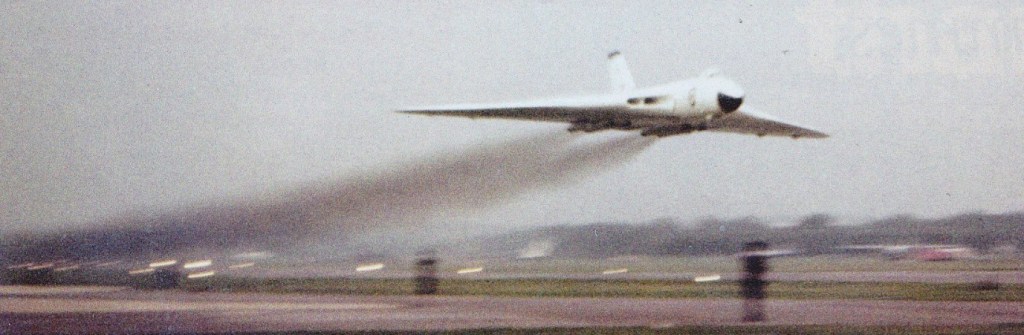
All production Vulcans were fitted with wings having the revised leading-edge configuration and the first production version was the Vulcan B.1, which entered RAF service in Febru¬ary 1957, powered by Olympus Mk 101 or Olympus Mk 102 engines of 4990 kg (11,000 lb) thrust each. All of these engines were converted later to Olympus Mk 104 standard, up¬rated in stages to 6078 kg (13,400 lb) thrust.
Twenty-five such machines were ordered in 1952 and the first Vulcan squadron became operational in 1957 (this delay in years was caused by yet another fatal accident). B.Mk 1’s were similar to the two prototypes. Early production models were finished the straight delta wings but these were later revised to the kinked wing design. The Mk.1s equipped Nos 83, 101 and 617 Sqn by early 1960. Nos 83 and 101 Sqns were re-equipped with Vulcan 2sband their Mk.1s were taken over by 44 and 61 Sqns.
Farnborough Air Show – September 1958 – 83 Sqn RAF Vulcan B.1
Production models were fitted with an Olympus 101 series engine of 11,000lb thrust (each). This rating was progressively uprated until reaching the Olympus 104 series with 13,500lb thrust. A total of 45 Vulcan B.Mk 1 models were eventually delivered. Re-equipment of three Bomber Command squadrons of the RAF with this version was completed in 1960.
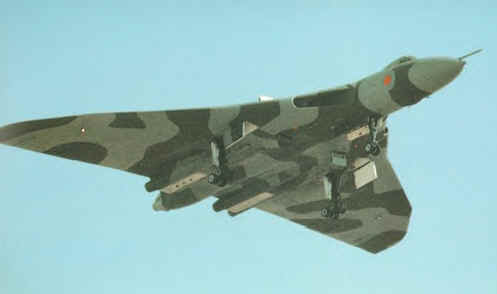
In the late 1950’s, the Vulcan B.Mk 1 had her countermeasures suite revised, becoming the Vulcan B.Mk 1A. Soviet defense technology advanced to the point that operation of the Vulcans in their originally intended mode was now in danger. As such, the aircraft was fitted with chaff dispensers, a tail warning radar (“Red Steer”), a radar warning receiver, and jammers. Twenty-eight B.Mk 1s were converted in this fashion with conversions taking place from 1959 into 1963. B.Mk1A’s and the future B.Mk 2 models were clearly discernable thanks to the addition of the ECM gear in the tail cone.
The Vulcan B.Mk 1 was followed by the Vulcan B.Mk 2 with development beginning in 1955. The system featured a revised and lengthened wing (increased from 99 feet to 111 feet), new Bristol Siddeley Olympus 201 series engines of 17,000lb thrust engines (later production models would feature the Olympus 301 at 22,000lb thrust), updated electrical system, in-flight refueling probe, a reinforced undercarriage (necessitated by the addition of the new engines), the countermeasures suite in the B.Mk 1A upgrade above and overall improvements to the aircrafts performance. First flight of the B.Mk 2 prototype occurred on August 19th, 1958 with deliveries beginning two years later and making up 89 total production examples. The increased performance offered by the Vulcan B2 made it ideal for modification to carry the Blue Steel nuclear stand-off bomb. This weapon allowed the aircraft to launch its attack from outside the immediate missile defences of a target and thereby extended the effectiveness of the Royal Air Force’s airborne deterrent.
This mark entered service in July 1960, and at first remained a high-altitude bomber. By 1961, Vulcan Mk.2s were in service with No.27, 83 and 10 Squadrons. By 1966 these had been withdrawn as the entire force had by that time switched to low level operations using conventional bombs, with a TFR (terrain following radar) on the nose.
Eight B.Mk 2 models were converted to Maritime Radar Reconnaissance platforms (B.Mk 2MRR)) and 6 more were modified as in-flight refueling tankers (K.Mk 2)).
Four Vulcan SR.Mk. 2 reconnaissance aircraft served with No.27 Sqn, and the force was being run down when in April 1982 Argentine forces invaded the Falklands. Several aircraft were converted as tankers in a crash programme by British Aerospace, while others were urgently equipped with bombs, new navigation systems, flight refuelling probes, and underwing pylons for ALQ 101 ECM pods and Shrike anti radar missiles. They bombed Stanley airfield in round trips exceeding 12870km (8000 miles). The 1964 edition did Jane’s revealed that the Vulcan B2 could cruise at Mach 0.94 at 55,000 feet. Range hi/lo was 2,300 and 1,725 miles respectively. Vulcans served as engine test-beds for TSR-2 and Concorde. Production was completed in 1964 and a total of 134 were built at Avro’s Woodford, Cheshire plant, along with the two Type 698 prototypes. The Vulcan series of bombers saw limited use in combat aggression. Vulcan B.Mk 1 model bombers were sent as an intimidation factor during the Malayan Insurgency. Beyond that, they were used to showcase the types reach to the Soviet Union by conducting regular global flights to and fro. Operations with American forces and other NATO allies were a common occurrence. The only true combat actions including the Vulcan came in the 1982 Falklands War between invader Argentina and responder Britain. Vulcan B.Mk 2 bombers were used in small numbers during the conflict and succeeded in providing Britain with an intimidating force – though actual damage caused to enemy ground forces from Vulcans were minimal. Regardless, the presence of the Vulcan was no doubt on the minds of Argentine ground forces. After the war of 1982, the Vulcan’s career as a dedicated bomber was all but over. Several were converted as an interim measure to fulfill a tanker role gap while the Vickers VC10 airframes were being modified for the job. Six such Vulcan B.Mk 2 models were converted for the role and became the Vulcan K.Mk 2. These Vulcans lasted until 1984 as the VC10s came online.
The last Vulcan squadron was disbanded in March 1984.
On 18 October 2007 Vulcan B.2 XH558 flew from Bruntingthorpe in Leicestershire after a decade long restoration.
Avro Vulcan B Mk.I Engine: 4 x Bristol Olympus 101, 48952 N / 4990 kg / 11,000 lb Length: 97.113 ft / 29.6 m Height: 26.083 ft / 7.95 m Wingspan: 99.016 ft / 30.18 m Wing area: 330 sq.m (3,554¬sq ft) Max take off weight: 170032.0 lb / 77112.0 kg Max. speed: 556 kts / 1030 km/h Service ceiling: 55003 ft / 16765 m Range: 2608 nm / 4830 km Crew: 5 Armament: 9525 kg Bomb.
Vulcan B.2 Engines: 4 x Bristol Olympus, 17,000 lb. Wing span: 99 ft 0 in (30.15 m). Length: 97 ft 1 in (29.61 m). Height: 26 ft 1 in (7.93 m). Max level speed: M0.94.
Vulcan B.Mk.2A Engines: 4 x 9072 kg (20,000 lb) thrust Bristol Siddeley Olympus 301 turbojets. Max speed: 1043 krn/h (648 mph) at 12190 m (40,000 ft). Service ceiling: 18290 m (60,000 ft). Range w/max.fuel: 6400 km / 3977 miles Empty wt: 45360 kg (100,000 lb). MTOW: 113400 kg (250,000 lb). Wing span: 33.83 m (111 ft 11 in). Length (with probe): 32.16 m (105 ft 6 in). Height: 8,28 m (27 ft 2 in). Wing area: 368.27 sq.m (3,964,0 sq.ft). Crew: 5 Armament: up to 21 454 kg (1,000 lb) bombs; no defensive weapons.
The company was founded by Count Giovanni Agusta in 1923, who flew his first airplane in 1907 and several more were built before the First World War. The firm was revived in 1923, specialising in light aircraft. The MV Agusta motorcycle manufacturer began as an offshoot of the Agusta aviation company at the end of the Second World War as a means to save the jobs of employees of the Agusta firm.
In 1952 Agusta was granted a license to build Bell Model 47 helicopters, the first Agusta-built example flying in May 1954, and over 1,200 were built before production ended in mid-1970s. The company also produced Bell Iroquois models as Agusta-Bell 204B and 205, 212 and 206 JetRanger helicopters. In 1967, under Sikorsky license, production of SH-3D helicopters began, and in 1974 production of HH-3F (S-61R); production of final HH-3F Combat SAR version lasted into mid-1990s. Together with Elicotteri Meridionali, SIAI-Marchetti, and other Italian companies, Agusta became involved in production of the Boeing Vertol CH-47C Chinook. Other license-built helicopters include AB-412EP/Griffon/Maritime Patrol versions of the Bell 412EP and Griffon, AMD-500E version of the McDonnell Douglas MD 500E, and Agusta-Boeing 520N NOTAR helicopter.
The company also had ambitions to design and build its own helicopters. The Agusta A.101 and the Agusta A.106 can be considered the best of its earlier attempts. Others included the AB.102, A.103, A.104, and A.115. Agusta-designed helicopters include the twin-turboshaft A109 civil/military multipurpose type (flown August 1971), A 119 Koala single-turboshaft wide-body helicopter (first flown February 1995), and A129 Mangusta tandem two-seat attack helicopter (first flown September 1983) and its more-powerful International variant with five-blade main rotor as standard (first flown January 1995).
It also produced a small line of aero engines such as the GA.70 and GA.140.
Developed in the 1970s, the Agusta A109 has undoubtedly been the company’s biggest success. The A109 is a commercial and military twin turbine helicopter, of which the latest variants are still in production, hundreds having already been sold.
Agusta acquired 30% of SIAI-Marchetti in 1970, increased its stake to about 60% by 1973 and reached complete ownership in 1983.
In 1983 the Agusta A129 Mangusta anti-tank helicopter partook in its first official flight engagement. It was the first attack helicopter to be designed and produced in Western Europe. However, this helicopter has been a limited commercial success so far, seeing service with the Italian Army, and only now has a modernized variant being developed for the Turkish Army.
The 1980s saw the start of several collaborative projects for Agusta. In 1981 Agusta and Westland of Britain started the EH101 medium-lift naval helicopter project in order to satisfy the requirements of the Royal Navy and the Italian Navy. In 1985 the company started a collaborative programme with the aeronautic industries of Eurocopter Deutschland; Eurocopter, and Fokker in order to develop and produce the NHI NH90, a 9-ton twin engine multi-role medium helicopter in order to satisfy the requirements of their respective countries’ armed forces.
1990s projects include the Agusta A109 Power, an improved version of the A109 (1994) and the Agusta A119 Koala (1997), a single-engine design based on the A109.
Agusta became involved in a notorious Belgian bribery scandal when it was revealed that the company had paid the two Belgian socialist parties who were then (1988/1989) in the government to assist the company in getting the contract for attack helicopters for the Belgian army.
1995: 520 Via Giovanni Agusta, Cascina Costa di Samarate, Varese I-21017, Italy.
In 1998 Agusta formed a joint venture with Bell Helicopter Textron called the Bell/Agusta Aerospace Company. Its aim was to develop the Bell/Agusta AB139 helicopter and the Bell/Agusta BA609 tiltrotor aircraft. Bell later withdrew from the AB139 project, which is now known as the AgustaWestland AW139.
In July 2000 Finmeccanica and GKN plc agreed to merge their respective helicopter subsidiaries (Agusta and GKN-Westland Helicopters), forming AgustaWestland.




 All Aero