K-Svijatoshyn District
v.P.Borschagovka
Kiev-City 08130
A trike manufacturer circa 2011
K-Svijatoshyn District
v.P.Borschagovka
Kiev-City 08130
A trike manufacturer circa 2011
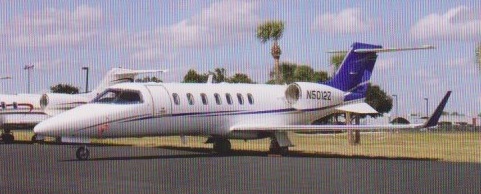
In 2002, Bombardier offered a smaller version of the Learjet 45, the model 40. The aircraft is designed for shorter hops with maximum Lear performance. The Learjet 40 features the same FADEC-equipped Allied Signal engines, all glass cockpit and systems as the Learjet 45, but with a slightly shorter fuselage. The Learjet 40 offers a 36% larger cabin and 35% more range than the Learjet 31 for only a 10% higher price. The 40 can fly with a full passenger load of seven and full fuel. With four passengers, it will travel from New York to Chicago in one hour and 35 minutes.
Engines: 2 x Allied Signal TFE731-20-AR, 15264 N / 1556 kp / 3,500-lb
Length: 55.512 ft / 16.92 m
Height: 14.14 ft / 4.31 m
Cabin height: 4.921 ft / 1.5 m
Cabin width: 5.118 ft / 1.56 m
Cabin length: 17.717 ft / 5.4 m
Wingspan: 47.769 ft / 14.56 m
Max take off weight: 20354.4 lb / 9231.0 kg
Empty wt: 13,888 lb
Max cruise: 464 kt
Cruising speed (mach): 0.81 mach
Long range cruise: 430 kts
Maximum range: 1857 nm / 3439 km
Ceiling: 51,000 ft
Takeoff distance (50ft): 5,250 ft
Landing distance: 2,660 ft
Crew: 2
Passengers: 7
Swiss American Aviation Corporation
Gates Learjet Corporation
Learjet Inc
William P. Lear founded the Swiss American Aviation Corporation in 1960 to build a twin-jet executive aircraft, originally designated SAAC-23. Tooling was completed in Europe but moved to Wichita, Kansas, in 1962, when the company became known as Lear Jet Corporation. By 1964 all work had been transferred to USA. In 1967, Bill Lear sold his 60 percent interest in the company to Gates Rubber Corporation, and in 1970 the name was changed to Gates Learjet Corporation. Became Learjet Inc. in 1987.
Lear Jet Inc becoming a division of Bombardier in 1990, offering the 11-seat light Learjet 31A (first flown May 1987), 11 -seat mid-size Learjet 45 (first flown October 1995), and 12-seat transcontinental Learjet 60 (first flown October 1990).
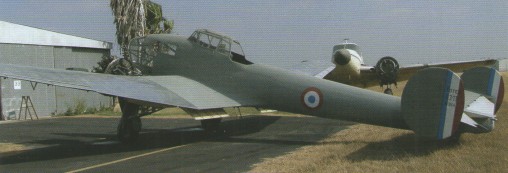
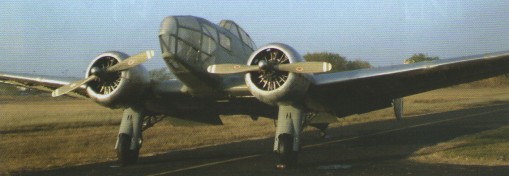
John Garric recreated an example of the long extinct Potez 63-11 twin-engined reconnaissance aircraft. Of 748 examples built, none have survived so John set about filling that glaring gap in history’s surviving French combat aircraft by building a new 63-11 from original drawings.
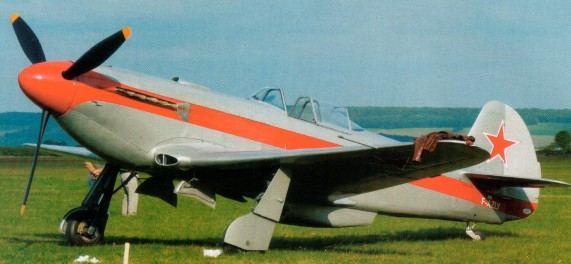
This replica Yak-3 was built by Jean-Marie Garric of Garric Warbirds based in Texas. Imported to France by Jean-Luc Langeard in 2003, it was damaged on 11 April 2003 on one of its first flights. The damaged Yak-3 was then acquired by Stephane Canu who returned the airframe to Garric Warbirds for repairs, while the wing was repaired in Normandy and a new Allison engine acquired in the USA.
John Garric, Texas, USA.
Builds replica aircraft
Aircraft Tool and Supply Company
Garrett Supply Company
AiResearch Manufacturing Company
AiResearch
PW-je-tp
John Clifford “Cliff” Garrett founded a company in Los Angeles in 1936 which came to be known as Garrett AiResearch or simply AiResearch. Already operating his Garrett Supply and Airsupply businesses, in 1939 Cliff Garrett established a small research laboratory to conduct “air research” on the development of pressurized flight for passenger aircraft. “[AiResearch’s] first ‘lab’ was a small store building on Melrose Avenue in Los Angeles”.
In 1939 Garrett incorporated the “Garrett Corporation” and the three operating companies became divisions: Airsupply Division, Garrett Supply Division, and AiResearch Manufacturing Division. Needing additional space, they built their own manufacturing facility in Glendale, California, and thereby established the name AiResearch Manufacturing Company.
By 1941, AiResearch needed new space, and on April 28, 1941 moved from Glendale to what until then had been a beanfield on Sepulveda Boulevard, at the corner of Century Boulevard near Mines Field, which later became Los Angeles Airport. In 1942, the Army Air Force concluded that vital cabin pressurization manufacturing facilities should be relocated inland from the coast, and AiResearch set up the AiResearch Phoenix Division in Phoenix, Arizona. For this purpose, AiResearch Manufacturing Company of Arizona was established as a wholly owned subsidiary.
The Company’s first major product was an oil cooler for military aircraft. Garrett designed and produced oil coolers for the Douglas DB-7. Boeing’s B-17 bombers were outfitted with Garrett intercoolers, as was the B-25. The Company developed and produced the cabin pressure system for the B-29 bomber, the first production bomber pressurized for high altitude flying. By the end of World War II, AiResearch engineers had developed air expansion cooling turbines for America’s first jet aircraft, the Lockheed P-80 Shooting Star. In all during World War II, Garrett AiResearch sold $112 million in military equipment and had as many as 5,000 employees at peak.
Having to scale back its workforce to just 600 employees at the end of the war stimulated Garrett to look for new income sources. “He found them in the small turbines which patient Engineer [Walter] Ramsaur had been perfecting since 1943. So that jet pilots could endure the heat generated by air friction at supersonic speeds, a way had to be found to cool their cockpits. Ramsaur’s turbine provided the answer; by putting an engine’s heat to work turning the turbine, it cooled the air by expanding it, shot the air into the cockpit. As rearmament got under way, Garrett began turning out a total of 700 accessory products. With the Navy order for an on-board engine self-starter, by 1951 Garrett Corp. had a $120 million backlog, enough to keep 5,500 workers on three shifts busy for at least the next three years”.
By the end of the 1940s, Garrett Corporation was listed on the New York Stock Exchange. “In the late 1940s and early 1950s, Garrett was heavily committed to the design of small gas turbine engines from 20 – 90 horse power (15 – 67 kW). The engineers had developed a good background in the metallurgy of housings, high speed seals, radial inflow turbines, and centrifugal compressors”.
By 1949, the Sepulveda Blvd. property was increasingly constrained by the demand for development of commercial space near the fast-growing Los Angeles International Airport (LAX). At that time, 2000 people worked at the facility “and Garrett was ranked one of the top three aircraft accessory manufacturers in the world”. In 1959 ground was broken for construction of an additional facility at 190th Street and Crenshaw Boulevard in Torrance, California. Part of that facility was occupied a year later. “By 1962, 1000 employees were working at the Torrance location and by 1972, 3000 employees were based there”. After a gradual series of moves, the Sepulveda facility was closed in 1990.
During the 1950s AiResearch initiated activities in the field of aircraft electronics, “first with an angle-of-attack computer to eliminate gunfire error and then with its first delivery of a complete centralized air data system”. In the 1950s and 1960s Garrett diversified and expanded. Garrett AiResearch designed and produced a wide range of military and industrial products for aerospace and general industry. It focused on fluid controls and hydraulics, avionics, turbochargers, aircraft engines, and environmental control systems for aircraft and spacecraft. “By 1960 Garrett gas turbines, cabin pressurization systems, air conditioners, and flight control systems were aboard the Convair 880, Lockheed Super Constellation, Vickers Viscount, Sud Aviation Caravelle, Douglas DC-8, and Boeing 707. The company had also developed the first inflatable airliner evacuation slides”.
In the 1950s and 1960s Garrett pioneered the development of foil bearings, which were first installed as original equipment on the McDonnell-Douglas DC-10 in 1969 and then became standard equipment on all U.S. military aircraft. In the 1960s, AiResearch Environmental Control Systems provided the life supporting atmosphere for American astronauts in the projects Mercury, Gemini, Apollo, and Skylab.
Garrett AiResearch is credited with inventing one of the first complete microprocessors, when it developed the Central Air Data Computer for the US Navy’s F-14 Tomcat fighter in 1968-1970.
In the 1970s Garrett’s expanding industrial and other non-military applications had changed the basic sources of income. “At the start of the decade sales to the military accounted for 70 percent of the company’s business. At the end of the ten years, largely because of turbochargers and general aviation products, the situation was reversed. Commercial sales made up 70 percent; military had dropped to 30 percent”. Also by the end of the decade “sales had reached $1.3 billion; backlog was $1.9 billion”.
To avoid a hostile takeover of Garrett’s assets by Curtiss-Wright following Cliff Garrett’s death in 1963, Garrett Corporation merged with Signal Oil and Gas Company in 1964. In 1968, the combined company adopted The Signal Companies as its corporate name. In 1985, Signal merged with Allied Corp., becoming Allied-Signal. The company acquired Honeywell Aerospace in 1999. Although AlliedSignal was much larger than Honeywell, it was decided to adopt the Honeywell name because of its greater public recognition.
Part of the original Garrett AiResearch became known as the Garrett Turbine Engine Company from 1979, and became the Garrett Engine Division of AlliedSignal in 1985. In 1994, AlliedSignal acquired the Lycoming Turbine Engine Division of Textron, merging it with Garrett Engine to become the AlliedSignal Engines Division of AlliedSignal Aerospace Company.
The Garrett Aviation Division (“Garrett Aviation”), which mainly services aircraft, was sold to General Electric in 1997 and later renamed Landmark Aviation after a 2004 merger. It became StandardAero after a further merger in 2007 and it was owned by Dubai Aerospace Enterprise, but subsequently purchased by another owner.
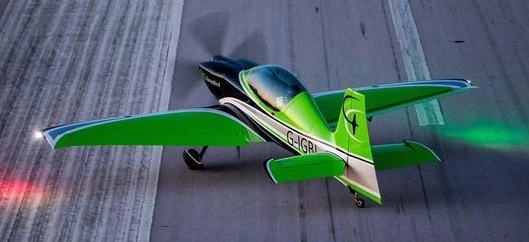
The GameBird was begun in 2013, when aerobatic pilot and designer Philipp Steinbach and a small team started drawing the initial shape of the airplane. The design was created using CAD software in England, where all of the initial development was done.
The GameBird is a versatile aerobatic airplane, with quick handling characteristics, capable of unlimited aerobatics at plus and minus 10 G with a roll rate of 400 degrees per second at 200 kias. However, with the ability to quickly shift its CG with a removable 25-pound weight in the tail section, the airplane can go from an unlimited aerobatic performer to a stable cross-country platform with an impressive 1,000 nm range. There is also a 30-pound baggage compartment for added versatility.
Even with the international move to Bentonville last year, the small team was able to get the airplane certified in 4 years. In August 2017 the team at Bentonville, Arkansas-based Game Composites saw their GB1 GameBird receive its certification. The FAA signed the Part 23 paperwork about four months after the European Aviation Safety Agency gave its approval.
Galaxy Aerospace was a new company, founded 1997 and partly owned by Israel Aircraft Industries, to promote the IAI Astra SPX and promote and fit-out the 8-18 passenger Galaxy wide-body intercontinental business jet developed by IAI (first flown December 1997).
In June 2001 Gulfstream bought Galaxy Aerospace from Israel Aircraft Industries.
2009: Xenon Gyroplanes
Future Flight LLC
411 Walnut St. No. 3986
Green Cove Springs, FL 32043
Gyrocopter builder
 All Aero