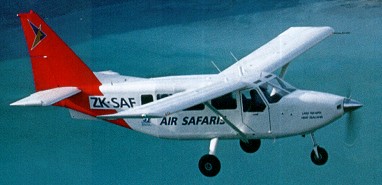
Designed by Peter Furlong to be between the Cessna Caravan and 206. Design work had begun in earnest in early 1994, with the first aircraft (VH-GAV and later re-registered as VH-PTR), powered by a 250 hp Textron Lycoming 0-540, making its maiden flight on 3 March 1995. On 7 February 1996, this air¬craft was destroyed during spinning trials. A second airframe was completed to a major component stage for static testing and a third, VH-ZGI, became the second flying prototype. The second prototype was first flown in August 1996 with a 300-hp Textron Lycoming IO-540K-lAS engine. Flight testing was completed by No-vember 1998 after a total of 350 hours had been collectively flown by the two aircraft. The basic simplicity of the aircraft’s non-turbo engine, automatic fuel management system, manual flaps, no cowl flaps, large cabin area with centre aisle, and useful centre of gravity range serve a utility role. It is of a strut braced high wing design, using the same wing as the GA 200, with a fixed undercarriage. It is of an all metal stressed skin construction which is fully corrosion protected. Up to eight passengers can be carried with entry gained by a large sliding door on the port side. The cabin floor has a quick release mechanism to permit rapid conversion between passenger and cargo roles or combi configuration.
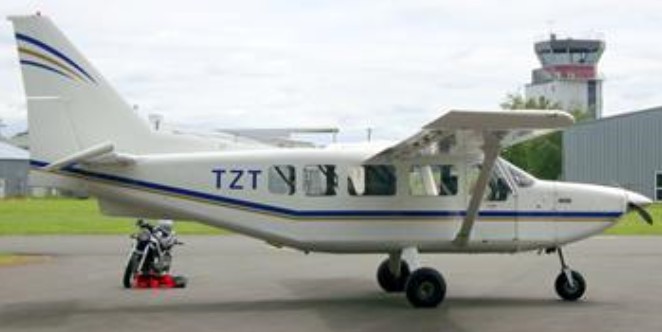
The second prototype was re-registered VH-XGA in January 1999 and provisional type certification was achieved in early 1999, followed by full certification on 10 October 2000.
The first production Airvan (004) was assembled in November 2000 and delivered to Air Fraser Island in Australia on 22 December 2000 as VH-RYT. The first export aircraft was 008, which was delivered to Maya Island Air in Belize, Central America, in late 2001 as V3-HGJ.
Planned is a 2.4-metre-long, 18 cu.ft underbelly cargo pod that can carry 400 lbs (180 kg). The pod is able to be retrofitted.
In July 2005 the Airvan was awarded EASA European certification. Gippsland had delivered about 80 Airvans by the end of July including the last of 16 for the US Civil Air Patrol.
In August 2006 the 100th GA8 was handed over to Missionary Aviation Fellowship.
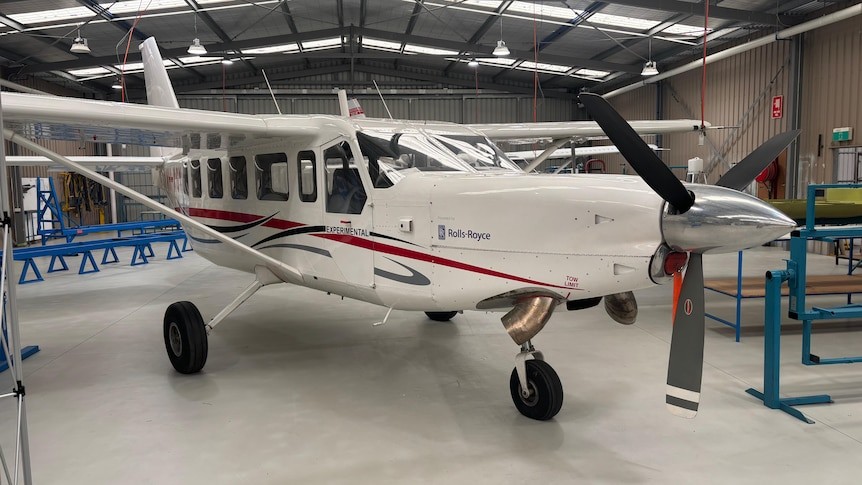
Several engine variants were under evaluation. These include a 320-hp version of the Lycoming IO-580, a turbo-charged Lycoming TIO-540, a diesel version powered by the Thielert TAE 135 turbo diesel or the French SMA engine, and a turbine example powered by the Rolls-Royce Allison 250 BT7F. The consideration of a turbine-powered Airvan has meant a study into a stretched 10-seat turbine version, aimed at paramilitary and special mission applications.
The Australian Civil Aviation Safety Authority (CASA) certified the GA8 Airvan for IFR flight. Certification work was also undertaken on an under belly cargo pod for the aircraft. The 18 cu ft pod will allow a total increase in weight lift of 180 kg and accommodate items up to 2.4 metres in length.
Mahindra agreed to pay about $40 million for a controlling stake in two small Australian aviation companies, Gippsland Aeronautics and Melbourne-based component maker Aerostaff Australia.
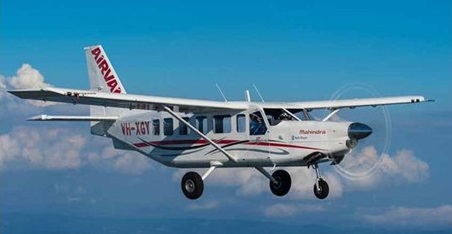
Developed by Mahindra Aerospace, the Airvan 10 10-seat single-engine turboprop received U.S. and Australian certification in 2017. With a price of around $1.7 million, it is targeted as a competitor to pricier turboprops, namely the Cessna Caravan and Quest Kodiak.
The Airvan 10 was planned to cost around $1.7 million and provide competition for turboprops like the Cessna Caravan and Quest Kodiak. The market introduction for the new turboprop was being supported by GippsAero, a Mahindra subsidiary in Australia and the original designer of the airplane.
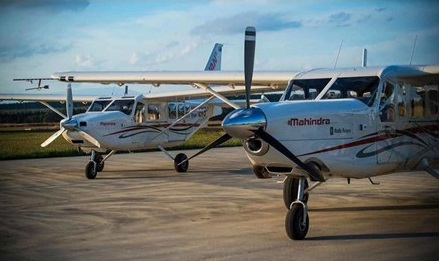
The Rolls-Royce M250-powered model, with a useful load of 2,300 pounds (1,400-pound full-fuel payload) and cruise speed of 145 ktas, is a follow-on to the piston-powered eight-seat Airvan 8, which Mahindra’s aircraft business unit in Australia produces. Certified in more than 42 countries, over 220 Airvan 8s were in service.
By 2025 more than 260 of the Airvans operating in 43 countries around the world.
The company employed up to 180 local people to send one GA8 Airvan out the factory door every two weeks in 2025.
Engine: Lycoming IO-540-K1A5, 300 hp.
Seats: 8.
Payload: 900 kg.
Wing Area: 208 sq.ft.
Aspect Ratio: 8:1.
Cabin Floor Area: 54 sq.ft.
Cabin Internal Volume: 180 cu.ft.
Empty Weight: 2,200 lb (997 kg).
Certified TOW: 4,000 lb (1814 kg).
Span, 40ft 5in (12.3m).
Length: 29ft 4in (9m).
Width: 40 ft 8 in (12.4 m).
Height: 12 ft 8 in (3.9 m).
Wheel Track: 9ft 2in (2.8m).
VNE: 185 KIAS.
Max speed, 140kt (259km/h).
Normal Cruise: 121 KIAS @ 56 1/hr.
Normal Range: 730 nm (6 hr).
Economic Cruise: 104 KIAS @ 37 1/hr.
Maximum Range: 930 nm (9 hr).
Take-off Performance to 50 ft: 550 m (1800 ft).
Landing Performance from 50ft: 370 m (1200 ft).
ROC: 788 ft/min.
Stall Speed (Clean): 60 KIAS.
Stall Speed (Full Flap): 52 KIAS


 All Aero