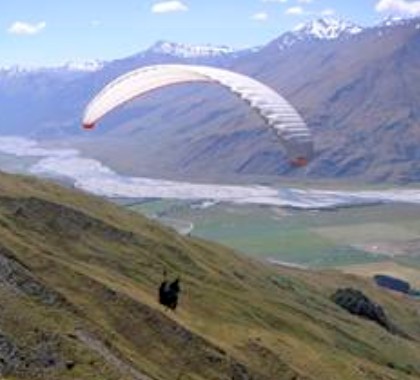
Tandem Paragliding circa 2000.
A New Zealand pilot flew a BiOnyx to a world tandem height record (7544m / 25,000ft) in the Himalayas.
Pilot weight: 140-210kg
Tandem Paragliding circa 2000.
A New Zealand pilot flew a BiOnyx to a world tandem height record (7544m / 25,000ft) in the Himalayas.
Pilot weight: 140-210kg
1998: Motol Plzenska 221/130, CZ-15000 Praha 5, Czech Republic
The company has its roots in the Junkers Profly operation, which Czechs Vaclac Sykora and Ondrej Dupal bought from Germany.
Supair, the French manufacturer which was initially known for its harnesses, then its reserves, has bought the Czech brand Gradient. Gradient is one of the best known makes of paraglider wings, but for some time now they seem to have been economically stifled.
Laurent Chiabaut was on his own at the helm of Supair since the loss of Pierre Bouilloux.

The Gradient brand and models will continue to be developed in parallel to the Supair wings and Ondrej Dupal will remain fully active.
The Goodwin Tri-Moto is an American powered parachute that was designed and produced by FL Goodwin of Phoenix, Arizona and introduced in 1997. The Tri-Moto had, as a design goal, creating a powered parachute carriage that can be folded up and transported on top of a recreational vehicle, in a small pick-up truck or even carried in a small boat. Folding it takes one person 20 minutes.
The aircraft was designed to comply with the US FAR 103 Ultralight Vehicles rules as a single seater or two-place trainer, including the category’s maximum empty weight of 254 lb (115 kg). The aircraft has a standard empty weight of 205 lb (93 kg). It features a 485 sq ft (45.1 sq.m) parachute-style high-wing, two-seats-in-tandem, tricycle landing gear and a single 45 hp (34 kW) 2si 430-F engine in pusher configuration.
The Tri-Moto is built from anodized aluminium tubing. In flight steering is accomplished via foot pedals that actuate the canopy brakes, creating roll and yaw. On the ground the aircraft has lever-controlled nosewheel steering. The main landing gear incorporates spring rod suspension. The aircraft was factory supplied complete and ready-to-fly.
The Tri-Moto is out of production.
Tri-Moto
Engine: 1 × 2si 430-F
Reduction: 3:1 gearbox
Propeller: 2-bladed wooden, 5 ft 6 in / 1.68 m diameter
Wing area: 485 sq ft (45.1 sq.m)
Wing loading: 1.87 lb/sq ft / 9.1 kg/m²
Empty weight: 205 lb / 93 kg
Gross weight: 905 lb / 411 kg
Cruise speed: 26 mph / 23 kph / 42 km/h
Rate of climb: 500 ft/min / 2.5 m/s
Fuel capacity: 6 U.S. gallons / 23 lt / 5.0 imp gal
Crew: one
Capacity: one passenger
Unit cost: US$8,000 (2001)
FL Goodwin was an American powered parachutes manufacturer that was based in Phoenix, Arizona. The company specialized in the design and manufacturer of powered parachutes.
Founded in the 1990s FL Goodwin was out of business in the 2000s.
The company introduced its first model, the Goodwin Tri-Moto in 1997 and the following year the company introduced the Goodwin Buckshot, a conventional powered parachute design.
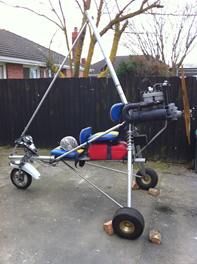
A two seat, custom built powered trike with undercarriage suspension certified with an Airborne Wizard wing.
It was registered to Mr P T Goleman, PO Box 41046, Christchurch 8247, New Zealand, as ZK-JQH on 27 April 2005, and the serial noted as PG1.
Powered by a Bombardier Rotax 532, single ignition engine and hand made wood, 2 blade prop made by Brent Thompson in NZ. The aircraft was flown out of Rangiora airfield.
It was stored in 2006 and the wing sold.
The registration was cancelled on 9 November 2007.
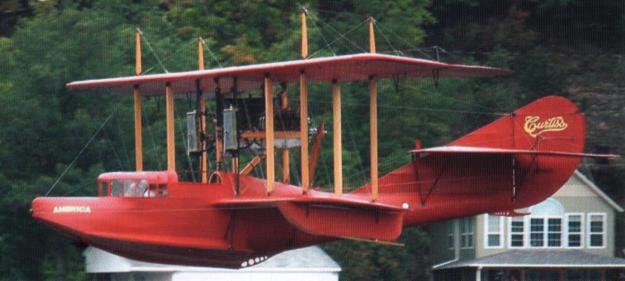
Construction of the replica Curtiss H-1 America began in the spring of 2004 and a total of 6000 man hours went into the construction at the Glenn H. Curtiss Musem at Hammondsport, New York. It has been built using the same materials as the originals with the exception of the glue and fabric covering.
At Keuka Lake, New York, attempts were made to fly the replica but despite rigging changes and engine tuning it refused to fly.
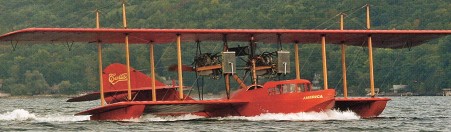
The engines were then changed from the 90 hp OX-5 units to counter rotating OXX-6 of 100 hp.
The aircraft then flew at Keuka Lake, New York on 13-14 September 2007, piloted by Jim Poel.
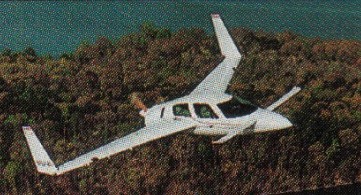
Initially referred to as the Speed Queen SQ2000, the SQ2000 was a new design following the lines of the Velocity etc., but with more rounded fuselage lines. The SQ2000 was designed by Stan Montgomery, and the prototype (which had the undercarriage of an Infinity) made its first flight in 1997 under the power of one 200hp Lycoming IO-360-C1A engine.
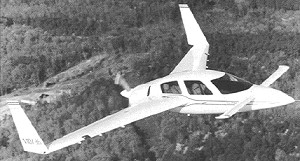
The basic SQ2000 could be completed as a 2-seater with as very large baggage compartment or as a 4-seater.

The SQ2000 features a cantilever mid-wing with tip rudders and a canard, a four-seat enclosed cabin accessed via doors, fixed or optionally retractable tricycle landing gear and a single engine in pusher configuration.
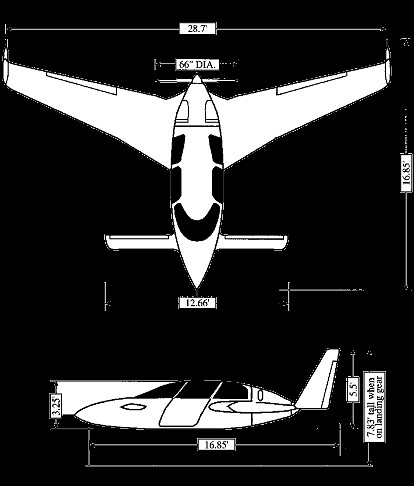
The aircraft is made from composites. Its 26.58 ft (8.1 m) span wing has a wing area of 104.0 sq ft (9.66 m2). The cabin width is 48 in (120 cm). The acceptable power range is 160 to 260 hp (119 to 194 kW) and the standard engine used is the 200 hp (149 kW) Lycoming IO-360 powerplant.
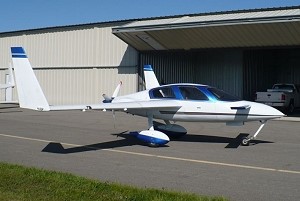
Like many canard designs, the SQ2000 has lengthy runway requirements. The standard day, sea level take-off run is 1,600 ft (488 m), while the landing roll is 1,500 ft (457 m).
The SQ2000 lacks flaps and has a high landing speed. The overall cabin height of the SQ2000 has more headroom since the seats are mounted lower. The kit is more complete as it uses molded wings and canards.
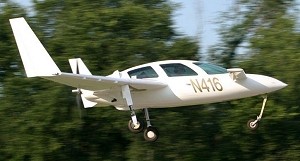
Several examples had been completed and flown by 2005, including one by Mr. Paul Lee with one 200 hp Franklin 6A-350-C2 engine and one by Mr. David Kanson with one 200 hp Lycoming IO-360 engine.
SQ2000 aircraft were observed with Velocity style undercarriage (retracting into the fuselage) and with a KLS-developed undercarriage, which had straight undercarriage members retracting inwards into the wings.
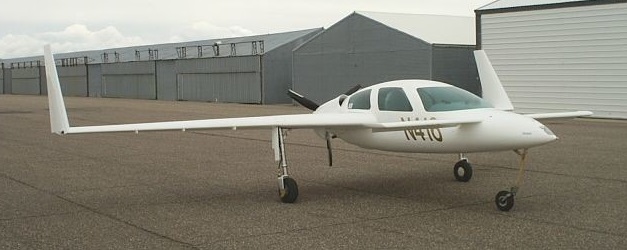
One particular SQ2000 was christened the Rotor-EZ by its builder, Paul Conner, who fitted one Mazda 13B rotary engine instead of the typical Lycoming, and a one-piece wooden propeller.

The aircraft made its first flight on 11 December 2004, but was lost in a fatal accident in May of the following year.
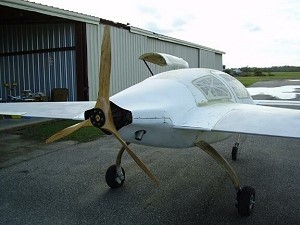
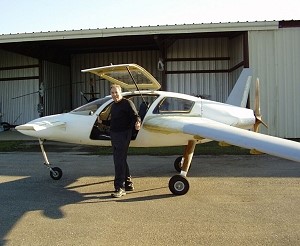
Several models were planned for amateur construction and available from Glassic Composites, LLC, which planned various models: the SQ2000 XP, similar to the SQ2000, but with lower empty weight and suited for 150-200hp engines such as one Lycoming O-320 or Lycoming O-360 series (one example seems to have been built but probably not completed); the SQ2001, a three-seater with a passenger in the rear of the cabin; and the SQ2002, a so called 2+2 version with children’s seats. Yet none of these variants was built, and when
The SQ2000 was available with fixed or retractable undercarriage. The basic structures are moulded with spars.
The SQ2000 first flew in 1993. The kit price in 1997 was US$22,000 for the SQ2000, and US$34,900 for the SQ2000 XP.
Less than a dozen aircraft were either completed or in construction in 12 years, and only eight on the US civil register. One reason probably lies in Glassic’s lack of credentials and the subsequent takeovers of the company’s assets.
Known completions are; SQ2000 N10736 (prototype), N416, N330DW, N2396M, N2366R, N206SQ, and N440DH. SQ2000 XP N971CL and the Rotor-EZ N2992P.
Glassic Composites ceased its activities and as of 1999, and was taken over by KLS Composites, a company formed by SQ2000 builders Messrs. Keith Register and Stan Montgomery.
Wing area: 104.2 sq.ft
MTOW: 2250 lb
Empty wt: 1100-1250 lb
Useful load: 1000 lb
Payload w/full fuel: 748 lb
Max wing load: 21.0 lb/sq.ft
Pwr load: 11.0 lb/hp
Cabin length: 83 in
Cabin width front: 47 in
Cabin width rear: 42 in
Cabin head room: 41 in
Prototype
Engine: 1 x 200 hp Lycoming IO-360-C1A
Wingspan:27.8 ft.
Length: 16.85 ft.
Height: 7.83 ft
Maximum speed: 258 mph
Cruise speed: 225 mph
ROC: 2,.200 ft./minute
Ceiling: 25,000 ft.
Range: 800 miles
SQ2000
Top speed: 250 mph
Cruise: 230 mph
Stall: 67 mph
Range: 900 sm
Rate of climb: 2200 fpm
Takeoff dist: 1700 ft
Landing dist: 1700 ft
Service ceiling: 25,000 ft
Engine: Lycoming IO-360, 200 hp
HP range: 150-250
Fuel capacity: 42 USG
Empty weight: 1200 lb
Gross weight: 2250 lb
Height: 7.8 ft
Length: 17.5 ft
Wing span: 28.7 ft
Wing area: 104 sq.ft
Seats: 4
Landing gear: retractable nose
SQ2000 XP
Top speed: 270 mph
Cruise: 235 mph
Range: 1035 sm
Rate of climb: 2200 fpm
Takeoff dist: 1500 ft
Landing dist: 1500 ft
Engine: Lycoming IO-360C-1C, 200 hp
HP range: 150-200
Fuel capacity: 52 USG
Empty weight: 1100 lb
Gross weight: 2100 lb
Height: 7.8 ft
Length: 17.4 ft
Wing span: 28.6 ft
Wing area: 104 sq.ft
Seats: 4
Landing gear: retractable nose or retractable tail
SQ2000 XP
Powerplant: 1 × Lycoming O-360, 200 hp (150 kW)
Wingspan: 26 ft 7 in (8.10 m)
Wing area: 104.00 sq ft (9.662 m2)
Length: 17 ft 6 in (5.33 m)
Empty weight: 1,200 lb (544 kg)
Gross weight: 2,250 lb (1,021 kg)
Fuel capacity: 42 U.S. gallons (160 L; 35 imp gal)
Maximum speed: 260 mph (420 km/h, 230 kn)
Cruise speed: 230 mph (370 km/h, 200 kn)
Range: 851 mi (1,370 km, 739 nmi)
Service ceiling: 25,000 ft (7,600 m)
Rate of climb: 2,200 ft/min (11 m/s)
Wing loading: 21.6 lb/sq ft (105 kg/m2)
Crew: one
Capacity: three passengers
Paul Lee’s N416
(The following are at 1850 lbs. & 117 CG)
Empty weight : 1410 lbs. (1394 lbs. without 9 qt. oil)
Engine : Franklin 6A-350-C2, 200 hp
Propeller : 66″ 3 blade, IVO magnum in-flight adjustable
Fuel Capacity : 35 gal. (includes 2.25 gal. in supplementary tank)
Landing gear: all-three wheels retractable
Climb: 2000 ft./min (105kts, 2000 dens alt.)
Ceiling: 18,000+ ft. (still doing 200+ ft./min)
Best glide ratio : @ 19:1 (105 kts., 3000 dens alt.)
Fuel efficiency : best about 5 gal. per hour near 120 kts.
Canard stall : 66 kts.
Takeoff distance : @ 1500 ft., rotate at 80 kts. (IVO electric adjustable prop.)
Landing rollout distance: approx 2000ft
Speed: 180 kias (3000 dens alt., 2800 rpm)
Crew/passengers: 2-4
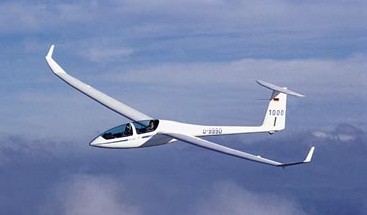
Long term plans for DG Flugzeugbau were to design and construct a a two seater glider, the DG-1000 – and from 2009 on the DG-1001.
The Airfoil is a laminar wing section designed by Horstmann/Quast from DLR Braunschweig. The Technical University of Delft completed the design with the addition of winglets and optimizing the wing- fuselage intersection. The wing section is slightly less efficient at best L/D, however much better above 160 km/h. This was combined with very docile stalling characteristics and low bug- and rain sensitivity.
The DG-1000 can be flown with 2 wing-spans. For easier rigging each wing features a parting device at about the 17.2 meter point. For flying at the 18 meter span a set of 0.4 meter long wing tips with “miniwinglets” are added (similar to the standard DG-800 18m tips). This configuration is designed to produce good rolling qualities and predictable flight behavior.
For cross-country flying the 20m wing tip extensions with integral winglets are added.
In addition the four-part trapezoidal wing of the DG-1000 has a small advantage over a two-part trapezoidal plan form at low speeds.
The wings of the DG-1000 wing are about 89 kg.
The fuselage incorporates a high seating position of the rear seat and a two-piece canopy. The landing gear has a shock-absorbing, new mechanism providing high comfort. One wheel extends forward from the landing gear compartment beyond the centre of gravity. The DG-1000 therefore tends to sit up, even with a pilot in the front cockpit. The sudden pitch up on winch launch is avoided because the glider always rests on the tail wheel.
The big spring gives comfort during taxiing and the wheel comes with a hydraulic disk brake.
The higher weight for the tail wheel is easy to handle with a towing device made by COBRA-Trailer.
The sailplane has been designed with new profile sections and optimized to the size of the wings. There is a compartment in the vertical fin for ballast weights which is accessible via a removable panel.
The wing-fuselage intersection was optimized for optima lboundary layer conditions with special airfoils in this area.
Winglets are standard for the 20m span which performance-wise will result in a wingspan of approx. 21 meters.
The drag of the nose wheel has been eliminated.
From the beginning the DG-1000 was planed with an engine – as a self-launcher or as a Turbo-version.
The maiden flight did not occur until July 28th, 2000.
The DG-1001S is the standard model with a 20 m span, winglets, retractable main gear, trim box, and water ballast. Additional there is an option for the landing gear of the DG-505 Orion.
DG-1001S-18/20
For this variation wing tips for an 18 m wingspan are available. 1.4 meter extensions, including winglets are available as options. In this version the DG-1000 is a very good aerobatic trainer. The extensions transform the ship into a high-performance cross-country machine.
DG-1001S Club
A less expensive entry model, the span is fixed at 18 m, the gear is non retractable, and there is no water ballast system. The Club Model can be ordered with “normal” retractable gear, water ballast system, and with removable tips. This gives the option of later adding the wing extensions, including winglets thus giving a complete DG-1001S-18/20m.
DG-1001T
The motorized version as a Turbo with a wing span of 18 or 20 m was available since spring 2005.
The DG-1000, with the help of the trim box and fin tank, can be set up with a suitably rearward C.G. for spin training.
DG-1001M
The motorized version as a Self Launcher with a wing span of 20 m was available since autumn 2009.
DG-1000
Wing span: 20m / 65.6ft
Wing area: 17.51sq.m / 188sq.ft
Empty Weight: 410kg / 902lb
Payload: 750kg / 1653lb
Gross Weight: 42.8kg /
Wing Load: 160kg /sq.m / 8.76lb/sq.ft
Water Ballast: 352lb
L/DMax: 1/46.5
MinSink: .51mps/ 100.3 fpm
Aspect ratio: 22.84
Seats: 2
DG-1001S 18m
Wingspan: 18 m / 59,1 ft
Wing area: 16,72 sq.m / 180 sq.ft
Aspect ratio: 19,38
Length: 8,66 m / 28,4 ft
Fuselage width: 0,73 m / 2,4 ft
Fuselage height: 1,0 m / 3,3 ft
Tail wingspan: 3,2 m
Empty weight with
min. instruments: 400 kg / 882lb
Wing loading with 80 kg loading: 28,7 kg/sq.m / 5,87 lb/sq.ft
Max. TOW: 750 kg / 1653 lb
Max. wing loading: 44,9 kg / sq.m / 9,20 lb/sq.ft
VNE: 270 kph / 146 kt
Acrobatic: unlimited
DG-1001S 20m
Wingspan: 20 m / 65,6 ft
Wing area: 17,51 sq.m / 188 sq.ft
Aspect ratio: 22,84
Length: 8,66 m / 28,4 ft
Fuselage width: 0,73 m / 2,4 ft
Fuselage height: 1,0 m / 3,3 ft
Tail wingspan: 3,2 m
Empty weight with
min. instruments: 410 kg / 902lb
Wing loading with 80 kg loading: 28,0 kg/sq.m / 5,73 lb/sq.ft
Max. TOW: 750 kg / 1653lb
Max. wing loading: 42,8 kg / sq.m / 8,76 lb/sq.ft
VNE: 270kph / 146 kt
Acrobatic: limited
Best L/D with max. TOW: 1:46,5
Min. sink (W= 625 kg): 0,51 m/sec / 100,3 ft/min
Glaser-Dirks Flugzeugbau GmbH
DG Flugzeugbau
Gerhard Glaser, owner of a civil engineering business, and Diplom Ingenieur Wilhelm Dirks, founded the Glaser-Dirks Flugzeugbau GmbH company. In 1972, they built their first glider, the DG-100. Glaser-Dirks produced 105 DG-100 and another 222 units have been produced later at the Elan factory. In 1977 the 15-meter class sailplane DG-200 entered the market. In 1978 the DG-200 was updated with 17-meter wingtip extensions. The DG-200/17 is one of the most sought-after gliders on the secondhand market. By 1980 Glaser-Dirks pushed into carbon fiber construction with the DG-200/17C motorglider. The DG-400 followed the next year and quickly became one of the best-selling motorgliders of all time. In 1983, version DG-300 Club Elan was designed to replace the DG-100 in the production line, and the fully aerobatic version DG-300 Elan Acro contributed to its popularity. The DG-300 is still in production; up until today 484 DG-300s have been delivered. In 1987 the two-seat DG-500 made its first flight, and the motorized DG-500M followed only 4 weeks later. Next came the 15m class sailplane DG-600. In 1989 a motorized self-launching version, the DG-600M followed. The latest product family is the DG-800, which was optimized for 18m span with wing flaps and equipped with modern wing sections designed by L.M. Boermans from the TU Delft. In May 1993, the self-launching version DG-800A and the pure sailplane DG-800S made their maiden flights.
In 2003 Glaser-Dirks Flugzeubau changed their name to DG Flugzeubau GmbH.
March 96 brought news of the company’s crash. Wolff and Glaser sold the remaining company capital, in a completely empty and deserted production hall. Gerhard Wolff joined the company as a partner.
Rolladen-Schneider has had to go into receivership, and DG Flugzeugbau did not take over the liabilities in 2003, but only the rights to build the gliders and use the brand name.
The Wolfgang Dallach Company collapsed and on 1 August 2008 DG Aircraft GmbH took over support of the Dallach “Fascination”, “Evolution”, “Sunwheel” and all derivatives.
Wolfgang Dallach was working for DG Aircraft as a freelancer since 2006.
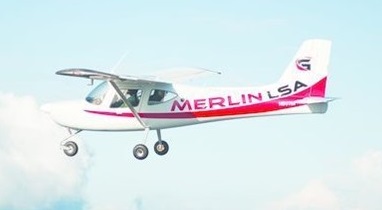
The first flight of Glasair Aviation’s Merlin light sport aircraft (LSA) took place on April 7, 2015. For nearly a year afterward, refinements and testing took place.
Almost a year later to the day, Glasair received the certification it sought on its prototype model, allowing it to reclassify the Merlin as an SLSA (that first S stands for Special). The Merlin will sell as fully factory-built, ready-to-buy-and-fly aircraft.
Pilot and passenger have a 47 inch wide cockpit and sweeping views outside. Skylights make it that much easier to track traffic.
Engine: Rotax 912 iS, 100 hp
Max Speed at Sea Level: 120 kts / 138 mph
Wing Span: 31 ft 9 in
Wing Area: 132 sq.ft
Length: 21 ft 8 in
Height: 8 ft 8 in
Empty weight (Prototype) 850 lb
Max takeoff weight: 1320 lb
Useful Load (Prototype): 470 lb
Limit Load: +4g / -2g
Fuel capacity: 24 USgal
Cruise: 105 kts / 121 mph
Stall, no flaps: 45 kts / 52 mph
Stall, full flaps: 39 kts, 45 mph
Cabin width: 46.5 in
Baggage: 50 lb
Base price: 2016: $149,000
 All Aero