229 Yarrow Hill Dr.,
Cottage Grove, WI 53527
2009: 1530 Pole Lane Rd., Marion, OH 43302, USA.
2009: Grosso Aircraft 400 W Oak St. Cottage Grove, WI 53527, USA.
LSA builder
229 Yarrow Hill Dr.,
Cottage Grove, WI 53527
2009: 1530 Pole Lane Rd., Marion, OH 43302, USA.
2009: Grosso Aircraft 400 W Oak St. Cottage Grove, WI 53527, USA.
LSA builder
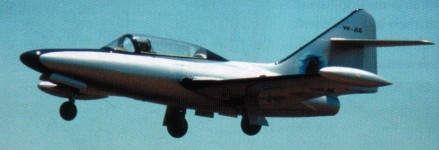
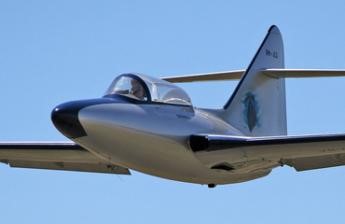
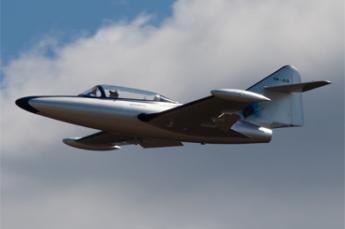
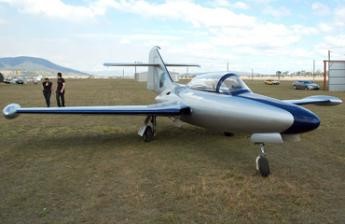
Designer and builder, John Gross, built the 3/4 scale replica Grumman F9F Panther at a Mt Cotton property a few miles south east of Archerfield (Australia).
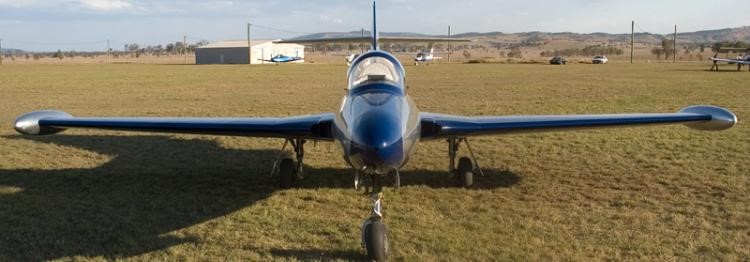
After 8 years of work, the homebuilt JG-2 took-off for the first flight on April 1 2006 at Kingaroy airport.
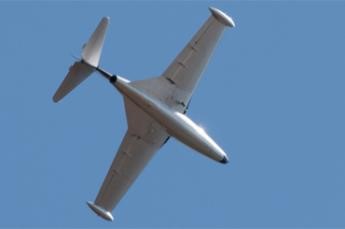
Power is from a GE T58-8F turbojet.
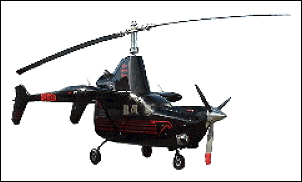
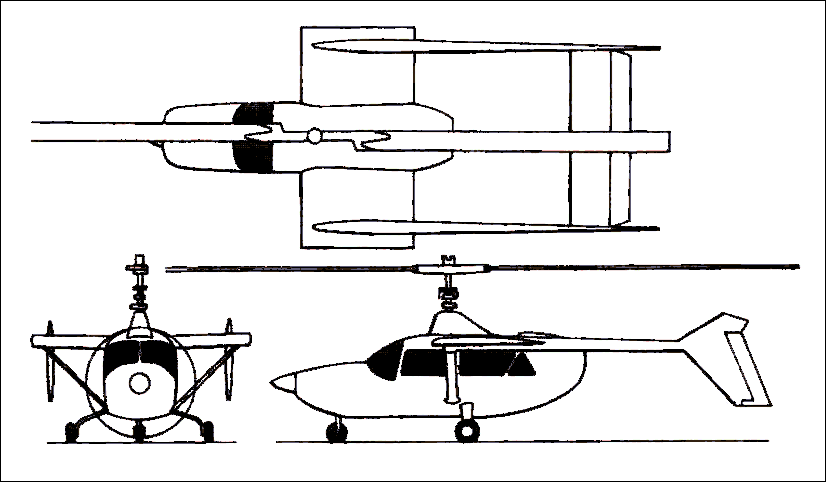
Groen Brothers Aviation, Inc. (GBA) has developed a plan that can rapidly bring the gyrodyne into the modern age. Implementing this plan would enable the design, development, production and delivery of safe, fast, vertical takeoff and landing, long range high payload rotorcraft. These aircraft will have the ability to hover and will be economical, reliable and easy to maintain. This can be accomplished using a tiny fraction of the cost and time that would normally be necessary.
Gyrodyne components and flight control systems can be incorporated into certain existing production high wing airplanes with only small modification to the airframe. The time and cost savings benefits of using an existing production airplane are possible because neither the airframe nor most of its systems will need to be designed, engineered, developed, structural loads measured, analyzed, tested, redesigned and engineered, tested again and then prepared for production. And, since the technology is simple, engineering risks are low.
Groen Brothers Aviation has also developed proprietary mission adaptive rotor blade technology. This technology allows GBA’s rotor systems to be optimized for hover flight and then during transition from hover to forward flight it can change to be optimized for high speed. Load sharing between the rotor and the aircraft’s fixed wing adds to the high speed capability of GBA’s gyrodyne aircraft designs.
Using an airplane that is already in production also means that the production plan, materials management system and massive supplier chain, quality assurance system, tooling, and production line are already in place and do not need to be designed, developed and paid for again, nor will there be a production learning curve to overcome. The only components that will need this development are the tip-jets (which have no moving parts), rotorblades, rotor head, mast and flight control system. Since the airframe is suspended from the rotor exactly from where it is suspended from its wing, in flight loads to the airframe should be virtually unchanged.
This concept was successfully tested by Groen Brothers Aviation through modifying a Cessna Skymaster airplane. It’s two piston engines were removed. The forward engine was replaced with a Rolls-Royce model 250 gas turbine engine, and the aft engine was replaced with a large clam-shell cargo door. The wings were clipped and the existing twin boom tail was inverted to give rotor clearance. The rotor system from one of GBA’s Hawk 4 Gyroplanes was directly connected to the high wing attach points that were already carrying the Skymaster’s fuselage. This conversion, using minimal assets, took less than one year from first conception to first flight. This aircraft demonstrated its exceptional stability and ease of flight, characteristic of a well designed gyroplane.
A technology demonstrator development of the Hawk 4 was announced in late 2000 as Hawk 6G with an expected first flight (prototype N9112A) in January 2001. The first flight was eventually made on 22 September 2001. Based around Cessna 337 fuselage with a single 335kW Rolls-Royce 250-B17F2 turboprop in the nose for propulsion, driving a FC9684C-6RX three-blade propeller, and a Rolls-Royce 250-C18 above the fuselage for rotation. The craft was fitted with an inverted Cessna 337 tailplanes and shortened wing with spoilers and two-blade rotor system from the Hawk 4. External fuel tanks are mounted at wingtips, and are modified Piper PA-24 Comanche wingtip units. Fuel capacity 416 litres. Estimated cruising speed was 209 to 241km/h, and a useful load of 907kg.
Price was US$950.000 in 2003.
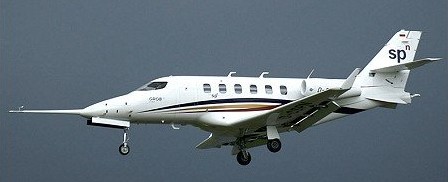
The Grob G-180 SPn (or spn) is a low-wing twin-engined corporate jet projected by Grob Aircraft in 2005. It can land on both paved surfaces and unimproved runway capability.
Engines: 2 x 1270kg Williams FJ44-3A turbofans
Max take-off weight: 6300 kg / 13889 lb
Wingspan: 14.86 m / 49 ft 9 in
Length: 14.81 m / 49 ft 7 in
Height: 5.12 m / 17 ft 10 in
Cruise speed: 754 km/h / 469 mph
Ceiling: 12497 m / 41000 ft
Range: 3334 km / 2072 miles
Grob launched their G140 four seat, fully aerobatic all-composite trainer at the 2001 Paris Air Show.
Engine: RR Allison 250-B17F.
Seats: 4.
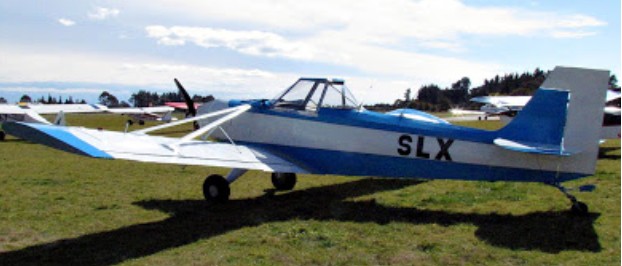
In New Zealand, Gavin Grimmer’s own design, the Grimmer Skylux (c/n 1005-2) is a single seat glider towplane powered by a converted Lexus V 8 engine. It was registered on 10/12/12, at Hastings, New Zealand, as an Amateur Built Aircraft. Gavin has had a lot of experience with automotive engine conversions in homebuilt aircraft with his Maranda ZK-JGR (which has the c/n 1005-1).
Yuneec International, created GreenWing International and in June 2013 it was announced that their GW280 (eSypder) and GW430 (e430) airplanes will be produced, marketed and supported by GreenWing International, however that company went out of business in about 2014.
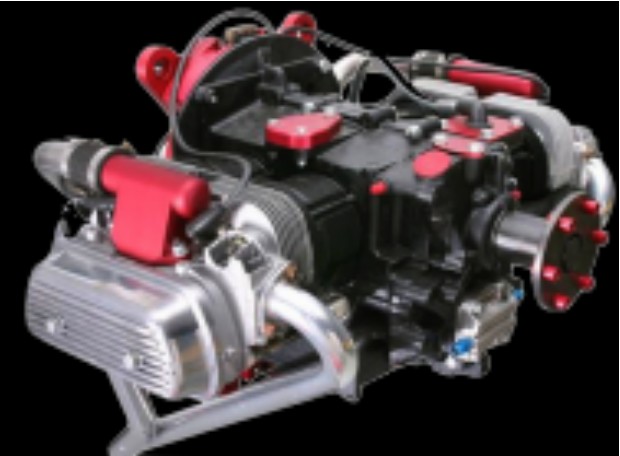
VW Engine 80 HP
4 Cylinder, Horizontally opposed
Air Cooled
Single Carburettor
Direct Drive
1998:
PO Box 545
NE 68010 Boys Town
USA
2009: Great Plains Aircraft Supply Co., Inc.
7011 N 160th Ave, Bennington, NE 68007, USA.
Markets kits and plans to construct single-seat Sonerai I monoplane and tandem two-seat Sonerai II in various subversions. Sonerai I originally designed by John Monnett and first flown 1971.
Built VW engine conversions
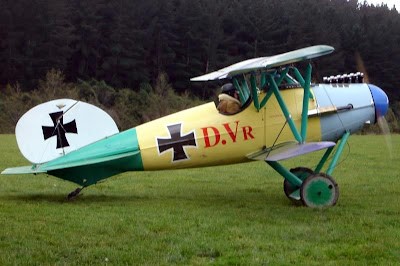
Tom Grant designed and built his 3/4 scale Albatross D V replica from his own plans over about 14 years, which included a building time of around three and a half years.
The fuselage was built up from white pine carvel planking (a boat building technique), with a lightweight fibreglass finish. The wings are of standard spruce spars and ribs with fabric covering. The engine is a 4 cylinder Toyota 480E from a Corolla.
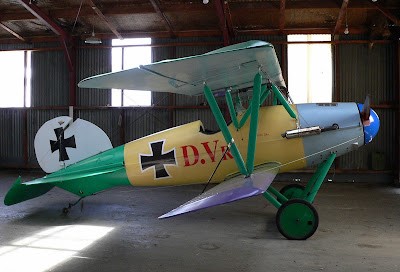
ZK-DVR (c/n TG01) was registered to Tom Grant of Dunedin on 8 November 2007. Tom says that it flies just like it is supposed to, and he had flown around 50 hours.
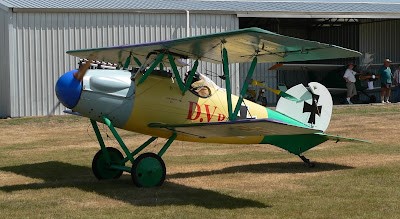
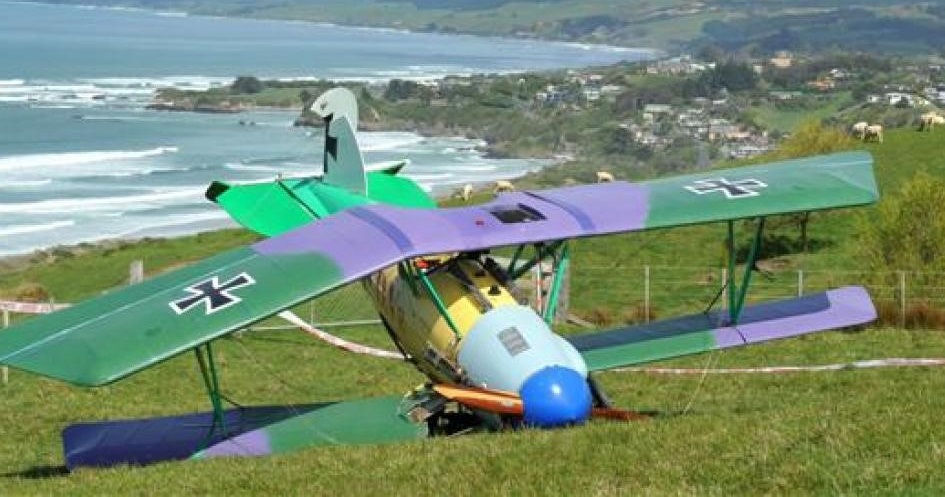
On 26 October 2015 it was reported;
Witnesses to the emergency landing of a replica World War 1 fighter heard the plane coughing before a loud ”boom” gave way to silence as it descended on to a ridge high above Ocean View on Saturday.
Police lauded the quick-thinking pilot for his ”perfect” emergency landing of the three-quarter Albatros D.Va replica on farmland above Brighton Rd about 10.50am.
The pilot, Tom Grant (87), was fine despite the plane hitting a fence on a ridge about 100m above Brighton Rd during the emergency landing, his wife, Jeanette, said.
”It was a controlled landing. He just caught the top of the wire as he came in,” she said.
”He got a tiny bump on his nose … but he’s fine.”
It appeared the landing buckled the plane’s wheels and damaged the right wing and undercarriage.
The plane, which Mr Grant built, was salvageable and would be ”next winter’s project”, Mrs Grant said.
 All Aero