Gulfstream 150

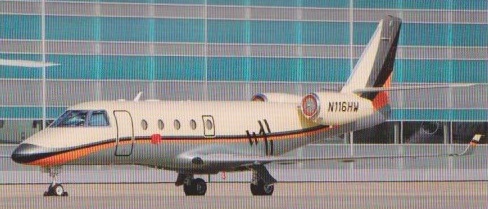
Gulfstream G150 N116HW

Through the use of high thrust, fuel efficient Honeywell TFE731-40AR engines, combined with numerous aerodynamic improvements, the Gulfstream G150 is a fast mid-sized business aircraft. The G150 started breaking speed records even before it went into service. A G150 test aircraft established a city-pair speed record on a flight from Tel Aviv to Geneva.

On Jan. 18, 2005, the first G150 business jet rolled out of the Israel Aerospace Industries (IAI) manufacturing facility at the Ben Gurion International Airport in Israel and successfully completed its first flight on May 3, 2005. The G150 received its Type Certificate from the Civil Aviation Administration of Israel and the U.S. Federal Aviation Administration on Nov. 7, 2005.

In 2006, the 22-year production run of the G100 ended and the G150 entered service to take its place. The G150 was the first business jet to be certified by the FAA for Stage 4, the industry’s most stringent noise standards.

In the first two years of service, the G150 has set 10 world city-pair speed records including New York to California, California to Hawaii, and from Aspen to New York.
Gulfstream’s avionics is Rockwell Collins ProLine 21 avionics system, resulting in a fully integrated avionics system.
The G150 offers a choice of three seating configurations accommodating up to eight passengers. In the first two years of service, the G150 fleet boasts a 99.8 percent dispatch-reliability rate. The comprehensive warranty on the airplane covers its primary structures, engines, and all production components (APU, avionics, etc.) for five years.
The TFE731-40AR engines have a thrust of 4,420 pounds each for good performance from hot and high airports. These engines also meet the stringent Stage 4 noise regulations.
The G150 can reach a maximum operating speed of Mach 0.85 and climb in steps to a ceiling of 45,000 feet, well above commercial traffic and weather. At its long-range cruise speed of Mach 0.75, it can whisk four passengers some 2,950 nautical miles. At Mach 0.80, the G150 can fly four passengers 2,600 nautical miles in less than six hours. With this range and at this speed, Gulfstream’s first true mid-size jet easily links New York with Los Angeles, London with Gander, Sao Paulo with Caracas and Cairo with Delhi.

Engine: 2 x Honeywell TFE731-40AR, 4420 lb / 19.66 kN
Wingspan: 55 ft, 7 in / 16.94 m
Length: 56 ft, 9 in / 17.30 m
Height: 19 ft, 1 in / 5.82 m
Maximum Ramp: 26,250 lbs / 11,907 kg
Maximum Takeoff: 26,100 lbs / 11,839 kg
Maximum Landing: 21,700 lbs / 9,843 kg
Maximum Zero Fuel: 17,500 lbs / 7,938 kg
Maximum Fuel: 10,300 lbs / 4,672 kg
Basic Operating: 15,100 lbs / 6,849 kg
Maximum Payload: 2,400 lbs / 1,090 kg
Maximum Payload/Full fuel: 850 lbs / 386 kg
Mmo: Mach 0.85
Long Range Cruise: Mach 0.75
Normal Cruise: Mach 0.80
Range at LRC: 2,950 nm / 5,463 km
Range at Normal Cruise: 2,600 nm / 4,815 km
Takeoff Dist. (MTOW, SL, ISA): 5,000 ft / 1,524 m
Baggage Volume (Gross): 80 cu ft / 2.26 cu m
Cabin Length: 17 ft 8 in / 5.38 m
Cabin Volume: 465 cu ft / 13.16 cu m
Cabin Height: 5 ft 9 in / 1.75 m
Cabin Width: 5 ft 9 in / 1.75 m
Gulfstream 100 / C-38 / IAI 1125 Astra

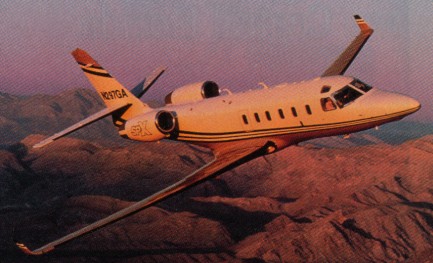
Gulfstream 100 SPX

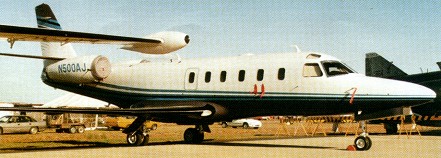
A swept-wing development of the earlier Westwind (itself derived from the jet Commander, a US-design), the Astra business aircraft first flew on 19 March 1984, with deliveries beginning in June 1986. Astra Jet Corporation in the USA undertook marketing and support of the aircraft which has been produced at the rate of one per month since January 1988. The aircraft incorporates composite structure and a Sigma 2 aerofoil wing section. The rear-mounted turbofans are 3,650 lb st (16,23 kW) Garrett TFE731-3A-200Gs.

Gulfstream 100 / C-38 / IAI 1125 Astra Article

IAI 1125 Astra SP

In 2001, Gulfstream acquired Galaxy Aerospace and with it, the mid-size Astra SPX and super mid-size Galaxy, which were later rebranded the G100 and G200, respectively.
In 2006, the 22-year production run of the G100 ended and the G150 entered service to take its place.

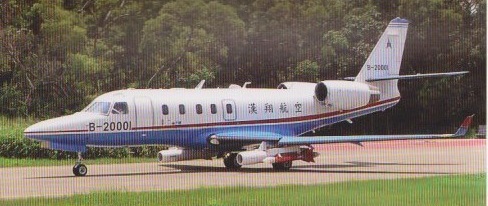
IAI Astra SPX B-20001

IAI 1125 Astra
Length: 55.446 ft / 16.9 m
Height: 18.045 ft / 5.5 m
Wingspan: 52.493 ft / 16.0 m
Wing area : 316.462 sqft / 29.4 sqm
Max take off weight : 23505.3 lb / 10660.0 kg
Weight empty : 12789.0 lb / 5800.0 kg
Max. weight carried : 10716.3 lb / 4860.0 kg
Max. speed : 465 kts / 862 km/h
Landing speed : 92 kts / 171 km/h
Cruising speed : 432 kts / 800 km/h
Initial climb rate : 3543.31 ft/min / 18.00 m/s
Service ceiling : 44997 ft / 13715 m
Wing load : 74.42 lb/sq.ft / 363.00 kg/sq.m
Range : 3110 nm / 5760 km
Engine : 2 x TFE 731 3A , 1627 shp
Crew : 2
Payload : 6-9pax

Gulfstream 100
Mmo: 0.875 Mach.
Cruise: M0.82-0.84 (470 to 480 kt).
Seats: 10.
Range IFR: 2,950 nm

Gulfstream Aerospace

The company that evolved into Gulfstream Aerospace Corp. started in the late 1950s when Grumman Aircraft Engineering Co., a company known for military aircraft production, developed a marketable business aircraft at its manufacturing facilities in Bethpage, N.Y.
At the start of the GII program in the 1960’s, Grumman officials separated the company’s civil and military aircraft production to improve efficiency. In 1966, they relocated the civilian component to Savannah, Ga. There they found the needed supply of skilled labour, an established airfield adjacent to the plant site and sufficient acreage for expansion. Transportation facilities suitable for heavy equipment and machinery and weather favorable to year-round flight-testing and flight-training operations further enhanced Savannah’s appeal. The new building in Chatham County opened in June 1967 and was officially dedicated on Sept. 29, 1967. It housed production and flight testing for the GII. The 100-person work force that built the GII was 90 percent local and grew to more than 1,700 within a few years.
In 1972, Grumman merged with light-aircraft manufacturer American Aviation Corp.
The 256th and final GII delivery took place in 1977. One year later, the Gulfstream line and the Savannah plant were sold to American Jet Industries, which was headed by little-known aviation entrepreneur Allen Paulson.
Paulson became the president and CEO of the company, renaming it Gulfstream America.
Under Paulson’s leadership, the Savannah work force grew to 2,500 employees by the spring of 1982. Also in this year, the company’s name changed to Gulfstream Aerospace Corp. to reflect its worldwide scope, and a new plane, the Gulfstream IV, was conceived. The following year, Gulfstream offered a total of 8.8 million shares of its stock to the public. In 1985, Chrysler Corp. acquired Gulfstream as a part of the automaker’s plan to diversify and move into high-tech industries. This was also the year that Gulfstream first appeared on the Fortune 500 list, at No. 417. Two years later, the 200th and last Gulfstream III produced was delivered, and the first delivery of a Gulfstream IV took place. The GIV was the first jet in business aviation to have an all-glass cockpit. In 1989, when Chrysler decided to sell Gulfstream, Paulson teamed up with Forstmann Little & Co. – a private equity firm specializing in leveraged buyouts – and bought Gulfstream back.
The opening of a $16 million Savannah service center with 136,000 square feet of hangar space was in 1996.

At the end of the 1990s, General Dynamics, a giant in the defense industry, purchased Gulfstream. The company focused on enhancing product performance and lowering costs. It opened a $5.5 million aircraft refurbishment and completions support facility in Savannah in 2000. In 2001, it acquired Galaxy Aerospace and with it, the mid-size Astra SPX and super mid-size Galaxy, which were later rebranded the G100 and G200, respectively. Also in 2001, Gulfstream purchased four U.S. maintenance facilities in Dallas; Las Vegas; Minneapolis; and West Palm Beach, Fla. Those service centers, along with a Gulfstream facility in Westfield, Mass., formed General Dynamics Aviation Services, which maintains and repairs Gulfstream and other business-jet aircraft.
In 2002, Gulfstream renamed its products, using Arabic numerals instead of Roman numerals to differentiate its aircraft. At the time, the company’s lineup included the ultra long-range G550 and G500, the long-range G400, the mid-range G300 and G200, and the high-speed G100. 2002 was also the year that Gulfstream introduced its Airborne Product Support aircraft, a specially equipped G100. It is used to deliver parts and provide any-time service to Gulfstream customers in North America and the Caribbean who are operating aircraft under warranty. In 2003, Gulfstream acquired a service center at the London-Luton Airport, the first Gulfstream-owned service center to be operated outside the United States.
In 2006, Gulfstream announced plans to expand its manufacturing and service facilities in Savannah. The seven-year, $400 million Long-Range Facilities Master Plan included the creation of a new 624,588-square-foot service center, an independent fuel farm, a 42,600-square-foot, state-of-the-art paint hangar and the addition of a new Sales and Design Center. As a result of the expansion, employment at the facility was expected to grow by some 1,100 jobs. To meet the immediate need for engineering office space, Gulfstream opened a Research and Development Center (RDC). The RDC accommodates approximately 750 technical and engineering employees.
The year 2007 also saw its share of major breakthroughs. In April, Gulfstream broke ground for a new business-jet manufacturing building at its headquarters in Savannah. The following month, the company signed a nine-year lease with North Point Real Estate for a second Research and Development Center. The RDC II consists of an office building, which can accommodate some 550 employees, and a Laboratory Building, which is designed for 150 employees and test equipment used in Gulfstream’s research and development efforts. Gulfstream completed the new Sales and Design Center addition in June and officially opened the first phase of the new Savannah Service Center in August.

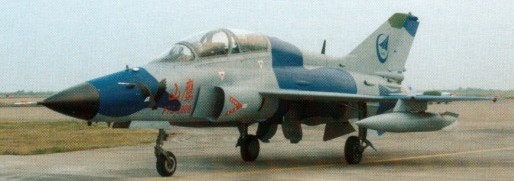
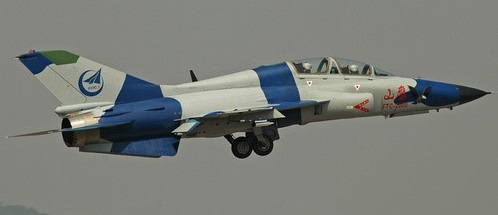
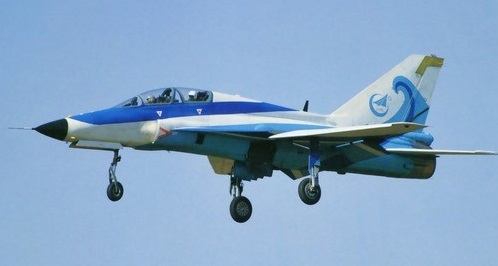
Guizhou JL-9 / FTC-2000 Mountain Eagle

In 2001, Guizhou began development of a new trainer aircraft to replace the JJ-7 (MiG-21) trainers and better prepare pilots for flying the J-11 (Su-27) and J-10. To reduce costs and development time, Guizhou based their design off of the JJ-7. It uses the same fuselage and wings of the late-model JJ-7s, while radically redesigning the forward fuselage. The intakes were moved to the sides of the fuselage, allowing for a solid nose holding a radar. To improve the view for the instructor, the tandem cockpits were stepped. While intended as a trainer, it retains secondary attack capabilities. It comes standard with an ECM suite and a radar warning receiver, as well as an inflight refueling probe. Armament consists of an internal 23mm cannon and five hardpoints for unguided air-to-ground munitions and short-range AAMs.

Also known as the FTC-2000 Mountain Eagle, on December 13, 2003, the JL-9 derivative of the JJ-7 first flew, from An Shun/Huang Guo Shu (AVA) airport. Involving little change from the JJ-7, the JL-9 took 28 months from design to first flight.

The PLAAF began service trials of the JL-9 in 2006, while Guizhou continued to upgrade the onboard systems. In 2009, the JL-9 passed trials, and began production.

Meanwhile a navalized variant for the PLANAF has arose, incorporating several major modifications. The nose intakes were modified to prevent engine stalls at high angles of attack, the vertical stabilizer and leading-edge root extensions were enlarged, and the ventral fins were deleted to make space for the landing hook.

Guizhou WS-13 / WoShan WS-13 Taishan

The WS-13 Taishan (WoShan-13) is a turbofan engine designed and manufactured by Guizhou Aircraft Industry Corporation to power the Pakistan-China jointly developed JF-17 Thunder light-weight multi-role fighter, and in the near future the Shenyang J-31 fifth generation stealth fighter currently under development.

China began development of the Taishan in 2000 to replace the Klimov RD-93 turbofan, which had been selected in the 1990s to power the JF-17 light-weight fighter. It is designed to have a life span of 2,200 hours and an improved version, providing around 100 kN (22,450 lb) of thrust with afterburner, was under development.

First run in 2006, the WS-13 Taishan was certified in 2007 and serial production began in 2009. The 18 March 2010 edition of the HKB report stated that a FC-1 equipped with the WS-13 completed its first successful runway taxi test.

Officials at the Farnborough International Airshow in August 2010 stated that a JF-17 development aircraft is flying with a Chinese engine, which is most likely to be the WS-13.

In November 2012, Aviation Week reported that a JF-17 Thunder is flying in China with the Guizhou WS-13 engine.

Variants:
WS-13 – 86 kilonewtons (19,000 lbf) thrust with afterburner.
WS-13A (upgraded) – 100 kilonewtons (22,000 lbf) thrust with afterburner.

Specifications:
WS-13
Type: Afterburning turbofan
Length: 4.14 metres (13.6 ft)
Diameter: 1.02 metres (3 ft 4 in)
Dry weight: 1,135 kilograms (2,502 lb)
Compressor: Two-spool 8-stage axial
Combustors: annular
Maximum thrust: 51.2 kilonewtons (11,500 lbf) dry; 86.37 kilonewtons (19,420 lbf) with afterburner
Bypass ratio: 0.57:1
Turbine inlet temperature: 1650 K (1,377 °C (2,511 °F))
Thrust-to-weight ratio: 7.8

Guggenmos ESC

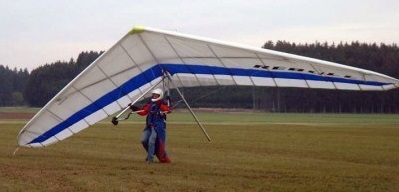
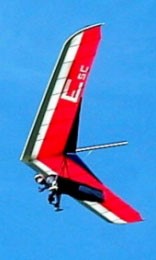
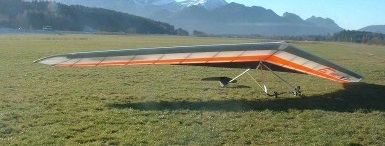
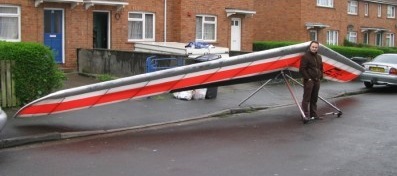
The 2000 Guggenmos ESC glider for Advanced pilots is very quick to rig and can be flat rigged. The twist, washout is manufactured into the leading edges combined with fixed tips and slighty more sweep then other rigids makes for a very stable platform.

The glider has the more usual spoilers for roll and a closed loop control system with no nose wires. The flaps split in two, length wise for derigging that enables them to be large, yet not impact on the folding up of the wing. The rib trailing edge junction is quick to attatch as are the fixed tips.

Very good roll control, quick to roll in and a little slower to roll out, pitch is light but positive. The landing is no harder then a sky floater. A very easy glider to fly.

The ESC XT for Advanced pilots appeared in 2006.

ESC XT

The ESC-C appeared in 2002.

ESC-C

ESC 2001
Wing area: 13.4 m²
Wing span: 12.1 m
Aspect ratio: 11.1
Minimum pilot weight: 70 kg
Maximum pilot weight: 104 kg
Nose angle: 127°

ESC 2002
Wing area: 13.4 m²
Wing span: 12.1 m
Aspect ratio: 11.1
Hang glider weight: 32 kg
Minimum pilot weight: 70 kg
Maximum pilot weight: 104 kg
Minimum speed: 42 km/h
Number of battens: 2
Nose angle: 127°

ESC-C 2002
Wing area: 12.1 m²
Wing span: 11.2 m
Aspect ratio: 10.5
Minimum pilot weight: 66 kg
Maximum pilot weight: 90 kg
Nose angle: 127°

Group Genesis Inc

Genesis Group is a team assembled around Jim Marske, Robert Mudd and John Roncz (famous aerodynamicist who collaborated with Burt Rutan, the much renowned designer of “canard” airplanes), and led by Jerry Mercer. The goal of this group was to develop a Standard class high-performance glider, made of composite materials, with a self-stable wing, utilising the latest design and aeronautical construction technology.
1995-2008: 1530 Pole Lane Rd., Marion, OH 43302, USA.

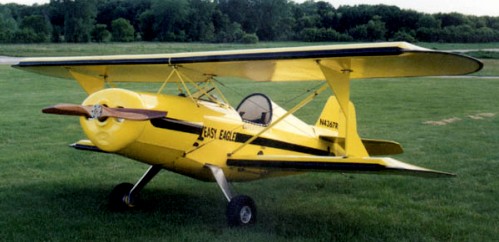
Grosso Aircraft Easy Eagle 1

The LSA Easy Eagle I Bi -Plane is an affordable, easy to build aircraft that combines standard aircraft construction methods, steel tubing, wood and fabric covering.
The 4130 steel tube fuselage is wide enough for 44 inch waist line and a 6 foot 3 inch pilot. The 300 pound useful load allows for a 228 pound pilot and 11 gallons of fuel. The low wing loading of 6.7 pounds. per square foot gives the Easy Eagle I Bi -Plane a low stall speed and great glide ratio.
The aluminum 5/8 inch landing gear and 5 inch wheels provide for easy handling either on paved runways or grass strips. With the optional hydraulic brake upgrade, ground handling is superior.
The Easy Eagle I Bi -Plane takes off in only 300 feet and lands in about the same, thanks to 105 square feet of wing area. Climb is 900 feet per minute at sea level.
With a stall at 45 mph or less, a cruise of 100 mph, low building time and simple straight forward construction, all combine to make the Easy Eagle Bi-Plane a single place, affordable bi-plane.
The airframe is rated at plus 4 and minus 3 g-s the Easy Eagle Bi-Plane is capable of doing many sportsman aerobatic maneuvers.
Featuring a fully welded steel frame combined with an all wood wing and a one piece aluminum landing gear, make it a airplane for today. Landing and taking off is made easy with a fully controllable tail wheel.
With a 64 hp VW engine the Easy Eagle cruises at 100mph and has a stall speed of 45mph. The Easy Eagle features a fabric covered fully welded steel frame combined with an all wood wing.
In 2008 the EASY EAGLE was available from:
GREAT PLAINS AIRCRAFT
PO Box 545 Boys Town, NE, USA.

Engine: 1915cc VW 65HP
Span: 18’4″
Length: 14’4″
MTOW: 725 lb
Empty Weight: 454 LBS
Useful Load: 283 LBS
Wing Area: 105 sq.ft.
Seats: 1
Take Off Distance: 450 FT
Stall: 45 MPH
Landing Speed: 55 MPH
Cruise: 95 MPH
Rate of Climb: 700 FPM
Range: 350 sm
Fuel capacity: 12 USG
Seats: 1