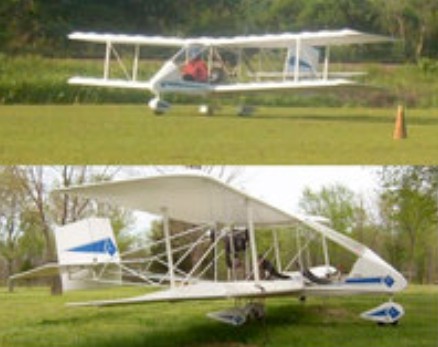
The Lite Flyer Biplane is Hart Aero’s FAA legal, three axis dual control, back to basics aircraft that fits the new Light Sport Aircraft and Sport Pilot rules. With three axis controls and dual controls, it handles just like a “real” airplane, the Lite Flyer has a center mount stick & is covered with the certified poly fiber process. This kit comes ready to assemble with all machining & required welding pre-done. Assembly time is normally around 100/200 man hours depending on experience. Price 2009: 6499 US$
Stall: 24 kt / 28 mph / 44 kmh Cruise: 60 kt / 69 mph / 111 kmh VNE: 100 kt / 115 mph / 185 kmh Empty Weight: 142 kg / 312 lbs MTOW Weight: 357 kg / 787 lbs Climb Ratio: 750 ft/min / 4 m/s Glide Ratio: 12:1 Take-off distance (50ft obstacle): 300 ft / 91 m Landing distance (50ft obstacle): 300 ft / 91 m
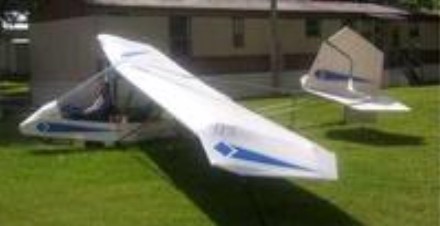
The Hart Aero Turkey Buzzard Sailplane is an FAA legal, three axis, back to basics sailplane. With three axis controls and dual controls with a center mount stick & is covered with the certified poly fiber or ceconite process. This kit comes ready to assemble with all machining & required welding pre-done. Assembly time is normally around 100/200 man hours depending on experience. Price 2009: 4999 US$
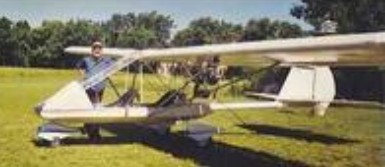
The Aero Trainer is Hart Aero’s FAA legal, three axis dual control, back to basics light sport training aircraft With three axis controls and dual controls, with a center mount stick & is covered with the certified poly fiber or ceconite process. This kit comes ready to assemble with all machining & required welding pre-done. Assembly time is normally around 100/200 man hours depending on experience. 2009 Price: 5999 US$
Stall: 25 kt / 29 mph / 46 kmh Cruise: 65 kt / 75 mph / 120 kmh VNE: 100 kt / 115 mph / 185 kmh Empty Weight: 135 kg / 297 lbs MTOW Weight: 352 kg / 775 lbs Climb Ratio: 900 ft/min / 5 m/s Glide Ratio: 14:1 Take-off distance (50ft obstacle): 250 ft / 76 m Landing distance (50ft obstacle): 250 ft / 76 m
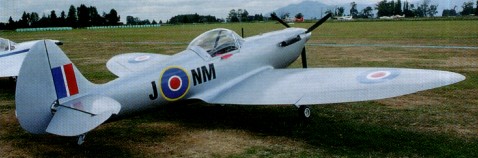
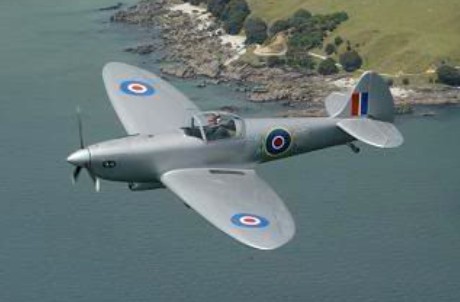
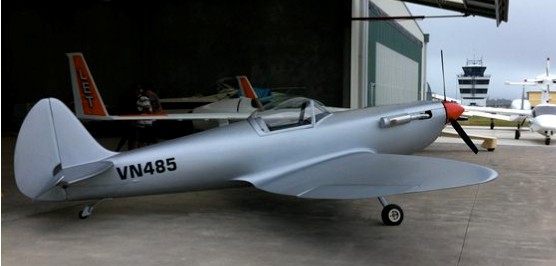
Harry Harris of Tauranga, New Zealand, constructed his own 2/3 scale Spitfire. First flying in 2002. The fiberglass microlight features a hydraulic gear retraction.
For sale in Feb 2014, the asking price was NZ$23,000
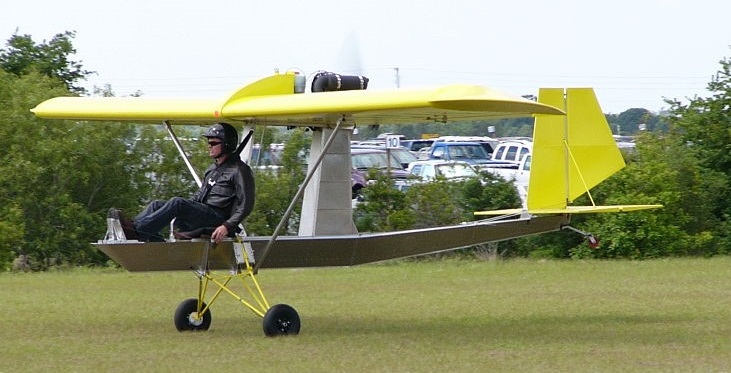
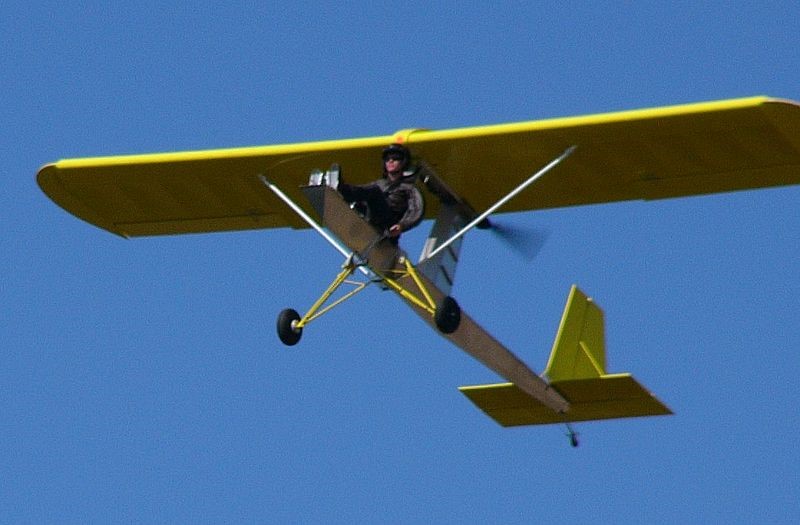
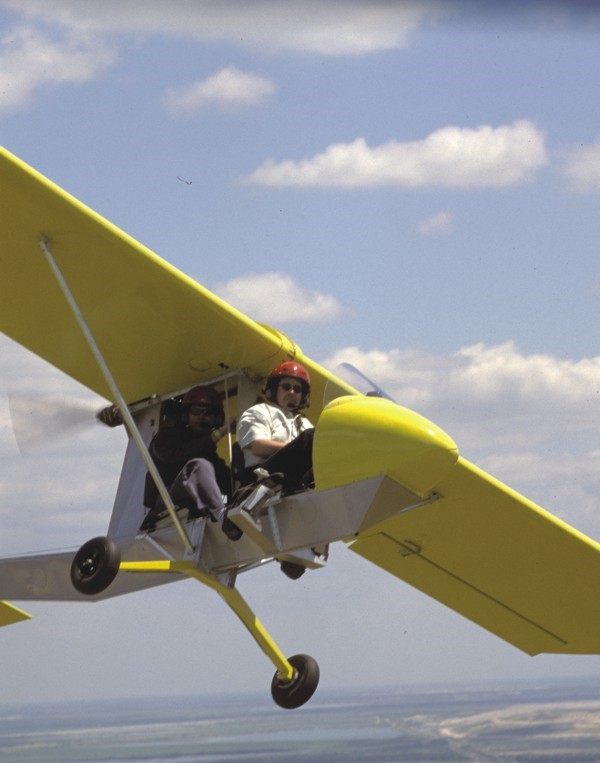
The Lil Breezy was inspired by the similar RLU-1 Breezy and designed by Jack Harper to comply with the United States FAR Part 103 Ultralight Vehicles rules in its single place version and also the US light-sport aircraft rules. It features a strut-braced high-wing, a single-seat or optionally a two-seats-in-tandem open cockpit without a windshield, fixed conventional landing gear and a single engine in pusher configuration.
The first flight of the prototype was in April 2002.
The early Lil Breezy-A, available as a kit, is made from welded steel tubing with its flying surfaces covered in doped aircraft fabric. The later “B” model, available as a kit or later as a complete aircraft only, is of aluminium construction, with flying surfaces covered with Dacron sailcloth. Standard engines available included the 50 hp (37 kW) Rotax 503 two-stroke powerplant.
The first Lil’ Breezy – effectively the “A” model though Jack Harper didn’t call it that – started out as welded steel. Later, he went to the newer stressed skin triangular truss construction, which is composed of aluminum angle on the upper sections of the aft fuselage (and elsewhere), square aluminum tube on the lower or ventral side, and laser-cut sheet metal webs. Aluminum angles are also used as stringers.
The only components contained inside the triangular boom structure are the push rods for the elevator. A direction reverser is located just aft of the tower structure to translate the stick movements to the correct action at the elevator.
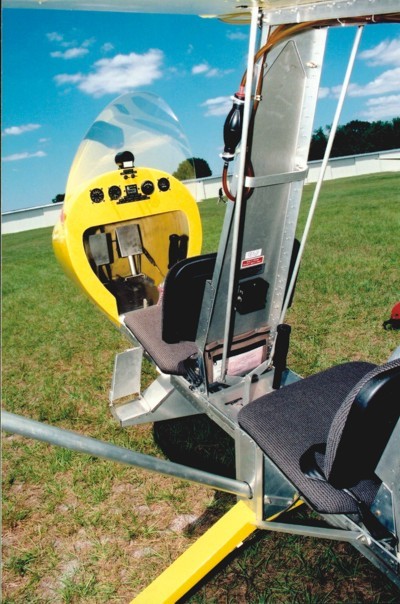
The front portion of the fuselage structure houses the throttles, which connect between the two seats.
The Lil’ Breezy B’s wing construction did not change. The wing is made from fiberglass and epoxy resin over a solid foam core incorporating aluminum stringers. Each part of the wing is vacuum molded at the factory and assembled in an alignment fixture. The wing is covered with polyester heat shrink fabric and then painted. The leading ledge uses a solid core foam leading edge with aluminum caps top and bottom. Each wing half weighs 40 pounds completed, 80 pounds total. Without the engine and its component parts prop the Lil’ Breezy B’s airframe weighs about 275 pounds.
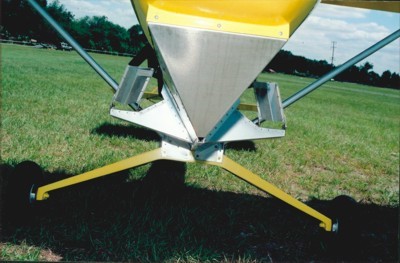
The Lil’ Breezy B’s main gear is solid wood core with fiberglass over it. It is a single piece structure weighing only ten pounds (without wheels and tires). The wood core is composed of three layers of bidirectional grain with ten layers of unidirectional on the lower side to absorb the landing loads.
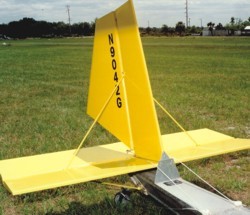
To adjust for trim speeds there are four positions on the leading edge of the horizontal stabilizer, which can accommodate different weights of pilots. The minimum weight of a front-seated pilot when flying solo is 150 pounds. If you have a 250-pound pilot up front (and no rear seat occupant), that pilot will need to drop the leading edge of the horizontal stabilizer down by one hole.
The Lil’ Breezy B’s pull starter is located just above the aft seat, where a primer pull knob is also mounted. The pull handle can easily be reached while in front of the strut. A small remote choke lever made of angle aluminum is located above the word “Experimental” on the aircraft’s right side.
The 2005 Lil’ Breezy B has a new nose cone that is much larger. The former one was also further out front “Drifter-style,” and you couldn’t reach the instruments. The rudder pedals were barely inside the old pod where now the pedals are well recessed. With the new pod, all knobs and switches are in close range and the larger pod with its windscreen will keep the breeze off the Lil’ Breezy pilot (“except for his knees,”).
The rear control stick is shorter than the front for a very good reason. When you have the stick full forward and off to one side or the other, it comes close to contacting the aileron push rods leading up to the control mixer. The short stick prevents this but it will bring slightly higher stick forces.
The two seat version cost US$21,000 in 2011. The standard features were all component parts for kit, pre-assembled wings, all hardware, covering materials, wheels and brakes with shock absorbing gear, remote choke and primer, steerable tailwheel, pre-assembled wings. Options were Dual controls, second seat, and nose fairing. Construction is aluminum stressed skin airframe using 2024 T-3 aluminum sheet and aluminum angle and square extrusion, fiberglass nose fairing, fiberglass gear, heat-shrink polyester fabric wing coverings.
For those who prefer not to fly the Lil’ Breezy as a 2-seater, you remove the rear seat rudder pedal box off the fuselage, and remove the rear seat and controls. Now you have some baggage area and single-seat performance.
A Rotax 582 model with electric starting was available with a single-piece radiator then located behind the “tower” structure. The tower structure is the stressed skin construction aft of the rear seat. It provides airframe rigidity that eliminates the need for wing bracing wires. The way the muffler is mounted above the exhaust port requires Harper Aircraft to supply special aluminum parts. Muffler clamps and the vibration isolation parts are obtained from Lockwood.
You shouldn’t push or pull the Lil’ Breezy B by its tail surfaces. For even tighter maneuvering, pick up the tail by hand with the tailwheel from behind the rudder. Push or pull the aircraft with the tailwheel or the wing struts at their attaching ends (never from the middle).
Ailerons and elevators are controlled using push/pull tubes. These are connected with rod-end bearings making for generally smooth operation. Bell cranks pivot on polyethylene blocks and therefore require little or no service. The rudder is controlled using flexible cables inside of nylon tubing held in place with plastic fair lead blocks. Throttle and brakes are controlled with cables inside of a flexible housing.
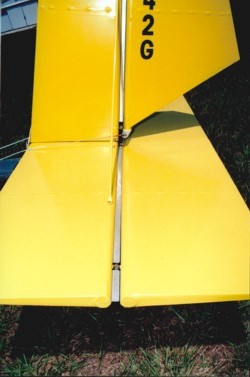
The wings can be removed in 10 minutes per wing, 20 minutes total, and placed in a trailer for easy transportation and storage. The tail surfaces have the normal gaps but Harper mostly seals these air-bleeding points with narrow strips of aluminum.
Build time is 150-200 hours, but that includes putting the Dacron on and painting. The wings come fully assembled by the factory but customers add the covering and finish. The rest of the kit is mainly a selection of laser-cut aluminum angle and sheet metal parts that you then assemble.
Fast-build kits and ready-to-fly aircraft were available. None of the B models can be built light enough to meet Part 103’s 254-pound requirement.
The kit comes complete with all the sheet parts cut out and ready to assemble. Rivet holes are located and punched. Welded parts such as the landing gear and control sticks come finished and ready to paint. Wings come mostly assembled needing only installation of the wing tip bow and trailing edge unit. All hardware is included along with the covering supplies for the wing and tail surfaces. You will need to buy the paint of your choice locally.
The basic airframe kit, in single-seat form and without the nose fairing, less engine, prop, and instruments sold for $7,795. A full airframe kit with the second seat and nose pod is $8,545. The engine, prop, and instruments are sold separately, drop-shipped to the customer from Lockwood Aviation Supply.The total price would be about $12,500 including engine, instruments, and paint finish work. You can start with a fuselage kit for $3,500 and add the wing kit ($3,500) and tail kit ($795) when ready. The new large nose fairing is optional at $500 and if you want the second seat and rudder pedals, add $250. All costs are effective in early 2005.
The Lil’ Breezy B is not particularly quick rolling but is a little quick in pitch. Your left hand is used for the throttle under your left knee. Some pilots don’t care for that so Harper planned to put the throttle on the instrument panel where General Aviation pilots are used to finding it.
Harper Aircraft’s Pilots Operating Handbook recommends you climb at 40 mph or greater. The Lil’ Breezy B can leave the ground in as little as 100 feet. At 700 pounds of load, takeoff is reported to require 150 feet. Best climb angle (Vx) comes at 50 mph and best rate of climb (Vy) is done at 60 mph. Flying the aircraft solo with the Rotax 503, should see about 1,000 fpm of climb. Dual operations with the same engine produce about 600 fpm of climb. Sink rate is about 500 fpm. Cruise speeds range from 40 to 60 mph though you can lower the bottom figure with practice or push a little faster so long as you remain less than Never Exceed speed (Vne) of 90 mph. Landing speed can be as slow as 35 mph if the plane has a lighter load.
The Lil’ Breezy B is rated for +6/-3 Gs at 550 pounds. However, given its 350-pound empty weight (when simply equipped) and assuming a full load of fuel (60 pounds), pilots over 140 pounds will have less margin. In an effort to save weight, the test Lil’ Breezy B had shoulder belts only. But as customers prefer 4-point security those restraints became standard.
Two-place stalls come at 42 mph with power reduced to idle thrust. Stall solo is about 38 mph. All stalls were identified not by a nose break through but by a wallowing of the wings. They walked back and forth in an easily identified fashion. Adverse yaw was very modest in either direction. When adding power to an engine mounted up high relative to the center of mass, the Lil’ Breezy noses over significantly. When checking longitudinal stability with the power at cruise, a reduction in power without stick movement produced a nose over and recovery in just two oscillations of decreasing amplitude. The Lil’ Breezy B leveled out to normal rather quickly.
The center wing fuel tank capacity is 10 gallons, which will provide about two hours of active-throttle operation or perhaps three hours of cruise at a lazier pace. On lateral and longitudinal CG, fuel use has little effect on weight and balance. The sight gauge can easily be seen from the front seat in its lower range.
The Harper Lil Breezy was produced by Harper Aircraft of Jacksonville, Florida. While the company was in business the aircraft was supplied as a kit for amateur construction or as a complete ready-to-fly-aircraft.
Jack Harper soloed at the age of 14 in a J-3 Cub. Later he graduated from Embry-Riddle Aeronautical University in 1989 with a Bachelor of Science degree in Aviation Technology. An A&P mechanic, he’s an instrument-rated pilot holding a Commercial Multi-Engine FAA certificate. He’s logged more than 4,500 hours of flight time by 2005.
Jack had a builder’s background before he started to manufacture the Lil’ Breezy kits. In the 1970s he and his father built a Bede BD-5. Since that project, Jack has built a Hatz Biplane and a Skybolt Biplane plus a Wittman Tailwind and an RV-8. Not content simply to build kits, he also restored a J-3 Cub, an Aeronca Champ and a Starduster Too Biplane.
All that work generated a desire to design an airplane from scratch. He first designed on paper, with drawings of shapes that interested him. He decided to bring some of the drawings to life and built the first Lil’ Breezy model and started improving on it after many hours of flying prototypes. The first planes were single-seaters and used a rear-mounted engine. Later, he went to a front engine and then back to what he calls “the superior rear-mounted engine.”
With the success of a Part 103 the first planes were true ultralights, but with the passing of the FAA Sport Pilot and Light-Sport Aircraft rule, it opened up a whole new set of possibilities. The later Lil’ Breezy “B” model had two seats, convertible to a single-seater (with great performance) if desired.
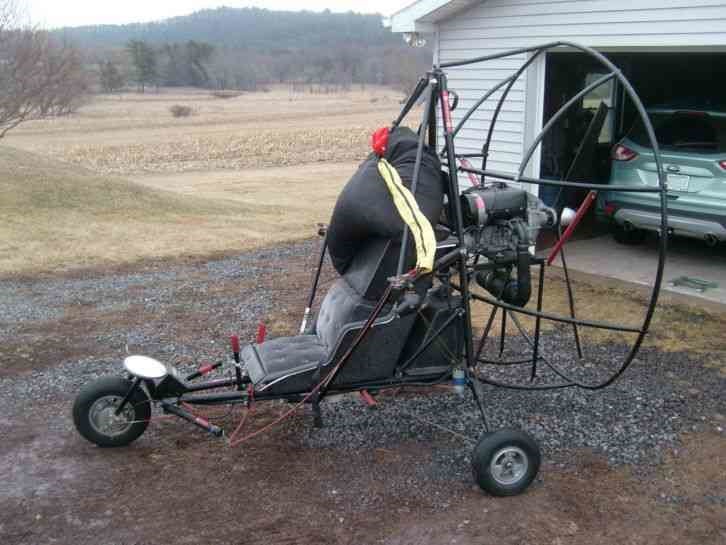
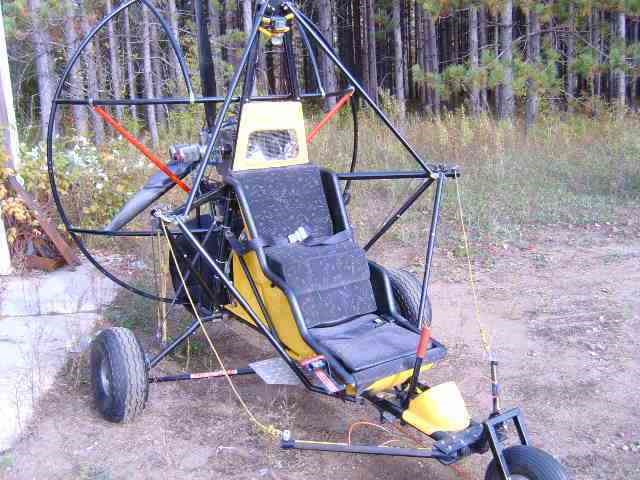
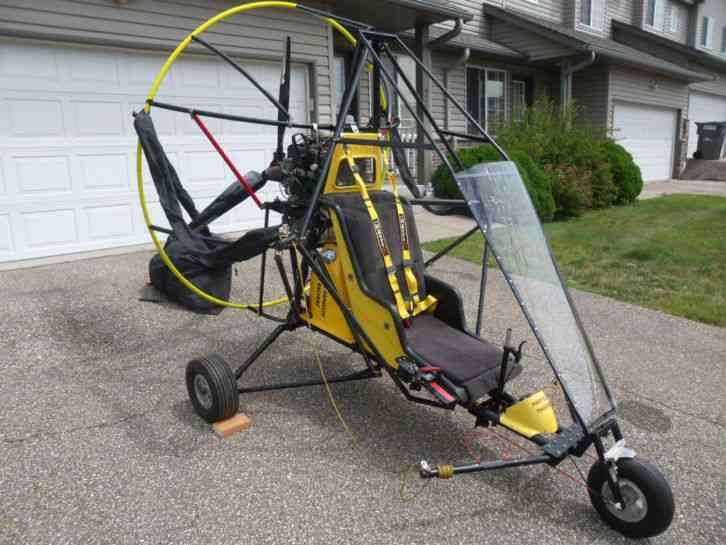
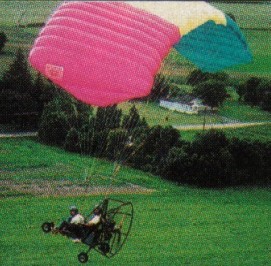
Introduced in 1988, the Harmening High Flyer powered parachute was designed to comply with the US FAR 103 Ultralight Vehicles rules, including the category’s maximum empty weight of 254 lb (115 kg). The aircraft has a standard empty weight of 247 lb (112 kg). The aircraft was designed to be a single-place or optionally two-seater. The base model High Flyer features an MK Superfit rip-stop nylon parachute-style high-wing, tricycle landing gear and a single 45 hp (34 kW) 2si 460-F engine in pusher configuration. Variants use other engines.
High Flyer Executive
The aircraft is built from a combination of bolted 6061-T6 aluminium, welded 4130 steel tubing and mild steel. In flight steering is accomplished via foot pedals that actuate the canopy brakes, creating roll and yaw. On the ground the aircraft has lever-controlled nosewheel steering. The main landing gear incorporates sprung steel suspension. The aircraft was factory supplied in the form of an assembly kit that required 30–40 hours to complete.
All kits were manufactured in the USA, and includes the engine and 3 blade propeller. FAR 103 legal, the High Flyer Standard converts from single to two place in 10 minutes.
By 1998 the company reported that 75 kits had been sold and 75 aircraft were completed and flying, the cost in 2001 was US$9,500.
High Flyer 503
The production by Harmening’s High Flyers of Genoa, Illinois, USA, ended when the company went out of business in circa 2008.
High Flyer Deluxe
High Flyer Premiere
Variants:
High Flyer Base model Engine: 2si 460-F, 45 hp (34 kW) Cost 2001: US$9,500
High Flyer Standard Engine: Rotax 503, 50 hp (37 kW) Height: 6.7 ft Length: 10 ft Empty weight: 247 lb Gross weight: 687 lb Fuel capacity: 5 USG Cruise: 26 mph Range: 20 sm Rate of climb: 450 fpm Takeoff dist: 50-150 ft Landing dist: 20-50 ft Service ceiling: 10,000 ft Cost 2000: US$9,395 Completed and flown: 25 by early 2000
High Flyer Deluxe Larger fuel tank Engine: Rotax 503 50 hp (37 kW) engine Cost 2000: US$9,895 Completed and flown: 25 by early 2000
High Flyer Premiere Engine: HKS 700E, 60 hp (45 kW) Cost 2000: US$14,980 Completed and flown: 30 by early 2000
High Flyer Executive Engine: Hirth 2706, 65 hp (48 kW) Wingspan: 39 ft (12 m) Wing area: 550 sq ft (51 m2) Length: 10 ft 0 in (3.05 m) Carriage Height: 7 ft 0 in (2.13 m) Empty weight: 280 lb (127 kg) Gross weight: 830 lb (376 kg) Fuel capacity: 9 U.S. gallons (34 L; 7.5 imp gal) Cruise speed: 26 mph (42 km/h; 23 kn) Rate of climb: 1,000 ft/min (5.1 m/s) Crew: one Capacity: optionally one passenger, if second seat fitted Cost 2000: US$11,999 Completed and flown: 30 by early 2000
High Five Engine: Rotax 582, 64 hp (48 kW) Cost 2005: US$12,250 Completed and flown: 10 by early 2005
Created in 1952 from the Mansyu Hikoki Seizo Kabushiki Kaisha of Manchuria. Began the H-6 bomber program in 1957, initially assembling two Tu-16s from Soviet supplied components, the first flying in September 1959, but in 1961 this program was transferred to Xi’an. Manufactured the H-5 jet bomber from 1966 to the 1980s, based on the Soviet llyushin II-28. Developed and still produces the Y-11 (first flown about 1975) and Y-12 (first flown June 1984) general-purpose transports and Z-9 Haitun twin-turboshaft helicopter as license-produced Eurocopter Dauphin 2. Was pursuing development of a new helicopter in 1999, and is a partner in the Colibri EC 120 B helicopter program . Also produced two prototype (one static) and five production SH-5 anti-submarine amphibians (one civil, tested as a firebomber).
In 1998, the core company of Harbin Aircraft Industry Group (HAIG) was under under AVIC II and occupied a 514 ha (1.270 acre) site, including 350,000 sq.m of workshop space. The workforce in 1998 numbered approximately 18,000.
Harbin partnered with Eurocopter and Singapore Technologies Aerospace in the Eurocopter EC 120 Colibri programme, for which it builds the cabin.
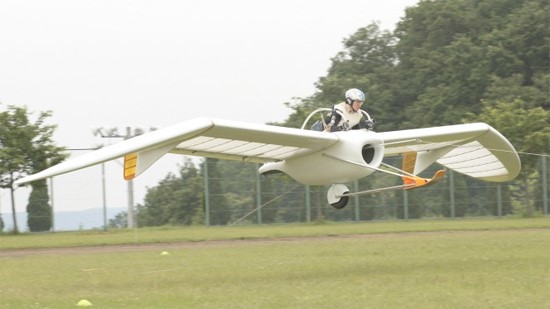
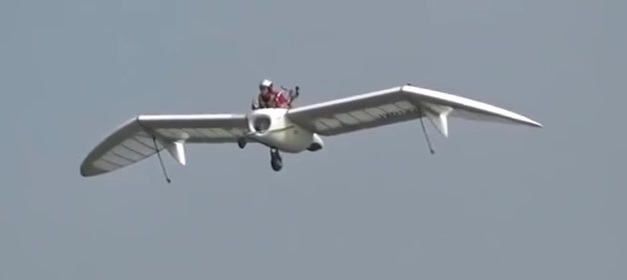
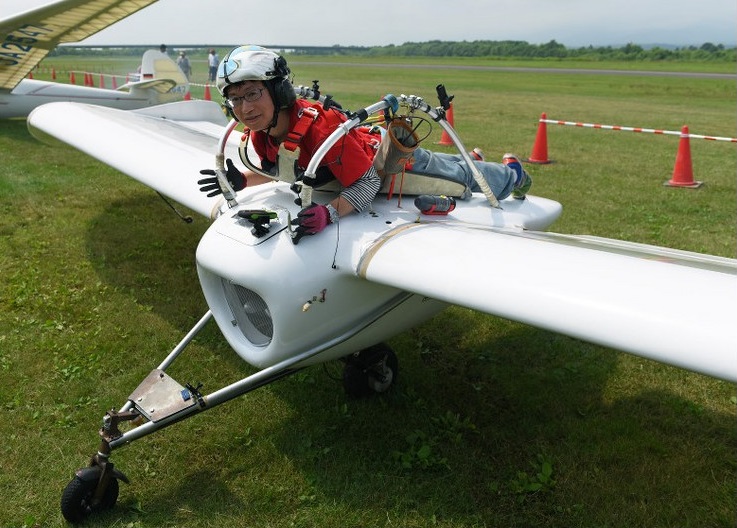
Designed by Satoru Shinohe, the OpenSky M-02 glider/jet-powered motor glider is based on the ‘Mehve’ glider seen in the 1984 anime film, directed by Hayao Miyazaki, Nausicaä of the Valley of the Wind. In the film, Nausicaa takes flight uses the Mehve – the name taken from the German “Möwe”, meaning ‘gull’ – to survey a toxic wasteland.
The M-02J is the work of Kazuhiko Hachiya, who has been working to produce a pilotable version of the aircraft since 2014. Like the animated version, Hachiya’s craft is built around a small jet engine, which is used to achieve take off, climb for a duration of 10 minutes, and attain gliding altitude.
Hachiya’s Mehve, called the OpenSky, has been through several versions since 2003. The original version was radio-controlled, but Hachiya himself took to the sky on OpenSky 3.0. It was this model he planned to show to the public.
The craft boasts a 963cm wingspan and a 267cm fuselage. Like in the film, the pilot lies flat against the top pf the vehicle, and steers by shifting their weight around.
As of June 2006, two aircraft prototypes had been constructed, and one has successfully completed a series of 10 unpowered test flights where it flew 98 meters and achieved an altitude of 4 meters after being tow-launched by a tensed elastic cable. The project is led by artist Kazuhiko Hachiya and design by Satoru Shinohe and manufactured by Aircraft Olympos.
The Jet engine installed version, M-02J, had public demonstration flight in June 2016 at Takikawa, Hokkaido. Hachiya – a pilot and artist, who conducted the flight in a helmet decorated with wings – hoped to improve stabilisation for future efforts.
Variants:
Möwe 1/2 (メーヴェ1/2) — sub-scale, radio-controlled development aircraft
M-01 — unpowered development aircraft
M-02 a total of 2 airframes of M-02 were built, 1 for preliminary gliding practice and 1 for installing Jet engine with no intention to mass-production.
M-02J (14 June 2007) Modified M-02 airframe has had a Jet engine installed. (14 April 2010) Vehicle M-02 has undergone high speed taxi tests at Fukusima Sky Park runway, in order to evaluate stability and acceleration. More details of the jet engine assembly are available, and the engine has a considerable separation from the walls of the engine pod, in order to permit better cooling and prevent the wood and composite airframe from encountering an excessive fire risk.
M-02 Engine: 1 × (undisclosed engine), 40 kg (88 lbf) Wingspan: 9.636 m (31.61 ft) Wing area: 12.2 m² (131.3 sq ft) Aspect ratio: 3.74 Airfoil: high forward camber, reflexed Mean aerodynamic chord: 1.287 m (4.22 ft) Length: 2.083 m (6.83 ft) Height: 1.057 m (3.47 ft) Empty weight: 50 kg (110 lb) Useful load: 50 kg (110 lb) Loaded weight: 105 kg (231 lb) Max. takeoff weight: 115 kg (253 lb) Fuel capacity: 10 L (planned) Never exceed speed: 200 km/h (124 mph) Maximum speed: 120 km/h (75 mph) Cruise speed: (projected) 50–90 km/h (31–56 mph) Stall speed: 36 km/h (23 mph) Wing loading: 8.6 kg/sq.m (0.0122 lb/sq.in) Thrust/weight: 0.36 Seats: 1
Front Control Stick, Activated Electric Hydraulic Pump for the Pre-rotator & Electric Pitch Trim, Electric Rotor Brake, Dual Contols, Adjustable Front Seat, and a Rear Control Stick. Aluminum Seat Tank Standard Equipment – Altimeter, Air Speed, Compass, Engine Tachometer, Oil Pressure, Water Temperature, Voltmeter, Hour Meter, Main Wheel Brakes, Tall Tail, & Seat Belts. The complete kit unassembled cost in 2010 US$16,500. Assembled and tested, 2010 US$18,000.


 All Aero