Hollman Aircraft

Martin Hollman

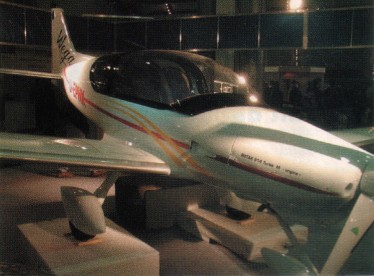
As part of his Aeronautical Engineering thesis research he designed a set of aluminum rotor blades for a two-place gyroplane. Having designed a practical rotor system for a two-place gyro, he moved on to the design of a gyroplane to go with the new blades. The result was the Hollmann Sportster.

1980: 11082 Bel Aire Ct. Cupertino, CA 95014, USA.

1995-7: 3 Harris Ct., Bldg. S., Monterey, CA 93940, USA.
2009: 5 Harris Court, Bldg. S, Monterey, CA 93940, USA.

Hogan Innovator

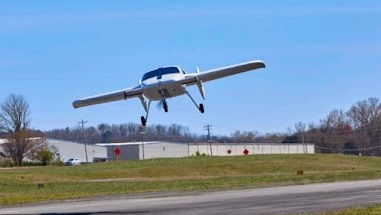
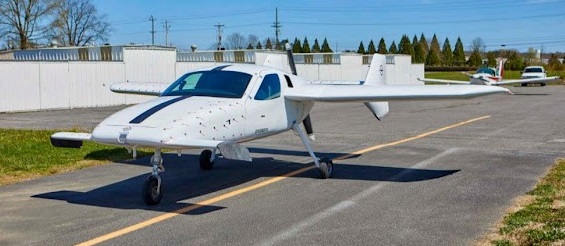
The composite construction Hogan Innovator was a two-place, twin-tailboom, rear-engine, pusher-propeller amateur built airplane, powered by a Continental Titan IOX-370-CLD1T4 engine.

Registered N257AR s/n 002, the Experimental (Special) Airplane had accrued about 12 hours on the Hobbs meter, of which about 0.3 hours was actual flight time.

In a written statement, the pilot who performed the initial test flight of the accident airplane provided a detailed description of what he observed and experienced on that flight. He said:

As soon as I came off the ground the plane went into a wild oscillation of both pitch and roll. I ran out of elevator up trim within the first few seconds of that flight and then had a lot of control pressure involved to keep it flying around the pattern. At that point I realized I needed altitude to sort out the control ability of the aircraft… During the flight I actually bumped off the elevator stop at least three times. I don’t know how many times during that flight the aircraft departed straight and level flight, all uncommanded, however I would guess it to be around a dozen times. At one point I considered bailing out of the plane but realized I had enough control to try to line up with the airport runway and attempt a controlled landing, or at least get it back to the airport where help could be given if the landing didn’t go well. As it turned out once I reduced the throttle for the final approach I was able to let off some of my control pressure for the elevator and make a very nice controlled descent… In my opinion: the aircraft demonstrated a static stability that was divergent and unstable. While dynamic stability was just barely on the stable side of neutral. These two factors obviously fought each other in the stability of the aircraft.

Video of the first half of the test flight, which was captured by an onboard camera mounted on the copilot’s window, provided a cross-cockpit view of the pilot and views outside his window and part of the windscreen. Audio of ambient noise in the cockpit as well as radio communications was heard throughout. The video viewed was consistent with the narrative description provided by the test pilot.

The camera’s battery lost its charge mid-flight and the video ended abruptly on the upwind leg over the runway.

The airplane was the prototype for an airplane kit that was planned for mass production.

The airplane was disassembled, returned to the factory, modified at the accident pilot/builder’s direction based on captured data and test-pilot observations, and then brought back to CLZ, reassembled, and taxi-tested on 22 March 2019.

On March 23, 2019, at 1535 eastern daylight time, an experimental amateur-built Commuter Craft Innovator, N257AR, was destroyed by collision with terrain during an uncontrolled descent after takeoff from Thomas B. David Field (CZL), Calhoun, Georgia. The pilot/owner/designer/builder was fatally injured. Accident Number: ERA19FA134

On the day of the accident, the pilot asked his assistant to fly in a “chase plane” with a camera and photograph the airplane “in case it takes off.” The pilot said he did not intend to fly, would land if the airplane lifted off, and would only fly if “he had no other choice.” According to his assistant, she watched from the chase plane as the airplane departed “barely above the trees,” turned in the traffic pattern, and then descended from view.

According to the chase pilot, the accident pilot/owner instructed him to depart ahead of N257AR. The pilot/owner said he would takeoff, enter the downwind leg, “verify the plane was flying satisfactorily” and then climb the airplane to 3,000 ft. Once at altitude, the two planes would join up to capture footage of the prototype airplane in flight. Footage of the accident flight was not captured, but the chase pilot witnessed the accident flight from about 2,500 ft.

The chase pilot watched the accident airplane take off and turn to the crosswind and downwind legs of the traffic pattern. He estimated the airplane never climbed more than 200 feet above ground level (agl), and that the airplane struggled “to maintain airspeed or a nose-up attitude.” The chase pilot heard the accident pilot announce his intention to return to the airport, though a reason was not specified. He said the airplane was “porpoising” in flight before the nose “dipped down” and the airplane collided with trees and terrain.

Another pilot witnessed the accident flight from his car as he approached the airport. Immediately after takeoff, the airplane was “pitching and rolling and appeared unstable.” He estimated the pitch and roll excursions were about 20° left and right, and nose-up and nose-down. The witness described the crosswind turn as “steep” and estimated the bank angle at 45°. He also stated the airplane was “very low” and estimated it was about 150 ft agl in the turn when it disappeared behind trees due to “distance and low altitude.” The witness said he could not hear the engine sound from inside his car.

In a telephone interview, another witness said that he was inside his workshop when the airplane flew “low” overhead. He said the sound of the engine was loud, smooth, and continuous until the sounds of impact were heard. The witness left his shop to discover the airplane had crashed on his property.

The pilot held a private pilot certificate with a rating for airplane single engine land. His most recent FAA third-class medical certificate was issued December 6, 1999. Preliminary review of FAA records revealed the pilot did not hold a valid medical certificate nor had he completed a BasicMed course. A review of his logbook revealed the pilot had logged 334 total hours of flight experience. He logged 4.7 total hours of flight experience in 2018. His most recent flight was 1.1 hours in duration on April 27, 2018 in a Flight Design CTLS airplane. According to employees of Commuter Craft and the pilot’s logbook, the pilot had no experience in the Innovator airplane as either a pilot or passenger.

According to a Commuter Craft employee, the airplane had accrued about 12 hours on the hobbs meter, of which about .3 hours was actual flight time.

The wreckage was destroyed by impact and displayed no evidence of pre- or post-impact fire. Ground scars and fragmentation of the wreckage were consistent with ground contact in a steep, nose-down attitude at high speed. The wreckage path was about 90 feet long and oriented 132 degrees magnetic. The initial ground scar was in an open field and the main wreckage came to rest inside a narrow wood line between two fields. Flight control continuity could not be confirmed due to multiple cable breaks and fractures. All breaks and fractures exhibited signatures consistent with overload failure.

The engine was separated from its mounts but entangled with the main wreckage. Engine control continuity was established from the engine to its control quadrant, which remained attached to the engine. The two composite propeller blades of the constant-speed propeller were both uniformly fractured at their respective hubs and displayed chordwise scratching.
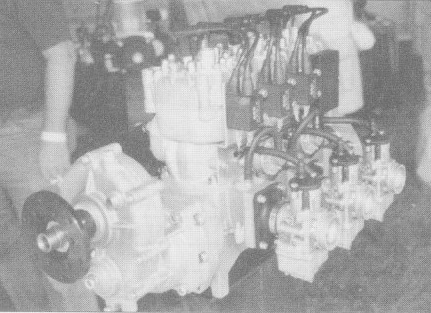
Hirth 3701

The Hirth 3701 is an in-line three cylinder, two stroke, carburetted aircraft engine, with optional fuel injection, designed for use on ultralight aircraft and small homebuilts. The 3701 was developed as a liquid-cooled and narrower installation alternative to the four cylinder Hirth F-30 air cooled engine of 85 to 110 hp (63 to 82 kW).

The 3701 features triple Bing 34mm slide carburetors or optionally fuel injection. The cylinder walls are electrochemically coated with Nikasil. Standard starting is electric start and recoil start is not available as an option. The reduction drive system available is the G-50 gearbox, with reduction ratios of 2.16:1, 2.29:1, 2.59:1, 3.16:1, or 3.65:1.

The engine runs on a 50:1 pre-mix of unleaded 93 octane auto fuel and oil, or optionally 100:1 oil injection. The base price in 2009 was US$9815.

Variants:

3701 high torque/low rpm engine
Three-cylinder in-line, two stroke, aircraft engine with three Bing 34mm slide carburetors or fuel injection. Low piston port timing produces 84 hp (63 kW) at 4950 rpm with a very flat torque curve.

3701 high performance engine
Three-cylinder in-line, two stroke, aircraft engine with three Bing 34mm slide carburetors or fuel injection. High piston port timing produces 100 hp (75 kW) at 6000 rpm with a steep torque curve.

Applications:
CGS Hawk II Arrow
Eagle Helicycle
Earthstar Thunder Gull II
Quicksilver MX II
Fusion powered parachute
Infinity powered parachute
InterPlane Skyboy
Rans S-9 Chaos
Skymaster powered parachute
Zenair CH 601 Zodiac

Specifications:

3701 high performance
Type: Three cylinder, two-stroke, in-line, aircraft engine
Bore: 76 mm (3.0 in)
Stroke: 69 mm (2.7 in)
Displacement: 939 cc (57.3 cu in)
Length: 490 mm (19.3 in)
Width: 280 mm (11.0 in)
Height: 420 mm (16.5 in)
Dry weight: 108 lb (49.0 kg), including electric starter and exhaust system. With optional gearbox total weight is 127 lb (57.6 kg), plus radiator.
Valvetrain: piston ported
Fuel system: 3 X Bing 34mm slide type carburetors or fuel injection
Fuel type: unleaded 93 octane auto fuel
Oil system: 50:1 fuel/oil premix or oil injection
Cooling system: liquid
Reduction gear: G-50 gearbox with reduction ratios of 2.16:1, 2.29:1, 2.59:1, 3.16:1, or 3.65:1
Power output: 100 hp (75 kW) at 6000 rpm
Compression ratio: 9.5:1

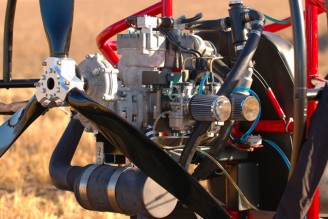
Hirth 3502 / 3503

Hirth 3503

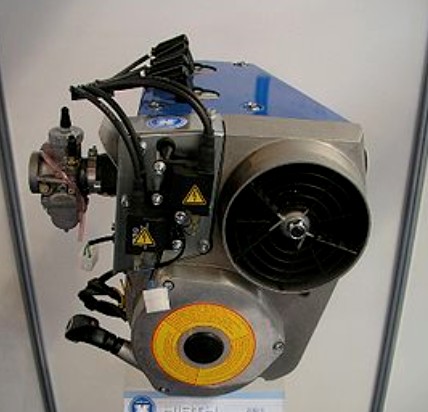
The Hirth 3502 and 3503 are a family of liquid-cooled, in-line twin-cylinder, two-stroke, carbureted aircraft engines, with optional fuel injection, designed for use on ultralight aircraft and small homebuilts, and produced from April 2008.

The engines were developed as competitors to the 64 hp (48 kW) Rotax 582 with an identical mounting bolt pattern to the 582, allowing either to be a drop-in replacement. The engines are similar to the Rotax powerplant in being liquid-cooled, two-cylinder in-line engines, with dual capacitor discharge ignition. The 3502 was developed from the 3503 as a de-rated version and produces 60 hp (45 kW), in comparison to the 3503’s 70 hp (52 kW). Both engines have the same bore, stroke and compression ratio as the three-cylinder in-line liquid-cooled Hirth 3701 and the bore, stroke, compression ratio and displacement of the twin-cylinder Hirth 2704 and Hirth 2706.

Both the 3502 and 3503 are equipped with dual Bing 34 mm slide carburetors or optionally electronic fuel injection. The cylinder walls are electrochemically coated with Nikasil and the crankshaft is forged from 4130 steel. Standard starting is recoil start with electric start as an option. The reduction drive system available is the G-50 gearbox, with reduction ratios of 2.16:1, 2.29:1, 2.59:1, 3.16:1, or 3.65:1.
The engines run on a 50:1 pre-mix of unleaded 93 octane auto fuel and oil, or optionally oil injection.

The base price in 2009 for the 3503 model was US$5988.

Variants:

3502
Twin-cylinder in-line, liquid-cooled, two-stroke aircraft engine with dual Bing 34 mm slide carburetors or fuel injection. Produces 60 hp (45 kW) at 5000 rpm and has a factory rated TBO of 1200 hours. In production since April 2008.

3503
Twin-cylinder in-line, liquid-cooled, two-stroke aircraft engine with dual Bing 34 mm slide carburetors or fuel injection. Produces 70 hp (52 kW) at 6500 rpm and has a factory rated TBO of 1000 hours. In production.

Applications:

3502
CGS Hawk Arrow II
Fresh Breeze XCitor – powered parachute
Paraski – powered parachute

3503
Excalibur Aircraft Excalibur
GyroTec DF02
Rotortec Cloud Dancer Light
Summit Steel Breeze – powered parachute

Specifications:

3503
Type: Twin-cylinder, two-stroke, in-line, aircraft engine
Bore: 76 mm (3.0 in)
Stroke: 69 mm (2.7 in)
Displacement: 625 cc (38.1 cu in)
Length: 398 mm (15.7 in)
Width: 368 mm (14.5 in)
Height: 419 mm (16.5 in)
Dry weight: 79 lb (35.8 kg) without radiator & coolant. The G-50 gearbox adds an additional 19 lb (8.6 kg)
Fuel system: 2 X Bing 34 mm slide type carburetors or fuel injection
Fuel type: unleaded 93 octane auto fuel
Oil system: 50:1 fuel/oil premix or oil injection
Cooling system: liquid
Reduction gear: G-50 gearbox with reduction ratios of 2.16:1, 2.29:1, 2.59:1, 3.16:1, or 3.65:1 or cog-belt
Power output: 70 hp (52 kW) at 6500 rpm
Compression ratio: 9.5:1

Hirth 3202 / 3203

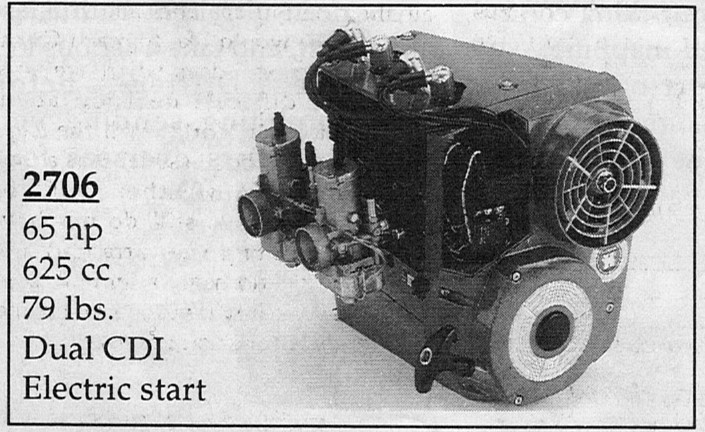
The Hirth 3202 and 3203 are a family of in-line twin cylinder, two stroke, carburetted aircraft engines, with optional fuel injection, designed for use on ultralight aircraft, especially two seat ultralight trainers, gyrocopters and small homebuilts.

The 3203 was developed as a replacement for the Hirth 2706 and as a competitor to the 64 hp (48 kW) Rotax 582. It replaced the 2706 in the Hirth line in May 2002. The engine is similar to the Rotax powerplant in being a two-cylinder in-line engine, with dual capacitor discharge ignition, although it is air-cooled, compared to the 582’s liquid cooling. The 3202 was developed from the 3203 as a de-rated version to replace the Hirth 2704 and compete with the 50 hp (37 kW) Rotax 503. Both engines have the same bore, stroke, displacement, compression ratio, and weight as the Hirth engines they replace.
Both the 3202 and 3203 use free air or fan cooling, with dual Bing 34 mm slide carburetors or optionally fuel injection. The cylinder walls are electrochemically coated with Nikasil. Standard starting is recoil start with electric start as an option. The reduction drive system available is the G-50 gearbox, with reduction ratios of 2.16:1, 2.29:1, 2.59:1, 3.16:1, or 3.65:1, with a cog-belt reduction drive optional.

The engines run on a 50:1 pre-mix of unleaded 93 octane auto fuel and oil, or optionally oil injection. The base price of the 3202 model in 2009 was US$4423.

Variants:
3202
Twin-cylinder in-line, two stroke, aircraft engine with a dual Bing 34mm slide carburetors or fuel injection. Produces 55 hp (41 kW) at 5500 rpm and has a factory rated TBO of 1200 hours. In production. Replaced the 2704 in production in May 2002.

3203
Twin-cylinder in-line, two stroke, aircraft engine with dual Bing 34mm slide carburetors or fuel injection. Produces 65 hp (48 kW) at 6300 rpm and has a factory rated TBO of 1000 hours. In production. Replaced the 2706 in production in May 2002.

Applications:
3202
Aero Adventure Aventura
Destiny PPC – powered parachute
Lockwood Drifter
Excalibur Aircraft Excalibur
Flightstar
ISON Airbike
Kolb Firestar II
Quad City Challenger II
Raptor Tryke
Paladin Sparrow – powered parachute

3203
CGS Hawk
Excalibur Aircraft Excalibur
Fisher Classic
Kolb Firestar
Kolb Mark III
Para-Ski – twin engine powered parachute
Quad City Challenger II
Rans S-12 Airaile
Sky Twister – helicopter
Sno Bird – gyroplane
ASAP Beaver RX550
Raj Hamsa X-Air
Revolution Mini 500 – helicopter
Rotortec Cloud Dancer I – autogyro
US Light Aircraft Hornet
VSTOL SST2000 – twin engined installation

Specifications:

3203
Type: Twin cylinder, two-stroke, in-line, aircraft engine
Bore: 76 mm (3.0 in)
Stroke: 69 mm (2.7 in)
Displacement: 625 cc (38.1 cu in)
Length: 377 mm (14.8 in)
Width: 587 mm (23.1 in)
Height: 383 mm (15.1 in)
Dry weight: 73 lb (33.1 kg)with free air cooling, 79 lb (35.8 kg) with fan cooling, including electric starter and exhaust. G-50 gearbox adds an additional 19 lb (8.6 kg)
Fuel system: 2 X Bing 34mm slide type carburetors or fuel injection
Fuel type: unleaded 93 octane auto fuel
Oil system: 50:1 fuel/oil premix or oil injection
Cooling system: free air or fan
Reduction gear: G-50 gearbox with reduction ratios of 2.16:1, 2.29:1, 2.59:1, 3.16:1, or 3.65:1 or cog-belt
Power output: 65 hp (48 kW) at 5500 rpm
Compression ratio: 9.5:1

Hirth 2702 / 2703

Hirth 2702

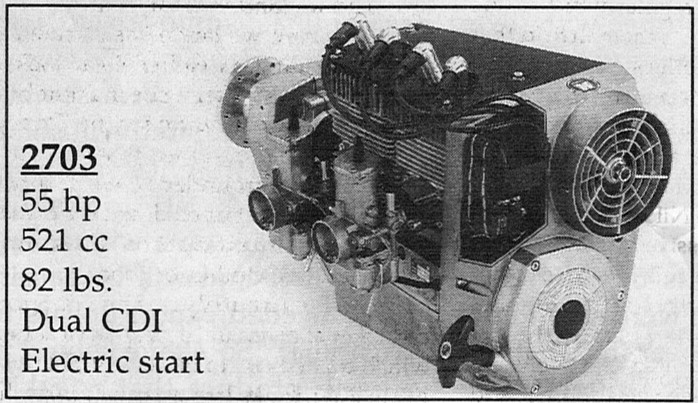
The Hirth 2702 and 2703 are a family of in-line twin cylinder, two stroke, carburetted aircraft engines designed for use on ultralight aircraft and especially two seat ultralight trainers, single seat gyrocopters, and small homebuilts.

The 2703 was developed as a competitor to the 50 hp (37 kW) Rotax 503 and is similar to the Rotax powerplant in being a two-cylinder in-line engine, with dual capacitor discharge ignition. The 2702 was developed from the 2703 as a de-rated version.

Both the 2702 and 2703 use free air or fan cooling, with Bing 34mm slide carburetors. The cylinder walls are electrochemically coated with Nikasil. Standard starting is recoil start. Reduction drive systems available are the G-50 gearbox with reduction ratios of 2.16:1, 2.29:1, 2.59:1, 3.16:1, or 3.65:1, or a multi-element cog belt drive. A tuned exhaust and electric start are optional.
The engines runs on a 50:1 pre-mix of unleaded 93 octane auto fuel and oil. Base price in 2009 was US$3476.

Variants:
2702
Twin-cylinder in-line, two stroke, aircraft engine with a single Bing 34mm slide carburetor. Produces 40 hp (30 kW) at 5500 rpm and has a factory rated TBO of 1200 hours. Still in production.

2703
Twin-cylinder in-line, two stroke, aircraft engine with dual or optionally a single Bing 34mm slide carburetor. Produces 55 hp (41 kW) at 6200 rpm and has a factory rated TBO of 1000 hours. The 2703 has been largely supplanted in production by the Hirth 3202, but in 2009 was still available as a special order from the factory.

Applications:
2702
Airfer Transan Plus 2702 (Paraplane)
Flightstar
Hy-Tek Hurricane 103
ISON Airbike
Preceptor N3 Pup
Spacek SD-1 Minisport

2703
American Sportscopter Ultrasport 254
CGS Hawk
Exkluziv Joker
Falconar Golden Hawk
Kolb Firestar
RemSchetMash Robust
US Light Aircraft Hornet

Specifications:
2702
Type: Twin cylinder, two-stroke, in-line, aircraft engine
Bore: 72 mm (2.8 in)
Stroke: 64 mm (2.5 in)
Displacement: 521 cc (31.8 cu in)
Length: 413 mm (16.3 in)
Width: 450 mm (17.7 in)
Height: 376 mm (14.8 in)
Dry weight: 70 lb (31.8 kg) with free air cooling, 76 lb (34.5 kg) with fan cooling, including recoil starter and exhaust. G-50 gearbox adds an additional 19 lb (8.6 kg)
Fuel system: 1 X Bing 34mm slide type carburetor
Fuel type: unleaded 93 octane auto fuel
Oil system: 50:1 fuel/oil premix
Cooling system: free air or fan
Reduction gear: G-50 gearbox with reduction ratios of 2.16:1, 2.29:1, 2.59:1, 3.16:1, or 3.65:1, or a multi-element cog belt drive
Power output: 40 hp (30 kW) at 5500 rpm
Compression ratio: 9.5:1

Hirth F-263

The Hirth F-263 is a twin cylinder, in-line, two stroke, carburetted aircraft engine that was designed for use on ultralight aircraft. Base price in 2000 was US$2300 but the engine was discontinued about 2001.

The F-263 uses fan cooling and piston-ported induction, with a single Bing carburetor and single capacitor discharge ignition. The cylinder walls are electrochemically coated with Nikasil. Standard starting is recoil start. A gearbox reduction drive system and electric start were factory options.
The engine produces 31 hp (23 kW) and runs on a 50:1 pre-mix of unleaded 93 octane auto fuel and oil. Recommended time between overhauls is 1000 hours.

Applications:
Howland H-3 Pegasus
Falconar HM-293

Specifications:
F-263
Type: Twin cylinder, two-stroke, aircraft engine
Displacement: 383 cc (23.4 cu in)
Dry weight: 70 lb (31.8 kg)
Valvetrain: piston-ported
Fuel system: 1 X Bing carburetor
Fuel type: unleaded 93 octane auto fuel
Oil system: 50:1 fuel/oil premix
Cooling system: fan forced air
Reduction gear: optional gearbox
Power output: 30 hp (22 kW)