The large square plan wing section provides a very low pitching moment. There is very little need to use the trim in either the SP2000 or 4000. When flaps are set, the increase or decrease in power has very little effect on the pitching which makes the aircraft very easy to fly. Wing cord is 1.5m thickness 20 cm maximum at about 1/3 cord. With a wingspan of only twenty-eight feet, (28′) the square plan wings have an inbuilt anti-stall feature that keeps the wing tips flying right up to the stall. On landing, the large flaps are effective; the aircraft can slow right down and the effect of crosswinds is much less pronounced. Although they’re comparatively short, the wings on the SP2000 provide excellent stability in the air and on the ground. The tyres are fifteen inch (15”) Air Tracs with disk brakes, and can handle rough or bush strips with ease. The nose wheel casters. The LSA ‘Speed’ was available in various configurations, from the lightweight RAA registerable SP-2000S (Nosewheel or tailwheel) to the four seat SP-4000 (Nosewheel only). Fitted with side control sticks, hydraulic toe operated disk brakes, elevator trim, and multi position electric flaps.
Australian LightWing SPEED SP-2000-S Engine: Rotax 912-s or Rotax 914 Wingspan: 28 ft Wing cord: 1.5m Wing thickness: 20 cm maximum at about 1/3 cord. Wing Area: 12.62 sqm Fuel Capacity: 120 lt Useable fuel: 112 lt Cruise 115 kts VNE 145 kts Stall Speed full flap: 45 kts Range max: 600 nm Takeoff distance to 50 ft MTOW: 600m Seats: 2 Undercarriage: Nosewheel or Tailwheel Structural testing: +- 5 G Wheels: 6″ x 6″ tyres 15″ Rear baggage area: 1m x .8m x .8m
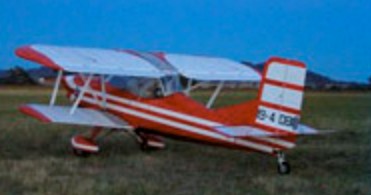
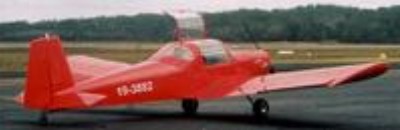
Designed and manufactured by Australian LightWing as a kit aircraft, the first PR-Bipe was test flown on Sat 10 July 2004. The aircraft was completed by Eddie Sieve in Sydney’s Northern suburbs, the aircraft was flown at Cessnock NSW. The Bipe is a pleasure to fly with ultra responsive controls and is ideally suited to positive G aerobatics the second seat can carry up to an 85 kg passenger or baggage. The aircraft shown above is powered by the Jabiru 4 Cyl 4 stroke engine. The PR-Bipe is a derivative of the PR-582, this superb aircraft can be fitted with either the Rotax 582, the 912 or the 912-s. The ALW Bipe Wing span is reduced to 6m. The aircraft can be built with a fully enclosed cockpit seating two. An open configuration Bipe can be made to order. The aircraft is available as a kit or a quick build kit and is suitable for either AUF or Experimental registration where aerobatics are approved by the manufacturer.
On 12 March, 2020, it was announced the Halcón 1 MSN 001 aircraft received the Certificate of Airworthiness from the Federal Civil Aviation Agency (AFAC), thus concluding a certification process under the experimental aircraft category.
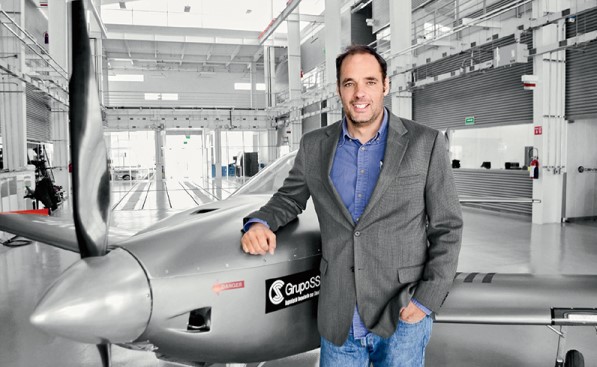
The two-seater aircraft was built by Horizontec, a Mexican company dedicated to the design and development of aircraft supported by the National Center for Aeronautical Technologies (Centa). More On September 30th, 2017, the H1 made its first flight at the Queretaro Intercontinental Airport (AIQ), lasting approximately 30 minutes. Subsequently, in February 2018, the aircraft successfully completed 50 flight cycles necessary for Tipo approval, said Giovanni Angelucci, founding partner of Horizontec.
Horizontec is a Mexican company dedicated to the design and development of aircraft supported by the National Center for Aeronautical Technologies (Centa).
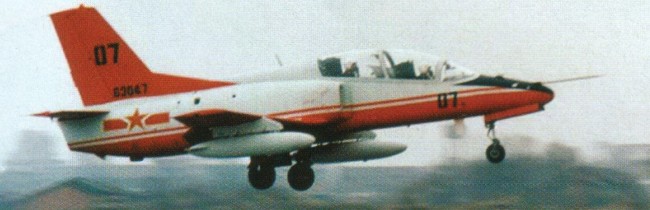
The JL-8 trainer was proposed as a two-seat intermediate jet trainer and light attack aircraft joint cooperation effort between the governments of Pakistan and the People’s Republic of China in 1986. The name was changed on the suggestion of Pakistan’s then President General Zia ul Haq to Karakorum-8 to represent the friendship between the two countries. Work on the design started in 1987 at Nanchang Aircraft Manufacturing Company (NAMC) at Nanchang, Jiangshi Province in South Central China. The Chinese chief designer of the aircraft was Mr. Shi Ping (石屏), heading a team of over 100 Chinese Engineers, while Air Cdr Muhammad Younas Tbt (M), SI(M) was the chief designer from the Pakistani side leading a team of over 20 Pakistani engineers.
Initially, the aircraft was to feature many United States parts, including Garrett TFE-731 engine and several cockpit displays along with communication and avionics systems, but due to political developments and an embargo from the US at the end of the 1980s following the Tiananmen Square protests of 1989, other vendors had to be used.
The JL-8 / K-8 has a multi-role capability for training and, with little modification, can also be used for airfield defense. The aircraft is supposed to be as cost-effective as possible, with a short turn-around time and low maintenance requirements. The JL-8 for the domestic Chinese market and its export variants, K-8E and K-8P, have different powerplants and avionics.
A low-wing monoplane design primarily constructed of aluminum alloys, the JL-8 / K-8 airframe structure is designed for an 8,000 flight hour service life.
The landing gear is of tricycle configuration, with hydraulically operated wheel brakes and nose-wheel steering. The flight control system operates a set of conventional flight control surfaces with a rigid push-rod transmission system, which itself is electrically or hydraulically operated. The aileron control system, of irreversible servo-control type, is composed of a hydraulic booster, an artificial-feel device, a feel trim actuator and a rigid push-rod transmission mechanism. The elevator and rudder control systems are of reversible push-rod type.
The JL-8 / K-8 cockpit arrangement is designed to be as close to that of a combat aircraft as possible. A transparent plastic canopy covering both cockpits, which are arranged in a tandem seating position, is supposed to give a good all-round field of view.
A Rockwell Collins Electronic Flight Instrument System (EFIS) is fitted, with multi-function displays (MFDs) in the front and rear cockpits showing information to the pilots. The emergency cockpit escape system is made up of two Martin-Baker MK-10L rocket-assisted ejection seats which are zero-zero capable, meaning they can be used safely at zero altitude and zero speed. Although JL-8 is designed to have limited capability to deliver air-to-ground weapons, the first rocket attack practice was only completed in May 2011.
Ultra high frequency (UHF) and very high frequency (VHF) radio communication systems along with a Tactical Air Navigation (TACAN) and automatic direction finder (ADF) and instrument landing system (ILS) were available.
A strap-on Environmental control system (ECS) from AlliedSignal provides air conditioning to the cockpit. It is capable of operating when the aircraft is on the ground, under ambient temperatures of -40 to +52 °C, as well as in the air.
The JL-8, for the Chinese domestic market, was originally powered by the Ukrainian Ivchenko-Progress AI-25TLK turbofan jet engine with 16.9 KN of thrust, but this has been replaced by the WS-11, the Chinese-manufactured copy of the AI-25TLK. Export variants (K-8P, K-8E) use the lower powered Honeywell TFE731-2A-2A modular turbofan, which has digital electronic engine control (DEEC) with 15.6 KN thrust, provided the US government approves sale of the engine to the customer.
A hydro-mechanical fuel control system delivers fuel to the engine. The aircraft’s fuel system consists of the fuel tanks and the fuel supply/transfer, vent/pressurization, fuel quantity measuring/indicating, fuel refueling and fuel drain subsystems. The total fuel is contained in two fuselage bladder-type rubber tanks and a wing integral tank of 1720 lb. The capacity of each drop tank is 250 litres. Two 80 gal fuel drop-tanks can be mounted on outboard under-wing hardpoints
The first prototype was built in 1989, with the first flight taking place on 21 November 1990 by Chief Test Pilot Col Yang Yao (杨耀). Flight testing continued from 1991 to 1993 by a Flight Test Team consisting of four Chinese and two Pakistani Pilots (Group Captain Waqar Ahmad and Squadron Leader Nadeem Sherwani).
After four prototypes were built, production of a small batch of 24 aircraft was launched in 1992. Chinese share out of these was 18, while Pakistan Air Force (PAF) received six K-8s in 1994. In 1995, PAF decided to order 75 more K-8s to gradually replace its fleet of Cessna T-37 Tweet basic trainers. In 2010, the number of K-8 aircraft in PAF were estimated to be around 40. The People’s Liberation Army Air Force (PLAAF) received its first six JL-8 trainers in 1995 following additional upgrades. The Chinese model uses WS-11, a Chinese-manufactured version of the Ukrainian Ivchenko AI-25 (DV-2) engine. The PLAAF is anticipated to continue adding the JL-8 trainer to its fleet to replace its obsolete trainers, such as the Chengdu JJ-5. In 2008, the number of JL-8s in PLAAF inventory were estimated to be over 120 aircraft.
Other nations have shown interest in the trainer and it also served in the air forces of Egypt, Sri Lanka and Zimbabwe. While the type primarily serves as a basic cum advanced trainer, it can also be used in the close air support or even air combat role when appropriately armed.
The export-variant K-8 Karakorum Basic Common Advanced Jet Trainer is co-produced by China National Aero-Technology Import & Export Corporation (CATIC) for export markets other than Pakistan, while later aircraft for Pakistan have been built by the Aircraft Manufacturing Factory (AMF), Pakistan Aeronautical Complex. The latest export variant is the K-8P version, which currently is operated by the PAF. The K-8P has an advanced avionics package of integrated head-up display (HUD), multi-function displays (MFDs) and comes equipped with MFD-integrated GPS and ILS/TACAN systems. It also features Armament racks for carrying a variety of training and operational bombs up to 250 KG, pod mounted 23 mm canon as well as PL-5 / 7 /AIM-9 P launchers. Studies for putting a Griffo Radar in the nose were under way. In September 2011, NAMC rolled out another 12 K-8P for undisclosed foreign client.
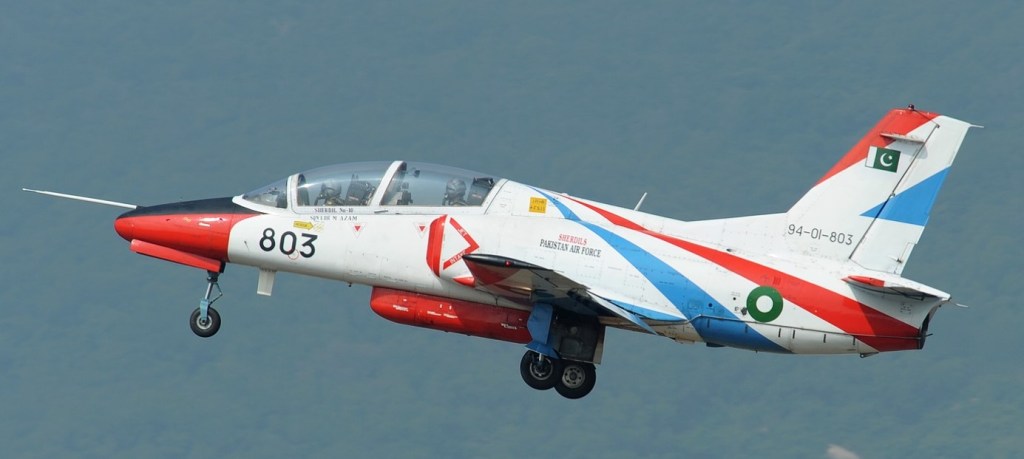
The K-8 took part in its first aerial display in 1993 at the Singapore Air Show and since then has participated at Air Shows at a number of places including Dubai, Paris, Farnborough, Bangkok, Zuhai etc. It was shown to the Pakistani public for the first time on 23 March 1994 at the Pakistan Day Parade. It became part of the Sherdils (Lion Hearts) aerobatics team of the Pakistan Air Force in 2009 and carried out its first public display on 6 April 2010. K-8 replaced the team’s previous T-37 Tweet aircraft.
K-8 of the Pakistan Air Force aerobatics team, Sherdils, Zhuhai Air Show 2010 in China
In 2008 Venezuela announced the purchase of 18 K-8 aircraft. The K-8 was being marketed by China to the air forces of the Philippines; and to Indonesia, as a replacement for Indonesia’s BAE Hawk jet trainers. In 2009, the Bolivian government approved a deal to purchase 6 K-8P aircraft for use in anti-drug operations. The total number of K-8 aircraft produced till 2010 in all variants were estimated to be over 500, with production rate of approximately 24 aircraft per year continuing.
Other operators include the Ghana Air Force (4), Myanmar Armed Force (12× K-8 delivered with additional 48 on order), Namibian Air Force (12), People’s Liberation Army Air Force (190× JL-8 delivered as of February 2011, out of 400 ordered), Sri Lanka Air Force (5× K-8 delivered with additional 2 on order, Sudanese Air Force (12), Venezuelan Air Force (17 Another 9 K-8V on order as of October 2013), Zambian Defence Force (15), Air Force of Zimbabwe (11), and Tanzanian Air Force (6).
The Pakistan Air Force operated 60 K-8 aircraft (12 K-8s and 48 K-8Ps), which served as intermediate jet trainers with the No. 1 Fighter Conversion Unit, Mianwali and as basic jet trainers with the Pakistan Air Force Academy, Risalpur. Another 32 K-8Ps were on order as of January 2012.
In late December 2012 and early January 2013, during the Kachin conflict, Burma Air Force K-8s have been used to strike Kachin rebel’s positions in the north of the country.
Incidents: At 9am on 5 September 2008, a K-8 Karakorum trainer of the Air Force of Zimbabwe crashed over the town of Gweru, killing both pilots. The aircraft was on a routine training sortie. On 21 July 2010, a K-8 Karakorum trainer of the Venezuela Air Force crashed just 4 months after its delivery. The pilots ejected and managed to survive. On 20 August 2011, two Zimbabwe Air Force K-8’s collided in mid-air while taking part in a fly past at the funeral of retired General Solomon Mujuru. Pieces were seen to fall from the aircraft, but they both appeared to land safely. On 23 October 2012, a K-8 Karakorum training plane lost directional control during take off from Julius Nyerere International Airport, Dar es Salaam. Both pilots ejected but one of them was killed on impact. The plane left the runway and struck a container. On 27 November 2012, a K-8 Karakorum belonging to Venezuela’s Bolivarian Air Force, suffered a malfunction and crashed near the El Libertador Air Base, in the Palo Negro parish of the city of Maracay, Aragua state. Both pilots ejected and suffered only minor injuries. The plane was scheduled to participate on the air show to celebrate Venezuelan Air Force Day, later that day. On 26 July 2013 at 12:50 A.M., a K-8 Karakorum belonging to Venezuela’s Bolivarian Air Force, crashed in the Gen. Rafael Urdaneta Air Base, near Maracaibo, Zulia State, while participating in night exercises. The pilot, First Liutenent Milenia Bolivar, ejected and was transported to a local hospital, where she is said to be in good condition.
Variants:
K-8 Original variant powered by the Garrett TFE731-2A turbofan engine.
K-8E K-8 variant developed for export to Egypt in 1999, featuring 33 modifications to the airframe and avionics. Built in Egypt from Chinese-supplied kits, production of 80 Egyptian-built Chinese kits was completed in 2005, with license production of an additional 40 K-8Es undertaken thereafter.
K-8P Pakistan-specific variant with new avionics, glass cockpit and Martin Baker Zero-Zero ejection seats.
K-8V An ‘integrated flight test simulation aircraft’ (IFTSA), equipped with an advanced flight control computer and analogue fly-by-wire (FBW) system which can mimic the aerodynamic characteristics and flight profile of other aircraft. Used primarily to test aircraft designs before prototypes are built and tested.
JL-8 PLAAF-specific variant powered by the Ivchenko AI-25 TLK turbofan and featuring Chinese avionics suite. First flew in December 1994, 6 aircraft delivered to PLAAF in June 1998.
L-11 Variant of JL-8 powered by the WS-11 turbofan (Ivchenko AI-25 TLK produced under license in China). Approximately 100 aircraft delivered to PLAAF.
JL-8W (K-8W) Variant of the JL-8 with improved cockpit and HUD. Delivered to Venezuela’s Bolivarian Military Aviation March 13, 2010, with no U.S.-controlled parts. Total order 18 aircraft (+ 40 announced).
JL-8VB (K-8VB) Variant similar to JL-8W; for export to Bolivian Air Force (6), with no U.S.-controlled parts. Total order 6 aircraft (+ 12 announced).
Specifications:
K-8 Powerplant: 1 × Garrett TFE731-2A-2A turbofan, 16.01 kN (3,600 lb) Wingspan: 9.63 m (31 ft 7 in) Length: 11.6 m (38 ft 0 in) Height: 4.21 m (13 ft 9 in) Empty weight: 2,687 kg (5,924 lb) Max. takeoff weight: 4,330 kg (9,546 lb) Wing loading: 254.40 kg m-2 Maximum speed: Mach 0.75 (800 km/h, 498 mph) Range: 2,250 km (1,398 mi) Service ceiling: 13,000 m (42,651 ft) Max. airframe load factor: +7.33 g / -3.0 g Crew: 2 (in tandem) Armament: 1× 23 mm cannon pod (mounted on centreline hardpoint) Hardpoints: 5, total capacity 1,000 kg (2,205 lb) external fuel and ordnance: 4× under-wing, capacity 250 kg each 1× under-fuselage (23 mm cannon pod mount)
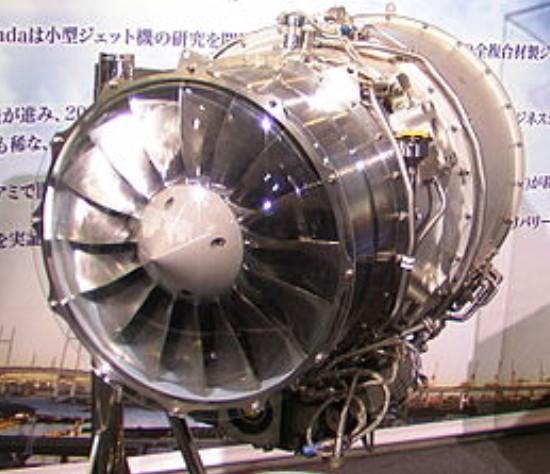
The GE Honda HF120 is a small turbofan engine for the light-business jet market.
The HF120 turbofan is the first engine to be produced by GE Honda Aero Engines. Developed from the Honda HF118, the HF120 was undergoing an extensive testing program, with formal certification testing scheduled to begin in late 2008. The engine has a wide-chord swept fan, two-stage low-pressure compressor and counter rotating high-pressure compressor based on a titanium impeller. Evolved from Honda’s HF118, the engine demonstrates a 2,050 lbf takeoff thrust. The engine touts environmental performance, striving to meet and exceed future environmental standards for business jet engines. Greater fuel efficiency and reduced emissions are two of the results of the engine’s lightweight design.
Specifications: Type: Turbofan engine Length: 44 in (111.8 cm) Diameter: maximum: 21.2 in (53.8 cm) Dry weight: <400 pounds (180 kg) Maximum thrust: takeoff thrust: 2,050 lbf Specific fuel consumption: <0.7 Thrust-to-weight ratio: >5:1
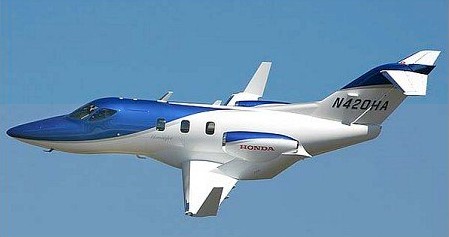
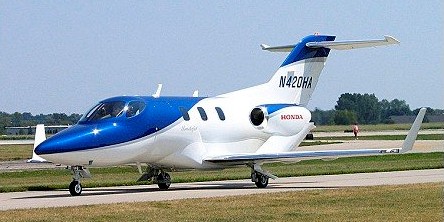
The HondaJet made its maiden flight in North Carolina in December 2003. Honda’s six seat business jet is powered by a lightweight low-emission turbine engine that has been in development since 1988.
It features a graphite composite fuselage, laminar flow wing and two Honda HF118 turbofans mounted on overwing pylons. Delivery of the first plane is planned for the third quarter of 2012.
Engines: 2 x 820kg GE-Honda HF118 turbofans Max take-off weight: 4173 kg / 9200 lb Wingspan: 12.20 m / 40 ft 0 in Length: 12.52 m / 41 ft 1 in Height: 4.01 m / 13 ft 2 in Max. speed: 800 km/h / 497 mph Cruise speed: 778 km/h / 483 mph Ceiling: 12497 m / 41000 ft Range: 2037 km / 1266 miles Crew: 2 Passengers: 5-6
At the Atlantic Aero FBO at Greensboro, North Carolina’s Piedmont Triad International Airport (KGSO), a team of engineers and technicians assembled a twin-engine very light business jet. This was the proof-of-concept (POC) prototype of what would become the HondaJet very light jet. The team’s work culminated on Dec. 3, 2003, when the POC took flight.
This was a relatively small team of engineers and technicians that had been working furiously for at least the last 10 months—and some much longer—in preparation for that day.
There were no electrical system drawings, only conceptual schematics, and they had to create them from scratch.
They had a very small group in the early days of the project in Greensboro and a larger team in Japan supporting them. Work hours during the design phase started early and extended into the evening, day after day. In three years, they accomplished a tremendous amount of work and overcame huge challenges with the limited staff getting the aircraft ready for its inaugural flight.
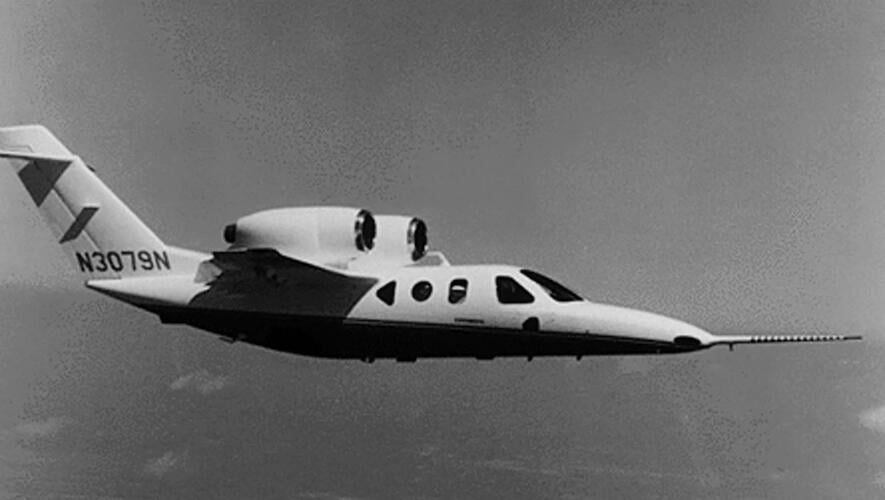
The second production jet to feature over-the-wing-mounted (OTWEM) turbofan engines, the HondaJet was the brainchild of Honda’s Michimasa Fujino. Fujino spent years exploring aircraft design, culminating in flight testing of the composite twin-engine MH02, which had two engines mounted directly on top of a wing attached to the top of the fuselage.
He eventually settled on the HondaJet OTWEM design because of its efficiency and the extra space it afforded in the aft cabin, but persuading the head office that this was the best configuration proved to be a huge challenge. It took more than two years to reach the point and finally the OTWEM configuration for HondaJet was fixed.
At midnight and, with the flight scheduled for 8 a.m., the aircraft was prepped and ready to go. However, back in at 5:30 a.m., firing up the aircraft to make sure everything was still okay before the preflight.
Michimasa Fujino’s first design was the MH02, which didn’t go into production.
Designed by Willy Andiel, the Typhoon was designed around the 90 to 100 knot capability, 44 inch cockpit, and dual disc brakes on 6 inch wheels. Most of the components and material were supplied. An all metal aircraft, available as Tri or Tail Dragger. 2009 Price: 30000 US$
Stall: 38 kt / 44 mph / 70 kmh Cruise: 95 kt / 109 mph / 176 kmh VNE: 130 kt / 150 mph / 241 kmh Empty Weight: 300 kg / 661 lbs MTOW Weight: 544 kg / 1199 lbs Climb Ratio: 1100 ft/min / 6 m/s Take-off distance (50ft obstacle): 250 ft / 76 m Landing distance (50ft obstacle): 400 ft / 122 m
As part of his Aeronautical Engineering thesis research Martin Hollman designed a set of aluminum rotor blades for a two-place gyroplane. Having designed a practical rotor system for a two-place gyro, he moved on to the design of a gyroplane to go with the new blades. The result was the Hollmann Sportster, a two-place home-built gyroplane. Plans for the Sportster were made available, powered by a certified Lycoming engine. The Sportster is designed for the homebuilder who has limited access to power tools. Ninety percent of the structure is bolted or riveted together, 2x2in aluminum tubing, and a minimum of machined parts are used. For convenience, the Sportster is designed to be towed behind a car.
Two average people, 350 pounds combined, can fly comfortably inside its nearly enclosed cockpit for up to 90 miles on a cross-country trip. A 130-hp Franklin, 135-hp Lycoming, or 150-hp Lycoming engine can be used. With the engine cut, the Sportster has a 1,000-fpm sink rate. The Sportster is now marketed by Aircraft Designs, Inc. The Sportster has been in the air since 1974. Its side-by-side dual controls are ideal for flight training. It’s partially enclosed and uses a 160-hp Lycoming engine to reach top speeds of up to 100 mph. Well-detailed plans for the Sportster 2001: $535
Engine 150-hp Lycoming Rotor diameter 30ft Gross Wt. 1100 lb Empty Wt. 600 lb. Fuel capacity 17 USG. Length 13 ft Top speed 90 mph. Cruise 75 mph. Minimum speed 28 mph. Climb rate 500 fpm. Ceiling 7,000 ft Takeoff run 350 ft. Landing roll 0 ft. Range 120 sm.
Engine: Lycoming O-320, 150 hp. Disk span: 28 ft. Disk area: 616 sq.ft. Speed max: 90 mph. Cruise: 75 mph. Range: 150 sm. ROC: 1000 fpm. Take off dist: 700 ft. Service ceiling: 12,000 ft. HP range: 130-150. Fuel cap: 17 USG. Weight empty: 650 lbs. Gross: 1100 lbs. Height: 8 ft. Length: 12 ft. Seats: 2. Landing gear: nose wheel.
Engine: 160 hp Lycoming, O-320. Propeller: 67″ X 38″ wood Rotor Blades: Hollmann 28′ X 9′ Min Speed 15 mph Cruise 85 mph Top Speed 120 mph Empty Weight 700 lbs Useful Load 500 lbs Gross Weight 1,200 lbs Width 7 ft 8 in Length 14 ft

 All Aero