1995-2009: 23 Linden Grove, Chandlers Ford, Eastleigh, Hants SO 53 ILE, England.
Markets plans to build Fury II single-seat biplane, a 70 percent representation of prewar Hawker Fury, and Spitfire as 60 percent representation of Supermarine Spitfire, first flown 1963 and 1975 respectively.
2000->
Irkut MC-21
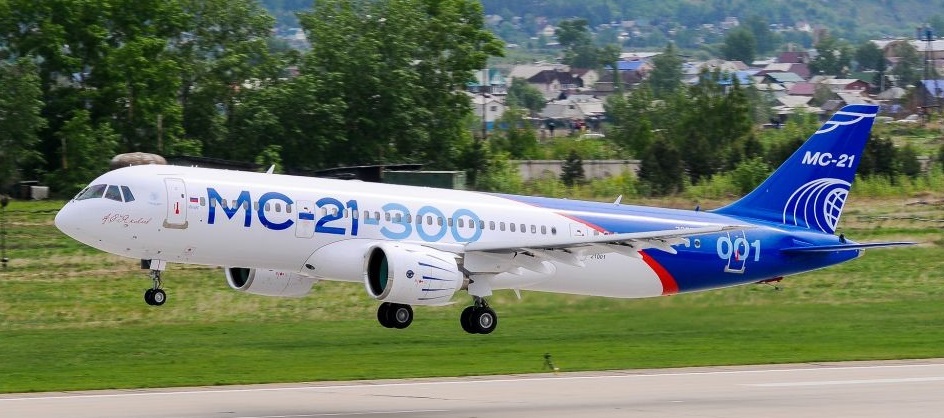
A project of Russian civil aviation was the new-generation narrow-body mid-range airliner MC-21-300. United Aircraft Corporation continued to work on the new civilian aircraft from the very beginning of the COVID-19 pandemic.
IT solutions have made it possible to transfer employees of engineering and corporate centres to remote workstations. The factories also did not stop, shift work was organised to support continuous production processes, on which the implementation of the SDO and MTC programs depended. Strict control over the health status of employees has been introduced, disinfection of territories and premises of UAC enterprises was carried out.
Due to the COVID-19 pandemic, there was a short break, but work resumed. As part of the certification program according to Russian and European standards MC-21-300, a large complex of ground, flight, bench tests was underway.
The MC-21-300 airliner is being created in a wide cooperation of Rostec enterprises. More than half of avionics was developed by the holdings of the State Corporation, and titanium and composite parts are supplied. The first MC-21-300 aircraft is under construction at the Irkutsk Aviation Plant, which will undergo flight tests with PD-14 engines developed by the United Engine Corporation.
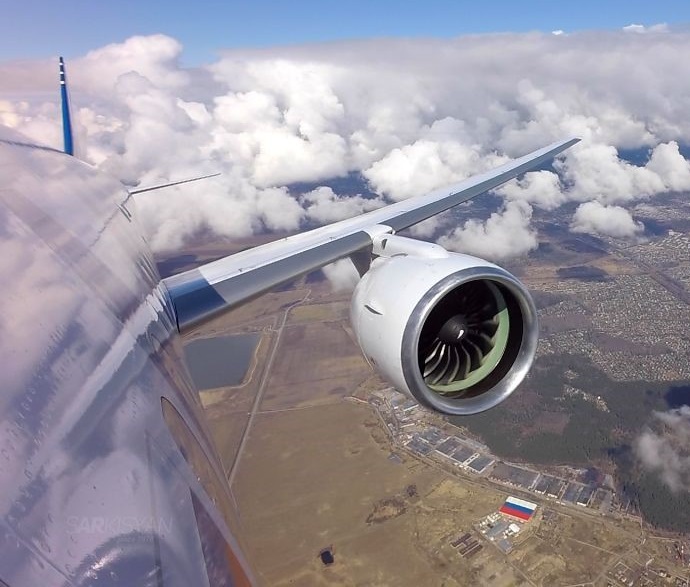
Test flights of the MC-21-300 continued. The program involves four experimental aircraft. Two of them are equipped with passenger cabins. In the case, modifications are being checked with a two-class layout for 163 seats and an ultra-dense layout for 211 seats. Flights are performed by crews of the Irkut Corporation and joint crews: pilots of the corporation and representatives of certification centres. The pace of flight tests is increasing. Often, two aircraft are simultaneously in flight.
During flights, the testing equipment allows recording of about 40 thousand parameters. By 2021 the MC-21-300 was tested for resistance to flutter and at extreme angles of attack. The main engines and auxiliary power unit were tested, including during take-off and landing with a failed engine. The minimum separation speed of the aircraft is determined. The operability of the instrumental landing system and equipment for flying in the dark was confirmed.
The production of MC-21-300 aircraft for delivery to customers had begun by 2021. The start of mass production was allowed by the positive results of flight and ground tests, which proved the correctness of the basic design and technological solutions.
Irkut A-002
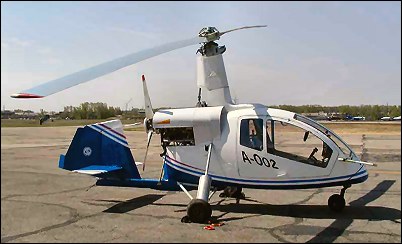
In October 2000, IAPO announced branching out into design and manufacture of its own products in the form of the prototype A-002 autogyro. A three-seat autogyro, an experimental version had been tested in 1998. The almost complete prototype was shown at Moscow in August 2001. First flight 21 April 2002.
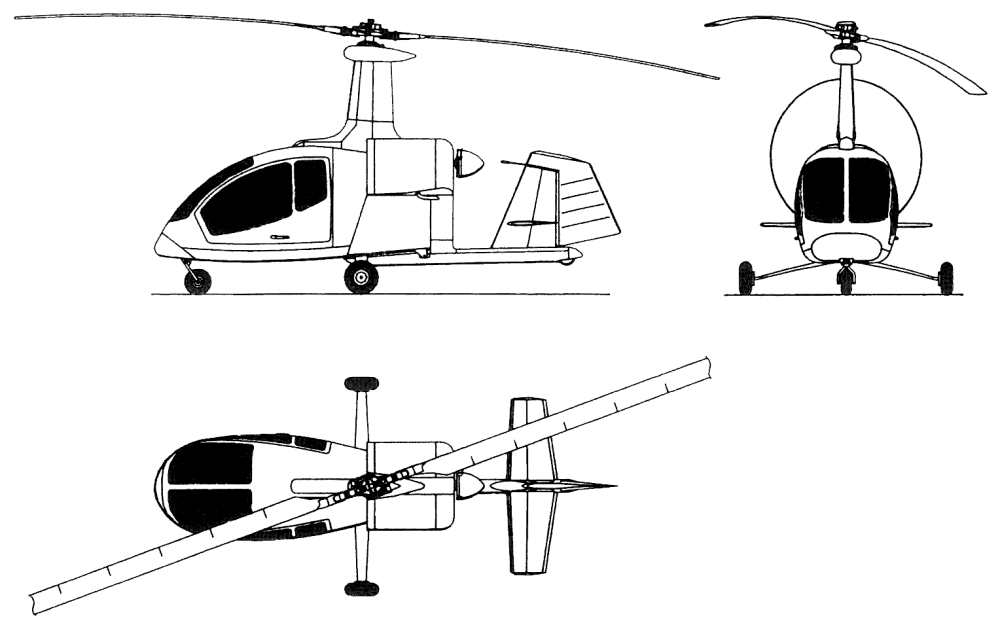
The A-003 conforms to FAR Pt 27 and Russian AP-27. A streamlined, cabin autogyro, with pusher propeller, single, sweptback fin with large rudder, and broad track landing gear. It is equipped for engine-driven pre-rotation of rotor.
All flying controls are manual, an all-moving tailplane mounted at one-third of fin height, with a horn- and mass-balanced rudder. Generally built of metal, the rudder and elevator of composites. The landing gear is a tricycle type; fixed. Cantilever-spring mainwheels; rubber-in-compression shock-absorber on nosewheel. Mainwheel tyres 400×150; nose 100×125. Hydraulic disc brakes on mainwheels. Safety tail skid on prototype; auxiliary tailwheel on production version.
The prototype has one 157kW Teledyne Continental IO-320 flat-six driving a fixed-pitch, two-blade propeller. Alternative engines of 134 to 157kW and three-blade propeller can be installed. Subaru conversions were under consideration in April 2003.
The A-002 has two front seats, side by side, with dual controls, and a single rear seat. Upward-hinged doors are on each side. Heating and ventilation are provided.
A-002
Rotor diameter: 9.80m
Length of fuselage: 4.98m
Height, rotor removed: 3.17m
Propeller diameter: 1.90m
Max take-off weight: 800kg
Overload take-off weight: 850kg
Empty weight: 500kg
Max level speed: 210km/h
Min flying speed: 40km/h
Max rate of climb at sea level: 150m/min
Service ceiling: 3000m
Take-off run (jump start): 0m
Take-off run (normal start): 40m
Range with 200kg payload 500km
Endurance 6h
Irkut
Founded on 28 March 1932 and commissioned on 24 August 1934, as GAZ 125 (becoming GAZ 39 in 1941), Irkut has built some 6,500 aircraft of 16 types from Antonov, Ilyushin, MiG, Petlyakov, Sukhoi, Tupolev and Yakovlev bureaux and supplied them to 21 countries. In recent years, it has manufactured MiG-23UB trainers (1970-85); 165 kits for Indian-assembled MiG-27MLs; Su-27UB trainers (from 1986); and was responsible for producing the Su-30 fighter (since 1991) and Beriev Be-200 amphibian. Su-30 customers include China and India; offers Su-27UBM and Su-30KN upgrades to older aircraft. Series manufacture of the Yak-112 lightplane has been abandoned, although company has been allocated prospective manufacture of the Ilyushin/HAL IL-214 twin-jet transport. Also undertakes Su-30 upgrades.
Irkut is a member of AVPK Sukhoi. Known from April 1989 until 2002 as IAPO (Irkutsk Aviation Industrial Association), having become a joint stock company in October 1992, but on 19 December 2002: shareholders approved a company change of name to Irkut NPK, IAPO becoming a subsidiary.
IRGC Shahed 274 / X-5
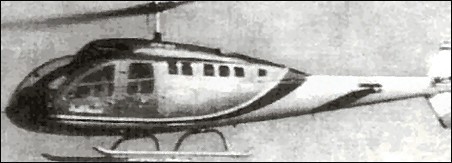
Development of the Shahed 274 light utility helicopter is reported to have been undertaken by the Pasdaran, or Revolutionary Guards. The organisation may also be responsible for a new transport helicopter.
Sponsored (as X-5) by the Institute ol Industrial Research and Development of the IRGC; reportedly due to have made its first flight in 1997.
Power is from one 313kW Roils-Royce 250-C20B turboshaft. Featuring a two-blade main and tail rotors; fully enclosed cabin and tailboom; upper and lower vertical fins. Landing gear is a twin-skid type. Seats for five persons including pilot. Forward-opening crew door and passenger door each side; baggage door aft of latter on port side.
First aircraft (71-832) handed over to IRGC 16 September 1999. International public debut, in Tehran, 30 December 2000. At least two more (74-001 and -002) in service by end of 2001. Further public appearance in air show on Kish Island, October/ November 2002.
A total of 20 (some sources suggest 30) were reportedly planned to be built by end of 2004.
Shahed 274
Engine: 1 x Rolls-Royce 250-C20B, 313kW
Main rotor diameter: 10m
Fuselage length: 9m
Height overall: 3m
Max. take-off weight: 1500kg
Empty weight: 1000kg
Max. level speed: 180km/h
Service ceiling: 5200m
Max range 600km
Iranian Aviation AVA-202
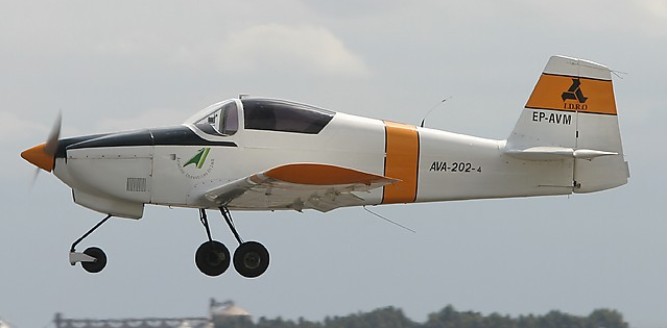
The Aviation Industries of Iran AVA-202 is an Iranian two-seat, light aircraft designed as a trainer and sporting aircraft. It was intended for the Iranian domestic market to avoid dependence on imports.
The AVA-202 was based on the Van’s Aircraft RV-6A and was designed to comply with European JAR-22 and JAR-VLA aircraft certification rules. It features a cantilever low-wing, a two-seats-in-side-by-side configuration enclosed cockpit under a bubble canopy, fixed tricycle landing gear and a single engine in tractor configuration.
The aircraft is made from aluminum sheet. Its 8.74 m (28.7 ft) span wing employs a NACA 63-215 airfoil and the wing root and a NACA 63-015 airfoil at the wing tip. The wingspan is greater than the RV-6’s wingspan of 7.01 m (23.0 ft) from which it is derived. The AVA-202’s wing has an area of 10.87 sq.m (117.0 sq ft) and is equipped with flaps. The standard engine fitted is the 160 hp (119 kW) Lycoming AEIO-320-B2B four-stroke aerobatic powerplant.
First flown on 3 June 1997, four had been built by 2002.
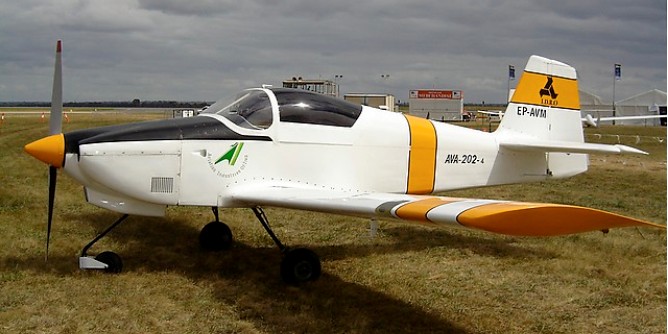
Engine: 1 × Textron Lycoming AEIO-320-B2B, 120 kW (160 hp)
Length: 6.02 m (19 ft 9 in)
Wingspan: 8.74 m (28 ft 8 in)
Height: 2.04 m (6 ft 8 in)
Wing area: 10.87 sq.m (117.0 sq ft)
Aspect ratio: 7.0:0
Airfoil: NASA 632-215
Empty weight: 500 kg (1,102 lb)
Max takeoff weight: 750 kg (1,653 lb)
Maximum speed: 259 km/h (161 mph; 140 kn) at sea level
Cruising speed: 250 km/h (155 mph; 135 kn) (75% power)
Stall speed: 84 km/h (52 mph; 45 kn) (flaps down)
Range: 1,000 km (621 mi; 540 nmi)
Service ceiling: 6,400 m (20,997 ft)
Rate of climb: 7.6 m/s (1,500 ft/min)
Crew: 2
Iranian Aviation
Iran’s aviation industry infrastructure was by and large established in the 1930s, at the time of the Shah Reza Pahlavi, where the German Junkers & Co Aviation provided the foreign expertise and assistance.
The Iran Aviation Industries Organization (IAIO) (Persian: سازمان صنایع هوایی ایران) was established in 1966 for the purpose of planning, controlling, and managing the military aviation industry of Iran.
The IAIO was responsible for directing five aviation organizations: SAHA, HESA, PANHA, GHODS, Shahid Basir Industry. These five organizations have different and complementary roles in the Iranian defense industry and Iranian civil aviation, and have progressed, with the exception of Ghods, from repair and maintenance facilities to larger defence enterprises with several thousands employees.
The Iran Helicopter Support and Renewal Company (IHSRC), or PANHA, was formed in 1969, the Iranian Aircraft Industries (IACI) in 1970, and Iran Aircraft Manufacturing Industries Corporation (IAMI), also known under its Persian acronym HESA, in 1974. Two other companies, Iran Aviation Industries Organization of the Armed Forces, (also known as the Iranian Armed Forces Aviation Industries Organization (IAFAIO)), and GHODS Research Center were formed in the early 1980s.
The industry was later expanded in the 1970s in the reign of Shah Muhammad Reza Pahlavi, benefiting from the boosted oil revenues. Not only did the Shah order vast quantities of America’s most advanced weapons, he was also acquiring the capability to produce them in Iran. Under a multibillion-dollar industrialisation programme, the Shah commissioned US arms firms to build entire weapons factories from scratch in Iran.
Thus Bell Helicopter (a division of Textron, Inc.) was building a factory to produce Model-214 helicopters in Isfahan. Northrop Corporation was also a joint partner in Iran Aircraft Industries, inc., which maintained many of the US military aircraft sold to Iran and was expected to produce aircraft components and eventually complete planes. These efforts represented a large share of US industrial involvement in Iran, and were a centrepiece of the Shah’s efforts to develop modern, high-technology industries.
After western sanctions following the Iranian Revolution, the general official policy of Iranian government changed from having the best available in the world to being able to manufacture independently in order to meet domestic needs, specially of technological products and therefore becoming “sanction-proof”.
In no other field this urgency was higher than aeronautics. Therefore Iran has avoided the need to purchase better western aircraft available to it from time to time in favor of inferior ones that could be manufactured in Iran through arrangements of purchasing licenses and technologies as well as reverse-engineering parts, mostly to avoid situations that Iran has gone through during 1980s till now by not being able to maintain what it had due to domestic technological starvation.
Major Projects
Former Iranian President Mahmoud Ahmadinejad had favored the purchase of aircraft such as Iran-140 which are manufactured in Iran. An agreement for licence production of the Antonov An-140 by Iranian Aviation called ‘Iran-140’ was signed in 1993. The first aircraft, supplied as a kit, flew on 7 February 2001.
Negotiations were underway to manufacture 50 An-148 under licence to be named Iran-148. Agreements were signed with Russia for co-development and co-manufacture of an uncertain amount of Tu-334 airliners in Iran with production to commence simultaneously both in Iran and Russia.
Another agreement with Poltava Helicopter Company of Ukraine allows Iran to manufacture the Aerokopter AK-13 ultra-light multi-purpose helicopters in Iran. Yet, Iran says it is prepared to order passenger planes from Boeing and Airbus if the United States lifts sanctions against Iran. In 2010, Iran’s Defense Ministry said it will begin the production phase of a domestically-manufactured medium-size passenger plane designed to carry up to 150 passengers.
Qaher-313, single-seat stealth fighter aircraft publicly announced on 1 February 2013.
In 2006 Textron sued IAIO, for producing counterfeits of six types of its Bell unit helicopters without licenses thereby using trade secrets and patented designs without permission and demanded compensation for damages. In another lawsuit (Bell Helicopter Textron Inc. v. Islamic Republic of Iran, Case No. 06cv1694, in U.S. District Court for the District of Columbia) brought by Iran against Textron earlier, Iran had sought damages against unfulfilled contracts dating back before revolution. Textron ultimately sent five commercial helicopters to Iran in addition to providing spare parts and training in 1994 to settle the dispute.
Ion Aircraft Ion 100 / 105 / 110 / 120
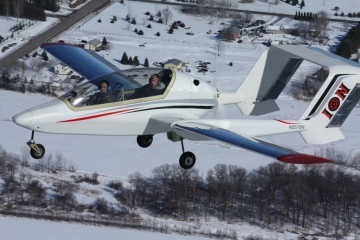
Ion Aircraft is developing a line of light, two-seat (tandem) airplanes suitable for training, sightseeing, cross-country cruising, and generally having fun. All of Ion Aircraft’s engineering is being done by AirBoss Aerospace of Reno, Nevada.
The Ion 100 is a kit aircraft being designed from the ground up to be Light Sport Aircraft (LSA) compliant.
The Ion 105 is a non-LSA variant of the 100, with better cruise performance. The 105 version is meant for the US Experimental category.
The Ion 110 is the export version, intended to comply with upcoming European rules.
All three versions feature easily removable wings for trailer storage and two sets of interchangeable wings to meet differing performance requirements.
The majority of the plane is carbon fiber/epoxy composite material. Specifically;
The cowl is fiberglass. Although it is very slightly heavier than carbon fiber would have been, the cowl is not structural and the fiberglass is much less expensive.
The wings are bonded aluminum as the bonded aluminum process is actually calculated to be a little lighter than composite would have been.
Tthe Ion 120 has a 10 inch (25 cm) removable nose cone to allow access to the nose gear and the batteries. It will also allow it to fit in a 24 foot trailer.
Ion 100
Cruise: 156 mph
Stall: 45 mph
Range: 920 sm
Rate of climb: 1600 fpm
Takeoff dist: 394 ft
Engine: Jabiru 3300, 120 hp
HP range: 100-150
Fuel capacity: 25 USG
Empty weight: 890 lb
Gross weight: 1320 lb
Length: 24 ft
Wing span: 29 ft
Wing area: 113.5 sq.ft
Seats: 2
Cockpit width: 31 in
Landing gear: nose wheel
Ion 120
Engine; 100 hp
Length: 24 ft (7.3 meters)
Wing span / LSA wings: 30 ft, 4 in (9.25 m)
Wing span / cruise wings: 26 ft 10 in (8.2 m)
Cockpit width: 30 in (76 cm)
Cruise 75% SL: 132 kt / 152 mph
Cruise 75% 3000 ft: 135 kt / 155 kt
Cruise 75% 9000 ft: 138 kt / 159 mph
Ion Aircraft
The genesis of Ion Aircraft is from a Kansas company named DreamWings and their flagship airplane, the Valkyrie.
Dozens of DreamWings depositors made their decision to buy the plane, no planes were ever delivered and in 2001 DreamWings ceased operations forever. When DreamWings closed its doors, it left 145 customers behind-customers who lost nearly $1.5 million in deposit money.
Ion Aircraft are those customers.
The former DreamWings depositors have formed Ion Aircraft to sell a beautiful airplane with good performance at a reasonable price.
LSA builder
Innovator Technologies
2009: Innovator Technologies Box 17,
Site 17, RR5 Calgary, AB Canada T2P 2G6
Helicopter builder
 All Aero