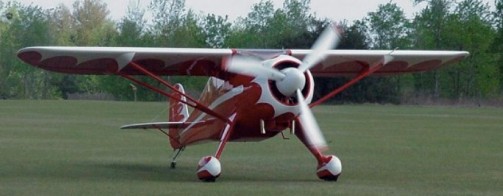
Johnson Aircraft Tiger Cub Sport II

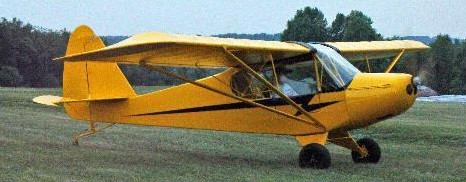
The LSA Tiger Cub Sport II has a wide enough cockpit to seat 2 full grown adults in comfort.
Wide main gear and a large rudder aid ground handling and the ailerons have a 2.7 to 1 differential throw, this virtually eliminates adverse yaw. Control surfaces are large, giving good control response throughout the flight envelope.
With a 912 Rotax or an O200 Contenental the Sport II needs only 300 ft of hard surface runway to get airborne, and will climb out at 800 ft per min. at gross weight. The landing roll is under 400 ft,
It can be ordered as a Tri gear or tail dragger and there were 2 engine options available.
The airframe is built of aluminum tubing with aluminum gussets and brackets at the joints, fastened together with bolts and rivets.

Engine: Continental O-200, 100 hp
Empty weight: 840 lb
MTOW: 1320 lb
Wing span: 33′
Wing area: 165 sq. ft.
Fuselage length (nose to tail): 22′ 6″
Folded width: 6′ 6″ (width of main gear)
Stall full flap: 35 mph.
Cruise: 105 mph.
Climb: 800 fpm.
Glide Ratio: 8 to 1
Take off Roll: 300′
Landing Roll: 400′
Wing Loading: 7.6 lbs. per sq. ft
Power Loading: 12.5 lbs. per hp.
Stress Loading: 5+ 3- G’s.
Vne: 130 mph
Cockpit width: 42 in

Engine: 912 Rotax, 100 hp
Empty weight: 700 lb
MTOW: 1320 lb
Wing span: 33 ft
Wing area: 165 sq. ft.
Fuselage length (nose to tail): 22′ 6″
Folded width: 6′ 6″ (width of main gear)
Stall full flap: 35 mph.
Cruise: 105 mph.
Climb: 800 fpm.
Glide Ratio: 8 to 1
Take off Roll: 300′
Landing Roll: 400′
Wing Loading: 7.6 lbs. per sq. ft.@ gross.
Power Loading: 12.5 lbs. per hp. @ gross.
Stress Loading: 5+ 3- G’s.
Vne: 130 mph.
Cockpit width: 42 in
Johnson Aircraft Tiger Cub

Tiger Cub

The LSA Tiger Cub UL has a wide enough cowl to keep the exhaust inside, (no unsightly two stroke exhaust hanging out) a folding wing and tail, fully enclosed cockpit (large enough to accommodate a 6’6″-250 lb. pilot in comfort) full three axis controls with flaperons and a steerable tail wheel, a wide speed range and rugged landing gear.
The first Tiger Cub first flew on 1 April 1996.

The ailerons have a 2.7 to 1 differential throw ro virtually eliminate adverse yaw.
With a 447 Rotax engine a 170 pound pilot needs about 150 ft. of hard surface runway to get airborne, and will climb out at 800 ft per min. Landing roll out is under 300 ft, even with out brakes.

The airframe is built of aluminum tubing with aluminum gussets and brackets at the joints, fastened together with bolts and rivets. A drill and pop rivet tool are all that is needed.
The plans include a complete materials and vender list .
The material list gives a list of the sizes and amounts of all the aluminum and chrome molly tube and sheet needed to build the airframe, a list of all the AN hardware sizes and quantities needed and a list of all the rest of the materials needed to complete the airplane, with descriptions and venders part numbers for hard to find or describe parts.
The gusset prints are organized by thickness from .025 to .125 the patterns can be cut out and traced onto the aluminum sheet with a fine tipped marker. No scaling from the plans is required. Directions and tips for cutting out the gussets are included in part one of the assembly manual.
Full size prints, of the chromemoly and machined parts, are included.

The panel prints have all the measurements needed to lay out the part on your work table, so you don’t have to scale your measurements from the prints, eliminating a common source of errors. ¼ scale prints (19″ by 30″ prints) of the wings, tail surfaces, fuselage and bulkhead panels.
The plans also include an assembly manual (over 200 – 11″ by 17″ ) pages of pictures and text), that gives step by step directions and tips to guide you through assembly, rigging, covering, wiring, plumbing and finishing.
Available since Jan. of 2000 over 300 sets of plans have been shipped (as of 1/2007).
Est. build time for scratch built…650 hrs.
Price for a complete set of plans was $250.00 in 2007.

The basic kit includes, a set of plans, all of the Parts Packages, listed on the previous page, and all of the additional materials needed to build a covered airframe (less engine prop instruments and paint.)
The kit will also include the main bulkhead, rear cross tube and the flaperon mixer, already assembled. These three subassembly’s are the most critical and the most difficult to build. Having them built in drill guides and assembly jigs, assures a strong and square part, and reduces building problems considerably.
The basic kit eliminates the hassle of having to order materials from six or seven different sources and tracking down all of the numerous small parts needed.

Tiger Cub UL
Engine: 447 Rotax, 40 hp
Gearbox (2.58 to 1)
Empty weight: 275 lb
MTOW: 600 lb
Wing span: 29 ‘ 4″
Wing area: 130 sq. ft.
Fuselage length: 19′ 11″
Folded length: 22′ 8″
Folded width: 6′ 6″ (width of main gear)
Stall full flap: 25 mph.
Cruise: 65 mph.
Climb: 800 fpm.
Glide Ratio: 8 to 1
Take off Roll: 150′
Landing Roll: 300′
Wing Loading: 4.6 lbs. per sq. ft.@ gross.
Power Loading: 15 lbs. per hp. @ gross.
Stress Loading: 6+ 4- G’s.
Vne: 90 mph.
Cockpit width: 27 in

Tiger Cub UL
Engine: 503 Rotax, 52 hp
Gearbox (2.58 to 1)
Empty weight: 320
MTOW: 650 lb
Wing span: 29 ‘ 4″
Wing area: 130 sq. ft.
Fuselage length: 19′ 11″
Folded length: 22′ 8″
Folded width: 6′ 6″ (width of main gear)
Stall full flap: 27 mph.
Cruise: 48 kt / 55 mph / 89 kmh
Climb: 1000 fpm.
Glide Ratio: 8 to 1
Take off Roll: 75′
Landing Roll: 300′
Wing Loading: 5.0 lbs. per sq. ft.@ gross.
Power Loading: 12.5 lbs. per hp. @ gross.
Stress Loading: 6+ 4- G’s.
Vne: 78 kt / 90 mph / 145 kmh

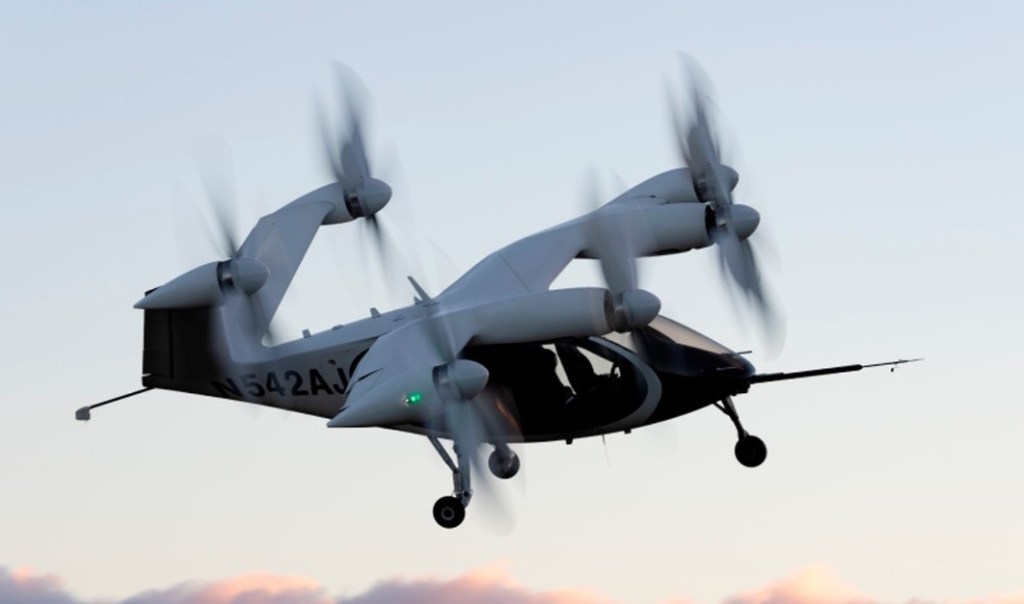
Joby Aviation S4

The Joby Aviation S4 air taxi 2.0 is a five seat eVTOL (one pilot and four passengers) vectored-thrust aircraft using six tilting propellers which are located on both the fixed wing and its V-tail. Four propellers tilt vertically including its entire motor nacelle, and two of the propellers tilt vertically with a linkage mechanism. The aircraft has large windows for spectacular views and has a tricycle-type retractable wheeled landing gear.

The company reports their aircraft is 100 times quieter than a helicopter during takeoff and landing with a near-silent flyover.

The Joby S4 four passenger eVTOL aircraft was revealed in January 2020 and the first to receive U.S. Air Force airworthiness approval in December 2020.

Jianjun 2010 airplane

After six years of design and construction, Huang Jianjun, a Chinese cobbler, who left school with only a basic education, completed a maiden flight in his home-made airplane. Huang Jianjun of Hunan Province spent more than $15,000 on the project, and in June 2010 his plane soared to a height of over 1640 ft / 500 m before landing successfully.

Kimball McCullocoupe

Late in 2000, a ‘doodle’ of what an M14P powered clipwing-ish airplane would or could look like was made. It does resemble the Monocoupe 110 Special and Jim Younkin’s Mullicoupes, but it is a design all its own specifically for the M14P series engine! The McCullocoupe was named by Jim Kimball.

The airplane is slightly larger than a 110 special with a cabin wide enough for 2 people rather than only 1 1/2 people. The wing is 2 piece rather than one and is fully ply sheeted and incorporates Curtis Pitts’ aerodynamically boosted aileron technology. Tail sizing is improved over the 110 special.

The M14PF engine is 400hp with MT making a special 3 bladed prop for the McCullocoupe that will be optimized for cruise while still having great acro performance. The landing gear is the same spring aluminum unit as used on the Pitts Model 12 hidden inside a large fairing. The firewall forward, including the cowling, are borrowed from the Pitts Model 12 as well.

Jihlavan Aeroplanes Sro

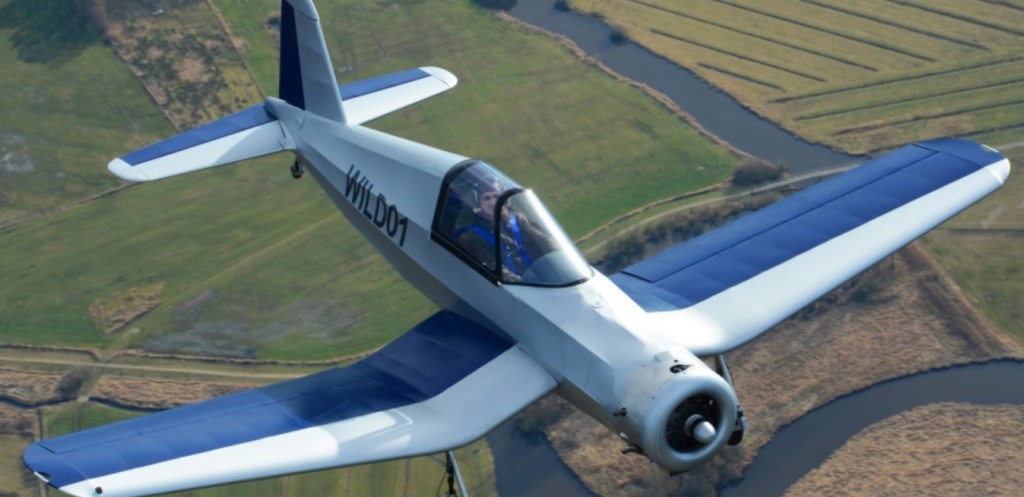
After the KAPPA 77 a.s. was declared bankruptcy on 16 February 2005, the company Jihlavan airplanes, s.r.o. was founded on 2 March 2005 with the main objective – to proceed in the production of the ultralight aircraft KP 2U SOVA. On 1 April 2005, the Jihlavan airplanes, s.r.o. became the holder of the manufacture rights, intellectual properties, etc. of the KP-2U. Over 160 airplanes of the Kappa KP-2U versions were built. After Jihlavan took over the production of the aircraft it was renamed as the Rapid KP-2U.

JH Aircraft Corsair

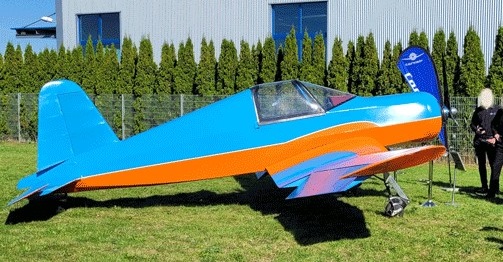
The Corsair relies on latest lightweight construction technology to combine flight performance, agility and energy efficiency. The whole primary structure is made of aerospace grade carbon fiber. Carbon fiber spaceframe technology is applied on the fuselage to achieve the greatest possible strength at the lowest possible weight.

The Carbon structure has a proven strength of +9 and -6g. Furthermore the complete cockpit area is constructed as a Kevlar reinforced safety cell.

The Corsair follows the German LTF-L regulation. As well it covers many other national regulations, e.g the British SSDR, the Italian, French, Czech, Polish and even the US American FAR part 103 regulation. For the later the empty weight, MTOW and speeds are slightly reduced.

The Verner Scarlett 3 V – a 4-stroke, 3-cylinder radial engine designed as a light aircraft engine and produces 42 bhp at 2500 rpm. The high engine torque allows the use of a rather big and efficient propeller. There are two standard options: either a ground adjustable 3-blade 1,60 m carbon prop which can produce – depending on the blade pitch – up to 100 kg of static thrust. Or the 1,75 m Helix 2- or 3-blade props which both even deliver more than 100 kg thrust.

The first version of the Corsair features a classic tailwheel configuration. The fixed main landing gears are located at the wings and due to the wing shape are rather short and quite aerodynamic. The cantilevered main wheel attachment together with hydraulic springs and dampers is great for grass strips and the occasional less than perfect landing.

The tail gear is connected with the rudder by means of a GFRP spring and allows good ground handling. Even the tail wheel is on a cantilever and has an elastomeric spring and damper.

Provisions for a retractable landing gear have been considered in the wing design and if we see sufficient customer demand a retractable version could become available in the future. Nevertheless it has to be stated, that the retractable version does not promise to be any faster – the additional weight and the resulting drag will consume the aerodynamic benefit.

Engine: Verner Scarlett 3 VW, 31 kW (42 BHP) at 2.500 RPM
Wing span: 24,6 ft
Wing area: 108 sq ft
Length: 20,7 ft
Empty weight: 265 lbs (FAR part 3 254 lbs)
Payload: 287 lbs (FAR part 3 254 lbs)
Loading: +6g / -4g
Wings folded width: 9,0 ft
Maximum speed: 55 knots / 102 km/h (EU 55 km/h)
Cruise: 54 knots / 100 km/h (EU 160 km/h)
Stall: 24 knots / 44 km/h (EU 210 km/h)
Best climb: 1000 ft/min / 5 m/s

Jetpack Aviation JB-9

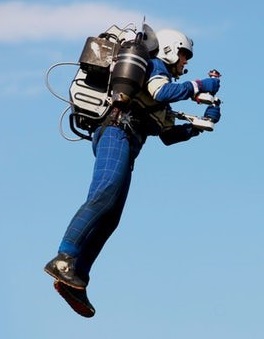
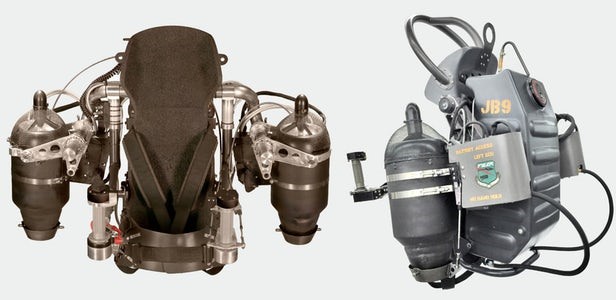
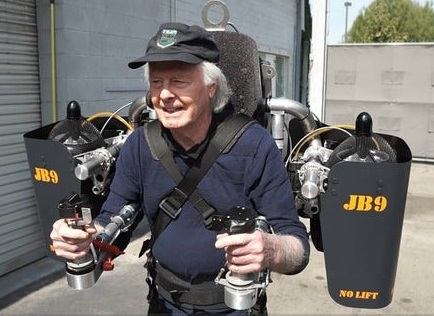
It’s a jet and a backpack; that can take off vertically. There’s a large suitcase that our whole JB-9 will fit into. It’ll fit in the back of a car. The JB-9 uses a carbon-fiber corset that straps to the pilot’s back, with the majority of the “backpack” section carrying fuel. The device can carry a total of 10 gallons of fuel, which it burns at around a gallon a minute. And the fuel itself is kerosene.

Mounted to each side is a small jet turbine engine that provides upward thrust. These engines mix ambient air with their exhaust gases to bring temperatures down to a comfortably warm airstream. The exhaust temperature actually declines really quickly.

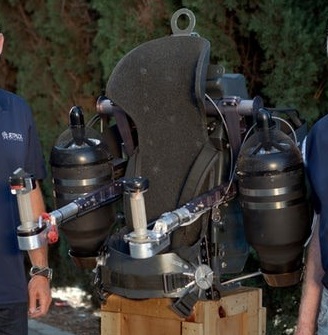
On the left hand is a twistgrip controlling yaw. If I turn the hand to the left, it will spin to the left. There are some little yaw vanes at the bottom of each engine, a little cup that tilts backward and forward. They’re on push/pull cables. They’re always going in the opposite direction to each other, so if you vector the right engine forward, the left one goes backward and you get that yaw rotation.

On the right is a fly by wire throttle driving the engines. That actually works back to front compared to a motorcycle throttle. Going back into the 1960s, the way Bell had it set up, you turn your hand inwards to develop thrust. The JB-9 works the same way.

The twistgrips sit on the end of levers, which can be pushed up and down to tilt the jet engines, either individually or together. Rather than just vectoring the thrust, they vectoring the entire engine on a sort of gimbal arrangement, not only moving the line of the thrust, but moving the centre of thrust.

To go forward or backwards, which requires pitch, effectively its pushing both handles down, that’ll make it go forward. Pulling them up, or actually allowing them to come up, because that’s what they want to do under thrust, will make it go backwards. Or more likely, just slow down from speed. The whole thing is completely manual at the moment, it’s literally a pair of levers tilting the engines.

You don’t need much roll as it’s similar to that. Once you start a roll it will basically follow that. It’s kind of kinesthetic, once you start a roll by shifting your body one way and pushing your arms down a little to the left, it’ll continue that rolling motion to the left.

The JB-9 is limited to the required standards, which is 55 knots, or just over 100 kilometers per hour.

Vertical speed depends more on the fuel payload. There is an initial climb rate of 500-1000 feet a minute and as fuel burns off, you get extraordinary vertical rates. Being turbine engines, they don’t run out of performance as the air thins. They’ll just keep going, they’re compressing the air like a turbocharger.

The total endurance of the JB-9 is 10 minutes plus, depending on pilot weight. It also depends a little bit on temperature, altitude and that kind of thing, but that’s by no means as significant as the total pilot weight.