Russia
Founded 1939, and since 1951 has manufactured Mil helicopters.
The Kazan Aviation Institute at Kazan on the River Volga, nearly 500 miles east of Moscow, has designed and produced some of Russia’s most notable sailplanes, especially the very advanced KAI-19 high performance all-metal single-seater which, in two-seater form, broke the world’s 300km closed circuit speed record on 1 August 1964, and the KAI-17 training glider.
Own designs are Ansat twin-turboshaft light multipurpose helicopter (first flown 1998) for up to 10 persons, and Aktay three-seat piston helicopter (to fly about year 2000).
2000->
Kawasaki P-X
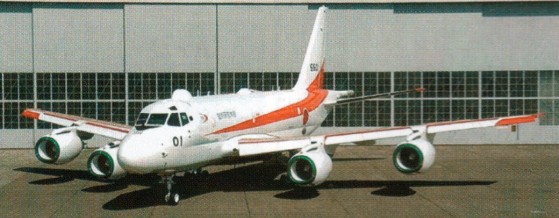
In 2007 the first prototype of the P-X maritime patrol aircraft was rolled out at Kawasaki’s Gifu factory.
The P-X is to replace the Japanese Air Self Defence Force’s P-3 Orions.
Kawasaki C-X / Xc-2
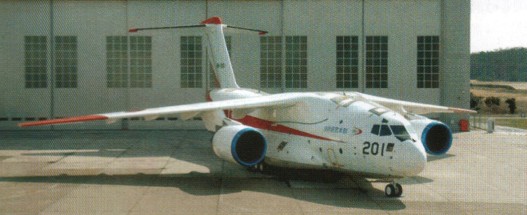
In 2007 the first prototype of the indigenously developed C-X transport aircraft was rolled out at Kawasaki’s Gifu factory.
The C-X is to replace the Japanese Air Self Defence Force’s Kawasaki C-1s.
Kawasak-Xc2.jpg 8
Xc-2
Kawasaki
Kawasaki aircraft was formed in 1918 as subsidiary of the heavy-industrial complex Kawasaki Jukogyo to build aircraft and aero engines. Based at Kobe, in the early 1930s built Salmson biplanes and engines as well as own designs. Kawasaki had a Dornier license for all-metal construction, and in December 1924 the first Kawasaki-Dornier Wal flying-boat made a notable flight with a German pilot. Thereafter made aircraft mainly for the Japanese Army.
A designer of Kawasaki landplanes was German Dr. Richard Vogt, with the company from 1923 unitl 1933. Vogt designs were Type 88 reconnaissance biplane (1927), Type 92 single-seat biplane fighter (1930), and Ki-3 single-engined biplane bomber. Japanese designed were Ki-10 single-seat fighter biplane (1935), Ki-32 single-engined monoplane bomber (1937), Ki-45 fast and widely used twin-engined fighter (1939), Ki-48 twin-engined light bomber (1939), Ki-61 single-seat fighter (liquid-cooled engine and showing German influence (1941), Ki-100 radial-engined development (1944), and Ki-102 twin-engined fighter (1944).
After the war, in March 1954, a new company of the same name was founded by the merger of Kabushiki Kaisha Kawasaki Gifu Seisakusho and Kawasaki Kikai Kogyo Kabushiki Kaisha. The Kawasaki KAL-1 (July 1953) was the first postwar all-metal aircraft of Japanese design. Early production covered 210 Lockheed T-33 jet trainers, 48 Lockheed P-2H Neptunes and 239 Bell Model 47 helicopters, all built under license from the USA. Also made major components for the NAMC YS-11 turboprop transport.
1962:
38 Akashi-machi,
Ikuta-ku,
Kobe
The company reorganized in April 1969 as Kawasaki Jukogyo Kabushiki Kaisha. In November 1970 flew the C-1 twin turbofan military transport, production aircraft later going to the JASDF. Went on to complete 82 P-2Js (derived from Neptune), 211 KH-4 helicopters (derived from the Model 47), 160 KV107 helicopters (derived from the Boeing Vertol 107 Model II), and many Hughes/McDonnell Douglas Model 500D and OH-6DA helicopters (production continued through 1998). Produced the Lockheed Martin P-3C Orion for the JMSDF; 101st and final aircraft delivered in 1997, when four EP-3/UP-3D electronic intelligence/training variants remained to be delivered up to the year 2000. Kawasaki produced 16 CH-47J examples of Boeing Chinook for the JASDF and compled delivery of 52 CH-47JAs to the JGSDF. It was s prime contractor on the OH-1 Kogata Kansoku armed scout, observation and attack helicopter (first flown August 1996), and had almost completed manufacture of some 200 T-4 intermediate jet trainers and liaison aircraft for the JASDF by 1998. Also constructs components and assemblies for the F-15J and various Airbus and Boeing airliners. Kawasaki teamed with Eurocopter on the BK117 helicopter, and has engine and space programs.
Kawasaki Heavy Industries, Limited is an international corporation and has headquarters in both Chūō-ku, Kobe and Minato, Tokyo. As of 31 March 2013 Kawasaki had 34,010 employees, total assets of ¥ 1.3 trillion at March 31, 2012, and a nett income ¥ 23.3 billion at March 31, 2012.
Kavanagh E-Srs
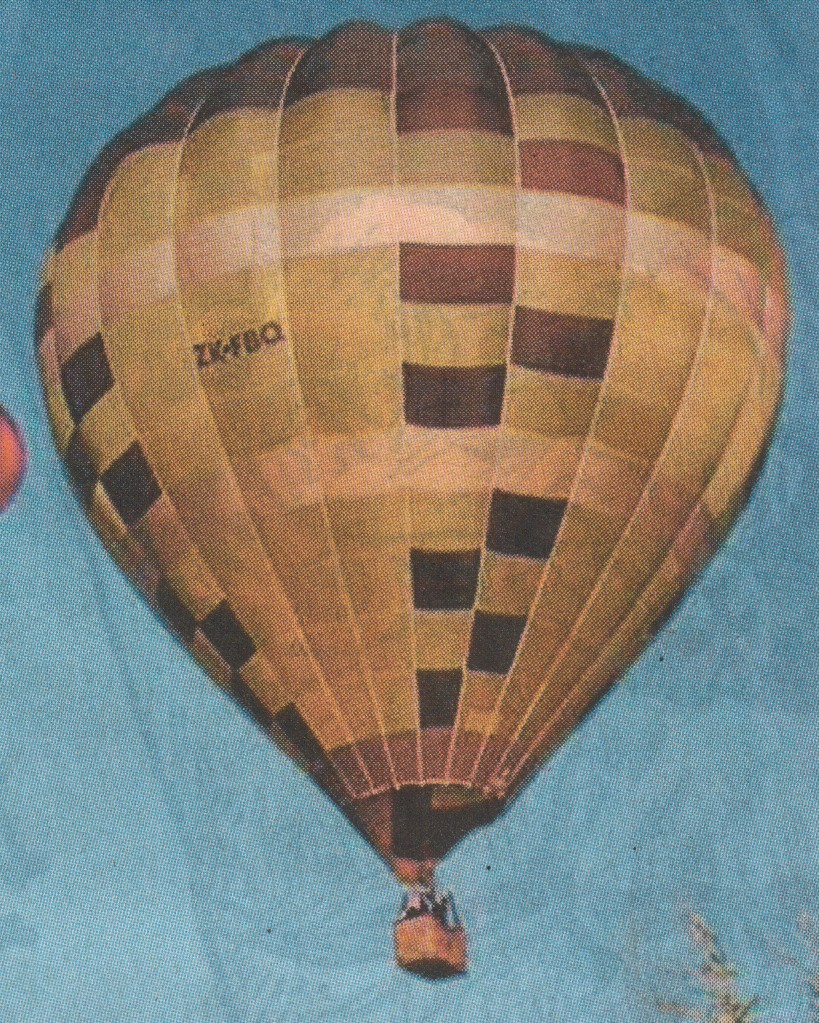
The Kavanagh E140 has Smart vent, HTN90 in vent and top panel, rotation vents, Nomex scoop, HTN90 from panel 13 up.
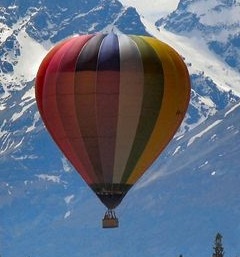
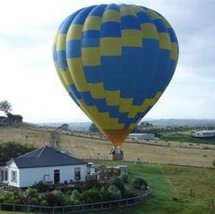
E-120
E-140
E-180
Kavanagh D Srs
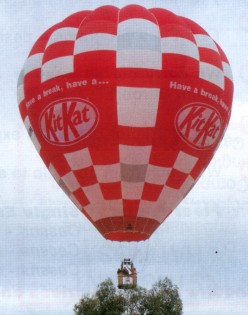
D-77
D-90
Pax cap: 4
Burners: 2
Fuel cap: 4 x 55 lt
D-105
Kavanagh
2002: From the Phil Kavanagh factory in the Hunter Valley, Australia.
Balloon builder
Kappa KP 5
Engine: Rotax 912ULS, 100 hp
TBO: 1500 hr
Fuel type: 100/100LL
Propeller: 68 in./FP/3-blade Woodcomp
Wingspan: 32 ft. 6 in.
Overall length: 23 ft. 7 in.
Height: 8 ft. 7 in.
Wing area: 128 sq. ft
Landing gear: Tri./Fixed
Max ramp weight: 1278 lb
Gross weight: 1278 lb
Landing weight: 1278 lb
Empty weight, std: 695 lb
Useful load, std: 583 lb
Usable fuel, std: 17 USG
Usable fuel, opt: 25 USG
Payload, full std. fuel: 481 lb
Wing loading: 9.9 lbs./sq.ft
Power loading: 12.8 lbs./hp
Seating capacity: 2
Cabin width: 47.2 in
Cruise speed 75% power: 115kt
Fuel consumption 75% power: 5.3 USgph
Fuel consumption 55% power: 4.9 USgph
Vso (kts.): 33
Best rate of climb, SL: 1100 fpm
Takeoff ground run: 452 ft
Landing ground run: 495 ft
2010 Base price: $105,000
Kappa KP 2 Sova / Rapid KP 2
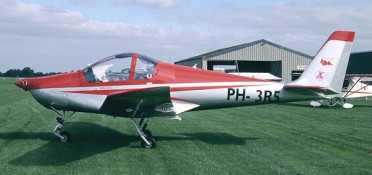
In 1994 the development of the all-metal UL aircraft KP-2U SOVA was started. Three prototypes were built: two for the test flights and one for the strength tests. The first test flight of the SOVA was done in May 1996. In September 1997 the aircraft obtained the type certificate by the UL-2 regulations from the Air Amateur Association of the Czech republic.
In June 1977, KAPPA77 a.s. was founded and the KP-2U entered serial production. After the KAPPA 77 a.s. was declared bankruptcy on 16 February 2005, the company Jihlavan airplanes, s.r.o. was founded on 2 March 2005 with the main objective – to proceed in the production of the ultralight aircraft KP 2U SOVA. On 1 April 2005, the Jihlavan airplanes, s.r.o. became the holder of the manufacture rights, intellectual properties, etc. of the KP-2U. Over 160 airplanes of the Kappa KP-2U versions were built. After Jihlavan took over the production of the aircraft it was renamed as the Rapid KP-2U.
The Kappa KP-2UR Sova is a side-by-side two-seat low-wing ultralight aeroplane, featuring variable-pitch three blade composite prop, retractable trailing link tricycle undercarriage and fowler flaps.
The all-metal aircraft is delivered in airworthy condition, with electro-retractable landing gear with hydraulic brakes, mechanically controlled Fowler flaps, removable wings with winglets, dual control and an elevator with electro-controlled trim tab. Both fabric-covered seats are adjustable, with four-point safety belts.
2009 Price: 49000 EURO
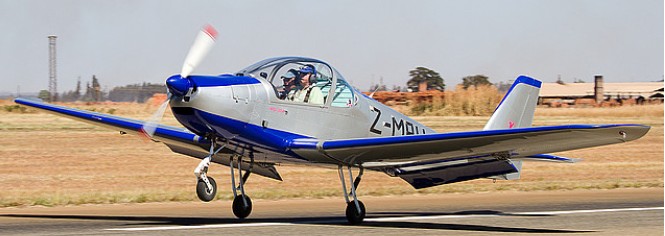
The KP 2V SOVA structure is entirely riveted dural tube. The side by side two seater is equipped with retractable undercarriage and Fowler flaps with a GAW 1 profile.
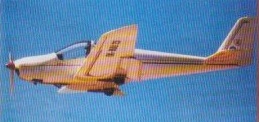
RAPID 200
Engine: Rotax, 100 hp.
Fuel cap: 64 lt.
Range nil res: 500 mile.
Stall: 26 kt / 30 mph / 48 kmh
Cruise: 113 kt / 130 mph / 210 kmh
VNE: 140 kt / 162 mph / 260 kmh
Empty Weight: 282 kg / 622 lbs
MTOW Weight: 450 kg / 992 lbs
Climb Ratio: 1300 ft/min / 6.5 m/s
Take-off distance (50ft obstacle): 330 ft / 100 m
Landing distance (50ft obstacle): 460 ft / 140 m
KP 2U SOVA
Engine: Rotax, 100 hp.
Fuel cap: 64 lt.
Range nil res: 500 mile.
Stall: 26 kt / 30 mph / 48 kmh
Cruise: 108 kt / 124 mph / 200 kmh
VNE: 143 kt / 165 mph / 265 kmh
Empty Weight: 285 kg / 628 lbs
MTOW Weight: 450 kg / 992 lbs
Engine: Rotax 912 UL, 80 hp
Wing span: 9.9 m
Wing area: 11.85 sq.m
MAUW: 450 kg
Empty weight: 260 kg
Fuel capacity: 64 lt
Max speed: 260 kph
Cruise speed: 185 kph
Minimum speed: 48 kph
Climb rate: 6.5 m/s
Certification: Cz
Seats: 2
Fuel consumption: 12 lt/hr
Price (1998): 100 000 DM
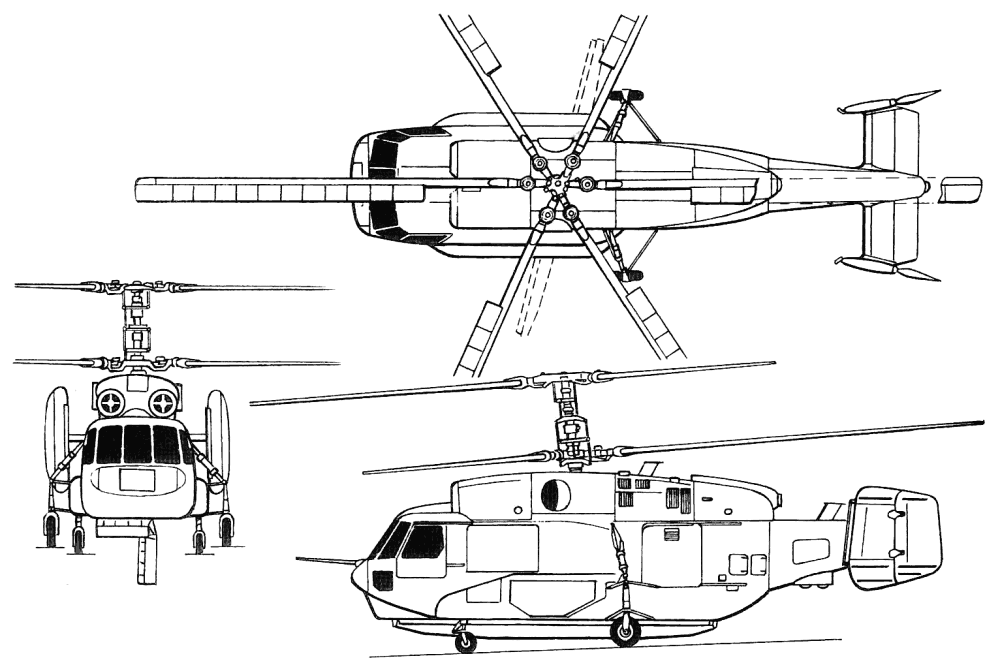
Kamov Ka-31
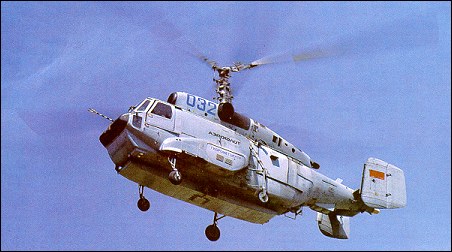
Later variants of the Ka-27 include the Ka-31 airborne early warning helicopter equipped with the E801M Oko (Eye) air and sea surveillance radar
The Ka-31 helicopter is intended for long-range detection of air targets of a fixed-wing/helicopter type, including detection at low altitudes, and over-waters ships, their tracking and automatic transmission of their data to the command posts.
Under the transport cabin floor there is a compartment housing the support-rotating mechanism of a 6-m span antenna. To prevent the interference in the antenna all-round rotation plane the nose landing gear legs are retracted rearward into the cowlings flight-wise and the main legs are retracted upward. In stowed position the antenna is kept against the fuselage bottom. A radio-electronic suite is installed for radar target detection, targets identification and transmission of the over-water and air situation data to the ship-based and ground-based command posts. The core of the on-board avionics suite is the solid-state radar. The radio-electronic package automatically controls the helicopter flight over the specified route in any weather and climatic conditions. When the radio-electronic package is on, the antenna is extended and the navigator has elected the operational mode, all further operations are performed automatically without operator interference. The navigator role is simply to control the systems operation and to duplicate target observation on the display screen.

Power is from two Klimov TV3-117VMA turboshafts, each 1,633kW, and started by APU. The fuel tanks are filled with reticulated polyurethane foam for fire suppression.
The Ka-31 (formerly Ka-29RLD: radiolokatsyonnogo Dozora: radar picket helicopter) development began in 1980 and was first flown in October 1987. Two examples (031 and 032) completed initial shipboard trials on the Admiral of the Fleet Kuznetsov (then Tbilisi) in 1990, state testing being completed in 1996.
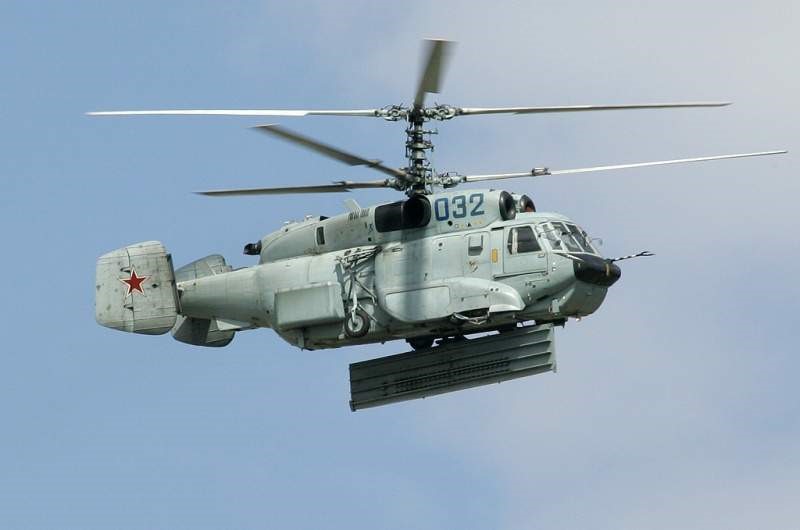
Following a 1996 evaluation, four Ka-31s were ordered in August 1999 by the Indian Navy for delivery in 2001 and basing aboard the the aircraft carriers and ‘Krivak’ class destroyers. A further five were ordered in February 2001. Limited production of the Ka-31 was launched (for Indian Navy) at Kumertau Aircraft Plant, Bashkiriya, in 1999. The Indian aircraft have 12-channel Kronshtadt GPS with Abris digital moving map and a 152x203mm AMLCD screen.
First flight of an Indian Ka-31 was on 16 May 2001, and by October 2001, the first two Indian airframes were delivered from KAPP to Kamov at Moscow for avionics installation. Flight trials were completed of the first two Indian aircraft by September 2002. The Indian Navy batch of was four priced at Rs4 billion (US$92 million) (2000), and the second five cost US$108 million (2001).
In October 2002, Kamov reported a second export customer for Ka-31s in addition to Indian Navy.
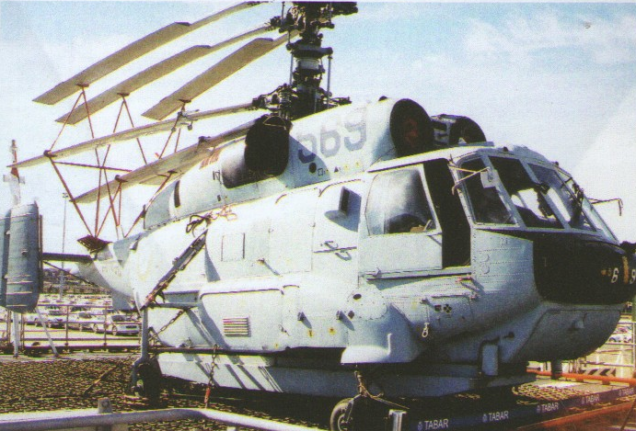
Ka-31
Crew: 2-3
Rotor diameter: 15.90m
Fuselage length: 11.30m
Height: 5.60m
Max take-off weight: 12500kg
Max speed: 255km/h
Cruising speed: 220km/h
Hovering ceiling: 3700m
Range with max fuel: 680km
Endurance: 1.5-2h
 All Aero