KLS became ACD / Advanced Composite Design Inc in 2005.
2000->
Klimov, Vladimir Yakovlevich
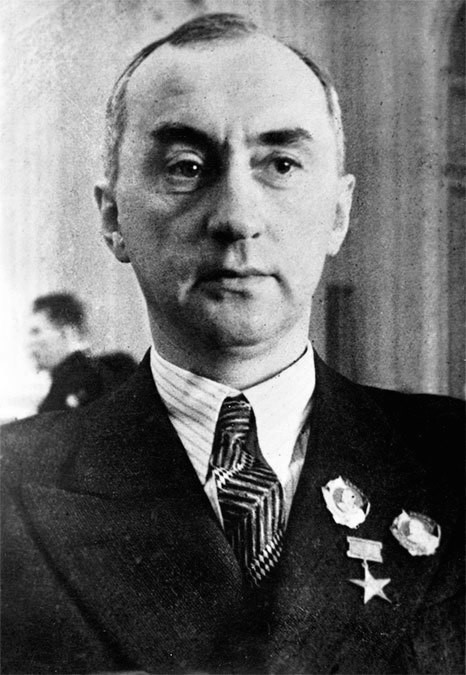
Vladimir Yakovlevich Klimov was born on 23 July 1892 in Moscow and studied at the Technical School Komissarovskom.
In 1918 he graduated from the Faculty of Mechanical Engineering of the Technical State University of Moscow NE Bauman and began his career in October of 1919 in Kolomna factory, an engineering company based in Moscow.
From July 1918 to 1931 he worked interchangeably as chief laboratory engineer, department head, assistant director of the automotive research laboratory of this factory which later became the Soviet Scientific Institute of Engines (NAMI).
After 1931 he became Head of the Department of Technical Control of gasoline engines of the Central Institute of Aviation Engines and at the same time, he worked as a professor at the Moscow Higher Technical School, the Lomonosov Institute and the Military Academy of the Force, Zhukovsky Aerial.
He was also head of the Engine Design Department at the Moscow Aviation Institute.
Vladimir Yakovlevich Klimov participated in the development of the first Soviet air-cooled star-shaped aircraft engines, the M-12, M-23, and others. In 1927 he created the first and most powerful engine of the time (approx. 650 kW (880 horsepower) the M-13 with liquid cooling for cylinders.
In the mid-1930s, it organizes the production of 12-cylinder M-100 engines, whose capacity was 30% more than that of similar foreign engines of the same size, at that time the M-103 series engine for bombers. “SB” designed by AA Tupolev and Arkhangelsk.
In 1935, Vladimir Klimov was appointed Chief Designer of the Rybinsk Engine Plant No. 26.
In August 1941, he worked designing high-power engines for Soviet aircraft destined to defend the USSR during World War II in a factory evacuated to Ufa.
The engines that Klimov had designed in the late 1930s and early 1940s (M-105, VC-105PF, EC-107, EC-108), were installed in Pe-2 dive bombers designed by VM Petlyakov and fighter jets designed by Yakovlev.
In the postwar period Klimov led the design and production of a wide series of jet engines.
During his work and research, Klimov developed and implemented a series of inventions and innovations in aircraft piston engines such as the closed liquid cooling system, the closed system with a special pressure air pump with two speed traction, advanced timing, mixed fuel feed systems in powerful and high-speed engines, and proposed a number of innovative solutions in the construction of the turbojet.
Klimov made a significant contribution to the development of lubrication theory, to the solution of balance piston engine problems, and other aircraft engine problems.
In 1947-1949 he created the first engines with internal centrifugal compressors for jet aircraft.
In 1951, on the basis of the English Nene engine, Klimov created the VK-1F – one of the world’s first turbojet engines equipped with an afterburner.
Vladimir Yakovlevich Klimov was a Deputy of the Supreme Soviet of the USSR from 1946 to 1950.
He reached the degrees of Major General in the USSR Air Engineering Service.
He was also an outstanding academic twice awarded as Hero of Socialist Labor (1940, 1957). Winner of four Stalin Awards (1941, 1943, 1946, 1949).
He died on September 9, 1962. He was buried in the Novodevichy Cemetery in Moscow.
In 2002, the name Klimov was given to a street in the Shevchenko district of Zaporozhye and a park called Academician Klimov already existed there.
Kitty Hawk Cora
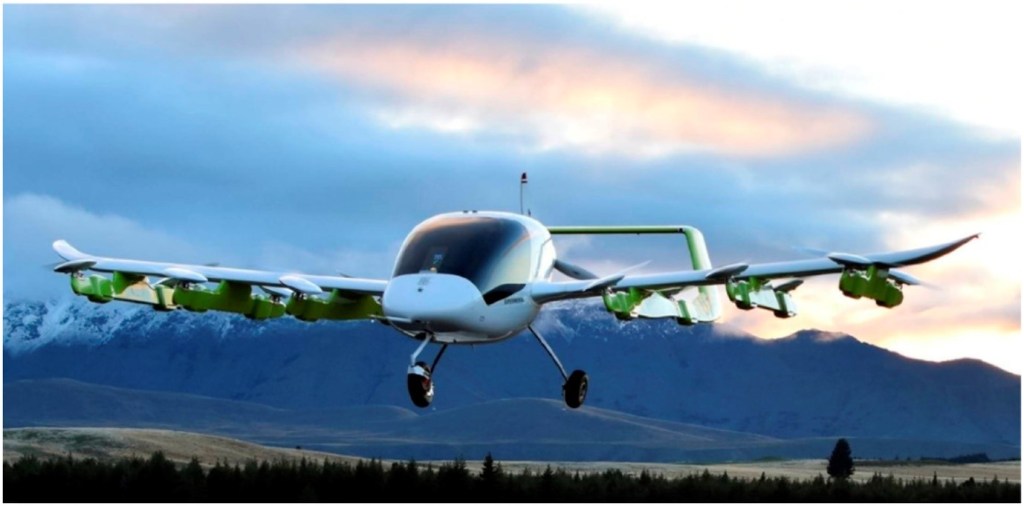
Kitty Hawk started flight testing of the Cora aircraft in California and New Zealand in 2017. The Cora is a two-seat autonomous aircraft with 12 lift propellers and a pusher prop.
Kitty Hawk Heaviside

Kitty Hawk revealed on 3 October 2019 that they had been secretly developing a single seat electric aircraft known as the Heaviside. The Heaviside features a front wing with two propellers, six propellers on the main forward swept wing, and a fairly conventional empennage. The propellers are all behind the wings and tilt downward for vertical flight. Later in October 2019, a software timing error lead to a crash of the Heaviside during flight testing.
Kitty Hawk Flyer
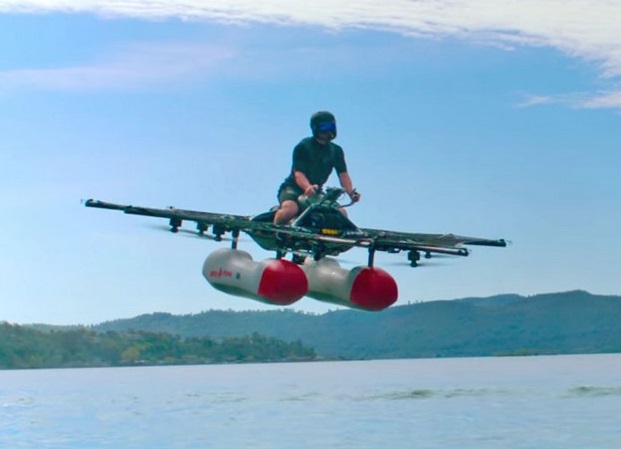
The Kitty Hawk Flyer flying car startup Google’s Larry Page is backing was first publicly demonstrated in April 2017. An aerospace engineer working for Silicon Valley company called Kitty Hawk piloted the Flyer above a lake about 100 miles north of San Francisco. It is an open-seated, 220-pound Flier with room for one person, powered by eight battery-powered propellers that howled as loudly as a speedboat.

The Flyer one-seat, propeller-driven vehicle is meant for a short flight across lake when you’re at the cottage, not commuting to work. During his test flight, Cameron Robertson, the aerospace engineer, used two joystick-like controls to swing the vehicle back and forth above Clear Lake. The flight, 15 feet above the water, circled over the lake about 20 or 30 yards from shore, and after about five minutes Mr. Robertson steered back to a floating landing pad at the end of a dock. The flyer is controlled by two handlebars and what looks like a giant touchscreen. It travels at up to 25 miles per hour at a max of 15 feet above water.

The vehicle is designed to fly above fresh water with two pontoons at its bottom. The prototype Kitty Hawk is showing off “looks and feels a lot like a flying motorcycle,” according to Cimeron Morrissey, who tested it.
They are flying under a special Federal Aviation Administration category for ultralight aircraft that does not require a pilot’s license and is intended for recreational flying in uncongested areas. To add an extra margin of safety, the Kitty Hawk engineers are sticking to flying over open water.

Kitty Hawk
The Kitty Hawk Flyer is just one flying vehicle being worked on by the Larry Page-backed startup. Page has reportedly invested more than $US100 million into Kitty Hawk and its other division, Zee Aero. Both organisations have registered to test a number of different aircraft, from gliders to sailplanes.
The goal of Kitty Hawk and Zee Aero is to one day reinvent personal transportation. Both divisions have roughly 100 employees combined. The CEO of Kitty Hawk is Sebastian Thrun, cofounder of Udacity and the father of Google’s self-driving car project.
The Kitty Hawk focus on over-water flights is intentional – it’s meant to reassure Federal Aviation Administration officials worried that unlicensed pilots will be flying over populated areas. The company wants to work with the FAA to enable more ambitious vehicles, but it would rather play it safe in the early stages.
Kinney Hot Rod Helicopter / HRH
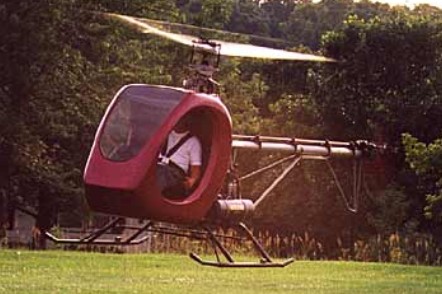
This helicopter was designed, completed, and flown in one year, one month, one week and one day.
It’s named the Kinney HRH (Hot Rod Helicopter) because of the lack of doors and hood and an air cleaner from a dual quad setup. The helicopter is small enough to fit in a home garage, and the counter-clockwise rotation of the Waitman blades is the same as standard America helicopters.
The HRH uses a 165 hp 4-cycle, 4 cylinder Subaru. It employs a computer-controlled fuel-air mixture, redundant fuel pumps, and multi-port fuel injection. It uses regular gasoline. The rotor head provides full cyclic and collective pitch, with an electronic system for maintaining rotor speed. The main blades are constructed of composite materials and the tail rotor is shaft driven.
The fully enclosed composite cabin features a fully equipped panel with both digital and analog instrumentation; a vinyl-covered seat with a “crumple-zone” support; a 4-point aircraft seat belt; and a tinted polycarbonate windshield. Addition of doors and a catalytic heater provide year-round comfort.
The powder-coated airframe is formed of aircraft-grade 4130 chromemoly steel, the primary structure both welded and bolted together with aircraft hardware. Most of the aluminum parts are black anodized.
Engine: Subaru EJ-25, 165 hp
Cruise speed: 80-90 mph
Empty weight: 1000 lbs
Useful load: 350 lbs
Gross weight: 1,350 lbs
Main rotor diameter: 25 ft
Main rotor chord: 8 in
Tail rotor diameter: 46 in
Length: 20 ft
Height: 7.25 ft
Width: 5.55 ft (175 cm)
Fuel capacity: 18.5 USgal.
Main rotor RPM: 520
Tail rotor RPM: 2,900
Endurance: 2 hours
Top speed: 103 mph
VNE: 115 mph
Blade: Waitman composite
Tail rotor chord: 4.5 in
Kinney

Bob Kinney, designer/builder of the HRH, considers himself a practical “electro-mechanical applicationist.” Bob was born in a small town in Connecticut where, as a young boy, he and some friends would visit a nearby factory that was manufacturing curious rotary-wing machines. Looking back, Bob is convinced that the man with the distinctive Russian accent that continually chased him and his friends away from that factory was Igor Sikorsky—father of the modern helicopter—and only later understood that those curious machines were helicopters.
2002: 221 Fordney Rd, Lancaster, PA 17601, USA.
Klatt Screamin’ Sasquatch / Jet Waco
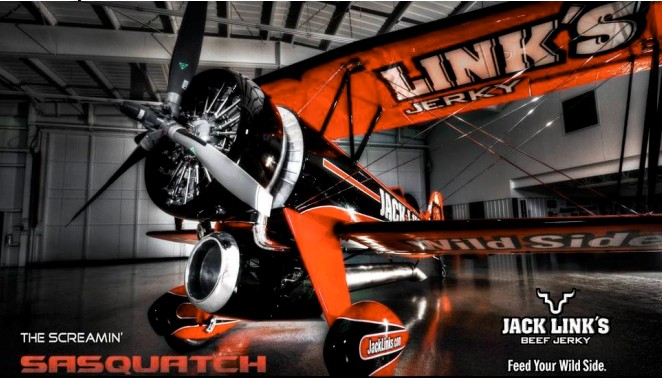
During the opening session of the 2013 ICAS Convention, John Klatt Airshows unveiled “The Screamin’ Sasquatch” Jack Link’s Jet Waco – a highly modified 1929 Taperwing Waco, powered by a Pratt & Whitney 985 Radial Engine and a CJ610 Jet Engine. These dual power-plants provide over 4,500 lb of thrust. Enough to rocket the Screamin’ Sasquatch straight up, into max speed vertical climbs.
Building this airplane over 2013 in collaboration of many others as the worlds second Jet Waco, the Screamin’ Sasquatch is sponsored by Jack Link’s Beef Jerky company.
Kitplanes For Africa Bushbaby Explorer
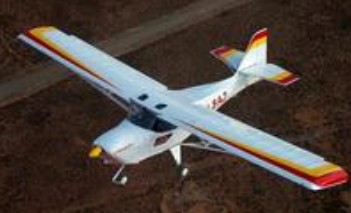
Comes as a taildragger or tricycle.
2009 Price: US$50000
Stall: 34 kt / 39 mph / 63 kmh
Cruise: 85 kt / 98 mph / 157 kmh
VNE: 113 kt / 130 mph / 209 kmh
Empty Weight: 260 kg / 573 lbs
MTOW Weight: 550 kg / 1213 lbs
Climb Ratio: 1000 ft/min / 5 m/s
Take-off distance (50ft obstacle): 390 ft / 120 m
Landing distance (50ft obstacle): 490 ft / 150 m
 All Aero