KAI KC-100 Naraon / KT-100

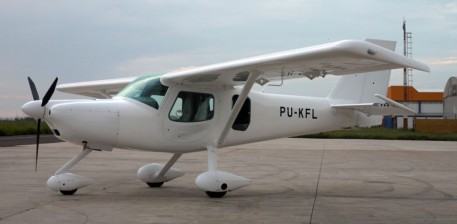
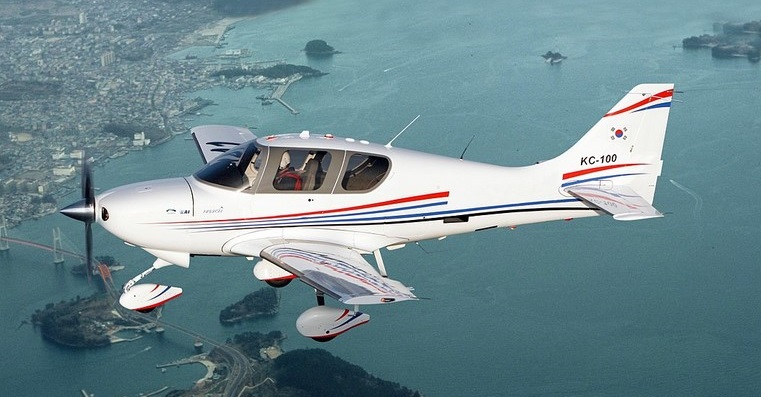
The KAI KC-100 Naraon is a four-seat, low-wing, single-engine light aircraft under development by Korea Aerospace Industries. Development began in June 2008 with a five-year development timeframe.

The KC-100 is built from carbon fibre and features gull-wing doors. The wing employs a laminar flow airfoil and winglets. The engine is a Continental TSIOF-550-K turbocharged 315 hp (235 kW) powerplant controlled by FADEC. A full-plane parachute system will be optional.

First flying on 20 July 2011, the name Naraon was chosen based on public input.

The company expected that deliveries would commence in mid-2013 at a forecast price of US$575,000.

In May 2014, the South Korean Air Force academy entered a memorandum of understanding to obtain a military trainer variant designated the KT-100, the first mass production contract for the aircraft. The KT-100 was to replace the 20 Ilyushin Il-103 aircraft at the academy to familiarize students with flying. The KT-100 first flew on 5 October 2015 and all expected to be delivered by the end of 2016.

KC-100 Naraon
Powerplant: 1 × Continental TSIOF-550-K , 315 hp (235 kW)
Wingspan: 37 ft 4 in (11.37 m)
Airfoil: laminar flow
Length: 27 ft 11 in (8.50 m)
Height: 9 ft 5 in (2.87 m)
Empty weight: 2,400 lb (1,089 kg)
Gross weight: 3,600 lb (1,633 kg)
Maximum speed: 210 kn (242 mph; 389 km/h)
Range: 1,200 nmi (1,381 mi; 2,222 km)
Crew: one
Capacity: three passengers

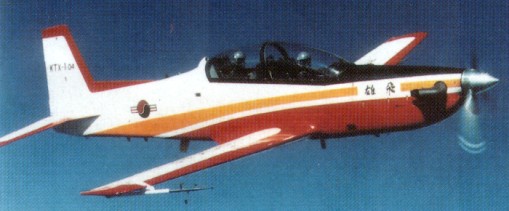
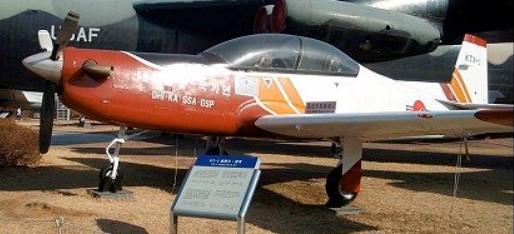
KAI KT-1 Woong Bee

Development was initiated under the KTX program as a single-engined turboprop, basic training aircraft for the Republic of Korea Air Force in 1988 using the CATIA computer program to completely develop the aircraft, the first of its class. It was jointly developed by KAI and the Agency for Defence Development (ADD).

Nine prototypes were built on June 1991 with the first flight of the KT-1 occurring on November 1991 for static and fatigue testing. In 1995, the project was officially named ‘Woongbi’. In 1998 the final test flight was performed. The KT-1 is the first completely indigenous Korean aircraft ever developed. In 1999, a contract was signed for eighty-five aircraft with provisions for an additional twenty between Korea Aerospace Industries and the Republic of Korea. The first KT-1 Woongbi was handed over to the Republic of Korea Air Force in 2000 with the delivery of the eighty-five aircraft being completed in 2002. The Republic of Korea Air Force received 85 KT-1s and 20 KA-1s.

KT-1 can be equipped with either an analog or ‘glass’ cockpit configuration. Both types are employed by the Republic of Korea Air Force.

KAI exported seven KT-1Bs plus spare parts to Indonesia in April 2003 under a 60 million USD contract, and five more in May 2005. A KT-1B was lost during training 24-Jun-2010 .

In a press release held in Sacheon, South Korea on March 8, 2006, KAI stated that it will export more than 150 improved versions of the KT-1 to various countries in Central America and Southeast Asia. The improved export version of the KT-1 will be called KT-1C.

As of June, 2007, South Korea and Turkey have successfully negotiated for a contract of exporting 40(+15) KT-1, as well as modular armor technology of K2 Black Panther for Turkey’s future indigenous MBT, to Turkey for KRW₩500,000,000,000 (approximately US$540,000,000).

A statement published by Chungwadae, the South Korean Presidential website, on 26 January 2010, said that India and South Korea had agreed, as part of upgrading their partnership to a ‘strategic relationship’, form a joint committee in the first half of 2010. The statement added that this committee will facilitate an offer from Seoul to supply up to 60 KT-1 trainers to meet Indian Air Force requirements. However, India signed the contract with Pilatus to supply 75 PC-7.

On November 6th 2012, KAI and the Peruvian Air Force has successfully negotiated a $200 million contract for 20 KT-1Ps (10 KT-1 trainers and 10 KA-1 armed counterinsurgency variants) including some offset and technologies transfers for an approximate amount of US$208 millions. KAI will provide the first 4 airplanes by 2014 and the rest will be assembled at SEMAN (Maintenance air wing of the Peruvian Air Force).

Peru reported on 19 November 2013 having set up its KT-1 family assembly plant at Las Palmas Air Base in Lima, and plans to begin final assembly work on 16 planes beginning in March 2014. The first flight of a KT-1P for Peru took place on 19 Febuary 2014. Korean Aerospace Industries (KAI) announced on 21 May 2014 it started the production of the KT-1 Woongbi for the Peruvian Air Force.

Variants:

KTX-1 Yeo-myung
Prototype primary trainer each with a different engine fitted, six built.

KA-1
An armed advanced trainer with light attack and forward air control capabilities. Several new features unique to the KA-1 are head-up-display and up-front control panel, MFD panels, and five hardpoints, two under each wing and one under the fuselage. The hardpoints may be equipped with rocket launcher, gun pods or AIM-9 Sidewinder missiles.

KT-1B
Export version for Indonesia.

KT-1C
Improved, armed export version equipped with a centreline forward looking infrared pod. The KT-1C may also be equipped with a 12.7 mm gun pod, chaffes, flares, training missiles, rockets or unguided bombs.

KT-1T
Export version for Turkey.

KT-1P
Export version for Peru.

Gallery

Specifications:

KT-1
Engine: 1 × Pratt & Whitney Canada PT6A-62, 950 hp (708 kW)
Wingspan: 10.59 m (34 ft 9 in)
Wing area: 16.01 sq.m (172.3 sq ft)
Length: 10.26 m (33 ft 8 in)
Height: 3.68 m (12 ft 1 in)
Empty weight: 1,910 kg (4,210 lb)
Max. takeoff weight: 2,540 kg (5,600 lb)
Maximum speed: 574 km/h (310 knots, 357 mph) (IAS)
Range: 1,333 km (720 nmi, 828 mi) at 7,620 m (25,000 ft), max internal fuel
Service ceiling: 11,580 m (38,000 ft)
Rate of climb: 16.2 m/s (3,180 ft/min)
Endurance: 3 h
Crew: 2 in tandem
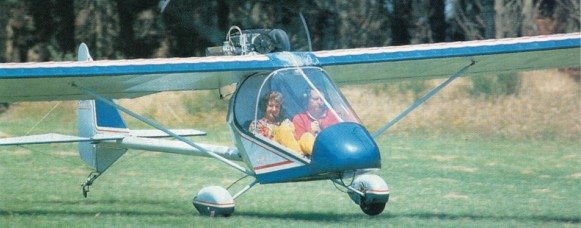
Kolb Mark III

Designed by Homer Kolb, the Twinstar Mk.III uses a steel spaceframe cockpit and 14cm diameter dural tube for the tail boom and spars. The ribs are dural tube, riveted and gussetter. The 1997 kit price, including Rotax 582 engine, was US$12,484.

The Mark III Classic, with the aerodynamic expertise of BarnabyWainfan, became the Mark III Xtra while retaining the STOL performance of the Classic. The Mark III Xtra, along with all Kolb aircraft, has folding wings and tails which allows for easy set-up and take-down. The tail folds up and the wings fold back. The process can be done in about 15 minutes. No tools or brackets are required. Everything stores right on the airframe.
The LSA Mark III Xtra comes with an assembly manual, including 3D illustrations, technical drawings and step-by-step procedures.
The New Kolb Aircraft Mark III Xtra 2009 Price: US$18700

Mark III Classic
Engine: Rotax 582, 65 hp.
Hp range: 52-80.
Speed max: 85 mph.
Cruise: 75 mph.
Stall: 33 mph.
ROC: 950 fpm.
Take-off dist: 200 ft.
Landing dist: 200 ft.
Fuel cap: 10 USG.
Weight empty: 450 lbs.
Gross: 1000 lbs.
Height: 6.12 ft.
Length: 22.5 ft.
Wing span: 30 ft.
Wing area: 160 sq.ft.
Seats: 2.
Landing gear: tail wheel.

New Kolb Aircraft Mark III Clasic
Engine: Rotax 582, 65 hp
HP range: 65-80
Cruise: 75 mph
Stall: 41 mph
Rate of climb: 1000 fpm
Takeoff dist: 200 ft
Landing dist: 200 ft
Fuel capacity: 17 USG
Empty weight: 450 lb
Gross weight: 1000 lb
Length: 22.6 ft
Wing span: 30 ft
Wing area: 160 sq.ft
Cockpit width: 41.5 in
Landing gear: tailwheel

New Kolb Aircraft Mark III Xtra
Engine: Rotax 912, 912S
Cruise speed: 90 mph
Stall speed (Vs): 35 mph
Stall speed (Vso): 26 mph
Climb rate: 1,100 fpm
Take-off roll: 200 ft.
Wing span: 30 ft.
Cabin width: 45 in.
Fuel tank: 10 USgal.
Empty weight: 550 lbs
Gross weight: 1,000 lbs

New Kolb Aircraft Mark III Xtra
Engine: Rotax 582, 65 hp
HP range: 65-100
Cruise: 80 mph
Stall: 41 mph
Range: 230 sm
Rate of climb: 1000 fpm
Takeoff dist: 200 ft
Landing dist: 200 ft
Fuel capacity: 10 USG
Empty weight: 500 lb
Gross weight: 1000 lb
Length: 24 ft
Wing span: 30 ft
Wing area: 160 sq.ft
Seats: 2
Landing gear: tailwheel

Mark III
Engine: Rotax 582, 64 hp
Wing span: 9.14 m
Wing area: 14.86 sq.m
MAUW: 400 kg
Empty weight: 179 kg
Fuel capacity: 38 lt
Max speed: 152 kph
Cruise speed: 120 kph
Minimum speed: 55 kph
Climb rate: 4.5 m/s
Certification: PFA
Seats: 2
Fuel consumption: 16 lt/hr
Kit price (1998): £10,811

New Kolb Flyer SS

The Flyer SS fuselage is a resin infusion moulded composite structure consisting of a carbon fiber/epoxy resin laminate with rigid PVC, birch plywood and balsa cores. The all-metal wet wing is a single-strut, single spar construction, covered with aluminum skins. The horizontal empennage features a cantilever stabilizer structure covered with aluminum and with fibreglass tips. The vertical tail, ailerons, flaps and elevator are also aluminum covered. Ailerons, elevator are mass balanced.
The airplane features dual control sticks, dual rudder pedals and a dual differential braking system. The Frise Ailerons are deflected through a bellcrank / pushrod mechanism mounted on ball bearings. The Fowler flaps are operated by a torque tube connected to an electric motor. Ailerons deflect 30° up and 17° down and flaps 40°. The rudder is cable operated while the elevator is operated via a set of 2 push-pull tubes connected by a central bellcrank. The trim tab is controlled by an electric servo motor.

The main Wittman type landing gear legs are made of heat-treated 6150 HR steel rods, faired with fibreglass. The system consists of a right and a left leg, bolted in two landing gear sockets located at each end on an extruded aluminum carry through square tube laminated in place in the bottom of the fuselage. The nose gear leg is made in the same fashion as the main gear but with a different camber. The wheel is mounted in an aluminum fork and suspension is provided by natural leg bending. The nose wheel is free and can rotate 360°.

Cleveland 5 inch wheels and brakes with 5.00*5 tires are used for all three wheels. Brakes are toe operated and the KOLB FLYER SS offers differential braking from pilot and passenger seats.

The flaps are electrically operated by an electric actuator. The flap control is located in the center console. They offer 5 positions from -4° to 40°. One elevator trim, electrically operated, that combines as an anti-servo tab. Fixed trims are used for the rudder and the ailerons.
Two seats, side by side and adjustable, leather seat cushions, dual sticks, dual pedals, center console, top hinged bubble doors, blown acrylic windshield, windows and skylights, baggage compartment accessible via a cargo door on the pilot’s side and over the central bulkhead. Three-point seat belts – shoulder harness for both seats. The two seats are moving forward and aft and are electrically actuated. The control is done via a rocker switch located between the two seats on the center console.

The Rotax 912S develops 100 HP at 5,800 RPM for take-off and 95 HP continuous at 5,500 RPM. Stainless steel exhausts system. 4 cylinder, 4 stroke liquid/air cooled engine with opposed cylinders, dry sump forced lubrication with separate 3l (.8 gal US) oil tank, automatic adjustment by hydraulic valve tappet, 2 CD carburetors, mechanical fuel pump, electronic dual ignition, electric starter, integrated reduction gear 1= 2.43.

Flyer SS
Engine: Rotax 912S, 100 hp
Wing span: 32Ft / 9.75m
Length: 20.6ft6./ 28m
Fin height: 8.25ft / 2.5m
Airfoil: GA30U-418
Wing area: 117Sq.ft. / 10.8 sq.m
Aspect ratio: 8.73
Dihedral: 0.9 deg
Incidence: 2.5 deg
Aileron Span: 57.6In / 1.46m
Aileron Area (each): 3.9Sq.ft / 0.36Sq.m
Flap Span: 103.4in
Flap Area (each): 6.9Sq.ft / 0.64Sq.m
Stabilizer span: 9ft / 2.74m
Stabilizer area: 13.9Sq.ft. / 1.29Sq.m
Elevator area: 9.7Sq.ft. / 0.9Sq.m
Trim tab area: 1Sq.ft. / 0.1Sq.m
Horizontal tail Angle of incidence: -1deg
Fin area: 4Sq.ft. / 0.37Sq.m
Rudder area: 7.1Sq.ft / 0.66Sq.m
Landing gear Track: 7.3Ft / 2.23m
Wheel base: 68.7In / 1.74m
Cabin width: 47 In / 1.2m
Cabin Leg room: 46 In / 1.17m
Maximum cruising speed: 117 ktas
Maximum speed (flaps extended): 74 ktas
Cruising speed: 115 ktas
Never to exceed speed (VNE): 140 ktas
Stall speed (flaps retracted): 45 ktas
Stall speed flaps 10°: 38 ktas
Stall speed flaps 25°: 32 ktas
Stall speed flaps 40°: 30 ktas
Climb rate: 1,234 fpm
Take-off ground roll: 725 ft.
Landing ground roll: 500 ft.
Operating ceiling: 12,000 ft.
Maximum take-off weight: 1,320 lbs / 600 kg
Typical empty weight: 850 lbs / 385 kg
Typical useful load: 470 lbs / 213 kg
Maximum weight per seat: 240 lbs / 109 kg
Maximum baggage weight: 28 lbs / 13 kg
Maximum fuel load: 162 lbs / 73 kg
Minimum single pilot weight: NO single pilot weight minimum

Kolb FireStar / FireStar II

Firestar II

First produced in 1985. The wings and tail fold for transport.
Designed by Homer Kolb
The 1997 kit price including a Rotax 447 was $9039.

FireStar II

The FireStar II is a two place version of the Firestar I.
The 1997 kit price was US$9264 including the engine.
The New Kolb Aircraft LSA Firestar II 2009 Price: 9000 US$

Firestar
Engine: Rotax 377
Empty wt. lbs: 264
Max wt. lbs: 535
Wing span: 27ft 8in
Wing area sq.ft.: 148
Wing loading lbs/sq.ft: 3.6
Power loading lbs/hp: 15.3
Max speed mph: 63
Cruise mph: 55
Stall mph: 26
Vne mph: 75
Seats: 1

Firestar I
Engine: Rotax 447, 41 hp.
Speed max: 70 mph.
Cruise: 60 mph.
Stall: 26 mph.
ROC: 1000 fpm.
Take-off dist: 125 ft.
Landing dist: 125 ft.
Fuel cap: 5 USG.
Weight empty: 275 lbs.
Gross: 550 lbs.
Height: 5.83 ft.
Length: 21.25 ft.
Wing span: 27.5 ft.
Wing area: 143 sq.ft.
Seats: 1.
Landing gear: tail wheel.

New Kolb Firestar I
Engine: Rotax 503, 52 hp.
Wing span: 27.8 ft.
Wing area: 143 sq.ft.
Length: 22.6 ft.
Weight empty: 325 lbs.
Gross: 760 lbs.
Fuel cap: 10 USG.
Cruise: 70 mph.
Stall: 27 mph.
ROC: 850 fpm.
Take-off dist: 150 ft.
Landing dist: 200 ft.
Seats: 2 tandem.
Cockpit width: 23 in
Landing gear: tail wheel.

FireStar II
Engine: Rotax 447, 41 hp.
Height: 5.83 ft.
Length: 21.25 ft.
Wing span: 27.5 ft.
Wing area: 143 sq.ft.
Weight empty: 290 lbs.
Gross: 725 lbs.
Fuel cap: 10 USG.
Speed max: 70 mph.
Cruise: 60 mph.
Stall: 30 mph.
ROC: 650 fpm.
Take-off dist: 225 ft.
Landing dist: 200 ft.
Seats: 2.
Landing gear: tail wheel.

The New Kolb Aircraft Firestar II
Stall: 30 kt / 35 mph / 56 kmh
Cruise: 61 kt / 70 mph / 113 kmh
VNE: 74 kt / 85 mph / 137 kmh
Empty Weight: 147 kg / 325 lbs
MTOW Weight: 329 kg / 725 lbs
Climb Ratio: 800 ft/min / 4 m/s
Take-off distance (50ft obstacle): 250 ft / 76 m
Landing distance (50ft obstacle): 300 ft / 91 m

Kolb / The New Kolb Aircraft Co

1982: Kolb Company Inc, RD 3, Box 38, Phoenixvil¬le, Pennsylvania 19460, USA.
1995-8: R.D.3, Box 38, Phoenixville, PA

The New Kolb Aircraft Co. offers 3 excellent designs to cover a wide spectrum of flying missions. The Firefly, was designed in 1995 and more than 500 units were sold worldwide. The Mark 3 Xtra was designed in 1999 by aircraft designer Barnaby Wainfan and more than 100 were sold in the Unites States. The Kolb Flyer SS was granted the S-LSA certificate and sold since July 2008.

König SD 570 / Zanzottera SD 570 / Compact Radial Engines SD 570

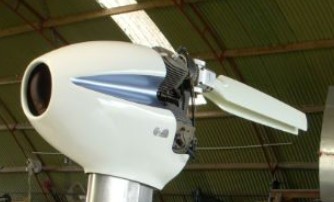
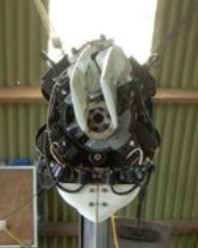
The König SD 570 is a four-cylinder, two-stroke, single ignition radial aircraft engine designed for powered paragliders, powered parachutes and single place ultralight trikes. The SD 570 is an unusual four-cylinder radial engine that is very compact and light weight at only 19 kg (42 lb). The engine features single capacitor discharge ignition, a single Bing 49 diaphragm-type carburetor and rotary valve induction. It was offered without a reduction drive, although when Zanzottera built it an optional 1.75:1 cog belt reduction drive was available. Starting is electric starter only and a recoil starter is not an option.

Earlier versions produced 28 hp (21 kW) at 4200 rpm with a slide-type carburetor and reduction drive. The later version is rated at 24 hp (18 kW) at 4200 rpm. Time between overhaul is rated as 300 hours.

The SD 570 shares the same bore and stroke as the smaller three-cylinder König SC 430 radial engine.

The engine was originally designed and produced by Dieter König of Berlin, Germany. The design was sold to Zanzottera Technologies of Italy and then sold again, along with the rest of Zanzottera’s two-stroke ultralight aircraft engine line to Compact Radial Engines of Surrey, British Columbia, Canada.

Variants:

Zanzottera SD 570
Four-cylinder, two-stroke, single-ignition, radial aircraft engine producing 28 hp (21 kW) at 4200 rpm. Equipped with a slide-type carburetor and an optional reduction drive.

Compact Radial Engines SD 570
Four-cylinder, two-stroke, single-ignition, radial aircraft engine producing 24 hp (18 kW) at 4200 rpm. Equipped with a Bing 49 diaphragm-type carburetor and no reduction drive.

Applications:
MFI BA-12 Sländan

Specifications:
SD 570
Type: Four-cylinder, radial two-stroke aircraft engine
Bore: 66 mm (2.60 in)
Stroke: 42 mm (1.65 in)
Displacement: 579 cc (35.33 cu in)
Dry weight: 19 kg (42 lb)
Valvetrain: rotary valve induction
Oil system: premixed oil and fuel
Cooling system: air-cooled
Reduction gear: none
Power output: 24 hp (18 kW) at 4200 rpm

König SC 430 / Zanzottera SC 430 / Compact Radial Engines SC 430

The König SC 430 is a three-cylinder, two-stroke, single ignition radial aircraft engine designed for powered paragliders and single place ultralight trikes. The SC 430 is a unique three cylinder radial engine that is very compact and light weight at only 17 kg (37 lb). The engine features single capacitor discharge ignition, a single Bing 49 diaphragm type carburetor and rotary valve induction. It was currently offered without a reduction drive, although when Zanzottera built it a 1.75:1 cog belt reduction drive was available. Starting is electric starter only and a recoil starter is not an option.

Earlier versions produced 24 hp (18 kW) at 4200 rpm with a slide-type carburetor and reduction drive. The later version is rated at 20 hp (15 kW) at 4200 rpm. Time between overhaul is rated as 300 hours.

The SC 430 shares the same bore and stroke as the larger four cylinder König SD 570 radial engine.

The engine was originally designed and produced by Dieter König of Berlin, Germany. The design was sold to Zanzottera Technologies of Italy and then sold again, along with the rest of Zanzottera’s two-stroke ultralight aircraft engine line to Compact Radial Engines of Surrey, British Columbia, Canada.

Unit cost from Compact Radial Engines in 2001 was US$3600

Variants:

Zanzottera SC 430
Three cylinder, two stroke, single ignition, radial aircraft engine producing 24 hp (18 kW) at 4200 rpm. Equipped with a slide-type carburetor and reduction drive.

Compact Radial Engines SC 430
Three cylinder, two stroke, single ignition, radial aircraft engine producing 20 hp (15 kW) at 4200 rpm. Equipped with a Bing 49 diaphragm type carburetor and no reduction drive.

Applications:
Air Est Goeland
Alpaero Sirius
Gardner Scout
Stratos 300
UTIAS Ornithopter No.1
Valentin Kiwi 6T
Windex 1200

Specifications:
CR 430
Type: Three cylinder, radial two-stroke aircraft engine
Bore: 66 mm (2.60 in)
Stroke: 42 mm (1.65 in)
Displacement: 430 cc (20.75 cu in)
Dry weight: 17 kg (37 lb)
Valvetrain: rotary valve induction
Oil system: premixed oil and fuel
Cooling system: air cooled
Reduction gear: none
Power output: 20 hp (15 kW) at 4200 rpm