Lake / LanShe Aerospace / Sun Lake Aircraft

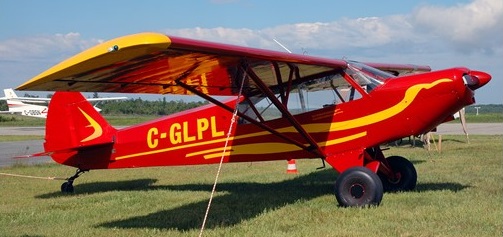
Lake formed at Sandford, Maine (pres: Jack Strayer), and purchased manufacturing rights to Colonial Skimmer in 1959, marketed initially as Lake Skimmer. Circa1961 Aerofab (Herbert Lindblad (ex-Colonial)) was founded to build Lake Amphibians for M I Alson, Lake Aircraft distributor, 5511 S Main St, Elkhart IN.

Merged with Consolidated Aeronautics 1962, continuing production as Lake LA-4A amphibian, the first under the Lake name appearing in 1960.

1978 production model was LA-4 200 Buccaneer. One LA-4 used by Bell Aerospace to test Air Cushion Landing System (ACLS) 1963-1968. In 1969 the company moved to Tomball TX. 1979: Acquired by Armand Rivard, Laconia NH and Kissimmee FL; TC to REVO.

Company became Lake Amphibian Inc. in 1983 and Lake Aircraft Inc. in 1987.

Lake Amphibian Inc. markets six-seat Renegade amphibian (first flown 1983), four-seat Turbo-Renegade with turbocharged piston engine, Seafury and Turbo Seafury as variants for salt water operations, and military Seawolf with underwing NATO pylons for stores. Over 1,300 amphibians manufactured by all Lake companies, past and present.

LanShe Aerospace in Florida bought the Lake Aircraft Company in 2002 (pres: Wadi Rahim). TC to Global Amphibians. Renamed as Sun Lake Aircraft, Ft Pierce FL.
Lada Land VM-01

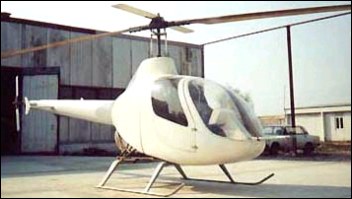
This light helicopter was built and flown in 2001 by the Lada Land company based in Tolyatti, Russia.

Lada Land VM-01
Engine: 1 x 170hp VAZ-416 piston
Main rotor diameter: 9.00m
Tail rotor diameter: 1.56m
Max take-off weight: 890kg
Payload: 300kg
Cruising speed: 140km/h
Rate of climb: 240m/min
Ceiling: 3000m
Range: 330km

Kubíček M-2 Skaut

In 2005 Petr Kubiček, encouraged by aerospace engineering students at Brno University, began to design a modernised Mráz M-2 Skaut with the hope of production. The first Kubicek M-2 Scout (the name was Anglicised) of the 21st century appeared, unflown, at Aero ’09 held in Friedrichshafen in the spring of 2009 and flew for the first time on 7 May 2009. The Scout design began with the original plans reassessed with modern methods and using a metal rather than wood structure, supplemented with some composite materials for the engines cowling and flying surface tips.

Externally the old and new aircraft are similar, wings and tail having the same features and the side-by-side seating retained. The aircraft is made from riveted and bonded aluminum sheet and is completely corrosion-treated after assembly. Electrically operated flaps are fitted to the Scout and there is a central trim tab on the elevator. Its fixed tricycle undercarriage is mounted on the fuselage with cantilever composite mainlegs. The mainwheels have brakes operated with a central lever and the nosewheel has helical springing. All wheels are spatted.

The new M-2 was designed to comply with the Fédération Aéronautique Internationale microlight rules and US light-sport aircraft rules.

After its first flight in May 2009, the Scout prototype appeared at several Czech airshows and fly-ins.

Two versions are being developed, one to meet the US Light Sport requirement with a maximum take-off weight (MTOW) of 598 kg (1,320 lb) and a second for the European Ultralight MTOW limit of 450 kg (992 lb). Both these MTOWs are less than that of the original Skaut and empty weight are also less. Certification was proceeding in 2010, with the aim of first deliveries during 2011.

M-2 Scout LSA
US light-sport category
Engine: Rotax 912ULS, 73.5 kW (98.6 hp)
Propeller: 3 blade ground adjustable
Wingspan: 9.6 m (31.5 ft)
Wing area: 12.4 m2 (133 sq ft)
Length: 6.87 m (22 ft 6 in)
Height: 2.35 m (7 ft 9 in)
Empty weight: 320 kg (705 lb)
Gross weight: 600 kg (1,323 lb)
Fuel capacity: 90 L (23.5 US gal; 19.8 Imp gal).
Maximum speed: 220 km/h (140 mph, 120 kn)
Cruise speed: 180 km/h (110 mph, 97 kn)
Stall speed: 72 km/h (45 mph, 39 kn) in the landing configuration
Never exceed speed: 260 km/h (160 mph, 140 kn)
ROC: 6.0 m/s / 1.181 ft/min
Endurance: 6 hours
g limits: +4/-2
Crew: one
Capacity: one passenger
Cockpit width: 120 cm (47 in)

M-2 Scout UL
European ultralight category
Engine: Rotax 912ULS, 73.5 kW (98.6 hp)
Propeller: 3 blade ground adjustable
Wingspan: 9.6 m (31.5 ft)
Wing area: 12.4 m2 (133 sq ft)
Length: 6.87 m (22 ft 6 in)
Height: 2.35 m (7 ft 9 in)
Empty weight: 320 kg (705 lb)
Gross weight: 472.5 kg (1,042 lb)
Fuel capacity: 90 L (23.5 US gal; 19.8 Imp gal).
ROC: 5.0 m/s (984 ft/min)
Cockpit width: 120 cm (47 in)
Crew: one
Capacity: one passenger

Krucker Cygnet / Sea & Sky Cygnet

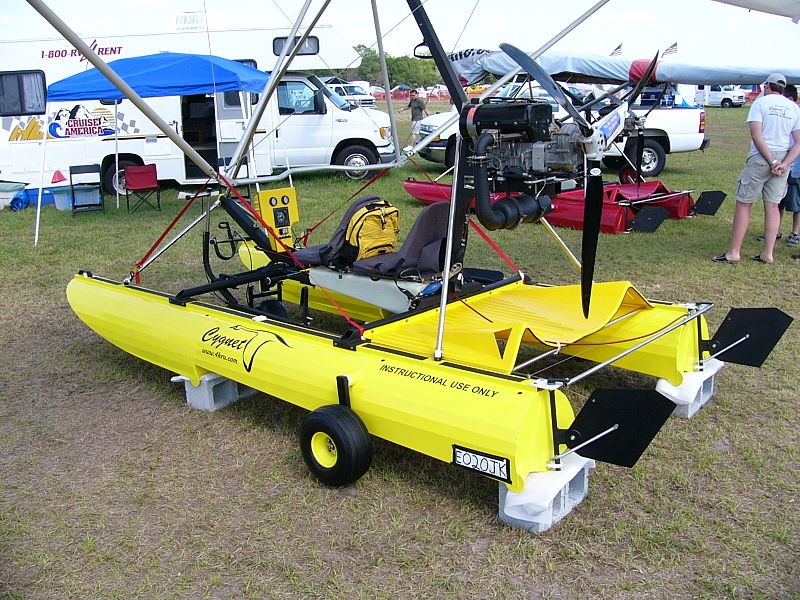
Krucker Cygnet at Sun ‘n Fun, 2004

The Krucker Cygnet amphibious ultralight trike was designed by J.P. Krucker and initially produced by his company Krucker Manufacturing in Sudbury, Ontario, Canada. Supplied as a kit for amateur construction or as a complete ready-to-fly-aircraft, the aircraft was designed to comply with the Fédération Aéronautique Internationale microlight category and the US light-sport aircraft rules.

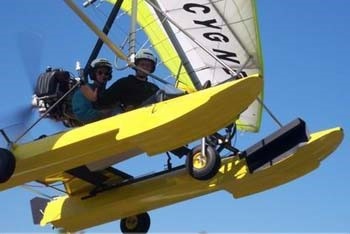
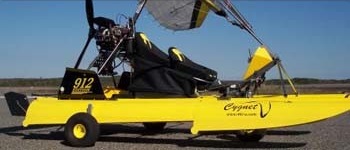
It features a strut-braced hang glider-style high-wing, weight-shift controls, a two-seats-in-tandem open cockpit, retractable wheeled tricycle landing gear and dual floats and a single engine in pusher configuration.

The aircraft is made from bolted-together aluminum tubing, with its single surface wing covered in Dacron sailcloth. Its 10.3 m (33.8 ft) span wing is supported by struts and uses an “A” frame weight-shift control bar. The standard powerplants are the twin cylinder, liquid-cooled, two-stroke, dual-ignition 65 hp (48 kW) Rotax 582 engine, the four cylinder, air and liquid-cooled, four-stroke, dual-ignition 80 hp (60 kW) Rotax 912UL and the 100 hp (75 kW) Rotax 912ULS engines.

A number of different wings can be fitted to the basic carriage, including the North Wings Pulse 17 m2 (180 sq ft) and 19 m2 (200 sq ft) sizes. The LSA-approved wings are the North Wing Mustang 3 in 15 m2 (160 sq ft), 17 m2 (180 sq ft) and 19 m2 (200 sq ft) and the Keitek Hazard.

The Cygnet was awarded Best Trike at Sun ‘n Fun in 2005.

SLSA #99 was the Krucker Cygnet amphib trike. The SLSA completed on 3 July 2009 accoring to U.S. representative, Michael Percy, of XL Kites who imports the Cygnet to the US.

The Cygnet was later manufactured by Sea and Sky of Fort Walton Beach, Florida, United States, selling for US$49,600 (with Rotax 912) in 2011, and still in production in 2013.

Cygnet 2 / North Wings Pulse 17 wing
Engine: 1 × Rotax 582, 64 hp (48 kW)
Propeller: 3-bladed composite
Wingspan: 33 ft 10 in (10.3 m)
Wing area: 189 sq ft (17.6 sq.m)
Empty weight: 529 lb (240 kg)
Gross weight: 992 lb (450 kg)
Fuel capacity: 10 U.S. gallons (38 L; 8.3 imp gal)
Wing loading: 5.2 lb/sq ft (25.6 kg/sq.m)
Maximum speed: 60 mph; 52 kn (96 km/h)
Cruise speed: 37 mph; 32 kn (60 km/h)
Stall speed: 31 mph; 27 kn (50 km/h)
Rate of climb: 490 ft/min (2.5 m/s)
Seats: 2

Kratzner Plank

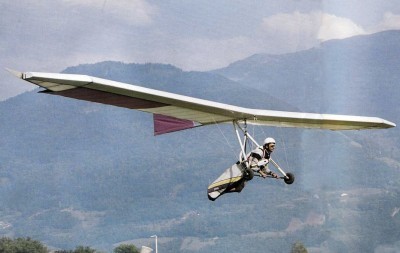
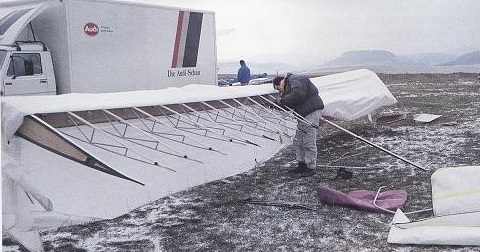
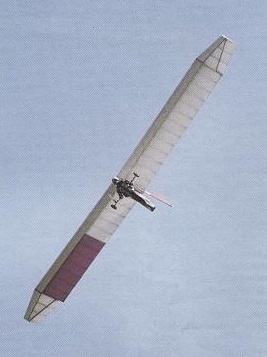
The construction was foam and glass D cell straight D cell wing. The nice feature is it allows the use of ailerons with differential throw as the lever arm from the ailerons to the CG is too short to give much pitch change – so no need for spadds, spoilerons, tip rudders or other complicated devices.

The 1982 Kratzner Plank was for advanced pilots.

proto unique
Wing area: 17 m²
Wing span: 12.78 m
Aspect ratio: 9.6
Hang glider weight: 59 kg
Minimum speed: 29 km/h
Maximum speed: 100 km/h
Max glide ratio (L/H): 16
Minimum sink rate: 0.78 m/s
Nose angle: 180°

Korean Air

Aerospace division of the commercial airline, Korean Air Lines, founded 1976. Has built more than 300 McDonnell Douglas (now Boeing) MD 500 helicopters, and is now constructing Sikorsky UH-60Ps for the nation’s armed forces. In addition to developing its own four-seat lightplane as the Chang-Gong 91 (first flown 1991), it is currently working on its Multi-Purpose Helicopter (KMH) with Sikorsky assistance (to be flown in about the year 2000). Other activities include maintenance, upgrading, and production of components for U.S. and European airliners.

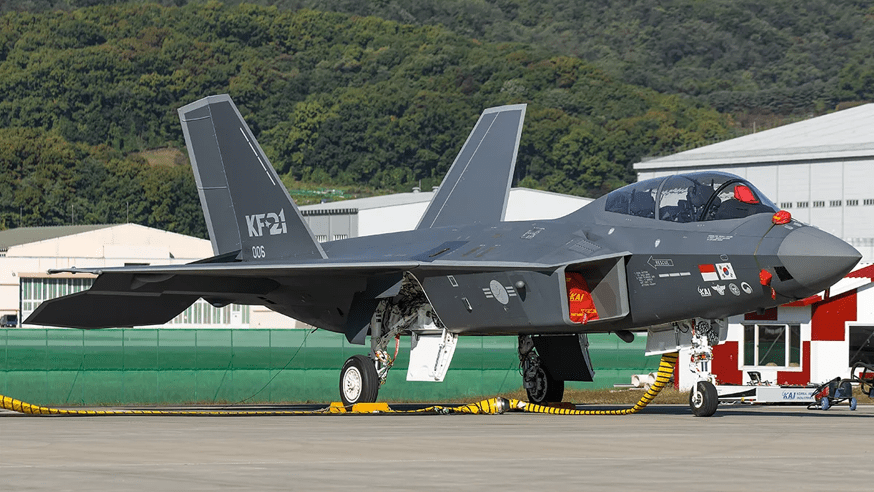
KAI KF-21 Boramae

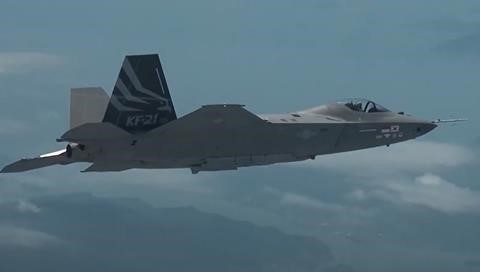
Following the KF-21’s maiden flight on 19 July 2022, five additional prototypes were set to join the flight test campaign from October 2022, according to South Korea’s Defense Acquisition Program Administration (DAPA).

The developmental Korea Aerospace Industries (KAI) KF-21 Boramae fighter continued to expand its flight envelope in September 2022, with more prototypes set to join the testing campaign.

Overall, the development was expected to be completed by 2026.

DAPA’s programme update coincided with a 28 September ceremony at KAI’s factory at Sacheon attended by South Korean government officials and Indonesia’s defence establishment – Jakarta is a 20% partner in the W8.8 trillion ($6.15 billion) programme.

Eom also told Yonhap that Jakarta has paid just 30% of its share via unspecified “in-kind” payments, and that no payments have been made since 2017.

Jakarta’s tardiness with payments has been a persistent issue for the programme, although Indonesian president Joko Widodo and South Korean president Yoon Suk-Yeol reaffirmed their countries’ joint commitment to the KF-21 in July.

At present, 37 Indonesian personnel are in South Korea working on the project, and Herindra indicates that the aim is to raise this number to 100.

Powered by two GE Aviation F414 engines, the KF-21 will replace McDonnell Douglas F-4 Phantoms and Northrop F-5s in South Korean service. Seoul is expected to obtain 120 and Indonesia 50, while the former also hopes to sell the type on the export market.

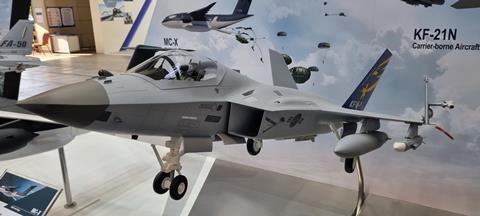
At the DX Korea 2022 show, KAI displayed a model of a prospective naval variant, the KF-21N. Media reports indicate that the jet would be capable of operations from both catapult assisted take-off but arrested recovery and STOBAR short take-off but arrested recovery vessels.

A model of the prospective naval variant of the KF-21, the ‘KF-21N’

The KAI KF-21 Boramae (meaning “hawk” in Korean) represents South Korea’s emergence as a major player in the global aerospace industry.

Powered by two General Electric F414 engines—the same that power the Super Hornet—the KF-21 reaches Mach 1.8 (2,200 km/h).

At approximately $74 million per unit, it offers near-fifth-generation capabilities at fourth-generation prices.

With 120 aircraft planned for South Korean service by 2032.