Morane-Saulnier Type H13 replica
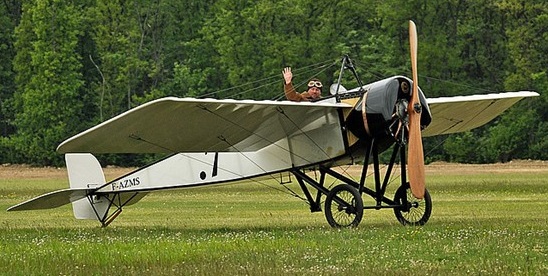
La Ferte-Alais, France, May 18, 2013
F-AZMS (cn SAMS 22.01) M
Morane-Saulnier Type H13 replica
La Ferte-Alais, France, May 18, 2013
F-AZMS (cn SAMS 22.01) M

The Shenyang FC-31 Gyrfalcon (also referred to as the J-35 in its naval variant) represents China’s second stealth fighter program and its first carrier-capable fifth-generation aircraft.
The FC-31 features a conventional twin-engine layout with canted vertical stabilisers similar to the F-22.
The aircraft incorporates internal weapons bays to preserve stealth characteristics and uses advanced composite materials to reduce weight and radar signature.
Powered by Russian-designed RD-93 derivatives (the Chinese WS-13 engines), production variants are expected to receive the more powerful WS-19 engines currently under development. These will enable the FC-31 to reach speeds of Mach 1.8 (2,205 km/h) and achieve supercruise capability.
With an estimated unit cost of $70 million, the FC-31/J-35 represents China’s strategic push to modernise its naval air arm. Initial operational capability on China’s newest carriers is expected by 2026, potentially altering the balance of power in the Western Pacific.
Daher took over Quest Aircraft in 2019.

Cirrus first began development of the Vision Jet in the early 2000s. The Cirrus founders, the Klapmeier brothers, started the program in their offsite Duluth, Minnesota, facility. It was officially revealed to the public in June 2006 at the Cirrus Owners and Pilots Association meeting.
The first prototype of the Cirrus Vision Jet conducted its maiden flight in July 2008. However, Cirrus ran into difficulties financing the continued testing and development program of the light business jet, especially in 2009 during the height of the Great Recession.
However, after the slow development process in the early 2010s, a new Cirrus investor provided enough financing to complete the development of the aircraft. It was officially certified by the Federal Aviation Administration (FAA) in October 2016. Deliveries of the aircraft began later that same year.
The Vision Jet is a low-wing-configured aircraft with retractable tricycle landing gear. The aircraft’s airframe is also made entirely out of composite materials. It utilizes a single turbofan engine that rests on the top of the fuselage near the rear of the aircraft. Because of the unique engine configuration, the aircraft utilizes a V-tail.
The small cabin can fit up to seven total occupants in three rows. However, the third row is small and typically can only accommodate two adults or three children. Passengers enter the cabin through a clamshell door on the left-hand side of the fuselage.
Additionally, the Vision Jet is powered by the Garmin G3000 avionics suite, including the Garmin Emergency Autoland System. The Vision Jet also features the Cirrus Airframe Parachute System (CAPS).
Vision Jet
Engine: 1 x Williams FJ33 turbofan, 1,850 lb thrust
Wingspan: 38 feet 9 inches
Length: 30 feet 11 inches
Height: 10 feet 11 inches
Gross weight: 6,000 lb
Maximum speed: 311 knots (358 mph)
Range: 600 nm (690 miles)
Service ceiling: 31,000 feet
In July 2010, 82 year-old Arnold Ebneter of Woodinville, Washington State, flew his home-made lightweight airplane, the E-1, non-stop from Everett, Washington State, to Fredericksburg, Virginia – a journey of 2327 mi / 3746 km – in 18 hours 27 minutes,

The XB-1 jet, the company’s prototype, was designed to bring back supersonic travel in a more efficient and accessible way, aiming to halve flight time from the traditional eight hours to just 3.5 hours.
After starting its tests in March 2024, the XB-1 reached a record speed of Mach 0.87 and reaching 27,716 feet of altitude during its ninth test flight.
Modifications to the vibration system made after the previous flight helped make the jet’s progress safer and more efficient.
The test pilot is Tristan Brandenburg.

After years of testing and refinement, a pilot flying the aerospace company’s XB-1 scale prototype finally broke the sound barrier during a livestream event—not once, not twice, but three times.
XB-1 took off from the runway at Mojave Air & Space Port near Barstow, California at about 11:21 AM EST. From there, Boom Supersonic’s Chief Test Pilot Tristan “Geppetto” Brandenburg ascended in the experimental plane to an altitude of 34,000 ft before turning left and beginning its supersonic test. After successfully achieving Mach 1.1 at 11:32 PM EST, Brandenburg continued XB-1 on its deceleration and descent path. At one point, however, XB-1 briefly broke the sound barrier once again.
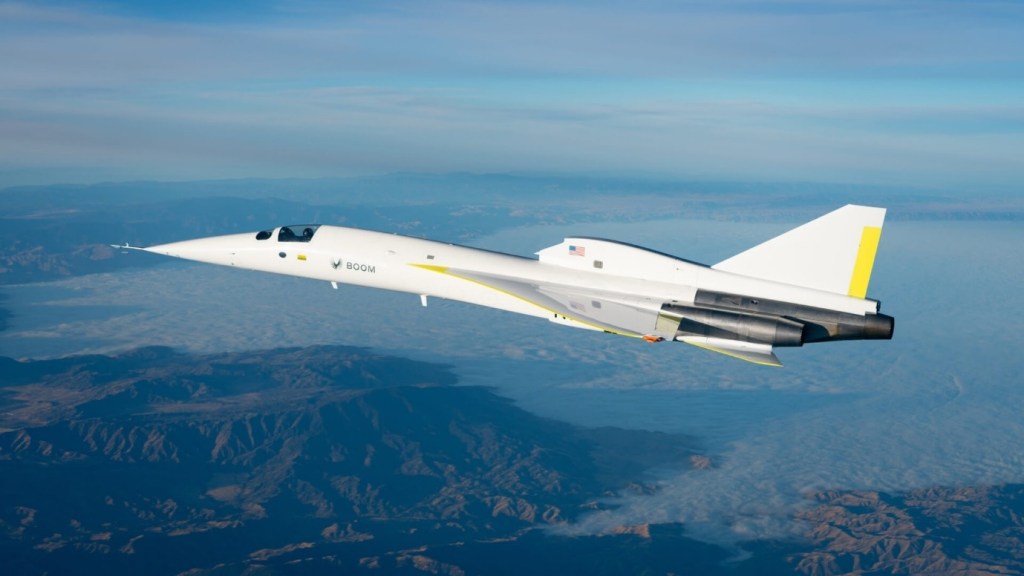
“Alright, knock it off, knock it off,” someone in Boom Supersonic’s flight control room could be heard joking during the livestream.
XB-1 surpassed Mach 1 yet again a few minutes later before landing 11:54 PM EST after a total flight time of 33.49 minutes.
Tuesday’s success comes less than a year after the demonstrator aircraft’s debut flight on March 22, 2024. The XB-1 conducted another 10 flights prior to today’s Mach 1 breakthrough. Its most recent took place on January 10, when Brandenburg topped out at Mach 0.95 at an altitude of 29,481 ft (575 knots true airspeed, or roughly 661 mph).
At almost 63-feet-long, the XB-1 is about one-third the size of Overture, Boom Supersonic’s proposed commercial jet.
XB-1’s first flight was originally scheduled for 2021, but required pushbacks to address various engineering and design concerns.
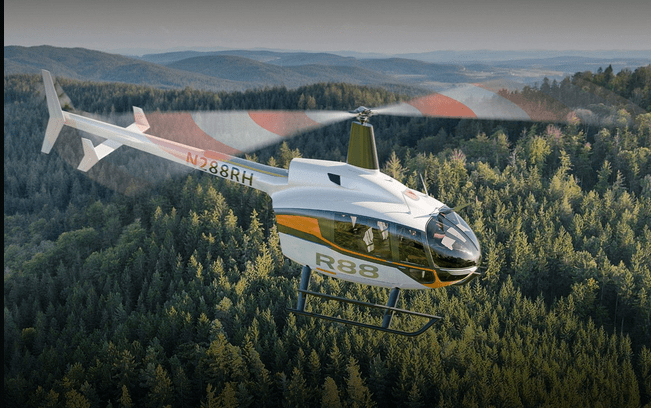
The R88 will feature an open-tail rotor design and two-bladed main rotor system. It also includes new LED aircraft exterior lights, including pulsed landing and taxi lights, tail rotor lighting, scene lighting, and entry lights, further enhancing utility and safety.
The internal payload was expected to accommodate over 2,800 pounds and deliver more than 3.5 hours of flight time and more than 350 nautical miles of range. It will carry up to two pilots and up to eight passengers for a passenger total of 1,800 pounds with a full fuel tank.
Large sliding doors on each side will provide easy access for passengers and cargo. The rear has a fold-down, truck-bed style door for simplified cargo loading or easily accommodating a HEMS stretcher. The aircraft is available with standard skids or optional high skids for increased ground clearance and compatibility with a firefighting water tank.
The Garmin avionics suite includes large Garmin G500H TXI displays and GTN navigators with touchscreen controls for easy operation, vivid displays, and extensive capabilities. The G500H TXI will include a crew-alerting system to provide the pilot with intelligent information about the aircraft’s systems. Offered is a standard 4-axis autopilot from Garmin. This system will provide a full range of important safety functions, including level mode, hover assist, limit cueing, low/high speed protection, and low altitude protection.
A standard data recording system with Datalink automatically will capture engine and system data for simplified operation and maintenance. A standard health usage monitoring system (HUMS) will monitor critical components and provide real-time track and balance data so operators can address issues before they affect operations.
The R88 incorporates dual hydraulics for pitch and roll for critical flight controls. Other standard safety features include an inlet barrier filter and impact-resistant windshields certified to Part 29 transport helicopter requirements.
The R88 introduces dual cyclic controls with removable controls on both sides, allowing the pilot in command to be in either the left or right seat with a passenger in the other seat. The aircraft will be type-certified for optional single-pilot IFR operations. The all-new interior design features comfortable, functional seating, easy-to-maintain materials, and a versatile layout.
New LED exterior lighting, including pulse landing and taxi lights, tail rotor lighting, scene lighting, and entry lights, further enhance safety.
The configurable cabin features a flat floor, allowing for multiple forward and club seating configurations, effective air medical and public safety mission configurations, and multiple future seating options. A fold-down, truck-bed style rear door simplifies cargo loading and accommodates a HEMS stretcher. The air conditioning system is made entirely by Robinson Helicopter.
Robinson partnered with Safran Helicopter Engines to add the Arriel 2W engine.
The R88 offers a wide range of optional OEM-provided mission equipment, including a 3000-lb. HEC-rated cargo hook, utility basket, optional wire strike protection kit, pop-out floats, and more.

With a launch price starting at $3.3 million, the R88 was presented in a configuration of two pilot seats followed by two banks of four passenger seats, illustrating the 275-cubic-foot (7.8-cubic-meter) cabin volume.
Powered by the 1,000-shaft-horsepower Safran Arriel 2W, the R88 has a payload capacity of up to 1,800 pounds (815 kilograms) with full fuel, and a range of 350 nautical miles (650 kilometers), with endurance above 3.5 hours.

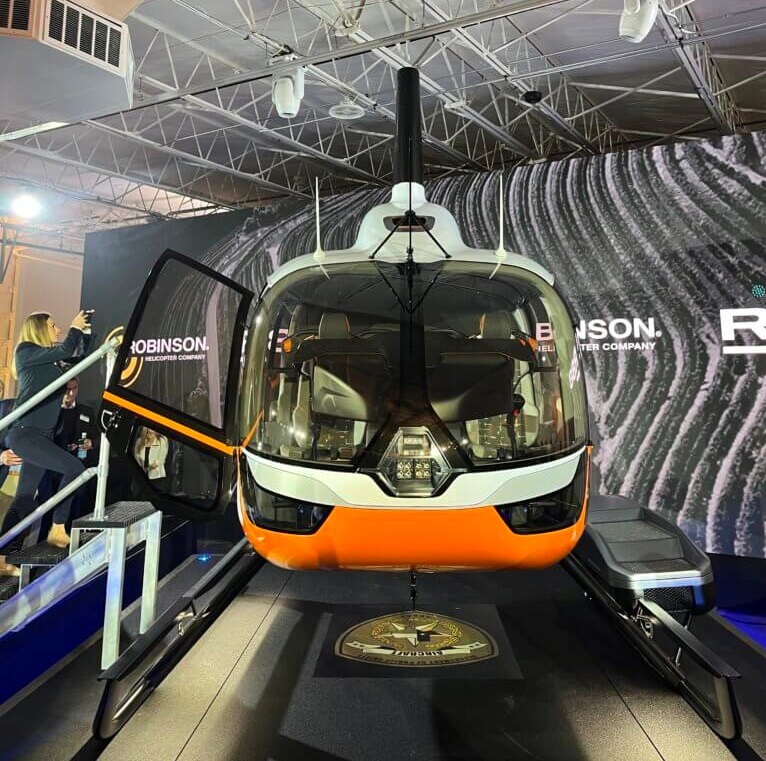
The engine of the R88 is in a different position than it is in the R66 and R44. Those types have a low engine placement within the airframe, while the R88’s engine is moved higher — representing a more “conventional” placement in a helicopter.
It has the standard Robinson two-bladed main rotor and tail, but scaled up to accommodate the increase in power and size provided by the Arriel engine. The blades have a 50 percent bigger chord than those of the R66, and are “quite a bit” longer, said Smith.
The tail boom looks similar to Robinson’s other types, but is higher up on the airframe. When the aircraft is equipped with high skids — as it was during the type’s unveiling in Dallas — the boom is high enough for most people to comfortably walk underneath.
Inside, the cockpit is fully glass, with dual conventional cyclic controls (rather than Robinson’s famed “T” bar — or teetering cyclic — as used in the other types in its range).
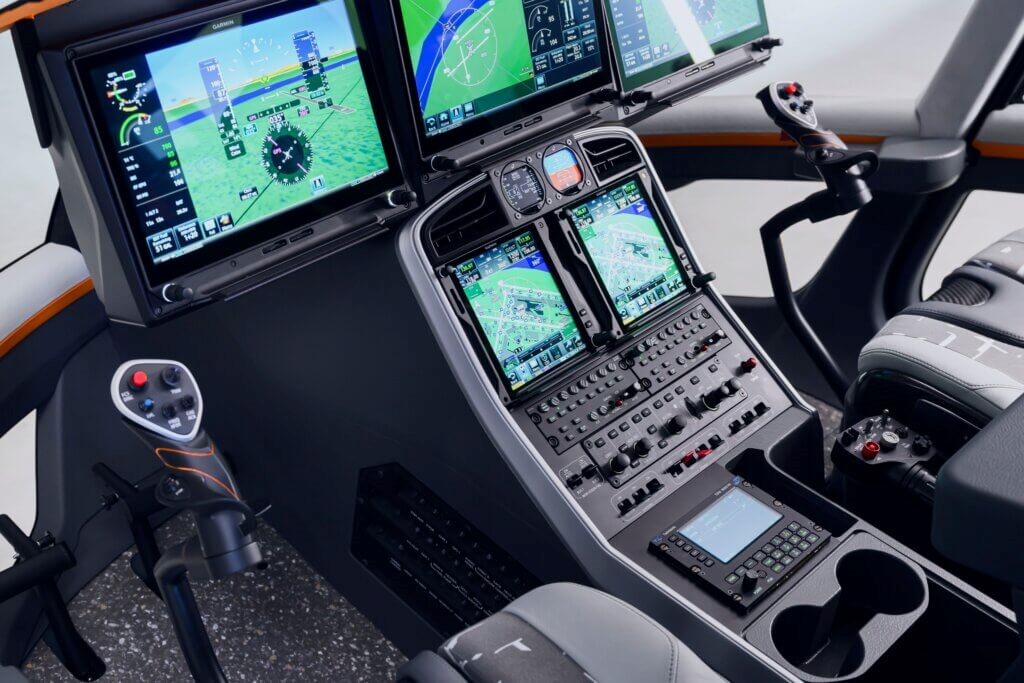
Switching to a conventional cyclic was the result of another functional decision, driven by the aircraft’s large width. They couldn’t get the teetering cyclic to work — it’s too large of a movement.
The R88 has a Garmin avionics suite, including large G500H TXi displays and GTN navigators with touchscreen controls.
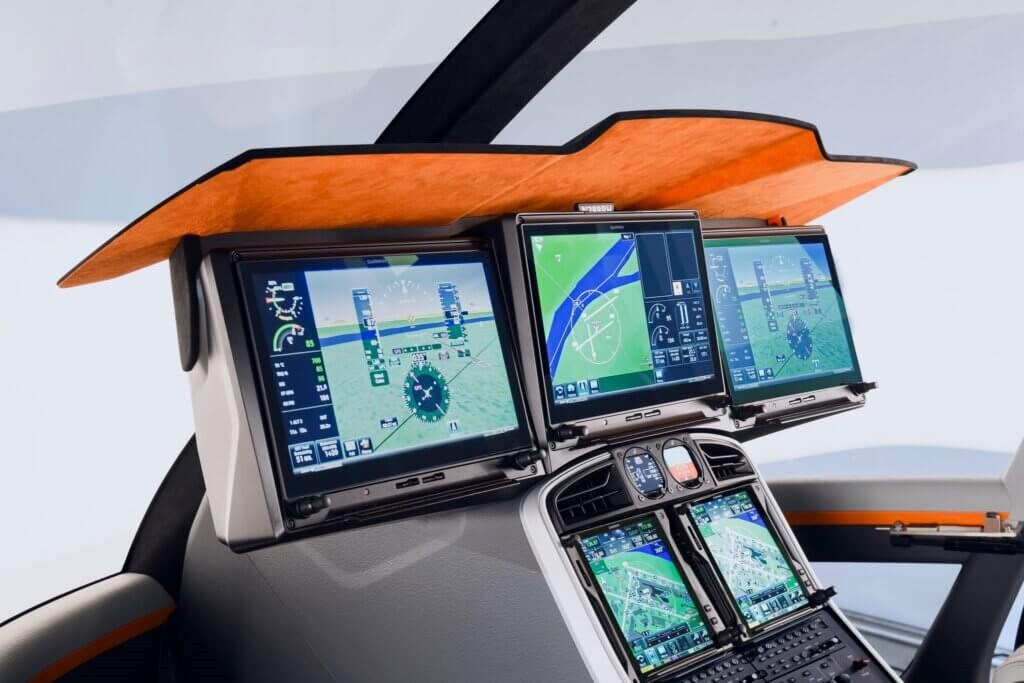
The R88 will have a four-axis autopilot as standard, along with data recording with datalink and a health and usage monitoring system (HUMS). Other safety features include an inlet barrier filter and impact-resistant windshields certified to part 29 transport helicopter standards.
Optional equipment will include a 3,000-pound human external cargo (HEC)-rated cargo hook, utility basket, wire strike protection kit, and pop-out floats.
The cabin has three entry points. Sliding doors — a new feature for a Robinson helicopter — are on both sides, while a fold-down door at the back of the cabin provides access from the rear.
Formed 1974 and currently producing the Zenith CH 2000 certificated two-seat Iightpiane (first flown June 1993 and delivered in assembled form from 1994). Also markets the Zenith CH-100 single-seater, Aero CH-150 and CH-180 (aerobatic variants of CH-200), Zenith CH-200 two-seat Iightpiane and Zenith CH-250 long-range version, and Zenith CH-300 (Tri-Z) three/four-seat Iightpiane (as variant of CH 2000), all built from plans and/or kits.
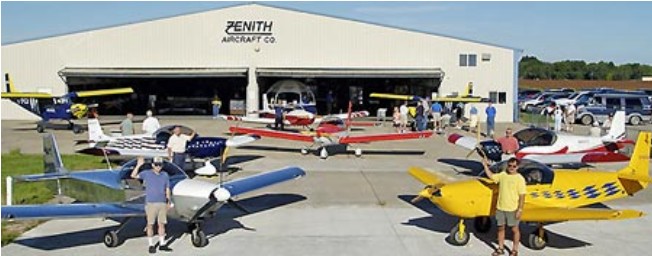
Zenith Aircraft Company is in the exclusive business of designing, developing and manufacturing kit aircraft. The independent, privately-owned company was formed in 1992 in Mexico, Missouri, centrally located in the United States, and is based in leased 20,000+ sq.ft. production facilities at Mexico Memorial Airport. Zenith Aircraft Company has acquired the exclusive rights to manufacture and market Zenair kit aircraft designs from designer Chris Heintz.

An aeronautical engineer, Chris Heintz is a graduate of the E.T.H Institute in Switzerland. After serving in the Air Force, Heintz worked for Aerospatiale on the supersonic Concorde jetliner, and later became chief engineer at Avions Robin (France) where he designed several fully-certified two and four seat all-metal production aircraft.
In his spare time, Heintz began to design and build his own aircraft, which he named the ZENITH, anagram of Heintz. His all-metal homebuilt aircraft incorporated simple construction methods throughout and after a little more than a year’s work, the two-place low-wing Zenith was rolled out and successfully flown in 1969. Soon after, detailed blueprints and construction manuals of the aircraft were drawn up and offered to the growing number of interested builders and flyers.
In 1973, Chris Heintz, his family and the Zenith moved to North America, where Heintz worked for de Havilland (in Toronto) as a stress engineer on the Dash 7 commuter. Chris decided to form his own aircraft company in 1974, and under the name of Zenair Ltd. started to manufacture Zenith kits himself from his two-car garage. Through the company, Heintz has introduced more than twelve successful kit aircraft designs over the years. In 1992, Heintz licensed the kit manufacturing and marketing rights to Zenith Aircraft Company for the STOL CH 701 and the ZODIAC CH 601 designs, and has developed the new STOL CH 801 and the new ZODIAC XL for Zenith Aircraft Company.
While Heintz officially retired in 2003, he is still very active as a designer, engineer and consultant.
1996: Huronia Airport, Midland, Ontario L4R 4K8, Canada.
PO Box 650, Mexico Memorial Airport, Mexico, MO 65265-0650.
By 1996, Zenair had a production facility in Mexico, Missouri, USA, headed by Sebastion Heintz (son of the designer, Chris Heintz)

Zee Aero (now Wisk), originally under the leadership of Professor Ilan Kroo of Stanford University, developed a proof of concept vehicle with a series of high, vertically-mounted mounted electric propellers. The proof of concept made its first unmanned hover in December 2011, and in February 2014, completed its first transition from hover to forward flight.

The Specter was designed during 1994-96, to build a glider that delivers much better performance than delta wings in fall and finesse rates, with good performance in the high-speed (up to 100 km / h) range.
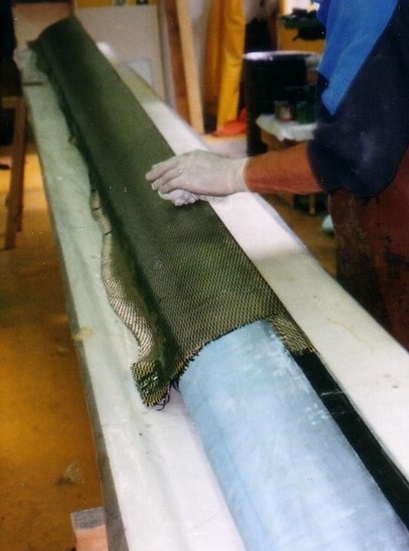
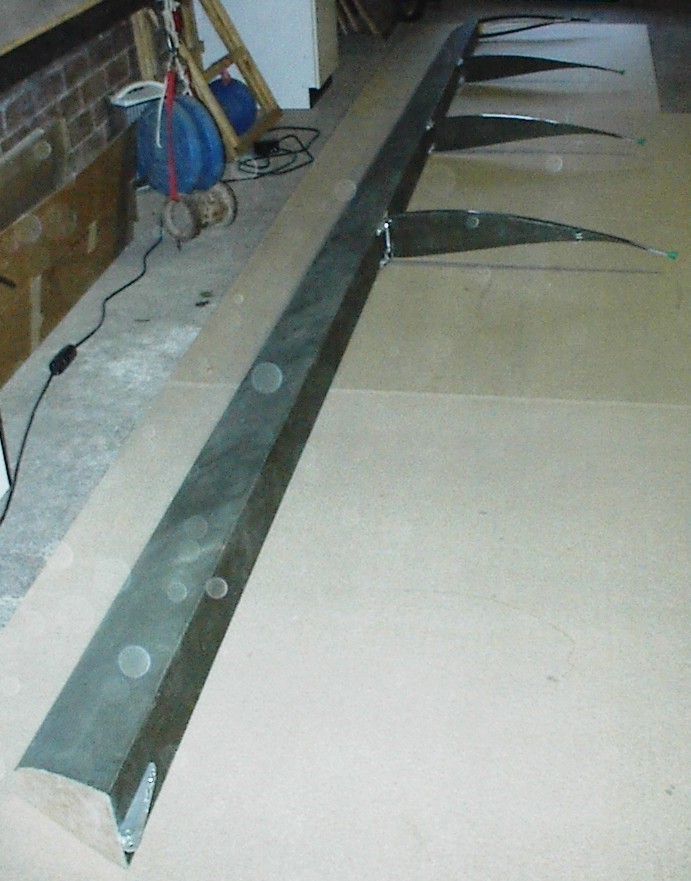
The D-tubes cover 20% of the profile. They were made of carbon / kevlar 200 gr / sq.m, directly on core of foamed 30kg / cu.m hollow, cut with hot wire. Unidirectional carbon beams have been inserted, as well as aluminum plates for riveting / screwing the various fixings: root, ribbed and cable ties.
The wingspan was set at 12.4 m, with a length of 12.4 m. The Worthmann FX 63-137 was designed to take advantage of take-off and low-speed behavior, and for the simplicity of the flaps. This profile has a maximum Cz of 1.7, and good stall characteristics. It equipped pedal-powered planes, but also motor-gliders. The wing tip of 3 degrees is obtained by modifying the back of the profile from half the wingspan of the wing.
To maintain the unique feel of the delta wing, as well as transport and simple assembly, the pilot is installed in a harness. Therefore, a trapezoid and the minimum of aerodynamic controls are required: only spoilers to turn, the rest will be done by displacement of the weight.

The trapeze will be used as an attachment to the lateral structural cables and will not be able, like on the rigid wings, to actuate the spoilers. Handles sliding on the speedbar will control them, using cords passing inside the uprights.
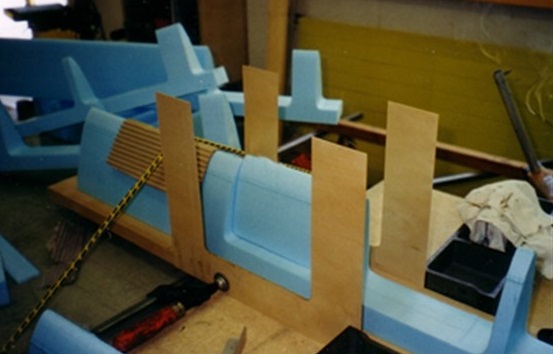
The ribs were also built with a foam-carbon / kevlar sandwich. They are connected to the D-tubes by aluminum fasteners, which also serve to fix the main cables for the median rib. Incident-maintaining cables are attached to the back of the rib by stainless steel fasteners. The ribs are extended with an aluminum tube for the tension of the sail.
Sail work is dacron 160 gr / sq.m, more than 1km of polyester yarn. The empennage was manufactured in a very classic way, in wood covered with a heat-shrinking filament (Oracover). It is very solid and was a bit heavy: 3.6 kg. The drift consists of fabrics stretched over an aluminum frame and carbon.
The calculations (unfortunately inevitably somewhat imprecise) give a fineness of 18 to 48 km / h and a drop rate of 0.65 m / s to 40 km / h.
In 2002, the prototype was ready for its first tests.
There were various revisions, and the big flight came on October 12th. The rolling behavior was very pleasant, but there is too much stability in pitch.

Zahn renounced the formula of the flying wing, despite its great advantage in free flight: allow an easy takeoff. The formula, which subjects an aerodynamic element (the wing) to perform two distinct functions (ensuring the stability of the aircraft and lift with minimum drag) is a delicate compromise to design and calculate. It imposes profiles with little variation of moments, unsuitable for gliding, and an important twist which makes them work at unfavorable impacts at the tip of the wing.
Wing area: 12.4 m²
Wing span: 12.4 m
Wing profile: Worthmann FX 63-137
Tail surface: 1.5 m²
Hang glider weight: 45 kg
Minimum pilot weight: 60 kg
Maximum pilot weight: 80 kg
Minimum speed: 36 km/h
Maximum speed: 90 km/h
Max glide ratio (L/H): 18
Max glide ratio speed: 48 km/h
Minimum sink rate: 0.75 m/s
Packed length: 6.2 m
Nose angle: 180°
 All Aero