First flown in 2003, piloted by Don Fleming, at Timaru.
2000->
Moss Gee Bee QED

In 2002, aircraft builder Jim Moss set out to recreate the Gee Bee QED. Starting with the basic original plans, Moss’ recreation incorporated several modifications including wider landing gear, lengthened wings, a 20% larger vertical fin, and the installation of a 1425 hp. Wright R-1820 engine which replaced the original 650 hp. P&W R-1690.
The construction of the QED II took place between 2002 and 2013 and encompassed in excess of 50,000 man hours to build.
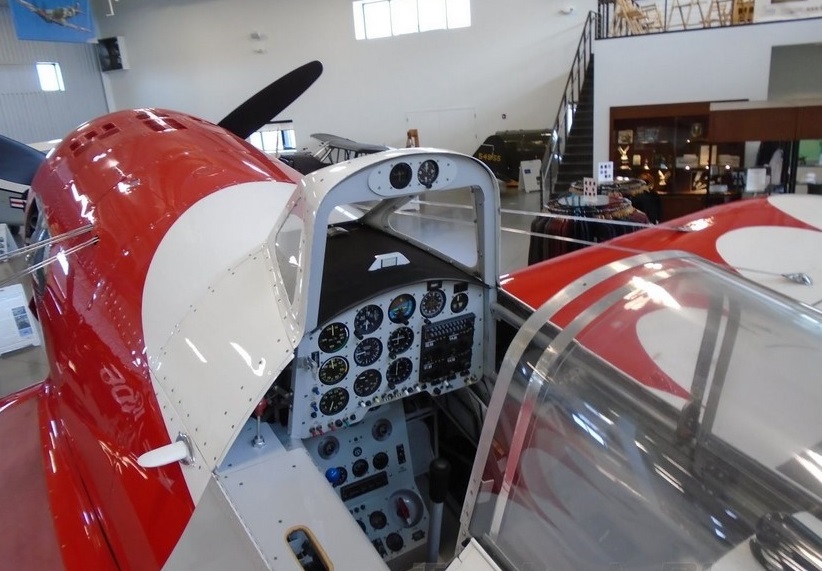
The aircraft was advertised for sale at $499,000 in October 2021.
Wright R-1820-56, 1425 hp
Moscow Aviation Institute / MAI

The Moscow Aviation Institute (MAI) was founded in 1930 on the basis of the aeromechanical faculty of the Moscow National Technical University “Bauman” (MGTU), becoming independent from it due to the wide importance that, since then, the aviation in the Soviet Union. It began with two faculties, aircraft construction and engine construction, since then it has been the most important aeronautical academic institution in the entire region, becoming a leader both in the scientific field, being the first to offer science chairs. aeronautics and training its own teachers and doctors who would make up the university boom, as well as technical-industrial, this is confirmed by the fact that it is the only university in the world that has launched its own aircraft on the market, built by its professors and students since 1932, when the MAI set up its own aircraft construction office.
After the Second World War the MAI expanded its academic and scientific interests, a new teaching system was developed, faculties were added in all aeronautical fields, as well as in physical-mathematical sciences, electronics and robotics. The student campus was built with more than 35 buildings, aeronautical infrastructure, workshops and laboratories were acquired, as well as the aerospace faculty, and in this way the MAI obtained the category of technical university. In 1979, artificial satellites ” Radio ” and ” Cosmos ” were launched into space, built with the participation of a large delegation from the MAI.
Although it is true in Soviet times the MAI as a national university maintained a margin of military defense, together with the state and the armed forces, always collaborating with the country, the university has also specialized its engineering in the commercial and experimental field.
The Moscow Aviation Institute (Russian: Московский авиационный институт (МАИ)) is a Russian university located in Moscow dedicated to the study of everything related to the aeronautical and aerospace industry. However, education is currently multidisciplinary and teaching and research programs are offered in multiple scientific and technological fields.
Over the years, the university grew to become the largest aerospace engineering teaching center in Russia, and one of the most prestigious universities in the world. More than 130,000 students, including 1,000 international students from 40 countries, have graduated from MAI after its founding in 1930.
In 1982 by the order of Ministry of Aircraft Industry the Design Bureau was transformed into a branch-wise experimental students aircraft construction design bureau of the MAI. The work was carried out by professional engineers. If necessary the co-workers from among the MAI students and teachers and also from among the workers of the industry were invited. The production facility of the MAI aircraft development plant (EOZ) in the experimental development shop (shop № 3) are manned by qualified technicians. The OSKBES work on the experimental aircraft engineering constantly received high estimations of the industry. Their technical novelty and utility are confirmed by nine Introduction Certificates and more than twenty Invention Certificates. By the end of 1980s six experimental aircraft of different types were designed and built: Kvant, Elf-D UAV, PS-01 small-sized UAV, Elf, Photon and Yunior aircraft.
The basic structure, address and the industrial areas occupied by it in the OSKBES MAI have remained the same. The EOZ MAI (shop № 3) and the MAPO (Moscow aircraft building plant) were used as an industrial base. On July 27, 1992 the application on realization the inspection work in the OKB MA for reception the certificate for the right to develop the civil aircraft engineering was sent to the Aviaregister of the MAK and the Air Industry Department of the Ministry of Industry of Russian Federation. It was made on behalf of the “Aviatika” joint-stock company. According to the inspection results the Aviaregister of the MAK issued Certificate № R-9 to the “Aviatika” joint-stock company with the right to develop light civil aircraft. It was on February 17, 1993.
Aircraft designed and developed at OSKBES include:
A single-seater Aviatika-MAI-890 aircraft — passed certification, had a temporary Certificate of a type of 31 March 1994 № 52В-890, valid till 1 April 1995, is series produced by the RAC “MiG”; A two-seater Aviatika-MAI-890U aircraft is serially produced by the RAC “MiG”; An agricultural Aviatika-MAI-890SKh aircraft is serially produced by the RAC “MiG”; A single-seater Aviatika-MAI-900 aerobatics (“Akrobat”)’ A two-seater Aviatika-MAI-910 with wings, folding on the ground; An Aviatika-MAI-920 glider; A single-seater Aviatika-MAI-890A autogyro, a pre-production model at the stage of flying test. The basis for the “Aviatika” aircraft manufacture at the MAPO plant is the License Agreement concluded by this plant with the “Aviatika” joint-stock company on 10 April 1995 (contract № 4276).
In 1997 Aviatika withdrew from the Design Bureau of Moscow Aviation Institute (Aviatikas) program, after which the manufacturer of Aviatika lightplanes became known as KB MAI.
The personnel of the OSKBES have continued to work in the field of light civil aircraft together with the MAPO MIG.
In April 27, 1998 the Aviaregister of Interstate Aviation Committee issued a Design Organization Certificate R-52 of the developer of light civil aircraft.
29 September 1999 eight members of our design bureau, Moscow Aviation Institute and RAC “MIG” were rewarded by “State Prize of the Russian Federation in science and technology” for designing and development of light multipurpose airplanes in a serial production. They are:
OSKBES MAI Chief Designer K. Zhidovetskiy (posthumously); OSKBES MAI Deputy Chief Designer (after the death of K. Zhidovetskiy — Chief Designer) N. Goryunov; OSKBES MAI Deputy Chief Designer V. Demin; OSKBES MAI Deputy Chief Designer V. Feigenbaum; Rector of MAI A. Matveyenko; Manager of MAI Experimental Plant P. Ogadzhanov; General Manager of RAC “MIG” plant G. Nemov; Deputy Manager of RAC “MIG” O. Chukantsev.
Autogyro MAI-205 made the first flight in 2001, chief designer Andrey Zorin.
In 2002 OSKBES MAI has started designing a new plane MAI-223. This plane made the first flight in 2004.
In 2003 OSKBES MAI started to work on different aircraft, airships and autogyros. It designed and produced gondolas, nacelles, fly-by-wire power plant controls and empennages of NPO “RosAeroSystems” airships Au-30 and Au-12M.
The design and development of Autogyro MAI-208 was started in 2006. The first MAI-208 is undergoing testing. OSKBES MAI presented MAI-208 at the 2nd International exhibition of the helicopter industry “HeliRussia-2009” (21…23 May 2009, Moscow). The new autogyro has caused the big interest of visitors and the press.
July 1, 2008 Vadim Demin was appointed Chief Designer of OSKBES MAI. The same year the design office has started working on a new multi-purpose four-seat twin engine aircraft MAI-407.
In 2009 OSKBES MAI started designing a new training glider MAI-227.

Volokolamskoe Shassé,
Building 4,
Moscow,
Russia,
125993
Faculties and Departments of MAI:
High school.
Faculty № 1. Aeronautical Engineering.
Faculty №2. Aircraft Engines
Faculty №3. Computer Science and Navigation System
Faculty №4. Radio and Electronics
Institute of Economic Engineering
Faculty №6. Aerospace
Faculty №7. Robotics and Intellectual Systems
Faculty №8. Applied Physical-Mathematical Sciences
Faculty №9. Applied Mechanics
Faculty №10. Humanities (Social Engineering)
Military Institute
Morszeck Junkers F 13
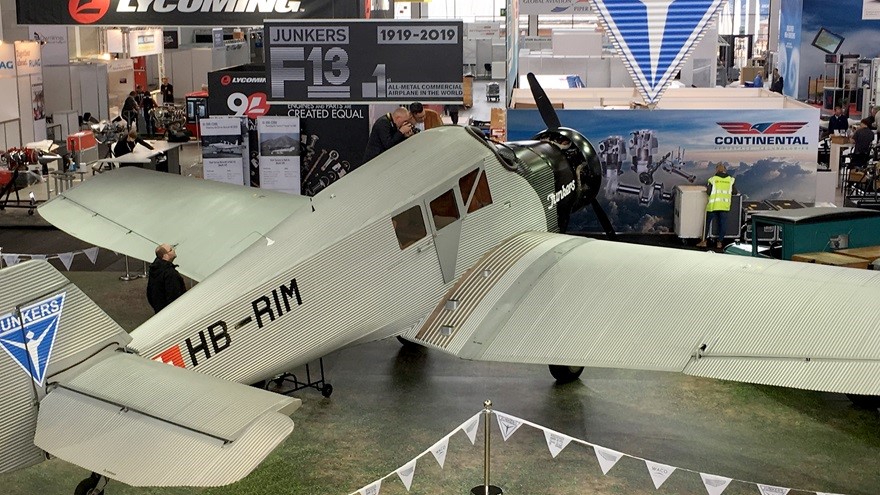
Dieter Morszeck, the owner of Rimowa GmbH, the famed baggage manufacturer, had a fondness for Junkers’ aircraft, and his father had produced the first travel case made of duralumin, the corrugated material Junkers used for his airplanes.
When the idea of a flyable reconstruction of the Junkers F 13 was floated in 2013, he was keen. However, he soon found out that there were only few remaining engineering drawings on which to base a reconstruction, and what existed was damaged and incomplete.
Further research revealed that there was an engineless F 13 in a museum in Le Bourget, France. With the permission of the curator, this aircraft was disassembled and laser-scanned, and the reconstruction proceeded on the basis of the derived blueprints.
Morszeck’s vision was a flyable airplane just like the original, but the knowledge of how to tool the components was seemingly lost. Dominik Kaelin, an expert in restoring vintage aircraft, their structures, and components. He and his team reinvented methods and materials they integrated into the aircraft. By the time they finished, every piece of it was crafted from scratch.
A ladder gets onto the huge wing, and tiny steps get through the door into the cabin, where four passengers can sit comfortably opposite each other in roomy leather upholstery. The two-seat cockpit, which is separated from the cabin by a window and, quite unlike the cabin, is open to the air. It can’t be accessed through the cabin as it also not have an outside door. Entry is from the wing.
A small recessed step leads into the pilot’s bucket seat 10 feet 2 inches above the ground. The instrument panel is equipped with a primary flight display, as well as a multifunction display, modern radio equipment, a transponder, and engine controls, but the wind is still in the pilot’s face.
In 2018 HB-RIM obtained type certification and was touring Europe.
Peter Bowers, president of Waco Classic Aircraft (which has been acquired by Morszeck) exhibited with the Junkers at Aero 2018.
Junkers F 13
Engine: Pratt & Whitney R-985 450 hp
Wing span: 48 ft 9 in
Length: 31 ft 6 in
Height: 10 ft 2 in
Empty weight: 3,430 lbs
Range: 345 nm
Cruise speed: 100 mph
Never exceed: 138 mph
Stall speed: 59 mph
Fuel consumption: Avgas 100 LL, 21 gph
Price: $ 2.8 million
Morin M85
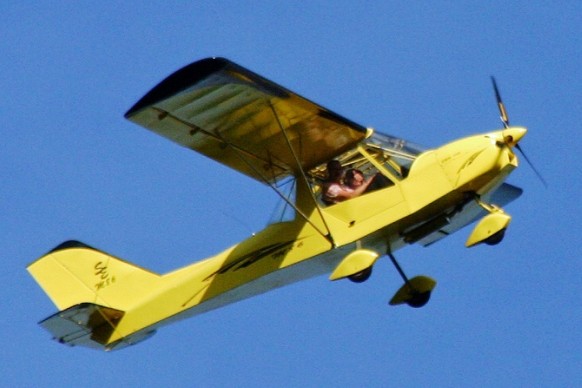
In 2010 the prices were:
Complete Morin M85 Plans- Aluminum Wing: $375.00
Complete Morin M85 Plans- Wood Wing: $375.00
Morin M85 Aluminum Wing Plans Only: $235.00
Morin M85 Wood Wing Plans Only: $235.00
Morin M85 Streamlined Wood Stabilizer Plans: $105.00
Morin M85 11″x17″ Booklet Of Complete 143 Drawings: $175.00
Morgan Aero Works 10 Cheyenne
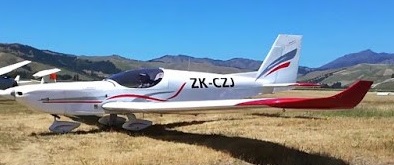
The one-off Morgan 10 Cheyenne aircraft was a 15 metre span motor glider powered by an 80 HP Jabiru 2200 engine. The fibreglass wings were constructed using foam ribs and the cockpit/engine mount/undercarriage mounts were connected by a steel frame.
The aircraft was registered VH-NZJ in Australia on 22/1/14 and its first flight was in May 2016 with an 18 metre 4-piece wing which was later replaced with a 15 metre wing.
Garry Morgan returned back to New Zealand in 2017 with the aircraft being cancelled from the Australian Civil Register on 17/2/17.
ZK-CZJ c/n GFA/AB/150 was registered to Garry Morgan of Renwick, New Zealand, on 7/8/17 as an Amateur Built Aircraft with a MAUW of 698 Kg.
The aircraft didn’t last very long on the New Zealand Register as on 31 December 2017 it suffered a major wing failure when flying over the Blairich Range South of Blenheim. The aircraft spiralled down and impacted on a steep slope with only minor injuries to the two occupants who walked to the top of the range and called for help by cellphone. The aircraft was fitted with a ballistic parachute but it could not be fired because the wing had folded over it.
It was cancelled from the New Zealand Civil Register on 18/1/18.
Morgan Aero Works Cougar / Wedgetail Aircraft Cougar
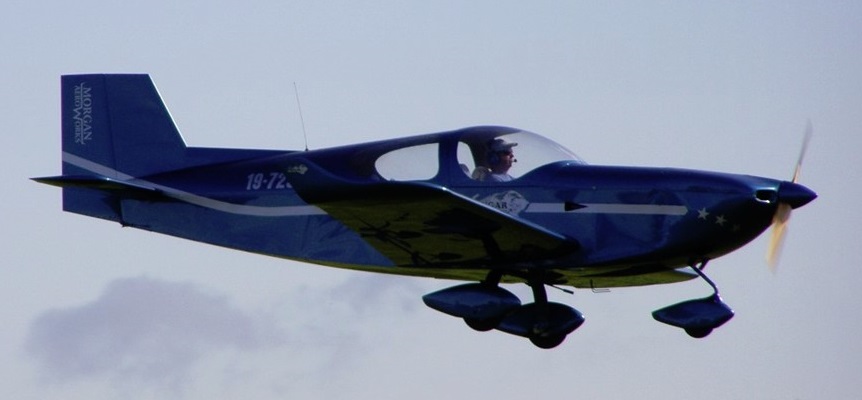
The 4-seater Cougar aircraft are built from kits and are of aluminium tube and sheet construction using pop rivets with a welded steel frame for the cockpit, undercarriage and engine mounts. The fairings and engine cowling are fibreglass.
Garry Morgan sold Morgan Aero Works in 2016 to Wedgetail Aircraft Pty Ltd which was formed by Ray Tolhurst and which is based at Camden Airport in NSW. Wedgetail Aircraft offer the Cheetah Sierra 200 and the Cougar, as well as the single seat Vampire.
The Wedgetail Aircraft Cougar 200, modelled on the original Morgan aircraft; features a number of improvements. Improvements to the landing gear, engine performance and instrumentation have not only improved this aircraft’s safety record but enhanced its performance and reliability.
Features:
3 Baggage Compartments
Derigged for trailer transportation in 10min
All kits include: Instruments and Radio
Wedgetail Aircraft Cougar 200
Engine: Jabiru 3300 (up to 160HP)
Wing Span: 8.23m
Length: 6.43m
Cabin Width: 1.06m
Tail Height: 2m
Tail Span: 3.05m
Empty Weight: 350-375kg
MTOW: 950kg
Main Fuel Tank: 100 Lt
Vne: 150 KNTS
Cruise 75% @8000ft: 120 KNTS
Max Manoeuvring Speed: 85KNTS
Stall Clean: 35 KNTS
Stall with flaps: 28 KNTS
Glide Ratio: 12
Rate of Climb: 1000FPM @ 80KNTS (with 130HP)
Service Ceiling: 10 000ft
Endurance: 5hrs +
Take Off Roll (Over 50ft): 150m
Landing Roll (Over 50ft): 180m
Rear Seat Load: 160kg
Seats: 4
Ultimate Load Limit: +4G, -2G
Morgan Aero Works Joey / Miranda Investments Joey
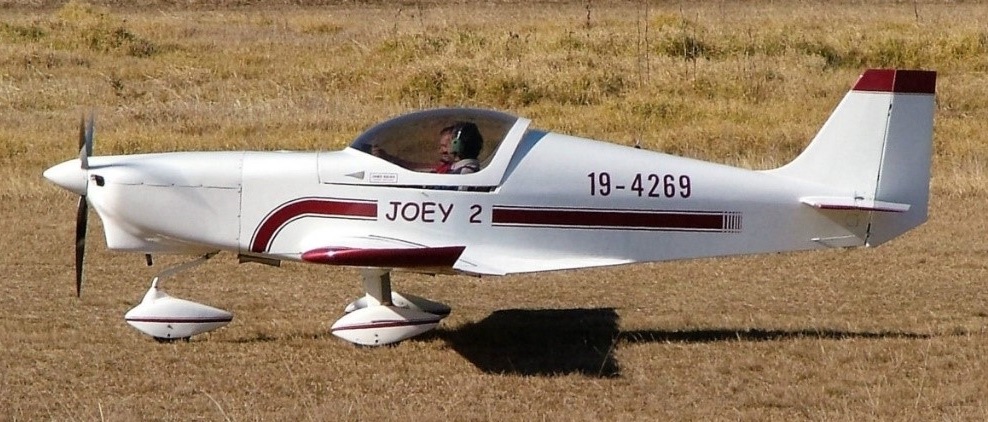
The two-seat Joey series of light sporting monoplanes was designed, developed and built by Garry Morgan of Miranda Investments of Riverwood, NSW, Australia. The first of his designs, the Joey, was designed for the amateur builder and was provided in kit form.
The kit provided the fuselage partly built, brakes, seat-belts, metal parts cut and bent, bolt kit, control cables and all welding carried out. The wing had wooden spars. The fuselage had fibreglass moulded skins on top of the fuselage deck, these being bonded with resin and cotton flock, the ply on the bottom half being 2.5 mm (0.98 in) Birch. The wing skins were pre-moulded, the tail, rudder and fin being supplied. Fuel was carried in integral wings in the wing.
The Joey can be de-rigged for carriage by trailer and to save on hangarage.
The prototype (19-3377) was completed in 2003, was fitted with a converted Volkswagen engine driving a two-blade propeller, and the cockpit width was 104 cm (41 in).
A number have been built and have been fitted with a range of engines, including Volkswagen conversions, Rotax and Jabiru units. Engines in the 45 kw to 75 kw (60 hp to 100 hp) range may be installed.
Development of the series continued and in late 2005 a new variant was released, known as the Joey 2, with a 114 cm (45 in) wide cockpit, powered by a Rotax 912 engine. Fuel capacity was a total of 150 litres (33 Imp gals) comprising 70 litres (15 Imp gals) in a header tank and 40 litres (8.8 Imp gals) in each wing tank. A further example became 19-7913.
Joey Mk II
Engine: Rotax 912, 60 kw (80 hp)
Wingspan: 8.3 m (27 ft 2 in)
Length: 5.5 m (18 ft 0½)
Height: 1.82 m (5 ft 10 in)
Empty weight: 300 kg (661 lb)
Loaded weight: 544 kg (1,199 lb)
Fuel capacity: 150 litres (33 Imp gals)
Max speed: 322 km/h (200 mph)
Max cruising speed: 222 km/h (138 mph)
Max manoeuvring speed: 222 km/h (138 mph)
Max rough air speed: 259 km/h (161 mph)
Stalling speed: 74 km/h (46 mph)
Takeoff and landing run: 200 m (656 ft)
Cockpit width: 114 cm (45 in)
Morgan Aero Works Super Diamond
Morgan Aero Works produced the single seat Diamond. The Super Diamond is a fabric-covered, pop-riveted aluminum tubing design with premolded fiberglass wing ribs, cowlings, fairings, etc.
The Super Diamond four-stroke single-seater can take many engines in the 60-80 hp range and they have a Super Diamond Twister model that is approved for aerobatics.
The complete kits less motor, instruments, paint and upholstery ran about $14-18k for the single-seater.
Morgan Aero Works Cheetah / Cheetah Sierra / Wedgetail Aircraft Cheetah Sierra

New Zealander Garry Morgan’s first design was the Cheetah and this was further developed into the Cheetah Sierra 100.
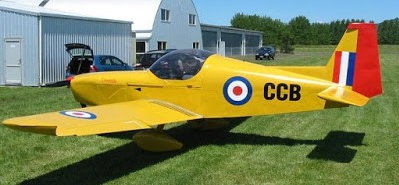
The aircraft are built from kits and are of aluminium tube and sheet construction using pop rivets with a welded steel frame for the cockpit, undercarriage and engine mounts. The fairings and engine cowling are fibreglass. The wings are easily detachable for trailering and storage.

Garry Morgan sold Morgan Aero Works in 2016 to Wedgetail Aircraft Pty Ltd. Wedgetail Aircraft offer the Cheetah Sierra 200.

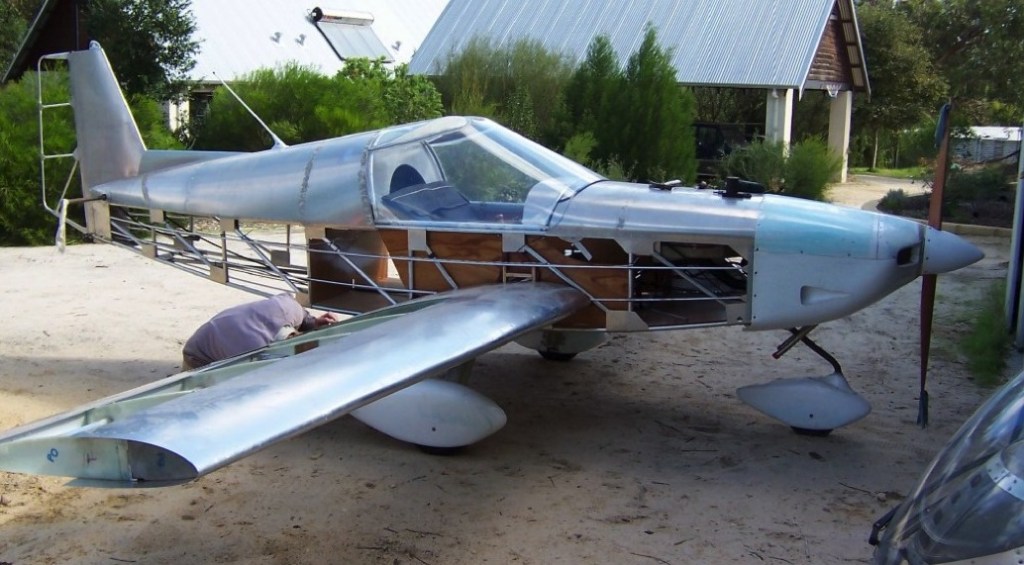
Cheetah Sierra 100
Engine: Jabiru 2200, 80 HP
Wingspan: 26 feet
Length: 19 feet
Empty weight: 313 Kg
MAUW: 544 Kg
Cruise speed: 130 knots
Stall speed: 37 knots
 All Aero