The president of Mustang Aeronautics is Chris Tieman. Chris earned a degree in aerospace engineering from the University of Michigan and has a background in metal fabrication. He acquired his pilots license in 1986 and soon began looking for something to build that was faster and more economical than the average factory airplane. The Mustang II was the best choice for the desired requirements so plans were purchased and construction started.
When Robert Bushby decided to retire in 1992 Chris’ hobby of home kitplane builder became his profession. Mustang Aeronautics, Inc. acquired the design rights from Robert Bushby in March 1992 for both the Midget Mustang and Mustang II aircraft. Located just north of Detroit in Troy, Michigan. His background in aeronautical engineering and architectural aluminum are evident in today’s complete kits that have reduced build times dramatically. New manufacturing processes have simplified the kits yet still maintained the economy of the Mustang through improved manufacturing efficiency.
The steel tube hull with carbon fiber covering is for the first time a divisible, also made of carbon fiber, wing. The plug-in wing halves allow for rapid assembly and dismantling, as well as the simple transport of the aircraft in a specially designed transport trailer.
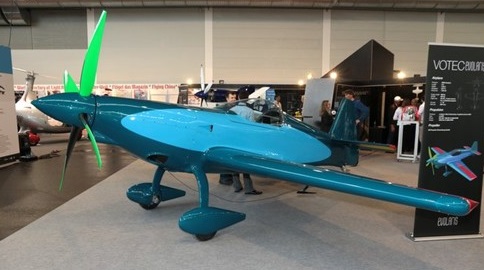
At the AERO 2017 MSW presented the project Evolaris, an electric aerobatic plane with an empty weight of 500kg and 221Kw electric motor power.
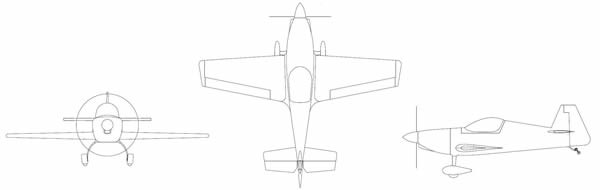
The Votec 252T is a side-by side seat single engine kitbuilt light-sport development of MSW’s earlier tandem seat Votec 322 aircraft. The prototype, powered by a modified Lycoming IO-540-J3A5 flat-six engine, marries the wooden wings and empennage to a new, carbon fibre fuselage, though a carbon fibre wing is under development. All flying surfaces are straight tapered and square tipped, the wing low mounted and the tailplane located on the upper fuselage; the rudder extends down to the keel. The ailerons are balanced with external spades.
The Votec 252T has a cabin over the wing, with baggage space behind the seat, under a single piece canopy. It has a fixed tricycle undercarriage with fuselage mounted cantilever legs and with speed fairings on all wheels. The nosewheel casters; there is a small tailskid for rudder protection.
Designed by MSW Aviation and built by Wassmer Aviation in Switzerland, the first prototype flew on 26 June 2009, by October 2011 only the first prototype had flown. A second prototype with a 260 kW (350 hp) Lycoming AEIO-580 engine, redesignated the Votec 352T, was under development but had not flown by October 2011.
252T Powerplant: 1 × Lycoming AEIO-540-X, 190 kW (250 hp) Propellers: 4-bladed MT-Propeller MTV-14 constant speed, 1.95 m (6 ft 5 in) diameter Length: 6.75 m (22 ft 2 in) Wingspan: 7.70 m (25 ft 3 in) Height: 2.20 m (7 ft 3 in) Wing area: 11.28 sq.m (121.4 sq ft) Aspect ratio: 5.3 Empty weight: 630 kg (1,389 lb) Max takeoff weight: 950 kg (2,094 lb) Fuel capacity: 166 kg / 365 lb / 240 lt Cruising speed: 306 km/h (190 mph; 165 kn) Stall speed: 106 km/h (66 mph; 57 kn) Never exceed speed: 433 km/h (269 mph; 234 kn) Range: 1,398 km (869 mi; 755 nmi) g limits: +8/-8 Rate of climb: 17.8 m/s (3,500 ft/min) maximum from sea level Landing and take-off runs: 300 m Crew: one Capacity: one passenger
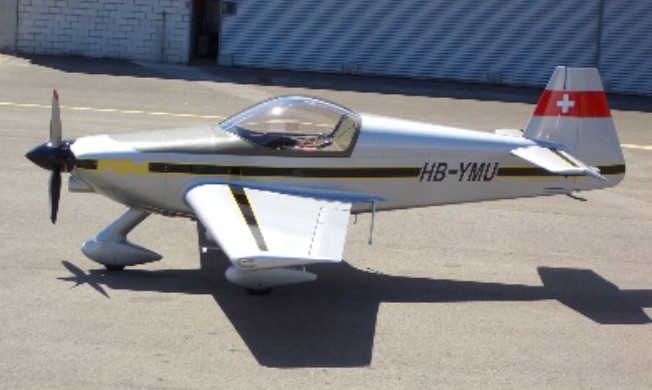
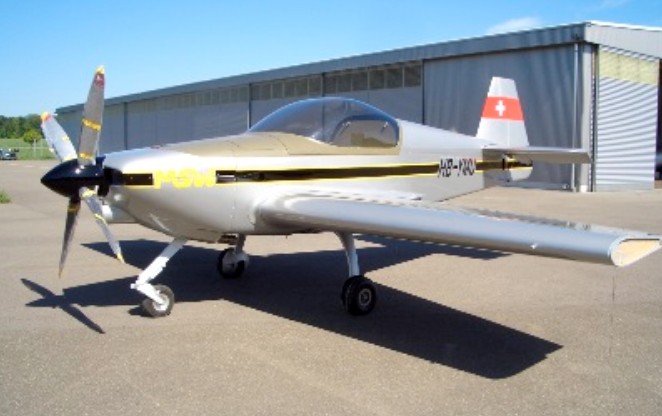
After 3 ½ years in the workshop of MSW Aviation AG in Wohlen came the first designs for the new kit airplane. A goal was to build in Switzerland an aerobatic aircraft. The prototype HB-YJY first flew on 6 April 2001 in Buochs, Switzerland. After 1 ½ years, the intensive test flight phase was completed without any incidents in November 2002.
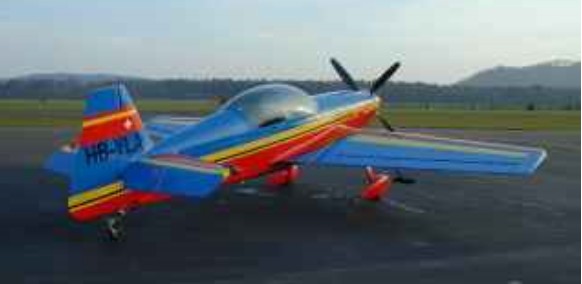
On 9 April 2003 the second VOTEC 322 was completed, HB-YLA SN003. The airplane was built in approx. 12 months. Technically the airplane was revised and optimized, which led to that the machine approx. 30 kg lighter than the prototype YJY. HB-YLA was introduced to the public at the AERO 03 in Friedrichshafen.
The VOTEC 322 performs on the level of the Sukhoi and Cap. Weighing approximately 650 kg, it is powered by a 330 HP Lycoming engine. The maximum speed is 400 km/h. Accelerations of 10 G’s are problem-free in the ergonomic cabin layout for the pilot, with a cruising speed of 300 km/h and a range by approx. 1000 km. The span is 7,30 m.
The airplane was available in kit form for home building building.
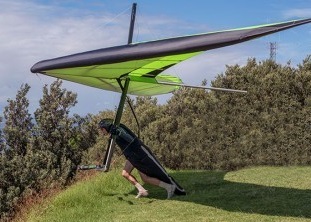
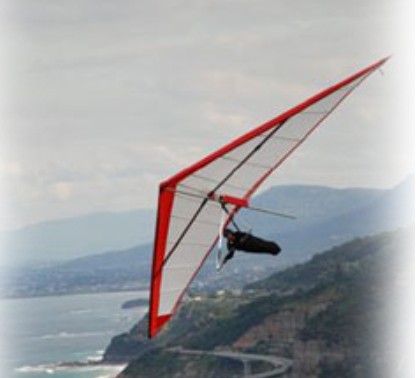
The king posted 1999 Litesport advanced hang glider performs similarly to a non-kingposted glider, but handles like an intermediate glider, making it suitable for many pilots whether competitive or recreational. Gerolf Heinrichs, the design engineer, has utilised many of the technical advantages of the Litespeed to design the thick leading edge tube, fipeglass wing tips, and the CAD/CAM design and manufactured sail, providing a clean and tight leading edge surface for high speed glides.
Litespeed
The Litesport uses a 7075 alloy frame with the 62mm (2 7/16in) leading edge with curved glass tips from the Litespeed. The Litesport larger diameter and stiffer tubing assists with leading edge wind deflection experienced at high speed as well as providing a sturdy mounting point for the dive strut. Carbon LEs are 1mm.
The cross bars are manufactured from a high-grade carbon fibre, which have been further enhanced for the new Litespeed. The carbon fibre spars are manufactured utilising yachting American Cup technology. Each carbon fibre spar is constructed of pre-impregnated fibre cloth and cured in a pre-heated oven at 120 degrees Celsius for 1.5 hours. The lay-up schedule incorporates unidirectional fibre, biaxial fibre, and woven cloth, which are laid in a sequence that optimises strength, flexibility and weight.
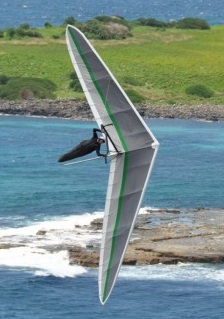
Bridging the gap between flex wings and rigid wings in terms of performance, the Moyes Litespeed provides high speed capabilities, sink rate and climb rate by being lighter than earlier models. The Moyes Litespeed still provides strength, durability and structural integrity, designed by Gerolf Heinrich, an Austrian team pilot and a certified aerodynamicist.
The sail is designed and manufactured with the same CAD/CAM system used for the Litespeed. The sail is precision cut and assembled, providing an extremely smooth and clean wing surface. The Litesport’s standard sail is constructed from Powerib (Dacron). Alternatively, a high performance PX10 Mylar sail is available. The Powerrib (Dacron) material provides a slightly more forgiving flight, whereas the Mylar sail, which is considerably stiffer and therefore provides higher performance. The Mylar sail is constructed with a PX20 leading edge and PX10 used on the remaining top surface. PX20 is a thicker Mylar material to the lighter PX10. While the Powerrib has traditionally been considered more durable, the new PX Mylar materials have advanced considerably and would now match the Powerrib in this area.
The battens of the Litespeed are also constructed from the 7075 alloy. The upper surface battens are contained within the sail using a spring-loaded retention device. This method provides easy installation of the battens while ensuring a clean trailing edge, further minimising drag. The under surface battens are installed through a small hole in the sail and are held in place by a recess in the batten sleeve.
The Litesport’s kingpost adopts a G-String compensation system, which requires only one luff line and a single dive stick to minimise drag and weight. As the VG is pulled on, the kingpost mounting point for the top side wires is lowered. The single luff line is secured to the top side wire instead of the kingpost as with conventional gliders.
The Litespeed with a kingpost is a slightly tuned down Litespeed with an emphasis on recreational flying. Flies very similarly to a Litespeed, but a bit more friendly especially in its landing characteristics (lands easily).
Kingposted Litesport
Another significant contributor to the diverse useable speed range on the Moyes Litespeed is the dive stick design. The dive sticks are attached and pivot from the leading edge, however the cable support for the dive stick is attached to the carbon fibre spar. With this design, when VG is off, the dive sticks are optimally positioned to provide low speed stability and handling. However, as VG is applied, the dive sticks will lower, flattening the trailing edge and providing a more aerodynamic profile to improve the gliders high speed capabilities. Despite the extra functionality, the VG system is extremely easy to operate.
The mounting point of the luff line is set 250mm forward of the trailing edge, providing a more reliable reflex action from the luff line. On most kingpost gliders when the luff lines apply pressure, the trailing edge curls up. With the Litesport’s system, the trailing edge is raised evenly, which has proved favourable during certification testing.
The diverse range provided by the VG and G-string systems are a key feature of the Moyes Litesport. When the VG is off, they provide a loose, flexible wing with a raised trailing edge for launches, landings and thermalling. When the VG is applied, they provide a tight, flat sail for high speed glides. The superior handling of the Litesport is also complemented by the low wing tip inertia due to the gliders low weight design. As less hardware is used in the wings (ie. One dive strut and one luff line only) the glider feels more responsive, easier to turn and even easier to straighten.
Glider stability is enhanced with a slightly increased sweep angle, inbuilt sail twist and advanced dive strut design. The positioning of the luff line in from the trailing edge also offers more reliable reflex when required.
The glider comes standard with aerodynamic uprights and a standard speed bar with rubber grips. The A-frame is made of an aerodynamic 7075 alloy tubing. The Litesport can be optionally fitted with a Fast base bar made of aerodynamic alloy tubing or the Zoom A-frame.
Gerolf Heinrichs won the last day at the Australian Open 2002 and Jon Durand Jnr won the entire Australian NSW State Championships 2002 flying the Litesport.
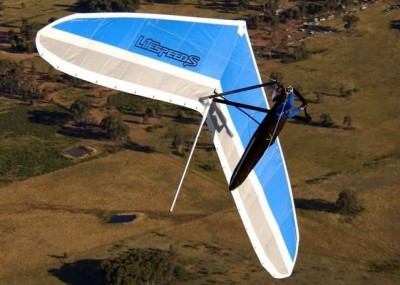
The third generation of the innovative Moyes Litespeed range is the Moyes Litespeed RS released in 2006. This glider has been specifically designed for racing and offers a larger wing span and higher aspect ratio providing enhanced glide and climb characteristics.
Litespeed RS
The Litespeed RS top sail surface is fully constructed from PX Mylar cloth and is standard as a full white surface with Titanium Oxide finish to reduce UV effects on the sail. An optional smoke inlaid sail is also available. The smoke inlaid sail uses a lighter semi-transparent dark Mylar cloth in the centre of the wing surrounded by white PX Mylar. In addition to being aesthetically pleasing, the smoke inlaid sail reduces the weight of the sail by approximately 1.5kgs. The under surface is made from Dacron, and is divided into three areas which can be customised to suit the colour requirements of the pilot.
The Moyes Litespeed RS is supplied standard with full aluminium leading edges, carbon fibre cross bars, standard aerofoil uprights and a round base bar. The glider flies extremely well in this configuration, however glider weight can be reduced and handling improved through the inclusion of an extensive range of performance options.
If using the standard uprights, an aluminium aerodynamic FAST base bar can be added. The preferred option is to upgrade the A-frame to the Moyes Zoom uprights and carbon fibre speed bar. The Moyes Zoom uprights feature an extremely aerodynamic profile constructed from extruded aluminium and presented with an electrically etched black finish. The Moyes Zoom carbon fibre speed bar uses the same aerodynamic profile as the Zoom uprights. The base bar is hand laid using pre-impregnated carbon fibre cloth and is pressure cured at a high temperature to ensure an attractive and durable finish.
A range of carbon fibre performance options are available when ordering the Moyes Litespeed RS. These include carbon fibre outer leading edges, carbon fibre inner leading edges, carbon fibre dive sticks, carbon batten set and carbon fibre leading edge inserts. Except for the carbon batten set, all these options are hand laid using pre-impregnated carbon fibre and pressure temperature cured to provide light yet strong components. The carbon fibre options provide a stiffer and lighter alternative to the standard aluminium components, contributing to the handling and performance of the glider.
Moyes Litespeed 4S
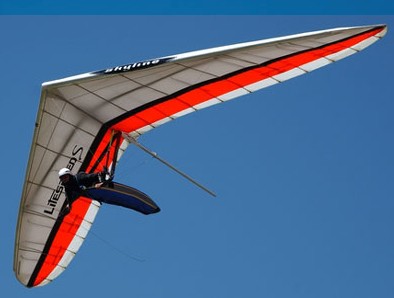
Moyes Litespeed “S”. The “S” refers to the sail cut design being applied to the Litespeed. Sail area has been removed from the chord or root of the sail and redistributed to the mid and outer wing. This results in an “S” shape along the trailing edge – or in more technical terms – a “super-elliptic” wing planform.
The sail cut is intended to counteract the typical mid-wing lift deficit of flexible hang gliders. The creation of a super elliptic wing planform in other words just compensates chord wise for the inevitable washout of flex wings – resulting in a better, more elliptic lift distribution. A wider mid wing and tip cord allows more of the outer wing to create lift along the wing span – the glider’s effective aspect ratio thus increases without additional span. The nominal gain in glide and climb is expected to be only about 1.5%, however a major improvement of the new Litespeed S comes much more from a significant improvement in slow speed manoeuvrability.
The 2003 Litespeed S can be flown 2-3km/h slower with this enhanced manoeuvrability becoming more apparent as more VG is engaged. Thermalling in light lift with up to 50-70% of VG, and very efficient dolphin style flying are the key advantages that top pilots will achieve with this new model.
In addition to the new cut sail, Moyes have also introduced a range of new high performance options including a carbon fibre outer leading edge, carbon fibre dive struts and a lighter redesigned carbon cross bar. All these options reduce the overall weight of the glider by about 2kg. With the weight reductions mostly towards the mid wing and tip, the wing’s roll inertia is reduced significantly. This leads to an amazing gain in handling, especially at slower glide and thermalling speeds, especially at tighter VG settings. Since overall measures of the wing frame have been kept unchanged, all these performance options are fully modular and interchangeable with the standard aluminium components so pilots can select the options that best suit their individual needs. A new size was also added to the Litespeed range. The new Moyes Litespeed 3.5 offers a smaller sail on a Litespeed 4 frame, offering the perfect glider to pilots in the 70kg weight range.
The Litespeed RX is a 2011 model, still for advanced pilots.
Litesport 3 Area: 13 sq.m / 140 sq.ft. Span: 9.4 m / 30.8 ft Nose Angle: 127 – 129 degrees Aspect Ratio: 6.8 Glider Weight: 30 kgs / 66 lbs Optimal Pilot Weight: 60 kgs / 132 lbs Hook-In-Weight: 65-85 kgs / 142-187 lbs Packed Length: 4900 mm / 16.1 ft Packed Length – Short: 3980 mm / 13.1 ft Centre of Gravity (Front of Keel): 1370 mm / 53.9 inches Number of Battens Top: 21 Number of Battens Bottom: 6 VNE: 85 kph / 53 mph VA: 74 kph / 46 mph Trim Speed: 34 kph / 21 mph Stall Speed: 26 kph / 16 mph Maximum Speed: 97 kph / 60 mph Best Glide Speed: 40 kph / 25 mph Best Glide Angle: 14:1 Glide Angle 10:1 Speed: 58 kph / 36 mph
Kingpost Litesport 3 Minimum pilot weight: 50 kg Maximum pilot weight: 70 kg
Litespeed 3 Area: 12.6 sq.m / 136 sq.ft. Span: 9.6 m / 31.5 ft Nose Angle: 130-132 degrees Aspect Ratio: 7.2 Glider Weight: 31.9 kgs / 70.4 lbs Optimal Pilot Weight: 65 kgs / 143 lbs Hook-In-Weight: 55-95kg kgs / 120-210 lbs Packed Length: 4845 mm / 15′ 11″ Packed Length – Short: 4200 mm / 13’9″ Centre of Gravity (Front of Keel): 1310 mm / 51.57″ Number of Battens Top: 21 Number of Battens Bottom: 6 VNE: 85 kph / 53 mph VA: 74 kph / 46 mph Trim Speed: 34 kph / 21 mph Stall Speed: 26 kph / 16 mph Maximum Speed: 124 kph / 77 mph Best Glide Speed: 45 kph / 28 mph Best Glide Angle: 15:1 Glide Angle 10:1: 69 kph / 43 mph
Litespeed 4 Area: 13.6 sq.m / 146 sq.ft. Span: 10 m / 32.8 ft Nose Angle: 130-132 degrees Aspect Ratio: 7.4 Glider Weight: 33.6 kgs / 74 lbs Optimal Pilot Weight: 75 kgs / 165 lbs Hook-In-Weight: 68-110 kgs / 150-240 lbs Packed Length: 4950 mm / 16’3″ Packed Length – Short: 4330 mm / 14’2″ Centre of Gravity (Front of Keel): 1363 mm / 53.66″ Number of Battens Top: 23 Number of Battens Bottom: 6 VNE: 85 kph / 53 mph VA: 74 kph / 46 mph VA: 74 kph / 46 mph Trim Speed: 34 kph / 21 mph Stall Speed: 26 kph / 16 mph Maximum Speed: 124 kph / 77 mph Best Glide Speed: 45 kph / 28 mph Best Glide Angle: 15:1 Glide Angle 10:1: 75 kph / 46 mph
Kingpost Litesport 4 Wing area: 13.7 m² Wing span: 9.7 m Aspect ratio: 6.84 Hang glider weight: 32 kg Minimum pilot weight: 68 kg Maximum pilot weight: 110 kg Minimum speed: 26 km/h Maximum speed: 97 km/h Max glide ratio (L/H): 14 Max glide ratio speed: 40 km/h Packed length: 4.95 m Packed length short: 4.33 Number of battens: 27 Nose angle: 127°
Litesport 4 Area: 13.8 sq.m / 149 sq.ft. Span: 9.6 m / 31.5 ft Nose Angle: 127 – 129 degrees Aspect Ratio: 6.7 Glider Weight: 31.8 kgs / 70 lbs Optimal Pilot Weight: 75 kgs / 165 lbs Hook-In-Weight: 68-109 kgs / 150-240 lbs Packed Length: 4950 mm / 16.2 ft Packed Length – Short: 4330 mm / 14.2 ft Centre of Gravity (Front of Keel): 1390 mm / 54.7 inches Number of Battens Top: 21 Number of Battens Bottom: 6 VNE: 85 kph / 53 mph VA: 74 kph / 46 mph Trim Speed: 34 kph / 21 mph Stall Speed: 26 kph / 16 mph Maximum Speed: 97 kph / 60 mph Best Glide Speed: 40 kph / 25 mph Best Glide Angle: 14:1 Glide Angle 10:1 Speed: 58 kph / 36 mph
Litespeed 5 Area: 14.5 sq.m / 156 sq.ft. Span: 10.4 m / 34 ft Nose Angle: 130-132 degrees Aspect Ratio: 7.5 Glider Weight: 34.5 kgs / 76 lbs Optimal Pilot Weight: 85 kgs / 187 lbs Hook-In-Weight: 75-120 kgs / 165-265 lbs Packed Length: 5150 mm / 16’11” Packed Length – Short: 4500 mm / 14’9″ Centre of Gravity (Front of Keel): 1370 mm / 51.94″ Number of Battens Top: 23 Number of Battens Bottom: 6 VNE: 85 kph / 53 mph Trim Speed: 34 kph / 21 mph Stall Speed: 26 kph / 16 mph Maximum Speed: 124 kph / 77 mph Best Glide Speed: 45 kph / 28 mph Best Glide Angle: 15:1 Glide Angle 10:1: 73 kph / 45 mph
Kingpost Litesport 5 Wing area: 14.9 m² Wing span: 10 m Aspect ratio: 6.7 Hang glider weight: 32 kg Minimum pilot weight: 79 kg Maximum pilot weight: 129 kg Minimum speed: 24 km/h Maximum speed: 97 km/h Max glide ratio (L/H): 14 Max glide ratio speed: 47 km/h Packed length: 5.15 m Packed length short: 4.5 Number of battens: 27 Nose angle: 127°
Litespeed RS 3.5 Area: 13.7 sq.m (147 sq.ft.) Span: 10.3 m (33.7 ft) Nose Angle: 130-132 degrees Aspect Ratio: 7.7 Glider Weight: 33 kgs (73 lbs) Optimal Pilot Weight: 72 kgs (159 lbs) Hook-In-Weight: 68-109 kgs (150-240 lbs) Packed Length: 5090 mm (16.7 ft) Packed Length – Short: 4500 mm (14.8 ft) Centre of Gravity (Front of Keel): 1343 mm (52.9 inches) Number of Battens Top: 23 Number of Battens Bottom: 6 VNE: 85 kph (53 mph) VA: 74 kph (46 mph) Trim Speed: 34 kph (21 mph) Stall Speed: 26 kph (16 mph) Maximum Speed: 124 kph (77 mph) Best Glide Speed: 45 kph (28 mph) Best Glide Angle: 15:1 Glide Angle 10:1: 74 kph (46 mph)
Litespeed RS 4 Area: 14.1 sq.m (152 sq.ft.) Span: 10.4 m (34.1 ft) Nose Angle: 130-132 degrees Aspect Ratio: 7.7 Glider Weight: 33.5 kgs (74 lbs) Optimal Pilot Weight: 78 kgs (172 lbs) Hook-In-Weight: 68-109 kgs (150-240 lbs) Packed Length: 5150 mm (16.9 ft) Packed Length – Short: 4500 mm (14.8 ft) Centre of Gravity (Front of Keel): 1353 mm (53.3 inches) Number of Battens Top: 23 Number of Battens Bottom: 6 VNE: 85 kph (53 mph) VA: 74 kph (46 mph) Trim Speed: 34 kph (21 mph) Stall Speed: 26 kph (16 mph) Maximum Speed: 124 kph (77 mph) Best Glide Speed: 45 kph (28 mph) Best Glide Angle: 15:1 Glide Angle 10:1: 74 kph (46 mph)
Litespeed S 3 Area: 12.9 sq.m / 139 sq.ft. Span: 9.7 m / 31.8 ft Nose Angle: 130-132 degrees Aspect Ratio: 7.3 Glider Weight: 32 kgs / 71 lbs Optimal Pilot Weight: 55 kgs / 121 lbs Hook-In-Weight: 60-80 kgs / 132-176 lbs Packed Length: 4900 mm / 16.1 ft Packed Length – Short: 3800 mm / 12.5 ft Centre of Gravity (Front of Keel): 1310 mm / 51.6 inches Number of Battens Top: 21 Number of Battens Bottom: 6 VNE: 85 kph / 53 mph VA: 74 kph / 46 mph Trim Speed: 34 kph / 21 mph Stall Speed: 26 kph / 16 mph Maximum Speed: 124 kph / 77 mph Best Glide Speed: 45 kph / 28 mph Best Glide Angle: 15:1 Glide Angle 10:1: 74 kph / 46 mph
Litespeed S 3.5 Area: 13.6 sq.m / 146 sq.ft. Span: 10 m / 32.8 ft Nose Angle: 130-132 degrees Aspect Ratio: 7.5 Glider Weight: 33.6 kgs / 74 lbs Optimal Pilot Weight: 68 kgs / 150 lbs Hook-In-Weight: 68-109 kgs / 150-240 lbs Packed Length: 4950 mm / 16.2 ft Packed Length – Short: 4330 mm / 14.2 ft Centre of Gravity (Front of Keel): 1343 mm / 52.9 inches Number of Battens Top: 23 Number of Battens Bottom: 6 VNE: 85 kph / 53 mph VA: 74 kph / 46 mph Trim Speed: 34 kph / 21 mph Stall Speed: 26 kph / 16 mph Maximum Speed: 124 kph / 77 mph Best Glide Speed: 45 kph / 28 mph Best Glide Angle: 15:1 Glide Angle 10:1: 74 kph / 46 mph
Litespeed S 4 Area: 14 sq.m / 151 sq.ft. Span: 10 m / 32.8 ft Nose Angle: 130-132 degrees Aspect Ratio: 7.3 Glider Weight: 33.6 kgs / 74 lbs Optimal Pilot Weight: 75 kgs / 165 lbs Hook-In-Weight: 68-109 kgs / 150-240 lbs Packed Length: 4950 mm / 16.2 ft Packed Length – Short: 4330 mm / 14.2 ft Centre of Gravity (Front of Keel): 1353 mm / 53.3 inches Number of Battens Top: 23 Number of Battens Bottom: 6 VNE: 85 kph / 53 mph VA: 74 kph / 46 mph Trim Speed: 34 kph / 21 mph Stall Speed: 26 kph / 16 mph Maximum Speed: 124 kph / 77 mph Best Glide Speed: 45 kph / 28 mph Best Glide Angle: 15:1 Glide Angle 10:1: 74 kph / 46 mph
Litespeed S 4.5 Area: 14.4 sq.m / 155 sq.ft. Span: 10.4 m / 34 ft Nose Angle: 130-132 degrees Aspect Ratio: 7.6 Glider Weight: 34.5 kgs / 76 lbs Optimal Pilot Weight: 85 kgs / 187 lbs Hook-In-Weight: 75-120 kgs / 165-265 lbs Packed Length: 5150 mm / 16.9 ft Packed Length – Short: 4500 mm / 14.8 ft Centre of Gravity (Front of Keel): 1360 mm / 53.5 inches Number of Battens Top: 23 Number of Battens Bottom: 6 VNE: 85 kph / 53 mph VA: 74 kph / 46 mph Trim Speed: 34 kph / 21 mph Stall Speed: 26 kph / 16 mph Maximum Speed: 124 kph / 77 mph Best Glide Speed: 45 kph / 28 mph Best Glide Angle: 15:1 Glide Angle 10:1: 72 kph / 45 mph
Litespeed S 5 Area: 14.8 sq.m / 159 sq.ft. Span: 10.4 m / 34 ft Nose Angle: 130-132 degrees Aspect Ratio: 7.4 Glider Weight: 34.5 kgs / 76 lbs Optimal Pilot Weight: 90 kgs / 198 lbs Hook-In-Weight: 75-120 kgs / 165-265 lbs Packed Length: 5150 mm / 16.9 ft Packed Length – Short: 4500 mm / 14.8 ft Centre of Gravity (Front of Keel): 1370 mm / 53.9 inches Number of Battens Top: 23 Number of Battens Bottom: 6 VNE: 85 kph / 53 mph VA: 74 kph / 46 mph Trim Speed: 34 kph / 21 mph Stall Speed: 26 kph / 16 mph Maximum Speed: 124 kph / 77 mph Best Glide Speed: 45 kph / 28 mph Best Glide Angle: 15:1 Glide Angle 10:1: 72 kph / 45 mph
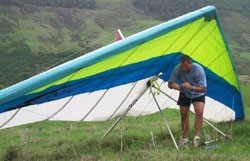
Moyes created the new Malibu open frame floater primary single surface hang glider. The Malibu offers an airframe built from 7075 aluminium tube, covered with a 4oz dacron sail. The sail is shaped and supported by 15 battens made from 7075 aluminium as well as a leading edge insert manufactured from Mylar and foam. Effort has been made to ensure the sail design is efficient, and capable of flying in very light conditions.
The sail design offers a number of stock colour designs, or optionally choose your own colour combination if desired. The standard Moyes Malibu is delivered with round uprights and a straight round base bar. Options include aerodynamic uprights and a round speed bar.
The Malibu offers an extremely slow stall speed with an extremely forgiving and progressive stall. Tip stalls are almost impossible and the glider is very easy to recover from most difficult situations.
The Malibu 2 for novice pilots appeared in 2008. By 2014 the price was near 4000 euros.
As of April 2010, the 166 square foot size has been flight tested and should be available.
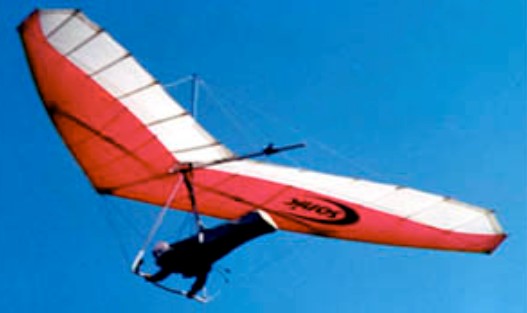
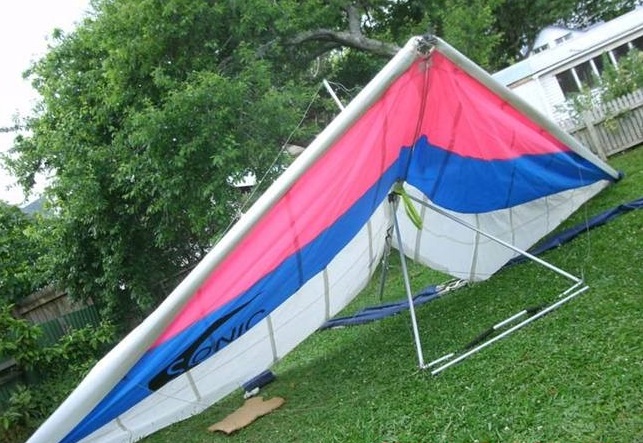
First appearing in 2000, the Sonic is for intermediate pilots.
The Sonic is a 60% double surface flex wing with round down tubes and a padded speed bar. The frame is made with Moyes custom seamless 6061T6 aluminium tubing which possesses excellent flex characteristics for maximum strength. The SONIC also boasts Moyes renown neutral static balance, granting the pilot greater ground handling control. In addition, the SONIC’s slow speed handling properties allow the pilot to soar with minimum effort and maximum safety while aiding in trouble-free landings.
Known for being an excellent dune/ridge soaring wing and “first double surface” glider, some models add a VG system. Described as easy to take off and land, and a fantastic glider for the new student who wants a glider that they can grow into.
2002 Moyes Sonic 190
Sonic 165 Area: 15.3 sq.m (165 sq.ft.) Span: 9.3 m (30.5 ft) Nose Angle: 120 degrees Aspect Ratio: 5.6 Glider Weight: 26 kgs (57 lbs) Optimal Pilot Weight: 75 kgs (165 lbs) Hook-In-Weight: 54-100 kgs (120-220 lbs) Packed Length: 5540 mm (18.2 ft) Packed Length – Short: 3920 mm (12.9 ft) Centre of Gravity (Front of Keel): 1640 mm (5.38 ft) Number of Battens Top: 15 Number of Battens Bottom: 4 VNE: 74 kph (46 mph) VA: 69 kph (43 mph) Trim Speed: 32 kph (20 mph) Stall Speed: 24 kph (15 mph) Maximum Speed: 72 kph (45 mph) Best Glide Speed: 43 kph (27 mph) Best Glide Angle: 9:1
Sonic 190 Area: 17.7 sq.m (190 sq.ft.) Span: 10 m (32.8 ft) Nose Angle: 120 degrees Aspect Ratio: 5.6 Glider Weight: 29 kgs (64 lbs) Optimal Pilot Weight: 90 kgs (198 lbs) Hook-In-Weight: 73-109 kgs (160-240 lbs) Packed Length: 6400 mm (21 ft) Packed Length – Short: 4260 mm (14 ft) Centre of Gravity (Front of Keel): 1680 mm (5.51 ft) Number of Battens Top: 17 Number of Battens Bottom: 6 VNE: 74 kph (46 mph) VA: 69 kph (43 mph) Trim Speed: 32 kph (20 mph) Stall Speed: 23 kph (14 mph) Maximum Speed: 72 kph (45 mph) Best Glide Speed: 43 kph (27 mph) Best Glide Angle: 9:1
Started in 1967, Moyes Delta Gliders was a Company solely dedicated to hang gliding. 1995: 2-4 Taylor St, Waverly, 2024 NSW, Australia.
1998: 1144 Bottany Road, NSW 2019 Botany, AUSTRALIA
2001: 200 Hillcrest Dr, Auburn, CA 95603, USA. LiteFlite is owned and operated by Bill Moyes. Bill is based in Sydney at the Liteflite factory and frequently travels the world to sell and support his products. Bill has been flying and manufacturing aircraft since 1966 and has a long list of accolades to show for his efforts.
Bill Bennett and his partner Bill Moyes worked improvents into the Rogallo tow kites and Moyes towed to 1000 feet in 1967. After the towboat ran into a sand bar one day and the kite gently glided down, they began to deliberatelycut loose and experiment with untethered flight. This led the skiers up mountain sides where they made ski launches, sometimes gliding as far as five miles.
Bennett went to the USA in 1969 and began a tou of exhabitions which included flying over the Golden Gate Bridge to land on Alkatraz, and, on July 4th, circling the Statue of Liberty. American fliers were still using the Lilienthal-type parallel bars and hanging by their armpits but Bennett brought with him a trapeze style control bar and swinging seat.
After the success of his tour he settled down in LA and began to manufacture and promote hang gliders to the growing market in Southern California.
LiteFlite is a manufacturer of ultra light aircraft and hang gliding accessories. The main product from the LiteFlite stable is the Dragonfly, an ultra light aircraft most commonly used for towing hang gliders into the air. The Dragonfly has been in production since 1990 with approximately 100 aircraft being made, and is internationally recognised for its slow flying speed and great manoeuvrability.




 All Aero