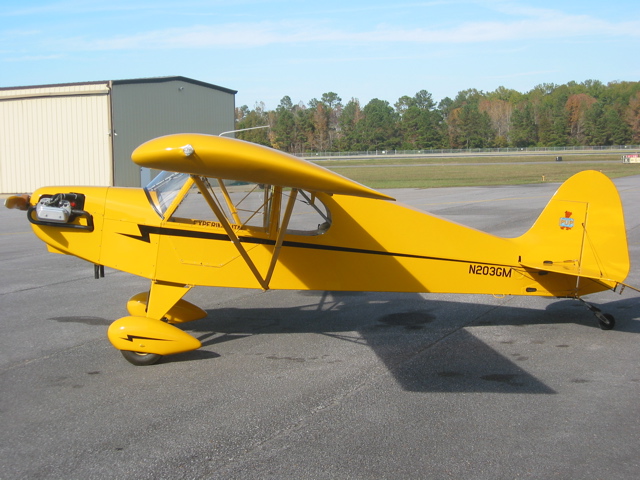
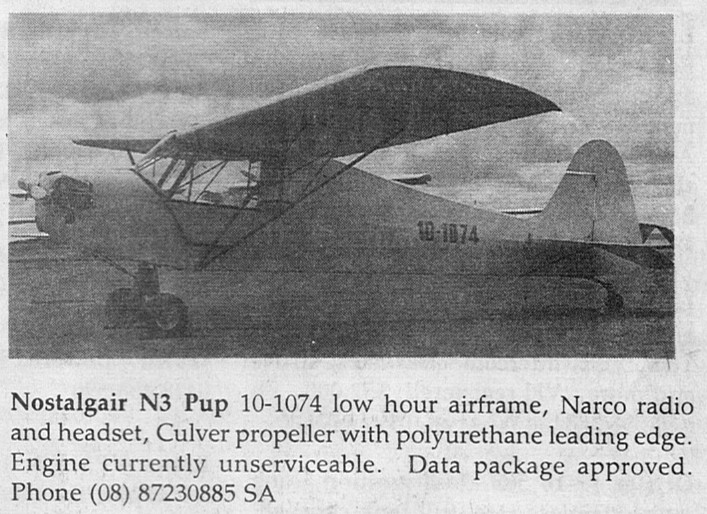
Bob Counts developed the single-seat N-3 Pup in the mid-’80s as what might be termed the third generation of ultralights. The Pup was among the first ultralights to resemble a general aviation aircraft, the Piper J-3 Cub in this case. Like several innovative ultralights, the N-3 Pup won a Best New Design award at its first Sun ’n Fun appearance.
The original N-3 Pup being a ¾ scale Super Cub replica. Centre mounted joy stick, rudder pedals, tailwheel steerable through rudder pedals. The N3 Pup has a welded chromemoly steel fuselage and a two-cylinder horizontally-opposed Global engine to add to its air of authenticity. By 1995 marketed as the Preceptor Aircraft Corp Pup from 1230 Shepard St, Hendersonville, NC 28792, USA.
The N-3 Pup can be ordered with folding wings. In less than ten minutes you can fold your wings and take your pup home with you, or unfold them and go flying. The N-3 Pup is a real joy to fly with easy, docile handling. The N-3 Pup built as a bare minimum plane will meet the FAR 103 requirement.
The N-3 Pup was followed by Counts’ larger, souped up version of the N-3, the Super Pup. Empty weight (450 pounds) and flight speeds take it out of the ultralight category. The Super Pup has folding wings, short takeoff and landings and a reliable 4 stroke engine. Wing sub-kits come with ailerons, all hardware, brackets, fittings, fuel tanks, ribs, skins, spars and lift struts. No fabric.
Fuselage sub-kits come with stabilizers, elevators, rudder, landing gear, seat cusions, control systems, all glass, blank instrument panel, wheels and brakes, tailwheel, stringer formers, shock struts, brackets, fittings, firewall and all hardware and necessary accessories. No fabric.
Firewall forward package comes with engine, exhaust stacks, intake manifolds, carb heat, engine mount, prop, carburetor and hardware Engine prices will vary depending on model, Horsepower and electrical option.
The two place Ultra Pup features folding wings, roomier cabin, and electric starting, which all called for a redesigned fuselage. The CG was shifted to accommodate the extra weight up front. Instead of adding weight in the tail, they used heaver-gauge tubing at strategic locations. Thus, we achieved the desired CG shift by adding strength, not just dead weight. Building smarter safer aircraft for all to enjoy has always been the “Preceptor Way”.
Wing sub-kits come with ailerons, all hardware, brackets, fittings, fuel tanks, ribs, skins, spars and lift struts. No fabric.
Fuselage sub-kits come with stabilizers, elevators, rudder, landing gear, seats cusions, control systems, all glass, blank instrument panel, wheels and brakes, tailwheel, stringer formers, shock struts, brackets, fittings, firewall, all hardware and necessary accessories. No fabric. Firewall forward package comes with engine, exhaust stacks, intake manifolds, carb heat, engine mount, prop, carburetor and hardware. Engine prices will vary depending on model, Horsepower and electrical option.
Stinger
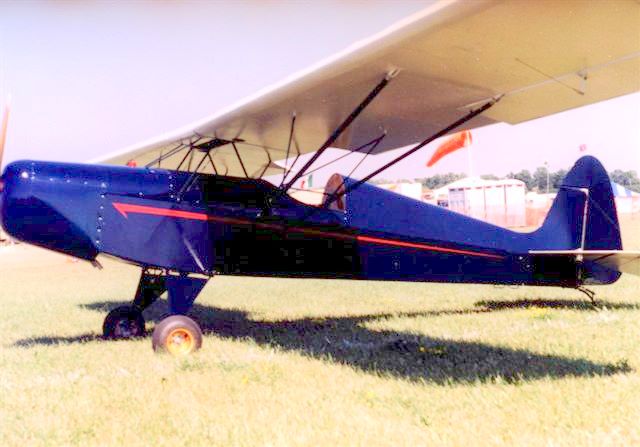
The LSA Stinger uses the same fuselage as the N-3 with front fuselage wider, cabin structure deleted and combing added. The (1995) US$6700.00 kitset came complete with paint and ready to assemble. Skis and floats are optional. Preceptor has taken the same fuselage as used on the time proven N-3 Pup, made the front of the fuselage wider, left off the cabin structure, added a combing and have come up with one of the cutest and nicest flying little open cockpit parasols going. The Stinger brings back the joy of owning and flying an open cockpit airplane that has performance that will keep you smiling. A real beauty that looks and feels like an antique racer of the good old days.
Initially produced by Nostalgair, N-3 kits were subsequently made by Mosler Motors, which eventually sold kit production rights back to Counts. A company named TEC took over engine production from Mosler, but it quit making engines in 1991. At that point, Preceptor began assembling VW-based engines of various strengths. The 70-hp version remains the recommended engine for the Super Pup. Wing and fuselage kits may be bought separately, but one can save $1400 if they’re purchased together. A firewall-forward package for $7600 is for the 70-hp Preceptor VW-based engine that claims a 1400-fpm climb rate. Bob Counts’ son Duwayne runs Preceptor Aircraft by 1995, marketing the Cubs.
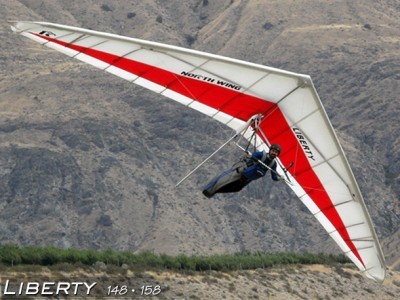
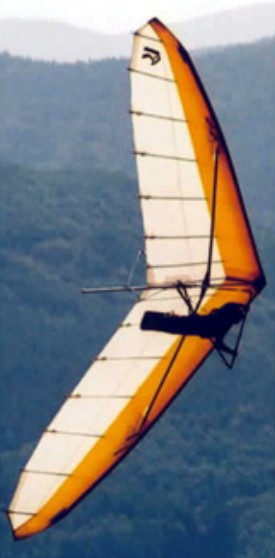
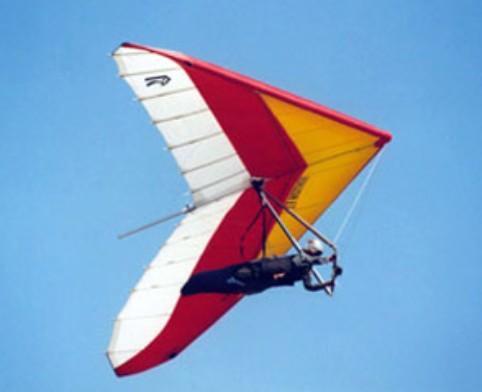
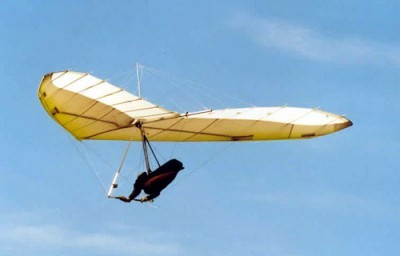
The Freedom is a curved tip, high aspect ratio Hang Glider with 35% double surface. Designed for a quick set-up, very easy to fly, comfortable in active air, and performs substantially better than modern training hill gliders. The Freedom is a modern performance design “single surface” glider. Full length mylar-reinforced leading edge, nose cone, and a king post hang system provides light bar pressure for X-C flying, in three sizes.
The sail design of the Freedom controls twist to get performance without locking up the sail and subsequent handling problems. The standard sail is made with 4.1 oz medium finish Dacron sailcloth. There is also full race sail option, using Mylar (PX10) in the main body.
The Freedom uses 7075-T6 tubing for the mainframe and ribs, imported from Europe, and 6061-T6 seamless drawn domestic tube.
Freedom 150 Double Surface: 35% Area: 148 square feet Span: 30.12 feet Aspect Ratio: 6.0 Number of Ribs: 13 Top Frame Material: 7075 Rib Material: 7075 Glider Weight: 48 lb Control Frame: 60 in Pilot Hook-In Weight: 120-200 lb USHPA Rating: 2 Suggested Retail Price 2009: $3990
Freedom 170 Double Surface: 35% Area: 171 sq.ft / 15.9 m² Span: 32.6 ft / 9.9 m Aspect Ratio: 6.2 Number of Ribs: 15 Top Frame Material: 7075 Rib Material: 7075 Glider Weight: 54 lb / 24 kg Control Frame: 60 in Pilot Hook-In Weight: 155-235 lb / 70-107 kg USHPA Rating: 2 Suggested Retail Price 2009: $3990
Freedom 190 Double Surface: 35% Area: 188 square feet Span: 34.8 feet Aspect Ratio: 6.4 Number of Ribs: 14 Top Frame Material: 7075 Rib Material: 7075 Glider Weight: 57 lb Control Frame: 60 in Pilot Hook-In Weight: 195-275 lb USHPA Rating: 2 Suggested Retail Price 2009: $4090
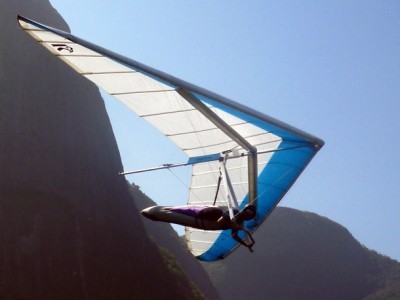
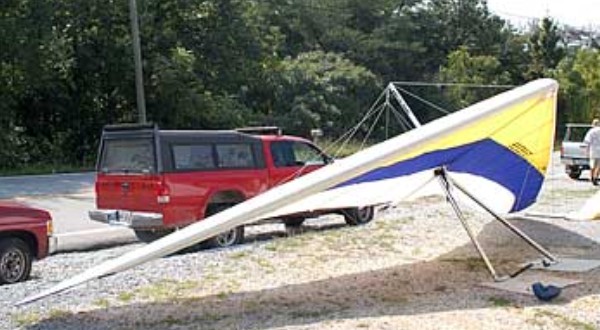
The 2005 North Wing Intermediate Horizon ET is designed to bring the new pilot far into the sport by offering outstanding performance in tight sail setting with pull of the VG line, and docile handling in loose settings to go right from the training hill to fun soaring. The Horizon ET is stable under tow, even without a stabilizer tail. The set up time is about 10-minute.
The Horizon ET has the easy-to-fly concept in this double surface novice wing, using elliptical fiberglass tips, and with the pull of the VG, exciting top-end performance.
Horizon ET 160
Horizon ET standard features include light weight 7075 air frame, strong 7075 ribs, elliptical curved tips, airfoil kingpost, airfoil downtubes, and variable geometry.
Horizon ET 160 Wing Area: 164 sq.ft / 15.3 m² Wing Span: 31 ft / 9.4 m Aspect Ratio: 5.8 : 1 Double Surface: 60 % Number of Ribs: 13 Top Rib Material: 7075 Frame: 7075 Glider Weight: 50 lb / 26 kg Control Frame: 60 inches Pilot Hook-In Weight: 130 – 240 lbs. USHGA Rating: 2 Leading Edge Color: PX20 Undersurface Color: White, Red Main Body Color: White Sail Area: 165 sq. ft. Glider Weight: 57 lbs. Pilot Hook-in Weight: 130 – 230 lbs. Skill Level: Novice SS/DS Double Surface KP/TL: Kingpost VG: Yes
Horizon ET 180 Wing Area: 185 s.ft / 17.5 m² Wing Span: 33.5 ft / 10.2 m Aspect Ratio: 5.9 : 1 Double Surface: 60 % Number of Ribs: 15 Top Rib Material: 7075 Frame: 7075 Glider Weight: 55 lb / 27 kg Control Frame: 60 inches Pilot Hook-In Weight: 160 – 280 lbs. USHGA Rating: 2 Leading Edge Color: PX20 Undersurface Color: Red, Black Main Body Color: White Sail Area: 189 sq. ft. Glider Weight: 60 lbs. Pilot Hook-in Weight: 180 – 255 lbs. Skill Level: Novice SS/DS: Double Surface KP/TL: Kingpost VG: Yes
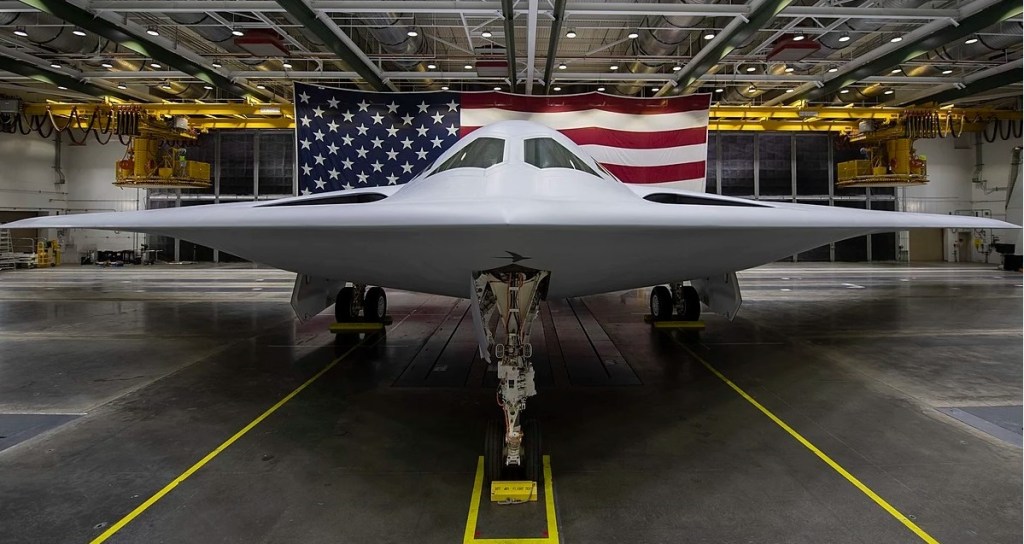
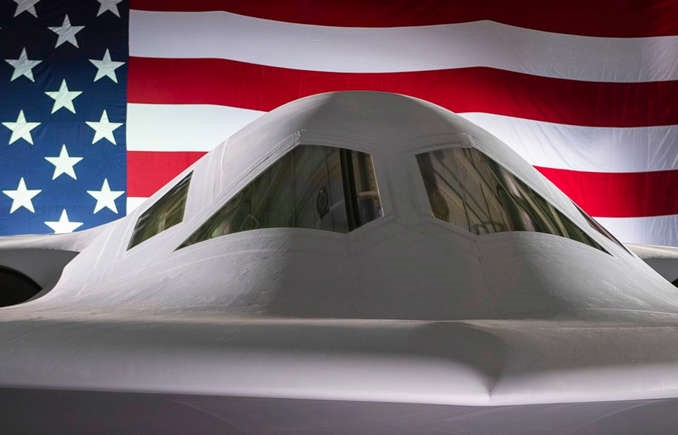
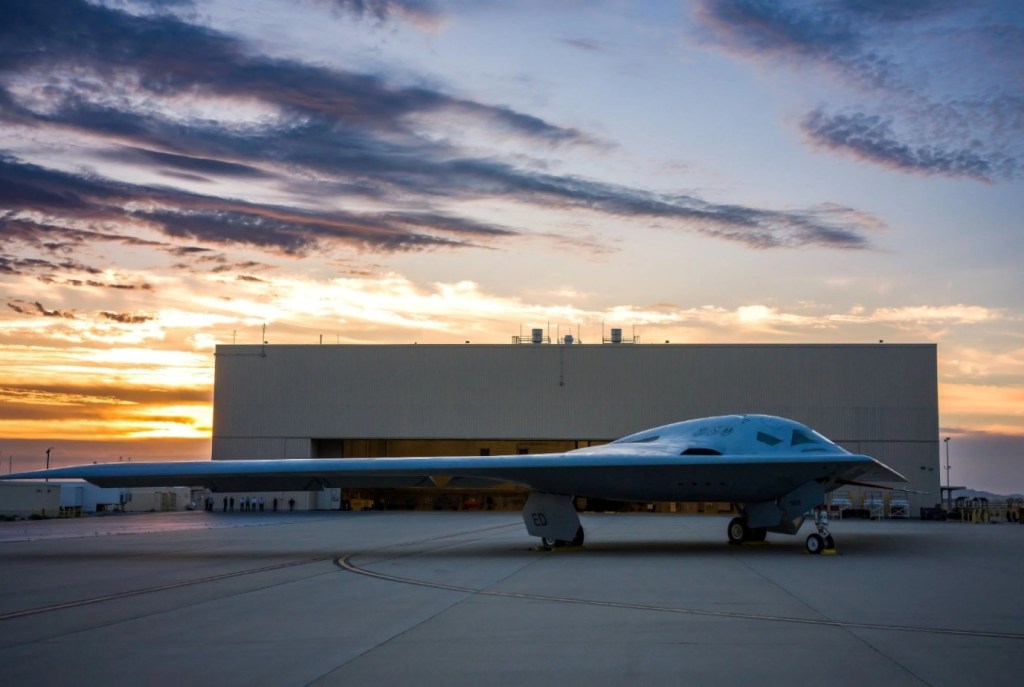
B-21 in a hangar at Plant 42 in Palmdale, California
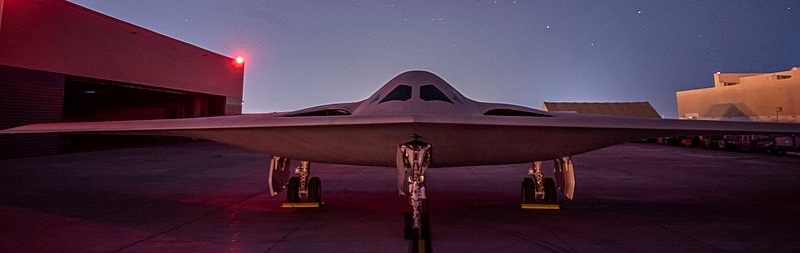
The Northrop Grumman B-21 Raider is an American strategic bomber under developed for the United States Air Force (USAF) by Northrop Grumman. As part of the Long Range Strike Bomber (LRS-B) program, it is a long-range, stealth intercontinental strategic bomber for the USAF, able to deliver conventional and thermonuclear weapons.
The classified Long Range Strike Bomber (LRS-B) program began in 2011, and the Air Force issued a request for proposal to develop a LRS-B aircraft in July 2014. A development contract was awarded to Northrop Grumman in October 2015. Boeing and Lockheed Martin, who submitted losing bids for the project, filed bid protests; in October 2016, the Government Accountability Office (GAO) rejected the challenges and sustained the USAF’s decision to award the LRS-B contract to Northrop Grumman. The GAO report revealed that cost was the deciding factor in selecting Northrop Grumman over the Boeing-Lockheed Martin team.
In March 2016, the USAF announced seven tier-one suppliers for the program: Pratt & Whitney, BAE Systems, Spirit AeroSystems, Orbital ATK, Rockwell Collins, GKN Aerospace, and Janicki Industries.
Many aspects of the B-21 program are highly classified; the program is designated as a special access program. The Congressional Research Service noted in a report that the B-21’s technical details and specifications, such as speed, enabling systems, “size, required stealth, structure, number and type of engines, projected weapons, and onboard sensors remain classified” although some information about various other aspects of the program have been made public since 2015. A 2015 media report said that the Air Force wanted the bomber to also function as an intelligence collection platform, battle manager, and interceptor aircraft. In 2016, then–Secretary of the Air Force Deborah Lee James said that the B-21 would be a “fifth-generation global precision attack platform” with networked sensor-shoot capability. Northrop Grumman described the B-21 at its 2022 “unveiling” as “the world’s first sixth-generation aircraft.”
The F-35 program manager Chris Bogdan said the B-21’s engines would be similar enough to the F-35’s Pratt & Whitney F135 engine to reduce its cost.
In January 2020, Air Force officials released new B-21 renderings and Northrop Grumman, showing the distinctive flush and blended inlets and the two-wheel main landing gear design. The drawing appeared to show a smaller, lighter aircraft than the B-2.
The program completed its critical design review in December 2018.
In September 2022, the USAF announced that the B-21 was to be unveiled in early December 2022 in Palmdale, California. The bomber was first shown to the public at a 2 December 2022 ceremony at Northrop Grumman’s production facilities in Palmdale, California. At the unveiling, Northrop CEO Kathy Warden said that the B-21 is designed with modular, open systems architecture to allow easy upgrades, and potentially, the ability to export components to foreign buyers. Warden said that the B-21’s internal operations were “extremely advanced compared to the B-2” and that the B-21 was slightly smaller than the B-2, with a longer range.
While the potential for an uncrewed flight was not mentioned during the ceremony, a US Air Force spokeswoman said the aircraft was “provisioned for the possibility, but there has been no decision to fly without a crew”.
At the 2016 Air Warfare Symposium, Air Force officials announced that the LRS-B would be formally designated “B-21” because the aircraft would be the 21st century’s first bomber. In September 2016, Air Force officials announced that the B-21 would be named “Raider” in honor of the Doolittle Raiders. The then-remaining survivor of the Doolittle Raiders, retired Lt. Col. Richard E. Cole, was present at the naming ceremony at the Air Force Association conference.
The head of the Air Force Global Strike Command said he expected the service would place an initial order for 100 B-21s and build up to a full fleet of 175 to 200. Two USAF studies suggested that Air Force could increase its initial purchase from 80-to-100 to 145 aircraft. Initial operating capability (IOC) was expected to be reached by 2030.
Assembly of the B-21 takes place at the United States Air Force Plant 42 near Palmdale, California, at the same facility Northrop Grumman used during the 1980s and 1990s to build B-2 bombers. In January 2017, Northrop Grumman was awarded a $35.8 million contract modification for a large coatings facility at Plant 42, to be completed by the end of 2019; the contract announcement did not specifically mention B-21, but the facility was likely meant for B-21 stealth coating. Because the program is classified, officials released very little information about it. By the summer of 2019 it was reported that construction of the first unit was underway. In early 2021, several media outlets reported that as completion of the first B-21 approached, construction on the second unit had begun.
By February 2022, six B-21s were under construction. The first B-21 was moved to a calibration facility the following month. About 5,000 Northrop Grumman employees worked on the program as of December 2022.
As of 2022, the B-21 was expected to enter service by 2026 or 2027. It is to complement and eventually replace the Northrop Grumman B-2 Spirit, but not the Boeing B-52 Stratofortress bombers.
In December 2022, the cost of a B-21 aircraft was estimated to be US$700 million; at the time, Air Force officials estimated that the cost to develop, purchase, and operate a fleet of 100 B-21s over a 30-year period would be at least $203 billion.
The first B-21 at Northrop’s Plant 42 in Palmdale, California, 29 November 2022.
Maintenance and sustainment of the B-21 will be coordinated by Tinker Air Force Base, Oklahoma, while Edwards Air Force Base, California, will lead testing and evaluation. In March 2019, Ellsworth was selected as the base to host the first operational B-21 unit and the first training unit.
In May 2022, the USAF announced that they expected first flight of the B-21 to take place in 2023.
The new bomber has stayed on cost and on schedule. The Air Force has set a $500 million ceiling for the unit cost in 2010 dollars; in 2019, Northrop said the Air Force’s target cost would be just over $600 million, accounting for inflation.
The first new B-21s will be based out of Ellsworth Air Force Base in South Dakota, and formal training will be conducted there as well. Maintenance and sustainment will be handled at Tinker Air Force Base in Oklahoma, while testing and evaluation is being performed at Edwards Air Force Base in California.
B-21, also known as Cerberus, achieved its first flight to Edwards Air Force Base on November 10, 2023.
The consortium of Northrop Grumman and its subsidiary, Scaled Composites, along with BAE Systems, was among the most favoured teams to win the competition to replace hundreds of T-38 Talon trainers for the USAF under the T-X program.
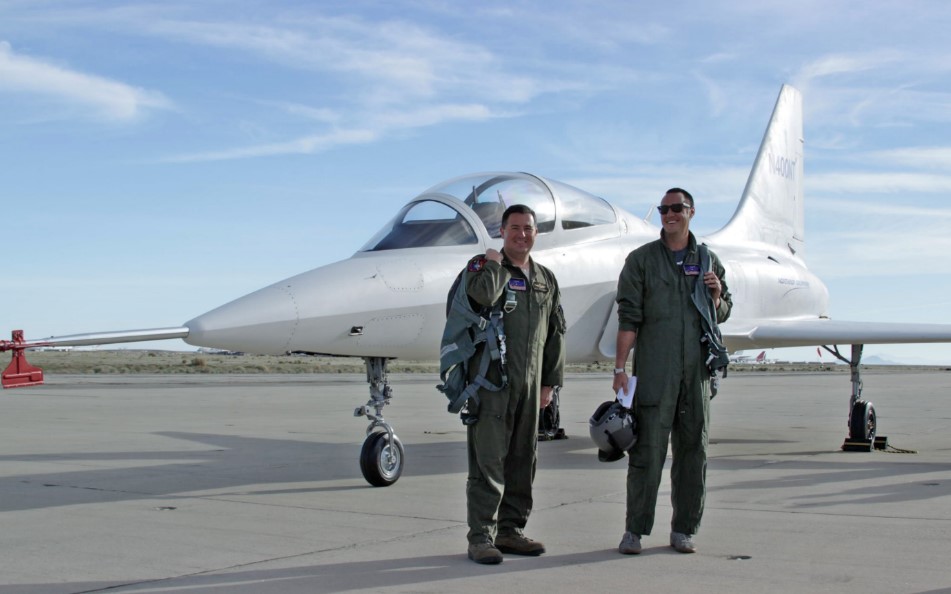
The Northrop Grumman and their teammates were progressing well with their T-X entrant, which received the in-house name Model 400. The jet was first spotted at Mojave Air And Space Port, where Scaled Composites calls home, in late August of 2016. The company made no comment on the prototype even as low quality photos of it taxiing hit the web. Not too long after it took to the skies, but still the only indication from Northrop Grumman that it existed was them stating that the Model 400 prototype would be officially unveiled in early 2017.
Originally, Northrop Grumman intended to run with an updated version of BAE System’s Hawk T2 trainer, but that idea was axed when it was clear that the 40-plus-year-old design would not meet the USAF’s performance requirements. Following this change in strategy, Northrop Grumman’s design process became especially secretive—although it was widely known that Scaled Composites, acquired by Northrop Grumman in 2007, would be heavily involved.
Dubbed the Model 400, the aircraft looks like a modernized, composite hybrid of the T-38 Talon and the F-20 Tigershark. It packs a single F404-GE-102D engine, a derivative of the same engine used in the F/A-18A/D, the JAS-39A/D (Volvo RM12), the F-117A, and India’s Tejas light fighter—as well as Lockheed’s T-X competitor, the T-50A.
The engine/airframe appears to lack an expanding nozzle usually indicative of an afterburning capability. Ultimately, this design can potentially be pitched as an entirely new aircraft while still leveraging Northrop’s hugely successful T-38 Talon lineage.
Just around the time that the company was supposed to officially unveil their exciting new T-X contender, one that had been flying for some time at that, the company canned its participation in the T-X program entirely. The move was startling to say the least, with Northrop Grumman not only giving up the possible opportunity to build at least 350 new tactical jets—an opportunity that is becoming increasingly rare—but also giving up on 50 plus years of pilot training heritage.
Model 400 test pilots. Note the rear main landing appear to be borrowed from the T-38
A statement by Northrop Grumman reads: “Northrop Grumman and its principal teammate BAE Systems have carefully examined the U.S. Air Force’s T-X Trainer requirements and acquisition strategy as stated in the final request for proposals issued on Dec. 30, 2016. The companies have decided not to submit a proposal for the T-X Trainer program, as it would not be in the best interest of the companies and their shareholders.”
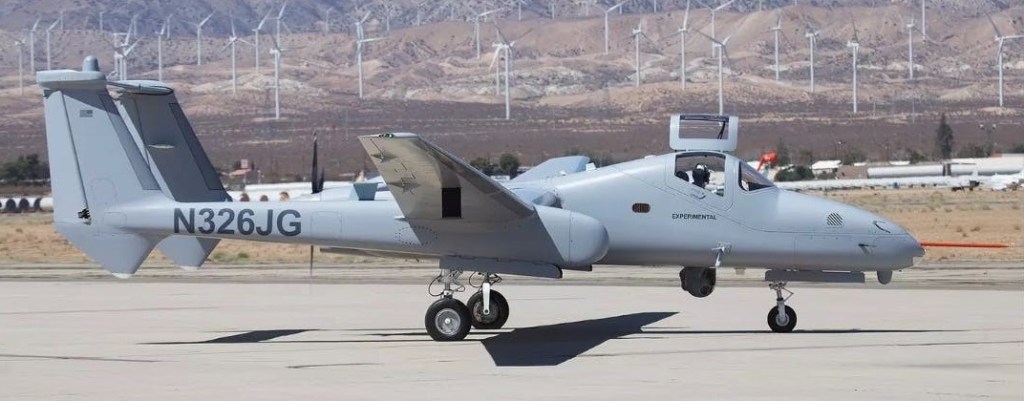
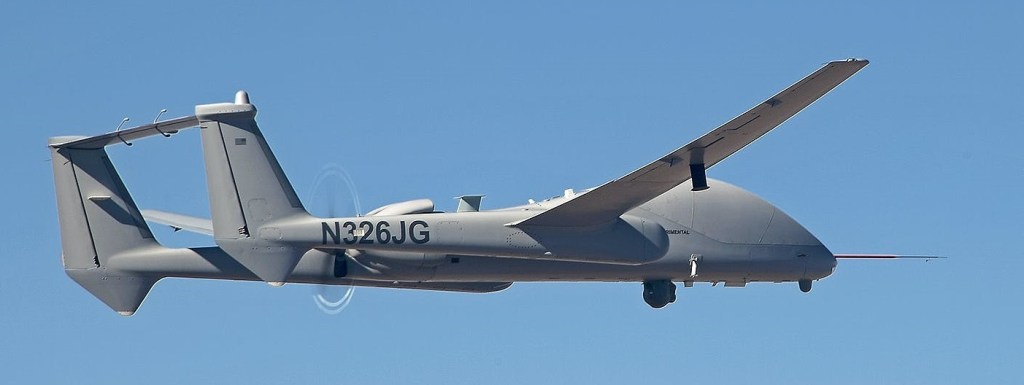
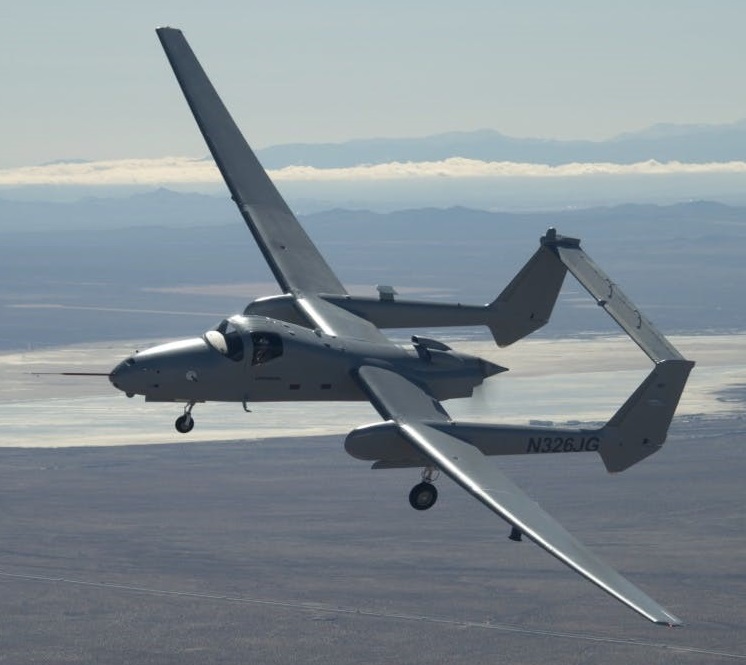
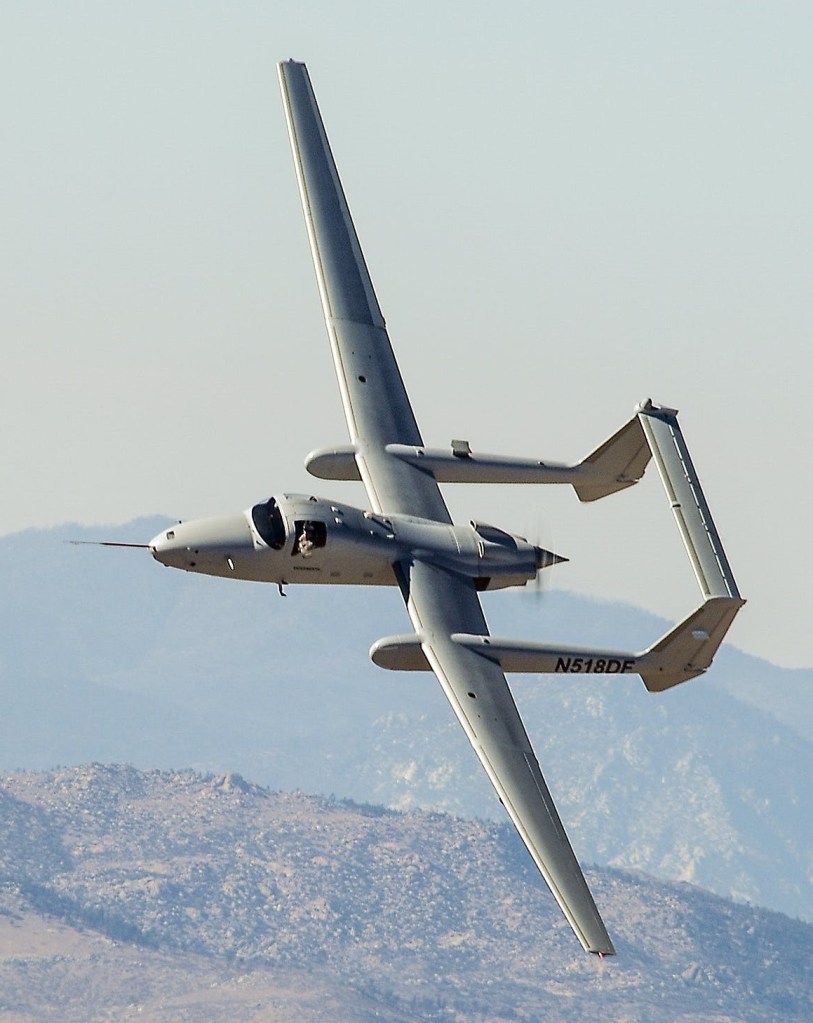
The Firebird concept actually dates the back to the latter half of the 2000s, with Scaled Composites, Northrop Grumman’s storied subsidiary, eventually building a technology demonstrator. That highly experimental aircraft was a forerunner to the current Northrop Grumman designed Firebird, which is a clean-sheet, production-ready aircraft. Scaled Composites’ Firebird demonstrator first flew in 2010 and proved that an optionally manned, highly flexible surveillance aircraft could not only work, but it could compete for missions with both unmanned and manned platforms at the same time.
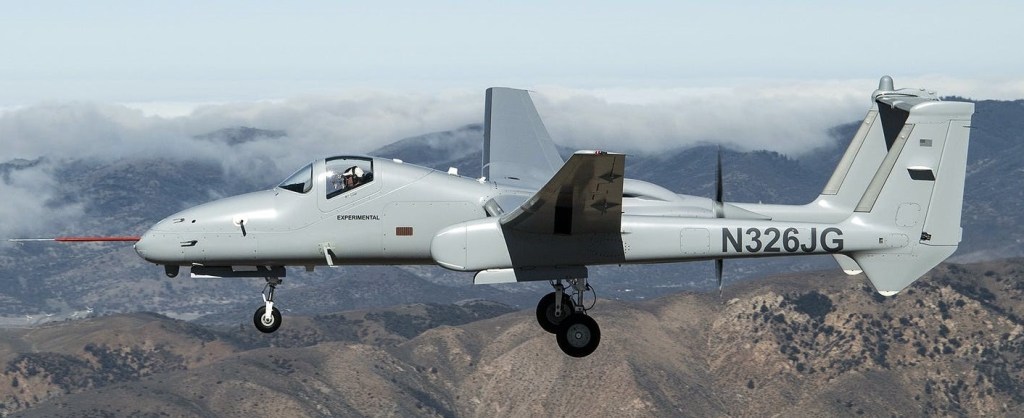
Firebird in manned configuration. It can be flown by one or two pilots and uses open architecture Garmin 3000 avionics.
Firebird is that it can self-deploy anywhere in the world with a pilot at its controls and even work out of small, rough airfields. Once forward deployed, it can then be converted into unmanned configuration and fly missions lasting over 30 hours. It single six-cylinder Lycoming TEO-540 engine runs on avgas.
Firebird in unmanned mode.
Being able to tailor payloads to the operating environment and mission, some operations and operating areas benefit from or even necessitate a human in the cockpit, while others largely benefit from long-duration missions run from a ground station. Being able to provide both in one airframe is revolutionary, at least in terms of a purpose-built aircraft being sold and sustained by an American aerospace-defense prime contractor.
The Firebird can be easily broken down and flown on a transport. Its modular carbon fiber design made this nearly a default capability.
Firebird was into the back half of its flight test program circa 2019.
In 1916, while working for the Loughead Aircraft Company (later Lockheed), he co-invented a process for making monoplane fuselages and helped design the F-1 flying boat. He became chief engineer at Lockheed in 1927 and built the Vega monoplane. With the help of designer Jack Northrop, Lockheed built the F1, but it was turned down by the Navy. In 1923 Northrop left to take a job with Donald Douglas, and later founded his own corporation.
Jack Northrop (1895-1981) was employed by United Aircraft and Transport Corporation. All went well until United decided Northrop should leave Burbank and join another United division. He remained in California to form a new company. In July 1929 Jack Northrop formed Northrop Aircraft Corp, as a division of United Aircraft and Transport Corporation and built the Alpha (first flown 1930), first all-metal stressed skin airplane, followed by the Beta 300 hp aircraft of 1931, first to exceed 200mph (322kmh).
New Northrop Corporation founded after split with United Aircraft and Transport Corporation, with Douglas Aircraft holding a majority shareholding.
Producing the Gamma high-speed mailplane in 1933 and other types. Northrop Corporation absorbed into Douglas 1937, and new independent Northrop Aircraft Inc established 1939 to concentrate on military projects, including the A-17 attack-bomber and P-61 Black Widow three-seat, twin-boom night fighter, first aircraft in this category to be ordered by USAAF. Northrop experiments with the tailless XP-56 interceptor led to a number of postwar flying-wing projects, culminating in eight jet engined YB-49 flying-wing bomber of 1947. The F-89 Scorpion all-weather fighter entered production two years later, serving USAF and Air National Guard Units until 1963.
Extending its activities into other fields, the company changed its name to Northrop Corporation in the year 1959. In May 1994 Grumman and Northrop merged to form Northrop Grumman Corporation. Northrop’s final pre-merger production aircraft included the F-5E/F Tiger II lightweight tactical jet fighter/fighter trainer, developed with U.S. Government funding mainly for export as International Fighter Aircraft (first F-5E flown August 1972), derived from the 1959 N-156 prototype and early production F-5A/B Freedom Fighters built for supply under Military Assistance Programs. The T-38 Talon two-seat advanced trainer variant of N-156 for the USAF (first flown April 1959) went out of production in 1972 after 1,187 had been built, but these are being modernized to T-38C standard for redelivery from 1999 by Northrop Grumman. Northrop developed the YF-17 Cobra for competition against the Lockheed YF-16 for the USAF’s Lightweight Fighter Program, but lost and became principal subcontractor to McDonnell Douglas on a proposed carrier borne naval fighter derivative. This eventually entered production as the carrier- and land-based F/A-18 Hornet. Finally developed the B-2 Spirit subsonic strategic stealth bomber (first flown July 1989) for the USAF. Two of the five main divisions of Northrop Grumman Corporation were Commercial Aircraft, to construct aerostructures and components for the commercial aircraft of other companies and engines, and Military Aircraft Systems, working on B-2 and all other Northrop Grumman aircraft production and modernization programs, and principal subcontractor to Boeing on Hornet. Delivered 21 B-2A Spirit stealth bombers, achieving initial operational capability with the USAF in April 1997 and full capability with the 715th Bomb Squadron in 1999. Undertakes F-5/T-38 modernization, F-14 work, EA-6B Prowler remanufacturing, production of E-2C Hawkeye in latest Hawkeye 2000 form (first flown April 1998; see Grumman entry for earlier development and production of E-2), and production of E-8C Joint STARS as joint USAF and U.S. Army co-operation program for an airborne surveillance and target acquisition system (first flown August 1995 for first production E-8C).
In 2000, Northrop Grumman is to sell its commercial aerostructures arm to the Carlyle Group for $1.2bn. NG was planning to specialise in the defence electronics and IT industries and its aerostructures business, which manufactures subassemblies for Boeing commercial aircraft, the C-17 and Gulfstream V, no longer fits the bill. Carlyle will rename the Dallas, Texas-based company Vought Aircraft and NG will reorganise its Integrated Systems and Aerostructures sector into the Integrated Systems Sector. NG, which recently acquired Comptek Reseach, has also cited expected decline in Boeing production schedules as one of the reasons for the sale. The Carlyle Group, however, has been active in the aero-manufacturing sector having purchased Textron’s aerostructures unit four years previous and buying out Gemini Air Cargo in 1999.
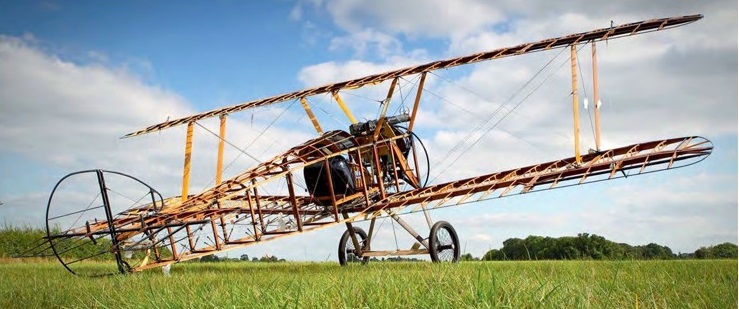
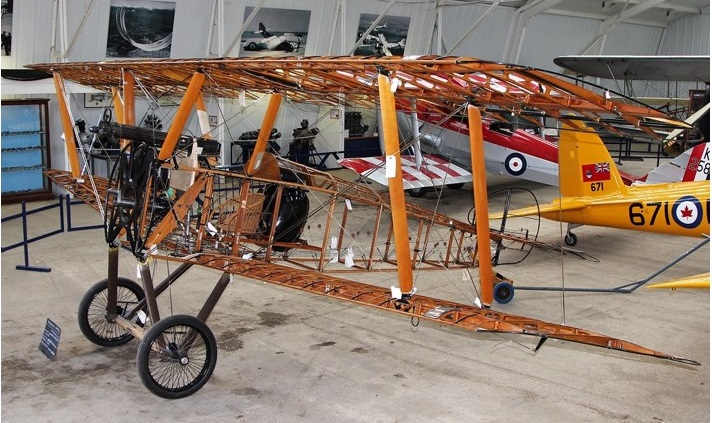
The Northern Aeroplane Workshops F.1 Camel The project was started around 2001, after the construction of the Sopwith Triplane and Bristol M.1C.
Eric Barraclough was the mainstay and inspiration behind the NAW. Having worked for Comper, Heston Aircraft and Auster, he was steeped in aviation. “When the Bristol M1C was coming to completion, we were looking at another project”, recalls Robert Richardson, another NAW lynchpin. “Eric had the idea of building the first Blackburn aircraft, which was an abomination, it really was. None of us were interested in it at all. Then he suddenly turned round and said, ‘I’ve got some Camel drawings in my loft’. He seemed to have forgotten about them.
The first metal was cut when they were still on with the Bristol, in December 1995. That was at the Mirfield workshop, at Butt End Mills, but shortly after that they moved to the workshop at the Skopos Motor Museum in Batley. Once the Bristol was delivered, they started full-time on the Camel.
Eric Barraclough died in November 1997, but the standards he had always desired in NAW’s projects set the tone. Adherence to the original remained to the fore.
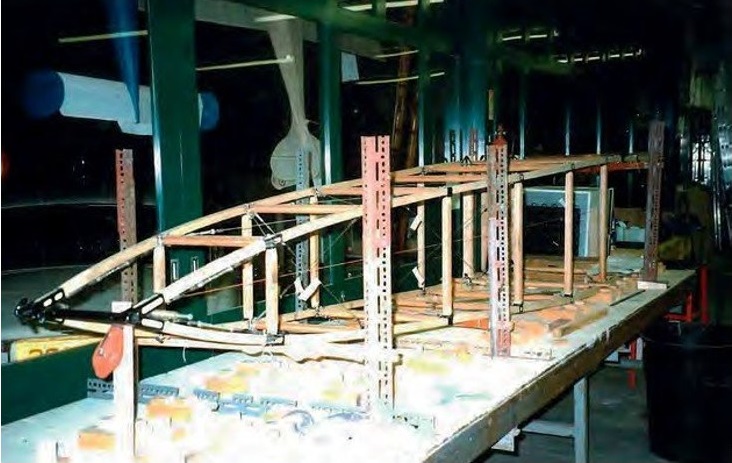
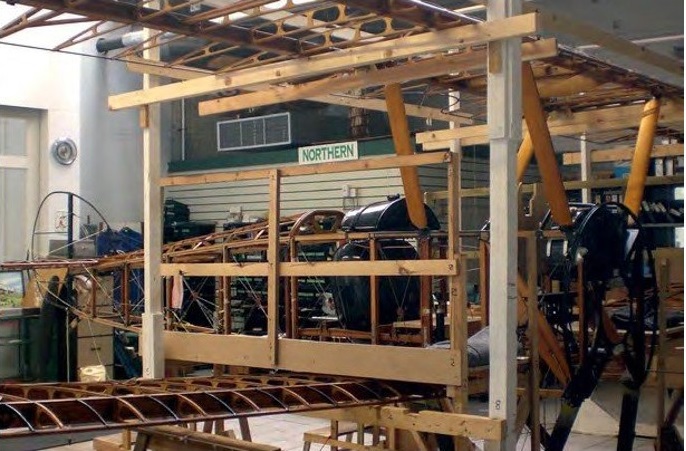
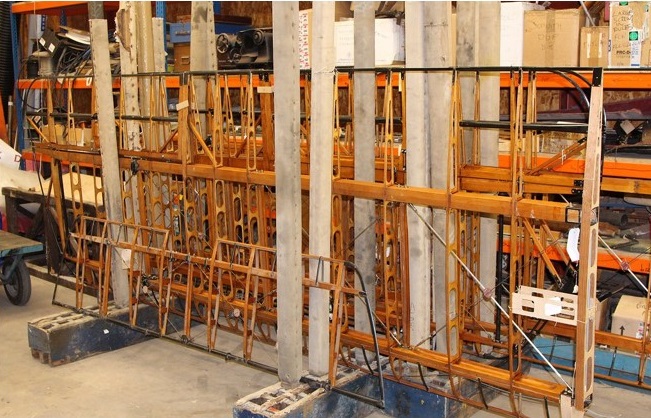
They built the fuselage sides first. All the sub-assemblies like the wings and fuselage were done in jigs.
The fuselage in build at the Northern Aeroplane Workshops’ premises at Alexandra Mills, Batley, in February 1999.
Most of the airframe is spruce, but the longerons are ash. They had woodworkers Chris Lawson, who had his own woodworking company in Skipton. They ordered the streamlined wires from Bruntons, who were making these wires during the First World War.
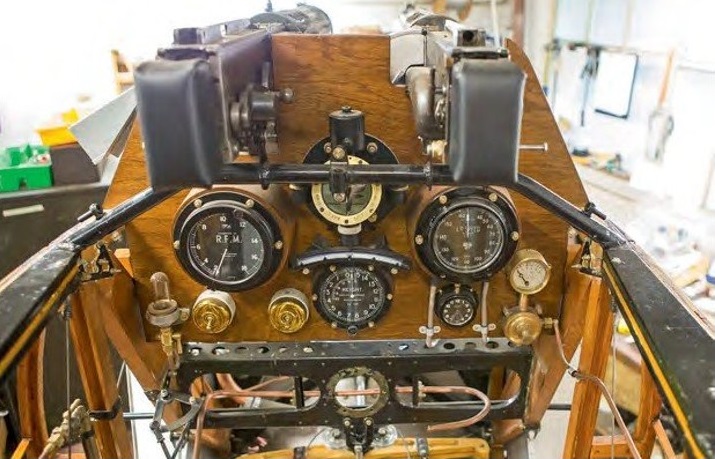
Tube left over from the Triplane for the undercarriage was utilised. It had been specially drawn by a firm called T. I. Reynolds in Sheffield. There were parts coming from all over the place, apart from what they were making in the workshops. The cockpit instruments were sourced by Shuttleworth.
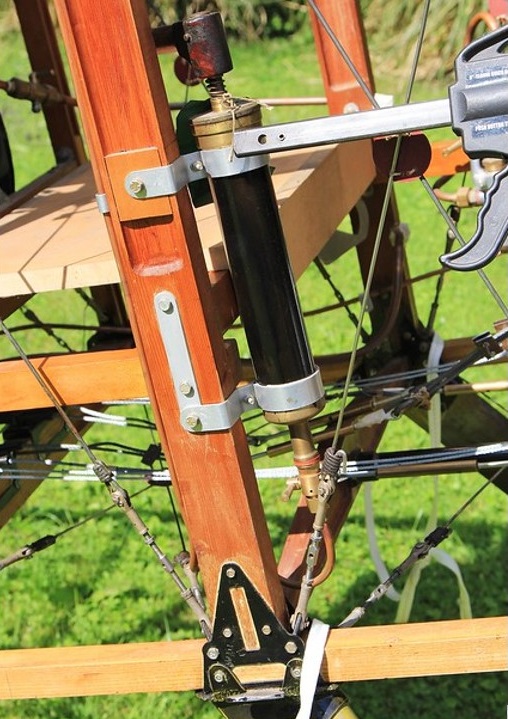
Of the metal fittings made in-house, CAD [computer-aided design] was available, but no one had the expertise to use it, or CNC [computer numerical control] machines and so on. So, it was done the old way. Sopwith would have stamped these fittings out, but they drew them out on a piece of metal, cut them out with a saw, filed them up and bent them as appropriate.
The engine was Shuttleworth’s. All they had was a crankshaft, which was used to set various things up. When they first approached Shuttleworth about the Camel project, one of the things that came to the fore very quickly was a suitable engine. The then chief engineer, Chris Morris, had another Clerget — it’s turned out to be a 9Bf 140hp long-stroke. They thought they could get that airworthy, which they’ve been able to do. It took a lot of work; it needed new pistons, new cylinders, and parts of the tappets as well. Shuttleworth engine specialist Phil Norris is an absolute wizard on rotaries.
February 2007: in the Batley assembly jig with wings attached, but before the flying and landing wires were fitted.
The first two NAW aircraft were done under CAA auspices, but the Camel was done under the LAA [Light Aircraft Association]. That worked out very well. One of the pilots down at Shuttleworth, Rob Millinship, was the LAA inspector.
Having proved ideal for so long, conditions in the Batley premises deteriorated when they were sold off. Then in 2013 the lease was due for renewal, and Shuttleworth weren’t prepared to renew it. About six NAW members were working on the Camel when it left in August 2013.
At that point, the undercarriage needed final welding. The cables were in, but they weren’t spliced. The systems weren’t in, like the air, fuel and oil systems, so that was all done at Old Warden. That’s probably a good thing, because they’ve got to maintain it. They’ve had to put a small access panel on the port side, which isn’t authentic, but they weren’t able to get to the fuel filter, even going upside-down in the cockpit.
The big things as far as modern standards were concerned were that a four-point harness was put in for the pilot, rather than a lap strap, and obviously the glue. The old casein glue or pot glue that they used in the First World War is not a good idea, so they used Aerodux 500, a very good modern glue.
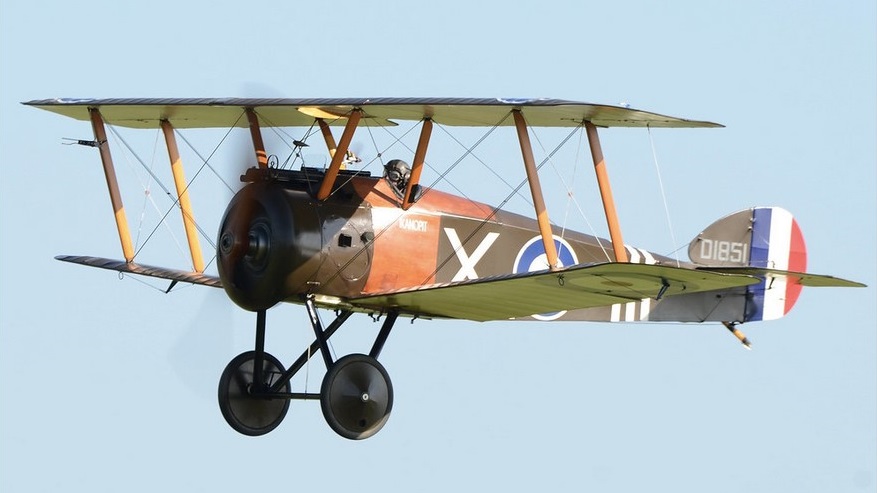
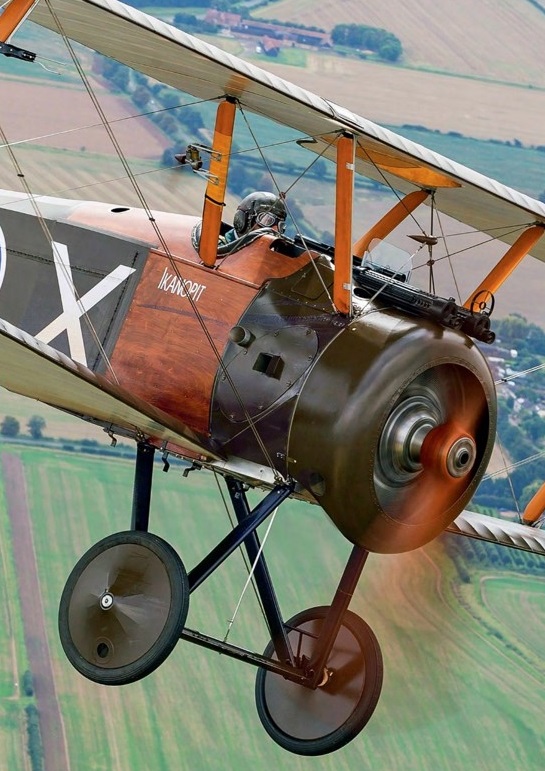
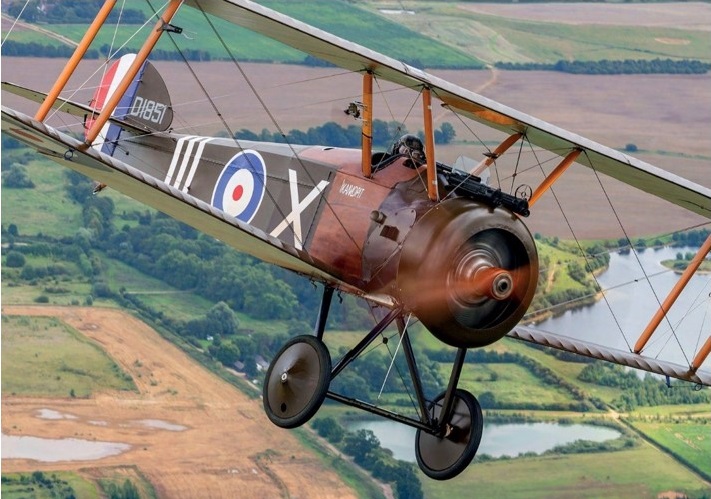
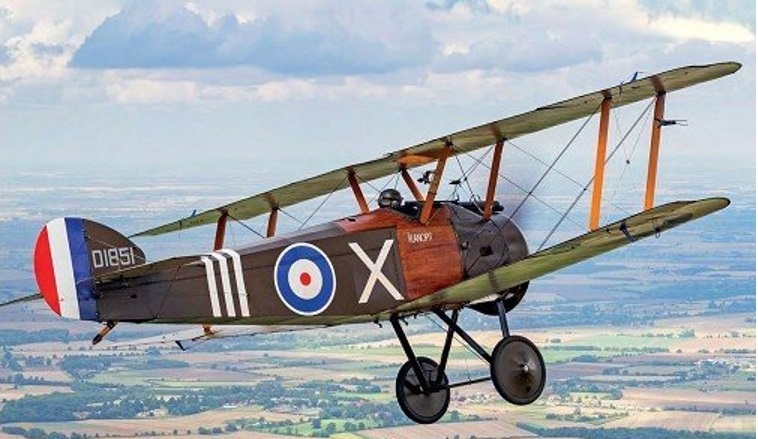
Now overseen by the Shuttleworth chief engineer Jean-Michel Munn, at Old Warden the Camel made visible progress towards completion. The plywood cockpit and side panels, which proved troublesome, were completed before the airframe was taken down to be covered, using synthetic materials rather than linen. The chosen colour scheme was that of a Ruston Proctor-built example operated by No 70 Squadron, Royal Flying Corps, the first front-line unit to receive the type. It carries the serial D1851 and is named Ikanopit (‘I can hop it’).
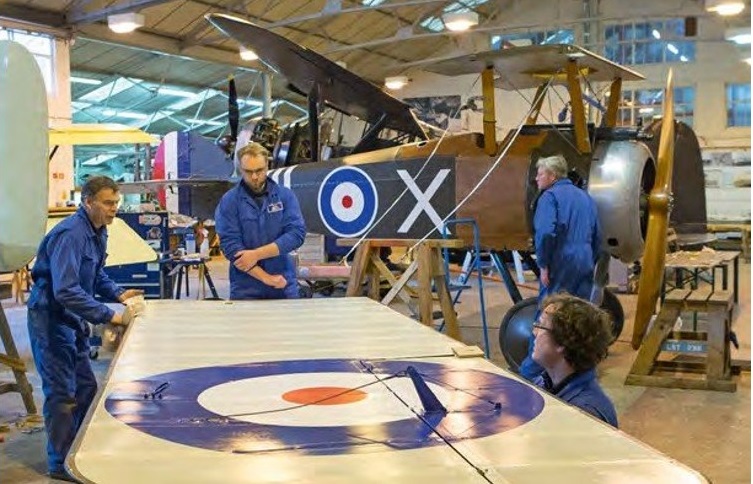
Members of the Shuttleworth engineering team refitting the wings in February 2015. From left to right in the foreground are Andy Preslent, Gareth Rutt and Rory Cook, while Phil Norris stands by the aircraft’s nose.
Engine runs began in August 2016, leading up to the following May’s successful maiden flight.
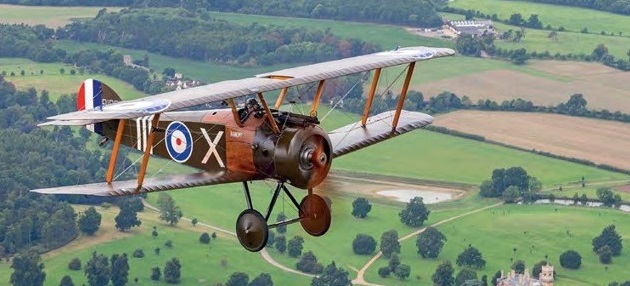
Roger ‘Dodge’ Bailey flies the reproduction Camel near Old Warden August 2017.
When ‘Dodge’ Bailey, the Shuttleworth Collection’s chief pilot, took Sopwith F1 Camel reproduction ‘D1851’/ G BZSC into the air for the first time at Old Warden on 18 May 2017, it brought one of the historic aviation scene’s most compelling stories to a close. The West Yorkshire-based Northern Aeroplane Workshops, established back in 1973, shut up shop when the Camel was moved to Old Warden for completion during the summer of 2013, but the machine’s maiden flight marked the very end of the group’s final project.
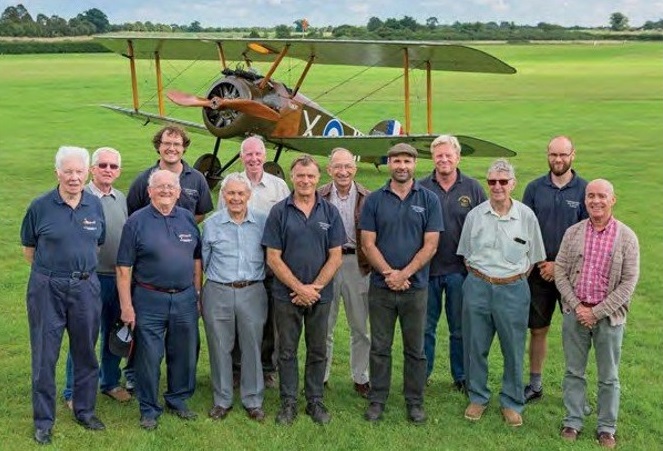
Robert Richardson describes the Camel project as “a great marriage between NAW and Shuttleworth”, members of whose teams gathered for this photograph. Back row, left to right: David Barraclough (Eric Barraclough’s son), Rory Cook, Robert Richardson, ‘Dodge’ Bailey, Phil Norris and Gareth Rutt. Front row, left to right: John Thompson, Geoff Kilner, Rod Elliott, Andy Preslent, Jean-Michel Munn, Horace Darlington and Ian Whitwan.
In preparation for that, ‘Dodge’ Bailey did a great amount of homework. He used three-view diagrams of different Sopwith types, all to the same scale, on acetate sheets that could be laid over one another to afford the most direct comparison: they depict the Camel, 1½ Strutter, Pup, Triplane and Snipe. Amongst other things, they showed that the Camel’s tailplane is about 60 per cent of the size of the Pup’s, and that the fin is smaller too. The tail arm is longer on the Triplane, making the tail more effective. They both preceded the Camel; its Snipe successor, meanwhile, saw the tail going back to the sizes of the previous aeroplanes, and the fin and rudder made significantly larger. “That tells you a lot about what the aeroplane’s probably going to be like”, says ‘Dodge’. “A very simple technique, but quite illuminating.” Then there were period scientific and technical papers to read, drawings made by the Germans of a captured Camel and reproduced in Flugsport to examine, and numerous references to study. In his weighty tome Flying Qualities and Flight-Testing of the Aeroplane, former CAA test pilot Darrol Stinton described flighttesting a Clerget-engined Camel. A May 1968 issue of Flight International includes a piece by six-victory Royal Naval Air Service pilot Capt Ronald Sykes on flying a Bentley BR1-powered example. Best of all, ‘Dodge’ feels, are the writings of Wg Cdr Norman Macmillan, who was operational on RFC/RAF Camels on the Western Front and in Italy, and subsequently flew the type while instructing at a fighter school back home in the UK. Apart from several books, Macmillan wrote an article on his Camel experiences that, some years after his death, appeared in the October 1984 Aeroplane Monthly; it was called ‘A Fierce Little Beast’. In that feature, says ‘Dodge’, “There’s some really good advice, and counterintuitive advice: for example, to start the take-off with the stick on the carburettor intake tubes. Because the Camel cockpit is set more forward, the carburettor is closer to the pilot than in earlier types. To start the takeoff with the stick on the intake tubes means the stick is fully forward. It’s pretty unusual to do that. On most taildraggers you would start with the stick back, and some you would start with the stick kind of neutral. What I had to think when I read that was, ‘why on earth is he telling ab initio students to do that?’ “This is one of the bits that I don’t understand about the thinking at Sopwith at the time. If we overlay the Camel and the Pup in side view, you can see that the cockpit has moved from the trailing edge to under the centre-section, so the distance from the cockpit to the engine has changed; they moved the pilot forward. In the Pup, the area under the guns, pretty much where the centre of gravity is, is where the fuel tank is. Any aircraft designer will tell you to put the fuel tank on the centre of gravity; then, as the fuel burns, it doesn’t change the CG. Whatever made them move the cockpit forward means that the fuel tank can no longer go there so it goes behind the cockpit, well aft of the CG. When the fuel tank is full of fuel, the CG is a long way aft. That’s a clue to why the guy is saying, ‘stick fully forward’. It means that when the aeroplane is in flight it is not in trim.
Airborne Old Warden Park.
It was one of its Camels, B7270, that was officially credited with the shooting-down of Manfred von Richthofen before evidence came to light that the ‘Red Baron’ probably fell victim to ground fire. Clayton & Shuttleworth employees were given a speciallyprinted leaflet commemorating their product’s feat. “Now, you have to be a bit careful about the term ‘in trim’ because it means different things to different people. To pilots, ‘in trim’ means, ‘I have trimmed the aeroplane; I can take my hands off and it flies straight, it doesn’t pitch up or pitch down’. That is, if you like, ‘controls-free in-trim’… To a flight dynamicist, ‘in-trim’ means that the sum of the moments is zero; in other words, that the aeroplane isn’t pitching, but the pilot might be holding a huge control deflection and/or force to hold it in that condition. If he lets go of the stick it wouldn’t be in trim at all; it would pitch. The Camel is like that. In order to stop the aeroplane pitching you need a relatively large stick force. What the aeroplane wants to do when you’re taking off with a full fuel tank is pitch up. “Imagine that a student used to taking off in an aeroplane with the stick back takes off in a Camel — it’s got twice as much power, maybe three times as much, as he’s used to. It’s very lightly wing-loaded and it’ll be airborne in no time. If the stick is back and the aeroplane is ‘out of trim’ it will just pitch up as it leaves the ground, and he will just stall and crash straight away. “By putting the stick forward Macmillan knows there is no chance of the pilot putting the aeroplane on its nose, because the CG is so far aft. The first thing that happens is that he’ll see the tail coming up once the take-off starts, and then he can adjust the stick position. If he’s late, if he holds the stick back and doesn’t get it forward early enough, the aeroplane’s going to pitch up. It’s all about anticipating the reaction of the aeroplane when it gets airborne. You don’t actually leave the ground with the stick fully forward; like I say, as soon as the aeroplane’s rolling and the tail comes up you can move the stick to hold the normal take-off attitude for a taildragger. When you get airborne you’re pushing on the stick all the time to stop the aeroplane pitching up. “I am told that if you run the aeroplane right out of fuel, like they would have done, by the time it’s empty the CG has moved pretty much on to the forward limit, and now you’re pulling all the time to the point where it became quite difficult to do three-point landings. The pull force needed to get to that position was quite a lot, and you might run out of elevator before achieving the three-point attitude. We never fly it that short of fuel, so we’ve not been there. “So, the Camel is, if you like, ‘out of trim’ with any sort of fuel in it at all, and under that ‘out-of-trim-ness’ it is also unstable. You’re dealing with an aeroplane that requires a force to maintain its attitude, but the force changes after a disturbance will likely be unpredictable. “One of the mitigations we came up with was to only use a half-tank of fuel… the other thing was that, because [this Clerget] is a really nice engine, to throttle up relatively steadily. That made the take-off a little bit more manageable. I really anticipated the aeroplane to be unpleasant in pitch, because every bit of evidence suggested it would be, and it didn’t disappoint in that regard. “I also expected turns, particularly to the right, to be compromised by the gyroscopic precession. I found on first acquaintance that even left turns were pretty unusual. These were climbing turns, because I was climbing out. I continued to climb until 3,000ft or so and then throttled back, and as soon as the power came back below about 1,000rpm the aeroplane started to get a bit more pleasant — or less unpleasant. The pitch deficiency is at its worst at high power, and pretty much has gone away by the time you’re gliding, so you don’t really notice it when you’re coming in to land. One of the things you tuck away in your head is, ‘if it all gets too much, throttle back’, which might be counter-intuitive to some people. “What was more of a surprise was how directionally sensitive the aeroplane was. There are very few aeroplanes that I have flown that behave like this; I think the Comper Swift is similar, but not as bad. Most aeroplanes you want to fly in balance, so you put the slip indicator in the centre — using the rudder, normally. Once you have put the rudder in that place, and your feet hold the rudder in that place, things won’t change unless you change the power or the speed or aileron. That’s not the case in the Camel. Having put the aeroplane in balance it doesn’t stay that way. It’s the directional equivalent of the pitch handling characteristics, in the sense that it will diverge from that condition you thought you had sorted out, and you have to put it right again. Darrol Stinton refers to that as, ‘there is no stability, it’s all control’. You not only have to control the pitch, which you were kind of expecting, but the yaw as well… ”I expected turns, particularly to the right, to be compromised by the gyroscopic precession. I found on first acquaintance that even left turns were pretty unusual”
Sopwith F1 Camel reproduction ‘D1851’/G-BZSC Shuttleworth Collection
“What it boils down to is that you have to be actively in the control loop all the time. Reputedly the only time a Camel will fly hands-off in-trim is when it’s inverted. I think if you were to fly it enough you would get to love it, and in one of Macmillan’s books he reckons it’s maybe 15 hours on the Camel and then you’ve adapted to the aeroplane. I haven’t got 15 hours on the Camel; I’ve probably got three, so what I’ve been relating are first impressions of a strange aeroplane.” In combat, flown by someone with the requisite experience, ‘Dodge’ says the Camel, “could be manoeuvred in a very unpredictable way, so it would be a very difficult target. Equally, they could get on the tail of a more predictable aeroplane, which couldn’t manoeuvre anywhere near as aggressively as the Camel. What the Camel couldn’t do was go fast; it couldn’t run away or chase, it just had to fight, and it did that very well in a tight dogfight. “One of the things you notice when you’re flying tight turns is that the gyroscopics of the engine start to dominate things. If the aeroplane pitches up, the gyroscopic precession causes it to yaw to the right. Whenever you’re turning steeply, as far as the aeroplane is concerned it is pitching up to go round the turn. If you’re making a left turn, the aeroplane is pitching up so it’ll yaw right. To stop it yawing right you need to apply left rudder. When you enter the turn you use some left rudder and left stick; then, having got the bank on, the nose is pitching up and so that left rudder needs to stay on — and even a bit more. In a left turn it does not feel particularly odd. Now, in a right turn, you might need a little bit of right rudder as you start to roll in to balance, but as soon as a pitch rate appears that right rudder is no longer appropriate. You need left rudder now. In a steep right turn, if you don’t apply left rudder the nose will yaw down towards the ground. The tightness of the right turn is limited by how much left rudder you can get on. You can end up in a tight right turn, going round apparently on a sixpence, probably only just getting rid of the push force — so you’re not pulling particularly, you’re just relaxing the push force — with nearly full left rudder on, and the aeroplane is perfectly in balance. That does feel odd”. On other Sopwiths, he continues, “the gyroscopics are there, but they are less intrusive because the tail volumes are greater.” Power is, of course, a factor. “This Camel has the 140hp, long-stroke Clerget engine. Somewhere in the documentation for that engine it says you must not use full throttle at sea level. Effectively it gives you a bit of enhanced performance at altitude that you’re not allowed to use low down. Full rpm would be 1,200- 1,250, and at that setting, with nearly full power on, the aeroplane is at its most cantankerous. But for what we need to do, we don’t ever need to apply that amount of power. What I’ve found is that if we take off with maybe 1,100rpm and get the climb to display height out of the way, as soon as you’re high enough come back to 1,000rpm, and then you’ve got a less challenging aeroplane.” It had been hoped to display the Camel at both of the last two Shuttleworth shows of 2017, but conditions were too windy. With all the usual provisos, it should make its public flying debut at a very appropriate occasion: the 2018 Season Premiere event on Sunday 6 May, marking the RAF’s centenary. There the fruits of so many labours will hopefully be airborne for all to see, and the exploits of one of the greatest British fighters recalled. When Sir Thomas Sopwith saw the Northern Aeroplane Workshops-built reproduction Triplane, he thought it so good that he famously declared it a ‘late-production’ example. Were the great man still alive, he would surely consider just the same to be true of this Camel.
The Camel demands notably careful handling in many areas of its flight envelope, but the rewards are there for the seasoned pilot. ”You have to be in the control loop all the time. Reputedly the only time a Camel will fly hands-off in trim is when it’s inverted”
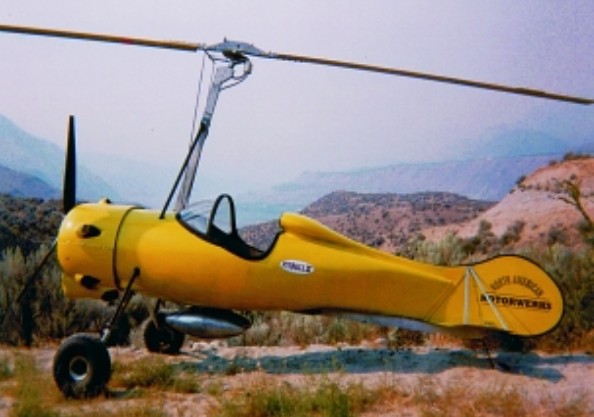
Single-seat enclosed tractor autogyro. Standard equipment includes hydraulic prerotator, disk brakes, instruments. Optional are a long range belly tanks, enclosed canopy and floats. Complete with engine, the kit sold for $13,900 in 2009.
Engine: Rotax 582 or Subaru EA 81 Rotor Blades: Dragon Wings or Sport Copter Specifications: Min Speed 18-22 mph Cruise 70 mph Top Speed 85 mph Empty Weight 290 lbs Useful Load 320 lbs Gross Weight 610 lbs Width 5’10” Height 8′ Length 13’6″


 All Aero