OMF Symphony 160

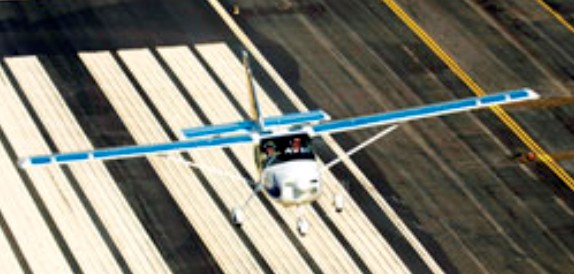
2005 Symphony 160

Base price 2009: $139,900
IFR-equipped price 2009: $154,900

Engine: Lycoming O-320-D2A, 160 hp@SL
TBO: 2000 hr
Fuel type: 100/100LL
Propeller: MT fixed pitch / 73 in
Landing gear: Tri./Fixed
Max ramp weight: 2150 lb
Gross weight: 2150 lb
Max landing weight: 2150 lb
Empty weight, std: 1450 lb
Max useful load: 700 lb
Payload, full std. fuel: 500 lb
Usable fuel, std: 29.1 USgals
Wingspan: 35 ft
Overall length: 22.84 ft
Height: 9.25 ft
Wing area: 128.4 sq. ft
Wing loading: 16.7 lbs./sq. ft
Power loading: 13.4 lbs./hp
Seating capacity: 2
Cabin doors: 2
Cabin height: 44.8 in
Baggage capacity: 165 lb
Cruise speed, 8500 ft 75% power @ 8,000 ft: 128 kt
Cruise speed, 65% power @ 10,000 ft: 123 kt
Cruise speed, 55% power @ 12,000 ft: 119 kt
Max range (w/ reserve) 75% power: 300 nm
Max range (w/ reserve) 65% power: 360 nm
Fuel consumption 75% power: 8.5 USgph
Fuel consumption 65% power: 7.4 USgph
Fuel consumption 55% power: 6.2 USgph
Vs: 60 kt
Vso: 51 kt
Best rate of climb (SL): 780 fpm
Service ceiling MSL: 16,400 ft
Takeoff ground roll: 982 ft
Takeoff over 50-ft. obstacle: 1309 ft
Landing ground roll: 715 ft
Landing over 50-ft. obstacle: 1827 ft

O’Hara P-38

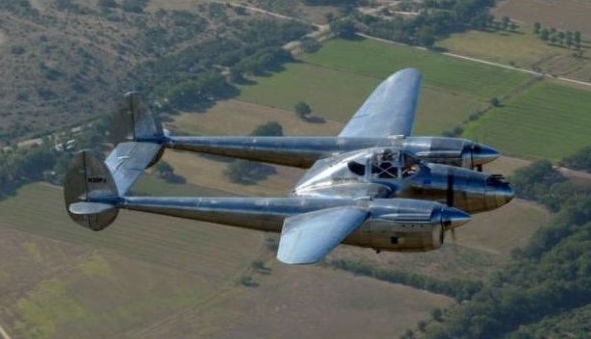
Jim O’Hara, a retired college professor, learned to fly in 1988. Six years later, he began construction of a two-thirds-scale P-38. Using information he obtained from various sources about the P-38, Jim drew up a set of plans in CAD and began building the plane with only his wife Mitzi aiding him in the construction of the aircraft.

He first flew his plane in July 2008, and at 81 years old in November 2009, he and his wife made its maiden cross-country trip.

NuVenture

2009: 4184 W. Kelley • Fresno, CA 93722, USA.

NuVenture was formed for the express purpose of preserving and promoting the Questair designed Venture Model 20.
NuVenture has four immediate goals:

  1. To continue the availability of this very fine airframe kit to the amateur aircraft builder. Continental engines and McCauley propellers will continue to be available to builders on an OEM basis.
  2. To continue the availability of replacement parts to current owners and builders of the Venture Model 20. While no specific support is envisioned for the Questair Spirit, parts common to both the Venture and the Spirit should be available.
  3. To seek proper solutions to mechanical discrepancies which have surfaced in the years since the Venture Model 20 was introduced. These solutions will involve appropriate engineering and extensive testing.
  4. To provide for construction information assistance to current and future builders.

NuVenture is headquartered at 4184 W. Kelley in Fresno, California, 93722. The company factory and warehouse are currently located in Visalia, California. It contains the original Questair fabriaction equipment as well as the tooling required to produce the aluminum and steel parts of the airframe. There is currently enough inventory to construct several complete airframes.

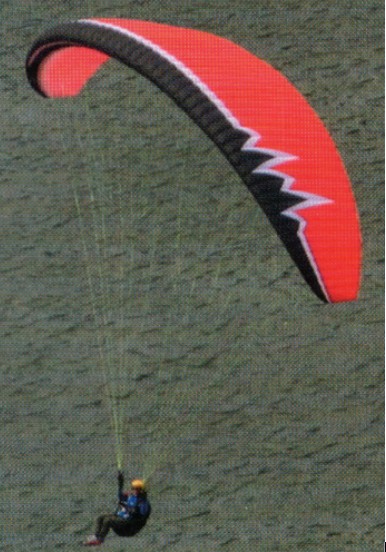
Nova Rookie

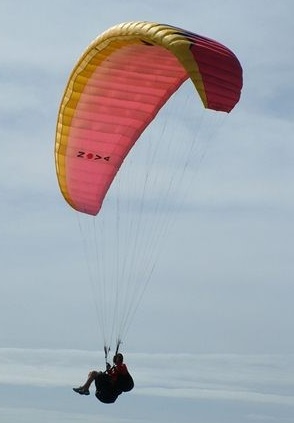
The replacement of the Syntax is a low-level 1-2 paraglider aimed at beginners as well as experienced pilots “in search of maximum safety and minimum stress”. The Rookie keeps some features from its predecessor like the airfoil, planform, cell number and line length, but introduces a new wing curve, more sail tension and new brake geometry for a more agile handling without any negative effects on the damping behavior, according to Nova.

The number of lines has been reduced for less drag and improved performance, especially in thermalling. The upper sail is made from 40g/sqm cloth which helps reduce the weight of the glider and improve takeoffs and safety. At Nova say that the Rookie offers agile handling combined with a very long brake travel, performance above the Syntax and a huge security potential. “The collapses are soft and all maneuvers are very safe”, which makes it a perfect glider for beginners. The Rookie was available in 5 sizes and 4 colors.

2010 Nova Rookie Small

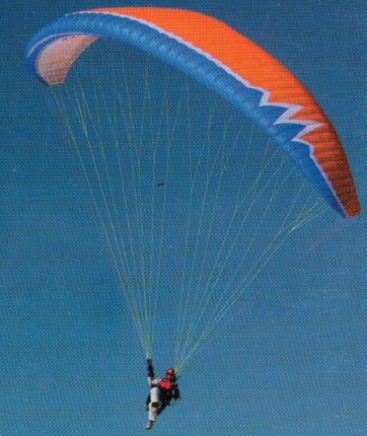
Nova Tatoo

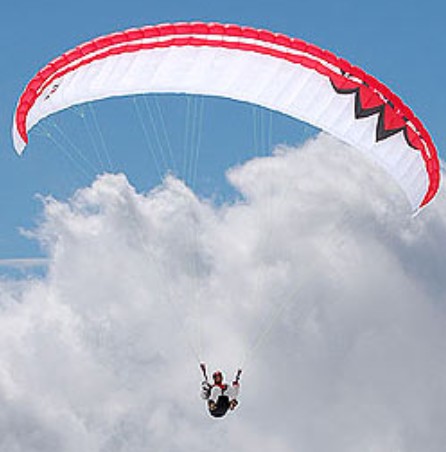
Circa 2005, the Tattoo is Nova’s replacement for the Aeron in the DHV2 class. Nova talks of easier handling, better climb in weak lift, slightly improved performance and all in a package aimed in the middle of DHV2. No special techniques needed with inflation and launch; just a gentle pull on the “A’s” and, despite rising pretty quickly, it comes to a rapid halt overhead. If inflated slightly out of wind it settles overhead easily. Collapsing was better done on “D” risers than brakes, but presents no problems. The small Tattoo is rated for the 80-100kg weight range The brake input needed is on the short side of average. Pushing the bar through the sink is light pressure and short travel, (27cm for full acceleration). The glider isn’t particularly floaty and prefers to carve turns in well defined lift. The glider felt solid with good pitch stability. The liveliness in roll is generally a positive thing. The Tatoo uses a lighter grade Gelvenor cloth and the skinny risers. All the stitching is fine but the sail isn’t quite as wrinkle-free as the cleanest cut gliders. Nova has produced an absolute beauty in the Tattoo. It has excellent glide at trim and on the bar. The sink rate is good and the thermalling ability is excellent. The inflation and launch are sweet, but best of all is the handling.

Seats: 1
DHV: 2
Glide: 9-1

Nova Artax

The Nova Artax is a member of the Radon family, which is made up of the Artax [1-2], Aeron [2] and Radon [some sizes 2 but others could be 2-3]. All the gliders have a similar diagonal rib and line layout, but with number of cells and aspect ratio increasing as you go up the range. Work on these started round about the end of 2001 but was slightly held up by a change of material choice for the construction of the glider. The Artax was first seen in production form at St Hilaire in Sept 2002

Nova use Gelvenor OLKS siliconised PU coated nylon for the top surface, some parts of the bottom surface and Porcher Skytex 9052 for the rest of the undersurface. Suspended and diagonal ribs are Skytex 9092 with the hard, low stretch finish, and unsuspended ribs are 9052. Riser material is black 25mm webbing, except for the 15mm baby A riser, woven by Güth and Wolf. Lines are Liros. The glider has a three riser system with split As, for those who prefer a standard [non-split] A riser this is available to special order or as a retrofit. The glider has a system of diagonal ribs, & compression straps across A, B & C line attachment points. There is full span compression strap across what would be the D line attachment points; there is no D riser and the lines attached here branch backward from the upper end of the middle cascade of the C lines. In the centre of the canopy there is a further cascade rearwards to what would be an “E” attachment point.

The large size [27], is DHV certified for 100 -130 kg. This has a flat surface area of over 31sq.m. The glider is supplied with a two stage speed bar.

In the air the glider turns flat and easily on the brakes, some weight shift helps but isn’t essential. Brake pressure is firm but still comfortable over a long period of time. Even on the bottom end of the weight range, the glider is very solid and whilst it may occasionally rustle or even unload, the collapses don’t materialise. This glider is rock steady and simply shrugs off turbulence. Pitch control isn’t much of an issue, even when the glider drops slightly behind on entry to strong lift or accelerates forward as it falls out of a piece of very small lift. The glider never seems to stray far from being overhead and simply returns there if not actively placed.

Other manoeuvres confirm this gentle giant behaviour. B line stall is classic and easy, the glider simply falls back slightly and then comes back overhead as the descent rate rises. A good descent rate is easy to get and the glider snaps sharply back into normal flight as the stall is released. Brakes were ready to damp the dive but were not needed. Asymmetric collapses start a turn but the inflation pressure whips the riser out of your hand as the glider insists on re-inflating. Big ears require a firm pull, it gets much easier once they are in and they can easily be adjusted via the baby A riser. Ears come out by themselves when released, although they take longer on the lighter end of the weight range. Spiral dives are easily controlled once you are familiar with the glider’s handling and if not maintained exit without drama.

Trim speed at 110 kg was 37 km/h, rising to 38km/h with an all up weight of 117 kg. The full speed bar travel gave 51-52km/h, again at 117 kg. The speed system is light and easy to use and the glider feels very solid with it in use.

The Nova Artax is a great glider for simply cruising around the sky with no stress. It can ride out the rough well and will build the confidence of the pilot upgrading to it. Nova have produced a very tolerant, solid, benign glider with top end performance for its class.

Nova’s Artax was replaced by the Mamboo